DD
MM
YYYY

PAGES

DD
MM
YYYY

spot_img

PAGES

Home Blog Page 6526

5G

0

This book is on 5G technologies and developments. 5G is the fifth generation wireless technology for digital cellular networks. It represents a shift from consumer technologies to industrial technologies as it promises to lead to the development of a highly automated and intelligent environment which would revolutionize many industries and every part of the society.

Table of Contents

1.0 – 5G Introduction

  • 1.1 What is 5G?
  • 1.2 Applications of 5G
  • 1.3 Ethical Implication of 5G

2.0 – 5G Spectrum

  • 2.1 Spectrum Re-farming
  • 2.2  Spectrum Sharing
    • 2.2.1 Spectrum Sharing – Unlicensed bands
    • 2.2.2 Spectrum Sharing – Under-utilized bands
  • 2.3 New Spectrum from mm wave band
  • 2.4 Dynamic Spectrum Management
  • 2.5 Spectrum Harmonization
  • 2.6 Summary

3.0 – Radio Technologies for Spatial Densification

  • 3.1 Network Densification
  • 3.2 Heterogeneous Network
  • 3.3 Cloud RAN for Backhaul
  • 3.4 Cooperative Communication
  • 3.5 Summary

4.0 – 5G System Architecture

  • 4.1 5G New Radio (NR
    • 4.1.1 Carrier Aggregation
  • 4.2 Non Stand Alone Architecture
  • 4.3 Stand Alone Architecture
  • 4.4 Summary

5.0 – 5G Core (5GC)

  • 5.1 Network Slicing
  • 5.2 Network Function Virtualization
  • 5.3 Software Defined Networking
  • 5.4 Control User Plane Separation (CUPS)
  • 5.5 Mobile Edge Computing
  • 5.6 Summary

6.0 – Other Technologies and Developments

  • 6.1 Other Technologies
  • 6.2 Waveforms and Access Technologies
  • 6.3 Security and Privacy
  • 6.4 Green Communication Technologies

7.0 – Conclusion

References


Ndubuisi Ekekwe Joins Board of World Bank’s Funded ACE-FUELS in FUT, Owerri

0

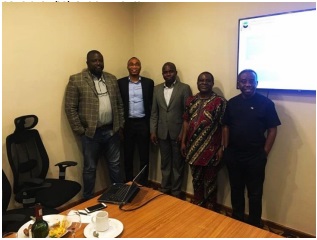
My alma mater and Africa’s leading technical university – Federal University of Technology Owerri Nigeria- recently received millions of U.S. dollars from World Bank for an advanced energy center.  On the invitation of the World Bank and the university leadership, I am serving on the Board of this Centre. Here are full Board members:

  • Sir Ndukwe Osogho-Ajala, OON (CEO, Soulmate Industries)
  • Dr Andrew Ejayeriese (General Manager Exploration, Exxon Mobil Nigeria) 
  • Engr. Victor Ugorji (Chevron Nigeria) 
  • Prof Theodore Ifeanyi Onyeche (Cutec-Forschungszentrum, Germany)
  • Prof Ndubuisi Ekekwe (Chairman, FASMICRO Group)

The Africa Centre of Excellence in Future Energies & Electrochemical Systems (ACEFUELS) at the Federal University of Technology Owerri, Nigeria, was established to fill a growing education, skills and information gap in the field of renewable and other clean energy sources within the sub region and in this way address regional development challenge of poor availability and access to energy. 

ACE-FUELS welcomes your partnership. The focus covers electrochemistry, production systems, software/AI, IOT, etc focusing on broad energy sector.

An interview with Chinenye Nzom on how to become a better person after graduation

0

You don’t need to have it all to pursue your goal in life. The moment you understand your process, you have already won.

Here’s an interview with a young graduate who started her journey right as an undergraduate. She shared some useful tips on how to become a better person after graduation.

Can you introduce yourself to the audience?

I’m Chinenye Nzom, a professional volunteer and a mental enthusiast. I am also the founder of Volunteers Hub Africa.

It is good to have you here after trailing your feed for a while now.

Wow! That’s a young founder and a female entrepreneur.

If I may ask, what is Volunteers Hub Africa all about?

Thank you!

Volunteers Hub Africa is an award winning social enterprise and volunteering organization that believes in strategic partnerships for the sustainable goals by providing Human capacity and professional volunteers to NGOs for the smooth running of their projects.

That’s quite interesting to know. What actually led you into this?

I’ve been someone who loves to help out, once I see a need for something, I love proffering solutions.

I attended a conference one-day and they called for volunteers, it was that day I knew what I was doing all along was “volunteering”.

I met with really great people because I volunteered for different social projects, and conferences, this made me have a clearer sense of my vision and purpose, I became bolder and courageous.

I grew so much because I decided to volunteer and give of my little knowledge, then I thought within myself that – if volunteering is what helps me become better, then young people should plug into it. 

This made me start the organization while I was in my final year at the University of Ibadan, the feedback have been overwhelming.

That’s what I call, selfless service. What makes it interesting, you started that as an undergraduate. How did you transition into the labour market after graduation?

Yes, I did start as an undergraduate. 

I saw an opportunity for fresh graduates who wanted to be trained in the media industry, I applied and a few weeks later, I got a mail that I’ve been chosen.

After the training, we had a test, of which I passed and I got the job in the media firm

What media company is that, and what is your role there?

Red for Africa,  I was in the Development sector (The Future Project) as a project manager.

Being a project manager and a founder, how has that being easy for you?

It’s not been easy at all because I have to travel during weekends, but I found a way to delegate to my team members at volunteers Hub Africa to do the work while I just supervise from where I am.

Chinenye, you are one of the few I respect because of your work ethic and energy. If you look into the current situation in the country, things are not just working. What advice would you give to fresh graduates out there?

The truth is, as much as we say things are not working, things are working so well for so many people. 

I would love to also say things are working for me, not because I’m living a perfect life, but because I’ve chosen to see life in a very positive light. 

One thing I’ll tell fresh graduates is to ensure they start training themselves and do everything it takes to make them not just “graduates” but people of value. 

They should take online courses, go to seminars, read books that will stretch their minds, network, volunteer!!!.

So that even if they don’t get a job immediately, they can still be of value to people which can still fetch them money. 

It’s about building your life for yourself, not just to get a job, but to live a life that is worthy and that you’ll be proud of.

Well said, Chinenye.

The first time we met, it was the City Scope Africa Boot camp. What’s your connection with John Fatanmi, City Scope Africa Co-founder?

Oh yes! 

He’s a mentor, and someone I look up to. 

I’ve been featured on his online platforms too. 

He’s been someone who inspires me to be better.

John Fatanmi is a great professional. Chinenye, can you share some of the work you have done with your organisation?

Yes, we have worked with quite a number of organizations like Coca-Cola, SheLeadsAfrica, Necci PR consults.

We have also partnered with social enterprises to carry our their charity and social projects .

Well done!

What should we expect from your organisation in the next five years?

We would have been a full-blown project management organization with luxury conference centers.

We would have partnered with the government and international bodies to carry our projects to tackle social issues.

May your dream come true, Chinenye.

Thanks for making out time to be with us on  this segment. It was great chatting with you. I wish you a wonderful new year ahead.

Thank you, Chinedu, for inviting me. I wish you the same.

Nigeria Needs Auditing-Only Firms (No Consulting Permitted) To Improve Audit Independence

1

According to Quartz, the Big Four accounting firms (PwC, EY, KPMG & Deloitte) now get the majority of their revenue from consulting, not their core auditing businesses. But can an auditor remain independent when it’s competing for lucrative consulting contracts? The constellation is that these firms are wired separately internally with big walls, theoretically making conflicts impossible. But with the level of impunity in Nigeria, believing that any wall would have a strong foundation would be dangerous. My suggestion (as articulated here) remains: Nigeria needs auditing-only companies. Yes, if you do auditing, you cannot do consulting or advisory services. This will help reduce corporate catastrophes which were enabled by auditing paralyses which are everywhere, reducing trusts on financial documents. 

At the big accounting firms, consulting is the tail that wags the dog.

It’s an open secret in the accounting industry that the biggest audit firms no longer get the bulk of their business from auditing. At Deloitte Touche Tohmatsu, for instance, only 22% of global revenues came from audits in fiscal 2019, compared with 60% from consulting and other advisory services. That’s a reversal from a decade ago, when it was 46% auditing versus 33% consulting. Deloitte’s global consulting revenue rose 13% in 2019; auditing revenue was flat.

Deloitte and the other Big Four firms—PricewaterhouseCoopers, KPMG, and Ernst & Young—have all increasingly emphasized and invested heavily in consulting in recent years. It’s easy to understand why: It’s lucrative, virtually unregulated, and offers greater potential for growth than the more-mature audit field. Advising companies on digital transformation and management is less structured and offers

(Remember: I am not against your job. Please accept that I have the rights to share my perspectives on things that affect Nigeria).

Nigeria Needs Auditing-Only Firms To Reduce Conflicts And Boost Independence

Why the Increase in Career Coaching and Skill Acquisition Trainings has not Solved Unemployment Problem in Nigeria

1

I noticed since the beginning of the year, and even towards the end of last year, that most of the online newsletters and calls for training and seminars revolve around career development. It was as if the common New Year resolution made by everybody on earth was climbing the career ladder. My inbox was loaded with so many of these newsletters and announcements that I spent my holiday enjoying free career coaching, leadership training and business management tips.

But it got to a stage I had to ask myself why my fellow Nigerians remained unemployed and underemployed despite all these free priceless tips and training that filled the internet. I also couldn’t help wondering why we still have unprofessionalism as part of the challenges Nigeria encounters.

To help from my little corner, I started forwarding some of the newsletters to some of my unemployed contacts and re-shared most of the career tips. I also asked them to subscribe to those blogs and magazines for more tips. But I can bet you one thing, these people didn’t do as I suggested.

Anyway, my little observation made me realise that battling unemployment and unprofessionalism in Nigeria is more than just putting up newsletters on the internet and calling for skill acquisition training.

Based on my observation, I can tell that the following are reasons why those newsletters and training may not solve the problem of Nigeria.

  • Unsuitable Newsletters and Blog Posts

When I noticed that my forwarded newsletters were not creating the sort of impact I expected, I decided to find out what the problem could be. The first thing I noticed was that these newsletters are not tailored for common Nigerian man. Yes, most online newsletters on career development are “foreign” to that ordinary man in the street because they come from foreign blogs and magazines. Hence, their tips may not be easily achievable in Nigeria.

This is not to say that their tips are useless, because I learn so much from them. In fact, to be honest, what I learn from these newsletters helps me in my career life. No Nigerian academic can give me freely for what these bloggers do. But for an ordinary man in the street to understand and imbibe what is in these newsletters may be too difficult. For this, almost all the newsletters I was circulating ended up unread because they didn’t capture the interest of my contacts.

  • Undiversified Training

Then coming to training, I realised that most career conferences and workshops that take place in Nigeria are for tech, finance and sales professionals. Someone once asked me when there will be trainings for writers in Nigeria and I had no answer to give. I have since then been searching the internet for workshops and conferences for Nigerian writers and I’m yet to find one. This means that people that are not into tech, sales and finance may lose out.

  • No Access to Internet

It may sound funny but it is true that many Nigerians do not have access to the internet. Some cannot afford internet-accessed phones while others cannot afford the high cost of internet in Nigeria. To be honest, someone I forwarded newsletters to bluntly told me that they consume much data. Now you can imagine what will happen if this person is asked to subscribe to a free webinar.

  • Chasing Shadows

I call this “chasing shadows” because there are many Nigerians that buy expensive android phones and load them with data just to take selfies and videos with distorted facial features and then send them into the social media. I’m not against people having fun but when unemployed youths prefer to burn their data and time on trivial things, then we have to be worried. I once asked someone like this to find and download APA referencing style, 7th edition, from the internet and she told me she doesn’t have data. But then, she downloads videos from Netflix.

  • Desire to Start Big

No one is against people that want to start big, but people kick against those that undermine small beginnings. A career coach said that one problem he always encounters with his clients is that they are too impatient to build up from scratch. This is also common among Nigerians; they don’t want to start from scratch. A lot of them want to hit it big. And so they have little interest in seminars and reading materials that will help them to build solid foundations for their careers.

  • Self-Doubt

Sometimes someone’s success story elicits doubts in the minds of the readers. Some of the writers send out their success stories or that of their clients in ways that make them seem unattainable. The consequence of this is that beginners will see the writers’ achievements as something from the moon.

A good example was when I forwarded a newsletter I got from Writers in Charge blog to one of my contacts, who showed interest in writing. The content of the newsletter was how the author, a Nigerian, managed to land a $3750 writing contract. The response my contact sent me on WhatsApp was both hilarious and heartbreaking. He said, “Nna, I haven’t even started writing and you are telling me about experts. People like me no get hope nah.”

This reply tells a lot about how people weigh the success stories of others – it motivates and discourages at the same time.

  • Nigerians Don’t Read

The people that will understand this better are the writers. Nigerians don’t read. I know a lot of arguments may come up concerning this because of the number of national tabloids published daily and the increasing number of news blogs. But what do people actually read in them?

Nigerians focus more on “gossip” stories than on career related ones (unless they are gossip-tinted). If you think Nigerians are interested in political news, I’m here to tell you that they only read those pages in newspapers because they want to see what to say about the government. Their interests are to have stories to tell about what the government did and what it didn’t do. Most of them do not make good use of the information they gathered from those dailies.

However, there is a need to make some changes towards this disturbing phenomenon. And I can only suggest the following ways:

  1. Nigerian prospective bloggers and online magazines publishers can consider opening blogs and tabloids on career tips in different professions in Nigeria. Nigeria doesn’t have much of these. And the existing ones should be willing to give out free newsletters.
  2. Associations, organisations and individuals can consider organising workshops, trainings and conferences on different career development. Life shouldn’t be all about tech.
  3. Parents, guardians and teachers should teach children the importance of reading. They can do this by making them see stories hidden in-between words and helping them to derive joy in finding those stories.