DD
MM
YYYY

PAGES

DD
MM
YYYY

spot_img

PAGES

Home Blog Page 6535

Don’t Cry for Me Africa (and Nigeria) – An unSporting Faux Pas

0

I was just watching the British 2019 Sports Personality of the Year Awards, and was thinking to myself, how much of this really goes on in Africa.   

Considering that the most populous sport on the continent happens to be football, I crave your pardon for the bias on this sport. However, I must acknowledge the the Cricket Nations such as South Africa and Zimbabwe and Athletics (notably marathon) Nations such as Ethiopia and Kenya. 

In the case of cricket, the likes of Dwaine Pretorius are more recent acknowledgments, as his decision to stay with the team rather than pursue a career with Nottinghamshire in English county cricket is a ringing endorsement for South African cricket’s apparent new dawn. 

Similarly in Zimbabwean cricket of the late 1990s and early 2000s, Henry Olonga, the country’s first-ever professional black cricketer,  stands tall as one of the most audacious figures of the game having played 30 Tests and 50 ODIs in a career spanning eight years, picking up 126 wickets across both formats. 

Coming back to Football, there have been numerous vilifications of unpatriotism as far as commitment to the National Teams goes, such as “the boys are not as committed to the country as they are to their club sides.” This goes to those that have managed to venture to higher paying British and North American club sides.

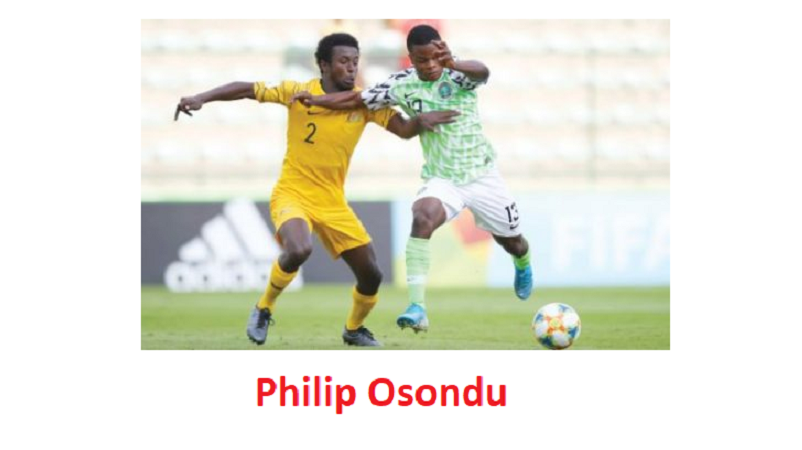
Staring with the most recent case of  the Golden Ball winner at the 1987 U17 World Cup, Philip Osondu, who passed away recently, there has neither been any detailed reporting on the cause of death or national support for the family. 

What exactly is the message for African Sports and especially the African Football. Obviously, this requires a situation of “all hands of deck”, and not just the football or other sports federations but also the media and opportunities for documentaries and possibly even movie scripts to celebrate these unsung heroes. 

In my 2016 article on the Nigerian Football league, I mentioned the dismal use of brand ambassadors citing the likes of the late Stephen Keshi as a case in point. 

So there we have it, African personality of the year award is a worthy imperative. Recognition comes in numerous forms and we are well aware that financial remuneration at the country level is clearly no match for what obtains at the club level and especially in the case of those that ply their trade in the West. 

Moving on, it is looking very likely that there would be more convergence between Africa and the Middle East from 2020 onwards hence more research attention should be paid to such a looming convergence imperative.

An Interview with Sohaib Hasan on How to Get Jobs on LinkedIn and Transition from one Career to Another

2

The rate at which job seekers complain about failed job interviews and their resumes being snubbed is appalling. It seems the recruiters and hiring managers derive pleasure in hurting the job seekers.

Who knows?

You can’t treat job seekers like a piece of trash simply because they are looking for jobs. Considering the fact that we are all job seekers at some point in time.

However, we could rant from now till the end of the world, it won’t change anything. Rather, this will continue to go on until we provide a lasting solution to this problem. That has propelled me to search for help from a Career Coach like Sohaib Hasan. 

Sohaib Hasan is a career advisor that offers a worldwide service for job seekers and those looking to transition into another career. 

Hello Sohaib! Can you please share your journey on how you started and grow to become a career advisor?

Thank you for the opportunity to showcase my interest and be the voice of job seekers. It all started back in 2013, in Germany, when I helped a friend of mine land at a job opportunity. I can still echo my excitement at that time and how I felt. I realized that God wants me to be the servant to job seekers’ entire community. It took a while though but I started to grow my audience and since then it has become a passion.

I do come across your posts most times on LinkedIn, and I must admit that they are really golden nuggets. Can you talk more about your advocacy for job seekers and those looking to make a career transition?

LinkedIn has evolved so much in the past 5-7 years that I may not be able to summarize here. But yes, the tools which are available now on LinkedIn I call them as Success Tools. Those who are looking for a career change or are unemployed should begin using LinkedIn to its fullest potential. You will never know how things will connect and a simple click can give you the career break.

Looking at the complaints from job seekers about not getting jobs or scaling through the interview session, what do you think is wrong with their job search process?

I will be honest here, unless the applicants do not tailor their resumes/profile for the job they are applying for; it is unlikely that they will be contacted. It is as simple as when you go to shop to buy a shirt; you make sure it fits on your body and yes it looks good as well. Similarly, make sure the resume is skin tight with the job description. I usually say – that if you have amazing communication skills, you can drive any interview to success and win it.

You have worked with many employees looking to transition into another job, what can you say is the most likely problem that would face them at the initial stage?

People usually come up and say – I wish to change my industry, employer or region etc. The most important thing here is to identify if these wishes are influenced or you actually see the career breakthrough taking this step. The biggest challenge is for those who have worked for many years in one industry and now they want to change the industry. I would say this is the initial stage challenge for anyone then who is moving from an industry to another that their applications may not be seen very promising.

How can they overcome this problem especially at the initial stages?

Can I say in two lines:

  • Build your network who can talk on your behalf that you are the best fit,
  • Be able to showcase your passion for this change (and not just for the sake)

How can someone who wants to work in a foreign country write his/her CV to suit a foreign company?

The best is to google and read about the cv formats used in that region. You can also google the job portals available in that region and then check out the BLOG section. It is likely that you would get so much information that it will not only save your time but you get different perspectives on the same question / topic. This will help you build further action plans.

Do you think LinkedIn can play a good role for job seekers in landing jobs?

Absolutely yes!

How do you think job seekers can apply for a job with at least 70 percent success?

This is a good question. Now when you say with 70% success, here we talk about the efforts that will be required to put in:

  • tailor resume to the job ad
  • put keywords in the resume and make sure your resume is ATS (Applicant tracking system) compliant
  • reach out to your network if they can push your application
  • do not forget to follow up after you have submitted job application (no matter how many, chase them)

If you would advise a job seeker and an employee looking to transition into another role, what would your advice be?

Be genuine and honest with yourself for the role that will satisfy your wishes and help you achieve your dreams. Do not just do any job, if you do, you are more likely to leave it soon.

How people can reach out to you?

They can connect and follow me on LinkedIn.

Also I run a telegram channel where my subscribers get the latest updates on jobs, career tips, networking events, videos and LinkedIn Lives. To join simply download telegram app and search for “SohaibHasanOfficial”. Alternatively you can logon here.

Thank you, Sohaib Hasan, for your time. I wish you great success in your career.

AfriOne Unveils Cygnus X Smartphone

0

AfriOne has launched its latest smartphone into the Nigerian market. The phone, Cygnus X came as bait in the company’s quest to win more market space in Nigeria.

The phone came with a large 6.53-inch-high resolution water drop full display with Lumia Gradient cover. It is powered by a strong octa core 2.0 Ghz processor with 4GB RAM and 64GB internal memory for a smooth and fast multitasking switch operation and supports up to 256GB expandable storage. Cygnus X came under the Cygnus series, and is designed with customers’ satisfaction in view.

Among the exciting features of Cygnus X are a high-end AI camera with 20mp selfie camera and rear dual 20mp plus 2mp camera, a 4000mah battery capacity, facial unlock ID, finger sensor.

The brand manager, AfriOne Nigeria Limited, Bunmi Yagba said the new designed was produced with customers’ satisfaction in mind.

“Cygnus X is making its debut in the market and we are confident it will meet our customers’ needs that will be a delight experience for them and satisfy the users in many ways. It is one phone that consumers will enjoy and they won’t regret owning it,” she said.

The phone also came with attractive price, at N44, 600, it is affordable to attract end users with low budget.

Sahir Berry, CEO AfriOne Nigeria Limited, noted that affordability together with features that will meet modern trend is a way to ensure customers’ satisfaction.

“Customers’ satisfaction remains our key focus while maintaining upgraded technology, quality and after sales service across the nation through our wide network of Service Centres which is our key strength by servicing our customers on any post sales challenge they may face with a minimum Turn Around Time,” he said.

Berry also stated that the company is expanding its market share with music accessories through the introduction of ‘Afrione Beats.’ A range of music gadgets rolled out to target the youth; they include Bluetooth speakers, headsets, wireless ear pods, earphones, power banks etc.

Yagba also disclosed the company’s vision to localize and expand the use of cutting-edge technology for manufacturing in mobility space in Nigeria. She said the vision when implemented in the near future will create job opportunities for the Nigerian youth.

AfriOne Limited was incorporated in 2016. It’s the first mobile device, tablet PC assembly plant in Nigeria under the brand name AfriOne is Situated in Lagos in a 20, 000 sq.ft. factory. The company is equipped with sophisticated lab for testing and quality control. The brand has partnership with the Federal Government of Nigeria under the N-power umbrella.

In April 2017, the company was inaugurated in Lagos as the first phone assembling plant in Nigeria, with the capacity of producing 300, 000 products in a month on its four production lines.

Upon its inauguration by the former Governor of Lagos State, Akinwunmi Ambode, the managing director Contec Global, Rohen Berry, said that the firm will not only serve as a tech corporation, but also as education center for entrepreneurship empowerment for Nigerian youth.

“In adherence to the AfriOne and Contec Global in-house Agenda, young men and women have the opportunity to be involved in product development and strategic management programmes.

“We are tangibly investing in Nigeria’s future through AfriOne, while providing a valuable skill set to its workforce that will facilitate continued innovation in Nigeria’s emerging markets,” he said.

Over the past two years, AfriOne has produced many brands of phones and increased its workforce beyond the 5oo it used to be. Sahir revealed that the company will soon extend its space of work to assemble computers, an addition that will make room for further opportunity of employment.

However, the challenge remains lack of capacity to go beyond assembly to manufacture the actual components needed to produce smartphones in their entirety. But Sahir said that plan is underway to facilitate the production of the components in the near future.

“For now, we import components to assemble the mobile devices, but that is going to change in the nearest future, even closer than anybody anticipated. For instance, the plastic battery cover of the phones can be produced right now in Nigeria, and we will start there,” he said.

Are You Looking for A Job? Are You a Fresh Horn in HR? This interview with Leke Oshiyemi Will Help You

0

Who is Leke Oshiyemi?

Leke Oshiyemi is the Founder & CEO of Rekrut Consulting Limited, a Human Capital Development Company. Leke is a Human Capital Strategist. An accomplished Trainer & Recruiter.

An astute Human Resource Professional of about two decades in the trenches, who has held Senior HR Leadership roles with Multinational and conglomerate companies, FMCG, HR-Consulting, Private Equity & Financial Services in Nigeria. He has consulted for various Nigerian Businesses. Previously, Human Resources Business Partner and Career Development Manager with Nigerian Breweries Plc. Former Head Human Resources at Verod Group, Strategic HR Business Partner (HRBP) at Honeywell Flour Mills PLC. Former staff of Smart Mark Ltd, Nadina Industries & Transcon Group. He holds a Certificate in Advanced Strategic HR Management from Cornell University, USA. Master’s degree in Public Administration (HR) from the prestigious University of Lagos, Akoka and Bachelor’s Degree (Honors) in Philosophy from Olabisi Onabanjo University, Nigeria.

Mr. Leke, you mentioned that you founded Rekrut Consulting Limited, what experiences led you to this decision?

Actually, Rekrut Consulting Limited was registered as far back as 2012 while I was in paid employment. The idea was birthed the day I asked myself the big question “What If your employee STATUS ends today, how will you feed your family?”. You see, as an HR guy, I’ve witnessed countless number of redundancies, downsizing or whatever you wish to call it. The motto of Boys Scout says “Be Prepared”. And then, I’ve always been the go-to guy whenever it comes to Human Capital Development, Training facilitation, public speaking, recruitment etc. I’m usually the MC at many corporate events wherever I worked. My colleagues and bosses would always commend and encourage me to imagine a future in Human Capital Development and that’s how it all started. And today, we’re grateful to God.

In your introduction, you used the phrase ‘in the trenches’, can you help our reader understand what you mean, and perhaps the dynamics of the trenches – is it hardwork, hardships, rejections or failures? What exactly do you mean?

In the trenches for me means: 20 years experience of working with amazing teams, long hours, hard work, hardship, rejections, the good, the bad and some uglies. Contending with industrial unions, working far away from home, dealing with Lagos traffic situation, pouring myself into developing people around me, giving appraisals and receiving appraisals. But the greatest of them all is every opportunity I got for storytelling, sharing information, ideas and training and developing people.

Ok. Thank you for telling us the way it is. So, drawing from your experiences in the past 20 years, what would you say about the nature of the Nigerian job market?

To my mind, the landscape of the job market in Nigeria is driven by macro and micro economics. I hear people say there are no jobs around. They are right and also wrong. According to one of the many business reports 2,877 firms in Nigeria have shut-down operations within 4 years. That’s massive loss of jobs and income for the employable youths of this country. Yes, we’ve seen loads of companies downsizing and rightsizing. We have also seen the emergence of new employers like Ridesharing companies Opay, Gokada, Max NG, etc. While we’re also seeing a rise in small scale entrepreneurships and entertainment industry thus creating employment in their own right. I can predict we’re about to see a huge jump in contract staffing and outsourcing of employees to third party agencies by big corporations in Nigeria. Many organizations are inventing various ways to save cost these days.

There has been this popular belief by Nigerians especially job seekers that ‘there are no jobs out there’, Are there truly no job opportunities in Nigeria?

Let’s look at the stats. Youth Unemployment rate in Nigeria averaged 23.63 percent from 2014 until 2018, reaching an all time high of 38 percent in the second quarter of 2018 and a record low of 11.70 percent in the fourth quarter of 2014. As at date, we have well over 170 Universities in Nigeria, churning out graduates every year. Indeed, the opportunities are shrinking very fast. Some people have chosen to blame the government for the unemployment but I belong to the group that says what can I do about this reality. Hence, I chose to be an employer of Labour.

What three key steps would you advise every job seeker to take between now and the wake of 2020 in order to have the harvest of jobs they desire? (If you have more than three key steps, kindly add)

Step 1. SOCIAL MEDIA VISIBILITY. A job seeker who is permanently offline has reduced their probability of getting a job by a wide margin. Job Seekers must be on LinkedIn as part of their job search strategy. There are 610 million LinkedIn users. According to a recent survey, 89% of recruiters have hired someone through LinkedIn. 10.2 Million Applicants found their job through LinkedIn. 1 out of 3 professionals are on LinkedIn. There are over 10 million job postings. Users get access to experts in every area of expertise. Job seekers should be visible by following potential employers, sharing meaningful content and finding creative ways of projecting why anyone should employ them.

Step 2. SKILLS FIRST, THEN EDUCATION. I tell everyone that cares to listen. Marketable skills are becoming more valuable than school education. Add to your academic status powerful skills like Digital marketing, content writing, copy writing, Website development, coding, graphic designing, video editing, photography, PowerPoint, MS Excel etc. One day, you’ll thank me for this.

Step 3. NETWORKING & VOLUNTEERING. A job seeker must be prepared to attend corporate and social events. Ask for opportunity to volunteer with SMEs. You might be surprised where this small experience will speak for you. Job seekers should volunteer because It gives you a place to go. It keeps your skills fresh and teaches you new ones. It takes your mind off your own troubles. It gets you out of your own head and reminds you of the things you’re good at. You also get to learn how to build working relationship with people.

You have really dealt with this subject even with verifiable statistics, thank you. So looking at your profession, the Human Resource, what sure secrets have you discovered that can help or accelerate the growth of young HR professionals or those intending to move into HR?

Here’s my advice to young HR Professionals and those intending to venture into Human resources management. Practice what I call “CANEI” Constant And Never Ending Improvement. It’s the philosophy of betterment or refinement. It’s the idea that nothing is ever finished, or declared perfect; there is always room for improvement. Readers are leaders. Show me your investment into HR books, CDs, Mp3, HR articles, videos, TEDx talks etc and I can predict your HR future. Be updated as per HR trends. Be adaptable. Seek knowledge. Seek wisdom. Be mentored. Update your knowledge.

Build your Dream. It is very important to think about your dream and the vision for your own life and career. Believe in Yourself. Never Stop Learning. Sharpen your People Skills. Expand your Network. Find a Mentor. Build your Reputation. Stop Telling & Start Selling. Don’t be old school. Improve your public speaking skills. Learn marketable skills. I won’t say these are some great secrets, but these are powerful stuff if you have the WILL to ACT on them.

Wow! I’m also being fired up here! Thank you. What are or is the major project you are working on now that you would like job seekers, job changers and professionals to know about that would help them get a job or link them to the process of getting a new job or a promotion at work?

My life’s work now is Project Rekrut Consulting Limited. We’re essentially a Human Capital Development Company. We help you HIRE GREAT EMPLOYEES & HELP YOU TRAIN THEM RIGHT.
We TRAIN RIGHT. Our learning solutions are adaptable to groups of all sizes. Open and in-plant courses. We are flexible to facilitate training sessions for your teams wherever you are located. Distance is not a barrier. World-class trainers. Well researched, rich content, excellent delivery. Check out our training calendar for 2020 at: www.rekrutconsulting.com/Training.

Also, we’ve developed a CV Writing /LinkedIn profile makeover service. Let’s convert your CV/LinkedIn Profile to a recruiter magnet or business lead magnet. For more details check out our website: https://www.linkedinwriter.com.ng

In case anyone would like to know more about what values you offer and perhaps want to reach you for mentorship, how can they reach you? Any website, or SM address or phone number?

You can reach us on:
+2348076844991
info@rekrutconsulting.com
www.rekrutconsulting.com

Think Rekrut Consulting Limited: Think Recruitment, Training & Consulting.

Mr. Leke, it has definitely been a good time together. Thank you for your time and responses to all the questions.

Nigeria’s Fuel Subsidy Challenge as Oil Price Hits $67.8 Per Barrel

0

In 2016, when the Federal Government moved pump price from N97 to N143/145, it’s in a bid to reduce the cost of subsidy that has been gulping whooping sums from the government coffers.

But unfortunately, the subsidy managed to survive complete elimination, and more so, it keeps gaining ground from market forces through rising cost of Premium Motor Spirit (PMS) or petrol. Today, the cost of subsidy has risen to N47.5 per liter due to the rising price of the commodity in the open market, currently expected to hit N180.78 according to the data from Petroleum Products Pricing Regulatory Agency (PPPRA).

The latest data from the PPPRA’s PMS pricing templates for December 12, 16, 17, 18, 19 and 23 put the open market prices of petrol per liter at N172.92, N177.33, N177.32, N174.81, N177.92 and N180.78 respectively. The ex-depot price for collection of petrol, as captured in the templates, was N133.28 per liter, which is an indication that the Nigerian National Petroleum Corporation (NNPC), was subsidizing the price of the product by an average of N47.5 per liter during the time of the review.

Fluctuating price has become part of the oil industry. The Organization of Petroleum Exporting Countries (OPEC) has been pushing to see that there is increase in oil prices by cutting production. The instability in oil prices has enabled marketers in the industry to stop importing, leaving it solely to NNPC for two years now.

The economic report of Central Bank of Nigeria (CBN), for the month of November 2019, confirmed the increase in crude oil prices. The report stated that the average spot price of Nigeria’s reference crude oil, the Bonny light (37° API), at the end of November 2019, was $66.11/b, compared with $61.10/b recorded in October 2019, which represents a 8.2 percent increase relative to the level in the past month.

The Apex bank also noted in the report that the hike in crude oil price in the month November was due to the adoption of cut measures by Nigeria and Iraq, and also the news of anticipated cuts by OPEC.

Mike Osatuyi, the National Operations Controller, Independent Petroleum Marketers Association of Nigeria, told Punch that the rise in crude oil price was a sure indication that the subsidy figures would increase.

“Even if the price of oil increases to $90, as long as the pump pric of petrol remains at N145 per liter, the government must continue to subsidize the product. We are waiting for government policy, whatever government decides, we are going to comply because we need to move forward. With Dangote refinery coming on stream, we should expect some radical policy changes in the oil industry, especially in the downstream sector,” he said.

Stakeholders have also shared the same sentiment. Marketers under the aegis of the Major Oil Marketers Association of Nigeria described the development as a drag on the mainstream sector of Nigeria’s oil and gas industry. The CEO and Executive Secretary, MOMAN, Mr. Clement Isong said.

“We are consistent in our view that the subsidy payment or subsidy in the petroleum downstream sector degrades operational efficiency and economics of the downstream sector. We don’t think it is good for the industry as a whole.”

There have been calls by economists and the International Monetary Fund (IMF) for Nigeria to reduce subsidy so as to spare more fund for infrastructure. The Regional Economic Outlook of IMF published in October stated.

“Fuel subsidies tend to be poorly targeted, foster over-consumption, curtail investment and maintenance in related sectors, and crowd out more productive government spending. Some countries need to take the opportunity afforded by low oil prices to reduce fuel subsidies to free up additional fiscal space (Cameroon, Nigeria, Senegal,) as was done in Mozambique and South Sudan and is being pursued by Burkina Faso.”

The 2020 national budget pegged oil benchmark at $57 per a barrel meaning that the recent increase in crude oil price would have been a good business for Nigeria if not for the subsidy payment gulping more than the excess.

The Nigerian government, through the NNPC has been making plans to get the refineries working by February next year. But the reality is indicating little hope, and the subsidy may continue even at higher cost of crude oil if OPEC continues to cut production. So the 2016 increment of PMS prices has only been able to curtail the cost of subsidy compared with the preceding years.

So far, there is no clear government plan on how to reduce the spending on fuel subsidy apart from the hope that Dangote Refinery will start operation very soon. So the rising crude oil price is not more of gain than it is a loss to Nigeria.