DD
MM
YYYY

PAGES

DD
MM
YYYY

spot_img

PAGES

Home Blog Page 6541

The Africa of my Dream – An Interview with Hammed Alabi

0

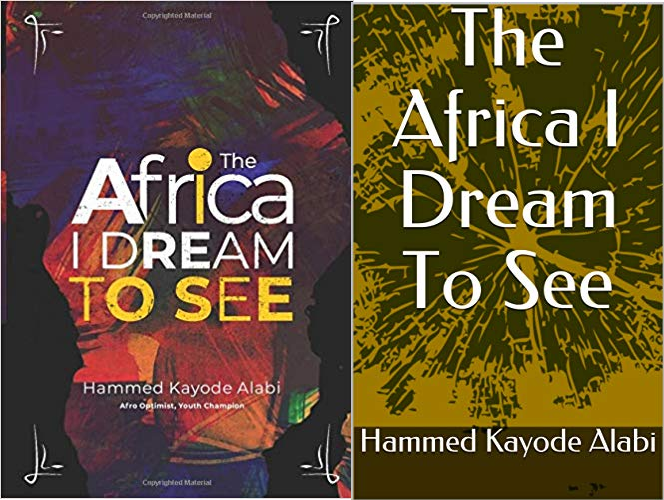
Nigerian youths are striving hard every day to make this country better. Hammed Kayode, popularly known as Kay Factor has done it again. He finally published his first book to make a change in Africa.

What do we expect from a book that has painted the harsh situations in the continent? Here’s what he has to say:

It’s good to have you here Hammed Kayode Alabi. I just came across your book and I must say it is a job well done. Can you share more about this book to the audience?

Thank you for the great commendation!

I will say I never thought of writing a book anytime soon but last year, I entered the African Development Bank: “African of My Dreams Writing Contest”.

I shared my passion for the Africa I dream to see but truth is, My African dream was so big that it could contain a 500-word essay. I did not win the essay competition but I was spurred. I got angry but I converted my anger into something great.

I was coming from on a sudden day and I kept thinking about my African dream, I hopped into the bus and I could not stop thinking. Then I was stuck in traffic, picked up my phone and started documenting the Africa I dream to see.

I shared my journey into leadership. How I found my African Dream from the worse of the worse places – “Makoko Slum”.

I shared how we need to put people first before any development. I shared how the future would look like and as Africans, are we prepared for the future. I deep dive into the plot of ”Black Panther” and swam into my African dream.

I believe if anyone read it, It will spark something in them to take action and create the Africa we want.

You are one of the few out there who is trying to make a change in this country. What problem(s) is/are you trying to solve with your book?

The truth; there is a lot of problems happening today. People are suffering, and dying, and we need to protect the future generations to come. 

Things are changing day by day but as Africans, we are not prepared for that change. Maybe someone somewhere will take action that protects our children. 

We need to protect the future generation and how actions today will determine that. We are the African dream! We are the solution.

Amen to that! We are the future. You visited Dubai recently, welcome back home. Can you share more about your trip with us?

I know many people travel to Dubai and would come back with nothing.

I had the opportunity of supporting Peace First accelerator program in Dubai as a Fellow-in-Residence. So I was a resource and also mentoring young people from the Middle East and North Africa to create massive social change.

I could recall engaging some so-called Yahoo-Yahoo guys along my trip and what led them to space. They talked about suffering in their home country. Truth is; the country is not livable for them. There was one; who said he served as a labourer and did a lot of odd jobs.

I did too but we choose a different path. I decided to use my pain to help others but he decided to hurt others.

What made the difference?

Education, mentorship and upbringing.

I think there is a larger role Education plays in this century. I saw a lot engaging people during the trip. However, that is a story for another day. 

Getting to Dubai, I was amazed by the metro station and what innovation led to that. I noticed that everything has been digitized and controlled by Artificial intelligence. I quickly learnt that AI has a way of reducing corruption.

When I got my metro card, loaded was about $7 and there wasn’t a conductor or thugs to disturb me. The moment I placed the card on a machine, I can enter the train and get to my destination faster. 

You can’t cross the road anyhow. There is a point where all cars stop and allow people to cross without stress. A way to curb accidents. 

We happened to be hosted by the Dubai Future Foundation and I was amazed by the amazing buildings I saw.

I happened to visit the Youth Hub and this was inspiring. The Youth Hub was created by youth and supported by the government and lots of private partners such as LinkedIn, Facebook, Twitter etc. 

The Youth Hub has a free conference hall where youth can organize free events. It has a pod, where two young people can bounce ideas without distraction. It has a stakeholder room, where youth can have meetings, a studio where youth can shoot videos, a business space where youth can run their business for 3 months and another youth take over. It has a youth library and youth-friendly. 

Seeing this, I became angry and I thought our leaders come here and they can’t tap any of this. They create policies that are not youth-friendly and we are literally not consulted to make things happen.

I think youth are not the future, we are now and it is high time we are taken more serious if we really want to grow and develop.

I also visited Amity University where I trained some students on how they can start a social change project. It was an amazing moment! A lot of inspiration.

Comparing what you saw in Dubai and what we have here, what can you say about it?

I saw a place where true system works, a place where people respect authority and where corruption doesn’t thrive.

Now I know why it attracted a lot of people. I saw visionary leadership and I must say we have visionary leaders here too in Nigeria but we do not have a system. The system has been clumped with corruption and selfish interest.

I also saw an educational system that works. The classroom is conducive, people can easily connect and I saw a country where people do not run away from taxes but promote progressive tax to better key sectors.

I was at the Dubai Future Academy and children are learning 3D printing. I look at my children here, it is a bag and shoemaking we have. Yes this is good but we can do better.

I also did not see a homeless person but here we have a whole lot that are supposed to be protected by a social protection system.

How can we fix this as a nation, Hammed?

I know it will take time but first, we need a visionary leader who understands the people’s needs and also have a good knowledge about the 21st century. 

We need this across all sectors and they have to model integrity and competency. We need to fix our educational sector, because that is the sector that provides man-power for all other sector and where people learn character and develop core skills. We need to review the curriculum to be purpose based and 21st century centred. 

We need to build conscious citizens who can hold the government accountable and hold them to deliver on their promises. Education makes you a conscious citizens but the truth is, it is being paid less attention to so that we can continue to produce unconscious citizens who would not be able to hold the government accountable and demand their rights. So they can turn us against each other.

I have a lot to say. I really have a whole lot.

In a University in Dubai, there was an incubation centre where young people can create solutions that would be market ready. I wonder what has happened to our own universities.

Hmm. It’s really sad Hammed. I hope we get to live to see this Africa of your dream. Where can your book be purchased?

For the ebook, purchase here;  Paperback here: 

I wish to see your book being nominated for the Nobel Prize Award in the future, Hammed.

Yes! I hope so too.

Africa will be changed by her own people, for her own people and with our own resources.

The book can be found on Amazon both e-copy and paperback and it will be delivered to your doorstep. People across the world have started to order and they are on the verge to create and support our African dream.

I really can’t wait.

Maybe someday, or tomorrow. But sometime soon. I envisage this and thank you for the opportunity to lend my voice.

You are a great role model, Hammed. I often learn from you and I hope we get to do something together in the future.

Thank you so much for telling good stories about Africa.

We have kept quiet a lot and the world need to hear us. Malala said, “Even when the world is silent, one voice is powerful”.

Thank you for the platform and creating an avenue for other people to thrive. Looking forward to what we will create.

Do have a wonderful weekend ahead, Hammed.

Thank you so much! You too!
PlentyWaka is Pushing to Expand its Ride Sharing Services in Lagos

0

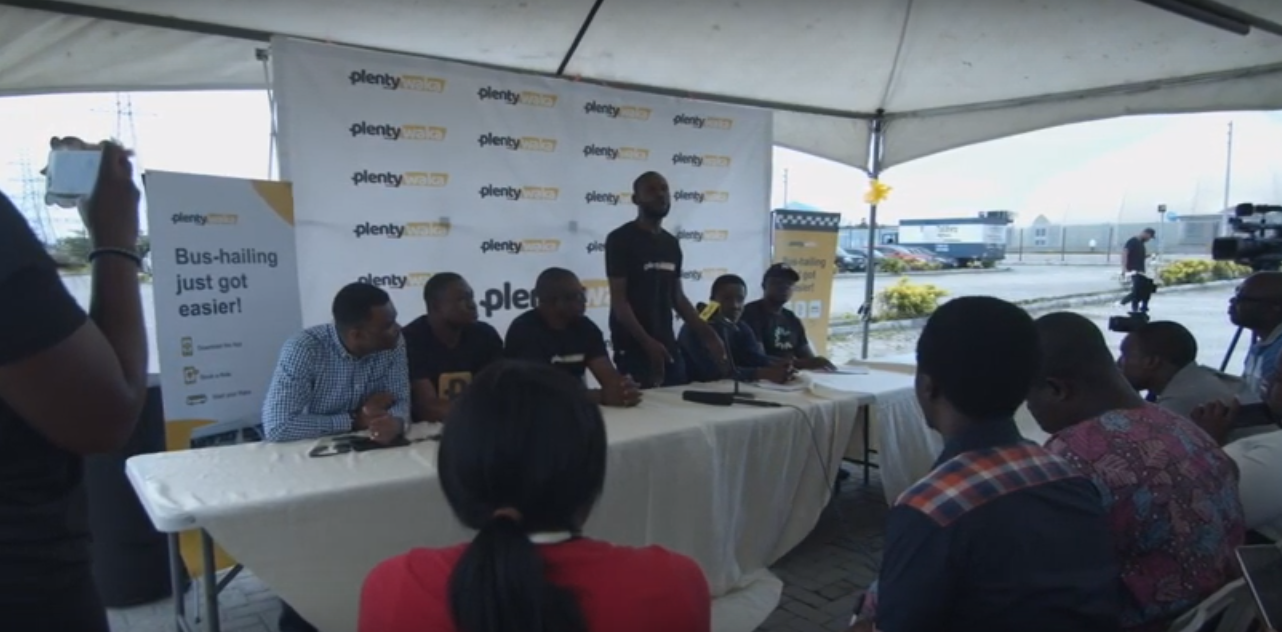
Plenty Waka, a bus-hailing service based in Lagos. has updated its app to fix some glitches that have hindered the growth of the company for some time now. The PlentyWaka application has been updated to 2.0 which is a better version.

“Plentywaka is a bus sharing solution that offers commuters convenience, safety and comfort in their daily rides. Providing convenient and effective driving experience one route at a time.”

Earlier in the year, CrowdyVest Holdings (CV Holdings) kicked off the pilot phase of the ride sharing service. Jonny Enagwolor, the managing director, and cofounder of the company said that their focus is on the island part of Lagos right now, but hope to expand to other areas soon.

“We are currently on the pilot run with 25 buses and we hope to go full scale soon,” he said.

How it works

Passengers need to download the Plentywaka mobile application, book a bus going their way, make a card payment and wait at the designated bus stop. A verification code to enable identification of the bus is then sent to the rider. When the bus gets to the designated bus stop, an assistant checks the booking details of the rider to ascertain a match, and then the rider gets on board.

Plentywaka also has a plan to make their drivers owners of their buses after a period of three years of driving with the company.

In the outset, the app posed a challenge to commuters who were excitedly embracing the ride-sharing platform. The company said the new app has been updated to fix the challenges.

Before now, it’s difficult to book for more than one rider, but the new app offers room for multiple bookings. Also, ride-payment can only be deducted at the completion of the trip, unlike before, when it was impossible for trips to be cancelled without a rider being charged. Passengers complained that they were being charged even when the service was not rendered.

Another new feature of the app is the barcode. The old style of manually checking the passengers’ details has been overridden by the barcode, enabling swifter services. The bus assistant will only have to scan a rider’s barcode to access his/her details at the start and end of the trip.

There is also the introduction of waka-purse, a Plentywaka wallet that gives riders the choice of not using their card information on the system. All they need to do is fund the wallet with as low as N1000, though there is no limit to how much a rider can fund his wallet with.

The waka-purse also came with a sharing feature. Afolabi Oluseyi, vice president, operations said: “You can also transfer funds from your waka purse to someone else’s. These features are coming live today and they are all geared towards improving user experience.”

Plentywaka is also exploring a lease idea to make up for its narrow operations. Since it was launched, its routes have remained Ajah-Abraham Adesanya, and few other routes in the island, a situation enabled by insufficient buses. In a bid to expand its services and cover other routes in Lagos, the Bus sharing company has introduced PlentyWaka Vehicle Partnership Scheme. The goal is to allow interested investors to register buses with the company and earn Return on Investment.

Enagwolor explained how the partnership scheme works: “When you bring a bus to the system, you’re guaranteed of revenue generation between 500 and 800,000 every month. From the revenue, PlentyWaka gets 30% and our partner gets 70%.

“There is also a finance leasing option for interested partners who can’t bear the cost of a full bus. With this option, a partner only needs equity of 30% and a partner finance company would provide the rest.

“From the revenue generated from this too, PlentyWaka will take 30%. The remaining 70% will be shared 70/30 again with 70% going to the finance leasing company,” he said.

PlentyWaka hopes to add 100 more buses to its fleet using this scheme by February 2020.

Apart from easy of movement, empowerment and of course the business aspect of it, the company’s other goal is to use their platform to decongest Lagos by taking at least 35% of passenger vehicles off the roads.

However, there is skepticism about its chances to dominate in bus sharing community, considering competition and other logistics that have worked against the progress of other bus sharing companies like OPay’s OBus.

Nigeria to Issue Visas on Arrival to All African countries While the Borders Remain Closed

0

Yesterday, at the Aswan Forum in Egypt, President Muhammadu Buhari announced that in January 2020, Nigeria will commence the issuance of visas at the point of entry to all persons holding passports of African countries.

“We in Nigeria have already taken the strategic decision to bring down barriers that have hindered the free movement of our people within the continent by introducing the issuance of visa at the point of entry into Nigeria to all persons holding passports of African countries with effect from January 2020,” he said.

Last year, the Nigerian government announced visa on arrival for selected categories of people. In July, over 2000 of such visas were issued to some persons considered in the category of investors.

In November, the Nigerian Immigration Service (NIS) announced plans to issue visa on arrival. Concentration was centered on pilgrimage as a way to boost tourism in the country. The recent announcement by Buhari to grant all African passport holders travelling into Nigeria, visa at entry, has however set a new milestone in African integration. But there is a contradiction!

The news although welcomed by many, came surprising for obvious reasons. Since August, Nigerian land borders have been closed, a development that the Buhari-led administration has defended as a means of curbing the smuggling of banned goods and services and to promote locally made goods.

The argument that the border closure is hurting already fragile economy has gone on deaf ears. All these are happening at a time when Nigerian signed the African Continental Free Trade Area (AfCFTA), a pact that is designed to spur intra-African trade and continental integration.

The principles of the AfCFTA guarantee free movement of people, goods and services. Each of these principles has been utterly violated by the border closure and it is hurting the economy of the whole West African region.

In his speech at the Aswan Forum, Buhari reminded other Africans countries of the need of connectivity through free-flowing transport system, especially through intra-African roads and railways.

“Africa should embark on the provision of transport connectivity by enhancing the development of roads, rail, and air links which will ease the free movement of persons, goods and services within the continent. In this regard, we in Nigeria have already commenced an aggressive drive to upgrade our rail transport system and road networks across the country.

“We should furthermore promote free trade within and amongst Africa and Africans especially now that we have launched the African Free Trade Area Agreement,” he said.

It is an unprecedented contradiction that action alone can substantiate. Whilst his speech is acknowledged as a fact, the closed borders have without words, refuted his preachment.

One of the implications of the closed borders has been restriction of movement of people, goods and services. A situation that has not only limited the inflow of goods through the land borders but also the growth of locally made products.

The needed integration that was advocated in the Aswan Forum has been preceded by anti-integration decisions that need to be unwound for the anticipated benefits of AfCFTA to materialize.

But on the basis of the contrasts between words and actions, the puzzling word-deed misalignment casts doubt on intent. When the largest economy in Africa preaches integration in one way and opposes it in another, it creates a bedrock of economic chaos.

Already, Ecowas countries are becoming vindictive, and are taking measures to fight what they perceive as economic injustice, and the overall trade of the region is at the receiving end. Nigerian traders in Ghana have become targets of government sponsored oppression, an attempt to register the country’s displeasure over the closed borders.

Ghana’s exports to Nigeria have been limited to the barest minimum and so it is with Benin and Niger Republic, and the three countries are seriously weighing the options.

While Nigeria’s ‘visa on arrival’ gesture is a good example for other African countries to follow, the fate of members of Ecowas should not be on trial. Charity begins at home. Therefore, Nigeria should open the doors to her immediate siblings.

Life after Graduation – An interview with Aso Ezinne Eke

0

There is always a life after school. Every graduate goes through that. I could still remember when I graduated and everything became tough. Indeed, life is a survival of the fittest. Ezinne shared her experience about life after graduation. Every fresh graduates can learn from this.

Can you introduce yourself to the audience?

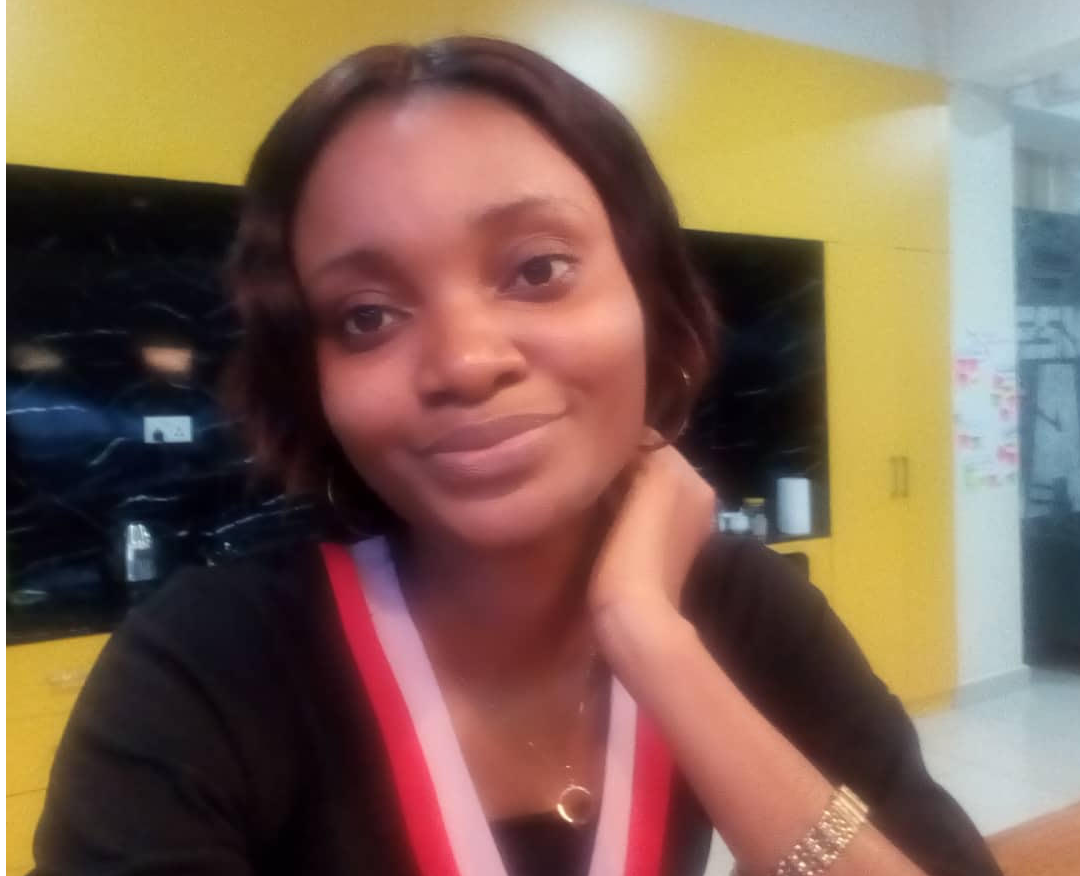
My name is Aso Ezinne Eke.

What have you been up to since you graduated?

In the midst of the urge to get a job and get money. I am the kind of person who really loves to follow my heart. I applied for some internship positions. I got called for some interview but I stayed at home for three months. I was home alone and my mum had just opened a new business just after my graduation. 

So I managed the business for her while she was away. Although I wasn’t paid, I got some real selling skills and customer relations skills too. We sell frozen food. 

I kept applying for internship. I also farmed in the yard. I just like to keep myself busy. I like watering the garden. Yes, I also wanted to be accountable for my time. 

I gave myself phone strikes to study, I also dressed like I was going to work.

On and on. Then I started a Job as a pharmacist and an HCD designer. A lot has really happened.

A pharmacist? Can you elaborate more on that?

Yes, I am a pharmacist. I worked in a pharmacy.

Which of the pharmacy?

Elpha Pharmacy, Magodo. I was really blessed to be there. I got the right boss who pushed me to develop my full potential.

He made me read books. We had amazing customers. The customers say I make then buy more than they planned. It was really an amazing experience for me.

Do you still work there?

Hmmm! I paused for a while.

Why? I hope you don’t mind sharing?

Let’s just say I am on a leave for a while. The company misses me a lot and I miss them too. And I’ll probably be back soon.

That’s good to hear. The last time we spoke, you told me you are in Kenya. What’s happening there?

Oooh, Kigali!

Yes, I was privileged to be selected for a training there on HCD.

HCD? What’s HCD

Human Centred Design.

Can you share how you have transitioned into the labour market?

Hmm, life after school was just as it is said. A week to my final paper, I could feel the tension everywhere from my classroom to my hostel. The question – “What’s next?”, kept popping?.

I would admit to the fact that I was actually a bit clueless. But I was confident that I will do just fine. 

As usual the whole hype. The expectations from friends and family. Everyone just wants to know where she works. People chat you up with how far. You begin to wonder. But I transitioned and it’s been an amazing six months of learning.

Being a fresh graduate, what advice do you have the undergraduates and fresh graduates?

Hmmm! For undergraduate, it is true. Life after school is real. You need to find a way to develop yourself. You need to get real skills. 

I wished I took more risks in school, my friends scolded me back then, I was probably very daring, but I wish I did more. 

For the fresh graduates, discover yourself first before you find a job. 

Be open minded, embrace opportunities, develop yourself daily, acquire new skills, meet new people, be social.

Don’t pretend, speak up when you need help, be humble to learn from anyone no matter how younger, then trust the process.

If you have the opportunity to go back to the undergraduate level, what will you correct?

Hehe! That’s really funny. But I think I wouldn’t be scared of failing a course. 

I mean, pharmacy school gave me chills, I did extremely well because I didn’t want to fail. 

I mean, I was a leader in almost all groups in school, I was kinda well known. If I failed, I am sure I would have been sunk in. 

That gave me chills. But here I am, life after school and life throws me questions back and forth and I fail them sometimes. 

I could also have applied for exchange programs, maybe take mandarin courses, go to China or Germany for an undergraduate, exchange. I only got to know about this opportunity after school.

No regrets though. I am grateful for everything.

You are the epitome of greatness. I definitely agree with you, no regrets. Where do you see yourself in the next five years?

Haha!

Thanks for the compliments.

That question everyone asks.

I ask myself too. I know I’ll be kicking the ass off some world problems generic to Nigeria.

Can you name a few of it?

Education

Healthcare

Waste

Thank you, Ezinne! 

It’s been nice chatting with you. I wish you a wonderful weekend ahead.

Thank you!

Common New Year Resolution Mistakes People Make

0

It remains just a few weeks for the year to come to an end and for another one to begin. Many people have started saying things like, “The year has finished, let’s do it next year,” or “This year isn’t good for me, I strongly believe next year will be my year.” You hear different sorts of proclamation and procrastination at this time of the year. Promises and pledges are also made by people to others on what they will do for them in 2020. In fact, the end of the year always comes with the same attitude – seeing the oncoming year as a better one. This is the chief reason behind New Year resolutions.

New Year resolution doesn’t only come at the first day of January. As far as I can tell, it comes from the beginning of the “ember” months (that is from September to December). Immediately we move into the 9th month of the year, people start seeing the year as coming to an end. There is this believe that whatever that isn’t achieved by September may no longer be achievable within the year. A lot of resolutions are actually made around the month of October and solidified in November. December is more like a waiting period for the year to go so that “actions” can be taken in the new year.

I’ve always been against New Year resolution because I see it as a way of restricting and binding ourselves to the limitation of time. I don’t believe we have to set our time to achieving goals in years but in the days and weeks, and, of course, in hours. I always believe that instead of saying, “I’ll do this next year,” I should say, “I will complete this in two or three weeks time” or “This should be done by April next year.” By so doing, I will not look at years but days, weeks and months. The essence of this is that I won’t have to fold my hands to wait for the year to end, as a lot of people do, but continue the planning and the processes that come with accomplishing the set goals.

But that is by the way. Some of us have certain goals we want to achieve next year. You can call it your New Year resolutions or Goals, they still mean the same thing to me. It will be good if you asked yourself whether you’ve been able to achieve the resolutions you made before, or whether you’ve been making the same mistakes all year round. If you have been able to achieve more than 50% of your set goals, that’s a pass mark I believe; but if you are among those that set goals and forget them immediately the year begins, or you decide not to pursue them, or worse, things don’t work out the way you hoped, then this article is for you.

Most New Year resolutions are not achieved for some reasons, which could range from wrong timing to going for things that don’t interest you. Below is a list of some New Year resolutions mistakes people make.

Waiting till New Year day to think up a goal. I’ve talked about this earlier but it’s good that it’s touched again. A lot of people have to wait till 12 midnight on December 31 to think up things they will achieve within the incoming year. Most of the times, people that do this make impulsive decisions and then sit back like Unoka in Chinua Achebe’s Things Fall Apart and wait for manna from Heaven.

The people that fall within this group most times don’t even know how to go about achieving those goals. Some of them choose to go after things they couldn’t control. And then there are those that may spend the whole year planning on how to achieve their goals.

You don’t have to wait for the clock to tell when to act. If you have things you need to put in place, now is the best time to do that. And don’t tell yourself you will land a better paying job next year because it is beyond your control. This is also the same thing with saying that you will get married next year. Let your resolution be on things you can control. For example, you can decide to acquire new skills that will make you eligible for better paying jobs and you may decide to go out more to meet people in order to find a partner. Those are the things within your power.

You need to plan for the future in order to create a better one. So, start now to arrange your life and don’t wait for 00.00am, January 1, 2020 to do so.

Focusing on end result without acknowledging the processes. A lot of people fail to understand that setting up goals is like embarking on a journey. And to embark on a journey, one has to pass through many processes, meet many setbacks, take a lot road detours, get delayed in heavy traffic, and so on.

There is need for you breakup your journey into stages and celebrate each success. Failure to do this can make you lose hope along the line. It is not to say that picturing the final destination is wrong, but you need to remember what you will meet different forms of challenges as you embark on your journey.

Lack of adequate planning: It is not only entrepreneurs that need to have plan A, B and C. Everybody needs that. Most of the times things turn out the way you didn’t expect and if you don’t have plans on how to set the course straight in such situations, or how to cushion the effects of the hits you get, you will fall out.

For example, when you plan to clear up your old debts, what plans do you have towards raising enough funds to take care of your primary responsibilities within the period? And if you want to go for further studies, how do you plan to pay up your school fees, buy your books and do other miscellaneous payments without starving yourself and your family members? Failure to put adequate plans in place will only end up discouraging you from achieving your set goals.

Going for things you have no interest in. Of course, if you plan to achieve something that doesn’t interest you, you will immediately drop the effort the first time you meet a roadblock. The easiest way to motivate yourself is to do what makes you happy and gives you fulfilment.

A good example of people that make this mistake are those that go for things others want them to achieve and those that follow trends. So long as your mind isn’t in it, it will flop along the line.

Setting up so many goals. I used to make this mistake. The result was that I forgot most of my goals in a matter of weeks and end up doing the basics over and over again – nothing new to add to the list.

The only way out of this is to remember that we are all humans and should therefore go for that which we can handle. So, set up your goals one at a time so it won’t be too cumbersome for you.

For example, if your resolutions for the year include to write two textbooks and a novel, set up an online shop, register and complete your professional exams, sit for IELTS, launch your blog, attend and speak in international workshops and conferences, purchase your PhD admission form, and so many others, you need to write them down and then plan your journey in such a way that your goals will be achieved one after the other. Alternatively, you can pair up two related goals and pursue them simultaneously within a time frame, if you can afford to do so. But if you hope to accomplish all these goals at the same time, you will either break down or drop them.

Whatever you decide, remember that what matters isn’t about achieving your goals within a year, but within a specific period of time – be it days, weeks or years. Don’t limit yourself to time, but use time to plan.