DD
MM
YYYY

PAGES

DD
MM
YYYY

spot_img

PAGES

Home Blog Page 6542

Lafiya Telehealth Is Changing the Way Healthcare Is Delivered in Africa

1

Connecting patients in urban & rural Africa to clusters of international & domestic doctors.

Lagos, Nigeria – BeepTool Launches Lafiya Telehealth platform to solve the healthcare crisis in Nigeria and Africa.

The Lafiya Telehealth platform provides a high-definition video interaction along with medical device attachments all in a private setting via a smartphone, tablet, pc or the kiosk. BeepTool is looking forward to deploying the technology to every city and rural community in Nigeria and Africa. They are open to partnership and investment from individuals, health care providers, institutions, businesses, NGO and government agencies to support the deployment in every community in Nigeria.
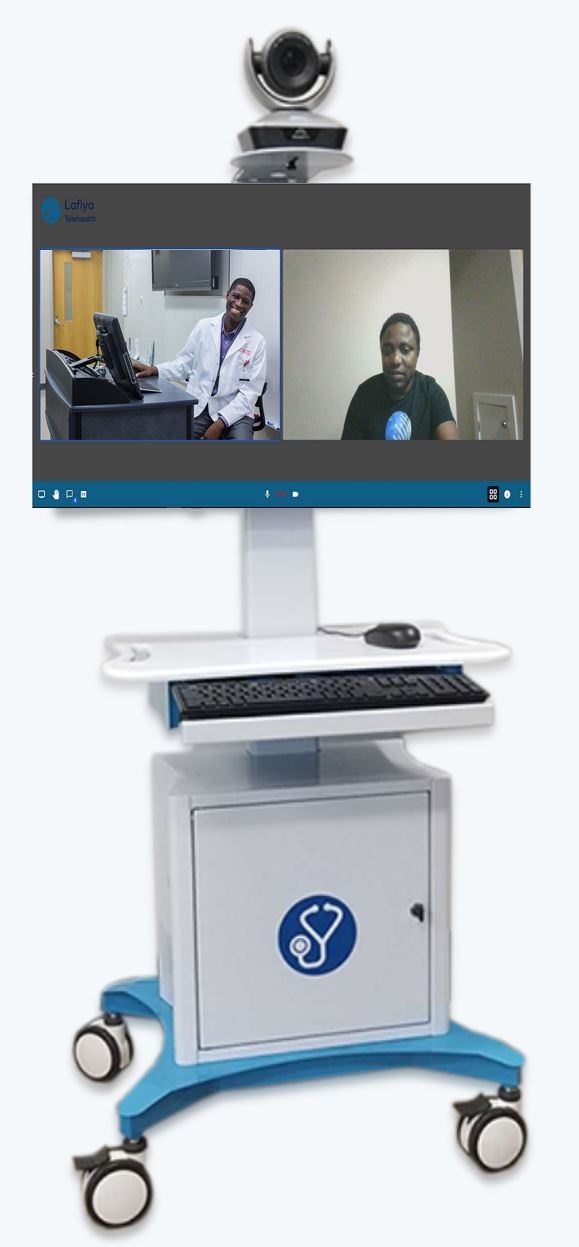
Lafiya Telehealth’s Mobile Cart

You no longer need to worry about access to genuine medications. They send your prescriptions to pharmacies near you and text you when they are ready for pick up. Lafiya Telehealth is being integrated to all licensed pharmacy stores in urban and rural communities in Nigeria and beyond.

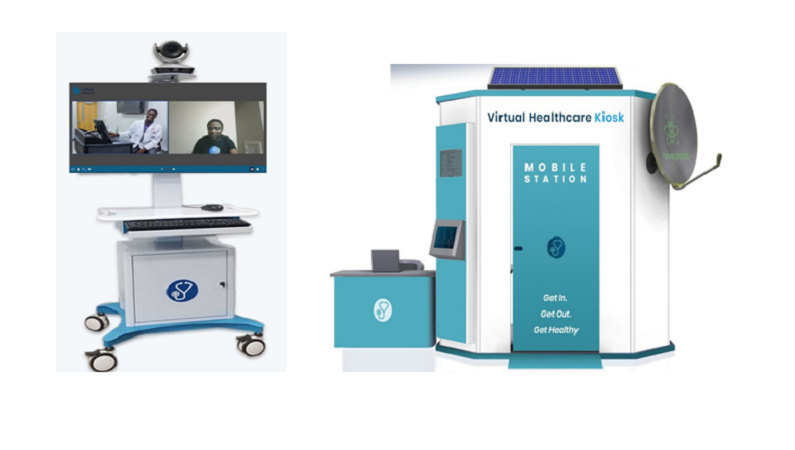
Lafiya Telehealth brings quality healthcare services and professionals to the comfort of your home via its web, mobile app, smartphone, tablet and virtual healthcare kiosk integrated to remote examination medical device and telehealth platform that virtually replicates the in-clinic primary care experience, by providing a remote physician almost the same clinical tools he has in the clinic now also in a telehealth encounter. It utilizes voice and video chat consultations, quality diagnostic tests, genuine medications, and specialist referrals through an affordable subscription plan that requires no out-of-pocket payment.

The Lafiya Telehealth platform came out of the founder’s vision to create a more intelligent patient care environment for underprivileged people in Nigeria, and the continent of Africa as a whole. Current statistics for medical assistance access in the region are terrifying, especially in this era of technological innovation. Alarmingly, 50% of Nigerians, which encompasses over 90 million people, do not have access to quality medical care.
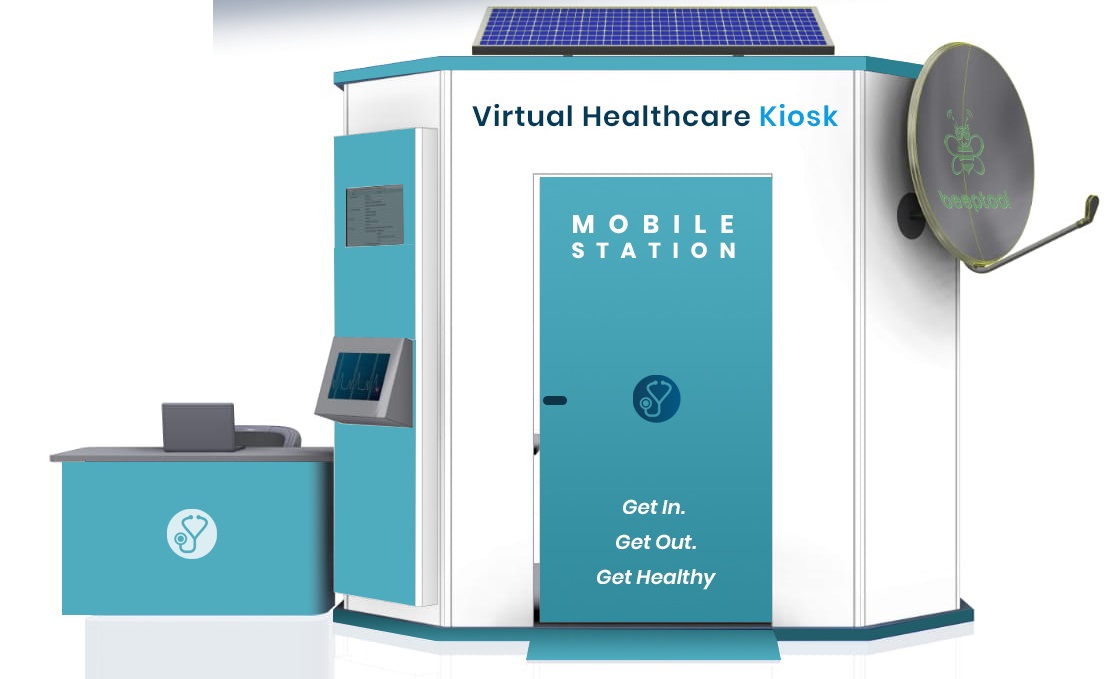
Lafiya Telehealth’s community walk-in virtual healthcare kiosk

The founders saw the need for a breakthrough and founded Lafiya which means “health” in Hausa.

The mobile application component of this product utilizes the power of artificial intelligence. It replicates existing workflow of doctors and nurses and intelligently bridges the gaps to provide smooth and satisfactory experience for all parties involved.  You can download the app from the play store here https://play.google.com/store/apps/details?id=com.telehealthcare

John Enoh, Founder and CEO of BeepTool, stated that the uniqueness of Lafiya is the proprietary Telemedicine device. The solar and satellite enabled device will help extend healthcare to remote and rural areas where doctor shortage exist. The Telehealth device will be deployed with a kiosk that has AI powered devices to take blood samples and run test on the spot. This is a solution that will disrupt the healthcare industry and bridge the gap of doctor shortage across Nigeria and Africa.

“Launching Lafiya Telehealth is a huge milestone for us, and we are proud to be working in fulfilling our commitment to expanding digital health options for consumers with a mission to  provide anywhere, anytime high-quality affordable healthcare accessible and on-demand, from any location to as many people as possible. This launch signifies a major step forward for the future of healthcare in Nigeria,” he stated.

Lafiya Telehealth App LTD is a subsidiary of BeepTool Group of companies, a technology company delivering a suite of connected telehealth platform aimed at enabling thousands of people especially in rural areas in Nigeria (for start) to live a healthier, happier and longer life by dramatically improving their access to quality healthcare.

For more information, please visit http://www.lafiya.app/ , http://www.beeptool.com/ or reach out to our contact person above.
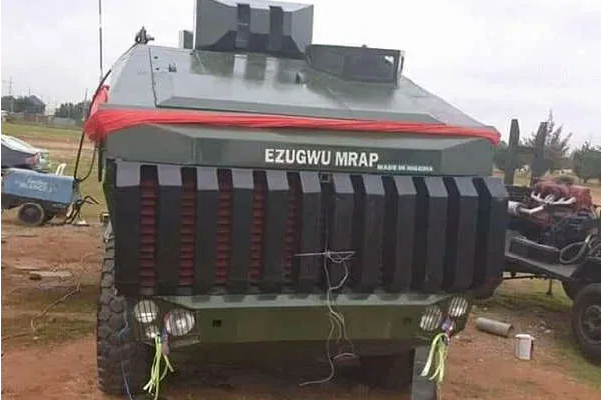
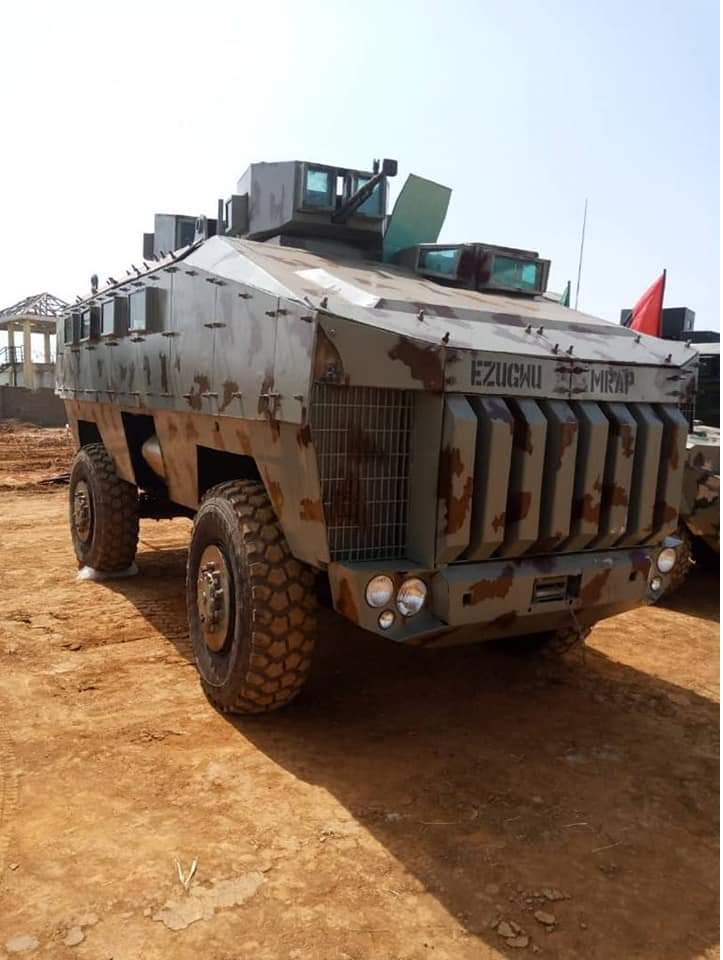
This is Ezugwu – Nigeria’s Army Armoured Vehicles Designed in Nigeria

0

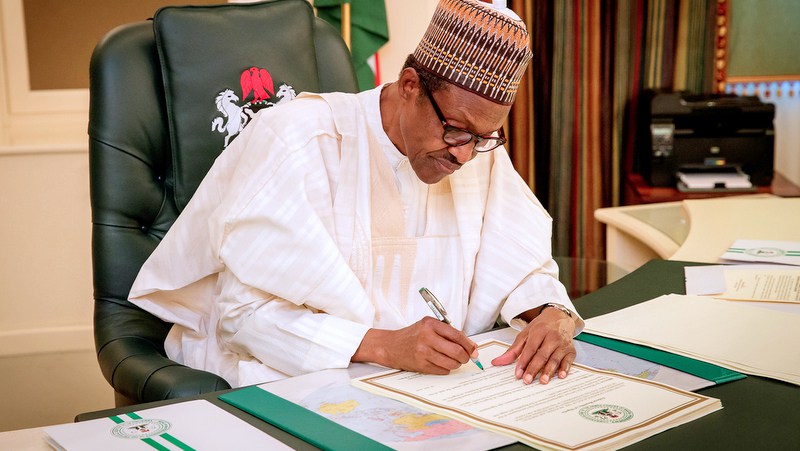
This is Ezugwu (“the king of the mountain”  or “the king with class” in Igbo language). Mr. President, Muhammadu Buhari, this week  unveiled locally produced mine resistant ambush protected vehicles named Ezugwu and other armoured vehicles designed to carry out insertion and extraction of troops, assault, counter-terrorism, delivery of high fire power and urban warfare, Premium Times reports.

Nigeria Banks Join The New Normal – Reduction of Manpower As Tech Deepens

0

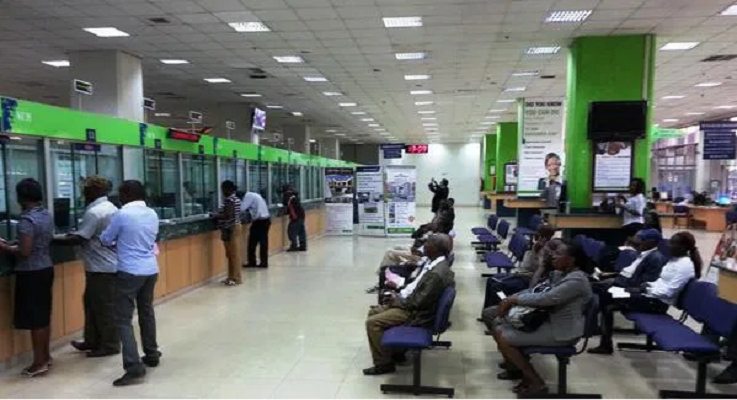
It is here – Nigerian banks begin sustained reduction of manpower: “According to the report, the staff strength of the banks reduced by 2,929 in the quarter with 101,435 total staff as against the 104,364 recorded in the second quarter of the year.” Those things people write on the impacts of data analytics (and AI) are coming home. Yet, we are still at infancy on this redesign. With the chatbots, ATMs and mobile apps, the digital species  will take over from homo sapiens and jobs would be lost in the banking sector.

Even as the Nigerian government continued to promise to reduce unemployment, the workforce of Deposit Money Banks in the country reduced by 2,929 workers in the third quarter of 2019, the National Bureau of Statistics reports.

The figure is contained in a report on ‘Selected Banking Sector Data: Sectoral Breakdown of Credit, ePayment Channels and Staff Strength data’ posted on the NBS website.

According to the report, the staff strength of the banks reduced by 2,929 in the quarter with 101,435 total staff as against the 104,364 recorded in the second quarter of the year. This represents a 2.81 per cent decrease.

It would be a massive dislocation because Nigeria’s economy is relatively small to offer good options when one has lost a job in banking, oil & gas, and telecoms. These are the top three sectors that employ decent numbers and pay well.

If you look at the total assets of our banks, we have lost more than 57% of workers, by asset per staff, between 2009 and today. In other words, banks have ramped up assets but without any need of hiring more people. In a way it is a good thing, as it means the bank are getting more efficient on the utilization of factors of production.

Nonetheless, there may not be need to be fearful – when new technologies come, jobs are lost, and new better ones are always created. That has been the case since the industrial revolution when farmers lost their farm jobs in Western Europe, and moved to factories which offered them better living standards. I do expect that redesign to happen provided people are open to be retrained for the jobs of the future.

The Nigeria’s 30% Drop in Fuel Usage After Border Closure

1
Buhari New Appointments
Mr. Buhari, President of Nigeria

Yes, it is a bombshell – with the closure of the land borders Nigeria has with some countries, the consumption of petroleum products in the nation has dropped by 30%: “The president said Nigeria’s domestic fuel consumption had dropped by more than 30 per cent since the closure, thus suggesting that about a third of reported fuel consumption by Nigeria was being smuggled to neighbouring countries where petrol price is much higher.”

While our President has used that as part of his justification to continue the closure, I personally think that the data is exposing the challenge in our nation. First, excluding Nigeria, Lagos state is the largest economy in West and Central Africa. Also, a local government area (LGA) in Lagos state like Eti-Osa LGA is bigger than the economies of most of the neighbouring countries. For these pockets of small countries to be using 30% of the fuel shipped out of Nigerian depots does imply that they are more economically dynamic since energy drives economies.

Mr Buhari said his administration’s directive on the border closure was meant to curb smuggling, especially rice, and that so far, the closures had saved the country huge sums on import bills.

He said his administration was betting on same measures to rekindle the country’s agricultural rebirth.

The president lauded actions taken by the President of Niger Republic, Muhammadou Youssoufou, including the dismissal of officials and a ban on use of the country as a dumping ground for Nigeria-bound smuggled goods.

This is what I think is happening: many factories in Nigeria are closing or reducing production due to the land border closure since most firms serve these small neighboring countries from Nigeria. And with those business decisions, the demand for fuels has dropped in the nation. The impact in West Africa is not accounting for up to 10% of this 30%. There are Nigerian companies who export exclusively to neighboring countries as they find better margins therein than in a more relative competitive Nigeria.  

Yet, there is one clear winner in this land border closure – security has improved in border communities in Nigeria. I do think that is really what the government should be focusing its case, as the fuel usage case is weak, as it is killing local production and giving these countries the opportunity to build resilience to decouple from Nigeria.

Remember: when America banned Huawei from using its technology, Huawei went and produced Mate 30 with no single American component (WSJ research). Now, the country has relaxed some of the restrictions, but Huawei is telling most U.S.. firms that the ship has sailed.  Lesson: that simple decision gave Huawei the opportunity to activate Option B. Nigeria should think twice on how we deal with our neighbors. That they come to Aba, Kano and Onitsha to buy things should not be taken for granted.

According to a report in the Wall Street Journal, the Chinese tech giant’s Mate 30 smartphone contains precisely zero American parts. The discovery was made thanks to an analysis of the Mate 30 by UBS and Tokyo-based tech lab Fomalhaut Techno Solutions, which disassembled the phone

Meanwhile, here are some other things to know:

We need more diesel in the courts.

Scores of litigants, including lawyers and witnesses, on Wednesday left the High Court of the Federal Capital Territory in Nyanya, Abuja, disappointed after the judge, Peter Kekemeke, cancelled the day’s sitting due to a power outage. “Besides, there is no diesel to run the generator. It is obvious we have to take a date and come back when electricity supply has been resolved,” Justice Kekemeke said.

Policy Disintermediates Discos on electricity:

The Federal Ministry of Power‘s new electricity distribution policy called “Willing Seller, Willing Buyer” was designed to bypass middlemen and sell power directly to consumers, a statement on Wednesday by Aaron Artimas, the Special Adviser (Media and Communications) to the Minister of Power, has said. Under the differential power distribution policy, electricity will be wheeled directly from the generation companies (GenCos) to willing consumers who are ready to fully settle their bills.

The Challenge of Mental Attitude for Advancement of Nigeria

0

In a nation characterized by good climatic conditions, abundant natural resources and well-positioned geography, one would expect that such a nation would blossom economically and in every wise in the advantage bequeathed her by nature. But reverse is the case in Nigeria.

Nigeria is known to possess all the requisite resources in terms of mineral and human for her development in every sphere but instead she has been on a path of constant retrogression. Now, the question is, “what is the root cause of Nigeria’s constant retrogression?”

Over the years, it has been constantly reiterated that human beings are the life-giving force of the cosmic system. Every activity or phenomenon we see in display is built upon the bedrock of human function. According to Sir Isaac Newton’s first law of motion which states that every object will continue to remain at rest or uniform motion unless acted upon by an external force. Human beings are the external force charged with the responsibility to plan, initiate and coordinate the necessary actions required to take every object out from rest and put the planet in an animated state of being.

Given this understanding, it should be reiterated that the source of every action or behaviour is rooted in a word called “mindset”. Mindset refers to a way of thinking. It is the regular pattern of a particular thought process. Mindset is so critical to the creation or development of any phenomenon. It dictates the reason why actions are taken, why people act the way they do. The issue of mindset is the starting point of every philosophy or value system adopted by every organisation and national society. The value system upheld by anybody of people is tied to the mindset or mentality they possess.

For more than two decades, different administrations have been on a quest to solve Nigeria’s problems but all to no avail. The reason being that they have failed to identify the root cause of the nation’s problems which is “wrong mindset or mentality”, that has been subtly built into the subconscious mind of the populace.

Nigeria has so drowned deep into the ocean of decadence that the abnormal has become a norm in the society. Doing the right thing today in Nigeria puts one in a position of crime while the real criminal offences are (disguisedly) celebrated and even awarded accolades. Today, we see thuggery being celebrated at the expense of respectable endeavours including education. We see graduates with outstanding results given peanuts while immoral acts are celebrated with stunning quantum of financial remuneration.

The issue now is “what is the solution to this menace that has plagued the mental residence of the Nigerian people?”

John F. Kennedy, the 35th President of the United States of America once said; “the progress of a nation is no swifter than the progress in education. And in progressing in education, the human mind is the fundamental resource.” John C. Maxwell concurs to this statement by stating that so much emphasis should not be laid on growing an organisation so much that it neglects working on the people’s attitudes. Further stating that an organisation that focuses on working on its people’s attitudes would experience 10 percent growth overnight. This is true not only for an organisation but also a macro-organisation like a nation.

Statistics has shown that Nigeria is the global capital for poverty and out-of-school children with an estimate of 13 million. This reveals a correspondence between poverty and undeveloped minds indicating that any nation with a high level of undeveloped or poorly developed minds will attract retrogression.

The principal solution to the problems of the Nigerian state is education. And by education we mean the transformation of the mental attitude or mentality of the populace not just the traditional acquisition of attitudinal skills of reading and writing. Emphasis should be placed on civic education where patriotism, morality, etc are preached. Imparting individuals with the information on the need to contribute their quota to the development of their nation both through their character and acquired knowledge, not depending and blaming the government for their malfeasance instead taking responsibilities as patriotic citizens.

Civic education should not be limited to secondary level of education but also incorporated into the tertiary framework of the educational sector. Every student irrespective of their disciplines should be mandated to take the course, civic education since they are all citizens.

Furthermore, a law should be enacted mandating all children to attain the primary and secondary levels of education. This will greatly reduce the number of out-of-school children in the country and automatically reduce the poverty level. More so, the government should endeavour to tap into the potentials of the society outcasts commonly called “area boys” who are seen on the streets and roads of the nation causing mayhem. This should be done by creating rehabilitation centres for these ones where their minds would be worked on and restored to “factory setting”. Subsequent to this, they should be employed for the government into areas where they can perform best. This would increase national citizenship behaviour or what is popularly called patriotism.

In conclusion, it is stated that the root cause of Nigeria’s problems is mentality and not anything else. And if the mentality of the people both the rulers and the ruled can be changed to the right one, the nation would be able to attain her maximum potentials.