DD
MM
YYYY

PAGES

DD
MM
YYYY

spot_img

PAGES

Home Blog Page 6543

How to Become a Data Scientist in Nigeria

0

What is community? It was Saturday and few days earlier on LinkedIn I saw a post on Linked by a contact, Adebayo Aderibigbe, about a Meetup for data science. I am very interested in data science although I was more interested in learning programming. Python programming language to be exact. It has been a long term goal of mine that is yet to be accomplished and is burning a hole in my mind. So, I asked how to register as the post did not show the registration process and but required it. 

Adebayo sent me a message asking for my email. I was a bit hesitant on giving my email when the registration process was not made available but I still gave it. He promptly sent me a google form by e-mail and my registration was completed. As stated on the LinkedIn post the venue was on the Island. It was changed for a reason I didn’t know. But, that didn’t bother me. I was more curious and interested in attending the meetup. It was the first meetup I attended in Nigeria. I had used Meetup.com a lot in England. I tried going to one in Nigeria but it was a strange experience since the organizers refused to reveal the venue for “Security Reasons”. This data science meetup was at Seed Space in Park View so there seemed to be some gravitas behind it. I decided to make sure I came early.

I left to go for the meetup an hour earlier than the stated start of the meetup. It was a bit surprising to me because I encountered just moderate traffic but I got there ten minutes late. Just coming in, I met a very jovial and congenial Adebayo who informed that although more people were to arrive, we would start in 20 minutes. He was not lying. He started by presenting a QR code on the huge projector screen to use a poll for some questions in the presentation and informing us on the inferiority of telecommunication devices other than iPhones. It was already starting to be obvious that this was one of the most well organized Meetup I have ever attended. He gave the brief history of the meetup which was for the Lekki Data science, which was aiming to become the Deeplearning.ai chapter in the Nigeria. Deeplearning.ai is an organization started by the famous Andrew Ng to develop data science and AI and also create groups and content for the advancement of data science. Adebayo played a short video which featured Andrew and his organisation.

After the video, he then told us about INDABA a convention for data science for Africa. It’s also a response to the difficulty of African Data scientists have in securing visas and other resources needed to attend other international data science focused events. Finally, by Skype, he introduced the key speaker of this meetup, Freddie Odukomaiya. He was streaming from UK live. The topic as stated in the flyers was how to get into Data science.

Freddie introduced myself and his brief history starting with his degree in Aeronautical engineering. After having a few jobs he wanted a career in something that combined his previous interests: math and physics. Something that was more challenging that what he was encountering in his work at the time in AirBus. Coming across guides to data science by articles in “Towards Data science” he decided to begin his quest to become a data scientist. One of those articles was “How to Become a Data scientist” written by Marcos Silva.

Now, this journey was by no means easy. He had to make hard choices and really work hard balancing self-study and holding down a full-time job. I would say his background in math and his passion for science really came in handy. He used free online sources such as freecodecamp.org to learn JavaScript which he left to pursue Python. Python presented more opportunities as it used for software engineering and data science. To expedite his progress he also attending a data science boot camp on the weekends. Even though all this was very tasking, he participated in a “hackathon” that resulted in getting him a job in data science. He was able to build a model in the hackathon. Although, he admits it wasn’t not a very effective model, it still got him the job as they company was very interested in the direction he was going and saw potential.

To become a data scientist, Freddie said you would need some tools and resources. The skills he stated are programming skills. He recommended ability in Python, SQL, and Docker. Docker is really important for deployment and makes one a very valuable data scientist and it makes gives them the ability to deploy projects on their own. The mathematics needed are: Linear Algebra, Probability and Statistics, and Calculus. These are required and one can brush up on them even though they have a history with weakness in mathematics. Currently there is a vast abundance of tutorials and lessons that would gift one with competence in this area. They are usually available on-line for free.

Finally, Freddie explained the need for business and problem solving skills. These skills include developing questions and metrics for the business. They include problem identification, Domain Expertise and Presentation Skills. Presentations skills also include explaining data science to lay people or people who don’t care about tedious statistics but want to know how the information changes their bottom line. Does it increase revenue? Does it reduce cost or waste? Does it make a difference to the business or organisation? These are questions you must be able to ask and answer for you to progress in your career in data science. 

Freddie also listed out some key takeaways:

  • Pick One Programming Language- He promotes Python
  • Find your WHY – If you are tired and fed up, what would keep you going?
  • Don’t get stuck in the tutorial carousel – Avoid the situation on doing tutorials or not completing any.
  • Pick a small set of resources – Makes it easier to start and focus.
  • Immerse yourself in a community – Gives motivation, support, and even competition.
  • Find a Mentor – Find someone who knows more than you and is interested in seeing your success.
  • Apply Deliberate Practice – Freddie didn’t speak much on this but this is a massive. All I can say is ignore Malcolm Gladwell and pick up books such as Peak by Anders Ericsson, Deep Work by Cal Newport, and Moonwalking with Einstein by Joshua Foer.

After Freddie’s talk, Adebayo and his colleague, Ayo, then organized the questions and answer session where the guest to the meeting could ask questions about opportunities with data science in Nigeria. He outlined what people could do in Nigeria to improve their opportunities as also stated that his current company, Oakam, is considered coming into Nigeria. We then had group pictures. Yes, with a big screen projection of Freddie, we could take a group pictures. 

Adebayo outlined his plan for Lekki Data Science Meetup: to make it a Deeplearning.ai group for Africa and have a livestreamed conversation with Andrew Ng. He also presented a plan for 2020 and recruited personnel and volunteers to manage LDS. Very soon LDA would organize competitions for DevOps in Data Science. This was a very packed and interesting event. But, apart from Adebayo and Ayo, I didn’t really talk to anyone. But, that is my personality quirk. This was, by far, one of the best meetups I have ever attended.

So, I am starting on my python journey with data science clearly in my future and a very important thing Adebayo and LDS has given me is a community I belong.
The State of the African Smartphone Market

0

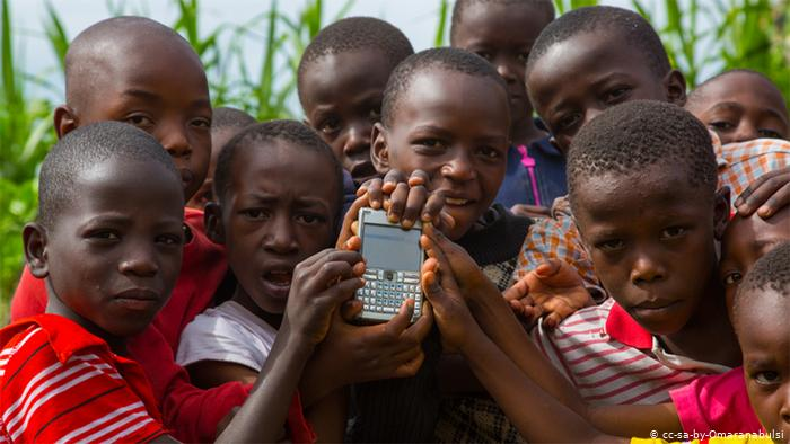
The African smartphone market saw encouraging growth in the Q3 against all odds. Report from International Data Corporation (IDC) noted that the growth has happened despite the market pressures emanating from China-U.S trade tension that has impacted smartphone markets globally.

Shipment increased by 4.0% on quarter on quarter in Q3 2019 to total 22.6 million units. The IDC’s Mobile Phone Tracker shows that Africa’s overall mobile phone market reached 55.8 million units in Q3 2019, with feature phones accounting for 59.4% of this versus smartphones at 40.6%.

“Africa’s smartphones and feature phones witnessed decline in shipments in Q1 2019. Market giants, Nigeria and South Africa posted quarter on quarter decreases of 14.7% and 23.4% respectively. In Nigeria, smartphone shipments were 2.3 million units in Q1 of 2019 which is a 11.9% drop year on year. This decline was attributed to a 3 weeks embargo on shipments of Chinese phone brands into the country, slow economic activity, prevalent cases of insecurity and the postponement of the general election. In this same period, South Africa recorded 4% year on year totaling 4.7 million units. This was attributed to Q1 being traditionally the slowest quarter in the year, and there was issue of overstocking due to volumes traditionally seen during Q4.”

The 2019 Q3 record growth was spurred by the activities of three major African markets – Nigeria, Egypt and South Africa. These factors have been noted as reasons for growth: 1. Huge influx of affordable models that saturated the markets, 2. Relative stability of the Nigerian naira (NGN) and the appreciation of Egyptian pound (EGP), all contributed to increase in consumer demand.

In the fierce competition among smartphone companies, Transsion brands (Tecno, Infinix, and Itel) are leading the feature phone space with a combined unit share of 64.0%. Nokia comes second with 10% share. In the smartphone space, Transsion (36.2%) Samsung (23.9%) and Huawei (11.4%) led the way in unit terms.

But Samsung is leading in value terms with 33.2% share, followed by Transsion (22.4%) and Huawei, (15.6%). Samsung’s year on year record in the Q3 is remarkably high at 61.4% in the low-end price band ($100-$200). Its recent position has provided a level playground, forcing Chinese companies to offer more affordable devices.

However, local African brands became protagonists of this new development. Their focus to fill the gap left by international brands in the entry-level declined by 33.6% year on year, due to the influx of smartphones of foreign origin.

But the growth of African smartphone market has seen support by another factor – price band. The $100-$200 category saw its share of shipment increase from 31.4% in Q3 2018 to 39.8% in Q33 2019. The launch of new Samsung and Transsion models spurred the growth, thanks to new features like big screen and 4G technologies. The ultra-low-end band(below $100) has been declining in recent quarters and losing share to the low-end price band because of upgrade in the smartphones that include larger screens and 4G capabilities.

The rise in the $100-$200 category is an indication that Africa is embracing the new innovations not minding the differences in the cost. Ramazan Yavuz, a research manager at IDC noted:

“2019 will prove to have been a pivotal year for the African smartphone market. 4G devices are now dominating the market like never before, accounting for 73.0% of shipments. Screen sizes are also getting larger, with devices equipped with 6-inch screens and above now accounting for 41.7% of shipments, up from just 9.0% a year ago.”

IDC says it expects Africa’s overall mobile phone market (both smart and feature phones) to total 218.2 million units for 2019 as a whole. Smartphone shipments will total 91.0 million units for the year, up 3.2% in 2018, and the introduction of more affordable devices will help drive progress in this space over the coming years. Feature phone shipments are expected to remain flat at 127.2 million units for 2019, up just 0.1% year on year, as the transition to smartphones wins popularity.

However, the concern of civil and political  instability poses a challenge to the sustenance of this growth. In Egypt, the tendency of currency fluctuation and political protests is a threat that cannot be ignored. In South Africa, xenophobic attacks have recently disrupted market activities, minimizing the market potentials, and there is no guarantee it is not happening again. In Nigeria, it’s more about insecurity and economic policies, such as the border closure that has stymied integration in the West African region.

Helping Job Seekers find a Better Source of Income is my Hobby. An Interview with David Jaiyeola

0

Nigerians are rugged and dogged in getting ahead. No wonder the country is blessed. Yes, the rate of unemployment is alarming but we won’t focus on that. Instead, we will find a way to make the job seekers resourceful and gainfully employed.

I had the pleasure of chatting with David Jaiyeola. His vision for unemployed graduates simply wowed me.

”Solving unemployment issues in a way that it’s not focusing on the crisis but channelling their abilities to a meaningful source of income has always been my passion since I graduated.” – David.

Here is what the co-founder of Worka and ProHangout has to say in my latest interview with him:

Can you introduce yourself to the audience?

Well, my name is Jaiyeola Ayodeji David.

I am the co-founder of Worka Nigeria.

I am a human capital development expert and I have been in this line of service for over 7 years.

I have a goal of solving unemployment issues in a way that is not focusing on the crisis but channeling the abilities of candidates to be more and a means of meaningful source of income.

I like to help people, this is what lead me to recruitment and HR and eventually Worka Nigeria and ProHangout

I am very athletic person in the sense that i have had the course to run the marathon twice, played and coached a football team and I am sport lover.

You really have an interesting profile. The one that caught my attention is the Worka Nigeria and ProHangout. Would you love to share more about them?

Thank you for this, Worka Nigeria came to mind in 2017.

I was out of Jobberman for say 12 months and I had this idea drawn up of a way to help candidates prepare more job interviews and also get them opportunities.

The first version of Worka Nigeria had a ranking that sees candidate write a test and get scored and ranked on a table that is accessible to employers.

The goal was to create opportunities for Candidates and also help them grow in their respective careers.

Prohangout is a spin-off from Worka, it’s a stand-alone entity and the sole goal is to break the barrier of connection between Employers and Jobseekers, we had our first edition in September 2019 and the idea is to have people connecting and networking with each other in a more serene atmosphere.

We achieved that and we are in the planning stage of the business edition of Prohangout, billed for Feb 29, 2020.

Do you mean Worka helps job seekers land jobs?

Yes, we are built like every recruitment company and a bit of tilt towards solving job seeker challenges like training and testing for the job and scaling interviews.

So, yes we recruit candidates for companies.

That’s the basic service apart from other related services such as CV and LinkedIn Optimization, Career Coaching, Training and Facilitation, In-House training of staffers and other candidates grooming services

That’s really interesting. I only know about Jobberman and Push Cv, but it seems Worka is the hope for job seekers. Since you have started this, how far have you been able to help job seekers (I mean the percentage of your success)?

Yes, those were the frontiers especially Jobberman, PushCV came along and did awesome as well.

We wanted to be more around our users and get them to see us every so we deployed the social media angle asides the platform itself. We have a strong presence on so many social media platforms

We have been able to help a lot of job seekers land jobs. Say 5-10 on a monthly average.

It gets better with the month and it’s been a good ride as we get companies sending us roles to share with our community.

We also get companies who wants to just do job ads through us while some want is to do the whole process and send them 5-7 candidates.

We have passed through candidates in thousands and I can’t tell you they all got employed but one thing I can say is in the last 2 years of existing (Offline and Online) the number is encouraging

I do follow your work online and I must commend you and the team for a great job. You are someone who has been working with job seekers for a while now, what can you say about them?

Thank you for the feedback.

Well, job seekers are in a different space.

You can get impatient with them if you don’t understand them, but I happen to have been on that divide even though I didn’t really look for any job, it was always there. But I understand how a typical job seeker thinks and processes things.

This is due to the volume I have come in contact with over the last couple of years.

I was going for a lot of job seeker events between 2013 and 2017 and this made me understand them more. I personally don’t like generalizations, so I won’t say they are quite needy or easy to read. But I will say one thing, they need all the help and support they can get

That’s a great way to look at things. You have spoken well. Pro Hangout is almost around the corner. Can you share more about it and the benefits of attending it?

Thanks! Let’s get to the event of the year.

Prohangout is in February and we are going to go really big this time around.

  • 1 Keynote Speaker, I won’t mention a name but i hope i get him to come.
  • 4 Panelists
  • 10 Breakout sessions
  • Business Pitch 
  • Meet and Greet session

This edition is tagged the business edition because businesses are the reasons we have jobs.

So we want to encourage small business owners, young executives, business managers, recruiters and start up founders to bookmark February 29, 2020 for Prohangout 2.0

We are focusing on job creation and how small businesses will play a big part if we are to tame the menace and create lots of jobs.

We have been speaking to sponsors and partners to enable us to have a great event.

We will also like to give out grants to small businesses on that day.

It’s a packed day already.

February 29 is once in 4 years, the best way to spend it is to be at Prohangout 2.0

I am definitely not going to miss this if I’m still around.

David, you are one of the few making a change out there. What advice do you have for job seekers out there?

You better not miss this edition.

I have one thing to say to job seekers, be the candidate an employer is looking for. Be ready and be skilled at what you do.

I recruited 2 people for a client this week and she is excited to start working with them.

That feeling is what job seekers should thrive for.

And they should keep working on themselves, the big gig will come

How can other job seekers reading this interview reach out to you?

I am around, they can follow me on:

Twitter @obadafidii or @dejijobs 

LinkedIn : Jaiyeola Ayodeji David

What about your company website?

Yes, I missed this one out, the website.

What about your company’s website, Worka?

Worka is being upgraded at the moment, so we took it offline for some reasons. We are relaunching at the event

Thank you, David Jaiyeola, it’s been wonderful chatting with you. I wish you and your team an outstanding success in all your endeavours.

Thank you Chinedu

Tough 2020 Ahead for Saving and Lending Fintech Startups in Nigeria

4

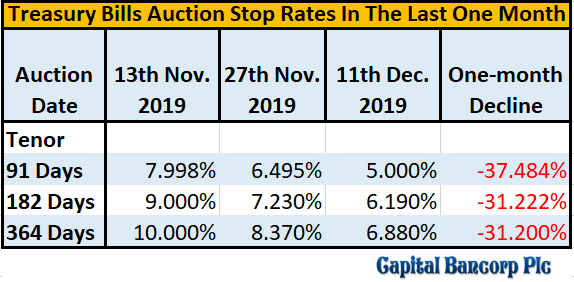
I have a tough call – most fintech startups in saving sub-sector in Nigeria will collapse in 2020! The reason is simple: the Central Bank of Nigeria (CBN) has done a coup. Yes, with the treasury bills (TB) rate now 5% for a 90-day tenor, I expect massive dislocation in the ecosystem. These startups have accepted savings, promising “investors” and “savers” north of 10.5% annual interest rates, hoping the high TB rate party would continue; the TB rate was projected by some to stay above 14% in coming quarters.

As if the low yields on T-Bills aren’t enough, CBN Director, Banking Supervision Department, Mr. Hassan Bello mentioned that The Central Bank of Nigeria will increase banks’ Loan to Deposit Ratio to 70% by 2020, he gave this hint during the week while speaking at the 2019 workshop for Finance Correspondents and Business Editors.

The Monetary Policy Committee (MPC) had noted in November an increase of N1.17 trillion in absolute gross credit between May and October, this was attributed to the adjusted LDR for deposit money banks. Manufacturing was the largest beneficiary, accounting for N460 billion of the increase. Consumer loans shared N360 billion from the total.

But now the government has made TB 5%, these startups would not just lose money, paying the 10.5% rate, they would be exposed to take more risks by putting that money they’ve collected via short-term savings, on safe long-term investments. In Nigeria, few of such safe investments are available: TB was the best deals in town, but now it is gone.

More so, the lending fintechs would also be forced to reduce rates as all lending rates would drop with the dropping of TB. The implication is that some of the rates they have quoted for investors as they raised capital may not be feasible anymore. Yet, this may be a good thing: if rates are low, more customers can come to patronize them. But they have to readjust to take advantage of the new opportunities.

Similarly, I expect many banks to see stress as they open their books to move from extremely low risks on TB to new investments by putting money in companies.The target CBN is giving them on LDR (loan deposit ratio) is mind-blowing, and most will have to revise their playbooks to thrive.

Here are ways this new policy on TB will play out:

  • Banks are going to see positive movements of their stocks. With the option of TB gone, equities would be a key option. Banks are usually the most preferred in Nigeria as the banking sector remains the most developed and liquid in the Nigerian Stock Exchange. Yet, investors would be watching on how banks would manage the risks associated by putting capital on small and large companies, hoping the loan default rates stay low.
  • Borrowing would become easier for companies. Typically, most rates were benchmarked with TB. Now the TB is lower, it means debts will become cheaper. In other words, if a company was to borrow from a bank, and with the option of TB not being a good option (very low at 5%), banks have limited options to put capital. The implication is that companies can easily negotiate better loan terms since the other key option for banks was 5%. When you know that is the case, getting a loan at below 15% from a bank becomes easier.
  • Servicing government debts will be cheaper. Interestingly, this low TB rate would make it easier for government to borrow and service its debts. Nigeria at both federal and local levels would be servicing tons of debts, and this low rate regime would make things easier.
  • CBN lending rates to bank remain important. Though CBN has cut TB rates, another important metric to examine is the rate banks are getting capital from CBN. If banks get at 11%, the impact of TB would be muted. If a bank gets funds from CBN at 11%, I expect 1% to cover insurance for the funds. By the time they add operational costs with small profits, 17% becomes the floor to lend. So, despite the reduction in TB, what will drive lower rates in lending in Nigeria is the rate CBN is lending to banks – today, it is about 13.5%. (I explained this deeper here).

See it this way: if a bank gets capital from CBN at 14% (the current rate) and has to keep 1% to meet required ratios from NDIC (the deposit insurance commission), by the time it takes care of operating expenses, it cannot practically lend below 17%. Then imagine if the bank has started with 2.5%, you will then experience lending interest rate of say 5% in Nigeria.

All Together

The low TB rates would do one thing: it would put pressure on banks to deploy capital in riskier investments like lending to SMEs (small and medium scale) companies in Nigeria. That is a good thing as lack of growth capital remains a major challenge in the Nigerian economy.

Philip Osondu – a Talent Unlocked

0

“Zanza is the captain, onye isi game” was a song we sang in the village as kids in primary school. My position was 9 ( I was bad on it!). But it was immaterial; every kid knew we could play like “Zanza”. Zanza was Philip Osondu, one of Nigeria’s most talented footballers. He was the captain and he was “onye isi game” [the leader of a football game]. Philip Osondu is dead. He was a force in Canada’87 and Saudi ‘89 when the world thought a new Pele was born.

“Philip Osondu, ogba bolu (footballer)” this is the adjectives that my mother used to qualify me with when I came home from a football game then. The memories came back with these words when I heard the news that Philip Osondu is dead. He was the hero of my childhood and alas, a victim of eventuality.

It was reported that Osondu was feeling unwell at work and went to the hospital for a checkup, he was pronounced dead shortly after. At 48, Philip Osondu was such a life cut short.

In 1987, Osondu became a sensation through his performance in the Under 16 FIFA World Cup in Canada. Though Nigeria lost to the Soviet Union on penalties, he wowed the world with his skills and won the Golden Ball as best player of the tournament. What followed was a professional career that his well won fans considered below expectations.

Though born in Aba,Abia state, a parent was from a neighboring village to Ovim, Ahaba Imenyi. Zanza was rising in the shadows of Kelechi Emeteole (the caterpillar for his defensive style). Emeteole who hailed from another neighboring village, Amiyi Obilohia, later became a successful coach. But Osondu was ruined – he signed bad contracts and “lost” Nigeria and his career. It was after his contract that the then-Nigeria Football Association set up a process to review foreign contracts offered to Nigerian players!

Zanza, buru ba – [score the goal by dribbling past players and goalkeeper] remains a song whenever a kid could accomplish that on a pitch. Zanza died in Belgium after a sudden illness; he was 48! 

Philip Osondu, unbounded tomorrow but vanished yesterday: a talent unlocked. Nonetheless, you inspired many across Aba and Isuikwuato, and I guess Nigeria.

Remembering Philip Osondu