DD
MM
YYYY

PAGES

DD
MM
YYYY

spot_img

PAGES

Home Blog Page 6543

NITDA Launches Investigation Into Public Data Breach by Lagos State Internal Revenue Service

0

The National Information Technology Development Agency, has launched an investigation into data breach by Lagos State Internal Revenue Service. The agency issued a statement on Friday confirming the incident and the steps it is taking to address it. The statement reads:

“The National Information Technology Development Agency (NITDA) was reliably informed and duly ascertained that the Lagos State Internal Revenue Service (LIRS) published…

…a web portal – https://t.co/gpLxOjgIjE – where personal information of tax payers of Lagos State was gleaned by the general public in breach of the Nigeria Data Protection Regulation (NDPR), 2019.

“We have also been informed that the LIRS has indicated that public access to the portal was a glitch from a consultant of the Service and that the portal has been duly disabled.

We commend LIRS for the swift remedial action in disabling the portal and pulling the website away from the public domain.

“We however warn that glitches of this kind do not insulate LIRS from responsibility or culpability from whatever actions, civil or criminal, that may arise from such glitch, as personal and confidential information of data subjects were made available to the public illegally.

“We stress that such glitches are in breach of the NDPR and invariably the National Information Technology Development Agency Act 2007.

“The Agency will further investigate this breach and the circumstances surrounding it with the aim of assessing the impact of the breach as well as determine responsibility and culpability of data controllers or processors connected to the breach and prevent future occurrence.

“We also advise the public to be vigilant and to report immediately to NITDA or other law enforcement agencies if they notice that the information of any data subject on the LIRS database is further disclosed or used in any manner in violation of the NDPR.

“We enjoin all parties to cooperate with NITDA as we seek to protect the personal and confidential information of Nigerian Citizens from misuse and abuse.

“The Agency can be reached through its email address: info@nitda.gov.ng”

NITDA was established in 2007 as the ICT policy implementing arm of the Ministry of Communication of the Federal Republic of Nigeria. It was saddled with the responsibility of developing programs that caters for the running of ICT related activities in the country. It is also mandated with the implementation of policies guidelines for driving ICT in Nigeria. NITDA plays an advisory role in copyright law by verification and revision of applicable laws in tandem with the application of software and technology acquisition.

In January 2019, NITDA issued the Nigeria Data Protection Regulations (NDPR). The overall objective of NDPR is to safeguard personal data rights, enhance security of transaction involving personal data rights, protect transactions involving personal data and improve the access of Nigerian companies to cross border data. Among the requirements it set out for data collecting organizations are, the mandate to publish a data protection policy, conducting a mandatory self-audit on data protection, every 6-12 months.

It didn’t take long before some organizations came under the radar of the data agency. It could be recalled that earlier this year, Truecaller came under the investigation of NITDA for breach of users’ data rights. That’s among others which include, Nigerian Immigration Service, Banks, Fintechs and telcos.

Upon the establishment of a framework to guide all organizations in the personal data collection business, NITDA stipulated penalties for those who would breach the rules and advised organizations to get professional advice from Data Protection Compliance Organizations (DPCO) on the compliance risks, obligation and responsibility under the NDPR.

This framework is supposed to guide companies and organizations that collect, store and use personal data. However, there have been a series of breach here and there, indicating a huge vacuum in the compliance.

Though Lagos State Internal Revenue Service blamed the breach on a third party, the incident is just an indication that many of the organizations are yet to come in terms with the seriousness of personal data rights and protection in Nigeria.

The website has been taken down until further notice, but the prevalence of these occurrences is a cause for worry. As many organizations delve into fintech and other personal data collection businesses, the need to protect users’ information becomes a business they should be conscious about.


Unlock Your Abundance in 2020 By Acquiring a Unique Capability

2

If markets are perfect, there would not be a single company in the world. Yes, if a buyer can find a seller and a seller can discover a buyer seamlessly, we would not have companies. But because of huge frictions that exist between buyers (demand) and sellers (supply), we need to have a force to overcome them. That force is what we call companies. Yes, companies exist because of one reason: markets are inherently imperfect in nature.

To make markets tend toward being “perfect”, companies offer services in markets. For offering those services, people pay them, and companies earn the revenue. Revenue is the compensation earned by companies for creating forces (products and services) which are used to overcome frictions in markets. There are different levels which companies operate in pursuing this mission.

(If I have $1,000 which I do not need for a year, and open to lend it to somebody at 10% interest rate, I will need to find that person for that deal to go through. Also, the person that would receive that money from me needs to know someone who is open to lend $1,000 at 10% for a year. Unfortunately, there is a huge information asymmetry as I cannot easily find that person and the person cannot easily find me. What happens is that to ensure that money does not stay idle, I will take it to a bank which will pay me 10% interest rate. Also, the person that needs $1,000 will go to a bank to ask for a loan, and the bank will lend that my $1,000 to him for say 17%. That extra 7% is the cost of fixing the friction and by overcoming the friction, a new equilibrium point is set, bringing a largely imperfect market into a more perfect one. This is what happens in all market systems, across sectors and industries.)

For one to wake up one morning and conceive to launch a company, the person must have noticed a friction which has not been fixed. In other words, in that specific domain, there is an imperfect market system between demand and supply. So, there is an opportunity.

To pursue the opportunity, the next phase is this: do I have the capability to deliver that force necessary to earn revenue with the cost of generating the force lesser than what people would pay for the frictions I am fixing in their lives? For that business to be sustainable, the cost of creating the force must be lower than what people pay for it (yes, if this is the case, you can make a profit).

Acquiring capabilities can come in many ways – education, training, apprenticeship, hiring labour, etc.  Indeed, that process is a continuum as you never finish the process of accumulating capabilities.

In Nigeria and indeed continental Africa, there are frictions everywhere. Those frictions are waiting for great forces to overcome them. As we sojourn into 2020, take this from me: the future is one of abundance, unlockable by those with compounding capabilities. To elevate your career, acquire a special capability which you can use for a better job or to run something yourself. Yes, unlock your abundance in 2020 by acquiring a unique capability.

Go for it – and Happy New Year ahead.

2020: Six things anyone involved in Youth Development must take note of

2


It is about four days to the end of 2019. As the year ends, it marks the end of another decade. Children born in 2009 are now ten years old. Those born in 1999 are now 20 years. There are a lot of implications of this on the agents of socialization in the society. Parents, teachers, school administrators, proprietors, religious institutions and other people involved in moulding the lives of the youth must be aware of the nature of the youth they now train or mould as well as their problems. Times are changing. It is the turn of a decade. We need to pay attention so that we could know where the shoes of these young adults hurt. And as well provide the necessary succour in counselling, training and admonition. As a youth development advocate, I have taken time to compile this list of six areas  we have to pay attention to as a new decade begins. Here is a rundown:


#Welcome to the World of Millenials and Gen Z. One major development youth advocates must accept is that the demographics have changed. The generation of youths that would be under our care now from 2020 onwards are mainly of these two types. Either Millenials or Gen Z. Whichever one that is represented, the two generations mean they were born shortly before or after the millennium. Find out more about these two here. There are negative perceptions about them. They are seen to have a high sense of entitlement. They are considered unfocused and generally unmotivated. To make them maximize their God given talents, youth development advocates must make them realize the realities of their lives.

#Appreciate the huge distractions before them. One thing that is common to the two generations is a huge load of distractions. They live in a multimedia environment. Everything for them is continuous. They are exposed to content online and offline. They are the generations that are beginning to experience media convergence. This opens them to limitless opportunities. And may spell doom for them. To them, the internet is the best gift this generation has received. They have unfettered access to videos, photos and global platforms where they could pitch themselves and get the needed attention. Yet, it is the biggest source of distractions for them.  They found it difficult to cope and manage their time with it. If you are relating with the youths at any level from 2020, bear this in mind. One of the biggest challenges they are facing and which has a high tendency to become more adverse is time management. Youth trainers need to talk more about time management more than they have ever done. It is the sign of the beginning of a new decade.

#Problems are internet related.  For youth handlers, there is an urgent need to pay attention to issues these youths will continue to encounter. If we have noticed the issues before, there is a probability of their escalation. They will be confronted by issues such as internet addiction, cyber bullying and sexual solicitation. They are also open to online isolation as well as  excessive gaming, and obsessive social networking. But beyond that, they get easily depressed and have a higher tendency to commit suicide. When their mates display a problem free life online, the pressure gets to these young people. For youth trainers, we must talk about these issues to make the youths live out their potentials from 2020 on.

#Lower Emotional Strength. Emotional strength is regarded as the ability to cope with life challenges and obstacles. One feature of life is that it throws impediments and obstacles the way of human beings. However, the major weakness of these two generations is that they have little or no strength to cope with issues of life. There have been young  people who kill themselves simply because they fail examinations or lose a relationship. They find it  extremely difficult to find inner strengths in the face of adversity. For youth nurturers, there must be an attempt to focus on this from 2020 and beyond.

#Learning Patterns have changed.  This particular one is for teachers and trainers. These are millennials who have lived with their smartphones all their lives. Before their attention could be secured, the teaching process must change. Videos, slides and other interactive methods of passing knowledge should be adopted. Interesting games should also be introduced. To get the attention of the 2020 youths, trainers must understand the changing learning patterns.

#Access to information. One major advantage of the internet is that it brings information closer to its users. As  a result, loads of information that are previously not readily available or that could not be easily obtained  are now available. But, it is not the volume of the available information that matters but its use by the concerned people. Trainings on how to make use of available information should be a priority from 2020 upwards. It is not the volume that is important but the extent of its use.

In 2020, anyone who is involved in youth development needs to be abreast of these issues for a more impactful youth development programmes.


Winning Locally Internationally

0

To win big on the international scene, I always tell people you need to export your own culture and package it properly in the form of art. It is your culture that the international scene doesn’t have.

You can’t go and expect a Nigerian rapper to go far rapping in English; how does he expect to compete with a Kendrick, Cole, Kanye or Hov? Or expect to do a movie in English and expect it to compete favorably with the likes of movies having a Bullock or Aniston? Our culture is what they don’t have, and it’s the only thing that keeps them looking into us because our culture is our uniqueness that we ought to sell to the world.

I write this because of the recent disqualifications of some Nigerian movies by the Oscars due to language barriers. Perusing through the list of African Grammy Winners, one thing is certain, all of them hardly or never sing in English and they all won under the World TRADITIONAL Music Category – this is evident that foreigners need to learn more about our culture because they love it. It is already evident with the collaborations between foreign musicians and the Nigerian musicians: we only get to win big locally internationally when we export our cultures.

The same goes for movies; check out movies that have performed very well on the international scenes, they are all deeply talking about happenings in Africa that the outside didn’t know about.

Check out a few of those movies:

  1. Cairo Station (Egypt, 1958) …
  2. Sambizanga (1973, Congo/Angola) …
  3. Chronicle of the Year of Embers (Algeria, 1975) …
  4. The Wind (Mali, 1983) …
  5. Hyenas (Senegal, 1992) …
  6. Guelwaar (Senegal, 1993) …
  7. The Silences of the Palace (Tunisia, 1994) …
  8. Keita, The Heritage of the Griot (Burkina Faso, 1996)


Don’t Cry for Me Africa (and Nigeria) – An unSporting Faux Pas

0

I was just watching the British 2019 Sports Personality of the Year Awards, and was thinking to myself, how much of this really goes on in Africa.   

Considering that the most populous sport on the continent happens to be football, I crave your pardon for the bias on this sport. However, I must acknowledge the the Cricket Nations such as South Africa and Zimbabwe and Athletics (notably marathon) Nations such as Ethiopia and Kenya. 

In the case of cricket, the likes of Dwaine Pretorius are more recent acknowledgments, as his decision to stay with the team rather than pursue a career with Nottinghamshire in English county cricket is a ringing endorsement for South African cricket’s apparent new dawn. 

Similarly in Zimbabwean cricket of the late 1990s and early 2000s, Henry Olonga, the country’s first-ever professional black cricketer,  stands tall as one of the most audacious figures of the game having played 30 Tests and 50 ODIs in a career spanning eight years, picking up 126 wickets across both formats. 

Coming back to Football, there have been numerous vilifications of unpatriotism as far as commitment to the National Teams goes, such as “the boys are not as committed to the country as they are to their club sides.” This goes to those that have managed to venture to higher paying British and North American club sides.

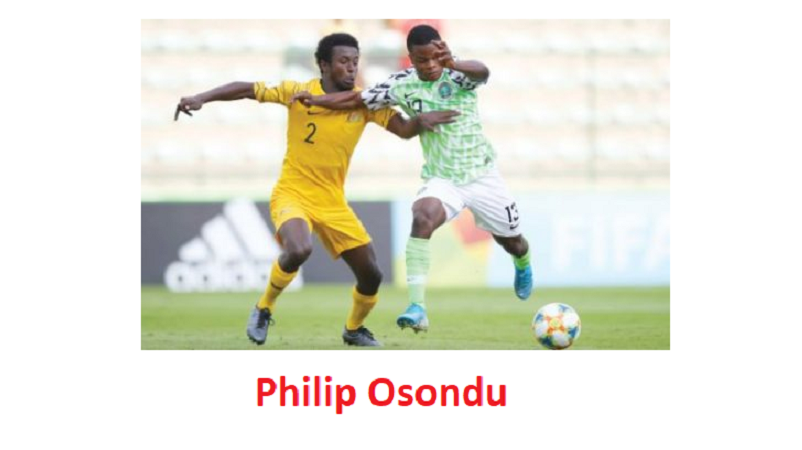
Staring with the most recent case of  the Golden Ball winner at the 1987 U17 World Cup, Philip Osondu, who passed away recently, there has neither been any detailed reporting on the cause of death or national support for the family. 

What exactly is the message for African Sports and especially the African Football. Obviously, this requires a situation of “all hands of deck”, and not just the football or other sports federations but also the media and opportunities for documentaries and possibly even movie scripts to celebrate these unsung heroes. 

In my 2016 article on the Nigerian Football league, I mentioned the dismal use of brand ambassadors citing the likes of the late Stephen Keshi as a case in point. 

So there we have it, African personality of the year award is a worthy imperative. Recognition comes in numerous forms and we are well aware that financial remuneration at the country level is clearly no match for what obtains at the club level and especially in the case of those that ply their trade in the West. 

Moving on, it is looking very likely that there would be more convergence between Africa and the Middle East from 2020 onwards hence more research attention should be paid to such a looming convergence imperative.