DD
MM
YYYY

PAGES

DD
MM
YYYY

spot_img

PAGES

Home Blog Page 6547

Gloomy Future for Oil as Chevron Writes Down $11 Billion Assets

0

Chevron is writing down about $11 billion worth of assets and it’s not good for the entire market. The company announced last week that the sum would be for the current quarter as it revalues its assets, which include shale gas production sites in Appalachia and deep-water projects in the Gulf of Mexico.

It is one of the biggest moves in Dow Jones in 2019. Howard Silverblatt, senior index analyst at S&P Dow Jones indices, said it could reduce 2019’s fourth-quarter overall S&P 500 earnings by $1.32 per share, depending on the final charge.

Companies in the index are estimated to earn $40.40 a share in the current quarter, according to S&P Dow Jones, and that would represent a chunk of the fourth quarter’s earnings. According to the estimates, the whole S&P 500 is expected to earn $158.50 a share for the full year.

Chevron CEO, Michael Wirth told CNBC’s Squawk Box: “We regularly take a look at our long-term outlook for commodity markets.” He added “AS we do that, we also look at our assets and we evaluate which assets will deliver the highest returns on investment for our shareholders… and the assets in the Northeastern U.S., along with some in Canada and other parts of the world simply don’t compete as well for our investment dollar as others do.”

Last month, the oil giants reported a 36% decline in third-quarter earnings as lower oil and natural gas prices offset an increase in production. Chevron earned $2.6 billion in the third quarter, down from $4 billion a year earlier. It also warned that higher costs could affect fourth-quarter results.

The company also announced a $20 billion capital spending budget for 2020, and revealed it is considering offloading its natural gas projects due to dwindling oil price.

Over two months ago, Chevron had sold off most of its assets in Nigeria, suggesting that it is already on the course offloading many of its natural gas assets around the world.

While the company is pointing at the cheap cost of oil products as a reason it’s taking judicious steps with capital to ensure that its shareholders go home with decent dividends, there is a hint that it may be considering a new direction outside the natural gas industry.

Competition in the midst of plenty oil has posed undeniable threat in the industry that even the biggest oil company in the U.S. can’t deny it. There is a gas glut in North America that has made the resource very cheap, and OPEC attempts to lift prices by cutting output has yielded little result.

Whilst the threat of cheap products as a result of its surplus is glaring, the quest for cleaner energy has become the bigger threat. The world is slowly transitioning to green energy in a bid to combat climate change. So the alternative to natural gas might show up any day and take the industry unaware.

A couple cities in California may likely ban natural gas in new buildings according to San Jose Mayor, Sam Liccardo. This comes as a measure to tackle it at more local level given federal stance on the matter. The idea may eventually get contagious in no time if it is successfully implemented in San Jose. While it will become a win for the fight against climate change, it will trigger the biggest threat to the natural gas industry.

Chevron is not the only company to tread this path, Schlumberger Ltd. and Repsol SA had ascribed a lower value to their assets at a time when the growing adoption of cleaner energy stokes speculation that demand for fossil fuels may peak in a few years. Schlumberger posted a $12.7 billion writedown in October, while Repsol did a $5.3 billion two weeks ago.

The intrigue emanating from the steps taken so far by Chevron is ripping through the oil and gas industry with the premonition of post fossil fuel era, and many companies are becoming paranoid as a result. A piece of Wall Street Journal captured it this way:

“The sobering reappraisal by one of the world’s largest and best-performing oil companies is likely to ripple through the oil and gas industry, forcing others to publicly reassess the value of their holdings in the face of a global supply glut and growing investor concerns about the long-term future of fossil fuel.”

The long-term future of fossil fuel has come under serious question that oil and gas based economies are working hard to diversify their economy in anticipation of the worst.

The institutional tranche of Saudi Aramco’s Initial Public Offering (IPO) was about three times oversubscribed with orders worth $50.4 billion. Aramco was valued at $2 trillion, making it the most valuable company in the world.

Aramco’s IPO holds the record of being the highest in the world, but the decision to go public has been part of Prince Mohammed bin Salman’s plan to diversify the Kingdom’s economy from oil.


Lesson for Nigeria as Saudi Arabia Moves to Ban Child Marriage

0

In the latest development following the reform measures of Prince Mohammed Bin Salman, the Kingdom of Saudi Arabia has issued de facto ban on child marriages.

The National reported that the Justice Ministry issued an order to the courts that any marriage application for someone under the age of 18 would have to be referred to a special court to make sure that “marrying those below 18-years old will not harm them and will achieve their best interest, no matter their gender.”

It could be recalled that in January; the Shoura council passed the amendment of the kingdom’s Child Protection Law that established marriage age to 16-18 years and above, discrediting the 15 years of age it was formerly based on.

An avalanche of unprecedented changes has been swirling through the kingdom following the reform agenda of Prince Salman. In June, Salman announced that women will be allowed for the first time in the history of the kingdom, to drive and also watch football matches in stadiums with men.

Saudi women were also permitted to study at the university, undergo surgery or get a job without the permission of a male guardian. The amendment also granted women the right to register the birth of a child, a marriage or a divorce, and to be issued official family documentation and be eligible as guardians to minors.

The ground breaking rule came with the announcement that women will be paid equally as men at the same job.

While the unequal pay remains a global challenge, child marriage is a tradition more prevalent in Islamic countries. And Saudi Arabia being the host of Mecca, the Islamic holy land, it’s widely being copied in many things relating to the Islamic faith, especially by developing countries.

In Nigeria, child marriage is a culture associated mainly to Islam, and it’s a debilitating norm in the Northern part of the country. Girls of 8 years and above are given in marriage to adult men way older than them, some old enough to be the girls’ fathers.

According to Unicef, Nigeria has the highest number of child brides in Africa. Most of the marriages are arranged by the child’s parents against her will and education, breeding a generation of unlettered child brides and parents who will grow up to bequeath the same tradition to their own children. And to cap it up, the practice is spearheaded by those in authority.

In 2013, a former governor and Senator, Ahmad Sani Yerima, was accused of importing a 13 year old bride from Egypt. The development exposed the gravity of the practice that was backed by Islamic beliefs and therefore opened the topic for debate. In 2013, the child-bride practice stirred outrage in Nigeria that the hashtag #ChildNotBride trended for days.

The controversy that followed Yerima’s child-bride did not quell it; in fact, it did not stop him from taking the little child as a wife. This is because the Nigerian constitution does not establish a minimum age of marriage. The Child’s Right Act of 2003 set the age of marriage at 18 years old, however, most northern states have failed to adopt the Act. So in some states of the country, the approved age of marriage is 12.

Attempts to change the system, even by Muslim right groups have proved futile. Some activists did propose 15 years as marriage age, but it was rejected based on religious ground. Awwal Tesleem Shittu, a member of the Muslim Lawyers Association of Nigeria said that putting a limit to a girl’s age of marriage is anti-Islam. According to him, a girl’s readiness for marriage cannot be determined by her age.

“A girl of 13 years old, if she is not physically okay, maybe she doesn’t have a sound mind, she could not comprehend, she could differentiate between right and wrong, she is not fit for marriage. She is not ripe for marriage.” He added “A girl of nine years, if she is sound, she is physically okay, she can go in, because in Islam there is no barrier to that.”

The Quran says that girls can marry once they reach maturity. While some Muslim countries set the maturity age at 18, some conservatives, like those in northern Nigeria define it as puberty. And girl children are bearing the severe brunt.

According to Global Health, Nigeria has the highest number of Vesico vaginal Fistula (VVF) in the world, with over 800, 000 women living with the problem and over 20, 000 cases being recorded annually. The majority of these cases is as a result of child marriage. Female children not old enough to practice sex or bear children, but are forced to do so due to ignorance, illiteracy or religious belief. Another factor attributed to the increase is poverty. It is said that many poor parents in the north want the bride price for their girl children not minding her age.

Upon the news that Saudi Arabia has set the age limit of marriage at 18, many Muslims from northern Nigeria took to social media to register their displeasure over the development. Activists believe that the number of Islamic countries that set the marriage age at 18 is enough to convince northern Nigerian states to do the same by adopting the Child’s Right Act of 2003. They said Nigeria cannot be more Muslim than Saudi, if the kingdom can see a reason to change the narrative, northern Nigeria should do the same.

Move Into 2020 With Confidence And Win – GREAT New Year Ahead

2

2019 is the best year in my business. Many founders, from Silicon Valley to Lagos, brought me into their missions, and made us part-owners. Few years ago, I created a new type of advisory services to help builders and makers. For a small part of the business, we work to build a better business. In 2019, we hit $millions in paper-money we control. My vision is that in a few years, the Private Client Services would hit $1 billion on total values of shares we hold! (Click and explore if you can get in – we are ultra-selective at low single-digit percentage acceptance).

The greatest thing about the future is Possibility. As 2019 fades into history and 2020 emerges out of the horizon, with unbounded and unconstrained possibilities, look far with optimism and plan. Overcome the fear of tomorrow by winning your today. Look at the seconds in time, master them, and rule the hours in your days. Greatness comes when one has victory over his or her time.

Discover a path that would take you to that mountaintop and listen to tested people with belts of triumphs. 2020 would be super-great if you connect with people who are winners in areas you need support. Yes, invest time to build a network of great-mentors, category-kings in their areas, and feed into their networks to rise. 

You are unique. The world is seeking for the special you. Make yourself unique and different. Yes, be separated from the crowd. 2020 is a promise; I invite you into the party of abundance. The bell is ringing, sojourn into the new year with style: I wish you a GREAT New Year ahead.

Ndubuisi Ekekwe Opens Application for “Private Client Services: Startup Growth”

Under U.S. Pressure, Nigeria Makes U-Turn On Sowore and Dasuki

0

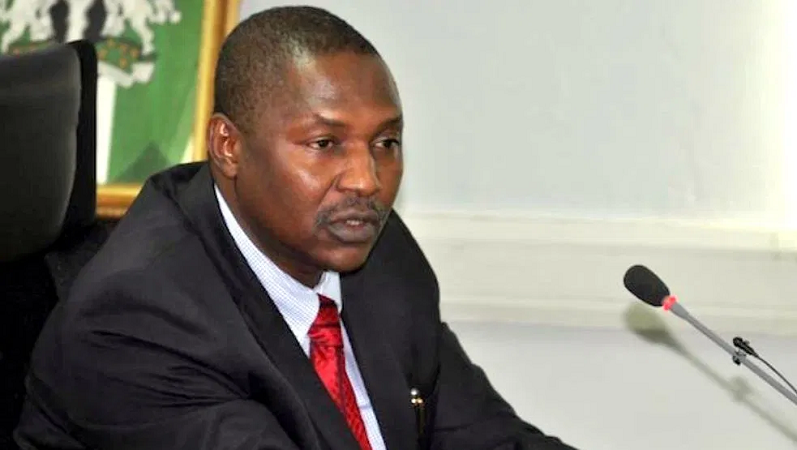
The Federal Government of Nigeria has ordered the release of the former National Security Adviser, Col. Sambo Dasuki rtd and the publisher of Sahara Reporters, Omoyele Sowore.

The duo have been incarcerated by the president Buhari administration for various alleged offenses. Dasuki was accused of embezzling over $2.1 billion security fund while Sowore was arrested and charged with treason for calling for a revolution.

Upon their arrests, there had been several court rulings granting them bail but had been ignored by the Federal Government. The government’s refusal to obey court orders has resulted in series of protests and condemnation both locally and internationally.

In October 2016, the court of Economic Committee of West African States (Ecowas) ordered the Federal Government of Nigeria to release Dasuki and awarded N15 million in damages in his favor. The order, like others given by Nigerian courts was flouted.

Early in December, the Department of State Security Service (DSS) invaded a Federal High Court sitting in Abuja and rearrested Sowore who had been granted bail the previous day. The development did not go well with a lot of Nigerians, especially those in the legal profession. The outrage that followed the incident resulted in the DSS sending a delegate to apologize to the presiding High Court Judge, Justice Ijeoma Ojukwu.

Following the consequent backlash, the National Assembly ordered probe into the incident termed “desecration of the court.” The U.S Government did not hold back from condemning the Federal Government over the excesses of security agencies and their apparent disregard for the rule of law.

On Monday, protesters for the release of Sowore, led by political activist, Deji Adeyanju, were attacked by hoodlums chanting (Sai Baba). They were believed to have been sponsored by the government as counter-protesters. Deji was injured, and another round of outrage ensued as a result.

The chronology of these events is seen as evidence that the present administration is being draconian and would go to any length to muzzle dissenting voices. so it came surprising on Tuesday when the Minister of Justice, Abubakar Malami issued a statement on the order to release both Dasuki and Sowore. The statement reads:

“1. The office of the Honorable Attorney General of the Federation has reviewed the pending criminal charges against the duo of Col. Sambo Dasuki (rtd) and Omoyele Sowore. Whilst the Federal High Court has exercised its discretion in granting bail to the defenders in respect of the charges against them, I am also not unmindful of the right of the complainant/prosecution to appeal or further challenge the grant of bail by the court having regards to extant legal provisions, particularly 169 of the Administration of Criminal Justice Act, 2015. However, my office has chosen to comply with the court orders while considering the pursuit of its rights of appeal and/or review of the order relating to the bail as granted or varied by the courts.

“2. In line with the provisions of Sections 150(1) of the 1919 Constitution (as amended), and in compliance with the bail granted to Col. Sambo Dasuki (rtd) (as recently varied by the Court of Appeal) and the bail granted to Omoyele Sowore, I have directed the State Security Services to comply with the order granting bail to the defendants and effect their release.

“3. The two defendants are enjoined to observe the terms of their bail and refrain from engaging in any act that is inimical to public peace and national security as well as their ongoing trial which will run its course in accordance with the laws of the land.

“4. I wish to reiterate again the utmost regard of my office for the entire judicial structure of Nigeria. This administration remains unrelenting in deepening the rule of law and the administration of justice in general.”

The questions that followed this statement are: why does the DSS have to wait for an order from the Attorney General of the Federation to obey a court ruling? What about the leader of Islamic Movement of Nigeria, El-zakzaki who the court has also ordered his release? Is the Attorney General selective in the court rulings he obeys?

On December 21, the U.S. Government added Nigeria to the Special Watch List of countries that show disregard for religious freedom and tolerance, and that is besides what has been criticized as government clampdown on free speech and freedom of expression. The order to release Dasuki and Sowore has been attributed to international criticism. On 20 of December, the U. S.  Congress had written Mr. Malami, urging him to respect the laws of his own country, especially regarding So wore, who the court had notably granted bail twice. But why the letter did not compel the government to release El-zakzaki also is not clear.

Civil rights activists have urged Mr. Malami to use his office to facilitate the release of others who are held against court orders.

Merry Christmas – Ndubuisi Ekekwe Receives Technology Connoisseur of the Year

0

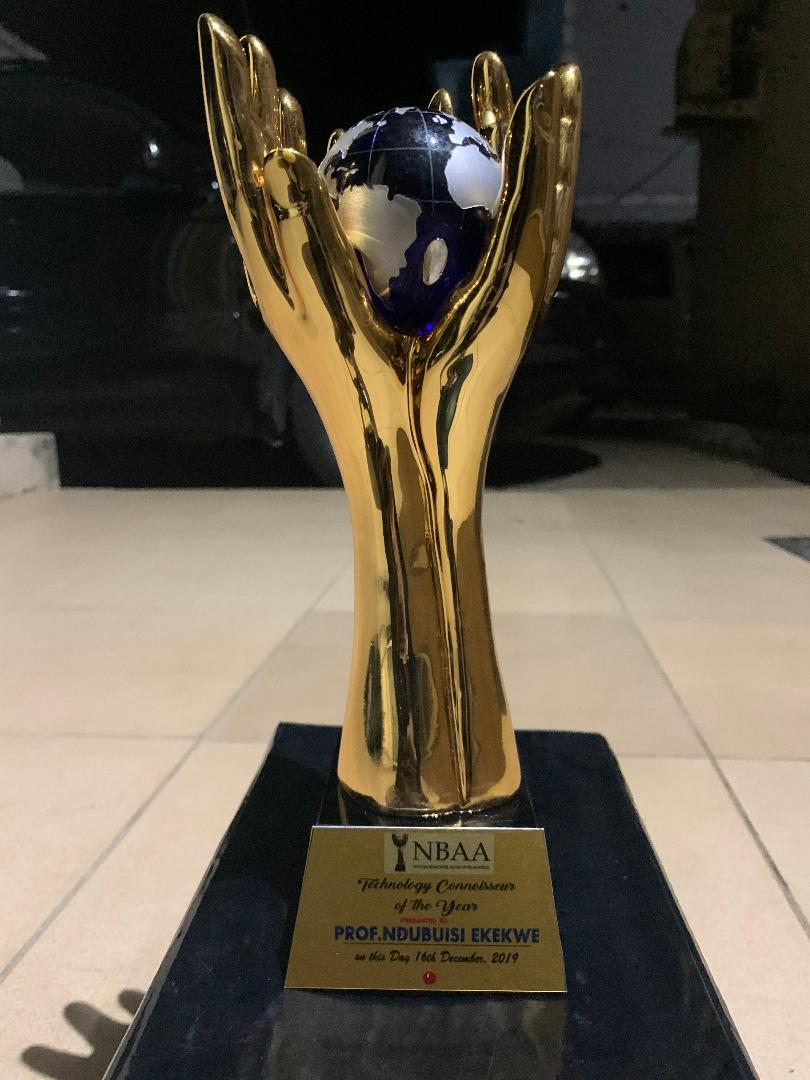
Let me wish everyone a Merry Christmas. Here, it is always a double for me because my best friend and wife, Ifeoma, is also a Christmas special gift. Few hours ago, a special award as the Technology Connoisseur of the Year was delivered to me. Nigeria’s Vice President and a former Group Managing Director of NNPC were some others recognized. I took home the award as the finest technology thought-leader and strategist in Nigeria. Thank you Nation Builders Achievers Awards for recognizing this village boy. This award is dedicated to Ifeoma on this beautiful Christmas day in the finest village in the world – Ovim, Abia State.