DD
MM
YYYY

PAGES

DD
MM
YYYY

spot_img

PAGES

Home Blog Page 6552

Tough 2020 Ahead for Saving and Lending Fintech Startups in Nigeria

4

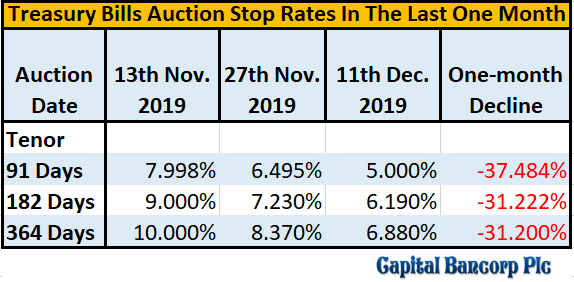
I have a tough call – most fintech startups in saving sub-sector in Nigeria will collapse in 2020! The reason is simple: the Central Bank of Nigeria (CBN) has done a coup. Yes, with the treasury bills (TB) rate now 5% for a 90-day tenor, I expect massive dislocation in the ecosystem. These startups have accepted savings, promising “investors” and “savers” north of 10.5% annual interest rates, hoping the high TB rate party would continue; the TB rate was projected by some to stay above 14% in coming quarters.

As if the low yields on T-Bills aren’t enough, CBN Director, Banking Supervision Department, Mr. Hassan Bello mentioned that The Central Bank of Nigeria will increase banks’ Loan to Deposit Ratio to 70% by 2020, he gave this hint during the week while speaking at the 2019 workshop for Finance Correspondents and Business Editors.

The Monetary Policy Committee (MPC) had noted in November an increase of N1.17 trillion in absolute gross credit between May and October, this was attributed to the adjusted LDR for deposit money banks. Manufacturing was the largest beneficiary, accounting for N460 billion of the increase. Consumer loans shared N360 billion from the total.

But now the government has made TB 5%, these startups would not just lose money, paying the 10.5% rate, they would be exposed to take more risks by putting that money they’ve collected via short-term savings, on safe long-term investments. In Nigeria, few of such safe investments are available: TB was the best deals in town, but now it is gone.

More so, the lending fintechs would also be forced to reduce rates as all lending rates would drop with the dropping of TB. The implication is that some of the rates they have quoted for investors as they raised capital may not be feasible anymore. Yet, this may be a good thing: if rates are low, more customers can come to patronize them. But they have to readjust to take advantage of the new opportunities.
Similarly, I expect many banks to see stress as they open their books to move from extremely low risks on TB to new investments by putting money in companies.The target CBN is giving them on LDR (loan deposit ratio) is mind-blowing, and most will have to revise their playbooks to thrive.

Here are ways this new policy on TB will play out:

  • Banks are going to see positive movements of their stocks. With the option of TB gone, equities would be a key option. Banks are usually the most preferred in Nigeria as the banking sector remains the most developed and liquid in the Nigerian Stock Exchange. Yet, investors would be watching on how banks would manage the risks associated by putting capital on small and large companies, hoping the loan default rates stay low.
  • Borrowing would become easier for companies. Typically, most rates were benchmarked with TB. Now the TB is lower, it means debts will become cheaper. In other words, if a company was to borrow from a bank, and with the option of TB not being a good option (very low at 5%), banks have limited options to put capital. The implication is that companies can easily negotiate better loan terms since the other key option for banks was 5%. When you know that is the case, getting a loan at below 15% from a bank becomes easier.
  • Servicing government debts will be cheaper. Interestingly, this low TB rate would make it easier for government to borrow and service its debts. Nigeria at both federal and local levels would be servicing tons of debts, and this low rate regime would make things easier.
  • CBN lending rates to bank remain important. Though CBN has cut TB rates, another important metric to examine is the rate banks are getting capital from CBN. If banks get at 11%, the impact of TB would be muted. If a bank gets funds from CBN at 11%, I expect 1% to cover insurance for the funds. By the time they add operational costs with small profits, 17% becomes the floor to lend. So, despite the reduction in TB, what will drive lower rates in lending in Nigeria is the rate CBN is lending to banks – today, it is about 13.5%. (I explained this deeper here).

See it this way: if a bank gets capital from CBN at 14% (the current rate) and has to keep 1% to meet required ratios from NDIC (the deposit insurance commission), by the time it takes care of operating expenses, it cannot practically lend below 17%. Then imagine if the bank has started with 2.5%, you will then experience lending interest rate of say 5% in Nigeria.

All Together

The low TB rates would do one thing: it would put pressure on banks to deploy capital in riskier investments like lending to SMEs (small and medium scale) companies in Nigeria. That is a good thing as lack of growth capital remains a major challenge in the Nigerian economy.
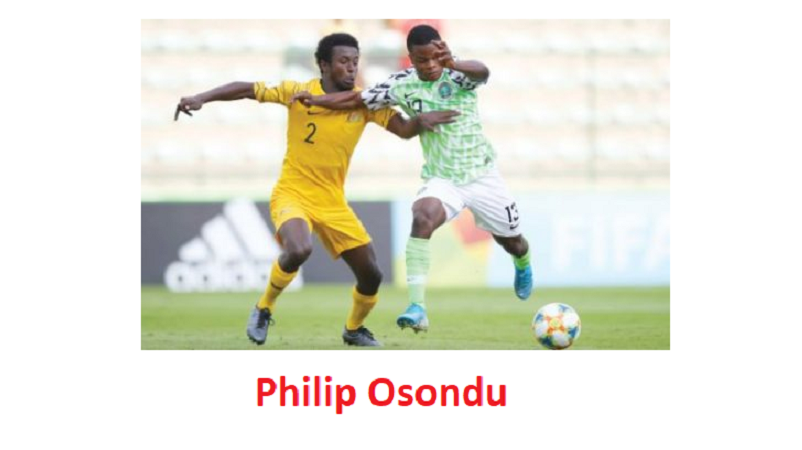
Philip Osondu – a Talent Unlocked

0

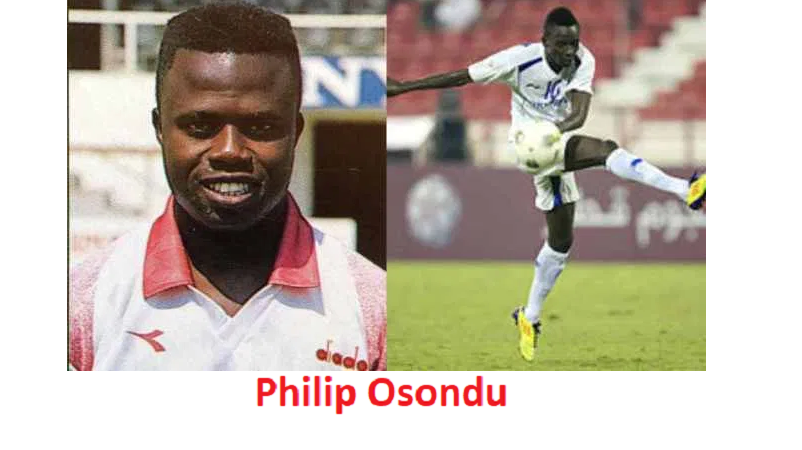
“Zanza is the captain, onye isi game” was a song we sang in the village as kids in primary school. My position was 9 ( I was bad on it!). But it was immaterial; every kid knew we could play like “Zanza”. Zanza was Philip Osondu, one of Nigeria’s most talented footballers. He was the captain and he was “onye isi game” [the leader of a football game]. Philip Osondu is dead. He was a force in Canada’87 and Saudi ‘89 when the world thought a new Pele was born.

“Philip Osondu, ogba bolu (footballer)” this is the adjectives that my mother used to qualify me with when I came home from a football game then. The memories came back with these words when I heard the news that Philip Osondu is dead. He was the hero of my childhood and alas, a victim of eventuality.

It was reported that Osondu was feeling unwell at work and went to the hospital for a checkup, he was pronounced dead shortly after. At 48, Philip Osondu was such a life cut short.

In 1987, Osondu became a sensation through his performance in the Under 16 FIFA World Cup in Canada. Though Nigeria lost to the Soviet Union on penalties, he wowed the world with his skills and won the Golden Ball as best player of the tournament. What followed was a professional career that his well won fans considered below expectations.

Though born in Aba,Abia state, a parent was from a neighboring village to Ovim, Ahaba Imenyi. Zanza was rising in the shadows of Kelechi Emeteole (the caterpillar for his defensive style). Emeteole who hailed from another neighboring village, Amiyi Obilohia, later became a successful coach. But Osondu was ruined – he signed bad contracts and “lost” Nigeria and his career. It was after his contract that the then-Nigeria Football Association set up a process to review foreign contracts offered to Nigerian players!

Zanza, buru ba – [score the goal by dribbling past players and goalkeeper] remains a song whenever a kid could accomplish that on a pitch. Zanza died in Belgium after a sudden illness; he was 48! 

Philip Osondu, unbounded tomorrow but vanished yesterday: a talent unlocked. Nonetheless, you inspired many across Aba and Isuikwuato, and I guess Nigeria.

Remembering Philip Osondu

Remembering Philip Osondu

0

“Philip Osondu, ogba bolu (footballer)” this is the adjectives that my mother used to qualify me with when I came home from a football game then. The memories came back with these words when I heard the news that Philip Osondu is dead. He was the hero of my childhood and alas, a victim of eventuality.

It was reported that Osondu was feeling unwell at work and went to the hospital for a checkup, he was pronounced dead shortly after. At 48, Philip Osondu was such a life cut short.

In 1987, Osondu became a sensation through his performance in the Under 16 FIFA World Cup in Canada. Though Nigeria lost to the Soviet Union on penalties, he wowed the world with his skills and won the Golden Ball as best player of the tournament. What followed was a professional career that his well won fans considered below expectations.

In 1989, he helped Nigeria to get to the final of the under 20 world championship – Saudi 89.

Born Philip Osondu Mast, on November 28, 1971, in Aba, Abia State, he started his youth career in 1988 with El Kanemi Warriors, his brilliance with the ball saw him being touted by Anderletch.

In 1989, Osondu joined Royal Sporting Club Anderlecht, a Belgium professional football club based in Anderlecht, Brussels. But his spell in Anderlecht, didn’t last long.

In 1990, he joined RWD Molebeek, another Belgian side. Osondu’s stay in RWD Molebeek lasted for two years, a period of time that only afforded him 41 match appearances and seven goals.

Two years later, in 1994, he was plying his trade in another Belgium club called R.A.A Louvieroise. But his stay there lasted only for one year, a situation that kept him on the move once more.

In 1996, he was in Union SG, a Belgian club located in the municipality of Saint-Gilles, in Brussels. Osondu only made 13 appearances for the club throughout his time there, scoring only one goal.

In 1999, Osondu joined K Diegem Sport, a Belgian club based in Diegem, Flemish Brabant. It was a three years spell, and he made 43 appearances and scored only two goals.

In 2003, Osondu joined FC Merchtem 2000, the Belgian club was the last in his professional career. Until 1996, he was still an Anderlecht player hoping to improve his game through other clubs where he was playing as a loanee.

The age controversy

When Philip Osondu was snapped up as an under 16 player by Anderlecht after the 1987 World Youth Championship, he was given the opportunity to grow in career and also in height. Both didn’t happen. His inability to grow in height like every other youth player became suspicious to the club authorities who opined that he was way older than he claimed, and that has come to impact his career negatively.

When Anderlecht finally let go of him at the age of 25, in 1996, he could only manage to secure some contracts with some low-key clubs in Belgium, he never made it big. Some of his national team mates in 1989, like Mutiu Adepoju moved to bigger clubs and had a call up to the national team. But Philip Osondu, the once brilliant star gradually receded to a player formerly known. He started doing odd jobs in Belgium to survive, a situation his past didn’t give a hint of.

But such is life, good and bad happen, even stars fall from the sky. For those whose childhood fell on the late 80s and early 90s, Osondu is a memory worth relishing. Our ancestors who don’t care about football today still remember the name Philip Osondu, not as a failed footballer, but as one who dazzled in the field and put his name in the mouth of everyone.

Though misfortune ended a would-be great career, Philip Osondu did not go ahead to play for the biggest clubs in the world, nor did he become the world’s best player at a point, he left one thing that matters to many – a good memory.

And although he couldn’t live long enough to tell his grandchildren his story, they will read it and hear it from those whose childhood was blessed by the skills of their grandfather.

Interswitch is Amazing and the Hangover is Over

0

I wrote this piece – Interswitch’s Innovation And Monopoly Hangover– more than two years ago when Interswitch was going through a redesign. Today, a friend re-shared it asking me a simple question: “can you now answer your question –  “Can Interswitch Evolve?”’. 

Everything will depend on the attitude of the firm. It can dance even as an e-payment elephant, relatively, at local level.  It cannot be obsessed with profitability as a digital company at this level of infancy. It has to focus on growth; profits will come. If it can cure itself of the love of fees and huge margins at the expense of growth, which is very critical for a digital company, it will return back to its glorious innovative past which won Central Bank of Nigeria and all the banks to adopt it as platform of choice. It is a great company and one that has moved Nigeria forward in many ways. Interswitch can do it as it is peerless in what it does, in the region.

My response: Interswitch is amazing and the hangover is over. There are many reasons for my answer. One is that this company is now evolving as an operating system for digital finance in Nigeria, with an eye on Africa. Sure, competitive insurgents are not sleeping but Interswitch seems deepened to battle effectively.

Founded in 2002, Interswitch disrupted the traditional cash-based payments value chain in Nigeria by introducing electronic payments processing and switching services. Today, Interswitch is a leading player in Nigeria’s developing financial ecosystem with omni-channel capabilities across the payments value chain, processing over 500 million transactions per month in May 2019.

Interswitch’s Innovation And Monopoly Hangover

How to Manage the Effects of Job Loss

0

Nobody wants to be sacked. The desire of every worker is to remain in service until a better job comes. But most times, the things we desire aren’t what we get. So, no matter how much we want it, we have to prepare ourselves in case a sack letter is dropped on our table.

Losing a job is never a delightful experience. Each time I remember what I passed through the one time I was sacked I shudder. It’s the sort of experience you don’t wish for anybody. The confusion that came with the dreadful words and the unanswered questions that flashed through my mind cannot be described with words. Only those that have passed through this bitter experience can fully understand what I’m saying here.

Truth is that the best way to avoid being sacked is by reading and understanding the danger signs (some of them can be found here). But if you happen to receive the letter before you resigned, knowing about the impending dismissal will help you to cushion the blow it will land on you.

But a lot of workers do not really believe they are not indispensable. They believed their hard work, dedication and innovative ideas could forever keep them in their jobs. What most of them didn’t know about is the evil known as office politics and its brother called bankruptcy. These two could send the best of staff out of an office.

Before I suggest ways people can manage the effects of job loss, I’ll like to mention wrong ways people handle this situation.

Fighting their Superiors and Destroying Employer’s Properties: I’ve witnessed and heard of cases where those who were dismissed fought the persons that handed them the letter or those that signed it. There are several reasons why this attitude is uncalled for. Even if you feel the sack was unjustifiable, as it is in most cases, kindly accept the letter and wish them well. Trust me, your next job may demand for a referral from your former employer and I don’t know how you will get that if you left the office with this type of drama.

Apart from getting referrals from your former boss, you never can tell where you will meet again and what favour you might need from him, or he from you. Besides, if I were a recruiter and I witnessed or learnt that you fought your boss, I won’t offer you a job. So, take a deep breath, and move on. Life continues.

Speaking Ill of your Former Employer: Most disengaged workers easily say bad things about their former employers. This attitude has made many of them lost the opportunity of landing good jobs, especially if they do this during interviews.

If you happen to find yourself in this situation, never speak badly about your former boss, no matter how bad he is. The logic behind this is that if you can castigate your former employer, you will still do the same to the current one. Besides, speaking ill of people is a sign of bitterness, and nobody wants a bitter employee.

Hating People: This might sound strange but it is true that people that lose their jobs most times become hateful. A lot of people that are close to them suffer the effect of this job loss too. Most men turn aggressive and make the lives of their wives and children unbearable. Some attribute this behaviour to frustration and depression, but I believe it also has to do with the anger that is buried deep down because of the feeling of being cheated by the employer. These people transfer the hate they have for their bosses to those around them.

If you found yourself in this situation and noticed that you are taking it out on your loved ones, kindly remember that job loss is one of the rungs you will meet on the ladder to success. You don’t want to lose your family too, I believe.

Petitioning your Superiors: Some people write to the company’s CEO to complain about their dismissals. I don’t see anything wrong here except that I’ve noticed that even if the person was returned to active service, it will be a matter of time before he or she is kicked out again – this time with reasons that will ensure that he/she stays sacked.

Like someone said, when you petition any of your superiors, the others will see you as an enemy that must be dealt with. So, instead of working in an uncomfortable environment where you know you are being watched, kindly find another job and move on.

Feeling Worthless: This is one serious problem dismissal causes. There is always this nagging feeling that you are insignificant and that was why the company didn’t need you. You may keep trying so hard to picture yourself fitting in into another company but your mind wouldn’t just let you. It may get to a stage where you lose hope and believe that you are indeed unemployable. If you are passing through this, all I can say is don’t let despair take the best of you.

Contemplating Suicide: This is the height of it.

Having seen the wrong ways to handle the emotions that come from losing a job, it is now time to see some of the ways it could be rightly done.

#1: Talk to no one in the office: There is a good reason for this. If you receive that letter, quietly leave the office and go home. Don’t talk to any of your colleagues, be it a junior or senior colleague, because he or she might incite you into fighting your boss.

#2: Evaluate yourself: As one of my bosses used to say, “look deep down inside you where there is no deceit” and find out if you gave them reasons to sack you. The essence of this is to avoid making such a mistake again.

#3: Send your boss a “thank you” message: I didn’t do this during my own time but people that did it said it was worth it, especially when you wanted to keep the doors open. Draft a note or an SMS and send to your former boss to thank him for giving you the opportunity to work with him and to wish him well.

#4: Job Hunt: Definitely this will come. Whether you go for any job that comes first or you sit back and wait for the big fish is a personal decision to make. In my own time I went for bigger fish but I didn’t get lucky so I settled for one that was smaller than what I had before (and started the journey up again). But, it is up to you and your account balance to decide. If you have been dreaming of starting a business, now is the time to do so. If you land another job, it may not be possible again.

#5: Go for further studies: You can go for higher certification or learn more skills. Don’t just jump into any open opportunity to acquire more skills; look for those that will enhance your performance in your new job, or business.

#6: Visit your former office: This is the fastest way to forgive your former employer. Pay them a visit and spend a little time with your former colleagues. The only thing is that you should go there when you must have gotten something doing – say another job, a business or further studies.

Other ways you can handle your emotional turmoil that comes with being sacked is to seek redress (I’m not sure this works in Nigeria) and to pursue your payoff (may also not work here).

Always bear this in mind if you ever received this dreadful letter, “Job loss is not the end of the road. A lot of people have been there and came out victorious. You too will win the struggle.”