DD
MM
YYYY

PAGES

DD
MM
YYYY

spot_img

PAGES

Home Blog Page 6553

Concerns on the Incessant Cases of Kidnapping in Nigeria

0

Christmas is around the corner but a lot of people are afraid of travelling to spend the season with their loved ones in their country homes. Beside spending so much on the trip, they were also afraid of the high rate of insecurity and violence found in our villages today.

When I was growing up, Christmas was the only period extended families gather to renew their relationships. We used that period to catch-up on events that happened in the village within the year. That period was when most of us learnt much about our villages and our extended family members. We always looked forward to Christmas holidays because we will visit our villages. Then, our rural areas were safe haven.

Things began to change during my undergraduate days. Then, I noticed that the number of people that returned home for Christmas began to dwindle. Speculations had it then that people were afraid of coming back to their villages because they believed that they were targets of their relatives who were witches and wizards. There were many stories that showed that some people that came home for Christmas returned to the city only to die mysteriously after some days. People started pointing accusing fingers at the aged and at those whose children were stationed in the village.

The narratives changed shortly before I went for my youth service. People have learnt how to protect themselves against witches and wizards, as well as from juju, so they were no longer afraid of them. But then, the era of poisoning arrived. This time, the young men were both the victims and the suspects. The claim was that they poisoned each other when they hang out. Nobody knows exactly what was going on, but the truth is that our villages became unsafe.

Today, no one talks about witches and wizards any longer, and poisoning seems to be a thing of the past. The problems we face in our villages right now are robbery, assassination, herdsmen attack and kidnapping. Robbery cases are gradually reducing because most villages have set up functional vigilante groups. As for herdsmen, their problems are way beyond human understanding. These people made themselves gods in most of our villages and no one questions them.

However, the problem of kidnapping has proved itself to be stronger than our village vigilantes. I believe the reason for this is that the people that carryout this heinous act do not dwell in the village, even though they have informants there. These kidnappers have succeeded in making our villages unsafe and the worst thing is that you can’t really tell who their informants are.

No one is free from these kidnappers. They go for the old and the young, male and female, religious and laity. For some time now, priests and pastors have become their targets. Day in day out we hear of their evil deeds and no arrests are made. We hear of how ransoms are paid, how released victims returned or are found dead, how more people are kidnapped and so on and so forth. The country is indeed unsafe.

What I don’t really understand is why these kidnappers freely do their businesses without hitches. Here in Enugu, we keep hearing about people being kidnapped along Enugu-Port Harcourt Expressway. We also hear of their operations around Nsukka axis. And these places are unsafe up till now. It is as if these people are having their field day knowing that no one will challenge them.

I don’t know if these kidnappers are faceless. Maybe that is why they cannot be arrested and tried. We keep hearing stories of how they take their victims into deep forests and all; does it mean there is no way those forests could be searched? Besides, I don’t believe these kidnappers live in the forests. These hoodlums are human beings and they live among people. So if the police really want to get them, they will.

Nobody is saying the jobs of policemen are easy, especially when they are underpaid and undertrained; but I believe they can do their jobs of keeping the country safe if they are truly motivated. They should think about the effect of these crimes on the nation’s economy and on her citizens. Nigerians need to feel safe in their homes. They have enough stress already; they don’t need insecurity added to it.

However, for those that wish to travel home and enjoy the Yuletide, I’ll suggest that they stay low and enjoy their holidays quietly and peacefully. They should cut down on flamboyant style to avoid attracting unnecessary attention to themselves. If they want to donate funds for a community project, they should do so quietly. They should feel free and mix up with their clansmen but they should be mindful of what they reveal. Let’s always remember, it’s the house rat that tells the bush one that there is fish in the house. Stay safe.

Saudi Aramco Overtakes Alibaba, Sets Record with $25.6B IPO Raise

0

Saudi Arabia has set a record initial public offering in history, pulling off a $25.6 billion sales in shares of its $1.7 trillion valued state owned oil.

A total of 3 billion shares were sold at 32 riyals ($8.53) each in its IPO, making it the biggest in history. Alibaba was holding the record since 2014 when it raised $25 billion in its IPO.

The Aramco’s IPO will be listed locally on the Tadawul, Saudi Arabia’s stock exchange. Crown Prince Mohammed bin Salman has unveiled his plan to diversify the country’s economy and move concentration away from oil. Though the IPO fail short of its targeted $2 trillion valuation, there is no sign it’s going to be a hindrance to anything.

Some experts have described it as a “hollow win,” saying that they needed to rely predominantly on local investors after cancelling roadshows in London and New York due to low international interest.

The president of Transversal Consulting, and author of the book “Saudi, Inc.” Ellen Wald, told CNBC: “The local demand from retail investors wasn’t as high as Saudi Arabia hoped for. The investments were almost entirely local and attracted no money from outside the region, oversubscription was not significant. Most IPOs are oversubscribed many more times over and the government had to manufacture demand, even from Saudis.”

Prior to the pricing announcement, there was a weeklong local roadshow around the Middle East, prompting the oversubscription of the listing by nearly three times, attracting offers worth 189.04 billion riyals ($50.4 billion), according to banks advising the listing. Institutional investors have between November 17 and December 4 to place their orders.

Before now, Aramco has promised that 0.5% of its listed shares would be available to individual retailer buyers, while 1% will remain for institutional investors. But the remaining 1% is equivalent to 2 billion shares, and in the first 2 and a half weeks of Aramco’s book building period, it drew subscription orders for 5.9 billion.

So far, demand from institutional investors, including Saudi funds and companies, has reached $106 billion, while retail investment’s demand hit $12.6 billion. The purchase has been centered on Saudi Arabians and countries in the Middle East. Around 4.9 million Saudi retail investors have bought shares in the oil giant, including 2.3 million between the ages of 31-45.

Aramco’s advisors said the “greenshoe”option may be fully or partly exercised at 15%, allowing it to increase the size of the deal to a maximum of $29.4 billion. But the Organization of the Petroleum Exporting Countries (OPEC) is getting ready once again for oil cuts to support prices, depending on its ability to get a deal with members such as Russia this weekend.

Other concerns have been fingered as the reason the IPO couldn’t sell internationally: Climate change, political risk and a lack of corporate transparency. The kingdom had planned to raise $100 billion via international and domestic listing of 5% stake, but ditched the plan due to lack of interest from overseas buyers.

It’s all part of Prince Salman’s ambition to sell a large portion of the kingdom’s oil and use the proceeds to establish a tech-based economy. But Monica Malik, the chief economist at Abu Dhabi Commercial Bank said the fund raised by the IPO is enough to sustain the ambition.

“The amount raised by the IPO itself is relatively contained given the size of the economy and medium-term funding requirement of the transformation plan.

“Nevertheless, combined with other areas of funding, we believe that there is meaningful capital in place to progress with the investment plans aimed at diversifying the economy,” she said.

However, foreign investors attitude toward the IPO showed that Saudi is yet to better its relationship with the rest of the world, especially the West. The murder of Jamal Khashoggi, the Saudi journalist who was killed in Saudi’s consulate in Istanbul created a strain that the kingdom is yet to clean off. And there is its involvement in the Yemen war that has attracted international condemnation.

The quest for cleaner energy is another factor that may have hindered foreign investors from purchasing from the IPO. European countries are at the forefront of the fight against climate change. Moreover, oil prices and growth in global demand are expected to crash by 2025 due to efforts to cut greenhouse gas emissions and prevalence of electric cars.

The Error in OrjI Uzor Kalu’s Slok Ltd Sentencing

0

Former governor of Abia state and current senator, Orji Uzor Kalu, was sentenced to 12 years of imprisonment by the court of Justice Mohammed Idris today. I have read the sentencing (as a layman) and was confused as to why the Federal Government of Nigeria should be the beneficiary of the Slok Nigeria Limited which according to the Guardian, the court “ordered forfeiture of all assets of his company to the federal government.” Mr. Kalu did not steal Nigeria’s money. It was Abians’ money; so, the court cannot magically award the assets to the Federal Government when Abia State Government is still there.

The federal high court in Lagos has sentenced the former governor of Abia State Senator Orji Uzor Kalu to 12 years imprisonment after being found guilty on all the 39-count charges brought against him.

He was convicted of N7.65billion fraud perpetuated when he was Abia State governor between 1999 and 2007.

Kalu was convicted alongside his firm, Slok Nigeria Limited and his former Abia State director of finance, Ude Udeogu. The court also ordered forfeiture of all assets of his company to the federal government.

But I am not a lawyer to know if states cannot be beneficiaries of such assets when cases are tried in federal courts. Or possibly, the federal government would receive the assets and handover them to Abia state government. But why go through that process when the court can replace “federal government” with “Abia state government” in the sentencing.

The Attorney General and Commissioner of Justice of Abia State should petition the court immediately to ensure the assets are given to Abia State and not federal government. The stolen assets did not belong to the federal government, and accordingly Nigeria should not be the beneficiary. Abia State clearly should get the assets because the ex-governor was convicted for defrauding the good people of Abia.

Yet, I am not a lawyer to understand how assets forfeiture processes work in federal courts. But that does not mean that I cannot voice my opinion though!

Roadmap for the Development of Successful Flare Gas Projects in Nigeria

0

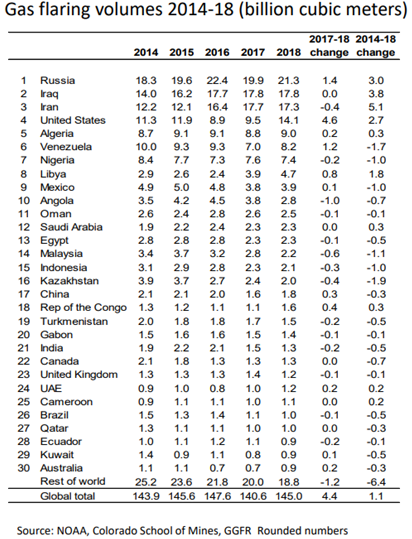
There is huge potential in the commercialization of Nigeria’s Flared Gas resources.  This can easily be seen from the sheer magnitude of gas flared and the huge gap in domestic gas utilization in Nigeria. According to data from the world bank Global Gas Flaring Reduction Partnership (GGFR) Nigeria is ranked 7th place in the global gas flaring space.

As a signatory to the Paris Agreement, United Nations Sustainable Development Goals (SDGs) and the Zero-Routine Flaring Initiative by 2030, the Nigerian Government obviously committed to charting a new course in the global climate effort, initiated a plan that will disincentivize the flaring of gas through encouraging the commercialization and monetization of flare gas, by providing access and title to third party companies that will process the gas and sell the end products to the domestic market.

Aside from the environmental impact of gas flaring, there is also the commercial side to it in terms of lost resources that would have amounted to revenue from export, gas-to-power or industrialization. For instance, over a 12 months Period (August 2017-August 2018), Nigeria flared 11% of the total Gas produced within this period: see the chart and table below
Nigeria Gas Utilization Chart (August 2017-August 2018)

  1. Export: 1325.26bcf (43%)
  2. Reinjection and Fuel: 970.86bcf (31%)
  3. Flared Gas: 331.76bcf (11%)
  4. Gas for Power: 292.63bcf (9%)
  5. Industries: 173.23bcf (6%)

Source: Nigeria Gas Utilization Chart (NNPC Monthly Financial Operations report August 2018)

A whopping 74% of the Gas produced in Nigeria are exported and used as reinjection fuel at the production fields.. Gas flared in Nigeria is 20% more than gas available for power generation and over 50% more than gas available for industrial use. The commercialization of flared Gas in Nigeria if done well, can make more gas available for Nigeria’s fledgling domestic industries and power generation companies.

THE NIGERIA GAS FLARE COMMERCIALIZATION PROGRAM

The NGCFP was launched to give a commercial framework for the development of flared gas by 3rd party companies/investors on behalf of the Federal Government of Nigeria. The NGCFP defined procedure for the implementation of the programme.
There are 12 steps associated with the completion of this program.
1.      Registration of Interested parties on the NGFCP portal
2.      Access to Request for Qualification (RFQ) by registered parties
3.      Submission of Statement of qualification (SoQ), confidentiality Agreement and payment of SoQ submission fees
4.      Evaluation of   SOQ, selection of qualified applicants and execution of confidentiality agreements.
5.      List of qualified candidates to will be published on the NGFCP portal
6.      Access to flare gas site data upon payment of Data prying/Data leasing fees by qualified applicants
7.      Submission of proposal by bidders, payment of processing fee and bid bond
8.      Evaluation of proposals and selection of preferred bidders
9.      List of preferred Bidders published on the NGFCP portal
10.  Execution of commercial agreements, payments of award fee and milestone bond
11.  Issuance of Permit to access Flare Gas
12.  Execution of Gas Utilization project and performance bond.

The NGFCP is at the fifth stage now with 203 companies/consortium (out of 240 companies that submitted SoQs) chosen as successful SOQ candidates see list . The next steps from here onwards will be the real hard facts for the qualified companies. Let’s delve into a description of what the next steps will look like and the key challenges that companies will face in order to make this process a business success, after all they are all in it to make profit right? Let’s go….

A.     Access to flare gas site data upon payment of Data prying/Data leasing fees by qualified applicants (step 6)
The beauty of this program is the flexible structure which allows selected bidders to bid for their preferred sites according to data that will be provided to them by DPR at this stage. A selected bidder has the privilege of comparing data across various flare gas sites before selecting which sites amongst all the flare gas sites to submit a proposal for.

B.     Submission of proposal by bidders, payment of processing fee and bid bond (step 7)
i.    Successful participants in the SOQ stage are not required to be Nigerian entities before the bid process, upon a successful bid, foreign entities will be required to be incorporated in Nigeria to be granted the Permit and to enter into the necessary Commercial Agreements.  Only companies incorporated in Nigeria can be Permit Holders.
ii.    Bidders that qualified for a flare site or multiple sites will or may be granted access to the flare site by the Department of Petroleum Resources (DPR), to make physical inspection of the flare site and related infrastructure of the Upstream Producer.
iii.    An interested entity may submit a singular proposal for a flare set or a set of flare sites, entities can also submit multiple proposals for different flare sites or different sets of flare sites.
iv. The proposals shall be evaluated based on pre-established criteria in the RfQ, to ensure transparency in the evaluation process.
v.    An entity or individual barred by the Economic and Financial Crimes Commission (EFCC), Independent Corrupt Practices and Other Related Offences Commission (ICPC), World Bank Debarred list and US Treasury Office of Foreign Assets Control, shall be ineligible to participate in the bid process.
vi. Access to flare gas site data upon payment of Data prying/Data leasing fees by qualified applicants
The Bid Bond: 1% of the estimated project capex capped at US$1,000,000 posted by a bidder upon submission of its proposal

C.      Evaluation of proposals and selection of preferred bidders (step 8)
The NGFCP team will look through the bid documents, details of the equipment’s, project viability, business bankability, the technology to be deployed; and their targeted end-use market or gas product. Bidders first qualify on technical grounds before they are considered to be evaluated on financial requirements.
The proposal will be evaluated with the joint team of officials from the Ministry of Petroleum, Department of Petroleum Resources (DPR) and the Nigerian Petroleum Corporation (NNPC).

D.     List of preferred Bidders published on the NGFCP portal (step 9)
The NGFCP team will publish the preferred bidders on her website just like the way the successful SOQ participants were listed on the portal.

E.      Execution of commercial agreements, payments of award fee and milestone bond (step 10)
A Preferred Bidder will be mandated to sign some agreements as a condition before the grant of a permit by the Minister as a condition precedent to the grant of a Permit by within sixty (60) days from the date of award of preferred bidder status:
i.  Milestone Development Agreement with the FGN, by which the chosen bidding company/consortium agrees to develop the flare gas sites according to laid out timelines s to the developments of the flare gas sites according to agreed timelines
ii.    Gas Sales Agreement with the FGN to purchase flare gas. The gas prices start at a minimum price of US$0.25/Mscf,
iii.    Connection Agreement with the Upstream Producer to provide access and connection to the facilities of the Upstream Producer.
iv.    Deliver or Pay Agreement with Upstream Producer by which the Upstream Producer guarantees to supply an agreed quantity of flare gas to the Preferred Bidder

NB:
Milestone Bond:
 2% of the estimated project capex capped at US$2,000,000 posted by the preferred bidder for agreed milestones under the milestone agreement

F.      Issuance of Permit to access Flare Gas (step 11)
Upon satisfactory signing of all agreements and issuance of the milestone bond, the FGN will issue permits to the successful preferred bidders to have unhindered access to the flare sites to start project development.

G.     Execution of Gas Utilization project and performance bond (step 12)
The deployment of equipment and Flare gas processing infrastructure. The successful preferred bidder will also have to execute a performance bond at this point.
NB:
Performance bond: Advance payments covering three months gas delivery payments for the take-or-pay flare gas quantity in the Gas Sales Agreement. a bidder upon submission of its proposal

THE KEY PERFORMANCE FACTORS THAT SUCCESSFUL SOQ PARTICIPANTS SHOULD TAKE INTO CONSIDERATION

For this investment to be profitable, companies will have to get their strategy from top to the bottom to get it straight.
The major things to look out for while packaging the bidding documents are
1.      The technology/Equipment to be deployed
2.      Contractual Structure of Project Agreements
3.      Joint venture partnerships
4.      Technical and Commercial Partnerships.
5.      Target Market and Offtake agreements with prospective buyers.
6.      Technical and Financial Capability
7.      Location of the Flare/Project Sites
8.      Nigerian Content Development
9.      Extent/history of hostility/stability of flare gas host community and developing conflict management strategies for smooth engagement with host communities.

This is the first of a series of articles on the Nigerian Flare Gas commercialization program to guide investors, bidding companies, equipment manufacturers, service providers to understand the value points in this program, the opportunities to be taken and the expected challenges and how to avert them.
Follow this space for the next expository on this exciting opportunity.

References:

  • Financial Nigeria Magazine – http://www.financialnigeria.com/commercializing-flared-gas-in-nigeria-part-1-feature-258.html
  •  World Bank Global Gas Flaring Reduction Partnership  – https://www.worldbank.org/en/programs/gasflaringreduction

This article was prepared in association with Kiakiagas.com

How to Manage a Host Community When Setting up a Gas Processing Plant

0

It is usually assumed that there are no templates when it comes to entering and managing communities. This is usually so assumed because communities are different in many respect: history, economy, culture, previous experience with multi-national companies (MNCs), etc. However, with years of experience working with communities and managing community entry agendas of MNCs and other related endeavours, there are surely host communities management strategies that are sustainable and for which consensus exits.

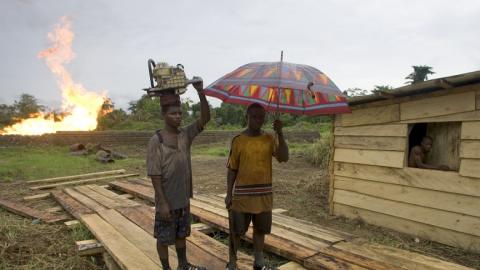
At the discovery of oil in Olibiri in 1956 and the subsequent granting of the first oil exploration licences to Multinational Oil Companies (MOC) in 1961, communities had a positive disposition towards MOCs1. The first impression of communities was that the MOCs were an opportunity to address long-overdue developmental issues. Many of these hopes may have been dashed, due to poor management strategies not necessarily a lack of resources to address the development issues, a major part of which is environmental degradation (where gas flaring has been a major contributor). Though gas flaring was legally prohibited in 1984 in Nigeria, MOCS has continued to flare gas for reasons beyond technical exigencies. As a consequence, communities in the Niger Delta had in 2005 sued2 NNPC, Shell, Exxon, Chevron, Total and Agip joint venture companies for failure to stop gas flaring. This and other similar ligations3 have not brought succour to the people of Niger Delta. Gas flaring has remained at over a million cubic feet annually. This has led to child respiratory diseases, asthma, cancer, and premature deaths are increasingly becoming the lot of a vast majority of Niger Delta residents, due to the massive gas flaring. Relations between MOCs and their respective host communities have strained, and conflict has escalated at the same time.

Permit Holders (PH)4, under the Nigerian Gas Flare Commercialization Programme (NGFCP) stand a great chance of helping communities realize their development aspirations if they get their community relations and development strategies right. The NGFCP requires that PHs, in collaboration with Producers5 acquire or build Gas Connection Assets6, which span communities, it is necessary to define the different stakeholders and their roles in this sector.

Permit Holder (PHs): A company that has, pursuant to the Regulations, been granted a Permit to Access Flare Gas by the Minister of Petroleum

Producer: A holder of Oil Mining Lease or allottee of a Marginal Field or a contractor under a Production Sharing Contract

Gas Connection Assets: Assets that include:

a) Buyer Gas Connection Assets: the natural gas pipeline used to transport Flare Gas from the Delivery Point at the perimeter of the Flare Site to the Project Facility and any other equipment, machinery or other property of any that are hosts for flare gas sites in the gas-rich parts of Nigeria. In pursuing these projects, regulations of the Nigerian Gas Flare Commercialization Programme expressly states that the PH “shall be responsible for managing a fair and balanced community relationship in its operations”.

This leaves the entire ramification of host community management and corporate social responsibility for the area of operation to the PH without a mention of the Producer.

b) Producer Gas Connection Assets: the pipeline, equipment, machinery, and other assets or facilities including the Measuring Station designed, funded and built by the Permit Holder and used to transport Flare Gas from the Flare Gas Connection Point to the Delivery Point under the Connection Agreement. Title, care and custody of these assets are transferred by the Permit Holder to the Producer on the Commercial Operations Date.

It is important that PHs commence their operations with a proper strategy such that they are investing resources in dimensions of host communities management or relations that are Value Drivers. In what follows, we describe a number of points that need to be considered for a mutually beneficial operator-host community relationship.

Community Entry and Relations Strategies

Initial Entry

This needs to be gotten right. Any flaws from this stage might leave the PH with months or years of stalled operations. A first step will be to pay courtesy visits to the traditional leaders of the community to send the signal to the community about the PH’s intention to respect local authorities and a readiness to work in partnership with the community on installing and operating the gas processing plant and gas connection assets. The next move will be to pay a similar visit to other leaders in the community including town union leadership, youth & women leaders, and religious leaders. As the norms and established traditions expect, each of these community stakeholders needs to be visited with cash gifts at hand and handed to the leaders of the groups as the group’s structure demands. In the event that a community is facing a leadership crisis with say two parallel running executives (exco) for a group, the PH should accord both executives exactly the same rights when visiting them. For all the visits, the PH’s team need to make it resoundingly

clear that they believe their planned gas processing operations won’t succeed with the cooperation of various leaders of the community. The PH’s team should also express their

intentions to work with any other relevant groups which they are yet to visit while making clear that they also have plans to ensure that the community positively reaps the benefits of hosting their gas processing operations.

While the series of visits are ongoing the PH should avoid any attempts at designating anyone as “middleman” or “go in-between”, unless in the case that such person is assigned by the traditional ruler of the community. In such cases, the designated middleman is then most likely a member of the council of chiefs. Similarly, the PH should avoid any opportunities for seeing community leaders without the entire exco/leadership. Whenever it is not possible to see the entire exco such visits should be postponed to such a time when the entire exco is available.

Concretizing Relations

After all the visits have taken place, its time to get down to the business of concretizing the promised made to various groups in the community. The various community groups will be informed of the intention of the PH to go into a Global Memorandum of Understanding (GMoU) with the community for mutual cooperation and community development. The GMoU gives kind that is owned or leased by the Flare Gas Buyer to take delivery of FlareGas under the Connection Agreement communities the privilege to define their own development priorities with the assurance that the MOC will provide the funding.

Governing Community Relations

In many host communities, committees (i.e Community Development Boards (CDBs) specially dedicated to defining and managing the implementation of these development priorities already exist. An example is the Itsekiri Rural Development Council (IRDC) which represents the cluster of communities within the area of operations of Chevron in relating with Chevron in accordance with the company’s GMoU. The CDB usually serves as the interface between the communities and the MOCs, the government & contractors. From the outset, it is important to ensure that the governance of the GMoU is such that transparency, accountability and sustainability is guaranteed. A way to guarantee this may be to include a committee that monitors the activities of the CDBs. The monitoring scheme could such that members are made up of representatives of various groups in the community with a tenure of just one year for each person so as to reduce tendencies for connivance with executing companies of priority projects. The main duty of the monitoring scheme is to ensure regular contacts are maintained with the communities, monitor the productivity of the CDB and ensure the even distribution of benefits.

Social Impact

Once the GMoU is put in place, the next activity will be to commence implementation of the social impact initiatives. As way of ensuring that PHs don’t get cut in the web of internal community crises between or within communities, or between and within community groups, the GMou needs to define priority projects, timing for execution, financing requirements, responsibilities of communities to ensure and availability of land, mode of engagement of executing entities (private companies or individuals), minimum engagement level for communities in the execution of community development projects, etc. To ensure PHs can maintain focus on their core operations, it may be important to employ the services of credible Non-Governmental Organizations (NGOs) very vast and knowledgeable in the affairs managing communities oil-producing Niger-Delta Communities.

Community Oriented Sustainable Supply Chains Strategies

While the GMoU may not include involvement in the value-chain of the operations of the PH, it is important to make effort at incorporating local small-to-medium enterprises (SMEs) and community economic clusters into the supply chains of the PH. To realize this, it is important that the PH categories its future demand opportunities using tools like the four Krajic Categories7 with specific strategies. Then with a basic understanding of local capacities & suppliers rank each opportunity according to priority8. The next will be to determine what are the potential ‘community content’ component of each priority opportunity, relying on a more rigorous supply-side analysis. Then develop a plan to achieve the desired community content by choosing appropriate procurement methods and supplier development strategies. Major criteria for this assessment need to be value-driven agenda for the PH.

Environmental Responsibility

No matter the level of success of the GMoU or the efforts at driving up social impact and supply chain integration, any neglect of the environment will negate the entire efforts. A degraded environment is the most sustainable route to impoverishment and conflict. PH needs to avoid this pitfall as communities already contend with a massive array of environmental concerns, and additional gas flare mishaps won’t be taken lightly.

References

1 Amodu, Lanre Olaolu. “Community relations strategies and conflict resolution in the Niger Delta: A study of three major oil companies.” PhD diss., Covenant University, 2012.

2 “Communities sue oil companies to stop Nigerian gas flaring”. Friends of the Earth International. June 20 2005. Online: https://www.foei.org/press_releases/communities-sue-oil-companies-to-sto… . Accessed on October 30 2019.

3 “Nigeria: Delta youth group sues Chevron, Exxon, Nigeria Agip, NNPC, Shell, Total over gas flaring”. April 3 2008. Business and Human Rights Resource Centre. Online: https://www.business-humanrights.org/en/nigeria-delta-youth-group-sues-c… Accessed on October 30 2019
4. Kraljic, P 1983. Purchasing must become supply management. Harvard Business Review, 61(5), 109–117.

5 Ana Maria Esteves & Mary-Anne Barclay (2011) Enhancing the benefits of local content: integrating social and economic impact assessment into procurement strategies, Impact Assessment and Project Appraisal, 29:3, 205- 215, DOI:10.3152/146155111X12959673796128


This article was prepared in association with Kiakiagas.com