DD
MM
YYYY

PAGES

DD
MM
YYYY

spot_img

PAGES

Home Blog Page 6560

Hey Mr DJ? A Brief Conversation with London-based Nigerian DJs

0

It was not long ago that I watched London-based David Rodigan in a soundclash in faraway (yes from England) Jamaica. Did I just say Rodigan? Who’s that? For the benefit of those unfamiliar with this name that I grew up with even before I moved to England, here’s brief bio.

“David Michael Rodigan MBE (born 24 June 1951) is a British radio DJ who also performs as a disc jockey. Known for his selections of reggae and dancehall music, he has played on stations including Radio London, Capital 95.8, Kiss 100, BBC Radio 1Xtra, BBC Radio 2 and BFBS Radio.”

OK time to move on to the busness of the day (although some reference to BBC Radio 1Xtra is not farfetched as we woud soon find out), the unsung heroes of the internationalisation of the Nigerian Music sector.

Outta Naija

The sounds like one of my LinkedIn posts right? But it’s not trust me. That previous post had to do with Nigerian Movies, but this is more about the sounds. You can’t rewind a radio (my people used to say).

Hopefully though there would be a resurgent interest in articulating the Sights & Sounds of the Nigerian Entertainment Industry (or Creative Industries if you like) after this piece publishes. So let’s get it on (apologies Marvin Gaye, I got lost in music here, oops that sounded like Sister Sledge there).

The past few years have seen Nigerian music explode all over the world, from D’Banj scoring a number one in the UK with ‘Oliver Twist’ to Wizkid’s acclaimed sell out of the reverred London’s Royal Albert hall on Naija’s 2017 Independence Day.


Guardian Gateways, a collaborative project with the much-celebrated Boiler Room and the British Council not long provided what it tagged a ‘shared vision for Nigeria’ targeted at showcasing and ‘building cultural connections’ between British and Nigerian artists, is my point of departure in this article. The showcase got three most influential pioneers on the Nigerian Music Scene, Don Jazzy, DJ Jimmy Jatt and Dr. Sid, discuss the evolution of Nigerian music over the past two decades, the current musical climate in Nigeria, and how the term ‘Afrobeats’ can be problematic.

In the 17-minute YouTube video clip, a household name on the Nigerian DJ scene, Jimmy Jatt, citing traditional Nigerian music genres such as Fuji, Juju and (local) Reggae as being more appealing to more mainstream labels such as EMI Music, points out that the importance of Streetcred.

Regrettably, I am not particularly concerned about this line of enquiry or what the other crooners (Don Jazzy and Dr Sid) have to say about the matter in this post. So, readers might as well as watch the following video clip to gain some insight from the interview.

An Interview with Don Jazzy, Jimmy Jatt & Dr Sid Boiler Room x Guardian Gateways. Boiler Room Published on Aug 8, 2016.

In the interim, however, my conversation continues with the curators of this music genre, our unsung heroes – the DJs. Reverting to the 17-minute YouTube video clip, Jimmy Jatt points out that the big labels were not interested in what the streets were talking about. According to him, We DJ on the streets […] know what the people want.’

Jimmy Jatt contines in segment 11.44 of the video clip by alluding to the success of South Korean “flash-in-the plan” Psy and his celebrated “Gangnam Style” one-track wonder as a case in point. Thiis is about global recognition of music from unknown geographic spaces and places.

Talking abot globalisation and/ or internationalisation, the global distribution and international radio air play such as Hot 97 and BBC Radio One Extra also received mention in the interview alongside the rather “unexplained” success of a “son of the oil,” WizKid in the musical sacred sanctrum of London (captured in segment 12.20 of the video clip). As Jimmy Jatt pointed out, ‘it is taking longer [to] recognise the New Sound from Africa and/ or with African influences …Putting Nigerian Music on the Map.’ Indeed, it the putting of Naijabeats on the global map that accentuates my quest to take what many might see as “baby steps” in profiling the following London-based DJs of Naija (slang for Nigeria) roots through the use of a pilot and brief interview guide.

My select London DJs

Here are some of the responses I received from the London-based DJs whom I have had personal encounters with. Please don’t be fooled about their London base as these DJs also play at international events outside London.

Considering their normal day jobs and the part DJing activities in the run up to Christmas, I had to be rational in keeping my questions as brief and insightful as possible.

DJ SoGood


DJ Alexo

So here are my five questions I put forward to these musical curators, just to set the ball rolling.

1. How long have you been DJing in the UK? Does this include organising other Nigerian/ African themed events?

I have been doing DJ work in the UK for about 12 years now. Headlined events both locally in the UK and  internationally. [DJ SOGOOD].

I have been DJing now/ organising events, for 19 years [DJ Alexo].

2. What do you think of Nigerian music in general and London in particular?

Nigeria music has really come far and making waves all over the western world now. Nowadays you hear Nigerian music and by extension afro beats played on UK radio stations, shopping malls and even events all over UK. I quite remember back then when I started, `Nigeria music was not really popular. Other DJs and I tried pushing Nigeria music at any opportunity we could find. We were mostly playing the funky house, R&B, hip-pop and reggae [think David Rodigan again] music back then. [DJ SOGOOD].

Afrobeat music has taken over in most countries. You cannot attend any party or show without Afrobeats played. Even the Americans artist i.e. (Drake, Chris Brown & Cardi B) are all collaborating with Nigerian artist [DJ Alexo].

3. Who are your top 5 Nigerian DJs of all time and why? This list includes those in Nigeria and London or even Europe.

DJ Easy, DJ Blox, DJ Preston, DJ Adex, DJ Lanre (Factory 78). These names have really inspired me. I have good working relationship with them. I will recommend any of these names any time. [DJ Alexo].

4. What do think about Nigerian music and musicians?

Nigeria music is one of the best things out of Nigeria. The whole western world now is catching the Nigeria vibes. Nigerian musicians are really working hard. Most of the musicians now have their own record labels thereby helping other upcoming artists. There is a more collaboration between Nigerian artists and popular international stars as against what it used to be in the past. There is a sense of healthy competition among musicians which gives room for creativity. [DJ SOGOOD].

Nigerian Afrobeat artist should slow down, they release tracks almost every month, this has to be controlled. [DJ Alexo].

5. Where do you see Nigerian Music going in the next 5 years.

I see Nigeria music growing bigger and bigger. I see more Nigerian talents with more dynamic music creativity with different dance styles to say the least. [DJ SOGOOD].

If care is not taken, Afrobeat will be too diluted (monotonous) in the next 5 years. [DJ Alexo].

The conversation doesn’t quite end here.

Hey Mr DJ?

As I sign off on this piece here are some parting words. DJ Lanre (Factory 78), DJ Adex & Co [including DJ Xclusive], I have my sights on you come 2020. In the mean time and in between time, Christmas is very much upon us and tickets are selling out fast on LiveNation courtesy of SoGood.

The story continues in the New Year!
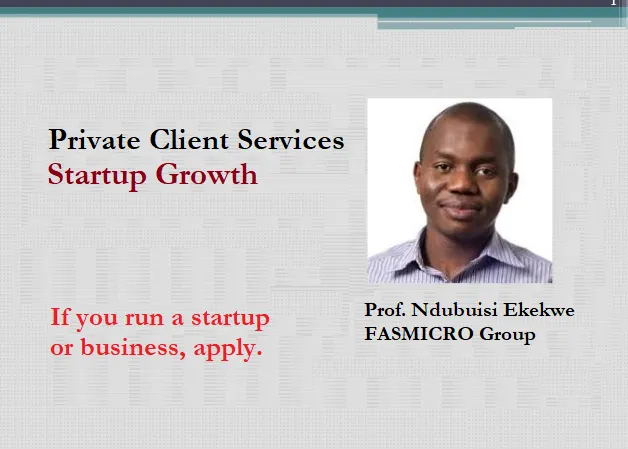
Ndubuisi Ekekwe Opens Application for “Private Client Services: Startup Growth”

0

I have opened applications for a new batch into my Private Client Services: Startup Growth. This service offers founders, CEOs and entrepreneurs 24/7 access to me. We talk over hard business things, strategies, growth and wins. We bring our people, invisible but great, to make those wins happen. This call is global as PCS  has founders from the United States, Germany, Nigeria and beyond. If you are an innovator and doing something amazing in any part of the world, you would like to be part of our portfolio. You have an option to be completely “invisible” with no one knowing we are working together. When banking talks of private banking, we talk of private client services for startups, and if you get in, we charge no fees.

We work with unrivaled tenacity, bringing all our assets and networks to ensure growth takes place. It is hard to get in because we do not accept payments; we win only when you have won.

As you build, we want to work with you. Though we come with humility to learn on what you do and have done, our value addition is unbounded.

We have advised Fortune 100 CEOs, and some in the richest 1% club. You will like to build with me. If you run a startup that utilizes technology, and looking for an invisible growth-maker, click and email my team with a description of what you do, or simply send us a link of your website.


Remember to Apply to Ndubuisi Ekekwe’s “Private Client Services: Startup Growth” – Have 24/7 Access to me.

Medcera Scores Touchdown with Investment from NFL American Football Player

0

Last week, Medcera, our category-king electronic health record (EHR) startup scored an investment from an American football player. We see a huge promise in our location-agnostic EHR which is helping doctors, labs, imaging centers, pharmacies and insurance firms to fix frictions for their patients in the broad healthcare sector.

Medcera is a cloud-based electronic health record (EHR) system with patient and healthcare professional modules, supporting patients, doctors, labs, imaging centers, pharmacies, health insurers and other healthcare institutions.

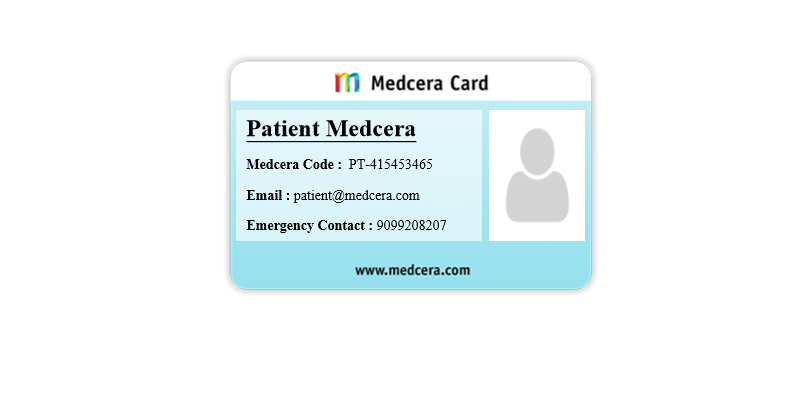
Medcera Patient Card 2
Medcera patient card

Our solution is free unless we have to do customization and training for the partner. Medcera meets HIPAA compliance on security and privacy. With Medcera, your health record will be in one location irrespective of where you live and travel to. We also have a messaging system to work with doctors, and other health practitioners all integrated inside our solution.

At the moment, Medcera is used in six countries including a UN field office.

Ask for Demo accounts to explore Medcera, free in your lab, clinic, imaging center, pharmacy, etc.

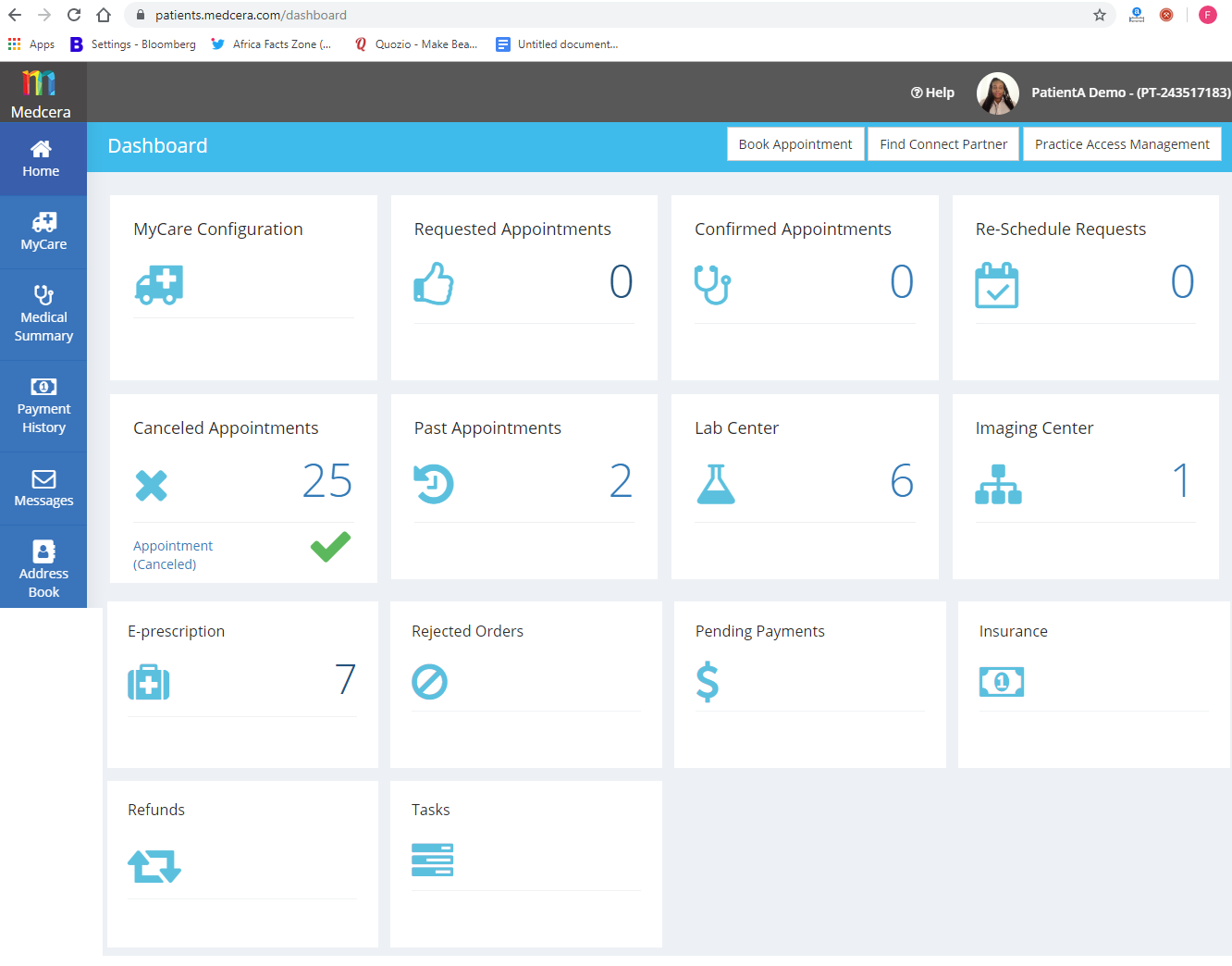
Medcera Dashboard for Patient

Two Things for Muhammad Nami, Incoming FIRS Chairman in Nigeria

3

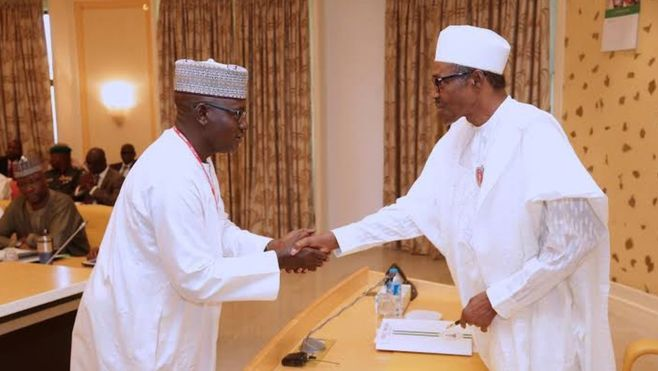
President Muhammadu Buhari has nominated Muhammad Nami as the new Chairman of the Federal Inland Revenue Service (FIRS), Nigeria. Mr. Nami would take over where the out-gone Chairman Babatunde Fowler stopped. Personally, I see the chairmanship of FIRS as critical as a federal ministerial position because of the impact  of the agency on the structure, format and architecture of the nation’s economy, arising from tax policies.

FIRS is going to drive tax revenue that would be needed to fund our national budget. Across all metrics, we have not been very lucky in that domain as Nigeria’s tax collection efficiency is severely underwhelming. From the less than 35 million payers, out of possible 100 million citizens, to recent plans to tax “revenue” instead of profits in digital companies, we have real paralyses to deal with. The new VAT rate coming in 2020 is something that could move some segments of the economy to move informal, in order to reduce tax exposure.

For Mr. Nami once Senate confirms him, his desk would be busy. As he begins to deal with the issues, here are two areas he has to pay attention:

Pursue TAX Policy for Economic Growth: In recent years, Nigeria has focused on tax collection with nothing done on how tax policy can engineer growth in the economy. I have shared some ideas on how a new tax policy can boost investment.

Government should offer new VC (venture capital) firms in Nigeria a ten year tax incentive on profits if they have asset base of at least $50 million and will deploy the capital in Nigerian startups within 10 years. Offer new VC firms in Nigeria the opportunity to repatriate 100% of profit within ten years. That will help the country to attract foreign investors to make Nigeria home. If we have this type of incentive, we will see many VC funds making Nigeria home to explore opportunities in Nigeria and continental Africa. That influx of capital will have many multiples of benefits to our economy, our people, and the Nigerian technology space. Most especially our tech firms will stay home instead of changing jurisdictions to U.S. or Europe..

Push for Tax Reforms to make donations to schools tax-deductible, not treated as expenses. This is one way to bring more funds into the school system, from primary to university levels. Largely, when companies donate money to universities to work on things that matter to them, they could use the donations to reduce their tax exposures. Typically, providing that structure would stimulate more entities to give to schools.

If Company A wants to start a factory in Owerri Nigeria and needs to train 1000 people in the areas it does business. It can ask Federal University of Technology Owerri to do that training, providing the manuals and documents required. It will fund it say with $3 million for three years. FUTO may integrate the program in its curricula (NUC may need to approve). FUTO has received funding, expanded its program and at the same time graduating students that will likely have jobs when they finish. Brilliant!

For Company A, it has moved the non-core training out to focus on its business, knowing that whenever it wants talent, FUTO is preparing them. Then on that $3 million, Nigerian government allows it to deduct it, non taxable. Simply, the revenue where that money has come will not be taxed because it has been used to do good to the society. Just like that, the company has saved money and at the same time assisted FUTO to deepen its programs. That is an incentive which does not exist right now, and Nigeria needs to update our tax system to make it possible.

Today, what is possible is to deduct that $3 million as an expense, meaning that it is recognized in the tax book as pure business. That is not enough as the resulting balance will be taxed accordingly. In U.S. that $3 million is treated differently, offsetting not just its expense but other areas the company might have experienced losses. So magically, you use donation to make-up. That is why giving is financially good, under some circumstances, for both the recipients and the givers.


PRESIDENT BUHARI NAMES NEW FIRS BOARD FOR SENATE CONFIRMATION

President Muhammadu Buhari has approved the composition of a new board for the Federal Inland Revenue Service, FIRS, subject to Senate confirmation.

The President nominated a renowned tax consultant, Muhammad M. Nami as the new chairman.

The board is composed of a member representing each of the six geographical zones and statutory representatives from a select number of ministries and government agencies.

Mr Muhammad, a well-trained Tax, Accounting and Management professional with highly rated qualifications and professional practice and licenses from relevant professional bodies, has almost three decades of practical working experience in Auditing, Tax Management and Advisory and Management services to clients in the banking, manufacturing, services and public sectors as well as non- profit organizations.

He is an expert in rendering advisory support services to investors in respect of new business start-ups and management of existing businesses. He has also continuously rendered outsourced services to clients in trading, service and manufacturing sectors of the nation’s economy.

Muhammad Nami attended Bayero University Kano and Ahmadu Bello University, Zaria where he obtained a Bachelor’s Degree in Sociology (1991) and a Masters of Business degree (2004) respectively. He is a fellow of Chartered Institute of Taxation of Nigeria, Institute of Debt Recovery Practitioners of Nigeria and Associate Member of Nigerian Institute of Management (Chartered) and Association of National Accountants of Nigeria.

He started his career with PFK in 1993 and rose to the position of a senior Consultant in charge of Tax management and advisory services. He is currently the managing consultant of Manam Professional Services (Chartered Tax Practitioners and Business Advisers) based in Kaduna, Abuja, Niger State.

Mr Muhammad has served, and is still serving, on many companies’ Board and Statutory Board Audit Committees. He was appointed as a member, Presidential Committee on Audit of Recovered Stolen Assets in November, 2017 by President Buhari.

He is married with children.

Chairman of FIRS, Babatunde Fowler, whose term of office expired on Monday, 9th December, 2019 is expected to hand over to the most senior director on the board, who will take charge, pending the senate confirmation of the new board.

Nigeria’s Lost Taxes to Mauritius

The Power of Customer’s “Thank You” in Evaluating Retail Service Quality

0

Typically, when a retail store gets its merchandise on shelves and opens door to customers, the hope is that customers will come and have a look at what products it carries, check the prices and quality of the products, and then make purchases. In helping customers fill their needs or fix their problems, the store wants to achieve an important thing: to sell and make money. However, the store’s chances of making those sales or getting customers to return to the store again and again, are hinged on one crucial thing: quality of its service!

Many fanciful terminologies have been employed to define what customer service is. But put succinctly, customer service are things you do and structures you put in place to make your customers satisfied and happy. Until you have helped your customers fill their needs or fix their problems in a professional, excellent manner; until you have put a smile on your customers’ faces, you have not rendered a quality service.

Because of its importance on their businesses therefore, companies make big effort to evaluate and ascertain if they are doing well in their customer service effort. They sometimes contract research firms or assemble people in-house to examine whether or not the customer service they render is on point. This is for them to know if they have served their customers well enough that they are happy to come back and/or refer them to others. And this research, too often, gulps big money and saps energy.

However, recently, I discovered that a business does not necessarily need to wait until a research is conducted before it knows if it is doing well, customer service wise. I found that a business’ customer service can be scored right after its customers receive its service. After spending a number of years in the retail industry and engaging customers in a number of ways myself, I found that the service of a retail store, or any other business in any industry for that matter, can be scored by customers themselves — immediately after they are served. And now, this is simple: when customers are happy enough to smile and tell you THANK YOU on their way out of your store, your intuition tells you that you have rendered a quality customer service. Yes, you satisfied them!

I have seen customers walk out of stores with anger and frustration. I have also seen customers visit a store, got a very bad service yet maintain their cool but determined within them to never patronize that store again. But one notable thing have I detected: customers can tell you ‘thank you’, too. Customers also show appreciation, but it is only when they receive quality service from your store.

As simple or instantaneous as customers’ ‘thank-you’ statement might appear, it is strongly attached to their emotions. It indicates how they feel about the service you rendered to them. And whether you like it or not, our emotions drive the choices we make as people. When customers say thank you, it shows they are feeling fulfilled and satisfied. And this, invariably, increases their chances of coming back to your store or referring you to others.

So you should ask: what percentage of customers says “thank you” before leaving my store? What percentage of them displays good, joyful countenance after checking out? Retails stores, as well as other businesses, can always watch out and hope for the ‘thank you(s)’ from customers as they speak volume of the perception of customers about the quality of the store’s service. Store staff should always be encouraged to serve customers excellently well that they are happy to drop nice compliments before exiting the store.

It must be noted that customers’ impression of a store starts from:

  • Their entry into the store;
  • The varieties and quality of merchandise they find on shelves;
  • Their ease of movement in and around the store;
  • The courtesy, mannerism, tone, gestures, professionalism and eloquence displayed by the store staff;
  • The knowledge and ability of store staff to recommend suitable products that suit customers needs;
  • And their eventual check-out from the store.

The excellence that the store demonstrates in all of these areas would determine whether or not its service is of good quality, and customers themselves would be the one to do that scoring through their simple ‘thank you’ and other compliments.