DD
MM
YYYY

PAGES

DD
MM
YYYY

spot_img

PAGES

Home Blog Page 6572

Extend The Capabilities With Zenvus Imaging System

0

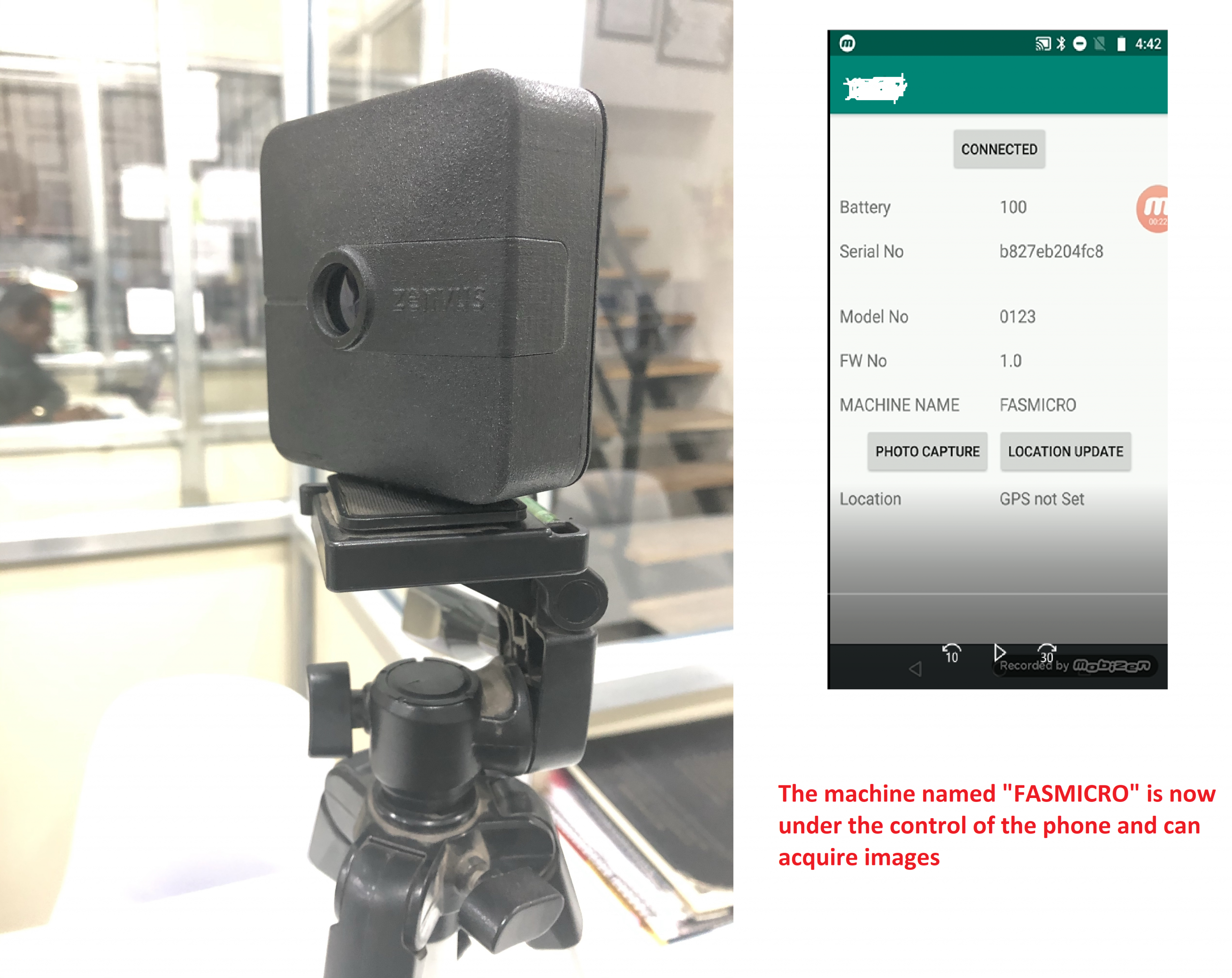
From Fasmicro’s Zenvus Lab – you want to extend your hands to capture an image. Think of the efforts to take a group photograph and every person wants to be in the photo with no one volunteering to do the shooting. (We have a similar friction for an industrial system but the problem being that the elevation is higher than the FOV (field of view) of the image taker.) We have a simple solution: have a Zenvus camera and install our proprietary app (not on Play store or IOS store).

The Zenvus camera will be positioned to do the image capturing. Each of you, all smiling, can then use your individual smartphones to take photos and magically everyone will be in the photos. There is a time setting that can give you time to hide the phones before Zenvus camera begins to take the photos.The images you acquire can be GIS tagged and converted into many image processing formats, enabling all kinds of things. Interestingly, we have not made the camera for “group taking photo” but an application it would be used depicts similar constructs where elevations of camera field of views are critical.

This does not need Internet to work as you can create a “local network” for all to work seamlessly.

Zenvus >> Intelligent Solutions


LinkedIn Summary

From Fasmicro’s Zenvus Lab – you want to extend your hands to capture an image. Think of the efforts to take a group photograph and every person wants to be in the photo with no one volunteering to do the shooting. (We have a similar friction for an industrial system but the problem being that the elevation is higher than the FOV of the image taker.) We have a simple solution: re-engineer the firmware in the Zenvus imaging system and extend the possibilities by making it such that everyone can time-take the picture with his/her personal phone, “taking” over the capturing camera. This does not need Internet to work as you can create a “local network” for all to work seamlessly.

The machine named “Fasmicro” is the engine built in the camera firmware to enable you to create a protocol that can help this image capture. We process the images in seven different formats delivering insights on what is being seen.

The Dangers of Learning Without a Well-Defined End-Goal

0

I’d like to switch gears to touch on a subject that’s near and dear to me: how to make learning more effective and meaningful. If I launched a poll to sample opinions regarding the relevance of each course you took in college, more than likely it’ll reveal a list of courses which were perfunctory at best or simply a blatant waste of your time. For courses that fall into this bucket, I’ve sampled the opinions of family and friends to understand why. Their reasons can be broadly summarized as:

The future relevance of the course content was not immediately apparent at the time. This adversely impacted the level of effort committed to it. 

This opinion piece focuses on why future relevance is key to effective learning today. Over the course of my decade-long practice as an engineer, I’ve often come across concepts that were totally opaque to me back in college. However, under different circumstances these seemingly impenetrable ideas turned out to be easier than expected. The new scenario often entailed: a clearly defined problem along with the desired end results, lofty expectations from management and a tight deadline to top it off. 

A good example of this for me is “Engineering Statistics”. I took this course in my 3rd year as an engineering student in Obafemi Awolowo University (OAU) Ile Ife. It was a mandatory course in statistics for all students of the faculty of technology. I barely understood a thing and got through by the skin of my teeth. My result: 40- E. I remember this clearly because it’s the worst mark I’ve ever received as a student. One mark lower and I would’ve had to retake the course.

I recall struggling through the drudgery of endless impromptu tests, homework and exams. I never saw the point of the concepts to my future career as an engineer. While there are a few other reasons to blame for my poor performance, I thought my professors (or lecturers like we called them back in Nigeria) were simply sadists who were hell-bent on ensuring my sojourn through OAU was as painful as possible. By the way, some of them actually were. But that’s the subject of a separate write-up.

Fast forward a few years, I’m working with Intel D1C as a Process Engineer. I’m shocked at how much statistics is required in manufacturing. My learning curriculum on day 1 included Stats courses that covered everything from sampling to hypothesis testing. The key difference here however was that I had clear manufacturing problems that needed solving. A good knowledge of “Engineering Statistics” would go a long way in arriving at the best solution without needless iterations of wasteful experiments. 

I confronted this behemoth head on and was shocked at how easily I was able to comprehend the concepts. Understanding the problem I was trying to solve gave me laser focus on key areas of the course curriculum. It also narrowed my questions to things that were relevant to the problem at hand. I was able to master concepts in weeks that took me months to flunk back in college.

If the purpose for the existence of companies is to solve problems, for which they get compensated, doesn’t it make sense to first the immerse problem-solvers in the issues and have them work back to a solution? Immersing workers in the full gamut of the problem facing any organization is key to its success. The challenges faced by companies tend to be complex and multifaceted. Only personnel who are aware of this possess the diversity of perspective to proffer effective solutions. 

This top-down approach to problem-solving weeds out over-simplification of complex issues and gives workers the oomph to hunt down a solution where one isn’t in clear view. As organizations grow the tendency to develop harmful work silos increases. This tendency means the vast majority of problem-solvers only possess a narrow perspective of the issues facing the organization. Complete immersion implies breaking these barriers by exposing engineers, for instance, to the financial or marketing angle of their problem to increase the chances of global success.

The most successful companies today are ones that are uncompromising in hiring the right talent and developing them for success. Effectively deploying such talent requires training that exposes them to the full complexity of the problems being faced. Only then will your hiring start to positively impact both your top and bottom lines.

Lessons learned from investing in Africa’s top businesses

0

Press Release

Africa’s startup ecosystem on the brink of massive growth

The growing number of startups securing major financial commitments, sets the stage for an entirely new era of growth in the African venture capital industry. This was the most discussed topic during the sixth edition of the Africa Early Stage Investor Summit #AESIS2019 held between 13-15 November in Cape Town, South Africa.

Growing interest from foreign investors – including an increasing number of Chinese investors – , startup valuations becoming too high, entrepreneurs increasingly looking to international markets and the question if local entrepreneurs are really benefiting from the influx of funding, were highlighted across a rapid series of panels, keynotes, fireside chats and roundtables across the three day event, that marks the 6th year VC4A and ABAN organize the Africa Early Stage Investor Summit.

Lessons learned from investing in the continent’s top businesses

Industry leaders challenged these topics while sharing insights and lessons learned from investing in the continent’s top businesses. At #AESIS2019, participants dove head-first into these and many more startup ecosystem topics with African powerhouses like Pieter de Villiers, Eghosa Omoigui, Keet van Zyl, Rebecca Enonchong, Ido Sum, Lauren Cochran, Tomi Davies, Marième Diop, Johann Choux, Paul Cook, Yassine Oussaifi,  Llew Claasen, Abu Bakr Cassim, Olivier Furdelle, Khaled Ismail, Ben White, David van Dijk and many others, leading the conversations.

The 2019 event comprised 3 days of rich content and networking activities including new components this year such as a full-day Fund Manager Training and curated speed-dating sessions between Limited Partners and General Partners. Both of which were oversubscribed. The first day of the Summit also included the first Annual General Meeting for the African Business Angels Network (ABAN) as efforts continue to spur angel investing across the continent and to unlock resources for starting companies at their earliest stages of development.

Co-organizers, ABAN and VC4A, welcomed 330 investors representing Africa’s early stage investing ecosystem. The Summit attracted the highest ever number of early stage African investors from 35 different countries representing 110+ investor organizations, funds, family foundations and business angel networks. The motivation? To bring together leading investors from Africa and beyond to network, exchange insights, create partnerships and make deals.

Key takeaways from the Summit include:

  • The number of women (co-)founders are on the rise at 18% in 2019
  • Africa’s startup ecosystem, as of 2018, is on par with Southeast Asia’s of 2014, with major increase in early-stage investing expected
  • Ecosystem actors need to stop looking to Silicon Valley and create own ecosystem model and path for growthAfrican startups create social impact but investing for profit remains leading driver for investor participation
  • Fund managers and investors need to play the long game to reap any returns while there is a need for more fund managers to enter the industry

Creating pipeline through VC4A’s Venture Showcase – Series A

#AESIS2019 wouldn’t be complete without co-organizer’s VC4A Venture Showcase that featured 12 vetted Series A-ready companies (https://bit.ly/2D4nfTB) from Egypt and Algeria to Nigeria and South Africa. Their solutions range from VR therapy to more efficient transport to an easy cashback app, and more. The Showcase simultaneously helps build pipeline for some investors and create exists for others, propelling the African startup ecosystem forward. Several past Showcase ventures currently appear on the list of companies that raised more than USD 1 million in 2019, with FlexClub from the 2019 Showcase making an appearance as well. In addition, the 2018 alumni Nawah Scientific and the 2019 participant LifeBank, have just been announced the winners of the Jack Ma Netpreneur Prize. Altogether, VC4A’s Venture Showcase companies have raised more than USD 36 million to date.

Announcing launch of Catalyst, a fund-matching mechanism for angels

Rebecca Enonchong, female founder and treasurer of the African Business Angels Network (ABAN) announced the Catalyst initiative to summit attendees. The initiative, in partnership with Afrilabs and funded by the AFD will stimulate angel investing across the continent by matching investments up to EUR 60K. She adds: “This mechanism helps build layers in the ecosystem and creates more pipeline for investors since angels will be able to invest in more businesses.”

Everyone at the Summit agreed that Africa’s startup ecosystem is maturing. To-date in 2019, over USD 1 billion has been raised with 83 deals alone exceeding USD1M and with 18% of those companies co-founded by women. “More women than in Silicon Valley,” as VC4A’s Ben White pointed out in his opening keynote. However, as anyone present at #AESIS2019 could sense, the hunger and energy to do better and to do more is mighty. With the quick adoption of Netflix across the continent, as Rebecca Enonchong highlighted to the amusement of all in the audience, the potential is endless. The key to ecosystem growth and success? Treat Africans as consumers, like anyone else.

SOURCE – Venture Capital for Africa (VC4A)

Y Combinator Exists China As U.S.-China Trade War Morphs Into Tech Car

0

The U.S.-China trade war is nothing but a tech war. Now, it is entering a new phase where digital and coding hostilities would be evident. Yes, the highly esteemed Y Combinator is shutting down its Chinese version. As that is happening, the US Army is carrying out a security review of TikTok, the extremely popular Chinese video app: “National security experts have raised concerns about TikTok’s collection and handling of user data, including user content and communications, IP addresses, location-related data, metadata, and other sensitive personal information,” U.S. Senator Schumer wrote in a Nov. 7 letter.

Y Combinator, a Silicon Valley incubator of start-ups, said on Thursday it would close YC China, a Chinese version of its U.S. program.

The move comes as tensions rise between the United States and China over trade and intellectual property in the technology sector. Y Combinator said the decision was a change in strategy unrelated to problems between the two countries.

YC China was created in 2018 under the leadership of Qi Lu, a computer scientist who was an executive in Microsoft Corp and Chinese search engine Baidu Inc.

Y Combinator said in a blog post that the incubator had changed its strategy to supporting local and international startups from its Silicon Valley headquarters.

Nigeria’s Bank of Industry GEEP Is An Impactful Financial Inclusion Initiative

0

Financial Inclusion can be defined as any initiative by the public and private sector to deepen access to financial services for individuals and businesses of all sizes. It is aimed at fixing frictions which prevent people from consumption of financial services.

According to the Global Findex Database 2017, only 40 percent of Nigerians of adult age have an account with a financial institution or a mobile money service provider.

Lack of accessibility to formal banking services, illiteracy on the benefits of financial services, cultural and religious factors such as Islam which forbid non-interest banking are some of the reasons for the high financial exclusion rate  in Nigeria, leaving many to adopt traditional methods of savings such as Esusu in the management of their day to day expenditure.

The following are benefits of formal financial services:

Savings of capital for future purposes: Financial institutions help small and large businesses save their capital. Savings also allows them to enjoy interest on their money in the case of fixed deposit which could be useful in cases of emergency such as during a recession. This opens the door for them to enjoy credit facilities for the banks to boost their businesses.

Access to Credit Facilities: As account owners in banks, the deposit money banks and microfinance banks monitor the financial health of the micro small business owners in order to determine eligibility for loans, and based on this offer finance to expand their business.

Insurance: Microfinance institutions offer micro insurance which helps micro and small businesses mitigate risks inherent in their businesses.

Convenience: With the advent of digital technology, commercial and microfinance institutions offer a convenient and traceable means of conducting financial transactions which the informal finance system lacks.

Helps in Economic Policy Planning: The formal financial system is structured and with the introduction of identity and security management initiatives like the Know Your Customer and Bank Verification Number, it helps the government with data on those financially excluded and poverty rate which can help in developing policies to deepen access to financial services, and lifting millions out of the poor pool.

The Government Enterprise and Empowerment Program (GEEP) is a micro credit initiative of the Federal Government of Nigeria,  and powered by the Bank of Industry, to empower millions of micro enterprises with collateral free and interest free loans, to grow their businesses as they comprise the MSME sector which employs over 60 percent of the nation’s labour force and contributes 76 percent of Nigeria’s GDP, but lack access to finance. Of all bank loans in 2017, only about 0.4 percent was lent to micro enterprises.

On the mode of pay back, the GEEP officer said two options were given to the beneficiaries to make daily payment of N85.00 or N430.00 weekly to the tradermoni account of the federal government in any bank of their choice after two weeks of grace.

“Those who finish the repayment of their first loan on time stand the opportunity to receive higher amount of N15,000 and so on. The federal government has a very big plan for the empowerment of small scale enterprises.

“The programme is for the federal government to empower traders, artisans and it makes it easier for young entrepreneurs to grow their businesses.

“Of course, our targets are micro business SMEs; these are people who typically have zero access to credit. As the government helps them to grow their businesses, their families will benefit and the economy will also benefit”, he added.

Most micro entrepreneurs are non-consumers of financial services  which makes visiting deposit money banks unnecessary since they cannot afford collaterals nor interest rates for their loans and are averse to technology.

The GEEP was designed to fix this friction by delivering last mile microcredit through aggregation construct, leveraging technology and market cooperatives, as the pillars, leading it to a high scalable advantage as over seven million MSMEs in 1,600 markets across the 36states have been enumerated.

Each day over 4,000 GEP agents visit various markets to onboard beneficiaries equipped with proprietary technology that enables full registration and capture of beneficiary data such as biodata, market information, nature of trade, GPS coordinates of trade pint, association membership and other necessary data to determine eligibility for credit. The platform utilizes geo-fencing and mapping to ensure that target beneficiaries at the bottom of the pyramid and most rural parts of the country are reached. Every captured beneficiary is sent to the Bank of Industry in real time for verification, appraisal and credit assessment through over 120 agents and officials operating from a call centre.

Qualified applicants receive money in their bank accounts or mobile wallets which was opened for them during the onboarding process and those of them who are non-consumers of mobile phones are given free phones. Each loan disbursed is booked autonomously on a core banking system which is connected to all commercial banks in the country for beneficiaries to easily enter any bank and make repayments periodically. It has also created a repayment scratch card for recharge targeted at beneficiaries who don’t like patronage of the banking hall which can be purchased in local markets. Upon recharge, it automatically credits their loan account, and upon completion of loan repayments, a subsequent loan offer is made by phone to the beneficiaries.

Using biometrics, Bank Verification Number as a digital collateral, mobile data capture, mobile wallets, over 4,000 agent network in all the 774 local government areas and its state of the art operations monitoring centre where its real time dashboards beam live details of active registrations, disbursement and beneficiary data across all the states and FCT, the GEEP has been able to give loans to 2.5 million Nigerians through its various products Trader Moni which disburses 10,000 naira to petty traders and artisans to boost their trade reaching 1.3 million, Market Moni which gives loans from 50,000 naira to market women across the country with over 350,000 beneficiaries and Farmer Moni which offers farmers in clusters loans from 300,000 naira and over 5,000 farmers have benefited from this scheme.

The Government Enterprise and Empowerment Program should include capacity development to help its beneficiaries in growing their businesses to boost Nigeria’s GDP. It plans to reach 20 million Nigerians through its various initiatives by 2023.