DD
MM
YYYY

PAGES

DD
MM
YYYY

spot_img

PAGES

Home Blog Page 6572

Nigeria to Issue Tourist Visa-on-Arrival From December

0

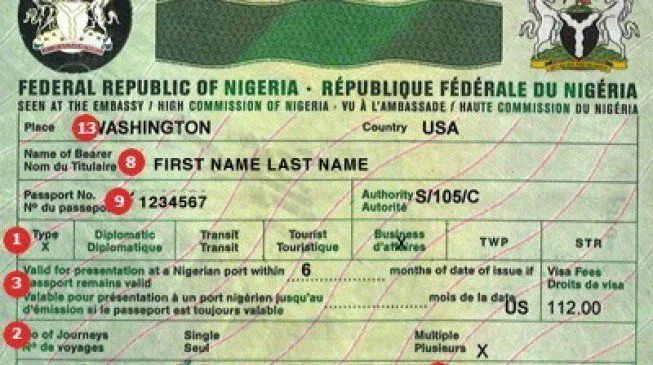
Nigerian digital quest has reached the corridors of immigration. An announcement from the Comptroller-General of Nigeria Immigration Service (NIS), Muhammad Babandede, said that there is a plan to digitize tourist visa before the end of 2019.

Babandede disclosed this while hosting the Director General of the Nigerian Tourism Development Corporation (NTDC), at his office on Saturday. He said there is an ongoing effort to make tourist visa web-based in order to improve tourism in Nigeria.

“Everything will be digitized with no physical contact with anybody. Once you apply online, upload your application, submit, pay, and get approval, you start coming and within 24-48 hours, you get your tourist’s visa,” he said.

He said that consideration has also been given to those visiting the country for religious reasons.

“We give them visa-on-arrival for certain churches because we know their spending will boost our economy,” he said.

Much attention has been given to tourism recently by the Minister of Interior, Rauf Aregbesola, who launched the Migration Information Data Analysis System (MIDAS), to track tourist activities and keep the records. Babandede said MIDAS will help the NIS with the statistics of tourists visiting Nigeria.

“The MIDAS will benefit a lot of people and organizations, tourism will benefit from this. We are hereby inviting the NTDC to feed tourism content and activity into the MIDAS system for overall best tourism experience and sustainable economic development in Nigeria,” he said.

Coker noted that the absence of human interphase on the Visa-on-Arrival platform is an indication that there is need for digitization of the system to enable development. Many other African countries have cashed in on the Visa-on-Arrival system to boost tourism; Coker said that the digitization of the visa process is in order to increase the chances of people coming in to do business and improve its ranking on ease of doing business.

“The fear of going to Nigeria now isn’t about how do I get a visa, it’s a certainty that one will get the visa on arrival once one follows very simple procedures. This has changed both images of Nigeria and the ease of coming to Nigeria and doing business in our country,” he said.

However, Coker appealed to NIS to make more room for accommodation when it comes to data sharing. He said there is a need to deepen the collaboration between NTDC and NIS through the digitization of data collation.

“While thanking you on one hand, I will also ask on the other hand that some of the data we get is limited because we do not have a permanent presence at the borders.

“But the complete data that you have can assist us with the right data to the National Bureau of statistics and Central Bank of Nigeria. So we would like to plead with you that the data starts to flow again monthly toward us.

“We would essentially like to collaborate with the NIS to establish a seamless channel through which we can adequately furnish you with information on tourism activities to enable us to work better and ease bottlenecks,” he said.

He also raised concern about the embarkation and disembarkation cards for foreign visitors, which he said are difficult to write due to their small sizes.

“I humbly suggest that the card be uploaded online so that, from your electronic gadget, phone or laptop, you can fill the card online, this will better foreigners’ experience,” he concluded.

In August, the U.S. announced revised visa reciprocity for Nigeria, a hike in fees for visa application for Nigerians to commiserate with the price that the Nigeria government charges Americans for visa. According to the statement issued by the U.S. consulate, the U.S. government has engaged Nigerian government to request that the Nigerian government change the fees charged to U.S. citizens for certain visa categories. After 18 months of review and consultations, the government of Nigeria did not change its fee structure for U.S. citizen visa applicants.

This is just one of the examples of the difficulties in obtaining visas to Nigeria. For other countries, it’s far worse before now, and it’s one of the reasons Nigeria kept ranking low in the ease of doing business.

So the plan of NIS to introduce digital visa process that allows visa-on-arrival is a development that its benefits span across ease of doing business, development of the tourism sector, and probable reciprocity from other countries that Nigerians visit.

In Support for the Adoption of Electronic Voting System in Nigeria

0

Some constant unpalatable phenomena have always characterized the decades of post-independent periodic elections in Nigeria – violence/killings, voter intimidation/harassment, heavy bribery, riggings, manipulation of election results, ballot box snatchings, and so on.

The most recent Kogi and Bayelsa States gubernatorial elections didn’t escape those features.

The Diplomatic Watch, which comprises Austria, the European Union Delegation, Germany, Ireland, the Netherlands, the United Kingdom and the United States expressed their displeasure with the conduct of the elections.

In their words: “We are concerned by evident vote buying and credible reports of ballot box snatching in both Bayelsa and Kogi.”

A reasonable progressive society will not allow itself to be repeatedly continuously prone to practices of failure except something was seriously wrong with the Leaders and the Led. Such failures becomes outrageously ridiculous when the solutions that could end it all stares all of us in the face.

When commonsense refuses to be common to a community of people, such people are worthy of an assembly of global wailers who gathers to mourn their blatant foolishness.

Just a few days ago, the immediate former president of Nigeria, Goodluck Jonathan, expressed his disapproval with the happenings in the 2019 governorship elections in Kogi and Bayelsa state. He made a couple of statements that expressed my thoughts for some years now about the way forward for Nigerian elections. He said:

‘’The signals coming from Kogi and Bayelsa are quite disturbing. The use of thugs, shooting guns and our people are already being killed when the voting process has not even started is disturbing. This would not happen if we have got to a point in this country where voter card matters. That is why I have always advocated electronic voting. If people these days can transfer billions of dollars from one bank to the other using electronic means, then I believe we can do electronic voting perfectly and that will ensure the use of thugs during elections would not come up again.’’

Isn’t that common sense solution to the unreliable volatile electoral system in Nigeria?

Elections in Nigeria has always witnessed a low voter turnout. This is especially common among the youth population.

According to the Chairman of the Independent National Electoral Commission (INEC), Mahmood Yakubu, there are currently 81 million registered voters in Nigeria. The youths, aged 18 to 35, are about 63% of registered voters which is about 51 million young registered voters.

If the total accredited voters in 2019 presidential election is 29,364,209 and Nigeria has over 51 million young registered voters, then the voting strength of the youths has not been properly harnessed.

Voters’ turnout in the 2019 Presidential and Parliamentary elections was far less than expected. The postponement of the election from February 16 to February 23 by the Independent National Electoral Commission due to logistics problem heightened voter apathy, especially among the youths.

The election process which is mostly manual (and therefore subject to electoral manipulations) and the long time it takes to cast vote on election days also discourages voters’ participation. The case of voters being limited to voting only in the polling unit where they registered reduces participation as a lot of them have relocated from these areas to other parts of the county.

The most viable method through which all classes of Nigerian eligible voters can fully participate in elections is if the current manual voting system is allowed to run along with a completely digitized voting system.

It would be very erroneous to think we are not ready for a digitized voting system. The statistics don’t lie.

According to the International Telecommunications Union (2018):

  • About 77 million Nigerians uses smartphone.
  • Internet penetration in Nigeria is at 63% of the population which is about 126 million.
  • 23% of Nigerians access the internet daily.

2013 Reports by the Nigerian Communications Commission (NCC) states that:

  • Nigeria has the highest number of mobile phone subscriptions in Africa – more than 93 million, representing 16% of the continent’s total mobile subscriptions.
  • The number of subscribers are expanding at about 40% every year.

According to Jumia 2019 mobile report:

  • There are over 172 million mobile subscribers in Nigeria, implying a penetration rate of 87% of the population.
  • 44% of mobile subscribers are using 3G technology while 4% are using 4G technology.
  • Nigeria’s broadband penetration is forecasted to rise to 55% of the population by 2025 with 70% having 3G connectivity and 17% having access to 4G networks.

Billions of naira transacted through phones by hundreds of thousands of Nigerians occurs daily in the country.

All these information technology statistics points to the obvious fact that Nigeria is absolutely ready for a completely digitized electoral process. All that is needed is the political/leadership will to execute.

How difficult can it be to fully digitize a voting process that occurs only once in 4 years?

The Nigerian youths, who constitutes the majority of the voting population, love using information technology to execute tasks due to its speed, convenience and efficiency. If people can vote online with their smartphones using their Voter Identification Number (VIN), the rate of youths’ democratic participation in elections will geometrically increase.

There have been arguments like – ”there are vast locations in Nigeria where there is very low or nonexistent internet penetration”.

The Nigerian financial sector has evolved to solve this problem. There is now mobile banking via USSD.

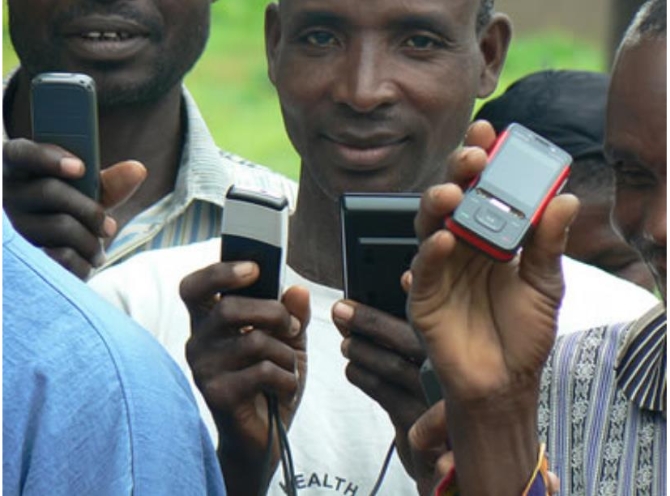
The USSD (Unstructured Supplementary Service Data) is a GSM technology that is used to send text between a mobile phone and an application program in the network without the need for internet. Through this internet-less medium, you can make instant transfers, check your account balance, pay bills, buy airtime etc via the dialing of short codes and supplying your bank account information.

So what solutions does this provide for Nigerian elections?

The commonsensical implication is that it is possible for a registered Nigerian voter to vote through the USSD technology for any political party’s candidate of his/her choice through his/her phone without access to the internet as long as he/she can supply his/her Voter Identification Number (VIN) in the USSD voting process.

However, some statistical evidence suggest that the manual voting process should not be entirely wiped out.

According to the EFInA (Enhancing Financial Innovation & Access) 2018 Survey:

  • The Nigerian adult population (18 years and above) is 99.6 million.
  • Out of this, 63.1 million are based in the rural area
  • 20.2 million have no formal education.

Therefore, the complete usage of a digitized voting system could disenfranchise millions of uninformed Nigerians concentrated in rural areas.

This is why a manual voting system needs to be run concurrently with a digitized voting system such that there is less of manual system and more of digital vote in urban areas and less of digital versus more of manual voting system in rural areas.

A digitized voting system will mean less of logistical demands that manual voting system requires, thereby saving us the kind of national embarrassment caused by the last minute postponement of the 2019 Presidential/Parliamentary elections from February 16 to February 23 by the Independent National Electoral Commission (INEC), which was mainly attributed to logistics problems.

A digitized voting system implies a demoralization of the factors and actors that emboldens the farce of an election that plays out in the 2018 Osun State gubernatorial election, the violence and corruption that determines Nigerian election results and the general unreliability of the voting system.

A digitized voting system means every eligible voter can vote from any location in the country irrespective of distance from polling units where they registered.

If the selfish desires of the Nigerian political leaders who came into power through dubious election processes prevents them from enabling an obvious solution that could geometrically increase voters’ participation and bring integrity into our electoral system, then the citizens must rise in unison to demand for such solutions.

It is a shame that when there are weightier issues, the people in government are focused on sponsoring a bill to criminalize hate speech. The successful passage of such bills can only further undermine our democracy and make the electoral system more susceptible to selfish manipulations.

Wouldn’t it be awesome if you can vote via your mobile phone in the comfort of your home on election days?  Wouldn’t it be awesome to vote without fear of intimidation, temptations of bribery and mental/physical exhaustion from travelling long distances to queue for hours at polling units?  Wouldn’t it be great to know your vote is automatically validated immediately you vote and thereby less vulnerable to manual manipulations? Wouldn’t it be nice to be spared the ridiculous sight of top INEC officials at collation centers strenuously staring through long sheets of voters’ data which their spectacles couldn’t effectively capture?  Wouldn’t it be great to have a truly free and fair voting system that effectively keep leaders accountable to the governed?

An electronic voting system properly anchored on flexible secure  information technology innovations can make all these happen.

Commonsense solutions should never be difficult to comprehend and activate for any nation that desires progress.

Visa Partners With Interswitch To Deepen Electronic Payment In Africa

0

Founded in 2002, Interswitch disrupted the traditional cash-based payments value chain in Nigeria by introducing electronic payments processing and switching services. Today, Interswitch is a leading player in Nigeria’s developing financial ecosystem with omni-channel capabilities across the payments value chain, processing over 500 million transactions per month in May 2019.

In 2018, electronic payments in Africa accounted for only 12 percent of transactions by volume, compared to 54 per cent in Europe and 79 per cent in North America. Sub-Saharan Africa is the fastest-growing digital payments market in the world, with electronic payment volume expected to grow at a CAGR of approximately 35 per cent from 2018 to 2023 in the region (excluding South Africa). This progress is expected to be driven by the deepening payments infrastructure, population and urbanization growth, GDP growth above the global average, increased mobile and internet penetration, as well as a supportive regulatory landscape for electronic payments and financial inclusion.

Interswitch’s core market, Nigeria, is the largest economy in Africa with a rapidly growing electronic payments market. Point of sale (“POS”) and ATM transactions per adult grew at a CAGR of 94 per cent and 59 per cent from 2013 to 2018, respectively. In Nigeria, there were only 11 card transactions per adult per annum in 2018 compared to 92 in markets like South Africa, 126 in Brazil and 465 in the UK. Despite this market under-penetration, POS card transactions in Nigeria are expected to grow at a CAGR of 63 per cent between 2018 and 2023.

On Tuesday 12th November, Interswitch Limited (“Interswitch” or the “Company”), a leading technology-driven company focused on the digitization of payments in Nigeria and other countries in Africa, and Visa Inc. (“Visa”), the world leader in digital payments, announced a strategic partnership that will further advance the digital payments ecosystem across Africa. As part of the agreement, Visa will acquire a significant minority equity stake in Interswitch. The investment makes Interswitch one of the most valuable African FinTech businesses with a valuation of US$1 billion. Visa will join globally renowned investors, Helios Investment Partners, TA Associates and IFC, as shareholders in Interswitch, alongside Company management.

The partnership will create an instant acceptance network across Africa to benefit consumers and merchants and facilitate greater connectivity for communities. Both parties will also retain their respective independent solutions, and Interswitch will retain its scheme neutral strategy.

Mitchell Elegbe, Founder and Chief Executive of Interswitch, said; “Sub-Saharan Africa is the fastest growing payments market in the world, with growth driven by a young and dynamic population, rapidly evolving consumer behaviour, and an increasing desire for payment solutions that can be accepted across the continent and abroad. I am delighted that Interswitch has formed a partnership with Visa, with whom we plan to drive the next phase of transformation in the African payments landscape.

Andrew Torre, Regional President CEMEA, Visa, said; “Africa is a priority region for us, and we continually seek strategic partnerships with local players to further strengthen our leadership position and enhance the payments ecosystem across the continent. This partnership aligns with our global strategy to work with and invest in innovative partners, and we look forward to working with Interswitch to provide new consumer and merchant experiences and support the rapid growth of digital commerce across Africa.”

Babatunde Soyoye, Helios’s co-founder and Managing Partner, added, “A strategic investment by Visa, the world’s leader in digital payments, into Interswitch is a substantial endorsement of the Company’s expertise in African payments. As an active investor in leading African payments businesses, we see tremendous opportunities to digitise payments across the continent and have worked closely with Interswitch’s management team to build a high quality and scalable platform geared to address some of these opportunities. We look forward to further collaboration with the Company alongside Visa.”

The transaction is subject to the relevant regulatory approvals and is expected to close by Q1 2020.

Come to think of it, as this makes Interswitch the most valuable fintech of African origin today and sets them on course to accelerate the transformation of the digital payment ecosystem and improve financial inclusion across the African continent.

The Nigeria’s Chams Plc $360M Suit Against Mastercard, Ajay Banga, etc on NIMC Deal

1

Justice Rilawanu Aikawa of the Federal High Court sitting in Lagos has ordered all Nigerian banks not to accept the transaction of any Mastercard that has the logo of the National Identity Card Management Commission (NIMC) on it, due to ongoing rights’ infringement suit filed by Chams Plc, and Chams Consortium against the Singaporean financial company on August 28, 2019.

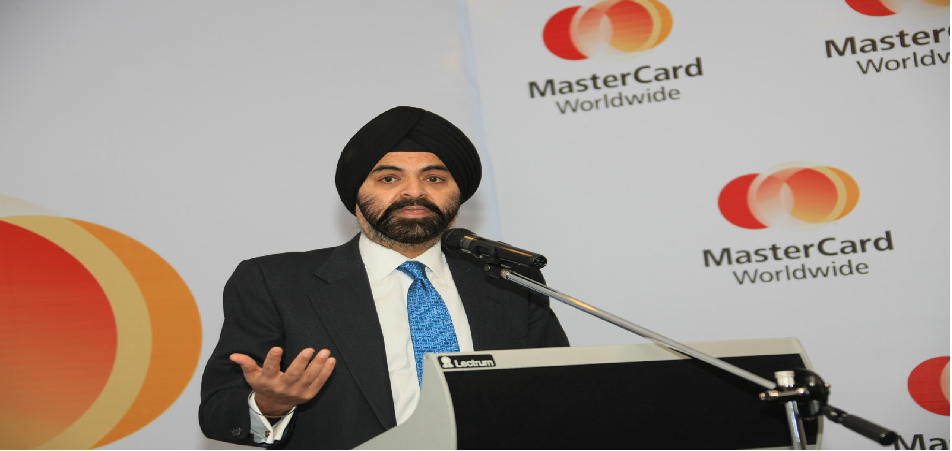
The suit which also has as defendants; Ajay Banga, president and CEO of Mastercard International, Omokehinde Ojomuyide, Country Representative of Mastercard in Nigeria, Daniel Monehin, the Staff of Mastercard, the NIMC, and 22 commercial banks, is making a claim of N114 billion (about $360 million) in damages.

The verdict reads: “An order of interim injunction restraining the defendants , whether acting by themselves or by their directors, officers, servants, agents, technical managers, or otherwise however from further manufacturing, producing, designing and or printing or authorizing the manufacturing, production, designing and or printing of any National Identity Card with Mastercard logo as described in paragraph 16 of the supporting affidavit in Exhibit CC9 pending the determination of the motion on notice filed.”

The N114 billion damage claim was divided to compensate for three categories of losses incurred by the claimant. The N84 billion is for special damages as a result of loss of expected revenue for years, N10 billion is for general damages of fraud perpetrated against Chams and Chams Consortium while N20 billion is inducing the breach and termination of the concessions awarded to the claimants by the 3rd defendant as a result of the fraudulent actions of the 1st and 2nd defendants.

The whole saga started in 2006, when the Federal Government opened bidding for the National ID project. Chams competed and emerged the winner, beating several other bidders to the National Identity Card (NIC) concession. Before and upon the execution of a concession agreement with NIMC, Chams Plc pursued the implementation of the NIC concession by incorporating Chams Consortium Ltd (CCL), a special purpose Vehicle (SPV) with the sole purpose of implementing the NIC concession.

The petition filed by Chams to the office of the Vice President explained where things went sour for MasterCard and CCL.

“Chams Plc holds majority shareholding in CCL. Chams Plc also invited MasterCard to work with the Chams group as one of its technical partners on the NIC concession. To our greatest surprise and disappointment, MasterCard went on to collude with our client (NIMC) to frustrate the concession won by Chams.

“MasterCard Asia/Pacific Pte Ltd (MasterCard) entered a Memorandum of Understanding (MoU) with Chams Plc by which the parties noted that they were considering working together to facilitate the issuance of identity cards to Nigerian citizens. On 18 November 2012, CCL also entered into a Customer Business Agreement (CBA), with MasterCard setting obligations of both parties. The CBA contained several clauses including non-disclosure and non-compete clauses.

“In the context of MasterCard/Chams Agreements, MasterCard was provided with a copy of the exclusive and confidential Concession Agreement granted to CCL. Over a period of many months, MasterCard worked closely with Chams on architecture of the National ID project designed by Chams. Chams exposed the entire architecture to MasterCard while working jointly to integrate MasterCard functionalities into the architecture of the National ID project. In the course of these developments, MasterCard received confidential information from Chams as contemplated under the CBA.

“CCL also formally introduced MasterCard to NIMC as its technical partner. Prior to this introduction, Mastercard and NIMC had no business relationships but each has existing relationship with CCL. CCL granted MasterCard access to NIMC as a signed-on partner under the concession agreement. Thereafter, MasterCard started having secret meetings with NIMC without informing, inviting, involving or updating Chams who brought them into the scene as partners.

“As a product of these meetings, MasterCard eventually entered into an agreement with NIMC to the exclusion of Chams Consortium, Chams Plc and Nextzon. This agreement was a direct breach of MasterCard’s CBA obligation not to compete with CCL or use any information disclosed under the CBA for purposes other than the CBA’s implementation.

“Following failed attempts to reason with MasterCard, we instructed our Nigerian lawyers, Olaniwun AJayi LP and UK lawyers, Allen & Overy LLP in June 2013 to take legal action against the clear breach of confidence and infidelity exhibited by MasterCard against Chams Plc and CCL. Because of MasterCard’s deep pockets and threats to outspend us in UK courts, we were persuaded to explore amicable settlement of our case against MasterCard. Our lawyers sent preliminary letters to MasterCard in that regard.

“Between April 2014 and till recently, we met with and wrote to the CEO, MasterCard worldwide on MasterCard’s breaches of obligation under their agreements with Chams. MasterCard always responded with the indifference of a huge multinational that believes it cannot be sued by a small local Nigerian company. MasterCard arrogantly told us that with their South African, Singaporean and American lawyers, they can outlast us, resource-wise, in courts.

“When we raised the issue of MasterCard’s underhand and sharp practices in cheating Nigeria and Chams, they threatened us again with court cases which they assured us we could not survive. All these were in disregard of public admissions made by MasterCard’s Country Representative, Omokehinde that Chams brought MasterCard into a deal MasterCard snatched. This assertion was also corroborated by Chris Onyemenam of NIMC, who publicly acknowledged that MasterCard’s Daniel Monehim did not disclose to NIMC that MasterCard had an agreement with chams before NIMC signed its illegal agreement with MasterCard. Based on the above, we held a meeting with the then Director General of NIMC, Chris Onyemenam, a concerned CBN Director, Walter Ahrey and the representative of MasterCard, Daniel Monehin in September 2013, at Hilton Abuja. DG NIMC, Chris Onyemenam, at that meeting asserted and confronted Daniel Monehin that MasterCard failed to disclose to NIMC the existence of the MasterCard/Chams agreements.

“Chris specifically asked Daniel Monehin and MasterCard to go resolve the betrayal issues with Chams, accusing Mastercard of subverting Nigeria and Chams. In show of remorse following Onyemenam’s accusation of MasterCard, an onerous draft of Technical Support Agreement (TSA) was sent by Daniel Monehin of MasterCard to Chams Plc for execution in December 2013, offering a paltry sum of US $500,000 against more than US $100 million CCL had invested on the National ID project. MasterCard, another giant multinational, was offering a poor Nigerian outfit peanut.”

It was based on the consideration of these events that the court made its ruling against MasterCard, NIMC and Nigerian banks. The Anton Piller order empowered the prosecuting counsel, Kemi Pinheiro SAN, Inspector General of Police (IG) or any officer not below the rank of Assistant Superintendent of police to search any of their premises, take into possession and remove any document relating to the said affidavit. They were also given orders to inspect, take photos and arrest anyone who is found to be contravening the orders of the court.

The whole event has been a defiant display of greed, conspiracy, rip-off and corruption. The NIMC was willing to betray a Nigerian company, and a multinational company like MasterCard could care less about its repute to play a dirty deal that betrays whatever integrity stands for. However, there is a lesson: Chams was able to lay a claim because there was an agreement signed by all the parties involved. Again, Chams, even though it took quite some time wobbling in the shadows of intimidation, did not cower to the financial muscle that MasterCard was flexing. So in business, sign agreements, document events, keep records, and do not be intimidated to approach the court when a party breached the rules.

Institute of Agribusiness Management Nigeria Honors Zenvus

0

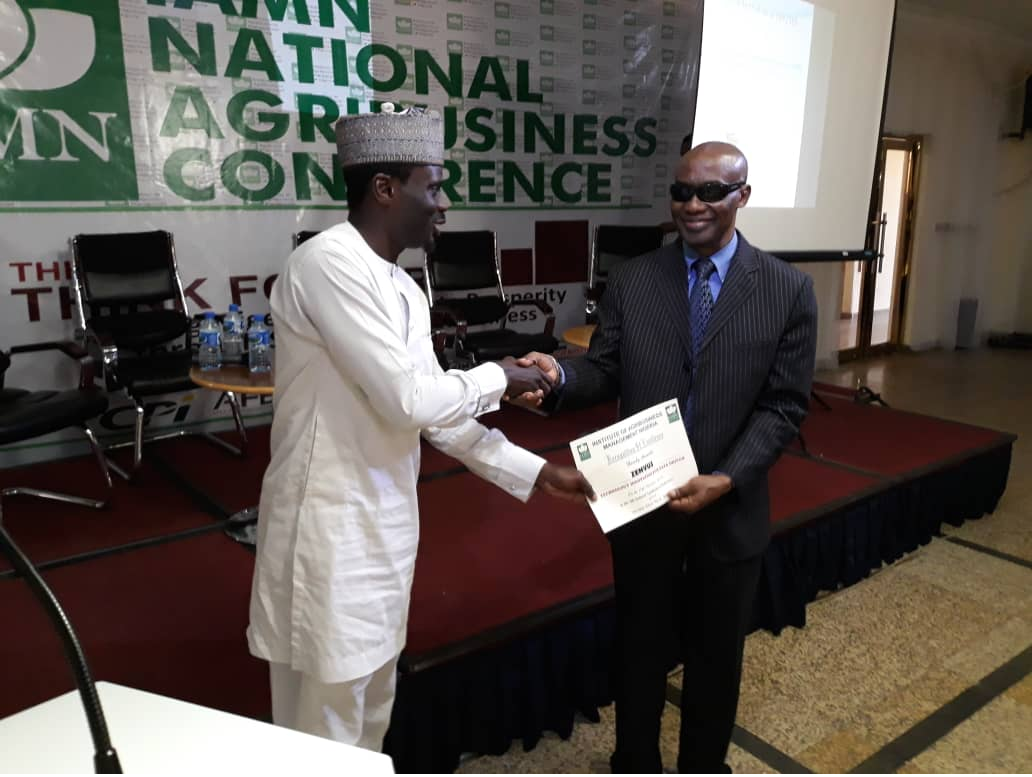
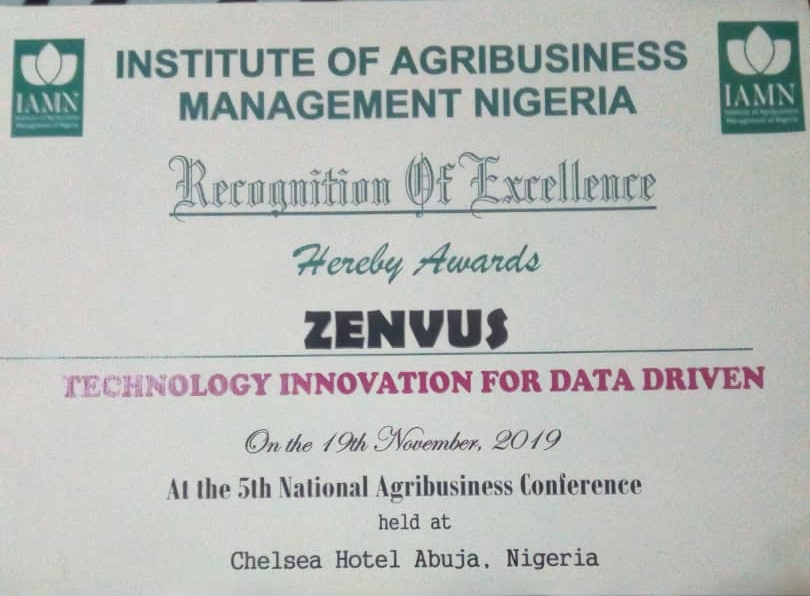
Today in Abuja, Nigeria, the Institute of Agribusiness Management Nigeria awarded a Certificate of Excellence to Zenvus for “pioneering a new agricultural system in Nigeria”. My colleague Mukhtar (on white) received the award on behalf of Zenvus and all of us. And of course, I thank Mukhtar and Fatima for excellence in business execution as both lead our business in the northern part of our nation. Thank you.

What Is Zenvus?