DD
MM
YYYY

PAGES

DD
MM
YYYY

spot_img

PAGES

Home Blog Page 6574

The Need to Tackle the Problem of Ageism in Recruitment Processes

0

There’s a viral picture that showed two “young” corps members during their passing out parade. I’m sure these corpers are like 40 years old or more; but they still participated in the NYSC programme. I laughed so hard when I saw this picture because it reminded me of “the adult corpers” we had during our NYSC days. One of those adult corpers was our CLO and we used to address him as “Pa James”. No one dared call him by his name because he was like a papa to us.

If you come to the labour force, you will see a lot of people that are getting younger instead of growing older. For example, you can find someone that was 35 years old three or four years ago that is 30 years old today. You can imagine the confusion such a thing can cause.

The greatest of them all is the magic performed by some civil servants, which makes the Guinness World Records seem like child play. For example, I have seen someone that wrote her first school leaving certificate at the age of 6 months. And I have heard of people that wrote and passed theirs before their mothers conceived them. Isn’t that something magical? And these records are officially documented and stored in their files.

Why do people have to lie about their age? It has become a tradition for people to doctor their ages before going for new jobs, especially if it is for the public sector. Why should age be allowed to decide who should be recruited and who shouldn’t?

Ageism isn’t a problem facing Nigeria alone; it’s a global thing. I was prompted to write this after reading a foreign newsletter that addressed the issue. I was actually surprised that something like this exists in other parts of the world.

Ageism may be as old as man because it has been in existence long before I was born. People have been discriminated because of their age – the young are treated as unwise, while the aged are treated as slow-witted. In those days, women were expected to marry within a particular age bracket. Those that missed their opportunities at that age were branded “old maids” and men were discouraged by their relatives – both male and female – from marrying them. The reasons for discriminating these ladies bordered around reproduction related matters and the fact that their husbands may not be able to “control” them at that age. Men also faced theirs because if a man fails to marry or become wealthy at a particular age, especially when his age mates had “acquired” both wealth and wives, he will be seen as irresponsible.

Today, the world is gradually turning its face away from the expected age for marriage (people can now marry in their 80’s and no one judges them). Even some tribes in Nigeria are beginning to relax their grips on the tradition of early marriage for both men and women. But then, as attention is shifting from marriage age, it is focusing on employment age.

Employers no longer want to recruit people with ages that indicate they have spent many years on earth, unless they are seeking their wealth of on-the-job experiences. As the day breaks, so does the age for entry level into employment reduces. Earlier, the required age for entry level or trainee jobs into most establishments was “not more than 30 years old.” Later, it came down to “not more than 25 years old as at the last birthday.” Now, some employers want graduates that are “21 years old as at the time of application.” Who knows if in the next ten years it will be “graduates with ten years experience but are not more than 20 years old before the date of the application”?

Someone once asked me why employers want more of young people in their team than their older counterparts. For an answer, I told my questioner that companies look for very young people because they want those they could comfortably micromanage as well as those that can work tirelessly because of their youthful exuberance. I also told her that these establishments know that these young people do not have many financial obligations, so they are ok with whatever they are paid. Put differently, the establishments that discriminate the ages of their applicants want young people they can pay peanuts and still get the most out of them.

Well, I might not be completely right but I know I’m far from the truth. I know there are advantages to having young people in a team. For example, they may bring in fresh and extraordinary ideas to the table and they are easier to train. Besides, they have the energy to make things happen, if they are given the opportunity. But I know a lot of employers seek younger employees for very wrong reasons.

The reason someone gave me some years ago for not employing a woman in her late 40’s was that she knows the woman, if employed, will undermine her (the employer’s) authority. She said she is biased with working with subordinates that are older than her because they hardly take instructions from her and some of them go as far as questioning her authorities. For that, she employs only younger people in her establishment.

This sort of situation is witnessed daily in different establishments, even among our domestic staff. For example, that papa that is your gardener may express his dissatisfaction with the way you talk to him even if you pay him salary. He may continue to remind you to show some respect to him because he’s your “father’s age mate.” Good managers have learnt to overlook certain behaviours from people like this so long as they deliver on their jobs.

Employers also have to bear in mind that there are individual differences. That one person misbehaved doesn’t mean that others will follow suit. The easiest way employers can look at older applicants is to see their wealth of knowledge which they must have gathered from life experiences. They should give this sort of people a chance and learn how to manage them so that they don’t have employer-employee face-off.

To reduce the rate of unemployment and poverty in the country, the problem of ageism needs to be tackled, and tackled very soon. A lot of fresh graduates leave school at the age which no longer fits into the prerequisite for most employments. This means that either they doctor their age or find other ways of surviving. I can bet you that those ones that can’t start off their own businesses will only end up doctoring their ages, which is quite improper.

In as much as I advocate for change of mindset towards the age of employment, I still believe that older employees and job seekers need to understand that they shouldn’t use their age to intimidate their younger bosses and colleagues because it only lands them into trouble. They should also be ready to embrace changes and not question every instruction given out by their superiors because they believe they should be consulted first (as par the papas in the house). Furthermore, they need to work hard so as to meet up with their work demands, if not they will have themselves to blame when they are kicked out.
Who is The “most influential” Researcher in Nigeria?

0

On 19 November 2019, the much-awaited list of “who is who” in various research fields across institutions of the world, the list of “Highly Cited Researchers” was released by The Web of Science Group, a subsidiary of Clarivate Analytics based in the United States. The purpose of the list was to showcase the significance and contribution of researchers in solving problems and contributing to the body of knowledge based on a global bibliometric analysis of the top 1% citations which is referencing of the previous study by other researchers from 2008 – 2018 across twenty-one fields of sciences and social sciences.

The “most influential” researcher in Nigeria

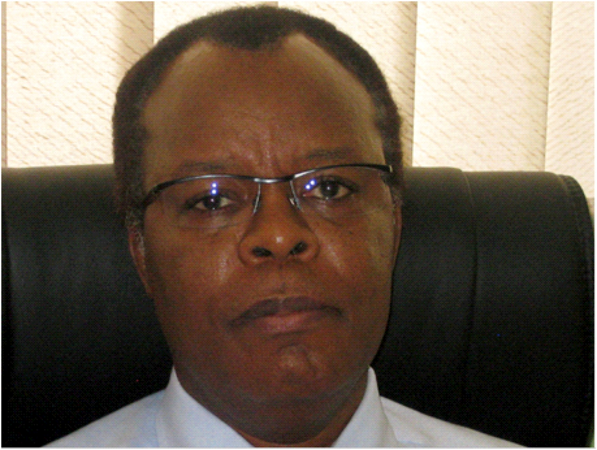
Overall, more than 6200 researchers in science and social sciences from 60 countries were highly cited by their peers. While the United States ranked first as the country with the highest number of most cited researchers, only one research scientist – Professor Oye Gureje from Nigeria made the list. The same researcher made the list in 2018. Professor Gureje is an internationally known medical research scientist specialising in psychiatry, global mental health, and epidemiology. He had both Doctor of Science and Doctor of Philosophy degrees aside his medical degree (MBBS). He is also the Director, WHO Collaborating Centre for Research and Training in Mental Health at the University of Ibadan.  His available online profile shows he has published over 380 scientific publications that have been cited for over 27,100 times. Similarly, he has published in the world most reputable journals such as The Lancet with the impact factor of 59 (2018). In the research community, publishing in The Lancet journal is as winning a gold medal to an Olympian.  Professor Gureje had seven of his research findings published in this prestigious journal.

He has, however, collaborated with more than 2500 researchers as co-author of scientific publications. His most recent research output was published in the Journal of Epidemiology and Psychiatric Sciences called for collaboration and partnership in mental health research and capacity building in sub-Saharan Africa. As of November 2019, he has published 18 scientific publications in high impact journals including Nature. The research finding that was published in the Nature journal was in collaboration with over 1000 co-authors and the publication has already been cited 18 times. Publishing in the Lancet and Nature journals is one of the criteria that are used for World Ranking of institutions in the world. This implies that Professor Gureje is also contributing to the global reputation of his employer.

Impact of research and “highly cited researchers”

While the current list of “highly cited researchers” is provided by a private organization, there is a need for institutional indicator most highly cited researchers. This could be incorporated into the criteria for the promotion. This will ensure carrying out impactful research and publishing the outcome of such research in reputable journals. However, many researchers from developing countries are still publishing in less reputable journals. This could affect the citations and ranking of such researchers. The list of highly cited researchers can foster research collaboration and mentorship for the upcoming research scientists. It also showcases the importance of carrying out impactful research as against the “publish or perish” syndrome that placed a premium on quantity rather than the quality of publications which has precipitated publishing in predatory journals. Becoming a “highly cited researcher” not only serves as a means of recognition to the researcher  but also to the affiliated institution and this could easily attract competitive research funds. Achieving such feat as the “highly cited researcher” in a field is not a child’s play, but rather a compendium of deliberate and dogged effort in personal and career development because research is not for a lazy man. Similarly, researchers do not need to seek undue recognition or hyping the output of their research activities but rather focused on robust research that can solve complex problems while recognition comes as a reward for such hard work.

Contributing and constraining factors

Why was it only the University of Ibadan that made the list? What are the contributing factors? The same university also made the recent World Ranking list. One might opine that it was because the university was the first institution in Nigeria. There are more than five-generation universities in Nigeria that have not made the list even once regardless of twice consecutively while Covenant University, a private university that was established just two decades ago made the World Ranking list twice. The major connecting factor between both institutions is their commitment to research and development. The importance and impacts of research and researchers in achieving national development cannot be overemphasized. It helps in solving complex national and global problems, drive innovation, build intellectual capital and fill the knowledge gap. However, adequate research funding is the driving engine of impactful research. There is a need for the government, institutions and non-governmental organizations to provide accountable funding for robust research.

Ndubuisi Ekekwe Spoke in the National Assembly Abuja Yesterday

2

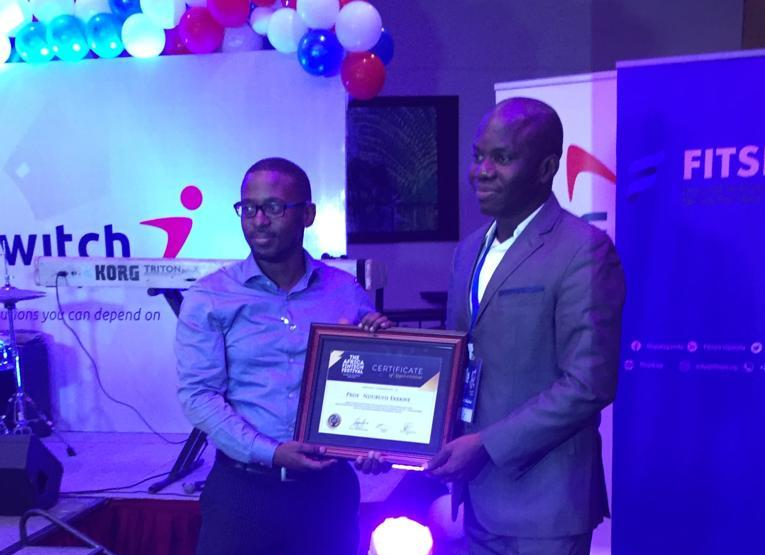
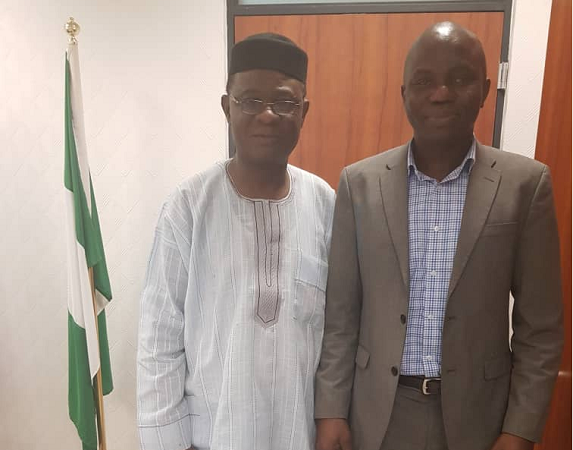
Let me tell you – it was a moment to enter that special chamber in our nation’s square at the National Assembly, the Nigerian parliament yesterday. Then it was special to keep them for hours as we discussed the mechanics to take this nation from $500B to $3 Trillion GDP. I want to thank the Speaker of the House Femi Gbajabiamila for approving my special day. We cannot give up on Nigeria – this is our nation and we will all salvage it all together.


Register for Vanguard Executive Masterclass by Prof Ndubuisi Ekekwe

0

I will run Vanguard Executive Masterclass. I invite staff and leaders of startups, SMEs, large firms and public institutions to join me on Dec 2 & 3 2019 in Lagos as we examine markets, strategies and how to unlock opportunities across sectors. I have done this in Fortune 500, HBS and some of the largest banking institutions in the world. It would be live in Lagos. Yes, two days of understanding the deep mechanics of business under a theme – “Innovate and Grow with Digital: Redefining Organisational Competitiveness and Productivity”.

For Registration & Participation Enquiries, Call or send SMS to:

  • Jude on 08034187233
  • Ife on 09095372559
  • Email:Conferences@vanguardngr.com

The amount is N150,000.

  • Date: 2nd & 3rd Dec 2019.
  • Venue: 2nd Floor, Conference Support Services, LCCI Conference & Exhibition Centre, Nurudeen Olowopopo Way, Behind Marwa Gardens, Alausa Ikeja

Register today.

Innovate and Grow with Digital: Redefining Organisational Competitiveness and Productivity

Over the last few decades, digital technology has emerged as a very critical element in organizational competitiveness. It has transformed industrial sectors and anchored new business architectures, redesigning markets and facilitating efficiency in the allocation and utilization of factors of production. The impacts have been consequential: nations like Nigeria are moving towards knowledge-based economic structures and information societies, comprising networks of individuals, firms and states that are linked electronically and in interdependent relationships. In this workshop, we will examine this redesign within the context of fixing market frictions and deploying growth business frameworks in a world of perception demand where meeting needs and expectations of customers are not enough.

Day 1 – Innovation Discovery Day 2- Growth Execution
Morning Session Morning Session
The beginning: fixing market frictions State of the Tech Nation
Emerging trends and opportunities Emerging technologies and competition
Digital Innovation frameworks and constructs Lessons from innovation cases: Nigeria, Africa and World
The redesign: IT for productivity, Internet for zero marginal cost Lab 2: Your company 2.0
Afternoon Session Afternoon Session
Becoming a digital growth innovator Lab 3: Double Play Strategy Lab
Perception demand – stimulating new markets Group Conversations
Developing digital roadmaps Group Conversations
Lab 1: One Oasis Strategy Lab Execution