DD
MM
YYYY

PAGES

DD
MM
YYYY

spot_img

PAGES

Home Blog Page 6594

The Almajiri’s Conundrum And Improving Nigeria’s Literacy Rate

0

“I call a complete and generous education that which fits a man to perform justly, skillfully, and magnanimously all the offices, both private and public, of peace and war.” — John Milton

In 2013, a UNICEF Op-ed stated that the prospect of Nigeria achieving education for all by 2015 remains frail. Fast-forward into 2019, the fear expressed by UNICEF has not only become a reality but also, the hope of Nigeria achieving inclusive formal education (western education) for all is still acute. The Global Monitoring Report (GMR) in 2015 revealed that Nigeria has the highest number of out-of-school children (OOSC) in the world. With approximately 10.5 million kids out of school, plus Nigeria dominating 12 other countries that account for 47 percent of the global out-of-school population, it is an ignoble statistics and a preventable endemic in the 21st century.

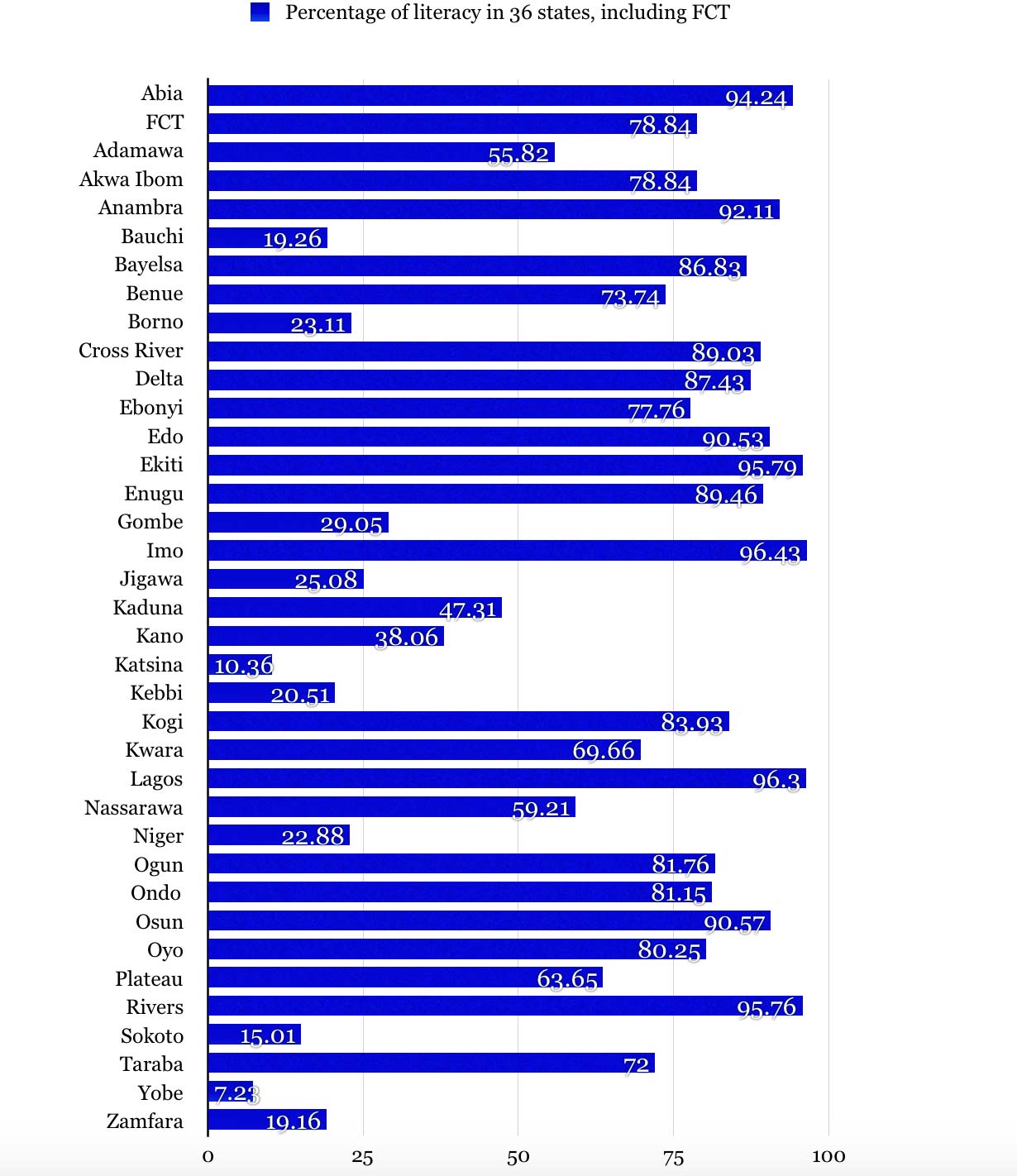
Although out-of-school children ‘syndrome’ is an educational malaise that is ubiquitous in every part of the Nigerian state, no region has it more pronounced or holds the record of having the highest rate of OOSC than the northern region of the country. With UNICEF Nigeria pegging the percentage of OOSC in northern Nigeria at 60%, the sight of primary school-age children roaming the streets of northern Nigeria states’ capitals during school hours looks normal to the locals considering their obsequiousness to this portentous phenomenon which an average educated alien in the country would term to be appalling.

Of all the spectrum of factors causing OOSC in nigeria; poverty, early marriage, illiteracy, dearth of competent instructors, inadequate facilities and increase in human fecundity, none contributes to the scalar of OOSC like the Almajiri Education System — A relic educational system that originated in the11th century in the ancient Karnem- Borno Empire that stretched from northwest Nigeria, modern-day Chad, and to the doors of Libya. Almajiri is derived from the Arabic word “al muhajirun”, meaning an immigrant. It centered around the Islamic concept of knowledge and migration that encourages the search for knowledge away from home, if the Islamic knowledge acquired is either insufficient or inconvenient.

Before the advent of the British colonialists in Northern Nigeria, the almajiri educational system also known as the Tsangaya system was established as a comprehensive system of education for learning Islamic principles, values, jurisprudence, and theology. It is a facsimile of Islamic learning centers in Muslim countries. In its apotheosis, the almajiri educational system contributed the largest workforce to the northern communities as they made significant contributions to the economy of the society. It is said that the Tsangaya system provided the British colonialists with the first set of colonial staffs in Northern Nigeria. The system though was funded through the State’s treasury, it was not dependent on the state because the students had the liberty to acquire occupational skills in between their Islamic lessons. They were involved in farming, masonry, trade, tailoring, and other artisanal jobs.

The fall of the almajiri education system began in 1904 when the British invaded northern Nigeria and took control of the state’s treasury. The new colonial administration deemed the indigenous educational system incongruous and thus deliberately abolished its state funding claiming that they were religious schools. This denigration of the indigenous educational system by the new colonial masters irked the Mallams, the students, and the society, thereby causing antagonism and acrimony for the new western education that was used to replace the indigenous format. The animosity shown towards the new educational system was compounded by its Christian origin.
Although, dwindled support from the government and the aptness of the incipient western education in the new colonial administration was a wrecking ball to the structure of the almajiri operating system, the Tsangaya education continued to thrive nevertheless, because local Islamic scholars deemed it a religious piety they owed Allah by continuing to teach in the Almajiri schools.

It is also pertinent to note that the Tsangaya educational system continued to exist not because it had any use in the new system, it never did, instead, the indigenous educational system continued to survive because of the deep religious sentiment expressed by the predominantly Muslim population of northern Nigeria against the Christian origins of western education and the inertia expressed by Nigeria’s northern elites. It is an oblique perspective that survived not only to this day but also has become an impediment to the socio-political and economic development of a significant population of northern Nigeria.

The socio-political and economic developments that ensued during the colonial rule and after the country’s independence to this modern epoch has had profound effects on the current state of the Tsangaya educational system. In equal terms, economic misfortunes and the political travesty of successive Nigerian governments have dealt massive blows to the almajiri schools. Mallams who once accepted the job of being teachers to disseminate Islamic knowledge as an act of spiritual obeisance, religious posterity and defiance against the colonists’ choice of education have turned the indigenous educational structure to an apparatus for satisfying their economic wants. Most Tsangaya in northern Nigeria has become an alternative for an orphanage for parents who can’t afford to cater to their offspring.

Stuck in some sort of time warp, the failure of those conventionally entrusted with the administration of the almajiri education to embrace educational progressivism, metamorphize and find a way to assimilate western education into the indigenous education curriculum, and teach skills that resonate with modern economic niche has helped in creating a long line of indigent Quranic teachers and graduates — both the teachers and the recipients of their teachings lack the major skills to contribute to a formal economy and are hence condemned to the catacombs of the informal economy — the students who refuse to take after their impecunious Quranic teachers occupationally tend to fend for themselves doing menial jobs, thereby continuing the vicious cycle.

From a humanitarian perspective, it would be quite obnoxious to encounter an almajiri and not pity his battered innocence. The alamajiri, deprived of the joys and boon of childhood by the society that was suppose to purvey them, their demeanor accentuate their realities: neglect, acute poverty (cognitive & material), gravely distorted future, shambolic governance, lack of parental care, and of course parentage whose current realities have been misshapen by the rabid shenanigans of successive Nigerian governments.

No country has achieved constant economic development without considerable investment in human capital. Previous studies have shown handsome returns to various forms of human capital accumulation: basic education, research, training, learning-by-doing and aptitude building. The distribution of education matters (Ilhan, 2001, p. 2). And failure to address this national disgrace portends great difficulty to the socio-economic wellbeing of the country’s future. The almajiri malaise will hunt Nigeria on two major fronts: economic and security. The nexus between poverty and terrorism is complicated but foot soldiers for terrorist groups have been known to join terror cause solely for financial incentives. Imagine an impoverished population of 10.5million illiterates under a charismatic leader with a bellicose and violent intent, the outcome would be devastating not just in Nigeria but also in the neighboring countries in the West African region already plagued by the activities of ISWAP and Boko Haram.

Furthermore, the world is well into the fourth industrial age and Nigeria is still very much lagging. In a world that is increasingly becoming data driven and artificial intelligence is being used to drive concise policies in agriculture, finance and public administration, the current almajiri curriculums should be revised and merged with western education which would boost the nation’s socio-economic development index. The educational provisions within any given country represent one of the main determinants of the composition and growth of that country’s output and exports and constitute an important ingredient in a system’s capacity to borrow foreign technology effectively(Ilhan, 2001, p. 3). Formal primary and secondary education will increase workers’ productivity either rural or urban. Although the economic prosperity of the almajiri is not a silver bullet for the country’s socio-economic challenges, and successive Nigerian governments at one point in time have been known to erect school structures to address almajiri education and lifestyle, the truth is that bad governments build schools too. More needs to be done to help the almajiri beyond building schools and effort should be made to measure the cost-benefit of investing in them and KPIs developed to the peculiarity of the situation. A concerned government would see the academic and economic inclusion of the almajiri as a concrete strategy for the socio-economic stability of the Nigerian state in the future.

Upon conclusion, inclusive modern education for the almajiri must be intentional because failure to do so is dangerous to the country’s stability, but a well coordinated effort to educate the almajiri in a highly competitive world lays a sweet spot for Nigeria’s economic development.

African Fintech Festival Is ON in Kampala, Uganda #AFFUG

0

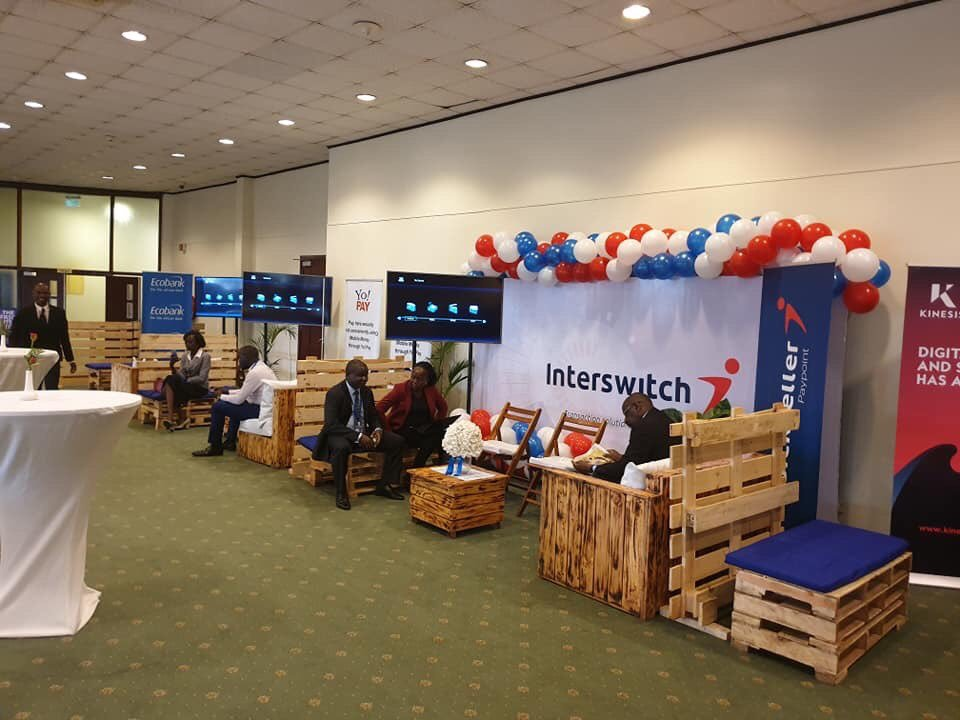
I have made it into Uganda, and tomorrow will deliver the Keynote in this year’s Africa Fintech Festival. Here, the exhibitors are showcasing some of the finest new products in African fintech sector. Our Interswitch is big here, UBA is everywhere with the flag welcoming all. Cellulant, Citi Bank, Ecobank, Standard Bank, etc are all here. It is indeed a festival; I hope to deliver a good lyrics tomorrow.

The time is 8.45am for my keynote tomorrow. And I will be speaking on a new species of companies, called fintech.  The title is “Fintech – Africa’s New Growth Operating System”. If you are in Kampala, Uganda, come over (Serena Hotel), and let us discuss the mechanics of building a sectoral operating system that would power Africa’s commerce.

Ndubuisi Ekekwe To Keynote the Africa Fintech Festival, Nov 2019 in Kampala, Uganda

Understanding The Physics Of Selling

0

“Most times, the best selling books are not the best written books.”

The moment you understand that statement, the ball game changes for you. You’d have more advantage in whatever you do.

What makes a book a best selling book is sometimes because it was sold best or it was selling best irrespective of the content it has.

While I’d strictly recommend that it’s good for a best selling book to be the best written book, I’d also be very plain that having a book with the best content doesn’t automatically mean it would be a best seller.

Now, let’s take this and relate with humans and my observation over the past few months. I have noticed that there’s a new religion flying around and I’m glad I play a huge role in the spread of the religion.

The religion is that “Africa is about to experience a new shift in few years to come, 2023 to be precise.” There will be a good change in the economy of Africa and entrepreneurship will enter a new phase.

This is not just entrepreneurship but there will be exciting opportunities for Africans but only those who embrace this religion will thrive. I have spent about a year preaching this religion.

The religion is all about changing the narrative of education in Africa to a simple definition;

“Education means having access to information that makes you relevant for the world of work in a society at a given time”

Whatever information you receive that makes you relevant in a society to be part of the labour force is a form of education either formal or informal.

Now, before I digress too much, I think I should leave those new religion discussion for another day and how it would change the narrative of Africa. Let me focus on the real issue which is about skills.

The impact of this new religion is that a lot of people are now learning different skills in several fields, several sectors and for several reasons. This is quite interesting to know that Africans are waking up!

We are in the skill economy!!

Let’s not be too fast right here. Do not run before the gun is shot is a warning I’m giving to you reading this. I have a lot of students on this space and months back, about a year plus to be precise, I have also recommended that you learn at least a skill.

A skill doesn’t necessarily mean that you should learn software development, it could be writing, speaking, even singing. Matter of fact, it could be some basic tools in your profession.

I have several skills that I have learnt over the past one year ranging from marketing to business strategy to storytelling, to business writing, to consumer psychology, to product development and a host of others.

I learnt all my skills on my mobile device and I never attended a physical event to learn anyone and I am an expert in them.

Now that everyone is rushing to learn a skill, so many persons have turned themselves to skills coach to make money from this gold rush.

Once you know a little stuff, the next thing is to hold master-classes and monetize it. I don’t have an issue with that anyway even though I don’t do that, I only have an issue with the new narrative flying around which is;

“Once you learn a skill, you’d get a high paying job”

This is the biggest lie of this present age. To every religion comes a fake one. I have seen a couple of people invest hundreds of thousands to learn a skill because they have been told that this is one of the most relevant skills in this age.

Starting from digital marketing to software development to copywriting to a host of others. While it’s true that these skills should give you good jobs, the reality remains that the opportunity for these jobs is still limited and only a very few out of the many will benefit from this.

In case you’re out there and you’ve learnt so many skills yet don’t have a job yet you feel you’d get a job sooner or later, I’m here to tell you that you may not.

You may still remain broke for the rest of your life because jobs firstly are scarce then seeing we’re in Africa, the opportunities for these jobs are limited.

If you’re earning less than one hundred thousand naira from these skills yet it has been two years of practicing full time, then you’re missing a piece of information that will change the whole game for you.

Perhaps, you have learnt the skill and you’re having an issue monetizing it, it is simply because having a skill is not what brings the money, the selling of the skill is what does.

Having a skill is important but selling the skill is just as important. Now, this is where the issue lies because most of these coaches do not really know the application of such skills so they do not know how to teach you to sell it.

I made a post earlier this year when I emphasized on why you should learn a skill to solve a problem. When I mean learn a skill to solve a problem, I don’t mean learning a skill to solve a community problem, neither do I mean learning a skill to go look for a problem to solve.

What I mean is that the approach you follow in learning a skill should be in such a way that you hope or plan to solve a problem with the skill. This helps you understand the fundamentals of such skill, it helps you know what exactly such skill does and gives you a background understanding of what to do with the skill.

To learn more on how to learn a skill to solve a problem, follow here.

Now, that’s by the way. I want to teach you in simple words how to sell your skills. I want to remind you again that; A best selling book doesn’t necessarily have to be the best written book.

I feel you should understand this already. There are few facts I will be sharing with you and you may seem sad after reading it but it’s for the better in order to give you the desired result.

The honest truth is that once you have a skill, it is left for you to create a channel from where such skill is to where it will bring you money. Most people do not know this so they keep fighting or hoping.

The worst thing you can ever do as an African is to hope without taking action. This however is the posture of many youths who have good skills. Hope is not enough.

Yet, I also understand that many people are also trying hard to get their skill out there but they’re not are not also getting results. You are very consistent but consistency is not enough.

Consistency without fully understanding what you’re doing might end up futile for you which is why I decided to write this post.

Firstly, you must know that your friends are not your customers. I wish I can repeat it again but I just hope this sinks into you. When people have skills, the first place they’re quick to show it is on Whatsapp.

If your Whatsapp list consists of your friends alone, then you just wasted your time pushing whatever information you have on the space.

I’d only recommend that you use your Whatsapp for showoff to show friends how you’re making progress with such skill or how very good you are, else you’re just wasting your time.

The only way Whatsapp can benefit you is if you understand Whatsapp marketing or you have strangers on your list. Strangers are your customers and not friends in most cases except your friends fall into the category of those who need your service.

Friends can only be your fans and support but they hardly fit in for customers. So take away the mentality that; “I have posted my content on Whatsapp, at least I’m sharing what I do, I’m loud about it”

You’re not loud about it in the presence of your friends, you’re only trying to make ends meet.

Next, you must be ready to dish out contents. Now, there’s a posture i see people take when dishing out contents. Well, let me first say when I mean dish out contents, I’m not talking about writing them out. No, that’s far from it.

I mean pushing out whatever you do to the best platform that suits what you do. If you’re the shy type, I’d strictly recommend that you get over your shyness as soon as possible. You cannot sell yourself if you keep hiding.

I must quickly add that whatever you do that is legal and has integrity, you shouldn’t be shy about it.

Well, this is a bit of digression but I really need to hammer on this because so many people care about what others say about them. They are scared of criticism, they are scared of mockery and all.

If I was scared, I wouldn’t be writing this remember but I don’t care. Just a few months ago, I had a little business knowledge, wrote for cheaper rates and now I don’t write in Naira anymore. I charge higher.

I wouldn’t get here if I kept my writing to myself. Pushing them out without the fear of criticism got me some spotlight and I’m enjoying them.

Now back to the posture people often take when dishing out contents. People take the posture of; “I’m trying to get better, please understand” or “I just love what I do, that’s all that matters”.

I really wish you all reading this could organize a small event where I could teach on skills physically. Typing is wearing me out because I want to throw my hands in the hair to emphasize a point but you cannot see me.

Stop pushing out your contents without a “chat me up to get my service” posture. The goal of pushing your content is to get people to patronize your service right?

Then I want you to close your eyes and imagine once again. Ask yourself this; “By the time my readers, viewers, followers follow my content up to this point, what should they be thinking? What would they be thinking about me?

Would they be thinking about following me or chatting me up to thank me?

Would they see me as someone who is just enjoying their passion and say “great job” in their mind?

You need to be able to program how to structure your content.

This requires a lot of mental effort but if you understand the problem your skill solves, it makes it a little easier for you.

Interswitch Goes Double Play Strategy, Acquires a Healthtech Company eClat

0
Interswitch

Interswitch acquires eClat, a health technology company that aims to improve healthcare delivery in Africa. Press release below. This is a quasi double play strategy as the financial technology company looks for volume transactions in a diversification playbook.

INTERSWITCH EXPANDS PRESENCE IN HEALTH-TECH SPACE THROUGH ACQUISITION OF E’CLAT

Interswitch Limited, a leading technology-driven company focused on the digitization of payments in Nigeria and other African countries is pleased to announce the acquisition of eClat Healthcare Limited, a Nigeria-based health technology company that aims to improve healthcare delivery in Africa. The deal was completed on September 30, 2019, and it involves Interswitch acquiring a 60% stake in eClat through the purchase of shares from current shareholders and subscription to new shares issued by the company.

Founded in 2012, eClat Healthcare Limited specializes in assisting healthcare service providers in planning, designing and operating their unique practices through the deployment of its bespoke healthcare technology platform, designed specifically for the healthcare environment in Africa. eClat’s healthcare technology platform, consists of a core e-Clinic software (including electronic billing, immunization, ante-natal and care pathway functions), as well as a variety of additional specialist modules. Prior to the acquisition, eClat’s platform had become a leading Electronic Health Record (EHR) platform used in over 250 public and private healthcare facilities in Nigeria.

Nigeria’s healthcare system currently lacks adequate funding and a national framework, leading to operational inefficiencies. Interswitch’s strategic investment in healthcare technology aims to address these challenges by modernising the healthcare sector in Nigeria and eventually in Africa through its innovative products and services. The combined product offerings of Interswitch and eClat are expected to, amongst other things, enable operators in the healthcare sector develop new capabilities, improve the efficiency of their core operations and facilitate seamless payments.

Due to the growing adoption of Interswitch’s healthcare product offerings by the operators, Interswitch’s healthcare technology platform aims to be one of the top industry platforms in Nigeria, which can be utilised as a major data source by healthcare policy makers for planning and efficiency improvements in the sector. As a result of this acquisition, the combined healthcare technology solutions are expected to position the Interswitch group as a health-tech solution and payments provider of choice to the healthcare industry going forward.

Commenting on the transaction, Mitchell Elegbe, Founder and Group Managing Director/Chief Executive Officer of Interswitch, said:

“We are a technology company that is innovating to deliver value across sectors that are critical to Africa’s social and economic development, our acquisition of eClat demonstrates strong progress along this strategy and alignment with our corporate vision.

Healthcare is rapidly evolving towards new, integrated and scalable models of care delivery that put the consumer at the centre. At the core of Interswitch’s expansion into healthcare is our ambition to provide customers with greater access to healthcare across different interaction points beyond hospitals, such as at pharmacies and primary health care facilities, providing much needed services to patients across Nigeria and, in the future, in Africa. It also represents an opportunity to introduce a number of Interswitch’s products, such as our Verve Health cards, as well as our payment collection & disbursement solutions (Quickteller for business), that will drive much needed efficiency in payments for health services across the value chain”.

Also remarking on the acquisition, Dr. Wallace Ogufere co-founder/CEO of eClat Healthcare Limited stated The growing adoption of value-based care, combined with the increasing level of usage of patient portals across the industry, has made it critical to take a new approach to patient engagement solution design in Nigeria. We expect to tightly integrate the eClat capabilities into the Interswitch platform, adding functionality that would enable providers to reach their entire patient populations by leveraging existing patient contact information

This new acquisition by Interswitch represents the latest of several strategic investments executed by the company to enhance Interswitch’s product and service offering and expand its reach into new markets as the payments technology sector in Africa expands rapidly. In 2016, Interswitch acquired the mobile financial services player, VANSO. Interswitch had earlier closed the acquisition of Paynet Group in February 2015 in a deal that resulted in the creation of a combined network of over 100 financial institutions, deepening Interswitch’s footprint in East Africa. Interswitch intends to continue with its expansion strategy whilst refining its offering, creating innovative payments solutions that are tailored to the demands of the African market. The acquisition of eClat Healthcare Limited is expected to further enhance Interswitch’s capability to provide comprehensive solutions that involve making payments a seamless part of everyday life across critical social sectors in Africa.

The Best Way To Introduce Technology To Your Business

2
Source: Dreamstime.com

I wrote a post some time ago titled How To Save Your Company.

This would be another long post as usual, and if you really want to become an entrepreneur, and you’re not accustomed to reading posts that have over a thousand word contents, then you’re not ready. You’re just fraternising with the idea of hustling, you are hustling because it just shows you’re not reading books.

I have established the fact that solving a problem is different from building a business. You can solve a problem and make no dime from it if you do not know how to build a business around it. Also, you can build a business without really solving a problem.

This may be the first time someone is telling you this because a lot of people who you pay huge money to learn from might just say – if you want to start a business, look for a problem to solve and monetize it.

If we look at it in the skeletal view, it’s very correct, however so many wantpreneurs have misunderstood this to be solving huge problems, solving dire problems. Well, it is not so. A good example is the reality show called “Big Brother Nigeria”. That’s a business on its own and there’s no problem it’s solving.

You may want to debate that it’s solving the problem of entertainment. But is it a dire need? Do people really need Big Brother?. Were people really craving a reality show like Big Brother Nigeria before it started? The simple answer is No!

No one could have imagined such a show will bring millions of naira in turn over for the organizers. They just built the “business” around some human realities. I had to state this point to make you as an entrepreneur understand that you really need to understand business aside from solving a problem, else your business wouldn’t scale.

The first lesson I want you to note down today is: NEVER BUILD YOUR BUSINESS ON ASSUMPTIONS OR SPECULATIONS

What I mean is that it can cost you your head to set up a busy assuming there’s a need, assuming there are 1 million customers, assuming the clients will come. In the last piece, I simply explained how the market size for the Edtech industry is 11 million customers but in real sense they are not up to 1 million.

What this should point out is that you need to do your assignment as an entrepreneur on research. Your research has to be well grounded, it has to be real, it has to be very correct. I will stop here shortly and continue before the peace ends.

The second lesson to take note of is: NEVER JOKE WITH THE POWER OF NUMBERS

It’s simply a continuation of the previous point. I feel a lot of entrepreneurs do not take this seriously or do not even understand this. Numbers help you plan and succeed. I quite agree that it’s not easy understanding numbers when it comes to the business world.

There are so many entrepreneurs yelling that they’d become billionaires just by running a particular business whereas in the real sense, such a business cannot make them more richer than a hundreds of thousands for decades and eternity. This is what I simply termed as optimism bias.

Let me give a quick illustration of this so you’d understand my point before I continue on the real point;

Let’s assume I want to join the Super Eagles team of Nigeria as a young guy, I will be full of optimism that I will one day join the team if I am consistent with training. While that may sound true, it is so very untrue. I might be consistent for eternity and not get a chance to even play for any club in the state. The reason is simple;

Super eagles team just needs 11 players on the team at a time andets say there are 2 million young Nigerians who also want to play for Super eagles; this means that my chances are low.

Optimism will not help you consider the numbers or look at the reality. There should be an optimism check or boundary. Once you realize that the probability of playing for the super eagles team is low, it gives you the awareness that your chances are slim and this helps you pivot and make the right strategies which could be

Change location

Train 15 hours instead of 5

Try to chat some players up

Block their cars

Play for the school team

etc

I just gave this as examples. The issue is a lot of people are taking this path already but they don’t know. They just feel it’s the next step while some are just confused. This analogy to just gave will help you to come up with the right strategies after understanding the boundary of your optimism.

You cannot be optimistic enough to claim you’d build a company that will beat Facebook. I can. The reason is because I know the boundary of my optimism, let’s say the probability is 1: 2 billion chances. That’s the boundary of my optimism and once I am fully aware of this, I need to go learn and understand what I need to measure up to make the probability 1:1.

Why did I go through the stress to analyze this for you? I did that because I want to talk about technology and your business. The first problem around this will be in the form of lessons as well.

  1. You don’t introduce your business to technology, rather introduce technology to your business.

People just start from the wrong side of things. A business should be built from the foundations first and not the roof. When people want to build businesses, they are in a haste to implement all the technological opportunities available, the technological tools available. It’s very wrong.

The reason is not far fetched; you have a business, you already know your numbers and the fact that your business cannot fetch you more than some millions in Nigeria and you want to become a billionaire, this is where you begin to apply technology.

I’d give the proper analysis even though it’s pretty hard trying to explain it. Firstly, I will begin by saying that technology plays so many roles in businesses of which one is to help reduce cost and increase reach which can be simply explained as productivity.

I mentioned earlier that due to the African culture at the moment, some businesses have higher potential of scaling especially in the need economy. However, if your business is in the techecosyem or service economy, then you need more than just building a product. Let me give this simple example;

I want to sell a pair of shoe for 1 thousand naira, from understanding numbers, I know that only 1000 customers are available in Nigeria, this means I’d have a revenue of 1 million naira. Yet, I want to make billions from this business or get investments to expand. I need to make technology play a key role know this.

Now, before technology plays a key role, I need to understand exactly what the business wants to achieve and map them out before I use technology to achieve them. Let’s say the goal is to make 1 billion naira instead; I can ask questions like;

  1. Can a customer buy more than one shoe? So, how can technology solve this?

Simple answer, you do branding using social media and use customer retention strategy. I won’t explain further than that. 

  1. Can I get more than 1000 customers in Nigeria?

Yes, by using customer attraction strategy and building a community. But creative Ads would have done it’s work as well.

  1. Can i expand beyond Nigeria?

I’d leave you to answer that. Once you answer it, the next question is how can you apply technology to achieve this.

And many more steps. This is how technology should work with your business.