The Video Assistant Referee (VAR) was highly welcomed when introduced. It was meant to solve the problem of poor refereeing decisions.
I was excited about it. I could still remember Liverpool vs Chelsea game, in the FA Cup final, at the Wembley Stadium; the referee got a crucial moment wrong in the dying minutes that could have changed the game. Referee Phil Dowd did not award Andy Carroll’s goal. Carroll thought he had got a goal after connecting with a cross, but Chelsea shot-stopper, Petr Cech, appeared to have saved the goal on the line.
The Liverpool forward wheeled away in jubilation but the goal didn’t stand. Many felt the decision was wrong while some felt it was the right call. I could remember Phil Dowd consulted his assistant, Andrew Grant, who ruled it was no goal.
But with the goal-line technology being introduced, that doesn’t seem to be a problem anymore for referees. They can make correct calls when the ball crosses the goal line.
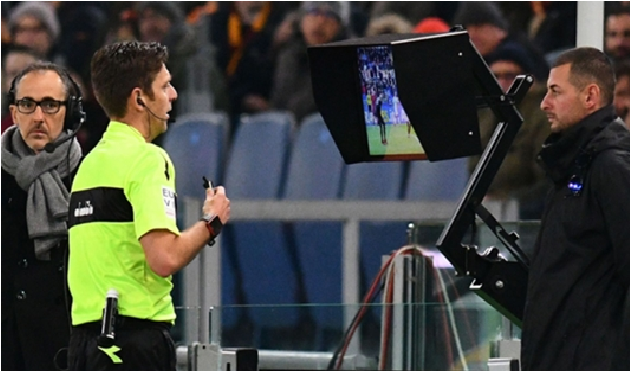
However, one thing I still find ineffective is the VAR. When you look at the blunders it has committed, then I don’t think it is helping the game.
You don’t get that feeling of Justice as a player, coach, supporter or even a pundit. Looking at the Aston Villa game over the weekend, it took around 2 minutes for the goal to be chalked off. Since the referee and his crew would have to go over it again and again.
Another area of incompetence was the Liverpool vs Man Utd game at Old Trafford, on Sunday, Marcus Rashford’s goal should never have stood. There was a foul in the build-up play. Victor Lindelof fouled Divock Origi.
Maybe the referee felt it would be a soft decision? But when you look at how the goal was set up, United still had to work the ball 60-odd yards upfield before scoring, then the referee should not have bothered to check the foul on Divock Origi.
Besides, there have been too many controversies surrounding the VAR since its introduction to the Premier League. It has been a huge talking point all season. Man City against Tottenham was another game that showed the flaws in the system. Man City should have been awarded a goal after Gabriel Jesus strike, but it was chalked off after the referee consulted the machine.
After the game, the referee had to admit that the goal should have stood. Meaning, Man City were denied their victory.
When you consider the amount that has been invested in this development, the least you would want to expect is an unfair judgement. It doesn’t seem to be doing any good.
Why not invest the money into training young referees?
As much as I know that we are all humans, we make mistakes, but it makes no sense if we set up a process to tackle incompetencies and it is failing.
A poor refereeing decision could kill the morale of the whole team. We’ve seen that before. Every football fan wants to feel rewarded for every penny spent on watching a football match, every team wants to be rewarded for the hard work they put out on the training ground and every manager wants to feel satisfied with the referee’s decision after the game.
No one is demanding 100 percent from the referee’s decisions, but they can still do better.
On Saturday, I spent the day in a new innovation hub in town – FUTO Alumni Innovation Hub. This hub is a gift from Federal University of Technology Owerri (FUTO) alumni community to support fresh graduates out of our university or those that plan to pursue entrepreneurial journey. The hub has sections – Inspiring Workspaces, Support Services, meeting area and a board room – everything is free for those associated with FUTO. With a recording studio, we do hope to unlock creativity also.
Unlike the typical hub we are used to, this one is structured for all sectors. I met a FUTO graduate who left her job in one of the big telcos to build a show company with a new layer – customized post-production. Yes, one shoe, with layers and you may think the person has four different shoes. Everything is done by swapping the top part depending on how you feel on the day! It is an amazing post-production innovation.
We faced challenges but we remained determined to move ahead because this cause is noble. A very noble cause because if we cannot find a job for everyone, we believe that we can provide a platform for members to flourish. We know that many fresh graduates, start-ups, and ideas holders are faced with the challenges of getting good office space, conducive thinking and working environment, business equipment, admin supports services, etc.
Besides the facilities, the elders are amazing. One runs the latest indigenous oil inspection company in Nigeria. One is a GM in a top-three African bank and another has a company that employs hundreds. I watched as these elders dish out insights and business secrets while awarding contracts to these young FUTOites to give their startups momentum in the market.
I am so proud of the leadership of our alumni community for funding this noble vision. I am sure with the location friction out, most FUTO graduates will rise further. This hub will run specialized training by bringing in experts from Google, GE, Dangote, Layer3, and other companies.
Personally, within a month, once I get to U.S., I will syndicate a feeder system with the hub with an amazing technology company arriving Nigeria. It will help to strengthen the quality of special skill development while opening avenues to place people on opportunities.
Let me thank Dr Andrew Ejayeriese, Sir Ndukwe Osogho-Ajala OON, Jesse Anyanele, Rex Mafiana, Ndubuisi Chijioke, Felix Chukwu, Anslem Chukwuka, Philian Duru, Nnamdi Agukwe, Ifeanyi Ajaebili, MKO Balogun, Engr Baylon Duru, Jesse Anyanele, Collins Opara, etc for this.
Well done our Alumni leadership.
Address:
Innovation Hub
15 Ayinde Giwa Street
Lagos, LA
Nigeria
Update
So many questions on the FUTO Alumni Innovation Hub. The Charter is simple: it is structured for FUTO alumni and students but that does not mean that non-FUOTites are excluded. Simply, if you want to use the hub, and not a FUTOite, you must find a FUTOite as a material partner on your project. That FUTOite will then help your team to qualify to use the hub. You can ask Collins who coordinates it for the alumni.
Amidst the controversy of high cost of data, perceived illegal deductions by operator, and poor services, the Nigerian Communication Commission (NCC), has shed some light on what actually happens when you are using the internet.
Experience of early depletion and rise in data consumption by telecoms consumers are not necessarily as a result of ‘illegal deductions’ or ‘sharp practices’ by Mobile Network Operators (MNOs) but more as a result of varied factors.
This was the position of Prof. Umar Danbatta, the Executive Vice Chairman (EVC) of the Nigerian Communications Commission (NCC) during a presentation at the monthly briefing on Short-Term Key Performance Indicators (KPIs) by agencies under the Federal Ministry of Communications.
During a presentation by the management of the Commission to the Hon. Minister of Communications, Dr. Isa Ali Pantami and other officials of the ministry, Danbatta spoke extensively on what the NCC has been doing in key areas of its regulatory mandate.
Such areas of mandate include reduction of cost of data, stemming the tide of ‘illegal deduction’ of data, addressing the issue of invalidly-registered Subscriber Identification Module (SIM) cards; as well as efforts in ensuring continuous compliance with the maximum.
Two percent Call Drop Rate (CDR) directive to telecom operators on Quality of Service (QoS)delivery, each of which Danbatta and Directors in the Commission took turns to discuss extensively with the Minister.
On the issue of data, the EVC said “The ‘illegal deduction’ of subscriber data was not in the real sense of the word illegal and was also not as a result of any proven ‘sharp practice’ by the operators.”
According to him, “the reasons for the rise in data consumption and depletion, which is classified by some users as ‘illegal deduction’, include the advancement in technology, which has led to the rise in applications, updates and services that leverage on this technology and advancement of supportive data infrastructure.”
Others, according to him, are increase in video-based advertising content by social media companies which in some cases are layered on free services offered by the companies; auto updates of apps on the phone over mobile data network without any sort of prompting or intervention by the user of the mobile phone.
While making a presentation to the Honourable Minister, Engr. Bako Wakil, Director, Technical Standards and Network Integrity, NCC, stressed that while regulatory efforts are ongoing towards a downward review of cost of data and improved quality of data services for telecom subscribers, the drivers of the cost of data provision and quality of service in Nigeria are, however, not entirely within the control of the Commission. These data provision drivers and factors include Right of Way (RoW) issues, fiber cuts, vandalism, multiple taxations, insecurity and power outages as well as site access denial that tend to temper seamless service provision.
Speaking on measures being taken by the Commission towards curbing proliferation of pre-registered SIM cards in the country, Danbatta elaborated on a broad-based identity management database solution being worked on to permanently curb the menace. He noted that:
“In view of the grave impact of pre-registered SIM cards and other SIM-related crimes on national security of the country arising from this challenge, the Commission is considering implementing a robust Identity Management Solutions to curb the menace once and for all as the telecom sector transit into a new SIM Card Registration Regime based on the Mandatory Use of National Identity Number (NIN) Regulations issued by the National Identity Management Commission (NIMC).”
On Call Drop Rate, Danbatta said, based on its monthly monitoring of operators’ level of QoS delivery, “the CDR across all mobile networks this year has been below 1 per cent threshold, a situation that has steadily and relatively improved quality of service (QoS) of telecoms consumers.
Meanwhile, Hon. Minister Dr. Isa Ali Pantami has commended the NCC for doing well in enlightenment on consumer issues and other ongoing initiatives, adding that “we can re-strategise and heighten campaigns in all media, especially in local languages.”
Many stories in terms of economic activities and social life have been said and still being reported about Lagos, the Nigeria’s largest commercial city. As the cities in the country prepare for another decade, the activities and lifestyle of the people in Lagos will continue to be debated by the locals and foreigners because the city seems to be a place for more success attainment considering its growing population and enabling social amenities.
Already, the city has had and still having a steady influx of people from neighbouring states in the south west region and states in the south-south, south-east, north-west and north-central regions. By 2035, the population is expected to reach 28.5 million people from its present 21 million. In the same year, the state’s Gross Domestic Product is projected to grow by 4.5 percent. This figure has been described as being rested significantly above the current global average of 2.9 percent.
These and other factors such as continuous infrastructural upgrade remain attracted factors. Over the last decade, a significant number of qualified graduates and people with specific skills have been attracted to the city with the intent of getting formal and informal jobs, which have contributed to the increase in office construction on the Lagos Island and Mainland areas of the state. In the Mainland area, shophouses are also springing up every day. This is similar to what exist in Singapore, where commercial cities are having at least one shophouse apart from the formal offices.
Lagos Office and Changing Workers’ Needs
Whether on the Island or the Mainland, Lagos offices are designed to suit different purposes. Some offices are designed for corporate activities. Some are designed to enable workers and others to engage in social activities. In both situations, the designs and spaces must meet the users’ needs every time. This is imperative because there is a strong relationship between buildings and users. Since 2015 that the world leaders agreed on a new global goals and targets, working people have been clamouring for greener and healthier office buildings, especially in developing countries where the adoption of green features for building construction and maintenance remain low.
This has once again emphasised the place of greener and healthier building on health, wellbeing and productivity in the workplace. This emphasis will linger on in Lagos as the state continues to receive intermittent rankings on indexes that focus on sustainable living. Three years after the new goals and targets, the city recorded lowest score in Stability Index despite all efforts and capital injection into infrastructure upgrade and construction.
Like previous analyses done by the academics and industry experts, this article emanates from a recent research conducted about the level of satisfaction of Lagos workers on the facilities and their office building. Lagos Island was the setting of the study and carried out in August, 2019. Among other questions posed to the workers, we gleaned that there are accepters and rejecters of the building. With this result and the modeling of other variables, we described the two classifications as the logic of satisfaction. According our data, workers are being logical in expressing their satisfaction about the building and facilities therein within true or false criterion. The satisfaction expression is largely explained by the national norms and values.
Source: Infoprations Analysis, 2019
National Norms, Satisfaction and Productivity
When the workers were asked to expatiate the true or false criterion, the data show significant movement towards very satisfied and satisfied. Those within the very satisfied were tagged promoters of the FM service quality and quantity provisions. Workers who tilted towards satisfied were better seen as rejecters. These are the workers who have ‘high level of subjectivity’ while reacting to FM services offered by the in-house FM team or FM service providers. They are the detractors of FM service quality and quantity provisions.
As pointed out earlier, the logic of satisfaction of Lagos workers about office building and facilities maintenance is being driven by norms and values Nigeria has been known for. Workers within satisfied are rejecters because they are being decisive and assertive in their reaction, while accepters, having used the building and the facilities therein, have seen quick results during the period of using the building and the facilities. The rejecters should be seen as the category of workers who are mostly meeting facilities in bad situations after serviced or maintained by the FM team. This led to expressing their satisfaction within the satisfied and false scales. The accepters fall to the opposite. They met the facilities in good conditions. This mainly explained their choice of very satisfied and true scales.
Source: Infoprations Analysis, 2019
Beyond the examination of the workers about restroom, reception, boardroom, canteen, training room and accessibility of the public transport to the office, we explored the impacts of lightening, nose, temperature and space and air quality on their health and productivity. On the productivity, analysis shows that temperature impacted productivity more than quality of air, distraction of noise and quality of space provided. Quality of light had least impact on the workers’ productivity during the study period. In spite of the low effect of the air quality on productivity, the workers reported high impact on their health status followed by temperature and noise.
Source: Infoprations Analysis
The extreme impact of the air quality is an indication that the sampled office did not have low concentrations of CO2 and pollutants, and high ventilation rates during the month of the study. This has equally established the dangerous situation many workers are while working in urban areas in Nigeria. An information has it that whether indoor or outdoor, air pollution is killing more residents today than ever before. Our data show that the studied workers experience eyestrain, mental fatigue irritation, eye irritation, headache and nose irritation. These are the common symptoms linked to exposure to pollutants.
To establish the extent to which people care about their life in Lagos, we did a simple analysis of the public interest in air pollution and indoor air quality on the basis that the sampled workers sought knowledge about their conditions using the Internet. Analysis indicates that public (assumed to include the studied workers) had more interest in air pollution than indoor air quality. Checks also reveal that on Lagos Island, from August 1 to 31, 2019, the average temperature was 790 F, humidity was 85%. On August 17 around 2pm, the temperature was high at 88 degree and low at 73 degree on August 1, on August 1, the humidity was high at 100% and low at 62% on August 17, 2019.
In an office where noise distracts workers often, the productivity level would dip, while health status would not be spared. This was also found as a major contributor to the workers’ logic of satisfaction. Though the workers reported the minimal effect of lightening on them, it is essential for the FM managers to always provide appropriate blinds or shutters for blocking out natural light in an office building when the situation calls for it. This is largely due to the fact that only 22.20% of 36 workers reported that the blinds or shutters are effective. Having appropriate blinds or shutters is further reinforced when we found that norms associated with the level of satisfaction accounted for 44% of seeing the provided blinds or shutters as effective. “Where the benefits of fresh air and good thermal comfort can be provided by natural ventilation and passive design (or mixed mode systems), there is a clear win-win for occupier and energy use.”
Our data show that 61.10% of the workers had full control over air ventilation in the office building, while 50.00% had slight control over artificial lighting in the building. It would not be a bad idea when workers are in control of both air ventilation and artificial lightning. Personal control over indoor environment is a strategic means of increasing level of satisfaction, productivity and energy performance.
Source: Infoprations Analysis, 2019
Go Green
Looking at the insights, companies and Facilities Managers have a number of actions to take towards making office building sustainable for the users. Companies need to incorporate green features in building and maintaining offices. A structure and application of processes that are environmentally responsible and resource-efficient. Improving fresh air in offices means companies must always use green products to maintain facilities. The narrative that green practices increase spending should be countered based on the fact that green buildings and facilities are more beneficial than conventional practices.
Being green in practices and solutions has the highest propensity of converting the rejecters into promoters, occupants who could become influential marketers of the FM providers and in-house team having experienced better building and facilities. An occupant’s willingness to recommend result from how well FM providers managed his or her company’s facilities, especially the critical ones. On-site Facilities Managers and Account Managers (Business Development Executives) need to pay specific attention to this because there is a low connection (7.1%) between workers seeing Facilities Managers’ maintenance of office building to operate at satisfactory that enhances physical and psychological comforts, and norms associated with satisfaction level.
I’ve started this writing several times but I’ve never been able to pen something down. It’s not like I don’t have ideas to put down, it’s just that I don’t want to create a wrong impression in the minds of the readers. I’m always careful when addressing people’s beliefs because of their stronghold on them. But I think it’s time to voice this out.
I will introduce these beliefs I’m about to discuss here with three short stories of events I witnessed.
EVENT 1 – Few weeks ago, I met this woman and her daughter that is about 8 months old. This beautiful daughter of hers doesn’t pass stool through the normal channel (I think it’s a congenital issue). According to this woman, her daughter has been through two surgeries already – shortly after birth and when she was 3 months old. She was scheduled to come back for another surgery 3 months after the second one. According to her, her baby became ok after the second surgery until she was “attacked” and the problem came back again. Anyway, she is working on taking her for the third surgery.
EVENT 2 – There is this man in my village; he keeps having misfortune after misfortune in his businesses. It seems that any business he goes into is bound to flop, so he just ‘zeros’ his mind and waits for it to fail. One day I overheard him saying that he has “ajo chi” (bad personal god) and that’s why all his efforts towards financial independence yields no good result.
EVENT 3 – This one is quite hilarious, but serious. I was in commercial bus with other travellers. We were plying the disastrous Enugu-Onitsha Expressway. Those at the backseat weren’t finding it funny because of all bumping up and down of the bus. The conversation in the bus later turned to the bad road. One of the travellers at the backseat was so furious that he started calling on God to come and judge the politicians and the construction company reconstructing the road.
These three events are just three out of the millions we witness every now and then. To discuss these three events critically, I’ll brand them the ‘attack belief’, the ‘bad destiny belief’ and the ‘revenge belief’ respectively.
THE ATTACK BELIEF
This is the belief that most Nigerians hold onto when struck by ill-health or ill-luck – they believe that someone or something is ‘attacking’ them spiritually. I’m not saying that I don’t believe that there are witches, wizards and ‘the village people’. For sure, as a Nigerian, I’m forced to know of all these forces and what they do. But then, how can someone be sure that the misfortune he or she is facing isn’t as a result of mismanagement or normal course of life? How can you determine the one that came naturally and the one that came from the manipulations of something spiritual?
Before we decide that what we are passing through is a supernatural thing, we need to evaluate critically all our decisions and conducts to be sure the fault isn’t ours. I’ve heard of some people that assumed that the mistakes and wrong decisions they made were the manipulations of some evil forces. I don’t know anyway; but I think this belief is really affecting a lot of people.
For example, some sick people won’t go to hospital because they believe it’s not what doctors can handle. Some of them will go to ‘prayer houses’ for deliverance. That aside, a lot of businesses are suffering right now because their owners believed that their ‘enemies’ are doing voodoo on them. So, instead of they learning and acquiring some outstanding business skills, they jump from one place to another seeking for people that will find who their enemies are and see the future for them.
We need to let go of this belief. Even if people are coming after you spiritually, do the much you can to make life better for you and then leave the rest for God.
THE BAD DESTINY
Having an ‘ajo chi’ almost means the same thing as having bad destiny. The people here believe that they have been destined to suffer in this life. Some of them see their ill-health as one of their ‘agreements’ with their ‘chi’. This is also the same thing with those in this group that are poor.
I know that life doesn’t really give it all to one person, but I believe that some things are preventable and avoidable. For example, someone that is having issues with his business might have to sit back and do a proper evaluation of his skills and decisions. He may also want to find out why his business isn’t moving as it should. I believe that when such a person is asking and finding true answers to his questions, he will notice that destiny has no role to play in his misfortune.
One more thing, the people that belong to this group easily resign themselves to bullying, bad governance and corruption. The major problem I have with this type of people is that they are not easy to help. In fact, the more you try to pull them out, the more they drag themselves back into their ‘holes’. They see their predicaments as ordained by a divine force and your help may not be appreciated.
THE REVENGE BELIEF
A lot of people belong to this group. These people won’t ask for what is theirs, even if they could, because they believe that there is a supernatural being that will do that for them.
If you ask me, I’ll say that this is Nigeria’s general problem. We refuse to talk at times when our rights are being trampled on because we hope that God will revenge for us. Please, I’m not suggesting that we revenge when we are wronged; my point here is that we have to fight for what is right and not fold our hands and wait for a divine battle to come down and do that for us.
When some things happen that Nigerians need to seek redress for, they usually just walk away in bitterness and pain with the belief that God will revenge for them. Of course, God fights for the trampled and the downtrodden; but if you have the means of seeking redress or getting your voice heard, are you still among the downtrodden?
In this life, we have to keep learning and unlearning. I believe Nigerians should unlearn these three beliefs, they are not helping us.