DD
MM
YYYY

PAGES

DD
MM
YYYY

spot_img

PAGES

Home Blog Page 6613

Libra Suffers Setback As Facebook Gets Government’s Knocks

0

Once again, Mark Zuckerberg found himself standing before the House Financial Services Committee on Wednesday. His journey to Washington DC has been necessitated by many questions the US Congress has in store for him, mainly on the activities of Facebook.

Although Zuckerberg was hoping to make a case for Libra, the hope was quashed by the wave of questions hitting him from many angles on antitrust and the ad services of Facebook.

Earlier in the month, US congress woman and Democratic presidential hopeful, Elizabeth Warren, has called out Facebook for publishing ads containing outright lies for President Trump. She said the influence of the social media giants in shaping electoral decisions cannot be ignored, and therefore, there is a need to keep its activities in check respecting upcoming elections in the US and what Facebook publishes in ads.

There is also a general concern about the power at the disposal of tech companies in the US, mainly, Facebook, Amazon, Google etc. and the calls to break them up is getting louder. In a campaign promise, Warren said.

“I want a government that makes sure everybody – even the biggest and most powerful companies in America – plays by the rules. And I want make sure that the next generation of great American tech companies can flourish. To do that, we need to stop this generation of big tech companies from throwing around their political power to shape the rules in their favor and throwing around their economic power to snuff out or buy every potential competitor.

“That’s why my administration will make big, structural changes to the tech sector to promote more competition – including breaking up Amazon, Facebook, and Google.”

Recently, the US government’s interest in the activities of the tech industry has upped, and Facebook has taken the center stage of the Government’s askance. The deteriorating relationship has resulted in Mark Zuckerberg’s frequent visits to Washington.

So on Wednesday, when Zuckerberg stood before House Committee once again, the arrows of quiz aimed at him were about issues like political ads, disinformation and child pornography. Therefore, there was no room for deliberation on Libra. The Democratic chairwoman of the committee, Maxine waters, puts this way:

“As I have examined Facebook’s various problems, I have come to the conclusion that it would be beneficial for all if Facebook concentrates on addressing its many existing deficiencies and failures before proceeding any further on the Libra project.” She said.

Although Zuckerberg argued that government’s failure to approve Libra would give China an advantage to lead the world of digital currency, the committee didn’t balk. In fact, they made it clear that their opposition to Libra has been because it opposes the US dollar.

“It should be clear why we have serious concerns about your plans to establish a global digital currency that would challenge the US dollar.” Waters said.

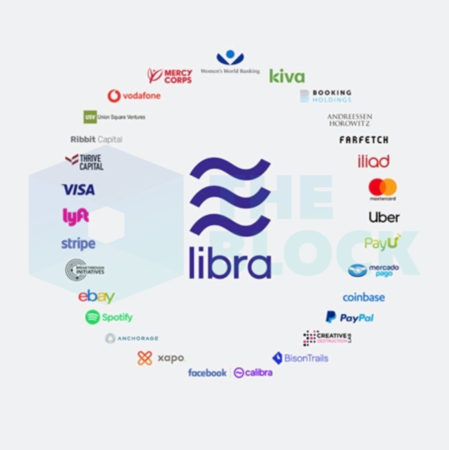
Since June when Facebook announced the idea of Libra, the US Government has not hidden its skepticism about it. The subsequent suspension of the idea has bordered on the fear it could usurp the dollar because it wouldn’t function under the control of regulators.

Facebook’s cryptocurrency head, David Marcus told The New York Times that regulators have been much more receptive to the idea in their private meetings than lawmakers. Facebook has been pushing to have its way through lobbyists and series of private meetings with regulators.

But the hope is dim and time is running out. Facebook appears to have so much dirt on their hands to clean up and the challenge of not getting broken up is becoming bigger. With the next election about one year from now, and Elizabeth Warren not relenting on her promise to tame the bullies in tech industry, there is a little chance that Libra will become a reality.


The Differences Between A Mentor And A Godfather

0

Having a godfather is good sometimes; at least you will have someone that watches your back. The good thing about godfathers is that they force you to sit-up and work (or get ditched). So it’s not bad to have one; at least it’s not really bad if you can find a good-hearted one (unlike The Dons in Mario Puzo’s “The Godfathers” – lol).

At times, someone may seek a mentor and end up with a godfather. He may find himself getting good jobs, business contracts, overseas trainings, better positions in offices, rapid promotions and so on, because he has ‘connection’. But he may find out later that a slight fallout with (or loss of) his ‘connection’ will crash-land him to the very rung of the ladder where he was before he met this ‘connection’, or even lower than that. This is why it is necessary that you know if that person you are ‘following’ is a mentor or a godfather ( I believe we all want to sustain what we have when we land in a better place).

Before going into the differences between a mentor and a godfather, I’ll like to state here that they both share some similarities. For instance, both of them are well respected and admired by the ‘seeker’. If not, he wouldn’t have approached any of them in the first place. Another thing is that they are in positions that this ‘seeker’ admires and wants to attain. And then, they are both advisers – at least they can both guide you to achieve a goal (the difference now is whose goal is being achieved).

So, here are the differences between a mentor and a godfather. Kindly note that the notion of mentor and godfather used here isn’t in relation to crime, but to legal career attainment and progression.

  1. Professionalism: Both mentors and godfathers are well established in their own professions; in fact they are experts there. But a mentor can only take-in a mentee in his own profession. He offers professional advice that are well needed by his mentee. It will be quite odd for him to take up someone whose career interest isn’t in his area of specialty because he won’t be able to help him (as needed).

But godfathers don’t necessarily take-in people in their areas of specialisation. Their godsons are like their tentacles which they spread to tap into other areas. The advice they can offer their godsons that come from other fields is a general one that will push them to get the job done. This means they may not be able to offer deep insights into some aspects of their godsons’ professions (this is one major reason godsons lose it all when they have fallout with their godfathers – they actually don’t know much about their careers).

  1. Financial Gain: A mentor doesn’t necessarily need to gain financially from his mentee. Of course mentees will always tag along and do some errands for their mentors because that’s how they learn. They (mentees) can also decide to work for them (their mentors) in order to gain deeper knowledge on their profession. But, a mentor doesn’t really take in a mentee because he sees him as a money-making machine.

This is not the case with godfatherism. Every godfather sees his godson(s) as an extension of his businesses. Godsons are to increase their godfathers’ income. They are not there to learn and gain insight into their own profession unless that will be the best way to increase their godfathers’ earnings.

  1. Career Growth: A mentor grows as his mentee(s) grows. He wouldn’t mind if his mentees become ‘huge’ in the future. They even take pride to announce to the world that they were in their mentees’ success stories. Truth is, they are there so the mentees can learn and become independent.

In a godfather-godson relationship, a different thing is obtained. A godson can never, and I mean ‘never’, be ‘bigger’ than his godfather. He (the godson) is meant to ‘serve’ him (the godfather) for as long as the relationship lasts. Any career growth the godson gets is because it will place him in a position to serve his ‘master’ better. In summary, there is no financial independence for a godson – he will always be under the whims and commands of his godfather.

  1. Encouragement Type: Mentors encourage their mentees but godfathers compel their godsons. This means that your mentor will encourage you to leave your comfort zone and face your challenges by making you see reasons you need to do that. In most, if not all cases, the reasons proffered by these mentors do not benefit them (the mentors); but they don’t consider that.

But if the person you have is a godfather, he will force you to leave your comfort zone to carry out whatever duty you are given. He doesn’t care about your comfort or welfare unless it will affect his ‘businesses’. This is to say that godfathers are very pushful (and I think some people need them for starters).

  1. Goal Achievement: Mentors are selfless because they help their mentees achieve their (the mentees’) goals. This is quite different in the case of a godfather who places his own goals before that of his godson. Put differently, in the case of mentor-mentee relationship, the goals achieved are the mentee’s; while in the godfather-godson relationship the godfather’s goals are achieved.
  2. Sustenance: So long as you are ready to learn, work hard, grow and improve on your skills and career, your mentor will always be there for you because he loves to see you grow. In fact, by teaching you, he too is sharpening his own skills. A mentor only drops a mentee when he (the mentee) ‘refuses’ to improve or waste his (the mentor’s) time.

But a godfather will only keep you as long as his need for you lasts. Once that ‘project’ he took you in for exhausts (and he doesn’t have any other ‘project’ for you) he will ditch you. So pray your godfather always have something for you.

Anyway, this is just a little piece for us to really look deep within to find out if we have a mentor or a godfather (or even to know what exactly we wanted). I believe we all know the right thing to do.

Wakanda and Akon’s Homecoming Album

2

In a recently published article Akon Delivers New Album AKONDA, it was reported that Global icon Akon is reconnecting with his West African heritage to release an album Akonda, his fifth studio album under his Akonik Label.

This album is an Afrobeats-influenced, ten-track release, which features “a slew of emerging stars from Nigeria and other African nations, including Olamide, Kizz Daniel and Skales.”

While “Low Key” is reportedly the album’s lead track, it is the following two tracks that captured my imagination and raison d’etre for this article: Track 8 entitled “Kryptonite,” and Track 10 labelled “Wakonda.” You need to listen to these clips to appreciate the homecoming.

Picture this – ‘Wakonda’ is a Black Panther-referencing parody of the UK sensation at the forefront of the flourishing ‘Afrowave’ sound, Afro B, with the hit ‘Drogba (Joanna)’, a track that is currently in the Hip-Hop Singles charts Top 10.

Akon has been acknowledged by Forbes, having been previously ranked #80 in the ‘Forbes Celebrity 100,’ and #5 in the ‘40 Most Powerful Celebrities in Africa’ list. He also clocked in at #6 on the list of ‘Top Digital Songs Artists of the Decade’.

Looking back at my 2011 article “Marketing Senegal through hip-hop – a discourse analysis of Akon’s music and lyrics” assessing the man, his diasporic chords and the place marketing of Africa in general and Senegal in particular, I must say that I am pleased with the following highlights.

It was by no accident that Akon was recruited by PepsiCo for the 2010 FIFA World Cup in South Africa through a charity single – Oh Africa! 

Future research may need to consider how to leverage the potential of celebrity endorsement or partnerships in place marketing strategies.

In an article I published almost a decade ago, I sought to highlight hip-hop’s contribution to the entrepreneurship and place marketing literature from the lens of an individual artist, Akon, whose music and lyrics ? a “hybrid of silky, West African-styled vocals mixed with North America’s East Coast and Southern beats.” In so doing, I relied upon a “discourse analysis” of the lyrics from two non-chart songs Senegal and Mama Africa, which provided the conceptual base for a better understanding of the fusion of music and entrepreneurship with place marketing.

In my findings a made an audacious claim that “through music, Akon has bridged socio-cultural (ethnic cuisine, immigration and social exclusion, faith or spirituality) and economic attributes (notably remittances) – with implications for entrepreneurship and place marketing.”

I also argued that my study “demonstrates that music and entrepreneurship can be extended to place marketing using discourse analysis.”

The latter point is noteworthy as, “Away from music, Akon pioneered the Akon Lighting Africa project, which aims to provide electricity by solar energy in Africa. Founded in 2014, the project has provided electricity in 14 African countries, employed over 5000 people and reached 1 million households.”

Keep Going – You Are Doing Great

0

Life can be dicey. You could plan for ”A”, and ”B” occurs when you least expect. I could remember those days when I was a job seeker. I traveled to Lagos on a Friday evening for an impromptu job interview. I had been invited for an interview at a reputable company. I applied for the vacant position six months away from the day of the invite. It was an impromptu interview. 

I could have perhaps let it slide but my love for the role wouldn’t let me give up on it. I boarded a bus from Ibadan to Lagos at around 4 p.m. in the evening. 

I had always dreamed of working in a bank. I got into the bus with lots of imagination. I pictured myself in the banking system doing my daily assignment. I pictured myself in a meeting with the board of directors. There was nothing I did not imagine. How I wish it came to pass. 

I got to Lagos by 11 p.m. Thanks to the traffic congestion as always. I could barely eat my dinner as I yearn for some rest. The journey ahead is still far, I said to myself as I retired to bed.

I woke up the next morning, freshened up and got dressed. I set out for the journey around 5:23 a.m. I could barely read anything about the bank last night as I was too tired. All I did was try to remain calm. Although I glanced through some as I journeyed in a rickety molue. 

I got to the venue around 7:48 a.m., looking relaxed and scared at the same time. ”Whatever comes my way, it’s fine,” I said to myself. 

I joined the long queue of job applicants who were sitting. It seemed we were all here for the same purpose. I tried to remain unintimidated. 

After sitting for two hours, a young lady came out to address us – ”Hi everyone, we have a slight change in our appointment with you. The proposed interview with you will no longer commence today. 

”We will contact you for further information about the next date. 

”We regret any form of inconveniences.”

She said and left. The announcement was welcomed with unpleasant noises in the banking hall. Everyone seems disappointed with the manner in which we were treated, especially from a reputable bank.

It was like a shock to me. I had actually told some friends that I was travelling for a job interview and they should have me in their prayers. 

I was really gutted. I had no idea what to do next.

I don’t want to go home with the same story – we will get back to you. 

I had no choice but to return. I did tell them the truth and moved on. But here’s a lesson I learned, ”Always be prepared for the unexpected.”

 My Kenyan friend, Njeri Marasi said,

In my culture, grown-ups are advised not to look at a baby when he falls. Reason?

”The baby will cry when he realizes that someone saw him fall. But if nobody notices, the baby rises up and keeps going. I have observed this to be true.

”While this practice is sometimes criticized, it offers an invaluable lesson in life.

”People make mistakes and are often aware of them. No need to keep focusing on the weaknesses. Overlook and you will be amazed how quickly they pick themselves and walk more steadily.

”If you fail, assume nobody noticed and keep going. A pity-party will erode your confidence.”

This is also common with many job seekers, they are always bothered about their failures. What people would say about them, and the society’s views. 

I used to be ashamed of my failures. I wouldn’t want to tell anyone about my shortcomings. I don’t want to be labelled a failure. But does it really matter? 

You don’t have power on people’s opinion. You didn’t fail like I always say, you only discovered a reason why it didn’t work. 

Be like a baby. Fall and stand up. Life is full of surprises but in the end, they are all life lessons.

Most Nigerian Firms Serve West and Central Africa Markets Via Land Borders

1

So many questions on what Onitsha traders are exporting while responding to my call for Nigeria to open land borders for exports even if we keep them closed for imports! But before my response, let me share this comment from Francis.

Francis Oguaju  ·

As always, everything about Nigeria somewhat appears complicated: if you take drastic action to correct or mitigate one problem, you end up creating paralysis in many other places; thinking things through could help, perhaps.

We remain highly deficient when it comes to using data to make decisions; all this while – government’s argument centred on how much we are losing from importation or smuggling via the borders, no one cared to publish how much we also make through exports via the same land borders; a serious omission that shouldn’t be left unattended.

When politicians want to run for highest offices in the land, you hear lines such as, ‘I am still making consultations with my people and associates’, apparently they forget to make the same all important ‘consultations’ on economic issues that affect multiple and varied constituencies and stakeholders; our decision-making capabilities as a people remain questionable…

It’s the same reason why we argue on wage increase, without corresponding arguments on revenue generation and capacity to fund our unrivalled level of profligacy. To advance, we must shift from getting few calls right to that of getting most calls right!

Now, here is my response:

Most big manufacturers like Unilever and Consolidated Breweries use Nigeria as a hub to serve some west and central African countries.  Because of the proximity of Cameroon to Aba, Unilever uses land borders to move its goods to that nation. In Onitsha, we have many small scale manufacturers making biscuits, cosmetics, etc which serve smaller West African nations. It is important to understand that some African countries see Nigeria in the same dimension as we see United States. 

Pharmaceutical firms in Nigeria serve most markets like Togo, Benin Republic and southern Cameroon. In short, in my village of Ovim (Abia State), we have a beverage maker whose 100% market is Cameroon. He does not sell his products in Nigeria as he makes more money in Cameroon than Nigeria even though he sources the raw materials from Oron in Akwa Ibom.

So, when we write Onitsha or Aba, do not just think these guys are just traders. Also understand that many manufacturers serve Niger Republic from northern Nigeria. They manufacture in Nigeria even though they sell in Chad and Niger. There are many reasons for that – Nigeria’s has a more advanced banking system and deeper talent base to support production.

Largely, if this border closure continues, I expect companies like FrieslandCampina WAMCO (makers of peak milk), Cowbell, Unilever to experience massive revenue drops in 2019. Most of these entities serve other small African countries via land borders. 

You may argue why not use sea to move these items – the fact is this, by the time you load a truck and travel from Aba to Lagos, you are largely already in Cameroon. And then it has to spend 3 months in the sea. Why do that especially for perishable or time-sensitive items like drinks, food items and medicine? It makes no sense.

Beyond Closure

The closure of border is simply saying that Customs is not doing its work well. If Customs does its works well, this will not be needed. Also, the argument that import revenue is improving because land borders are closed must also be evaluated on how much exports have been affected. We can make extra N2 trillion from import fees while our local industries that serve small African countries go out of business! Government will have more money in its vaults while families will lose breadwinners.