DD
MM
YYYY

PAGES

DD
MM
YYYY

spot_img

PAGES

Home Blog Page 6626

Stop Sending Your Children to Friends and Family Members to Help Raise Them

0

African parents, please stop sending your kids to friends and relatives!

I have written this article on behalf of the young generation. When you see what’s going on in the African community, you will be moved to tears.

I had the pleasure of speaking with a young girl that hawks on the street. Ayo is a 17-year-old girl who lives with her parents in Ibadan. She shared her story with me and how her parents pushed her into a home that ended her dreams.

In our conversation, she revealed how the poor financial state of his parents made them send her to a family friend who promised to help raise her. What the guardian promised was to send her to the university after she completed her secondary school education but that was not the case with the poor girl.

Since all his kids are grown up and they are away from home, Ayo’s parents agreed to let the poor girl go live with him. The 52-year-old man and his wife run a small food canteen down the busy market at Aleshinloye. They set up the business after both lost their jobs in a private company in 2010.

Ayo moved into the home with them and follow them to shop. They’d return home every evening, around 8 p.m.

Ayo expected to be enrolled in a school so she could retake her WAEC exams based on the promise he made to the father that had prompted him to release her, but that seemed to be an empty promise.

The poor girl worked in the canteen as a food vendor and ended up falling into bad associations. She started having emotional affairs with the opposite sex since there was nobody to caution her. Her Guardian was only interested in the business, that is, we must make profits today.

Poor Ayo had no one to caution her or listen to her, she ended up having an unwanted pregnancy, did abortion and was sent back to her parents. The dream to further her education became a mirage.

I was moved to tears and decided to write this article to educate and also plead with our parents.

First and foremost, nobody can take care of your child(ren) like you. Often times, I have seen parents send their child/children to family members or friends to help train their child/children simply because they feel they are not financially capable of raising them.

Most of the time, it ends up in tears and regrets. Some children have been exposed to bad gangs who taught them drugs and prostitution in the process. Some of these children have become thugs and robbers in the street and on the highway.

We can’t afford to keep jeopardizing the future of our children. Listen, you don’t need much to raise your kids. Give them the necessary attention and send them to schools that are free or less expensive.

If you can’t afford their schooling, let them learn good work that will serve them in the future. They can go to school later. Nobody is too old to go back to school. Their safety and development should be your priority.

Besides, if you can’t feed yourself, don’t bring too many children into this world. Enough of giving birth to twelve children and having the mindset of – it is God that takes care of us.

Yes, I won’t dispute that – God takes care of us. But the same God encourages every man to estimate how much a building project costs before embarking on it. Unless he wants to become a laughing stock in the society.

Stop ruining the future of these innocent children. I know parents who are struggling to eat, still, they give birth to ten children. Isn’t that madness? You know your financial status, why do that?

Africans must do more. Our economy doesn’t support having too many kids. If you calculate how much it takes to train a child, then you will understand the situation in the country.

We need to get it right that our children are our future, please, stop giving them up easily to family members or friends. They will only sell empty words to you. Only a few will stand by their words. Your future is too precious to be messed with.

But my question is, ”Do you even value your future?”
These Are Reasons Why Young People Deserve Opportunities During Hiring

0

I have never doubted the value of experience, and I am not hoping to do so anytime soon. They say it’s the best teacher. I learnt not to put my hands in fire because I got burnt the first time I tried to do so. Infact,  many of the things we do today was learnt after we must have tried so many times, just like walking for instance. So experience is good, but still…

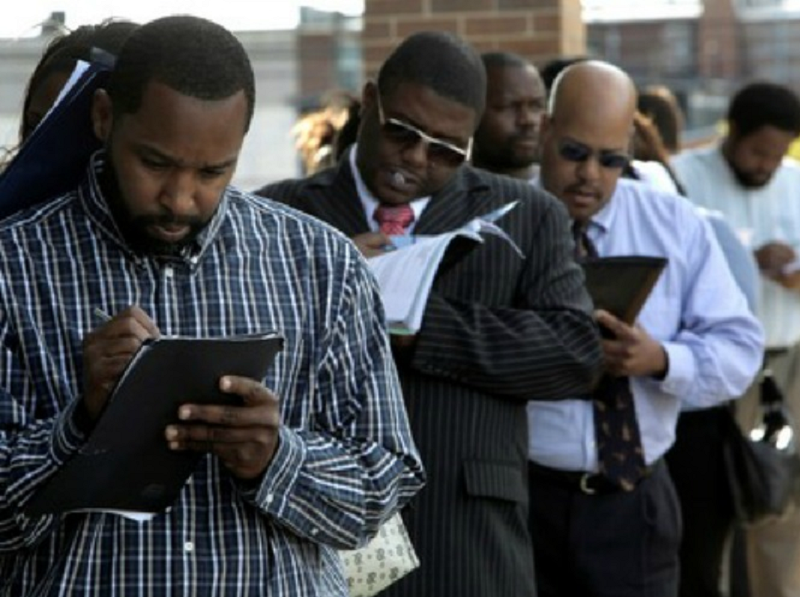
There are many economic and age related issues, making it more difficult for  younger workers to break into the current job market. Many think they lack the needed depth and professionalism needed to deal with work related issues. In reality it isn’t exactly clear black and white terms. Zlatan ibrahimovic is almost 40, yet he outperforms many footballers in their teens and twenties.

In another instance, the brilliance of the golden boy Mario Gotze was able to outshine the experience of the veteran German Striker Miroslav Klose in the World Cup final between Argentina and Germany in 2014. It took a moment of brilliance from the young player Gotze to score the winning goal in extra time, after being brought in to replace the German Legend who just couldn’t find his pace in that particular game.

The debate can go on for as long as you want to,  but here I will try to give some reasons why you may want to hire someone younger the next time you’re thinking of hiring someone. Though this depends on what whoever is hiring is looking for.

1.New Perspective

Young employees tend to bring fresh ideas and a different way of thinking to your business. They are more willing to learn and build their experience along the line. This drive and excitement is good for every team. If the organization is also aimed at reaching out to a younger audience,  young people are more likely going to relate better with these group of people. 

2 .Technology Adaptation

Most young people, say millennials, grew up with technology. As a result, they are more likely to adapt to technology quicker than the older generations in the workforce. Especially in the use of software technology, young people adapt more readily to the rapidly changing and dynamic digital space.

3.Affordability

Young people are more likely to receive lower wages for doing a particular job than older workers. Yes, generally they get paid less than the average big portfolio man. 

4. Energy and Affordability

Generally younger workers are more energetic and adapt better to changes in the economic and political spheres. They are more likely to relocate also. 

5. Health

Younger workers are less likely to complain about failing eye-sight, waist pain, indigestion and high blood pressure. This doesn’t mean that all older workers have to deal with these, but you know, you never can tell.

This article  isn’t trying to underestimate the value of experience in anyway. Experience is valuable and cannot be thrown aside. Whoever does so is doing it solely at his own risk. The article is only trying to give you reasons why you may have to carefully weigh your options to know exactly what you need as the case may be.

The AfCFTA and the Nigerian Closed Borders

0
AU

After months of partial experimental closure of Nigerian land borders, the Nigerian Government has decided to close them totally. The decision to shut the borders completely came after the Nigerian Custom Services claimed it is generating more revenue from the seaports as a result of the closure.

In a recent meeting with the National Assembly’s Committee on Finance and National Planning, the Comptroller General of the Nigerian Custom Service, Hammed Ali, praised the initiative. He said that it has opened an unexpected economic door to Nigeria.

“There was a day in September that we collected N9.2 billion… it has never happened before.” He said.

The Minister of State Petroleum Resources, Timipre Sylva, also indicated that there has been a significant drop of eight million liters in fuel consumption. An evidence of immense smuggling of petroleum products aided by Nigerian security personnel.

The entry of rice, cars, chicken products and so many other goods and services that originate from neighboring African countries have also reduced drastically.

It is based on these developments that the Nigerian Government has vowed to keep the borders closed until the neighbors get their acts together: Mainly, quelling the lax that has enabled smuggling of contraband goods into Nigeria and petroleum products out of Nigeria.

To keep the momentum that has yielded such a result, the Federal Government of Nigeria has commissioned a joint task force comprising customs, immigration, police and the military to keep unrelenting check on the borders.

However, the decision of the Nigerian Government to shut the borders has come against Ecowas rules of integration and the free movement of goods and services within the region. And the implication goes beyond breaking the rules to hurt the export of local products of Nigerian origin.

Scrap copper, tanned goat hides, cocoa butter, rubber etc. Most of these goods produced in the North, East and Western Nigeria make their way to other African countries through land borders – each contributing a huge sum to the GDP.

According to the Nigerian Government, the exports have to be done through the waters until further notice. It’s a development that the local producers of these goods are not accustomed to or ready to take on now. Because the cost is far higher and will result in increment of the export products which will negatively impact the trade.

The African Continental Free Trade Area (AfCFTA), signed by Nigeria in July has also been totally breached. The integration and free trade agreement have been jeopardized by the border closure. It has also instigated retaliatory responses from neighboring African countries with Niger Republic threatening to shut her doors against Nigerian goods.

While Nigerian Government is celebrating it as a win, experts are decrying the impacts and the precedent that it is setting: “It is a clear violation of international trade policy that will bring economic woes than remedy.” They said.

The National Bureau of Statistics (NBS) just announced an increment in inflation; from 11.02% to 11.24%, a development that experts attributed to the border closure. There has been a notable hike in the price of food items; the  Nigerian people will have to add to their existing struggle with hunger.

The brute spikes are likely going to hit with more severity since the government is more interested in the increased revenue generation emanating from the border closure. There is also concern that the increased Nigerian Custom revenue will become a bait that will lure Nigeria back to recession.

The Nigerian Government has been urged to reconsider its stand since it admitted that the prevalence of smuggling has been mostly as a result of corrupt Nigerian Custom Service. Some have suggested that Nigeria should pull out of AfCFTA before her actions and inactions immobilize the collective efforts of other African countries.

How Toll Gates Can Help Road Maintenance in Nigeria

0

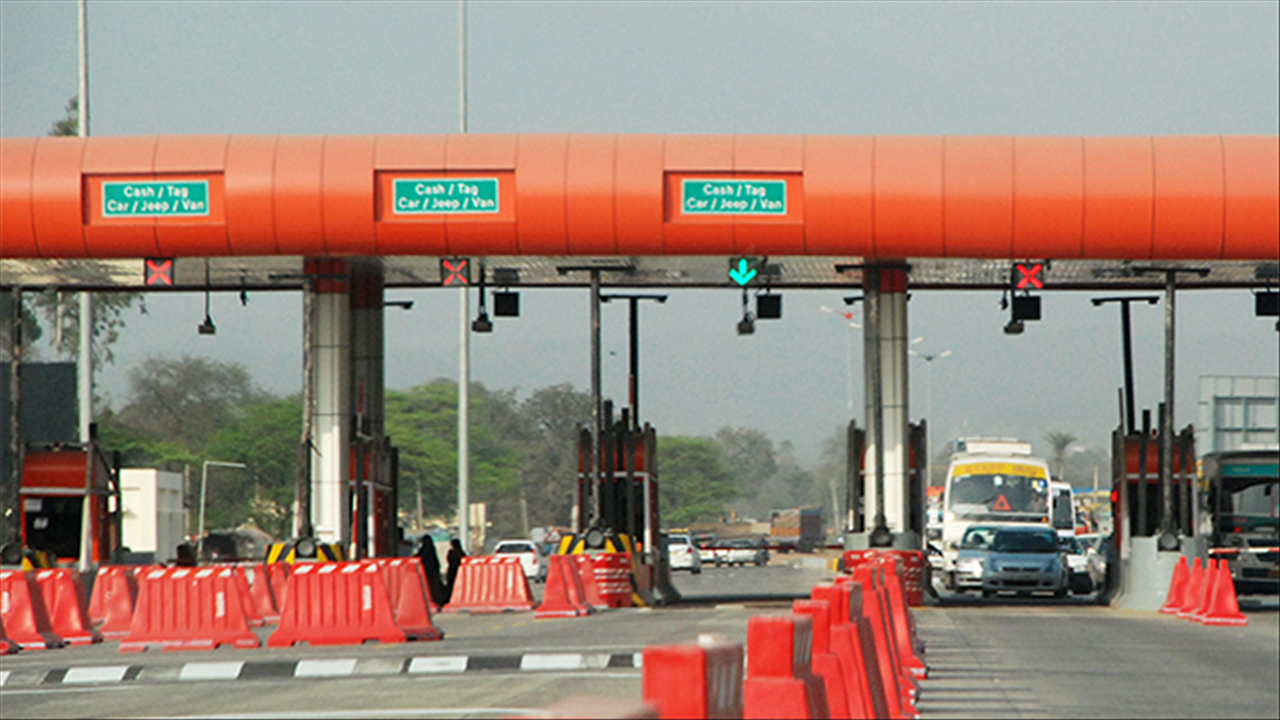
The Infrastructure Concession Regulatory Commission believes that  Nigeria has about 195,000 km of road network. About 32,000 km out of these are federal roads, and 31,000 km are state roads. In total, we have  about 60,000 km paved and the remaining 135,000 km are untarred. Most of which are in a state of disrepair.

When two cities in two different states of the country are linked up by a road, that road is considered to be a Federal Road. This is a very broad definition that could get things complicated along the line.

When I see a long  expressway where vehicles run for hours, leading to another state,  it’s easy for anyone to say that the road is a federal road ; what makes it complicated then is when this road twists and bends into streets in a particular state. Under that situation, should the twists and bends within a state, used mostly by people in the state be also a part of what belongs to the Federal Government?

A typical example is the Portharcourt road Aba in Abia State,  which joins the Enugu/Portharcourt Expressway. Most of the commuters using the road are in Aba, the streets are in Aba, the small shops and businesses there are in Aba, in fact almost everything about the road is in Abia State for instance,  and yet the road is considered a Federal Road . This dilemma has left most roads in shambles for years leaving them in deep mess as these roads are not visible enough for the Federal Government since they are hidden in the streets within a particular state.

Another example is the Lekki/Epe Expressway. Located in Lagos, leads to different places in Lagos, and used mostly by Lagosians travelling to other parts of Lagos State. Yet, the apparent reason for it’s neglected state is the fact that it is considered the property of the Federal Government.

The States think the roads should be built by the ‘owners’ ,the Federal Government thinks they are close enough to the states to be one of their own. In this state of confusion, the roads suffer neglect and the citizens get the pain. 

In many developed countries around the world,  road projects are executed using monies and revenue generated from tax. If a particularly road was built using taxpayers money,  the road users are expected to use for free. Otherwise, toll gates are introduced. I know what heavy vehicles do to roads, and anyone who thinks that vehicles should not contribute to repairing the wear and tear they contributed on the road based on how heavy they are should kindly reconsider.

I have seen a newly constructed road get ripped apart by a low bed truck carrying an excavator, I have also  seen a newly constructed drain get wrecked by a fully loaded tipper truck parking just next to it. Though this may have more to do with the quality of execution than prolonged wear and tear still; it reminds us that vehicles deteriorate roads.

Hence, the reintroduction of toll gates on roads should be seen as a need to restore efficiency and the culture of sustainable development. In some countries private companies build roads and then introduce toll gates which helps in keeping the roads maintained.  Also roads built with loans collected from banks are also serviced by the revenue generated from toll gates.

What We Can Do

So then, as the nation contemplates on the big picture restructuring, whether or not the ownership of resources within a state should belong to the Federal Government or the State Government, they have to restructure the ownership of roads. State Governments should own, maintain and generate revenue from all roads within their topological boundaries with assistance from the Federal Government in critical cases. Also,  the members of the National Assembly should as a matter of urgency to try to do the needful. Then, there should be a total, I repeat! total expulsion of touts who neither build nor maintain roads from all government owned roads.

No government would be taken seriously by anyone if there are as many touts as there are potholes and gullies in their major roads.

I Have Accepted to Speak in Turkey’s Uludag Economy Summit, March 2020

0

I will be speaking in Turkey’s leading and most influential economic summit – the Uludag Economy Summit (UES) in March 2020. I accepted the invitation this week. You can learn more from MIT Media Lab here

A week after, it would be Amsterdam but for a closed gathering, hosted by a global microelectronics company. We will be talking hard technical things on circuits and systems, not economics and markets. 

Uludag Economy Summit, the most important business and economics meeting of Turkey, has been organized by Capital, Economist, and Start Up magazines since 2012. Every year, the Summit hosts substantial speakers and business people from Turkey and all around the world.

Steps that should be taken to sustain competitiveness and increase efficiency in various industries from commerce to manufacturing, retail sales to finance and education have been addressed in the Summit, which has been followed with great interest by 1,800 people from Turkey and all around the world in 2018.

In 2019, the 8th Uludag Economy Summit, in which global and local issues will be discussed, will be held on March 22-23.