DD
MM
YYYY

PAGES

DD
MM
YYYY

spot_img

PAGES

Home Blog Page 6628

Nigeria’s Biggest Problem – Inability To Follow Through On Anything

0

It’s hard to say what Nigeria’s biggest problem is, if really the problem is singular. Many believe they are many. Ask some, and they tell you it is corruption,  ask another and you may hear something like illiteracy and hunger.

Of Course, in reality, the nature of the problems befalling Nigeria is multidimensional. More like a hydra-headed monster with multiple nervous systems. If you severe one head, the rest are able to continue performing their basic functions with very little obstruction since they’ve got enough heads to carry on as usual.

But if you ask me, I would say that one of our biggest,(if not the biggest)  problems is our inability to follow through on anything. Or simply put, the inability to start and complete any project. That doesn’t mean that there aren’t pockets of completed projects here and there to counter my ‘unverified’ claims.

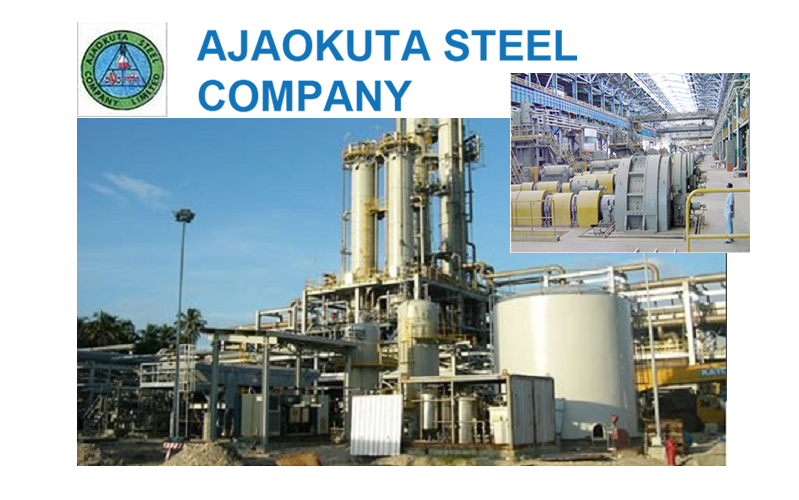
Around 1975, a Soviet survey team discovered iron ore deposits in minable quantities and  a contract was signed between the Nigerian government and the Soviet state-owned company, Tiajpromexport (TPE).

The Government of the day sent many Nigerian engineers to  Russia and Soviet states to train them in preparation for what was to come.

In 1979, Shagari’s government began work on Ajaokuta Steel Project. The Ajaokuta Steel Company Limited was incorporated in 1979, and by 1994 the steel mill had reached 98% completion.

With different administrations coming with different policies and agenda, promising to do something different from what it’s predecessors had done, the place remains today a ghost of a once lofty idea waiting to be laid to rest and an experimental laboratory for anything but anything that works. Nothing substantial has been done and followed through to completion. A series of promises, vows,M.O.U’s and nothing more. Yes it remains nothing more than an idea till today.

Most of the Engineers who were trained in Russia for the specific purpose of running the place may have retired or will be retiring soon, with sadness in them knowing that they may never get to apply what they believe will greatly change their country.

At what cost?

$4.6 billion. Which should be around $14.5 billion today considering the annual inflation rates.

$14.5 billion , Millions of man hours, 40 years and counting,  nothing ,absolutely nothing to show for it.

This sounds like the Mysterious Bermuda triangle where whatever crosses it’s part somehow manages to disappear. Forget  the narratives from NASA and Stephen Hawking, this is the real Black Hole, located in the most populated black country in the world.

The story of Ajoakuta embodies the Nigerian problem. A drive across all the states in the country reveals  to you the size and magnitude of abandoned projects and ideas and systems of doing things .

The irony of it all is that many believe the solution lies in finding the best method of doing something. But the reality points to the fact that identifying a path, and following it religiously to its logical end is actually what works.  Communism for the Chinese, Capitalism for the Americans, Monarchy for the Gulf Arab states have been able to deliver on the economy and poverty alleviation.

From 6-5-4 educational system to the 6-3-3-4 and now to the 6-9-4  the illusion that what leads to results is WHAT and not HOW is clearly written all over the place.

In the Power sector for example,  we have seen the transition from NEPA to PHCN  and now to the regional distribution companies like IKEDC or EEDC as the case may be.Still, nothing much has changed. I know a particular power station where the turbines are started using electricity from the grid. Meaning that if the power goes off from the Distribution Company  the turbine shuts down. A plant that is supposed to generate power to the distribution companies now needs electricity from the distribution company to function simply because the emergency diesel generator(BLACK START GENERATOR) which is supposed to kick start the turbine isn’t available.

Between 1999 and 2007, about $16billion was spent in the Power sector with very little to show for it. 

I know you may ask, What need is there to keep highlighting these if there isn’t any solution? My answer is simple. Now you know what doesn’t work. If there are 1000 possible iterations to success and I successfully eliminate just two, then we have lesser things to work on and the picture of how it should be gradually becomes clearer.

Secondly, at least now you know what the problem is. Could a solution to sickle have been reached if we never realised it was genetic and still felt it was a spiritual curse from our ancestors?  Could there have been a real malaria cure if we still like many of our forefathers believed that it was caused by palm oil consumption?

The first step in solving a problem is identifying what the problem is or is not. By the way who says you can’t provide the solution to all these problems?  Yes you! I mean you the reader.
What Lagos State Needs To Do To Fix Lagos Traffic Paralyses

1

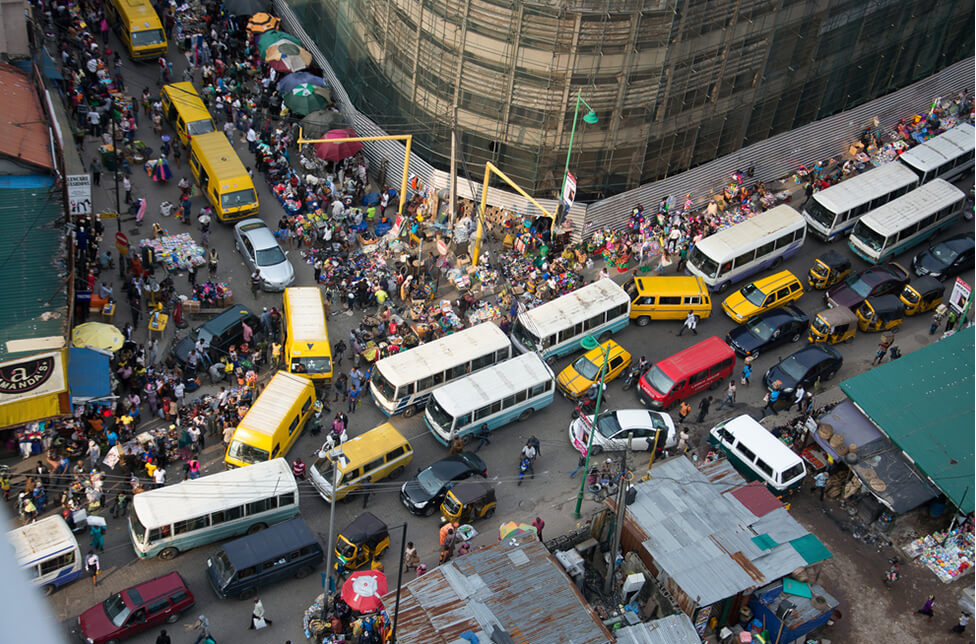
Recently, the Eko Innovation Centre launched a five million dollars social innovation challenge tagged “Eko Traffic” with the aim of finding innovative solutions to Lagos. While the idea is commendable, there are steps Lagos State Government must first take before implementing solutions gotten from this challenge.  In my opinion, most of the traffic jams experienced in Lagos are artificial traffic which can be avoided. Below are my observations that led to this assertion and suggested solution to this issue.

Presently, at the Fadeyi interchange going to Oju-elegba, the surface course (top layer) for some part of the road has been scraped off for days in order for repairs to be carried out. This scraped off area has deteriorated to the extent that it is now worse than it was before it was scraped. There is no visible solution or repair in sight. What you can only see are equipment showcased at the side of the road. Three days ago, this very issue led to a traffic jam from Fadeyi to Maryland and still causing serious traffic daily.

Another scenario is the Oshodi area of Lagos; where the five star bus terminal construction activities is ongoing. The pedestrian bridge on the Mushin –Sango Ota expressway has been blocked off for months now without providing alternative to road users. One third of the road is condoned off due to construction activities, market sellers and passenger vehicles popularly known as ‘Danfo’ leading to serious traffic.  All these put together coupled with road users struggling to cross the road is the major cause of traffic along this road. Similarly, the main express way from Oshodi to Isolo leading to Mile 2 is partially blocked off due to construction activities, forcing all motorists to use the service lane which in itself is in a bad condition with series of potholes. One can only wonder what the traffic on this road will be like now with the continuous rainfall causing flooding. 

The most baffling of all is the jetty barrier (median) dividing both carriage way that has been redesigned to allow for a conduit service pipe, increase the height and prevent road users from crossing but construction work on the pedestrian bridge which will provide respite for road users has been abandoned or placed on hold. One cannot help but wonder why the pedestrian bridge along Oshodi- Mile 2  was not completed before the plan to increase the height of the jetty barriers commences or why will the construction of the bus terminal lead to the permanent condoning of the two pedestrian bridges on Mushin –Sango Ota road. These are same bridges you would be arrested if you fail to use them when crossing the road a month ago by environmental officers, or why the road resurfacing cannot be done in the middle of the night or why a most three lane roads in Lagos becomes a two lane road with a BRT lane after reconstruction, knowing fully well that even the previous three lane road is not adequate for the number of vehicles plying the road.

Some other examples were such traffic jams are experienced are; Yaba- can be attributed partly to the abandoned terminal project, Ikorodu to Mile 12 and Oshodi to Iyana Paja axis-  as a result of poor design and construction of the road.

Even our Institutions are not left out of this worrisome occurrence. The University of Lagos (UNILAG) presently refurbishing its entrance gate and walkway. The contractor have literally condoned off the road with construction materials and activities. This is causing serious traffic on the already busy road. One can only wonder why institutions where we are being taught these construction planning and processes, and look up to for solution can’t schedule the concreting of the road for a Sunday when there is less vehicles plying the routes or why construction activities on the road can’t be ended daily before peak traffic periods in the evenings or why the contractor can’t stack their materials elsewhere off the road and cart only what they need at a time to the road.

A close look at most of Lagos roads will reveal poor construction planning for ongoing projects resulting in traffic, incomplete infrastructural projects mostly from last administration, flooding of major roads as a result of clogged drains or no drain at all, reckless driving and bad roads as the lead causes of traffic experienced in Lagos. These are the issues LASG need to tackle before implementing solutions that will be proposed from this challenge. There are no quick fixes to these issues as they did not just happen in a day but careful and methodological steps towards finding the right solution will sure result in tremendous changes. Some suggestions that can be considered are;

  • Planning and Environmental Impact Assessment report must be made part of submissions by intending contractors before projects are awarded to them. This must be approved (even by stakeholders in that) and enforced for all infrastructural project; this will ensure that the impact of that project on all stakeholders are considered during the planning process and workable plans are put in place to ease the sufferings of the people the project will affect.
  • The Lagos state Neighborhood watch can be revamped into environmental officers just like the War Against Indiscipline (WAI) ensuring that homeowners and business owners are responsible for their environs such as clearing of drains and proper refuse disposal to avoid clogging of major drains and ultimately reduce flooding on the roads. A good example to buttress this point is the Mushin area of the state where you will be amazed at the quantity of debris you will see on the road after rainfall. This has led to continuous deterioration of the road even after continuous routine repairs though the quality of the repairs is also questionable.

Announced Inspections By Sanwo-Olu And True Governance

0

The past three weeks has been full of public works in the twenty local government areas and the thirty-six(36) local council development areas of Lagos State. A stranger might think a state of emergency has been declared on infrastructure by the government of Mr. Babajide Sanwo-olu, the executive governor of the state. Lingering projects are hurriedly being completed, drainage and refuse are being cleared, and roads are being graded. The more I daily hear the jingles on the radio about the scheduled inspection of projects coupled with the high level of activities, series of questions arise in my head: why so much publicity? Was the local governments and councils on shut down before now? Is there more that meets the eye?

I am expressing my displeasure as a concerned Lagosian and tax payer that has high expectations from this new administration. I may be a novice to how the government works, but I strongly believe that a government that wants to transform the lot of its people should not go around publicizing work inspection tour for almost a month before the event because it will not get the true picture of governance at the grassroots.

Permit me to share an experience of sincere and excellent leadership. It happened a little over two decades ago when I was a resident of Nigeria Air Force Base, Ikeja where I had a taste of good governance. Before the appointment of late Group Captain Sam-Ethnan as the Base Commander, the barracks was in a state of paralysis and shame. The environment was highly polluted as refuse was collected and burnt close to residences, electricity and water supply was a luxury, sewers leaked, domestic animals roamed everywhere, crime rate was high, infrastructure was dilapidated and lawlessness prevailed.

Before him there had been commanders that maintained the status quo. On his appointment, he set to work, spoke less and acted more. He Never Announced Inspection Tours; and they were frequent. He was tireless. He randomly entered flats and inspected the level of hygiene, food in the kitchen, furnishings of the living room. Soldiers were parked and locked out of their flats for things like dirtiness, no beef in the soup, etc. If a block was unkempt, the entire occupants were relocated to a non renovated section of the Base. His transformation would be much appreciated under subheadings below.

Environment and Refuse Management

Trees were felled and the environment was landscaped with flowers that produced sweet aromas. Everywhere was lit with street lights and powerful flood lights, no more hideout for miscreants. Refuse was collected and taken out of the Base everyday except on weekends. Burning of refuse stopped and the sight was transformed into a beautiful lawned field. Little baskets were tied to poles to collect trash. No one dared litter the streets. All domestic animals were banished.

Security, Law and Order

There was 24 hours Air Police patrol. Criminals(even soldiers children who stole) were paraded around the base and banished. There was prompt response to distress calls. The fire department was revamped with new vehicles and equipment with constant fire drills. Speed limit and traffic rules were strictly enforced. Parking spaces were marked on the streets. Curfew was imposed from 11pm to 5am. Indecent dressing was banned. There was zero tolerance to indiscipline.

Infrastructure and Social Amenities

There was 24 hours uninterrupted water and electricity supply. Residences were completely renovated. The only time in my life I enjoyed constant electricity for two consecutive months without ceasing at some point. The medical centre was upgraded and service was improved. The Mammy market was enlarged and modernized and home retailing was outlawed. The roads were rehabilitated. Indoors and outdoor sports facilities were improved and, recreation centres were built.

Communication

He installed intercoms in all blocks as there was no GSM at that time. Service delivery between the Base Service Group, BSG, institutions and the residents was excellent.

Air Force Base Ikeja underwent complete transformation that it became the most beautiful, organized, neatest, and functional military barracks in the country. It became a centre of attraction for Nigerian tourists. Life was exciting. Unfortunately we lost him and he was immortalized with the renaming of the base to Sam-Ethnan Air Force Base, Ikeja.

This is not a eulogy but a point of reference to leadership and how governance should be. During his frequent unannounced inspections, everyone was on his toes. Everything worked. Ex-Governors Lateef Jakande, and Raji Fashola are of one spirit with Sam-Ethnan. They exhibited exemplary leadership that puts the people first.

In conclusion, I call on Governor Sanwo-olu to eke his name in the hearts of Lagosians by delivering good governance. Lagos was excellent under Fashola because he was known for Unannounced Inspections. His credentials made President Muhammadu Buhari to appoint him twice as a super minister: a minister that handles more than one or two portfolios. There was a reversal of this excellence under the last administration. Mr. Sanwo-olu should make the local governments work by unscheduled visits. We should feel their presence.

I wish the governor well in his duties!

Obafemi Awolowo University Takes Lead in Open Innovation

0

This is one of the interesting things I have seen in recent times; an academic institution, whose major source of innovation is research or at best, closed innovation, is taking a big leap to transit to an open innovation system. Our education system so far in Nigeria, has been largely characterized by a one-way transfer of knowledge and information, where students have to take-in what the lecturer is saying, and regurgitate back during examination. Yes, our system tests for memory and not intelligence.

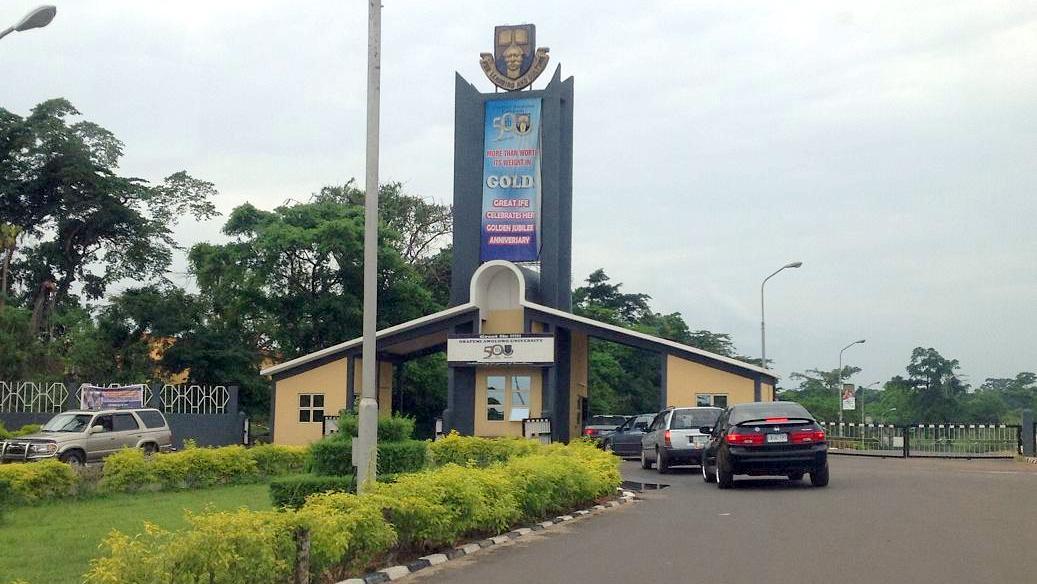
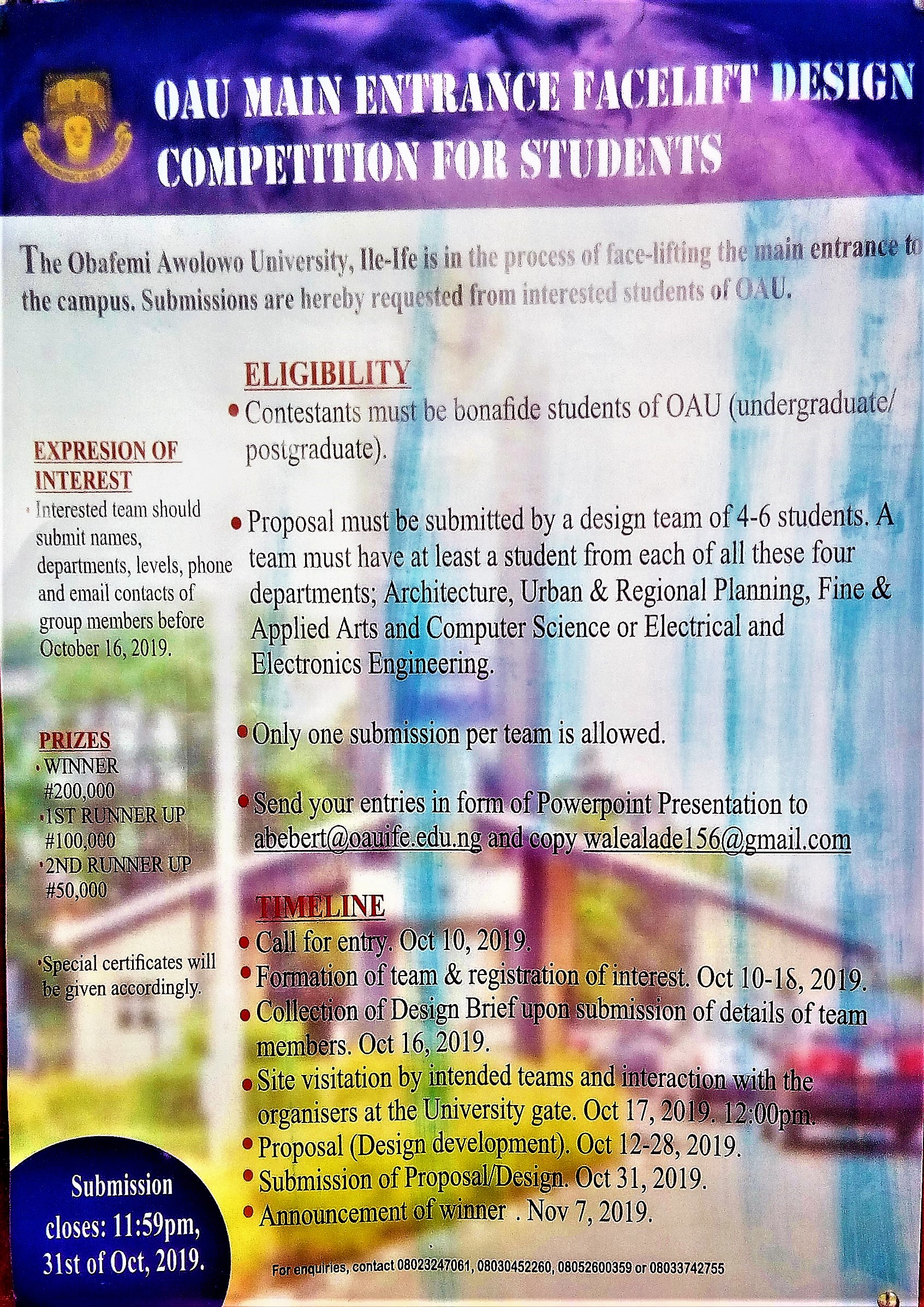
Amazingly here, Obafemi Awolowo University, is in the process of face-lifting the main entrance to the campus, and has thought it so nice, to involve students in the design phase of the project. The school is not just sourcing for ideas, they are also ready to award monetary prizes to winning students. This is a big redesign of our public system of governance in Nigeria, and kudos to the Vice Chancellor, Prof. Eyitayo Ogunbodede, for championing this initiative. Traditionally, this design could have been outsourced, or done internally, with huge sum of budget. Yet, the design will be poorly done, and the funds allocated to the design will be siphoned.

For a university with brilliant professors and design professionals, deciding to go beyond their border of innovation, and make it open source, is a big leap to our public system.  In a world of widely distributed knowledge, an institution, organization or company, cannot afford to rely entirely on their own research. Open innovation is more or less like the antithesis of the traditional vertical integration approach, where R & D activities lead to internally developed products. It is a “distributed innovation process, based on the purposively managed knowledge flows across boundaries”. By integrating a much larger variety of ideas and knowledge into new product and service development, the performance of this process will improve, and the resulting products/services will have a better fit with the customers’ requirements.

The open innovation challenge

Many big corporations such as IBM, 3M, DuPont and Boeing have explored the benefits of external innovation opportunities, transferring major new initiatives from internal resources to those that focus on external networks and communities. Procter & Gamble’s (P&G) approach to R&D is one of the most popular examples of open innovation. To have a greater grasp of external ideas and actors, P&G moved its R&D strategy from concentrating on internal R&D toward “connect and develop”. By this, P&G has opened itself up to a wide range of external sources of innovative ideas. The “connect and develop” model is based on the notion that externalities may often be more valuable than internal ideas, or they can complement the internal ideas to generate great value.

As Obafemi Awolowo University, takes the lead in student-centred design, the Nigeria public sector, must equally transit to an open innovation system, a citizen-centred governance, to develop tailored solutions and policy framework. Citizens are not meant for the electioneering process alone. They must also be involved in co-creation and co-innovation process. This is not new. President Barack Obama did it, with the Open Government Initiative, in the United States. In Canada, The Institute for Citizen-Centred Service (ICCS), was established by the Public Sector Service Delivery Council (PSSDC), and has been playing an important role in enhancing citizen satisfaction with public sector service delivery. Also, in South Africa, The Centre for Public Service Innovation (CPSI), was established by the Minister for Public Service and Administration, with the aim of improving the quality of public service through the development of innovative, sustainable and responsive models.

Nigeria has been 20 years into democracy, and despite this, the government has been employing a dominant top-down approach to governance system. Treating citizens as customers is one of the key elements in transforming public services, and has been considered a core element of the (new) public management reforms globally. Government, institutions and public authorities, must transform from bureaucratic organizations into public service provider, to be managed with a strong emphasis on transparency, accountability, service orientation and perceivable output and outcome devoted to the welfare of the citizens.

Public values must be integrated into the decision-making process, to improve the quality of decisions, build trust in public institutions and create public access to information. The “Change begins with me Campaign” in Nigeria can’t be effective, until democratic power is given to the voices of the masses. Nigerians have the capacity of citizens to pass sound judgment on public policy matters, and provide high quality contributions to the policy processes. Without the right structure, to create an open innovation culture in Nigeria, we will continue to circumnavigate cycle of poor policy, poor implementation and poor standard of living.

“Let there be showers of As”.

0

This morning, teaching in my home grace and hardwork, and faith, I went back to secondary school and the prayer before exams in the Scripture Union. We would meet for a very short prayer before the term meetup is closed. Uzoaku, our then student-leader, would close, proclaiming “Let there be showers of As”. Have a great Sunday.

Father, thank you for grace – the amazing and abiding grace.

I have worked hard this term and I am prepared.

As exams begin tomorrow, qualify me before my teachers.

And as people sleep tonight, and your angels go out to bless, remember me.

May my work shine glory to your Name.

And let people testify of Your glory because of my grades.

My hands are raised up unto the heavens – see them, Father, and bless.

David made his sound with cymbals.

I want to make mine with As in this exam.