To some, they go on a trip for work, events, and to visit their family. On the other hand, others likely travel to unwind and escape the work’s daily stressful grind.
Although reserving a flight and getting a hotel room becomes a lot easier today because of our digital and connected society, we have been missing the soul of traveling within ourselves.
Indeed, modern smartphones have their ways of making our lives easier because of their wide array of functions. However, these devices only operate with automation, which makes things efficient, but not exciting.
And that is why this effect will dwarf from the charm of the traditional traveler’s tool, a travel wristwatch. Why? Easily because we travel to have a memorable experience, and one way to achieve that feat is to travel like the old ways using a GMT watch.
What is a GMT Watch?
Manufacturers developed the GMT watches mainly for aviation, which includes the GMT and local time. Although these are the primary purpose of GMT watches, we can also use them in other ways.
We can use the GMT timepieces to know two time zones simultaneously, with the use of conventional positioning the GMT hand to the original GMT. Next, you can subtract or add to GMT to determine the current time of any country.
The complications of GMT watches are likely the most helpful features in a wristwatch, next to chronograph watches.
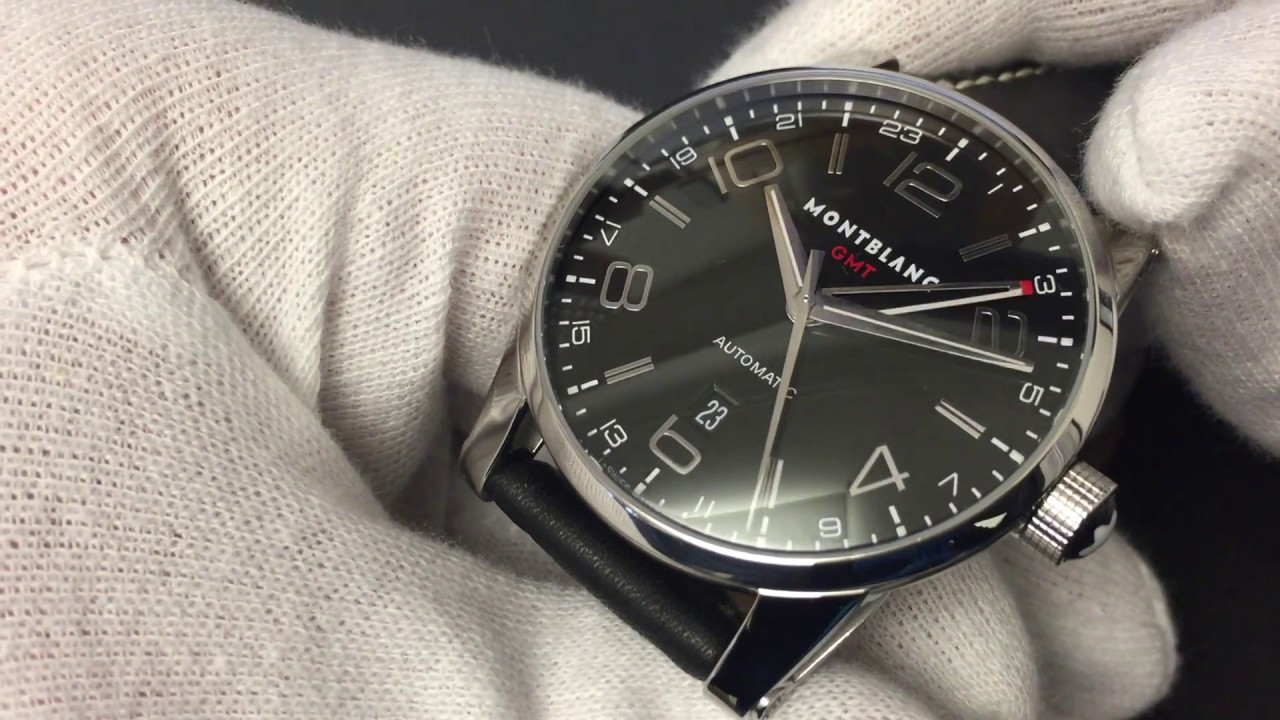
Montblanc TimeWalker GMT
This timepiece is a dress watch style that has a black leather strap attached to a stainless-steel case. The timepiece has a 42mm case diameter and a skeleton case back.
The Montblanc TimeWalker GMT contains a black dial together with silver-colored hands. It possesses rotating Arabic numerals along with stick hour markers with automatic movement.
The Montblanc brand is Swiss Made. As a real GMT watch, it has 24 hours of markings as well as minute markers throughout the outer rim.
Additionally, this watch is scratch-resistant and covered with anti-reflective crystal. It is also water-resistant at around 30 meters deep.
Why is Montblanc TimeWalker GMT Ideal for Travelling?
If you love to travel, you would want to wear a timepiece with a function that you can certainly use. The most apparent reason as to why a GMT wristwatch could be the most suitable timepiece for you is the complication of GMT itself.
Usually, by knowing the specialty of a timepiece does not fundamentally indicate that you will utilize it. On the other hand, you can always make use of the time zone function of GMT watches.
The complications of a GMT watch is not only an entertaining feature because it is entirely useful, particularly when you travel in a place that has a different time zone.
The function of GMT timepieces probably has the best complications that are still friendly to its user and possesses the most undemanding features you can find in a timepiece.
There is arguably no other device that could compete with the GMT watches’ convenience of knowing the local time of any country in the world by merely rotating a single part of it.
Furthermore, you can also use GMT wristwatches on a plane, and you don’t need to switch it off or shift it to flight mode. The functions of a GMT timepiece are indeed a classic example of a traditional device that can effortlessly beat any smartphone application.
To Conclude
While traditional in their design, you cannot certainly call modern travel wristwatches as timeless classics.
Wearing a timepiece that can display the time in several time zones holds an elegance that you cannot compare to any modern gadget. Besides, this kind of function can indeed stimulate the sense of adventure of its wearer.
World Bank’s IFC invests $10 million in Lagos-based CardinalStone Capital Advisers, a private equity firm. This investment is part of the IFC SME Ventures program that supports high-growth entrepreneurs in frontier markets by investing in funds that provide risk capital. The program also offers technical assistance on a range of issues, from management skills to accounting, to build a more sustainable environment for SMEs. SME Ventures funds have financed over 100 SMEs, which have created over 6,000 direct jobs, many more indirect jobs, and generated tax revenues for governments.
Press Release
IFC, a member of the World Bank Group, is investing $10 million in CardinalStone Capital Advisers Growth Fund (CCAGF), a private equity fund launched and managed by CardinalStone Capital Advisers (CCA)- an investment management firm, to expand access to finance for high-growth, underserved small and medium enterprises (SMEs) in Nigeria and Ghana.
SMEs account for 96% of businesses in Nigeria and 85% of the private sector in Ghana. The growing middle class in both presents an opportunity for SMEs to scale up, however access to long-term capital remains a challenge. CCAGF will seek to support SME growth opportunities by providing long-term capital as well as operational expertise to ensure business sustainability.
Yomi Jemibewon, Co-Founder and Managing Director of CardinalStone Capital Advisers, said: “This funding represents a significant step towards catalyzing growth in small and medium enterprises in Nigeria and Ghana. We look forward to working with the IFC as a partner in this fund as we strive to continuously bring best practices in operating standards to our investments and investee companies.”
CardinalStone Capital Advisers is seeking $100 million in total for the CCAGF fund and has secured $50 million in capital commitments from the CDC Group, the UK’s development institution; Kuramo, a leading African investment firm; FMO, the Dutch Development Bank; and NSIA, the Nigerian sovereign wealth fund; among other investors.
“IFC’s investment in CardinalStone will spur growth of SMEs and facilitate much-needed job creation, while creating the ecosystem for a more robust local private equity and mezzanine financing market,” said William Sonneborn, IFC Senior Director for Disruptive Technology and Funds. “By supporting SMEs in fast-growing markets, we hope to bring best practices that raise the bar for operational improvements and environmental and governance standards across the investee companies.”
Despite being a first-time fund manager, the CCA team has experience investing in these markets, having deployed $29 million in capital in 5 investments across several sectors. Their investment in cassava starch production in Nigeria is already creating value for hundreds of farmers who can now transform their raw materials into value-added products, reduce reliance on imports and improve supply chain efficiencies.
This investment is part of the IFC SME Ventures program that supports high-growth entrepreneurs in frontier markets by investing in funds that provide risk capital. The program also offers technical assistance on a range of issues, from management skills to accounting, to build a more sustainable environment for SMEs. SME Ventures funds have financed over 100 SMEs, which have created over 6,000 direct jobs, many more indirect jobs, and generated tax revenues for governments.
Every writer, I suppose, has in mind a picture of his readers and what he expects to create in their mental imagination after reading the writing. Mine is a picture of a watercolorist. This article intends to paint in your mental memory a new and emerging narratives of Nigerian medical students. I will use experiences from my own classroom and classmates to achieve this. I hope to enrich the vocabulary that people use when they talk about medical students. Why be concerned with this? Because it is time to expand words used in describing a medical student.
When I attend events centered around digital and I introduce myself as a medical student I look strange. I am a stranger who is not supposed to be here. The reaction is clear. That is why I am concerned. Another reason is because we have been marginalized to certain things. When everyone talks about digital nobody remembers we can plug the power of digital into our health sector. Whatever new description you get from this I will want you to use it very well.
Questioning what we believe is difficult at the best of times, and especially difficult when we need to do it personally, but we can benefit from informed decision of others. The common words synonymous to medical students years back are bookworms, nerds, antisocial amidst a few. But gradually we have been on a surge that peaked in the last few years. The revolution to be described differently peaked this year in my own class. I will share some of the revolutions.
My classmates and few friends in other medical colleges are now introduced differently from what it used to be. Examples are, Tosin; a medical student and an entrepreneur, Progress; a medical student and a social entrepreneur, Omooba; a medical student and a blogger, and for few like myself the new description comes first before the introduction as a medical student. In fact, these days we do not want to be introduced as a medical student. We do not want that to define our entire youthful age. And if not been questioned appropriately many prefer to use their new description. I’m Tosin, an entrepreneur.
AGBOOLA PROGRESS
“Progress Agboola is a global health enthusiast, social innovator and medical doctor in training with over three years experience working on social impact projects and initiatives across Nigeria covering adolescent sexual reproductive health, HIV Prevention research, health financing and gender equality. Progress is a convening space working group member of the Global Health Workforce Network (GHWN) Youth Hub at the World Health Organization. He is part of the selected advocates for the Africa Free of New HIV Infections (AfNHi) Youth Cohort. He has been recognized as a 2017 fellow of Barack Obama Young African Leaders initiative (YALI), IFMSA 2019 delegate to World Health Assembly at Geneva Switzerland, 2019 Fellow of the Young Professionals Bootcamp, A Kectil 2018 colleague, Alumnus of Common Purpose UK, Youth Ambassador at International Youth Society”. Facebook- Progress Agboola LinkedIn- Progress Agboola Twitter- progress_md Instagram- progress_md
Personally, we are as surprised as everyone around. There is a paradigm shift from who we used to be to who we are now. I gathered a few reasons for this quest for revolution. I asked few of my colleagues why they started what they are doing now. I consulted myself why I have chosen to be doing what I am doing.
“In my 2nd year in medical school, there was an industrial strike action of about 6 months which was the period I used to discover myself more. I understood things I was passionate about and I became deliberate about it by volunteering, attending conferences and networking with colleagues and mentors that guided me in harnessing my potentials and in leveraging on opportunities to advance my growth. I strongly believe that as Medical students we are not too busy or young to make a difference and to contribute our quota in actualizing Sustainable Development Goal 3 by the year 2030. The Future of work is evolving so fast and as medical students we need to be well positioned and equip our selves with necessary skills and knowledge so that we won’t be left behind and to be able to compete globally. The bigger picture for me, is not just to be confined to the four walls of the hospital but to explore further in designing sustainable interventions that will save the lives of people and enacting policies that will influence the lives of millions positively”.
AGBOOLA PROGRESS
One major reason is that there is a containment that medical school brings that everyone is not comfortable with anymore. Medical school is busy and challenging. That is true. But we are making extra efforts to break out of that excuse less we reduce our lives to only bookworms. Medical school could be depressing. Apart from the joy of seeing patients’ smile and joy coming from passion for Medicine and personal motivation there is little or no source of happiness in the school. From morning reviews to ward rounds to call duties, the whole day could be rough and the cycle continues everyday. It is mentally draining sometimes. There are good days, but in total you are barely praying for a good day everyday. The scoreboard is another depressing board. The knowing that results of exams are coming out is crippling. In the midst of these, everyone decided to find a new description. If things are depressing with the name medical student I can shift into being a social entrepreneur for that moment. It is way out of depression. It is a way of finding a love. Many people started doing things outside Medicine as hobbies before it became something they really wanted to be describe with.
SULE OLUWATITOMI
“Sule Oluwatitomi is presently a medical student at LAUTECH. He is majorly into drawing but as a side view, he loves singing. He works on improving himself daily by taking active participation in challenges online and online courses as well. He is also a self-employed Android web developer. Why have I chosen to engage myself in drawing? Well for the most part, he sees art as being therapeutic because he is someone that does not think he is enough making him bury himself in it. He sees art as gently opening up his cover spread and peeping to see what others are doing and it is where he gets to open up too. And lastly, showing everyone that in everything there is a tint of beauty even in his incompleted art. His work can be viewed on his Instagram account. https://www.instagram.com/doc_titos/”. OLUWATITOMI
Overtime, everyone saw they could do more with their mental capacity. Everyone saw they could get another life degree while investing six years for MBBS certificate. It is running two different courses concurrently. It is demanding, but everyone has made up their minds to pay the sacrifices. While in school people are picking up entrepreneurship skills. I could tell you many of my classmates can compete with business management students. They might not get an hard copy certificate but they have experience certificates. My classmates are picking up entrepreneurship books and reading it. My classmates have businesses. I once built a mini media company with few of my classmates. Even though it failed after two years, we learnt. We earned a certificate from life experience. The point everyone has seen is that we can maximize our 6 years getting MBBS certificate and other certificates. I run online courses. By the time we are graduating, we are not coming out of school with MBBS alone.
“Imagine your license is withdrawn as a medical practitioner and you can’t practice anymore. What would be left of you? Of course, if you have been opportuned to be under training as a medical doctor, you definitely owe it your all. It is your primary assignment and it’s of uttermost importance that you take it as priority. Beyond being a medical doctor, what other value can you offer to people around you? I don’t pray so, but what if you license suddenly gets withdrawn, will you then become valueless? The world is constantly revolving and developing. The people that matter and will yet continually remain relevant are those who have been able to successfully identify a need in their society and are on the go to meet that need. Coming to realise this over the years, I decided to revive the business.This will serve as an inspiration to me that I have capacity to do much more as far as I can imagine.It will also serve as inspiration to other medics outside there who has abilities that are dying in them”. OLUWATOSIN
There are various reasons that we would need to call for a summit to discuss them. Students have seen loopholes in the healthcare system of the country. We are not taught leadership in school, but we are expected to head a medical team, how do we do that? We build ourselves personally. We are not taught emotional intelligence in school, but we expected to break sad news to people the best possible way, how do we do that? We develop ourselves personally. Some of these loopholes are the stimulating factors driving this revolution. If this revolution do not happen, in few years time we will not have the necessary skills to compete with our colleagues outside school.
ADETUNJI OMOOBAJESU
“My name is OmoobaJesu Adetunji, my friends call me Omooba (Or-moh-bah). I am a 4th year medical student who enjoys reading and writing. Those are by far my two favorite things to do, which is why blogging came naturally to me. I started blogging in twenty-fourteen mostly for self expression. Now my blog has morphed into a place where I share ideas on life and living and also document my journey through medical school. The latter part of which is cathartic for me. I often describe my blog as a med student’s hub, because I believe in the power of stories, how much more alike we are than we care to admit and how we can inspire, motivate and empower one another through vulnerability. I also believe in the power of one so as long as I get to reach one person and help them in whatever way, I am content and happy”.
Blog address: www.omoobaadetunji.com Twitter: @helloomooba Instagram: @omoobaadetunji
The revolution is not a form of distraction. It is surprising to know we are doing better in school as a result of this. We are driving depression away. Everyone is finding a definition of themselves. Everyone is happy.
“I’m Afolabi Aderonke Christianah(DR BAKER). I have acquired this skills of baking for the past 6years. Over the years, I realised that medical school is structured in a way that it doesn’t give room for any other thing except you create time for that other thing. The tension alone can make you give up whatever you are supposed to do.The funniest part of it is that after sacrificing so much, you will realise you could have multitask those things with your academics such that none will suffer and you will still do excellently in all. Multitasking is not easy but a life of a typical medical student is wired to be stressful meaning you can’t run away from stress,you will always have something to do at every minute”. ADERONKE IG; @-DrBaker
We can be contacted whenever you want to use any of these new words to describe a medical student.
ADERINTO Nicholas
Author: ADERINTO Nicholas
Email: nicholasoluwaseyi6@gmail.com
LinkedIn: Nicholas ADERINTO
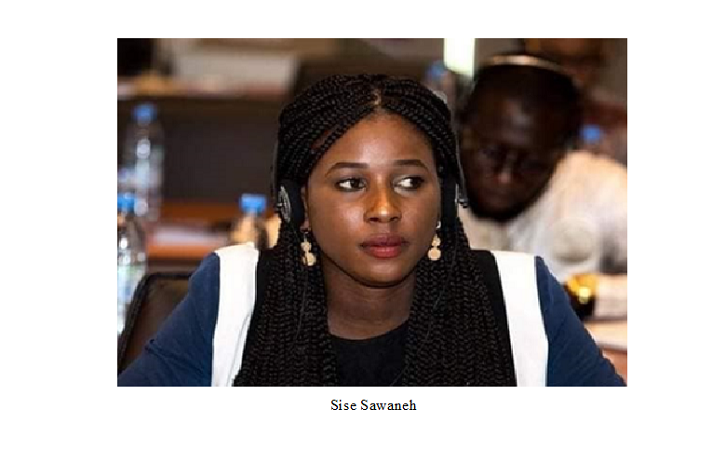
Sise Sawaneh. You died! But, your journalistic writings and efforts made to make your community and country embrace peace over conflict, collectivism over individualism will forever live on. You and others died not because you were in the wrong car drove by incompetent driver. You died because it is time to meet your Lord.
I do not know it will be earlier than expected. I had wanted to contact you for information on the Caste System ravaging your tribe based on my research to unearth the causes and proffer nationalistic solutions to the stakeholders. During my stint in your country, despite our arguments about the point of parity and difference between Nigeria and The Gambia, you always put me on my toes, defending your country. At that point, I knew you are the type of the citizen The Gambia needs to fight oppressions and liberate thousands of Gambians through journalisms and humanitarian services.
I assure you that I will still go ahead with the researches on the Caste System. But, what I do not know now is the time the outcomes will be published for the public, especially your fellow Gambians. Your death has been described as a monumental national loss. But, for me, it is more than national loss. It is a loss to the media communities worldwide and the global leaders who agreed to 17 Sustainable Development Goals in 2015 because you died fighting for one of the Goals –Sustainable and resilient cities.
Despite that God has destined that you will leave us in October, 2019, we cannot be muted on the circumstances that led to your death. Therefore, I am writing an open letter on your behalf and others who died due to bad roads, reckless driving and government failure to act on matters that concern living a sustainable life in your country to President Adama Barrow.
Dear President Adama Barrow,
Mr. President it is understandable that you came at a time when Gambians need to be liberated from the Yahyah Jammeh administration that held the country for 22 years. After Jammeh exists, actors and non-state actors echoed “Gambians now free…” It is understandable that years of damages to the socioeconomic and political structures require painstaking efforts and sustainable plans. But, you have been in government for nearly 5 years and already canvassing for another tenure. I believe your first 2 years are sufficient to provide the needed changes in the socioeconomic structures, especially infrastructural development and urban renewal.
Mr. President considering the number of accident cases reported and recorded deaths in the last 5 years, it is high time that your administration declare emergency in the road section of the transportation sector. The Gambia is one of the countries in the developing world that has been predicted to have high road deaths in 2020, already we have less than three months into the year. The projection indicates that 2 persons out of 10,000 persons will die when fatal accidents are recorded.
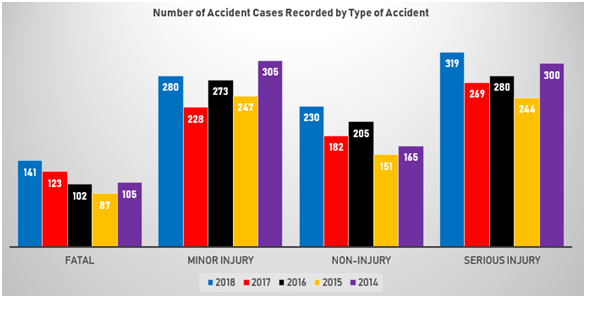
Mr. President I would like to draw your attention to some national and global staggering statistics about road accidents in The Gambia. In its latest report, The Gambia Bureau of Statistics notes that “the number of fatal accidents has increased from 123 in 2017 to 141 in 2018 with a total number of 129 persons killed from the accidents. The number of serious injury, minor injury and non-injury accidents increased by 18.5 per cent, 22.8 per cent and 26.4 per cent respectively from 2017 to 2018.”
Mr. President these national statistics call for sober reflection. The reflection should be deeper if your administration looks at the international statistics. For instance, in the course of my search about the road accident statistics, I found that out of 50 causes of death identified by the World Health Organisation for The Gambia in 2017, road traffic accident death was ranked 8, placing the country in 8th position in the world. According to the global body, Road Traffic Accidents Deaths in Gambia reached 606 or 4.14% of total deaths. The age adjusted Death Rate is 43.85 per 100,000 of population. In villages and urban areas, people have died and many have remained paralysed. On average, The Gambia has lost 119 people between 2014 and 2018.
Mr. President. It is an established fact that reckless driving has mostly been cited as the cause of road accidents. But, it is high time your administration examines the changes in the length of the roads paved in the last 5 years. Available statistics indicate that the percent of the length of paved roads increased from 63.2% in 2013 to 64.9% in 2014. More than 1% increase was achieved in 2015 (65.7%). Surprisingly, the percent was dipped in 2016 to 50.6% and picked in 2017 (51.8%) and 2018 (52.8%). Mr. President. This trend is not encouraging at all, when we look at the consequences of unpaved roads –fatal accidents with serious injuries.
Source: The Gambia Bureau of Statistics, 2018; Infoprations Analysis, 2019
Mr. President. Let us examine the impacts of the accidents on the economy between 2014 and 2018. Maybe this will give us more reasons to make critical decisions on the transportation sector. There is no doubt, the economy experienced ups and downs during the period. The growth was mainly driven by the services, tourism, trade, financial services and insurance sectors, supported by the transport, construction and telecommunications sectors.
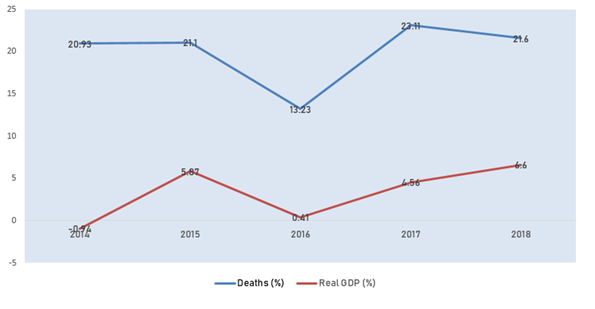
Mr. President. It is disheartening to know that the death rate grew at faster percent than the real GDP between 2014 and 2018. Analysis further indicates that the death growth rate and GDP based on purchasing-power-parity (PPP) per capita connected by 36.9%. This shows that the death and real GDP moved in tandem during the period. Average real GDP growth rate between 2014 and 2018 was 3.3%, average persons killed growth rate during the period was 19.99%, while the average the GDP PPP per capita was $ 1,596,628,000.
Source: Gambia Bureau of Statistics, 2018; Statista, 2019; Infoprations Analysis, 2019
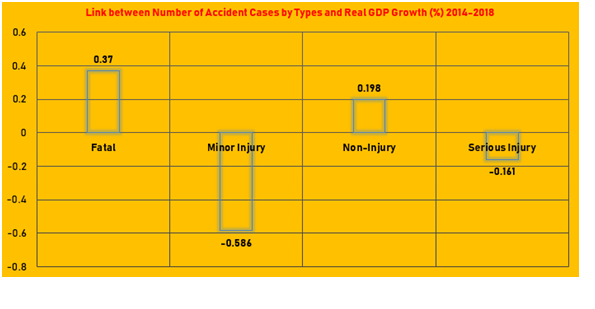
With these results, Mr. President, it is obvious that road accidents had impacts on the economy. For more insights, Mr. President, let us examine the linkages that existed during the years. The number of deaths and real GDP growth connected by 52.9%. Based on the accident types, analysis shows that fatal accident cases and real GDP growth connected by 37%. This is positive but, it stresses the extent to which the accident type could impact economic growth. Mr. President. It was not positive for the minor and serious injury accidents. Analysis reveals that one minor injury accidents reduced the country’s real GDP growth by 58.6%, while one serious injury accident dipped the real GDP growth by 16.1%.
Mr. President. These results imply that those who had minor and serious injuries were unable to engage in socioeconomic activities capable of increasing the economy during the period. This has established that your administration cannot do without proffering immediate solutions to road crashes because analysis shows that the severity of the accidents was 54.2% on the real GDP growth between 2014 and 2018. The expectation is that these accidents would reduce 2019’s real GDP growth by 43.1%.
Source: Gambia Bureau of Statistics, 2018; Statista, 2019; Infoprations Analysis, 2019
Mr. President. There is no need to be panic about these statistics and results. What your administration needs is strategic choices and tactical implementations. As stated earlier, the transport sector needs overhauling. This must be done with the immediate effect. Roads must be well taken care off between now and next year. Public workforce and citizens need to be more enlightened on the do’s and don’ts on the roads while driving.
Since it is not practically possible not to experience road crash, Mr. President, emergency medical facilities equally require overhauling. In the event of an accident, the facilities are very sparse, especially in upcountry. The Edward Francis Small Teaching Hospital and other health facilities need more emergency facilities including competent personnel for accident victims. Accident and emergency units should be strengthened. Your administration should consider insurance scheme for the accident victims. This will go in a long way of reducing the number of victims who died before or within 24 hours of hospital admission because of finance issue being sorted out with the health workers by the relatives of the victims.
Mr. President, without these, having Public and Environmental Health sector that would be a model in the African Region by 2020 would remain a dream that would never be realized. Mr. President, I believe my positions and emerging insights would help you in making strategic decisions towards the attainment of the country’s health philosophy “health is wealth”.
It’s hard to say what Nigeria’s biggest problem is, if really the problem is singular. Many believe they are many. Ask some, and they tell you it is corruption, ask another and you may hear something like illiteracy and hunger.
Of Course, in reality, the nature of the problems befalling Nigeria is multidimensional. More like a hydra-headed monster with multiple nervous systems. If you severe one head, the rest are able to continue performing their basic functions with very little obstruction since they’ve got enough heads to carry on as usual.
But if you ask me, I would say that one of our biggest,(if not the biggest) problems is our inability to follow through on anything. Or simply put, the inability to start and complete any project. That doesn’t mean that there aren’t pockets of completed projects here and there to counter my ‘unverified’ claims.
Around 1975, a Soviet survey team discovered iron ore deposits in minable quantities and a contract was signed between the Nigerian government and the Soviet state-owned company, Tiajpromexport (TPE).
The Government of the day sent many Nigerian engineers to Russia and Soviet states to train them in preparation for what was to come.
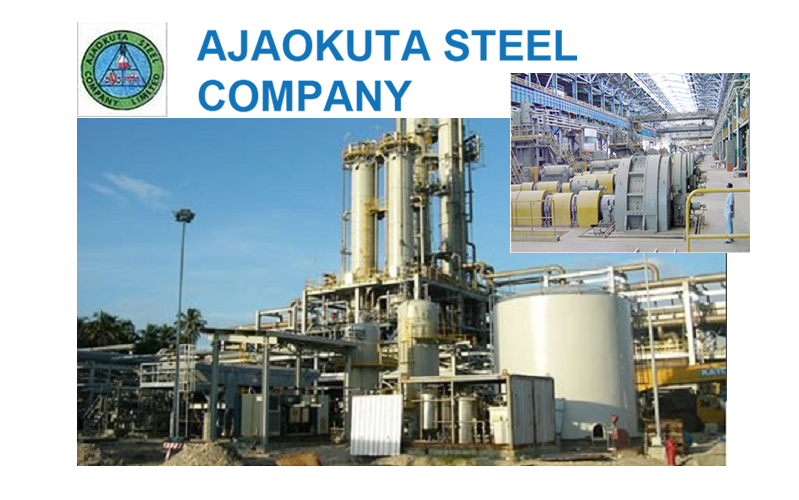
In 1979, Shagari’s government began work on Ajaokuta Steel Project. The Ajaokuta Steel Company Limited was incorporated in 1979, and by 1994 the steel mill had reached 98% completion.
With different administrations coming with different policies and agenda, promising to do something different from what it’s predecessors had done, the place remains today a ghost of a once lofty idea waiting to be laid to rest and an experimental laboratory for anything but anything that works. Nothing substantial has been done and followed through to completion. A series of promises, vows,M.O.U’s and nothing more. Yes it remains nothing more than an idea till today.
Most of the Engineers who were trained in Russia for the specific purpose of running the place may have retired or will be retiring soon, with sadness in them knowing that they may never get to apply what they believe will greatly change their country.
At what cost?
$4.6 billion. Which should be around $14.5 billion today considering the annual inflation rates.
$14.5 billion , Millions of man hours, 40 years and counting, nothing ,absolutely nothing to show for it.
This sounds like the Mysterious Bermuda triangle where whatever crosses it’s part somehow manages to disappear. Forget the narratives from NASA and Stephen Hawking, this is the real Black Hole, located in the most populated black country in the world.
The story of Ajoakuta embodies the Nigerian problem. A drive across all the states in the country reveals to you the size and magnitude of abandoned projects and ideas and systems of doing things .
The irony of it all is that many believe the solution lies in finding the best method of doing something. But the reality points to the fact that identifying a path, and following it religiously to its logical end is actually what works. Communism for the Chinese, Capitalism for the Americans, Monarchy for the Gulf Arab states have been able to deliver on the economy and poverty alleviation.
From 6-5-4 educational system to the 6-3-3-4 and now to the 6-9-4 the illusion that what leads to results is WHAT and not HOW is clearly written all over the place.
In the Power sector for example, we have seen the transition from NEPA to PHCN and now to the regional distribution companies like IKEDC or EEDC as the case may be.Still, nothing much has changed. I know a particular power station where the turbines are started using electricity from the grid. Meaning that if the power goes off from the Distribution Company the turbine shuts down. A plant that is supposed to generate power to the distribution companies now needs electricity from the distribution company to function simply because the emergency diesel generator(BLACK START GENERATOR) which is supposed to kick start the turbine isn’t available.
Between 1999 and 2007, about $16billion was spent in the Power sector with very little to show for it.
I know you may ask, What need is there to keep highlighting these if there isn’t any solution? My answer is simple. Now you know what doesn’t work. If there are 1000 possible iterations to success and I successfully eliminate just two, then we have lesser things to work on and the picture of how it should be gradually becomes clearer.
Secondly, at least now you know what the problem is. Could a solution to sickle have been reached if we never realised it was genetic and still felt it was a spiritual curse from our ancestors? Could there have been a real malaria cure if we still like many of our forefathers believed that it was caused by palm oil consumption?
The first step in solving a problem is identifying what the problem is or is not. By the way who says you can’t provide the solution to all these problems? Yes you! I mean you the reader.