This is the summary here: the 2020 Nigeria budget is about $29 billion depending on the exchange rate of choice. If you use the official exchange rate ($1 for N310), it moves to $33.3 billion. The biggest challenge is that Nigeria spends 24% of its budget to service debts. That number has to come down; we need growth to generate revenue to pay down the debts even before maturity.
- An aggregate expenditure of N10.33 trillion is proposed for the Federal Government in 2020. The expenditure estimate includes statutory transfers of N556.7 billion, non-debt recurrent expenditure of N4.88 trillion and N2.14 trillion of capital expenditure (excluding the capital component of statutory transfers). Debt service is estimated at N2.45 trillion, and provision for Sinking Fund to retire maturing bonds issued to local contractors is N296 billion.

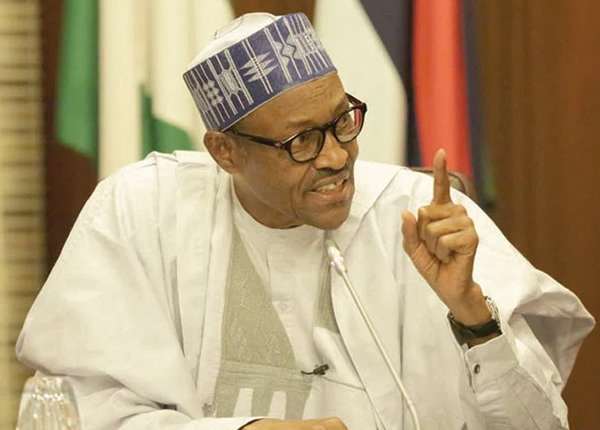
President Muhammadu Buhari on Tuesday presented his proposal for the 2020 Budget to the National Assembly in Abuja.
Below is the full text of the speech:
2020 BUDGET SPEECH: Budget of Sustaining Growth and Job Creation
Delivered By:
His Excellency, Muhammadu Buhari
President, Federal Republic of Nigeria
At the Joint Session of the National Assembly, Abuja
Tuesday, October 8, 2019
PROTOCOLS
- I will start by asking you to pardon my voice. As you can hear, I have a cold as a result of working hard to meet your deadline!
- I am delighted to present the 2020 Federal Budget Proposals to this Joint Session of the National Assembly, being my first budget presentation to this 9th National Assembly.
- Before presenting the Budget, let me thank all of you Distinguished and Honourable Members of the National Assembly, for your avowed commitment to cooperate with the Executive to accelerate the pace of our socio-economic development and enhance the welfare of our people.
- I will also once again thank all Nigerians, who have demonstrated confidence in our ability to deliver on our socio-economic development agenda, by re-electing this Administration with a mandate to Continue the Change. We remain resolutely committed to the actualization of our vision of a bright and prosperous future for all Nigerians.
- During this address, I will present highlights of our budget proposals for the next fiscal year. The Honourable Minister of Finance, Budget and National Planning will provide full details of these proposals, subsequently.
OVERVIEW OF ECONOMIC DEVELOPMENTS IN 2019
- The economic environment remains very challenging, globally. The International Monetary Fund expects global economic recovery to slow down from 3.6 percent in 2018 to 3.5 percent in 2020. This reflects uncertainties arising from security and trade tensions with attendant implications on commodity price volatility.
- Nearer to home, however, Sub-Saharan Africa is projected to continue to grow from 3.1 percent in 2018 to 3.6 percent in 2020. This is driven by investor confidence, oil production recovery in key exporting countries, sustained strong agricultural production as well as public investment in non-dependent economies.
- Mr. Senate President; Right Honourable Speaker; I am pleased to report that the Nigerian economy thus far has recorded nine consecutive quarters of GDP growth. Annual growth increased from 0.82 percent in 2017 to 1.93 percent in 2018, and 2.02 percent in the first half of 2019. The continuous recovery reflects our economy’s resilience and gives credence to the effectiveness of our economic policies thus far.
- We also succeeded in significantly reducing inflation from a peak of 18.72 percent in January 2017, to 11.02 percent by August 2019. This was achieved through effective fiscal and monetary policy coordination, exchange rate stability and sensible management of our foreign exchange.
- We have sustained accretion to our external reserves, which have risen from US$23 billion in October 2016 to about US$42.5 billion by August 2019. The increase is largely due to favourable prices of crude oil in the international market, minimal disruption of crude oil production given the stable security situation in the Niger Delta region and our import substitution drive, especially in key commodities.
- The foreign exchange market has also remained stable due to the effective implementation of the Central Bank’s interventions to restore liquidity, improve access and discourage currency speculation. Special windows were created that enabled small businesses, investors and importers in priority economic sectors to have timely access to foreign exchange.
- Furthermore, as a sign of increased investor confidence in our economy, there were remarkable inflows of foreign capital in the second quarter of 2019. The total value of capital imported into Nigeria increased from US$12 billion in the first half year of 2018 to US$14 billion for the same period in 2019.
PERFORMANCE OF THE 2019 BUDGET
- Distinguished and Honourable Members of the National Assembly, you will recall that the 2019 ‘Budget of Continuity’ was based on a benchmark oil price of US$60 per barrel, oil production of 2.3 mbpd, and an exchange rate of N305 to the United States Dollar. Based on these parameters, we projected a deficit of N1.918 trillion or 1.37 percent of Gross Domestic Product.
- As at June 2019, Federal Government’s actual aggregate revenue (excluding Government-Owned Enterprises) was N2.04 trillion. This revenue performance is only 58 percent of the 2019 Budget’s target due to the underperformance of both oil and non-oil revenue sources. Specifically, oil revenues were below target by 49 percent as at June 2019. This reflects the lower-than-projected oil production, deductions for cost under-recovery on supply of premium motor spirit (PMS), as well as higher expenditures on pipeline security/maintenance and Frontier exploration.
- Daily oil production averaged 1.86 mbpd as at June 2019, as against the estimated 2.3 mbpd that was assumed. This shortfall was partly offset as the market price of Bonny Light crude oil averaged US$67.20 per barrel which was higher than the benchmark price of US$60.
- Additionally, revenue projections from restructuring of Joint Venture Oil and Gas assets and enactment of new fiscal terms for Production Sharing Contracts did not materialize, as the enabling legislation for these reforms is yet to be passed into law.
17. The performance of non-oil taxes and independent revenues such as internally generated revenues were N614.57 billion and N217.84 billion, respectively.
- Receipts from Value Added Tax were below expectations due to lower levels of activities in certain economic sectors, in the aftermath of national elections. Corporate taxes were affected by the seasonality of collections, which tend to peak in the second half of the calendar year.
- On the expenditure side, 2019 Budget implementation was also hindered by the combination of delay in its approval and the underperformance of revenue collections. As such, only recurrent expenditure items have been implemented substantially. Of the prorated expenditure of N4.46 trillion budgeted, N3.39 trillion had been spent by June 30, 2019.
- In compliance with the provisions of the 2018 Appropriation Act, we implemented the 2018 capital budget till June 2019. Capital releases under the 2019 Budget commenced in the third quarter. As at 30th September 2019, a total of about N294.63 billion had been released for capital projects. I have directed the Ministry of Finance, Budget and National Planning to release an additional N600 billion of the 2019 capital budget by the end of the year.
- Despite the delay in capital releases, a deficit of N1.35 trillion was recorded at end of June 2019. This represents 70 percent of the budgeted deficit for the full year.
22. Despite these anomalies, I am happy to report that we met our debt service obligations, we are current on staff salaries and overhead costs have also been largely covered.
2020 BUDGET PRIORITIES
- Distinguished Senators, Honourable Members, let me now turn to the 2020 Appropriation, which is designed to be a budget of:
a. Fiscal consolidation, to strengthen our macroeconomic environment;
b. Investing in critical infrastructure, human capital development and enabling institutions, especially in key job creating sectors;
c. Incentivising private sector investment essential to complement the Government’s development plans, policies and programmes; and
d. Enhancing our social investment programs to further deepen their impact on those marginalised and most vulnerable Nigerians.
PARAMETERS & FISCAL ASSUMPTIONS UNDERPINNING THE APPROPRIATION BILL AND THE FINANCE BILL
- Distinguished and Honourable Members of the National Assembly, the 2020-2022 Medium Term Expenditure Framework (MTEF) and Fiscal Strategy Paper (FSP) set out the parameters for the 2020 Budget. We have adopted a conservative oil price benchmark of US$57 per barrel, daily oil production estimate of 2.18 mbpd and an exchange rate of N305 per US Dollar for 2020.
- We expect enhanced real GDP growth of 2.93% in 2020, driven largely by non-oil output, as economic diversification accelerates, and the enabling business environment improves. However, inflation is expected to remain slightly above single digits in 2020.
26. Accompanying the 2020 Budget Proposal is a Finance Bill for your kind consideration and passage into law. This Finance Bill has five strategic objectives, in terms of achieving incremental, but necessary, changes to our fiscal laws. These objectives are:
a. Promoting fiscal equity by mitigating instances of regressive taxation;
b. Reforming domestic tax laws to align with global best practices;
c. Introducing tax incentives for investments in infrastructure and capital markets;
d. Supporting Micro, Small and Medium-sized businesses in line with our Ease of Doing Business Reforms; and
e. Raising Revenues for Government.
- The draft Finance Bill proposes an increase of the VAT rate from 5% to 7.5%. As such, the 2020 Appropriation Bill is based on this new VAT rate. The additional revenues will be used to fund health, education and infrastructure programmes. As the States and Local Governments are allocated 85% of all VAT revenues, we expect to see greater quality and efficiency in their spending in these areas as well.
- The VAT Act already exempts pharmaceuticals, educational items, and basic commodities, which exemptions we are expanding under the Finance Bill, 2019. Specifically, Section 46 of the Finance Bill, 2019 expands the exempt items to include the following:
a. Brown and white bread;
b. Cereals including maize, rice, wheat, millet, barley and sorghum;
c. Fish of all kinds;
d. Flour and starch meals;
e. Fruits, nuts, pulses and vegetables of various kinds;
f. Roots such as yam, cocoyam, sweet and Irish potatoes;
g. Meat and poultry products including eggs;
h. Milk;
i. Salt and herbs of various kinds; and
j. Natural water and table water.
- Additionally, our proposals also raise the threshold for VAT registration to N25 million in turnover per annum, such that the revenue authorities can focus their compliance efforts on larger businesses thereby bringing relief for our Micro, Small and Medium-sized businesses.
- It is absolutely essential to intensify our revenue generation efforts. That said, this Administration remains committed to ensuring that the inconvenience associated with any fiscal policy adjustments, is moderated, such that the poor and the vulnerable, who are most at risk, do not bear the brunt of these reforms.
FEDERAL GOVERNMENT REVENUE ESTIMATES
- The sum of N8.155 trillion is estimated as the total Federal Government revenue in 2020 and comprises oil revenue N2.64 trillion, non-oil tax revenues of N1.81 trillion and other revenues of N3.7 trillion. This is 7 percent higher than the 2019 comparative estimate of N7.594 trillion inclusive of the Government Owned Enterprises.
- The increasing share of non-oil revenues underscores our confidence in our revenue diversification strategies, going forward. Furthermore, in our efforts to enhance transparency and accountability, we shall continue our strict implementation of Treasury Single Account (TSA) to capture the domiciliary accounts in our foreign missions and those linked to Government Owned Enterprises.
PLANNED 2020 EXPENDITURE
33. An aggregate expenditure of N10.33 trillion is proposed for the Federal Government in 2020. The expenditure estimate includes statutory transfers of N556.7 billion, non-debt recurrent expenditure of N4.88 trillion and N2.14 trillion of capital expenditure (excluding the capital component of statutory transfers). Debt service is estimated at N2.45 trillion, and provision for Sinking Fund to retire maturing bonds issued to local contractors is N296 billion.
STATUTORY TRANSFERS
- The sum of N556.7 billion is provided for Statutory Transfers in the 2020 Budget and includes:
a. N125 billion for the National Assembly;
b. N110 billion for the Judiciary;
c. N37.83 billion for the North East Development Commission (NEDC);
d. N44.5 billion for the Basic Health Care Provision Fund (BHCPF);
e. N111.79 billion for the Universal Basic Education Commission (UBEC); and
f. N80.88 billion for the Niger Delta Development Commission (NDDC), which is now supervised by the Ministry of Niger Delta Affairs.
- We have increased the budgetary allocation to the National Human Rights Commission from N1.5 billion to N2.5 billion. This 67 percent increase in funding is done to enable the Commission to perform its functions more effectively.
RECURRENT EXPENDITURE
- The non-debt recurrent expenditure includes N3.6 trillion for personnel and pension costs, an increase of N620.28 billion over 2019. This increase reflects the new minimum wage as well as our proposals to improve remuneration and welfare of our Police and Armed Forces. You will all agree that Good Governance, Inclusive Growth and Collective Prosperity can only be sustained in an environment of peace and security.
- Our fiscal reforms shall introduce new performance management frameworks to regulate the cost to revenue ratios for Government Owned Enterprises, which shall come under significant scrutiny. We will reward exceptional revenue and cost management performance, while severe consequences will attend failures to achieve agreed revenue targets.
- We shall also sustain our efforts in managing personnel costs. Accordingly, I have directed the stoppage of the salary of any Federal Government staff that is not captured on the Integrated Payroll and Personnel Information System (IPPIS) platform by the end of October 2019. All agencies must obtain the necessary approvals before embarking on any fresh recruitment and any contraventions of these directives shall attract severe sanctions.
- Overhead costs are projected at N426.6 billion in 2020. Additional provisions were made only for the newly created Ministries. I am confident that the benefits of these new Ministries as it relates to efficient and effective service delivery to our citizens significantly outweighs their budgeted costs.
- That said, the respective Heads of MDAs must ensure strict adherence to government regulations regarding expenditure control measures. The proliferation of Zonal, State and Liaison Offices by Federal Ministries, Departments and Agencies (‘MDAs’), with attendant avoidable increase in public expenditure, will no longer be tolerated.
CAPITAL EXPENDITURE
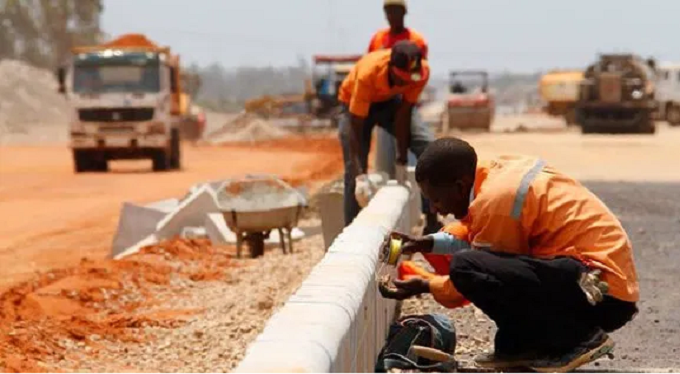
- As I mentioned earlier, investing in critical infrastructure is a key component of our fiscal strategy under the 2020 Budget Proposals. Accordingly, an aggregate sum of N2.46 trillion (inclusive of N318.06 billion in statutory transfers) is proposed for capital projects in 2020.
- Although the 2020 capital budget is N721.33 billion (or 23 percent) lower than the 2019 budget provision of N3.18 trillion, it is still higher than the actual and projected capital expenditure outturns for both the 2018 and 2019 fiscal years, respectively. However, at 24 percent of aggregate projected expenditure, the 2020 provision falls significantly short of the 30 percent target in the Economic Recovery and Growth Plan (ERGP) 2017-2020.
- The main emphasis will be the completion of as many ongoing projects as possible, rather than commencing new ones. MDAs have not been allowed to admit new projects into their capital budget for 2020, unless adequate provision has been made for the completion of ALL ongoing projects.
- Accordingly, we have rolled over capital projects that are not likely to be fully funded by the end of 2019 into the 2020 Budget. We are aware that the National Assembly shares our view that these projects should be prioritised and given adequate funding in the 2020 Appropriation Act.
- Therefore, I will once again commend the 9th National Assembly’s firm commitment to stop the unnecessary cycle of delayed annual budgets. I am confident that with our renewed partnership, the deliberations on the 2020 Budget shall be completed before the end of 2019 so that the Appropriation Act will come into effect by the 1st of January.
- Some of the key capital spending allocations in the 2020 Budget include:
a. Works and Housing: N262 billion;
b. Power: N127 billion;
c. Transportation: N123 billion;
d. Universal Basic Education Commission: N112 billion;
e. Defence: N100 billion;
f. Zonal Intervention Projects: N100 billion;
g. Agriculture and Rural Development: N83 billion;
h. Water Resources: N82 billion;
i. Niger Delta Development Commission: N81 billion;
j. Education: N48 billion;
k. Health: N46 billion;
l. Industry, Trade and Investment: N40 billion;
m. North East Development Commission: N38 billion;
n. Interior: N35 billion;
o. Social Investment Programmes: N30 billion;
p. Federal Capital Territory: N28 billion; and
q. Niger Delta Affairs Ministry: N24 billion.
- Although Government’s actual spending has reduced, our plans to leverage private sector funding through our tax credit schemes will ensure our capital programmes are sustained.
- For example, we launched the Road Infrastructure Tax Credit Scheme, pursuant to which I have approved the construction and rehabilitation of 19 Nigerian roads and bridges of 794.4km across 11 States. Indeed, the Scheme has attracted private investment of over N205 billion and the first set of tax credits are being processed by the Federal Ministry of Finance, Budget and National Planning.
- As I mentioned during my Independence Day Speech, under the Presidential Power Initiative, we will modernise the National Grid in 3 phases; starting from 5 Gigawatts to 7 Gigawatts, then to 11 Gigawatts by 2023, and finally 25 Gigawatts afterwards in collaboration with the German Government and Siemens.
BUDGET DEFICIT
- Budget deficit is projected to be N2.18 trillion in 2020. This includes drawdowns on project-tied loans and the related capital expenditure.
- This represents 1.52 percent of estimated GDP, well below the 3 percent threshold set by the Fiscal Responsibility Act of 2007, and in line with the ERGP target of 1.96 percent.
- The deficit will be financed by new foreign and domestic borrowings, Privatization Proceeds, signature bonuses and drawdowns on the loans secured for specific development projects.
DEBT SERVICE
- Nigeria remains committed to meeting its debt service obligations. Accordingly, we provided the sum of N2.45 trillion for debt service. Of this amount, 71 percent is to service domestic debt which accounts for about 68 percent of the total debt. The sum of N296 billion is provided for the Sinking Fund to retire maturing bonds issued to local contractors.
- I am confident that our aggressive and re-energised revenue drive will maintain debt-revenue ratio at acceptable and manageable levels. We will also continue to be innovative in our borrowings by using instruments such as Sukuk, Green Bonds and Diaspora Bonds.
SOCIAL INVESTMENT PROGRAMME
- Our government remains committed to ensuring the equitable sharing of economic prosperity. Our focus on inclusive growth and shared prosperity underscores our keen interest in catering for the poor and most vulnerable. Accordingly, we are revamping and improving the implementation of the National Social Investment Programme through the newly created Ministry of Humanitarian Affairs, Disaster Management and Social Development.
- The National Social Investment Programme is already creating jobs and economic opportunity for local farmers and cooks, providing funding to artisans, traders, youths, and supporting small businesses with business education and mentoring.
- The provision of N65 billion for the Presidential Amnesty Programme has been retained in the 2020 Budget. Furthermore, to fast track the rebuilding efforts in the North East region, a provision of N37.83 billion has been made for the North East Development Commission.
OTHER STRATEGIC PRIORITIES IN 2020
- The 2020 Budget is expected to accelerate the pace of our economic recovery, promote economic diversification, enhance competitiveness and ensure social inclusion. We are optimistic of attaining higher and more inclusive GDP growth in order to achieve our objective of massive job creation and lifting many of our citizens out of poverty.
- The efficiency of port operations will also be enhanced by implementing a single customs window, speeding up vessel and cargo handling and issuing more licenses to build modern terminals in existing ports, especially outside Lagos.
- Furthermore, completing the reforms to the governance and fiscal terms of the Petroleum Industry will provide certainty and attract further investments into the sector. A consequence of this will be increase in jobs and in government’s take. I therefore seek your support in passing into law two Petroleum Industry Executive Bills I will be forwarding to you shortly.
- In addition, we need to quickly review the fiscal terms for deep offshore oil fields to reflect the current realities and for more revenue to accrue to the government. The Deep Offshore and Inland Basin Production Sharing Contract (Amendment) Bill 2018, was submitted to the 8th National Assembly in June 2018 but was unfortunately not passed into law.
- I will be re-forwarding the Bill to this Assembly very shortly and therefore urge you to pass it. We estimate that this effort can generate at least 500 million US dollars additional revenue for the Federal Government in 2020, and over one billion dollars from 2021.
- Whilst the Budget is our principal fiscal tool to achieve these socio-economic development targets, we remain committed to prudently planning for our future economic prosperity. In this regard, I have directed the reconstituted Ministry of Finance, Budget and National Planning to commence preparations towards the development of successor medium – and long-term economic development plans, particularly as the Nigeria Vision 20-2020 and the ERGP expire next year.
CONCLUSION
- Mr. Senate President, Mr. Speaker, Distinguished and Honourable Members of the National Assembly, this speech would be incomplete without, once again, commending the patriotic resolve of the 9th National Assembly to collaborate with the Executive in the effort to deliver inclusive growth and enhance the welfare our people. I assure you of the strong commitment of the Executive to deepen the relationship with the National Assembly.
- As you review the 2020-2022 Medium Term Expenditure Framework (MTEF) and Fiscal Strategy Paper (FSP), as well as the 2020 Budget estimates, we believe that the legislative process will be quick, so as to restore the country to the January-December financial year.
- It is with great pleasure therefore, that I lay before this Distinguished Joint Session of the National Assembly, the 2020 Budget Proposals of the Federal Government of Nigeria.
- I thank you most sincerely for your attention.
- May God bless the Federal Republic of Nigeria.
Like this:
Like Loading...