DD
MM
YYYY

PAGES

DD
MM
YYYY

spot_img

PAGES

Home Blog Page 6647

The 7+ One Principles of Product Display

0

Sometime ago, for the first time as an undergraduate, I felt so free as I walked back to my lodge from campus. This feeling resulted from the submission of my final year project. It was then that I started to notice even the minute details of my environment. I saw the power of attraction the beautiful flowers had on the butterflies; but my most striking observation was the huge tree I sat under just to watch the ‘business’ of the noisy birds. They were so many that the sight reminded me of a market scene.

There were lots of nests, some completed and others were being built. The male birds, like human entrepreneurs, were busy beautifying their nests with an eye for comfort and strength. And I saw how the female birds came and inspected the finished nests; they looked around, in and out, and if they were impressed, they would patronize the males by staying to breed, otherwise, they would fly to another nest.

This illustration is the closest approximation I have seen of the retail business by nature. The tree represents a business environment, e.g., a mall. The male birds are the entrepreneurs while their nests are their stores. The female birds are the highly esteemed customers.

The business strategy I could liken this to is the principles of product display in a typical retail store. As a retailer with hundreds of SKUs (SKU: Stock Keeping Unit: A unique product), how do you display your products to attract customers, make them shop longer, and increase your conversion rate? Have you heard of the 7+ One Principles of Product Display? I guess not, because I coined it.

A sage once said, our actions can be no wiser than our thoughts, and our understanding can be no better than what we know. I will share with you the knowledge of the 7+ One Principles of Product Display in the unfolding paragraphs to equip you with the tools that will transform the ambiance of your store and attract more customers.

Obvious

The first principle is called obvious. How easily can your product be seen from the outside? How are you maximizing your window display? Are your products easy to identify and understand? Your store layout needs to be accommodating, and should enable customers to move and shop freely. Each product category must be boldly written on POP over it. Make sure every product has its logo facing out on the shelves. This principle has the effect of a peacock displaying its splendor.

Abundant

Second is the principle of abundance. It is not right to have your shelves looking half empty while products are in the stockroom. Display your products close to each other, let them look plenteous. An abundant look has a great attractive power. Be careful to place small, light, and the most attractive products at the top, while big, heavy, and less attractive ones are displayed at the bottom. People naturally like making choices from a rich display, but a scarce looking display makes them feel that what is left are inferior goods.

Accessible

Your effort at making your display look obvious and abundant would be a waste if the products are not easily accessible to customers, thus, the third principle is accessibility. This should make for convenience. Do not stock your products too high or too low; there should be one to two finger spacing between products and shelves to enable customers to carry and return the products. Fragile products should be protected from falling.

FIFO (FIRST IN FIRST OUT)

The fourth principle is FIFIO: First in first out. This is popular. This applies to products that are subject to expiration. Examples are foods, and cosmetic products. The store manager must take note of products that are close to their their lifespan limit and find creative ways to sell them off quickly to minimize losses.

Classified

The fifth principle is classified.How classified is your display? With lots of SKUs competing for limited space, it is wise to maximize your shelves by categorizing and displaying your products according to function, package, color, size, and prize. Customers should by themselves be able to locate the digital, food, fashion, and accessories sections of your store without assistance, for example. This creates order and serenity.

Related

The sixth principle is relatedness.How related are products that have been placed close-contiguous to one another? For example, if you display batteries close to digital gadgets like scales, and toys, more would be sold. School bags should be displayed close to lunch bags, water bottles, stationeries, and so on. This makes shoppers to buy what they did not budget for because they would believe what they bought is incomplete without the other.

Vertical

The seventh principle is vertical.Display your products in a vertical order if and only if that particular product has more than one SKU on furniture. This principle is based hinged on customers’ visual habit as they tend to look from left to right, and from top to bottom. Colours are of particular interest here. The first two layers of display must be conspicuous and attractive.

+ One

Last, and more important, is the + One, which is the principle of the Golden Position, or the Sunny Side. This is the side of a display furniture that has the greatest exposure to customers. It affords displayed products vintage view from the outside. Here, only best sellers and high priced products should be displayed. For the central furniture, products should be stocked 80 cm above the ground, while on the wall furniture it should be (80 -155)cm above the ground.

Conclusion

A good product display strategy like the ‘7 + One’ has a gravitational effect on customers the way the earth holds the moon in its orbit, and the sun holds the earth in its orbit. Before you apply these principles, take note of your current sales performance so that you can compare that with the after effects. This strategy has a triple benefit of attraction, retention, and high conversion rate. Why not give it a try?


The Re-Emergence of Psychopathic Security Agents

0

The Special Anti-Robbery Squad (SARS) and Special Anti-Robbery Squad, a unit of the Nigerian Police Force has been know to go rouge. From kidnapping, killing and robbing innocent citizens of their hard-earned resources, the story is scary. Here is another re-emergence of the Wolves in a Sheep form.

It was a really hard time in 2018 (and still continues to be), for young developers as myself and others. The SARS Unit (Special Anti-Robbery Kidnapping Unit) of the Nigerian Police Force (NPF) were not friendly or professional towards young ones at all. Many young people lost their lives as a result of their careless actions. So many well meaning Nigerians have rose up and begun the #ENDSARS campaign on Twitter. This lead to a series of numerous positive changes.

The bad and inhuman operation of the SARS rouge unit has sparked a aloud out cry and a deeper view in to what was really happening to the citizens of Nigeria under the watch of the Police. At the long run, the phenomena of harassment has continued to increase drastically.

Earlier in the past month of September 2019, there has been an increase in the rouge activities of this Special Unit of the Nigerian Police Force at all level. Yes, both National and Local level of rouge activities. Before we head to that in a bit lets look at some insights on the activities of SARS.

Overview on SARS

  • In 2006, the Special Anti-Robbery Squad (SARS) was formed to combat robbery in Nigeria?—?it worked.
  • Around 2009, SARS found its way into Nigerian Universities as a medium to repress the surge of internet fraud and cultism which had spilled to the streets. This era also coincided with the radicalism of style and fashion evolution among Nigerians under 35.
  • On January 21, 2018, news filtered in that FSARS was disbanded, but people claimed it was only going back to being SARS under state leadership and not the Inspector General of Police’s office.
  • The idea of restructuring SARS after months of accruing complaints on denigration of Nigerian Youth at the hands of SARS operatives always seemed shady.
  • The Senate passed for Second Reading ‘A Bill to Repeal and Re-enact the Police Act of 1943.’ Deputy Senate President, Ike Ekweremadu, presided over the session.
  • The IGP who was newly appointed overhauled the ENDSARS campaign to a default reset. This has kept Nigerians where they are right now. The fact that SARS keeps targeting the youths is another alarming scenario.

The Rude Re-Awakening

The issues is no longer funny. It’s always life threatening. Nigerian Millennial’s are constantly being brutalized by the Special Anti-Robbery Squad SARS especially in Lagos, Edo, Owerri and Delta State. Suspects are often arrested without proof, properties searched without warrants and being extorted for money.

Last week, a young Nigerian Software Developer was illegally harassed by SARS. They detained him and made him pay cash for their act as they labelled him a fraudster. This SARS thing is not even about software developers or guys with gadgets. They target random young men on the streets with or without gadgets. They see you with a deadlock as your hairstyle, they label you a fraudster. They see you using an iPhone they label you a fraudster. In-fact, everyone they come across that’s a young person is a fraudster.

So yeah, SARZ messed up my Saturday and I get to be locked up because I’m a software developer. Read More Details.

According to Toni Astro, this is what he has to say: “I’ve been hearing people’s experiences and most of them complaining about not having an ID card. I had an ID card but they chose not to see it. All they wanted to hear was me accepting their accusation of what I wasn’t.”

You cannot change the organization if the men remain in the body, alive and breathing. The name might be gone, but the idea was always going to remain. It becomes worse. On the other part, the ‘restructuring’ of SARS never seemed a permanent solution to the problem we had?—?SARS.

The Nigerian Police Force was already a corrupt organization, abusing power and office at will and for sport, but the story of SARS had been overshadowing their shady dealings. With the restructuring of SARS and not a complete disbandment and other forms of affirmative action to shelve the continued abuse of office and power, and internalized corruption as well as oppression of Nigerian youths.

Take another case study that happened to Nigerian Photographer Yinka Badmus. On December 31, 2018, 24-year-old Nigerian photojournalist, Yinka Badmus who works with Talk Village International was allegedly arrested because of his hairstyle?—?dreadlocks. Claims were that he was simply eating noodles close to his house at Pedro Bus-stop, Gbagada, Lagos when he was arrested. He has since been remanded at Ikoyi Prison by the Lagos State Police Command Anti-Cultism Unit. Reports also claim that his Fundamental Human Rights have been breached as he has simply been blatantly denied of his right to call someone, which has been the normal act of that same rouge unit of the Nigerian Police Force called SARS!

The “Nigerian dream” for an average Nigerian youth is leaving (or dare I say ‘escaping’) the country to start a new life elsewhere. That is a major sign of a failed state. That is an abomination and it has become accepted by the older generation who have failed woefully. The current has not said anything inthe new plight of the Nigerian populace by SARS. Will that remain constant? No! As of 30th September 2019, a group of well meaning Nigerians have decided to say Enough is Enough.

Nigeria’s technology leaders have launched #StopRobbingUs, a campaign to put an end to the common practice where Nigerian police stop young people with laptops and unlawfully arrest, attack or, in extreme circumstances, kidnap them, forcing them to withdraw funds from their bank accounts in order to regain their freedom. Working alongside Enough is Enough Nigeria [EiE], a network of individuals and organisations that promote good governance and public accountability in Nigeria, the #StopRobbingUs movement is now considering a Class Action Lawsuit on police brutality.

Led by ‘Bosun Tijani of CcHUB, Jason Njoku of IROKO, Iyin “E” Aboyeji of Future.Africa and Oluyomi Ojo of Printivo, amongst others, the campaign is calling for the Federal Government of Nigeria to intervene in the continued practice of illegally arresting and extorting young people in Nigeria who work in the technology sector. A fundraiser has been launched by Flutterwave to raise money for a legal intervention and public awareness programme, which has already seen donations flooding in from across the globe.

The #StopRobbingUs campaign comes after Toni Astor, a Lagos-based software engineer, posted on Twitter a harrowing account of his encounter with Special Anti-Robbery Squad [SARS] officers in Ketu, Lagos. During his ordeal on Saturday 28th September, Astor was allegedly publicly intimidated, arrested, beaten and extorted, in order to secure his freedom. News of SARS officers (Nigeria Police and all tactical units) targeting software engineers is a frequent occurrence in Lagos and this is the latest in a string of attacks. Today’s news builds on the larger #EndSARS movement that has rocked Nigeria over the last year, which has used social media to appeal for an end to the frequent robberies of Nigerians, by security operatives who are supposed to protect them.

In the next article, we will explore the deep side of Tech Companies who are putting forth effort to stop this mess, we will also examine those companies who are are sitting on the fence.

What is IoT Digital Forensics?

0

Digital forensics, also known as digital forensic science, is a branch of forensic science encompassing the recovery and investigation of material found in digital devices, often in relation to computer crime, notes Wikipedia. It involves investigation of electronic devices to find data that can be used to solve a digital crime. With the proliferation of […]

This post is only available to members.

The Platform Theme and Speakers – Oct 1, Lagos

0

The Platform is a non profit initiative by Covenant Christian Centre which is aimed at empowering Nigerians with insights and skills needed for economic transformation and ensuring good governance. It has played host to different thought leaders from various countries across different fields, with events which take place on May 1st(Workers Day) and October 1st(Independence Day) at The Covenant Place, Iganmu Lagos with live broadcast by Channels TV and streaming on YouTube and other social media channels.

The next edition themed ‘’Redesigning The Nigerian Economy With New Ideas’’ will feature:

  •  Pastor Poju Oyemade, Senior Pastor Covenant Christian Centre and Visionary The Platform
  • His Excellency Prof Yemi Osinbanjo SAN, GCON(Vice President Federal Republic of Nigeria)
  • His Excellency Babajide Olusola SanwoOlu (Executive Governor of Lagos State)
  • Dr Bismarck Rewane(Managing Director/CEO Financial Derivatives) with over 40 years experience in the financial services industry as a banker, economist and financial analyst, 
  • Former Governor of Anambra State, business magnate  and PDP Vice Presidential Candidate in February 2019 Presidential elections His Excellency Peter Gregory Obi.
  • Indian leading global expert on strategy, globalization and emerging markets Prof Anil Gupta 
  • Former Central Bank of Nigeria Governor and member Presidential Economic Advisory Council Prof Charles Chukwuma Soludo 

The event will take place on Tuesday October 1st 2019 from 9:00 am.

Keep a date and witness thought leadership to take Nigeria’s economy out of the woods.

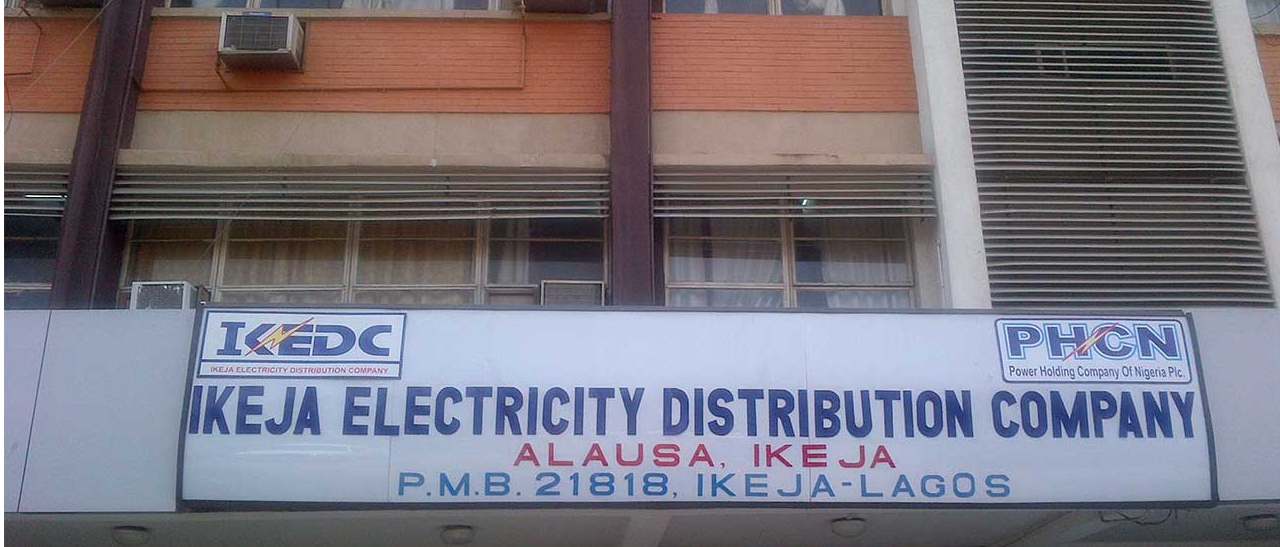
IKEDC: Unlikely Customer Service Champion? Or How To Make Smart People Shallow, Lazy and Irresponsible

0

“Up NEPA!” A phrase that I find more repulsive than ironic. I felt the rage right from when I was a boy trying to watch “Voltron: The Defender of the Universe” knowing fully well that even Voltron could not defend himself against a blackout. Yes, NEPA would strike. It could be for hours, days, weeks, months, years. You name it; people have experienced it. There is a history of power black-outs and power problems that have become more of the culture than a disappointment. It’s expected. Most people have had very bad experiences with the utility company and its affiliates, both staff and contractors. But, I have been experiencing something somewhat unexpected. 

I have been observing something for a few years now. I am beginning to experience good service from IKEDC which still takes me aback. Just so we are clear, I am the archetypical irate customer. I storm in, grimace and get ready to yell and argue to try my problem solved so I can go away. This is not a successful approach but here we are. I scream at customer service advisers and their managers and ask for as much concessions and compensations as possible usually to no avail. But, for more than two years my experience with IKEDC has been surprisingly pleasant and impressive.

On several occasions, I have gone to the IKEDC offices for complaints and I have found speedy resolutions and a very responsive staff. This has been going on for a few years and I am not sure whether other people are noticing or experiencing the same thing. Although, the energy industry is a monopoly, this approach to good service is quite astonishing to me. The first time was when I was using the online customer care line. It was the weekend and there had been not light for about 3 days. I had a lot of work to do and my inverter was going to go off the next day. So, I thought I might as well use the internet to try to contact them. I did not think much of it but it was worth a try. I got a response on helpline chat.

This just involved filling in some details and writing your complaint. The chat was pretty casual and I did not have much of an expectation. The attendant informed me of the current problem and told me that power would be restored the next day. This was Saturday. For IKEDC to restore light on Sunday to me was complete BS. Sunday came. Power was restored. I went outside to check if the sun still in the sky and if that sky was blue. A few more times when there was no light for more than two days, I used the same chat service and issues were quickly resolved. I stopped using the service because it was just awkward. It was as if I had got some kind of superpower and besides, I stopped having blackouts for more than 2 days.


Another experience has some level of frustration. I was trying to get a meter for another property where I was not actually living in. There were new tenants moving in and I was in charge of making sure there was a new meter. The process was going along well. Going to the IKEDC office was straight forward. The engineer I spoke was very receptive and advised me properly on how to process the request fairly quickly. I told me there was an inspection to be done by third party agents. The agent part was where it started becoming an issue. She came late and incoherent. She could not decide how her transport money should be used on her assignment. I don’t have any idea why she was bringing this up with me. I got a few missed appointments and I thought this was unacceptable. I went to make a complaint and in both offices of Alausa and Ojota. The staff knew what they were doing, were proactive, and provided a speedy resolution. I got my new meter without any further hassles.

Now as much as I don’t like most companies that collect money from me ( I like to keep my money), I really like it when companies take care of their own money .i.e. being able to collect on monies owed and track their accounts and billings. Two of my neighbours were caught having irregular power installations. One was not paying bills at all and one was not using the appropriate meter. IKEDC someone was able to track and target the irregularity. This is good because it demonstrates they are competent and don’t have to rely on whistle-blowers to discover these kinds of issues (Hilary ain’t no snitch). I think this was part of their asset audit and assessment initiative they had a few years back. This way, they can account for all their assets that are vital to billings and collection. This is a great factor in loss prevention and capturing revenue that may otherwise be lost. This is also good for paying customers as the costs of non-payers will eventually affect them.

I really don’t know how they were able to improve and develop their customer service capabilities or who the brains behind it are. But, it brings me to companies that need good or if possible great customer care service delivery. JUMIA to me has poor customer service and this is really disappointing considering the enormous expense sunk towards this. 

JUMIA sucks! What is really sad it that most of the people in JUMIA are really smart and hard-working. In fact, they are the most intelligent and hard-working group of people that I have ever met. But, something is really wrong with system and the culture. This leads to them dropping the ball unnecessarily and too often. There seems to be a lack of incentives and process that develop customer satisfaction and develop relationships. Trying to improve customer satisfaction needs more than just surveys and discounts. Even to me, one of worst things is the 7-day money back guarantee. This is a costly lose-lose scenario which is amazing it just goes on. I remember a video clip I watched during my MBA that showed the owner of Sam Club’s recalling how he gave a customer her money back. She turned and told him that she would never come back again. He was baffled. But, then he realized she didn’t want her money back. She wanted to be a satisfied customer. JUMIA returns buyers money but not their confidence in the company. Also, many vendors really have bitter experience with JUMIA and they incur losses. This is not just bad for the company but also the employees.

JUMIA staff are becoming used to something called CYA (Cover Your A**). It’s a passive aggressive tactic found in many corporate environments where people don’t want to make themselves vulnerable or open to blame. It’s in discussions, e-mails, inter-department interactions. The problem-solving is replaced with self-preservation. So, the employee would do only what would not cause him any potential problems. This is co-morbid with pushing blame to vendors which you can see could really be bad for company’s image and reputation. It’s really unfortunate because it means that costly mistakes and repeated and over and over again. The capital of the company has to be built in terms of stakeholders and that includes customers and vendors. Customer service is not a feel good cliché. It’s actually that system that can be a powerful source of competitive advantage.

Going back to IKEDC, I remember overhearing a Customer Advisor have an exchange with a colleague. I just came to resolve an issue I was having with a payment. It was resolved within 3 days which I thought was reasonable. The colleague was relaying a message from a customer and addressed IKEDC as NEPA. The Customer Advisor coolly replied “We are not NEPA.”