DD
MM
YYYY

PAGES

DD
MM
YYYY

spot_img

PAGES

Home Blog Page 6651

More Taxes As Lagos State Wins “Consumption Tax” Case

0

The battle of consumption tax has been won, and Lagos State is the victor. The vanquished, hoteliers, event centers and restaurants are sober on the uncertainty the state’s victory will bring upon their businesses.

On the 3rd of October, the Federal High Court delivered its judgement on the case between The Registered Trustees of Hotel Owners and Managers Association of Lagos (RTHMAL), and the (defendants), the Attorney General of Lagos State and the Federal Inland Revenue Services.

The verdict reads that the Hotel Occupancy and Restaurant Consumption (HORC) law is legitimate and must be abided by.

The ruling was based on states’ right to legislate as supported by the second schedule to the constitution of the Federal Republic of Nigeria, which makes tax a residual issue that states can legislate on. Since it does not fall under the exclusive legislative list or the concurrent legislative list.

The schedule to the Taxes and Levies (Approved List for Collection) Act order of 2015, (as amended), includes hotel, restaurant or event center consumption tax as the taxes at the disposal of states to collect.

However, the judgement has thrown further anxiety upon those in the hospitality industry. At a time when businesses are feeling overburdened with multiple taxation in Lagos, experts believe that that the new 5% tax will do more harm than good.

Presently, there are over 24 taxes and levies payable to the states and federal government, and Lagos State is having a high stake. There is company tax, consumption tax, hotel license, personal income tax, parking permits, land use charge, radio and TV permit, wastewater request and VAT. etc.

Although the ruling restricts the Federal Inland Revenue Service (FIRS), from extracting VAT from restaurants, event centers and hotels, operators are worried that there will be little or nothing to show for the taxes collected by the state government.

Victor Edosomwan, founder and CEO of Vicwan Limited, a hospitality and lifestyle consulting firm said:

“The hotels have to provide their own power and evacuate sewage on their own; these should be provided by the government.”

The hospitality industry operators are also concerned that the recent development may likely put many out of business, especially the minor companies in the industry. Their fear is that additional cost to food and services will scare customers away in the business that is already experiencing low patronage.

The interpretation of the judgement also means that FIRS will stay away from VATs emanating from the hospitality industry under states.

Why Africa Is So Poor

0

I was having a conversation with a good friend, Apolline Adiju who lives in Sweden. We talked about poverty in Africa, especially in the way we eat. Mind you, in Africa, if a person eats with a piece of meat, they are regarded as a rich person. If he eats with fish, he belongs to the middle class. If he eats with an egg, he belongs to the lower class. And if he eats with nothing, he is poor.

Isn’t that ridiculous? Because we have all these things in excess. I often the word – Africa is rich. Africa is blessed. Africa is full of milk and honey.

”We often say that Africa is very rich every time but the proof of the facts is very questionable.” – Bruno Kongawoin.

In reality, a very large part of Africa is poor indeed. Even very, very poor. I delve into the cause of poverty in Africa despite having all the natural resources that are enough to make them compete with nations like America, China, Germany and many more developed nations.

Bruno said the poverty is above all “Intellectual“. It is this intellectual poverty that makes a country like Niger, perhaps the world’s largest producer of uranium, sorely lacking an energy industry.

This is rampant in Africa. A country like Nigeria exports raw materials like crude oil to other countries still, her citizens buy it expensive while the importing nation sells it cheaper to her citizens.

”It is this intellectual poverty that causes some African countries to export logs and to import furniture made from wood waste at a cost of gold.” – Bruno Kongawoin.

It is this intellectual poverty that pushes some Africans to the extreme of hostility or maintains a certain inferiority complex. Africans feel inferior when it comes to using their own products.

The evil of ignorance is so deep that today we Africans have become the first defenders of our alienation. From kindergarten, we are taught dogmatism and not to ask questions. A good student is the one who recites his lessons better.

We are therefore subjected to the thought of others. A lecturer will fail you if you don’t give him the answer according to his material or what he taught you in class. This is also common in our religious beliefs. Something I would save for another day.

For if you have all the riches of the world in your hands and you are intellectually limited, you will remain poor.” – Bruno Kongawoin.

Africa Wake Up!

The Copy Copy Style in our Educational System is NOT Helping Our Young People

0

The la cramme, la pour in our educational system has killed our graduates thinking and dynamism.

I once had a lecturer at the Federal Polytechnic Ede, Osun, who will tell you never to write down your ideas for him. He told us, ”when I ask you questions in the exam or quiz, give it back to me the way I have taught you. Give me back my note.”

That was really a disgusting teaching scope. Turning graduates into a photocopier machine. Graduates never bother reading to understand, instead, they read to master the notes, in order to give the answer back to the lecturers.

Education is meant to pass information and facilitate understanding for genuine application into real life problems. How do our graduates apply what they’ve learned when they were made to copy and paste?

The ability to think critically and act logically has been killed. Isn’t that the reason why we have graduates that would sit and wait for the government to provide everything they want?

Common, use your head! Look around you and see. There are many things around you that can help you find an income. Think! Think!! Think!!!

These have contributed immensely to the poverty rate in Africa. We are intellectually poor. But for one, most African Leaders, Teachers, Lecturers, Religious Leaders studied abroad, returning to the continent with Doctorate qualifications in many disciplines (political science, economics, finance etc…) but yet we’re incapable of solving our own problems. They simply can’t offer anything except for their selfish interests.

”The reluctance of many African regimes to unlearn archaic ideas that seem to keep Africa “stuck”, relearn innovative ideas and invite youthful forward thinkers to policy making sessions continue to keep Africa at a disadvantage.” – Nonye Aghanya.

Our lecturers acquire certificates overseas to oppress. That’s what we do best in Africa. We oppress ourselves with little affluence. That has actually made us more greedy. We want to acquire wealth for ourselves in order to be seen as relevant and an important figure. Whereas the main purpose of acquiring wealth is to lift others up.

Until we eradicate the copy copy mentality in our educational system that has affected our lifestyle, I don’t see Africa progressing in the nearest future.

Africa – Which way?

Ndubuisi Ekekwe Will Deliver 2019 FUTO Convocation Lecture

5
FUTO is a top technical university in Nigeria

Few minutes ago, I accepted the invitation of the Senate of the Federal University of Technology Owerri (FUTO), my undergraduate alma mater, to deliver the Convocation Lecture during the 2019 convocation ceremony scheduled Dec 6-7, 2019.

To re-engineer and re-position the Federal University of Technology to be a truly world class university through recreating, nurturing and developing uniquely promising students and exceptional staff in Science, Technology and enterprise to the benefit of our globalized world.

To our Vice Chancellor (Prof Eze), the Governing Council, the Senate, the Committee of Deans, our Professors, the leaders of our alumni association, the FUTO alumni anywhere, and the very best – current FUTO students, I am truly honoured. Selecting who speaks to graduating students is an academic ritual, and to be invited to mount that podium is a moment.

Reading the letter, tears dropped from my eyes. Please believe in the promise of tomorrow; it is unbounded and unconstrained.

The Nigeria’s 9% Communication Tax

2

The rejection of the proposed 2.5% increment in Valued Added Tax (VAT) by the National Assembly was celebrated by businesses, companies and entrepreneurs. The National Assembly was praised for understanding the plights of SMEs and the implication the VAT increment would have on the overall economy of the country.

The decision of the lawmakers to halt the implementation of VAT was celebrated until they proposed 9% communication tax. It sent chills to the bones of the hopefuls, and anxiety to businesses that are already on life support.

If given the choice, many would prefer the 7.5% VAT although they are all seen as outrageous.

There is concern that the present government appears to be establishing a tax regime that will make up for the revenue lapses from other economic sectors. And they seem not to bother about whose ox is gored by the approach.

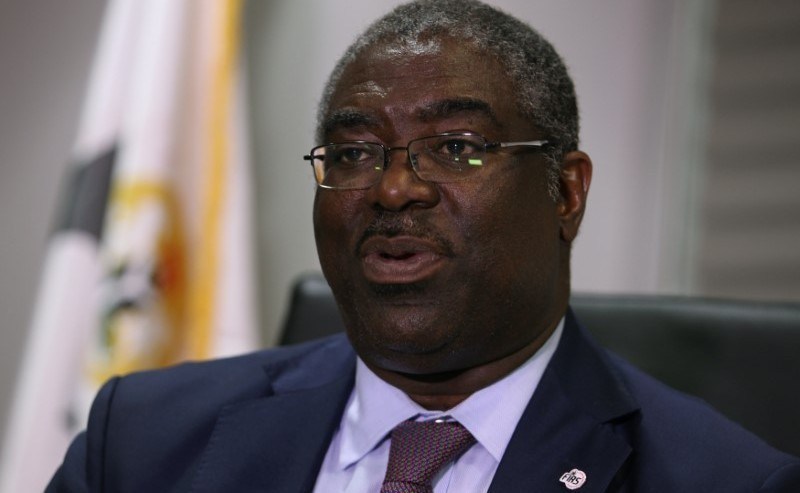
The chairman of the Federal Inland Revenue Service (FIRS), Mr. Babatunde Fowler, says the proposed communication tax is no big deal because Nigerians are equal to it.

“I will put it this way, Nigerians talk a lot on the phone; they even talk more than is required, so for them to capacity or revenue to talk that much, I don’t see any harm in paying a little bit more to government.” He said.

The 9% communication tax bill, if passed, will be levied on all electronic communications: SMS, MMS, voice calls and the internet. That means, every Nigerian phone user will have to pay based on the assertion that every Nigerian communicates like the rich.

The communication tax bill is coming at a time when internet data consumers, especially entrepreneurs, are complaining that the cost is becoming too high.

Mr. Fowler justified the move citing Ghana’s 2% education tax as an example. He said it has resulted in education development in Ghana, and Nigeria should borrow a leaf from that.

However, it is a popular knowledge that Ghana has made economic progress by cutting taxes, reducing their VAT, and waiving taxes for entrepreneurs.

The Nigerian government’s recent approach to taxes is said to be as a result of its dwindling revenue generation from the oil sector. Experts believe that attempts to make up for the losses through taxes will harm the already wobbling economy. Many SMEs in Nigeria are using their last lifelines due to lack of basic infrastructure to thrive on. So they need tax waivers to cushion the effects of the infrastructural decay.

In the age of data mining, when Information Technology is replacing natural resources, the Nigerian government has been encouraged to support internet based enterprises. Nigerians are concerned that the recent communication tax bill will only compound the woes of entrepreneurs.