DD
MM
YYYY

PAGES

DD
MM
YYYY

spot_img

PAGES

Home Blog Page 6659

Artist Pracademic Extraordinaire: Professor Nnenna Okore

0

Let me get the jargon out of the way for those unfamiliar with the phrase “Pracademic” – it is the cross between a practitioner and an academic.
OK, let me come out straight, Professor Nnenna Okore is not directly known to me. Yes, her husband was a classmate of mine. Himself an erudite scholar, businessman and ex-employee of a leading accounting and auditing firm, Ernst & Young in the Chicago area.
 
Having said this, my first physical encounter with Nnenna was at the October Gallery in London, where I was privileged to attend her showcase of on Igbo Art entitled “Ukwa Ruo Oge Ya O Daa (i.e. There’s a time for everything).”
This exhibition, which took place at the October Gallery in London between  26 October and 2 December 2017,  was an eye-opener for me, and also prompted my interest in exploring this woman of stature further. That exhibition is one of many in the long line of exhibitions spanning geographic spaces from Africa to Australasia, Europe to North America. For instance, her works were featured in the inaugural exhibition “Second Lives: Remixing the Ordinary” at the Museum of Arts and Design in New York. She has also exhibited at the Goethe Institut in Lagos and has participated at the Dakar and Johannesburg biennials as well as the prestigious 29th Sao Paulo Biennial.

Nnenna Okore
Nnenna Okore
 
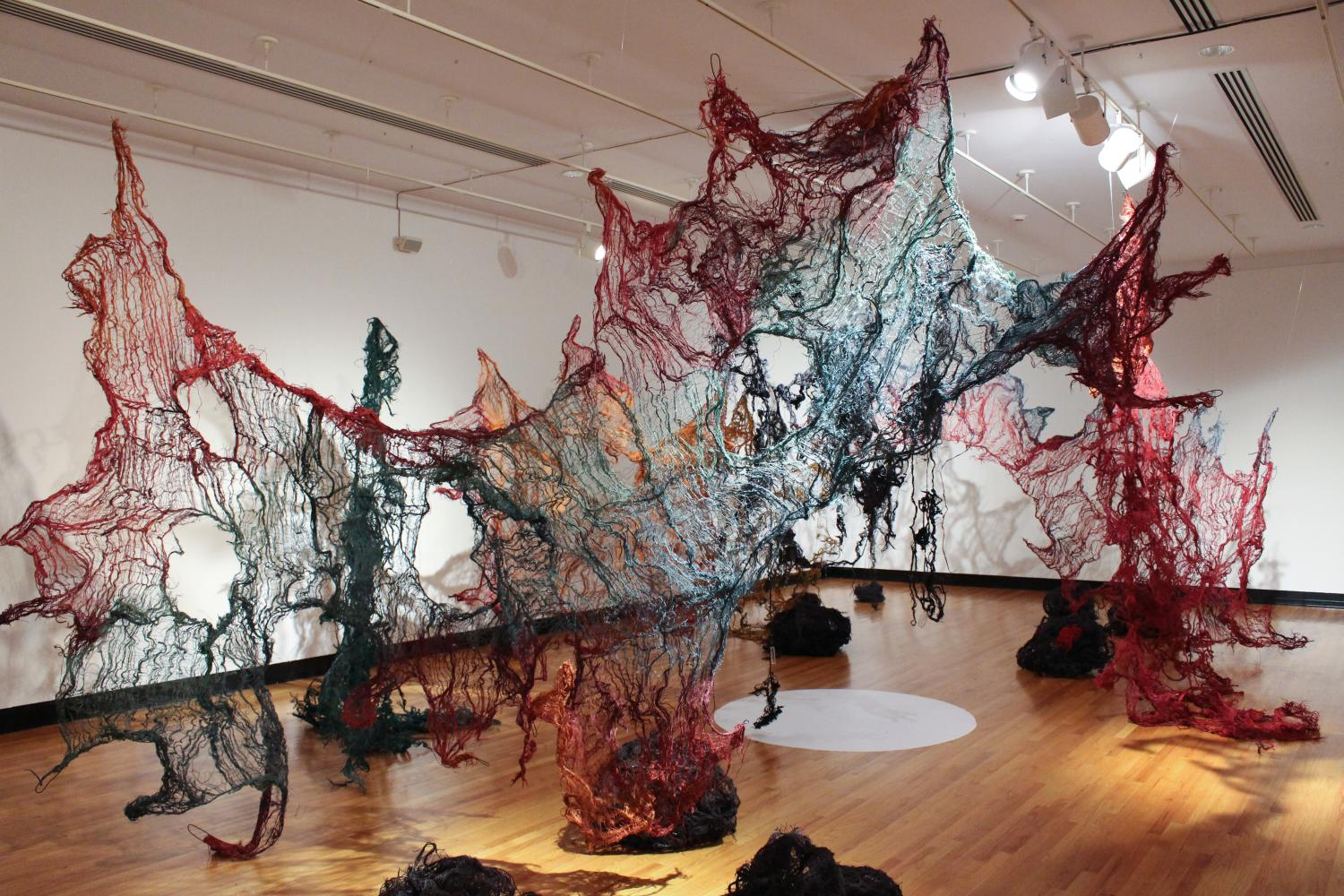
Nnenna’s notable works include her debut project Ulukububa – Infinite Flow as well as Metamorphoses . She continues her work exploring new materials and new textures deployed in rather ingenious and impressive ways. Her Art highlights how the circular economy can be harnessed as she uses sustainable materials in transforming the customer experience.
Here’s a sneak peek at her personal statement taken directly from her web page.

My work broadly focuses on the concepts of recycling, transformation, and regeneration of forms based on observations from ecological and man-made environments. I am drawn to uniquely diverse and tactile characteristics of the collective physical world. I am astounded by natural phenomena that cause things to become weathered, dilapidated and lifeless – those events slowly triggered by aging, death, and decay – and subtly captured in the fluid and delicate nature of life. My materials are biodegradable and comprise largely of old newspapers, found paper, ropes, thread, yarn, fibers, burlap, dye, coffee, starch, clay, etc.

Nnenna also points out that there are challenges along the way and especially so for female artists and even more so in challenging environments. For example, in one of her interviews with Art Design Cafe she opined:
“My choice was passion-driven, and therefore fairly stress-free. It is generally difficult to sustain an artistic career in Nigeria, and more so for women.”
Ultimately, Nnenna has become a role model for budding female artists having navigated turbulent waters and emerged as a force majeure on the Art scene.


Talent Truly Pays – A Case Study of Burna Boy

0

Burna Boy is an example of the statement, ”Talent truly pays”.

Damini Ebunoluwa Ogulu, professionally known as Burna Boy, is a Nigerian singer and songwriter. Burna Boy came to limelight in 2012 after releasing his lead single – ”Like to Party” from his debut studio album, L.I.F.E.

Burna Boy faded away after some years. Yes, he was active and releasing songs but it was hard for him to outshine the two reigning champion of hip-hop – Wizkid and Davido. 

No doubt, Damini is talented. The ’Ye-crooner’ is one of the most talented musicians out there if not the best. Having drop hits back to back, he doesn’t seem to be resting on his laurels. 

Burna just broke another record, he was nominated into ten categories of the 2019 Headies Award. A record that was held by Olamide. 

What can we learn from the story of Burna Boy?

After going off the limelight for a while came back unstoppable and untouchable. The giant of Africa, like he called himself from his latest album, has shown that real talent always wins if it doesn’t relent. 

  • Persistence

Burna Boy could have stopped a few years ago, even though he was underrated, but his persistence shows he truly believes in himself. 

  • Patience

Patience is always the key. Talent without patience is useless. Oluwaburna was indeed patient for his time. Culled from his track, Anybody – ”life na turn by turn”. Indeed, being patient is key. 

  • Uniqueness

Anyone who wants to stand out must be unique. Burna Boy could have joined the trend in the music industry, but he stood out. His style of music is rare. He brought Afrobeat into his own music, bringing back the memory of the late Afrobeat legend – Fela Anikulapo Kuti. Anybody who wants to be somebody must not think like everybody. 

  • Dynamism

Dynamism is the killer point. You can’t give people rice every day, they’ll surely get tired. The Port Harcourt boy is known for his dynamism. He can sing reggae, hip hop and slow jams. He can also play some musical instruments which makes him different from the rest.

I see Burna Boy ruling the music industry for the next ten years. Congratulations on the nominations and I hope you finish the year stronger.

 Talent isn’t just enough, you need to be persistent, patient, unique and dynamic.

Talent only pays for those that work for it.

Equality Starts With Your Children Education

0

I know parents want to give their children the best education. Truth be told, some of our parents never had the best education as they would have loved it, so they had vowed to give their children the best of the best.

There’s nothing wrong with that type of mindset. In fact, as an aspiring father, I will give my children the best education I can conveniently afford. However, as Africans, we seem to be getting it wrong.

I have a neighbour who has six kids. The oldest is about age 9 while the youngest is 2. As much as I admire my neighbour’s passion for education, I don’t seem to agree with his approach.

His kids are in the most expensive school in my neighbourhood. This is a man who is a casual worker at the Nigerian Breweries. He is on a very low salary scale – forty thousand naira per month. Every term, he would always complain about their school fees. This new term that just started, his children stayed at home for two weeks after the resumption. He lamented every time. He said he was finding it very hard to raise their school fees. He had to go borrow.

In Nigeria, having six children in nursery school is no joke especially if it is a very expensive one. I have seen some parents put their first two or three children in the best school and the rest are made to go to a substandard one or even public school.

This goes out to every parent, before choosing your children’s school, ensure you check your pocket. You know what is at stake. Don’t go with the biblical belief that God will do it. Remember, it is the same God that said, ”have you seen a man that wants to build a house without checking his pocket to see if he has enough money to complete it.”

Let’s be strategic. It’s easier to invoke the spirit of hatred in the children when one is given the opportunity to attend a better school over the other. If you can’t afford an expensive school, choose a moderate one that suits your financial capability. If you make an enquiry, you’ll always find relatively cheaper ones with good quality as well.

It makes no sense to be in debt just because you are trying to give them the best. Remember, living in debts could cut a man’s life short. At the end of the day, you won’t be able to give them the best you wanted because of premature death.

Equality starts with your children’s education. May we all live long enough to reap the fruits of our labour.

Nigeria Does Not Need Cost Cutting; We’re Severely Under-Spending.

1

“Nigeria must increase her productive base thereby increasing government revenue from increased taxes and then there will be more money for development of shared infrastructure for us all. Also with increased productive base comes more jobs and economic opportunities for her citizens. So I believe our focus should not be heavily on cutting cost when there is still so much room for productive growth in Nigeria.” C.A. commenting on my LinkedIn feed.

This is the point I am trying to make here. If our budget is $24 billion for 200 million citizens and South Africa is $122 billion for 60 million people, focusing on reducing the $24 billion in the name of cost cutting will not advance us! My point is this – Nigeria is not spending enough and efforts should be on improving productivity to ramp up the national revenue via efficient taxation and fees. With that, we will have more money to spend.

People, nothing like that. This is one area our successive governments have failed Nigerians: no one has told us that we are relatively “severely” poor, and exceedingly underperforming as a nation. Nigeria does not have excess spending problem – the fact remains that Nigeria does not even have enough to spend (note that I am not arguing on the efficiency of the “little” spending).

Nigeria’s national budget is $24 billion for 2019. South Africa budgeted $122 billion. South Africa spends 50% of our national budget on healthcare alone! Yet, Nigeria’s population is more than 3 times South Africa’s. I do not share this without the consciousness that I carry the Nigerian passport.

On corruption, we can cut 99% of procurement fraud (a big part of our national demon) within 3 months. Doing that saves 15% I had expected is lost in the national budget to corruption. This is my plan with video.  

Nigeria does not have a spending problem (minus the corruption). As a nation, we are under-spending. We need to ramp up our budget while eliminating corruption and advance our citizens.

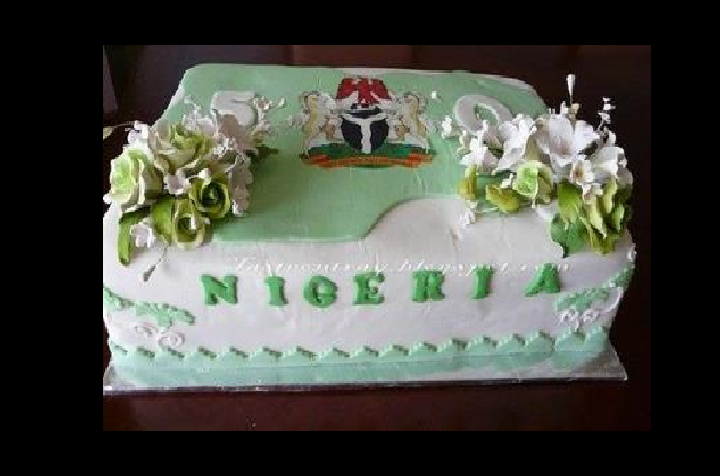
This is the end game: that Nigeria’s national cake above needs to grow from $500 billion to $3 trillion by 2030. The ingredients (massive national accumulated capabilities across many fields and domains) are there. What remains is a compass from political leaders, and giving young people the opportunity to bake a bigger cake for shared prosperity. #TheRoadTo3T

Sales Lessons from Nigeria’s Highway Hawkers

0

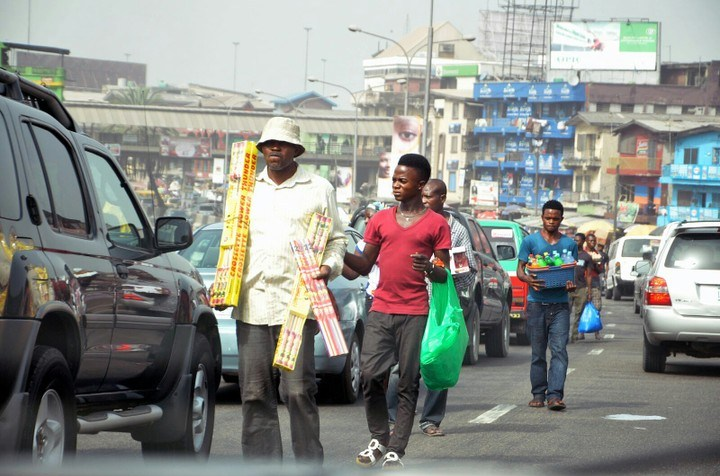
We all enjoy their services. They seem to show up when we need them most. They station themselves at strategic areas and try to make life easier for us. To be honest, we look out for them and when we don’t see them, we feel uncomfortable and disappointed.

These are the highway hawkers. They are there to make travellers feel less troubled by our bad roads. We see them at popular road junctions, traffic lights, police and army checkpoints and at sites where roads are so bad. They sell things like snacks, portable water, handkerchiefs, drinks (both alcoholic and non-alcoholic), books, auto parts (especially windscreen wipers), toiletries, house cleaning equipment, bush meat, and so many others.

I don’t really like this business because of the risks involved. I mean, this is highway, even though they station themselves in places vehicles have to slow down. But anything can happen. I know the rate may be low, but accidents can still happen and claim the lives of some of these hawkers. Besides, some drivers and their passengers are mean enough to run off with these people’s wares without paying them. Anyway, that is a story for another day.

A lot of people see these hawkers as nuisance on the highways and I don’t really blame them for that. This is because most of those that pose as hawkers are actually robbers – those living in Lagos can tell this story better. In fact, when they come close to your car’s window, keep your bag out of their reach so they don’t pick-pocket you. If you are not mindful of them, your phones, money and other valuables can just disappear without your permission.

But we still have so much to learn from these hawkers. The other day I was wondering why start-ups don’t recruit these people as sales agents instead of employing those that don’t really understand aggressive sales and marketing. These hawkers have some qualities that make them survive in the business and be able to generate enough income to solve their financial needs. There is no way anyone that doesn’t possess these qualities can go into the business.

Below are some qualities of highway hawkers every salesperson should learn and imbibe:

  1. Agility: Of course if you are not agile you can’t be in that business. I haven’t seen a sluggish person selling on the highway. Make out time to observe these people when you see them. You will notice that they are always ready for actions. It always seems as if their antennas are up all the time. Their whole bodies are up and actively listening and searching for potential customers. Once they sight one, they move as fast as anything towards him. As they are selling to that customer, they are listening and looking for another one. They are ready to sell to several customers at the same time and collect their money the same way. If a vehicle they are selling to drives off, they run like Usain Bolt to collect their money and hand over balance. Like Nigerians will say, “these people are sharp”; every salesperson needs to be like that.
  2. Resilience: Most Nigerians can’t stand under the sun or the rain for 30 minutes, but these hawkers do that the whole day. The bad weather or climate doesn’t deter them. If they stay under the shade when traffic is light, they immediately jump back into the road once they see a prospect. And after a tiring day’s work, they come back tomorrow to continue.
  3. Passion: I strongly believe that these people are driven by their passion for the business. They have this zeal to get the job done. I don’t know if their passion is with the type of business or with the income they generate through it – all I know is that there is passion.
  4. Attitude: You know, so long as you have a positive attitude towards whatsoever you do, you are bound to excel in it. I believe these hawkers have positive attitude towards their business. I haven’t heard any of them complain about how they suffer to make a living. I haven’t seen anyone of them ask for pity. All they do is try to convince travellers to buy their products, which most people do.
  5. Forceful Marketing: This attitude may annoy some people, but it is a strategy that helps the business. Have you ever been thirsty as you were travelling and all of a sudden, one of these hawkers thrust a cold sweating bottle of Fanta before you? Lol. Let’s be honest, what was your first reaction? Let me guess, you asked how much the drink was? Well, the only reason you won’t buy that drink is because your pocket says so or your doctor kicked against it. If not, you won’t rest until you settle your appetite. This is forceful marketing – appetising dangling what you need before you.
  6. Team Spirit: I think this is part of what makes these people survive on the highway and in the business – they work as a team. If you don’t know, you may think they all come from one family. Take for instance the women that sell okpa at 9th Mile Enugu, they stand together to gist and move together to vehicles to sell their wares. All of them will be shouting “aunty/brother buy this okpa” at the same time that you won’t know who to buy from again. If you finally choose one person, the others will shift back and look for other prospects. If the person you patronised needs to give you balance but doesn’t have the ‘change’, any other seller can easily help her out. If you decide you don’t want to buy okpa but plantain chips, the okpa sell will happily call the plantain chips seller for you (you will be left to wonder if the okpa seller also owns the plantain chips business). Honestly, these people don’t compete among themselves, at least as far as I can see.
  7. Strategic Citing of Business: These people knew the right places to cite their businesses. They first try out places where cars usually stop to drop off or pick-up passengers. Next they check up areas where there are checkpoints or traffic lights because the probability of vehicles slowing down there is high. Another place they try out is where roads are so bad that there is every possibility of hold-ups. This quality may sound trivial until you consider that a lot of salespersons don’t know where to locate their customers.

One more thing about these hawkers, they move in groups, thereby making it possible to watch each other’s back. I think this is the major reason they are hardly robbed or knocked down by moving vehicles.

But all in all, I think business owners should consider recruiting their salespersons from among these highway hawkers. If they are not comfortable with that, they should encourage their marketers and salespersons to pick up their (the highway hawkers’) qualities.