DD
MM
YYYY

PAGES

DD
MM
YYYY

spot_img

PAGES

Home Blog Page 6659

Why Do Nigerian Graduates Face the Future with Little or No Confidence?

2

  • I should be happy but
  • It scares the shit outta me
  • But Alhamdulillahi for the gift of life…….

I copied this quote from a younger friend and student of mine who just graduated from a university in Southwestern Nigeria. He was in the usual passing out mood of the average Nigerian graduate, yet he was not happy as captured from his quote.

The question is why is it that after spending four or five years studying a course in a university, Nigerian graduates are afraid to face the future? I have noticed that a typical “uneducated youth” who spends two years or thereabout learning a trade is more confident of himself than a Nigerian graduate. Such a person is sure that once he has the toolkits for his trade, he is good to go.

 The typical Nigerian graduate despite the number of years and amount of money spent on getting trained still appears not to know what is next after graduation. I know them by their responses to my usual question: what next after tertiary education? Many would retort national service. And I throw back, but NYSC is just a year?! The blank looks on their faces tell it all. And I ask myself, but why?Is it a function of the school attended? The course studied in school? Or the level of awareness or lack of career clarity? What should our institutions do to ensure their products are not confused after graduation? What should the concerned graduates do to bail themselves from this fear of the unknown?

In search of answers to these questions, I conducted a kind of informal focus group discussion with selected people including an entrepreneur, a human resource management personnel, recent graduates and other concerned stakeholders. The focus of the discussion was to find out what could be done to ensure that Nigerian graduates are given education that makes them look at the future with some measured confidence. Some nuggets were revealed.

The problem with the education system

When asked what the problem was with the Nigerian tertiary institutions, one of the participants exclaimed : “ I have had courses to interview several graduates for jobs,most of them simply don’t have anything to offer. If the business organisations do not teach them what  to do, they have no initiative . Hence, the majority of them feel blank and really they are.” This points to the fact that the universities are not producing industry ready graduates. This speaks volumes of the distance between the classroom and the industry.

Another participant said there is a need to re-jig the country’s education system focusing on its curriculum. He concluded that: “the country is implementing a curriculum as handed down by the colonial masters which cannot help solve present societal problems.” One of the participants also posited: “in most tertiary institutions, they teach more of theories than practical skills. This is compounded by the dearth of resources to equip their students with skills that would empower them.”

Participants also agreed that most courses do not give relevant knowledge to their students until they get to the penultimate or final year of their study. Why teach accounting students history of computers, MS DOS and abacus instead of teaching them sage, Peachtree, Quick Book or at the very least, Excel spreadsheet operations, “ he quipped.

These submissions point in the direction of re-evaluating both the curriculum and its implementation. A continuation of the present scenario in the Nigerian institutions would rather guarantee a more chaotic unemployment situation in the country. 

The way out of the cul de sac

When asked the way out of the debacle, participants offered solutions to the precarious problem ahead of Nigeria with her teeming unemployed youths. The obvious mantra of curriculum change dominated the discourse. Participants called on government and its regulatory agencies to strengthen the curriculum to produce graduates who will have society relevant skill sets. This will help in two ways. One, it would make graduates fit in to the jobs of this time. Two, such graduates could easily become job creators instead of job seekers. They should create conducive environment for entrepreneurship ideas of students to ideate, incubate and accelerate.

More attention was directed at the students or graduates. They were charged to deliberately seek out skills that would set them apart and create a path for them. Their future is in their hands and not someone else. They should learn more out of the classroom than within. The internet is a larger canvass for them to warehouse skills depending on their interest and passion. Prospective students are also advised to get career clarity before they seek admission into tertiary institutions. Such can be built through formal or informal internship and mentorship programmes. Careers do not start at the end of a four-year course, it does before the journey starts at all. Other amendments are along the line.

The Bismarck Rewane’s Message: Nigeria Needs Execution

0

To be candid, we can go on complaining about the shamble and inoperable state that we have our country in. In fact, I have shared my version of complaints and they are valid just as much as yours are valid. We have all rights to point fingers at what’s not right. But, that won’t bring an end to our quagmire. 

The state of the nation is nothing short of what can be transformed and placed on a part of sustainable prosperity. What is lacking is the readiness to work, the political will to mobilize reasonableness and action. 

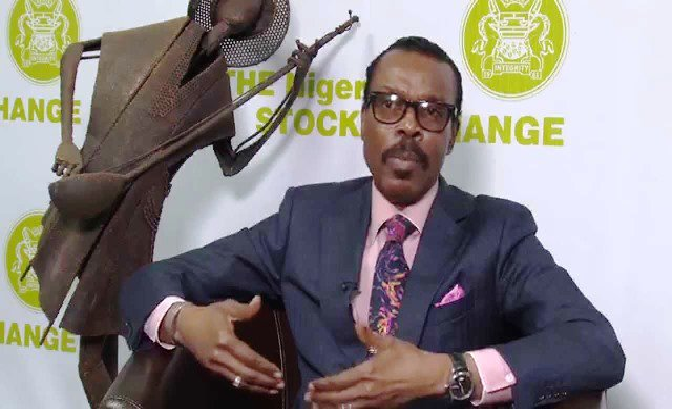
Bismarck Rewane from his speech on the platform today made a solid point, ” we don’t need ideas to get Nigeria working again. We need execution.”

 From his body language, you might decode that this is a man who had seen through the width and depth of why Nigeria will work and largely why it won’t. But he offered his opinion still. He cared less about whether his appointment to the new economic team is withdrawn or not. “We are men who care less about those things,” he said. Nigeria can work.

I’ve read through a lot today and seen lots of expressions of dissatisfaction. But what can YOU do to make this better? 

Truth be told, as a nation we have embraced a culture that will necessarily lead us to misery, nasty and brutish end. This is evident in our day to day living.

We all want a “share of the national cake” as it is commonly said, but that won’t take us far. It will only breed more political opportunists and vampire elites that suck the vitality of the economy for selfish gain and personal aggrandisement. But you can do something as an individual. 

In the search for answers to a couple of questions relating to nation-building, earlier this year I picked up two books…

 “Why Nations Fail” and “History of Political Order.” Before these 2 books, I read “The Autobiography of Benjamin Franklin.”

 These three books though drawing from different points in history have a common denominator and proffer similar answers to my questions…

Nations rise and fall on the sustained whims or otherwise of capabilities accumulation of it nationals cum drive and strive to execute.

Drawing from the lessons of history, has elucidated from my books and careful study of sustainable development of nations, to build a great nation, it behoves it nationals (You) to let themselves lost in the accumulation of capabilities able to solve problems that behalf their nation.

Nations don’t rise first by the spending of government to enable problem-solving effort, the reverse is what’s obtainable from history. Nationals solve problems, government generate tax and build therefrom.

To be explicit, while I share of the pain inflicted on Nigerians of which I am one, what I think YOU can do both to better your lot and possibly that of your nation is simple… 

Accumulate capabilities, that is, build up your knowledge arsenal.

 Doing this will put you on a pedestal to both understand the intricacies that are responsible for the state of Nigeria and help you channel a way to thrive despite it not necessarily because of it. 

Benjamin Franklin noted… “It is hard for an empty sack to stand upright”

It is hard for an uninformed mind to consider intricacies with needed clarity. Complaints and more complaints are what such will be given to, nothing more.

But on the pedestal of knowledge and accumulation of capabilities, you will better your lot and possibly that of your nation.


NASD OTC is a Viable Alternative for Startups and SMEs to Raise Capital in Nigeria

0

The NASD Over The Counter (OTC) market Securities Exchange is a market which facilitates secondary trading of all securities of public listed companies in Nigeria and the West African region. Its main focus is to act as a catalyst by facilitating access to capital by pooling stakeholders in the capital market to a secure and transparent environment. Those who trade in the exchange include issuers of equity and fixed income instruments, individual and institutional investors, accredited licensed traders and their participating institutions, settlement banks, clearing systems, capital companies and venture capital organizations.

At NASD Plc Exchange our focus is on being the hub of first call for capital formation in West Africa. This translates to us working to provide platforms for primary and secondary market liquidity. In the primary market, our focus is to ease capital raise process and provide secondary liquidity and transparency for investors who wish to play in our secondary market.

It currently has a market capitalization of about 514 billion naira. Considering the fact that the current SME finance demand is huge and largely unmet, Nigeria’s fast growing SMEs and startups need to think out of the box. They need to look at the flanks, beyond bank financing, which offers them a non-competitive interest rate, and venture capital that could dilute their shareholding.  

Largely, startups and SMEs could approach the OTC market to raise long term funding which could make them competitive in their markets by offering some equity for sale. Examples of organizations which have leveraged this capital market tool include fast rising real estate companies Afriland Properties and Mixta Real Estate, consumer foods giants Dufil Prima and Frieslandcampina Wamco, among others.

The OTC Exchange should learn from the Kenyan Stock Exchange which last year launched an incubator scheme for startups aimed at helping them grow, to become successful companies, and establish partnerships with global leading alternative exchanges like London Stock Exchange’s Alternative Investment Market, NASDAQ, and Shenzhen Stock Exchange’s Chi Next. Through this mechanism,  Nigerian SMEs and startups could tap funds to drive growth despite not being listed on the primary Nigerian Stock Exchange.


Nigeria’s Monetary Policy on Over-Circulated and Mutilated Notes

0
CBN Governor

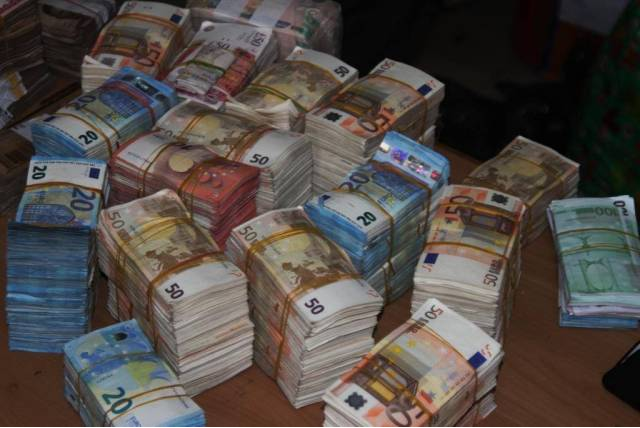
“Please be advised that the Central Bank of Nigeria [CBN] is on a drive to promote a clean note policy and ensure fit for purpose bank notes are in circulation.

As a result, you are required to deposit all over-circulated and mutilated / damaged Naira notes at any of our branches by 30 August 2019.

These banknotes must fall within the descriptions below:

  • An over-circulated banknote (Naira) is one that tends to disintegrate when passed through processing machines, as such rendering handling and processing difficult.

  • A mutilated banknote is a currency note (Naira) that has been partially or permanently damaged by fire, flood or soaked, dyed, torn or destroyed by natural disaster and is clearly more than one half of the original size of the banknote and may require special examination to determine its value.”

Some months ago, I received the above notification from my bank that over-circulated and mutilated money should be brought to the bank for exchange to new ones with August 31st, 2019 as the deadline and I thought that by this day, the quantity of those monies should have reduced in circulation. Alas! I still find them all around till today.

In my last article “quantum denomination” I wrote that the mistake Nigerian government often make when implementing the acceptance or non-acceptance of the naira currency is that it always uses the medium of the monetary sector only.

This we have known to always be slow in effectiveness because of the non-synchronization between the fiscal and the monetary sector in the Nigerian economy. What that means is that, whenever the monetary authority issues a circular, it does not always have that ‘fast’ effect on the economy because both the fiscal policy makers and the monetary policy makers are not always working together.

Secondly, the time lag between the execution of fiscal policy and the impact is short compared to the monetary policy because the fiscal policy is directly proportional to the level and activities of the economy while the monetary policy has to work through the deposit money bank (DMB) to have any effect. The question lies in the fact that how Nigerians transact through these banks or does the activity of these banks have any effect on the Nigerian economy? I’m still yet to find the answer within the Nigerian context.

The Nigerian market is still largely informal and any economic policy has to come to that level. This is the reason we see fiscal policy having its impact quickly than the monetary policy in Nigeria.

Come to imagine that the federal government declared that no mutilated note should be spent from 31st August 2019, that the spender will be arrested and be fined xxx amount or be imprisoned for xxx years. I can categorically tell you that the message will sink into the ears of an average Nigerian. That is just an example though it is backed by force.

Other democratic means can be used such as the use of incentives, rebates, tax payment to banks etc.

That concludes my take that for any monetary policy to have any ground in Nigeria, all government agencies must be involved.

Nigerian Workers Need More than Minimum Wage

0

Early this year, my colleagues and I enjoyed calculating what our new salaries will be if the new minimum wage is implemented. These guys are statisticians and they used whatever method to find out that if the minimum wage becomes N30,000, our salaries will be increased by 66%. Wow! The result was so enticing. I was already making lists upon lists of things to buy (funny, huh?). I even called a car dealer to find out the price of one car I have been eyeing for long (abeg, laugh if it presses you, no be your fault). Honestly, I fell in love with Nigerian government (that was then o).

Fast forward to April 16, when Mr. President finally signed the money into bill, it was celebration all over (I heard that people started placing orders for things). We couldn’t wait for that month’s alert. Finally the alert showed and we were wondering if our HQ made a mistake. Next alert showed, nothing. Hehehehehe, that was when we began to suspect that this minimum wage thing is a ‘scam’. And we were right, because up till now, we are yet to see anything, even the 9.5% increase for people like me (but seriously, what will 9.5% actually do for us?).

Anyway, what I want to discuss here isn’t how civil servants have been waiting unto the new minimum wage. I am here to look at how the new minimum wage can make the lives of Nigerian workers better. Well, here is the bad news – the proposed increase in our salary will not help us.

To start with, the amount is small; it will make no difference in our spending and saving power. Ok, let’s look at it. If my net monthly income is #70k, and it is increased by 9.5%, by the time you remove tax, pension, trade union fee, National Housing Fund, and any other deductibles, I may only have #5k added to #70k making my new salary #75k; and there will be noise about salary increase everywhere (mtchewww). Even the 11% increase they are dangling before us now will still give the same result, so leave that.

I want to use this opportunity to call on Nigeria Labour Congress (NLC) exco to demand for better welfare for Nigerian workers. Asking for money isn’t enough, we need more than that. I will list the things we need below.

What Nigerian Workers Need
a. Housing: Every month a certain amount of money is deducted from our salaries in the name of National Housing Fund (NHF). I honestly don’t know which houses we are funding. I haven’t seen any house provided by the government for its workers that they are collecting that money for. When I asked, I was told that when I retire, the money will be released to me. Hmmm, my mother retired from civil service since 2008 and Federal Mortgage Bank hasn’t paid her till date. She followed it up and they kept doing her ‘come today come tomorrow’ until they told her they will contact her when it is ready. Till date o, nothing has shown. She later heard from one of her fellow retirees that the money that will be refunded is so small that you will wonder why you spent your time, energy and the little money you have following up NHF refunds.

Aside that, why do I have to wait till I retire to own a house? Why won’t Federal Mortgage Bank build houses and sell it to workers on mortgage? Anyway, what do I know? As far as I am concerned, NHF deductions na scam. If it is not, they should tell us publicly how they plan for us to use our money to buy our own homes while we are still in service.

Anyway, let NLC executives also demand for housing scheme for Nigerian workers. If not, the new minimum wage will go into making up money for rents.

b. Health: The government is actually doing well here through National Health Insurance Scheme. At least right now, I am not afraid of taking my children to hospital because our government got it covered. But, some hospitals are not doing well here – they collect a certain percentage of the total bills from the patients even with the NHIS coverage. I don’t know if it has something to do with the hospital or the HMO. Anyway, proper investigation and cautioning need to be done.

c. Education: There is nothing wrong with government paying for the education of their workers and their children. The government may decide that any staff that wants to go for further studies should apply for sponsorship. I know that something like this exists for some institutions and for some privileged workers, but it should be thrown open to all. This is also the same thing with paying the school fees for workers’ children. I know that some agencies and parastatals accept to pay the tuitions for maximum of four children per worker, so this isn’t new in Nigeria. My own is that such privilege should be extended to everyone.

d. Retirement: Do you really know why Nigerian workers are afraid to retire? It’s because they have nothing and nowhere to retire to. Ok, let’s be honest with ourselves. These workers have been feeding from hands to mouth all through their service years. This means they have no savings, houses, businesses, secondary source of income, or even any idea on how to survive without their salaries. A lot of people will say, “what about their pensions?” Well, meet a pensioner and he will answer that question.

So what am I trying to say here? Nigerian workers are not prepared for life after retirement. All through their service years they have been following the civil service rules rigidly and do not know that life outside the civil service world is flexible. By the time they retire, pick up their gratuity and go into the flexible world to set up something that will keep their flow of income coming in, they will be lost. Anyway, this is story for another day. There are several ways government can help its workers to prepare for retirements.

To our NLC executives, as we are getting ready for another nationwide strike action (hopefully, it won’t happen), deliberate on these demands and add them to what government should do for us. We need life, not just money.