DD
MM
YYYY

PAGES

DD
MM
YYYY

spot_img

PAGES

Home Blog Page 6661

Optimism Is Still Your Best Bet

0

I receive newsletters from James Clear weekly. This week’s edition is too compelling not to amplify his thought. He said:

“Optimists win in the long-run because their miscalculation of how long it will take or how likely it is to succeed motivates them to give it a try.

If you knew how hard it would be and how long it would take in the beginning then you might not try in the first place.

You can’t guarantee success, but you can guarantee failure: never try.”

Pessimists are good at one thing, on the contrary, they “know” exactly how long and what probability of success lies in any adventure. Because of “their knowledge”, they are deprived of ever attempting anything. Invariably, denied also of the likelihood of ever achieving anything. Be an optimist, you have more to gain than being otherwise. 

Examining the habit of an optimist

In James Clear quote above, 3 things exemplify an optimist

  1. They believe they can achieve the impossible in a short period

They may not necessarily achieve it in that short period and in fact, they rarely do. Yet, they still maintain the momentum. As James noted, “If you knew how hard it would be and how long it would take in the beginning then you might not try in the first place.” There is beauty in not having complete knowledge of the process but your eyes must be focused on the end that you envisioned. This is the habit of an optimist.

  1. They are not sure about the future but they still try

While all gaze is fixated on the end, optimists are still skeptical about the outcome. Except that their skepticism is not enough to push them back from attempting the impossible. Be an optimist.

  1. They know that doing nothing guarantees failure

Here’s how they think, if I do this, what assurance of success do I have? say 15%.

If I do not do this, what assurance of success do I have? Guaranteed failure!

That’s it for them. They had rather attempt a 15% possibility of success towards a thing dear to them than accept a 100% guaranteed failure for not attempting. Be an optimist.
Given the choice between being an optimist and a pessimist, I urge you to go for the former. The reward from the former is more compelling.

Side note: A pessimist is generally not liked in most settings. While everyone is suggesting how to make something work, a pessimist will be proliferating the “gospel of how it cannot work”. This makes everyone naturally repel working with a pessimist.

And remember:

We grow by people. People are our reason for success. And if these people repel you, success by natural cause repels you. It’s an endless loop that ends in failure. Optimism is still your best bet.
Nigeria Needs to Protect Road Workers while on Duty

0

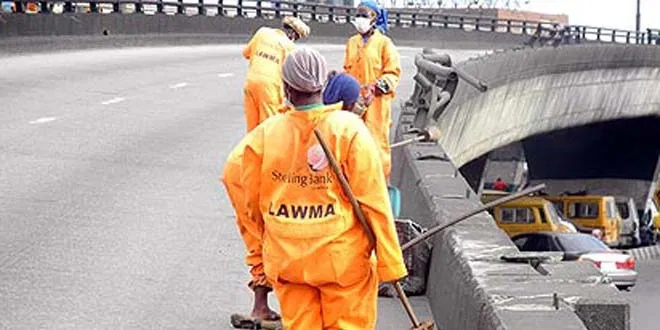
Our vehicle nearly hit an elderly woman sweeping the flyover bridge at Akwata Junction, Enugu-Onitsha expressway, Awka in Anambra State. The woman seemed oblivious to her near demise. She was more interested in doing her job than keeping her life safe. She staggered to where her dustpan was, picked it up and went back to pack what she gathered together.

Some months ago, I witnessed a similar incident along Enugu-Port Harcourt expressway (on top of New Haven Bridge), but this time it was a construction worker marking areas to be dug on the road. His own case would have been worse because two trucks came for him. But for his quick movement out of the road, he would have been added to the number of accident victims.

I don’t understand why most Nigerian employers don’t consider the safety of their workers when assigning them duties. For instance these road workers I mentioned here were sent to work on highways but there were not safety measures taken to protect them. They were left to wine and dine with fate. Of course, if anything happens to them, they will be replaced immediately.

Apart from being knocked down, the presence of these road workers during rush hour can increase the magnitude of traffic gridlock. This usually happens when one side of the road is blocked completely and the side used by all the vehicles isn’t in good condition. Or when cars have to wait for some heavy equipment vehicles to finish their works before the road will be opened again (maybe for some minutes before it is blocked again).

I don’t even believe that these workers relax to do their jobs well in this sort of condition. For instance, you may see the part of road swept by someone looking like no work has been done there. I think the fear of being hit by cars makes them want to do their job as fast as they could so that they leave.

Well, I believe that the employers of these workers should consider the following as some of the ways they can make their workers’ job easier and safer:

  • Time of Work: A lot of people suggest that these workers perform their duties in the night. I used to have this view but the state of security in the country has changed that. I wouldn’t advocate that someone comes out late in the evening or night to work on our roads when thieves and other hoodlums are at loose. To even start with, which light will they use to work?

What I suggest is that they come out very early in the morning to do their jobs. If they start of around 5am, when traffic is still very sparse, I believe they will be able to get most work done before 8am, which is when the morning rush hour starts.

As far as I know Nigerian roads, traffic is never sparse again until around 11pm, by which time it becomes unsafe again on our roads. So, it is best to do early in the morning.

  • Use of Modern Equipment: You may not believe it when I tell you that our road sweepers use short brooms made from palm fronds to carry out their duties. Can you just close your eyes and imagine how many kilometres one sweeper can cover in a day with a short broom (especially those ones that have gone shorter from long duration of use)?

You see, we keep deceiving ourselves. It is something like this that makes my mother say that someone is busy tickling himself. How does it sound that people are being paid to sweep and keep the major roads clean and that they are using short brooms to achieve that? To some people, it sounds funny. But to me, it sounds embarrassing.

The employers of these people should please procure some decent equipment that they should use to make their work easier and more efficient. These people aren’t sweeping compounds nor streets, they are sweeping highways.

  • Use of Road Sign: Sometimes these workers are sent into the road without road signs to notify motorists of their presence. This was the reason those two trucks nearly crushed the construction worker I mentioned earlier. Employers should ensure that they provide these workers with signs that tell motorists of their presence. Any worker that failed to use his or hers should be surcharged.
  • Safety Gear: I think these people manage to get just the yellow or orange jumpsuit for their workers and leave them to ‘manage’ with that. Other safety equipment seems to be luxury. Helmets, goggles, gloves, facemasks and the rest are not part of what I see these people wear to work. For their helmets, they tie scarf; for their facemask, they use handkerchief; I see some of them with worn out gloves, on one palm only; as for the goggles, either they use their personal sunglasses or they leave their eyes to enjoy dusts and grits.
  • Supervision: These workers need to be supervised to ensure that their works were well carried out. Most of them, especially the sweepers, don’t do their work well (even though I’m suspecting the short broom to be the culprit).

I know that developed countries use better electronic machines to sweep their streets and roads. But in Nigeria, we still use manual ones. It is fine because it ensures more job creation, to some extent. But, there is a need to make this work easier and safer for those performing it by giving them much needed equipment and providing safety measures that will protect them.

P&ID: UK Court Grants Nigeria Leave to Appeal

0

The English Commercial and Arbitration Court in London, has granted Nigeria leave to file an appeal against the award of $9.6 billion against the Federal Government of Nigeria, in favor of Process and Industrial Developments (P&ID). The Attorney General of the Federation and Minister of Justice, Mr. Abubakar Malami, said.

Few days ago,  it was announced that Nigeria had lost about $9.6 billion to an Irish firm simply because we couldn’t keep our own part of an agreement ,if really it was an agreement . It’s difficult to blame a specific individual  for this because when and how this contract was signed is shrouded in mystery. A few suggests it was signed at the time the late President Musa Yar’adua was in coma . Whoever signed it! Anyway, I don’t believe in ghosts.

He also disclosed that the court also ordered Nigeria to pay a security sum of $200 million for the court to grant a stay of execution of the ruling pending the judgement of the appeal.

“Stay of execution has been granted subject to payment of $200 million security payment to the court pending the determination of the appeal for the leave to appeal which has been granted by the commercial court.

“Application for leave to appeal against the award and enforcement of the award is granted.” He said

P&ID was awarded $9.6 billion in damages following a failed Gas Supply Agreement contract it had with Federal Ministry of Petroleum Resources.

The Federal Government of Nigeria launched an investigation into the contract and discovered massive fraud by representatives of P&ID in Nigeria. Upon the discovery, the Economic and Financial Crime Commission (EFCC) filed charges against the culprits which they pleaded guilty to.

The guilty plea and subsequent sentences provided a ground for Nigeria to challenge the outcome of the first hearing. Nigeria is desperately trying to mitigate the consequences   the ruling will impact.

With P&ID assets in Nigeria nationalized, legal experts believe that Nigeria has a better chance to turn things round. The recent development in London has given hope to such belief.

Nigerian Labour Market Needs Skills Not Certificates

0

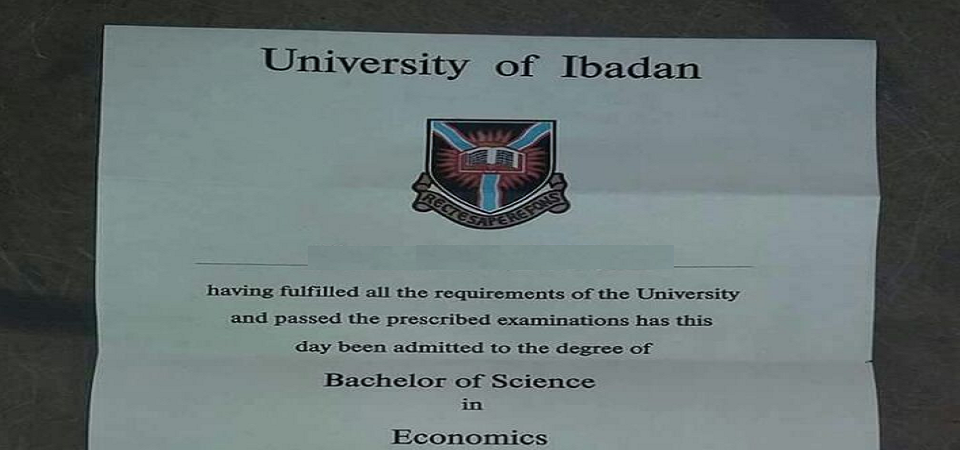
It was alas narrated: A 3rd class student who built a military grade drone for the Nigerian Army could not be employed by the Army because the condition of service does not permit the military to employ a 3rd class student!

Another sad one in the series of “sad tales in the Nigerian labor market.” And it beckons the question: what matters in the Nigerian labor market, certificate or skills?

A job vacancy for a driver once listed Honorary National Diploma (HND) as the required qualification. Another opening for a cleaner listed O’level certificate. An applicant for a bartender posting was required to tender some certificates, and the list goes on. In fact, it cuts across every field of employment not just white collar jobs.

The certificate-based judgement of one’s ability to fulfill a task has become the basis for efficiency and inefficiency in Nigeria. People who possess the ability to do jobs effectively are denied the jobs because they don’t have the certificates. Those who have the certificates and lack the needed skills are employed to the detriment of the jobs.

Others who have neither the skill nor the certificate have secured jobs the easiest way they can – certificate forgery. Because in many places, that’s the only thing that counts.

The number of certificate forgery cases in Nigeria is increasingly alarming, even among public office holders. Many have been sacked by courts because of certificate forgery. Since 2012, about 5 000 teachers have been sacked over certificate forgery. And that has put a challenge on where qualification for jobs actually lies. Is it on the ability to perform the needed task or possession of proof of school attendance?

The Presidential Petition Tribunal (PEPT) recent ruling on the qualification for the most important office in the country has, in a way, discredited the certificate norm that has ruled the labor market for so long. If the president doesn’t need a certificate to rule a country of 200 million people, why should a (drone maker) graduate be denied employment just because he has a 3rd class?

It is nothing but stigmatization that empowers the under-skilled, and relegates the skilled to wastefulness, all to the detriment of effective labor force.

In developed countries, employers look for skills and abilities: they always ask: what can you do? What skills do you have? And that’s what matters most. A popular quote of Bill Gates comes to mind here:

“I failed in some subjects in exam, but my friend passed in all. Now he is an engineer in Microsoft but I’m the owner.” Bill Gates.

The things that may contribute to lack of certificate, low grade or class will not hinder the skill or the ability that one possesses. And it should not hinder the opportunity to practice what one knows.

Announcement of My Vanguard Newspapers Workshop Next Week

0

Something big is coming. I want you to hold that training budget intact [do not spend it yet] because I will run a workshop in coming weeks under a partnership with Vanguard Newspapers. I promise you that it would be SUPERB. The location is Lagos – the centre of excellence. I will co-learn and co-share with the participants on the mechanics of business as we walk through innovation, growth, and digital.

The official announcement is coming next week. We have all the emails of those that have indicated interest. Please continue to send intents to my team.

You need to attend this program. It will be a like a mini-MBA. Tell your supervisor, director, MD or your company HR that you will attend. They will find the resources to make it happen.