DD
MM
YYYY

PAGES

DD
MM
YYYY

spot_img

PAGES

Home Blog Page 6664

The Chief Information Officer of Nigeria

3

Imagine if all software acquisitions by the Federal Government for Nigeria are purchased by one office, and then shared by the MDAs (ministries, departments and agencies).

We would save money, fixing the problem which exists today where every unit of government acquires its own software. Yes, it is very painful reading public tenders with clusters of wastes. You see waste because no one is harmonizing simple acquisition of technology assets. This extends beyond software; simply, a redesign will save Nigeria money.

In 2017, I suggested for Nigeria to appoint a national Chief Information Officer, by updating the role of either the DG of NIMC (National Identity Management Commission) or DG of NITDA (National Information Technology Development Agency) with no new bureaucracy required. That message was picked up by many industry stakeholders.

What is happening in telcos is happening in Immigration, Drivers License Office and clusters of entities across Nigeria where they continue to capture biometrics. I do think that Nigeria may need to redesign the Acts that govern NITDA (National Information Technology Development Agency) and NIMC (National Identity Management Commission) to deal with many pressing issues on technology and data management. If we collapse them as one, we can have an Office of Chief Information Officer, for Federal Republic of Nigeria; call it National Chief Information Officer (NCIO). The present Director-General of NIMC can assume that office as NIMC has more roles in the consolidation of the disparate databases in Nigeria, and certainly more strategic than NITDA.

There is an update – government has indeed acted: any DG of NITDA will also in parallel serve as the Chief Information Officer of Nigeria (just knowing that!). Now, let’s make it work for Nigeria and not just another title. Yes, we can eliminate procurement corruption via harmonizing data as I noted in this “address”.

Time for “National Chief Information Officer, Federal Republic of Nigeria”

How Government Agencies for Nigerian Motorists Can Improve Services

2

Have you ever noticed that Nigerian drivers don’t want anything to do with Federal Road Safety Corps and Vehicle Inspection Office (except to obtain driving license and all)? Even commercial drivers don’t want their wahala. In fact, once a driver gets to FRSC checkpoint, he won’t wait for anyone to remind him to cross his seatbelt. If that checkpoint was mounted by VIO, the driver that knows his vehicle isn’t in good shape will just find an alternate route.

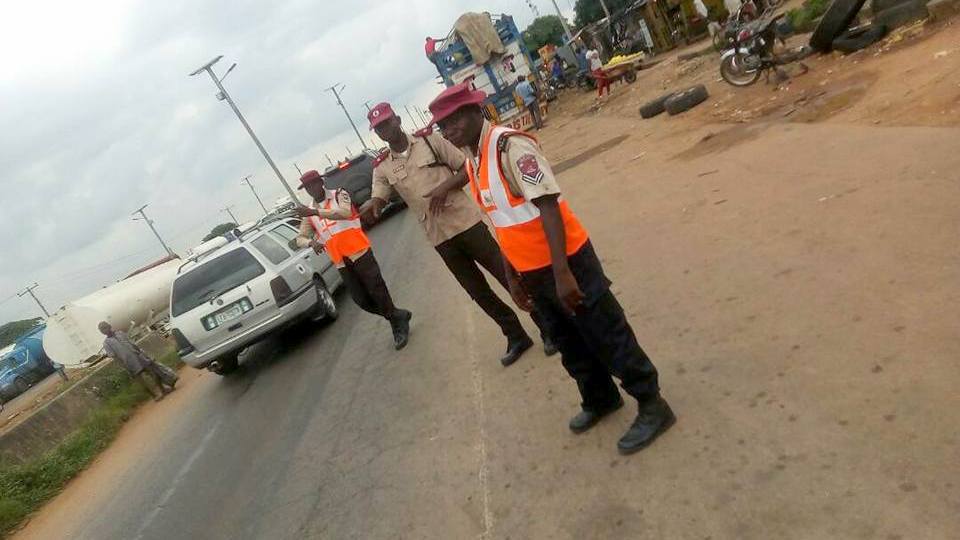
Here in Enugu, I found another agency that keeps drivers in check. This group is the Enugu State Ministry of Transport Traffic Enforcement Bureau Cadets, popularly known as ‘MOT’. These officials don’t mount blocks, and they don’t have checkpoints. I only noticed that they patrol the major roads in the city and station themselves in areas that usually have traffic congestion. Honestly, Enugu State ‘MOT’ has ensured that commercial drivers stick to traffic rules and regulations.

For once, I am going to commend these agencies – Road Safety, VIO and MOT (that’s the names we know them with down here). When I see something good I will say it. If I see bad ones, I will also say them loud. Let’s be honest for once, the presence of these officials on our roads has made our roads safer – as in, safe from reckless driving and not from bad roads and theft. I will point out some of the things these agencies have contributed to.

Vehicle Inspection Office (VIO)

See, the fear of VIO is the beginning of well maintained cars. Trust me, you don’t want to argue with these guys. If you insist that your car is 100% ok, they will take you to their inspection room. And once your car enters that inspection room, well as my brother always says, unless you recently bought the car as ‘tear rubber’, VIO will write it off-road. So the best thing for you to do to obtain certificate of road worthiness is to make sure your car is in good shape. And believe me when I say that most cars in the city are now in good condition because of the VIO.

So, I can categorically say that VIO helped to minimise the rate of accidents on our roads.

Federal Road Safety Corp

The fear of Road Safety is the beginning of making sure that every component in your car works. If by mistake this people catch you and your vehicle’s lamps are not functioning properly, well, get ready for their office.

Because of Road Safety people now change their tyres as at when due and make sure they have a spare one in their car’s boot. I know a lot of people hate them for this but I think they are doing something good for us. If you think I’m lying, witness an accident scene that was caused by tyre burst. So, let’s just give them this one, they are trying.

Road Safety also helped to minimise carrying of loads that are more than the capacity of the vehicle. At least I know that commercial bus drivers are no longer comfortable with carrying heavy and bulky loads on top of their vehicles because of what Road Safety will do to them.

Commercial bus drivers don’t like using seatbelts. I kept wondering why until one of them told me it is because of the bad roads. Well, that didn’t stop Road Safety officials from ‘dealing’ with them when they catch them. To avoid their problems, bus drivers cross their belts immediately they sight these officials, or their patrol vehicles.

Enugu State Ministry of Transport Traffic Enforcement Bureau Cadet
I don’t know how many states that have this agency, but they are doing a good job in Enugu metropolis. Since their inception, motorists have started observing traffic rules. There is a noticeable reduction in the number of drivers that run red lights, park wrongly or drive recklessly.

Another good thing about this agency is that they help in traffic control. Their presence on congested roads ensures easier movement of vehicles. I don’t really know but I think they are there to fill up for Road Safety and Traffic Wardens (do these people still exist in Nigeria?)

Their Strategies

Ok, so we have seen some of the ways these agencies help in keeping Nigerian drivers in check. Anytime I look at these officials I wonder why Nigerians are so ‘afraid’ of them. I mean, they don’t mete out corporal punishments like the Nigerian Army and Nigerian police officials do. But they found out one thing that every Nigerian doesn’t want to part with – money.

These people are able to hold everyone in check because of the monetary punitive method they adopted. I could remember when I was in a commercial bus and a Road Safety official flagged down our bus. The driver had to reverse and follow another route because his ‘papers’ weren’t complete. When I asked him to explain to the officers, people in the vehicle laughed and reminded me that there is no ‘abeg’ for Road Safety, VIO and MOT.

Well, their strategies are working, but a lot of bad eggs in the system are misusing that. They need to do something about corrupt officers in their midst.

Areas for Improvement

I know that these agencies are working but they need to improve in some areas. These areas include:

a. Training on Emotional Intelligence: Sometimes, in fact most times, these officials lose their cool. I don’t think it is proper for someone to break the windscreen or side mirror of a moving vehicle. But these agencies do that a lot. In fact, Road Safety is notorious for that. These agencies need to train their staff every now and then on how to control their emotions. They should also remove officials that are hot tempered from the road before they cause more problems for the agencies and innocent citizens.

b. Penalising Corrupt Officials: We already know that some of these officials are corrupt. Some of them will try to negotiate with you to see if you will ‘settle’ them there or be taken to their office for bigger ‘pay’. Most drivers will prefer to ‘settle’ because it will be cheaper for them. In as much as these drivers don’t want to violate any traffic rules because they don’t want to part with their money (and these agencies don’t settle for any small amount), the behaviour of these corrupt officials is an embarrassment to the nation and the agencies.

c. Putting a Stop to Wrong Practices: One practice of these agencies I want to point out here is car chasing. I don’t know if these officials realise the danger they put the lives of the defaulter, his passengers and other innocent motorists as they chase cars. They should find ways of searching, finding and arresting defaulters who ran off when stopped. Car chase is very wrong, especially in this our bad roads.

d. Increasing Number of Officials on the Road: The only officials I can see more on the road are the MOTs. There is need for more officials of these agencies to patrol different roads. They should also patrol and monitor rural areas and bring sanity there.

So, anytime you see of these officials, hail them, they are trying. Hopefully, they will do better in the nearest future.

How To Do A Follow-up On A Job Interview

0

You just finished the much-anticipated interview session and hoping that luck will shine on you this time, I can imagine how it feels. Especially when it seems you have done well enough to impress the recruiter.

One question that comes to your mind, should I follow up?

Of course, there’s nothing wrong with doing a follow-up on the recruitment process. But this must be done in a professional manner so you don’t appear too desperate or stalking the hiring manager.

Want to know how to FOLLOW-UP after an Interview?

Kristy Bonner shared two ways you could do your follow-up to stay in the mind of the recruiter and hiring manager:

  • “Thank you” email within 6-8 hours of the actual interview: we often underrated the power of ”Thank you”. Every human love to be appreciated and the recruiters are no exception.
  • “Follow-up” email 10 BUSINESS days after the interview: You can also proceed to send a follow-up email in ten business days after the interview. This shows how intentional you are going about your job search.

Now that you know what to do, the question some may ask is, ”What to write?”

According to Kristy Bonner, here are two EXAMPLES:

  • “Dear (Interviewer), Thank you very much for taking the time to see me today. I thoroughly enjoyed our conversation and I am very interested in the vacant role.
    (Then add 3 lines reminding them about something positive in the interview OR something that you wish you had mentioned).
    I look forward to hearing from you at your earliest convenience.”
  • (Subject line) Your name, date/time Interview.
    “Dear (Interviewer), I hope this finds you well. Since I am still very interested in this role, I was wondering whether you have any feedback for me at this time, please?”

Number 2 can be sent 10 business days after Number 1.

I still wonder why many job seekers do not send thank you emails after the interview session. There are many people competing with you for the vacant role, therefore, you need to do something that makes you stand out or different from the rest.

I have no idea why not, but if YOU want to stand out from others who interviewed that day, send one!

Please don’t bug the recruiters and hiring manager. They are also trying to keep their jobs. Besides, you want to be remembered for the RIGHT reasons, not as a stalker!

Good luck to you!

As Nigeria Begins Investigation of Truecaller’s Alleged Privacy Violation

0

The National Information Technology Development Agency (NITDA) has launched an investigation into alleged gross of privacy violation by Truecaller services.

The investigation was instigated by the discovery that Truecaller’s privacy policy is not in compliance with global laws on data protection and that of the Nigerian Data Protection Regulation (NDPR).

It was also discovered that about 7 million Nigerians who use the services know little or nothing about privacy rights. And according to NITDA, they need to be educated.

The report of the findings notes that Truecaller privacy policy is made of two sets, one for those in the European Economic Area (EEA), and the other outside the EEA. Nigeria is said to fall under the latter category. Furthermore, every Nigerian user is contracting Truecaller India. The findings gathered that there has been breach of NDPR’s policy, that is different from EEA.

Article 1.1 of Truecallers’ privacy policy was quoted as an example. It states that Truecaller may supplement the information provided by you with the information from third parties and add it to the information provided by you.

The NITDA explained that it contravenes Article 2.1 (b) of the NDPR which requires data collection and processing to be accurate, and Article 1.3 (iii) which requires that valid consent must be specific. So by supplementing the personal information of Nigerians without specific consent and accuracy, they are susceptible to serious invasion of their privacy.

Another example quoted by NITDA is Article 1.2 of Truecaller’ policy, which states that when you install and use the services, Truecaller will collect personal information from you and any devices you may use in your interaction with our services.

The personal information may involve every data of your online activity. From IP address to device ID, to websites you have visited, to your outgoing calls and messages.

The probe finds these data collections to be excessive and invasive of personal data. It is also contrary to Article 2.3 (2)d of the NDPR, which states that when assessing whether consent is freely given, utmost account shall be taken of whether the performance of a contract, including the provision of a service, is conditional to one’s consent to the processing of personal data that is not necessary or excessive for the performance of that contract.

Another issue of concern noted in Truecallers’ privacy policy is the sharing of personal information with third party. The NITDA noted that it is global best practice for users to be reminded that there is data collection technique (like cookies) on the platform. Giving the user the opportunity to choose whether to use the webpage or not. That was also flouted by Truecaller as there are no such prompts or queries in their web platform.

The data information Agency expressed their disappointment over the highlighted issues, noting that it has exposed many Nigerians to identity theft. And many have been framed over issues they know nothing about. The Director General of NITDA, and the Chief Information Officer of Nigeria, Kashifu Abdullahi Inuwa, thus promised Nigerians that the Agency will act to protect their privacy and will continue to monitor the activities of digital service providers in Nigeria, to ensure ethical behavior.

Thomas Cook Collapses

0
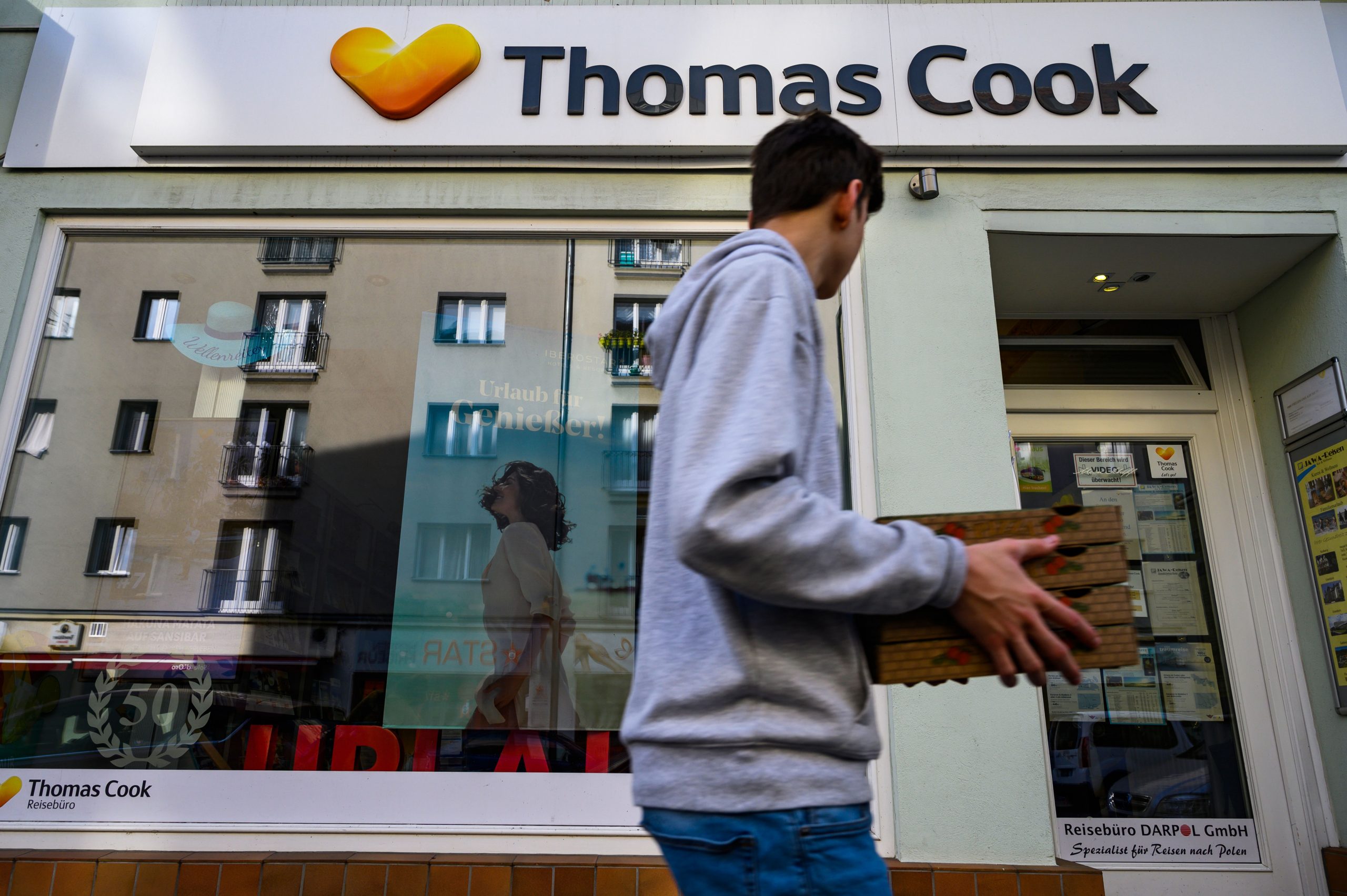
A young man passes by a travel agency of the British tour operator Thomas Cook in Berlin on September 23, 2019. - As British tour operator Thomas Cook declared bankruptcy, some 600,000 tourists from around Europe had their holidays disrupted. (Photo by John MACDOUGALL / AFP) (Photo credit should read JOHN MACDOUGALL/AFP/Getty Images)

Editor’s Note: This company has actually collapsed; the title of this piece has been updated.

Thomas Cook’s issues went beyond Brexit. But Britain’s complicated departure from the European Union, and its impact on the pound, may have been the final nail in the troubled company’s coffin.

The travel operator’s dramatic collapse follows years of mismanagement and a failure to keep pace with online rivals, writes Hanna Ziady from CNN Business. And Brexit didn’t help.

Analysts say it was one of several factors that led to the 178-year old travel company’s demise, which has left 150,000 UK holidaymakers stranded abroad and cost thousands of employees their jobs


The 178 years existence of Thomas Cook is under serious threat with the British traveling company failing to secure £1.1 billion bailout fund to stay in business.

Thomas Cook Group have been struggling with a burden of £1.7 billion debt that has pushed it into administration. The Civil Aviation Authority announced the tour operator’s bankruptcy early Monday morning.

“Thomas Cook Group, including the UK tour operator and airline, has ceased trading with immediate effect. All Thomas Cook bookings, including flights and holidays, have now been canceled.” The aviation regulator announced in a statement.

In a statement issued on their defunct website, the company acknowledged the announcement of the Civil Aviation Authority.

“We are sorry to inform you that all holidays and flights provided by these companies have been cancelled and are no longer operating. All Thomas Cook’s retail shops have also closed.”

The Guardian reported that apart from the 9, 000 UK jobs at risk, about 150, 000 travelers, who use Thomas Cook services are stranded around the world. The unprecedented turn of events has prompted a backup plan by the UK government to evacuate her stranding nationals.

The UK Prime Minister, Boris Johnson, who has ruled out the possibility of £150 million bailout from the government said the only plan of action is to bring the Holidaymakers home.

“It is a very difficult situation, and obviously our thoughts are very much with the customers of Thomas Cook, holidaymakers, who may now face difficulties getting home. We will do our best to bring them home.” He said.

The contingency plan was also reiterated by the Foreign Secretary, Dominic Raab, who told the BBC that it’s all the government has on the table for now.

“We would wait to see and hope that Thomas Cook can continue but in any event, as you would expect, we’ve got the contingency planning in place to make sure that in any worst case scenario we can support all those who might otherwise be stranded.” He said.

The tour company has been making desperate moves to savage a dire situation that holds the fate of 21, 000 employees and about 600, 000 travelers around the world.

Before now, the company has accepted a £900 million bailout but was told to get £200 million more, which is proving difficult. Meeting with stakeholders, among them, Chinese conglomerate Fosun, has proved futile, instigating the kind of disappointment that the chief executive, Peter Fankhauser doesn’t want to talk about.

The guardian reported an indication that the company made a lot of proposals, which includes asking lenders to reduce a £200 million demand for extra funding and for credit card companies to release about £50 million of cash they hold as collateral against Thomas Cook bookings.

The whole situation has thrown the holidaymakers into panicky, especially those who are on a trip right now. However, Thomas Cook has reassured them that there is nothing to be scared of, since their interest is protected by the Atol scheme, a (sort of) insurance scheme that guarantees the welfare of holidaymakers. A staggering £600 million to bank on in case things go south.

But the twist in the hope is that not all the customers of Thomas Cook have the Atol coverage, and the company noted that repatriation flights are only available for passengers whose journey originated in the UK. Therefore, the cancellation means that many are going to get thrown out of hotels or planes.

Holidays companies usually don’t pay the bills until after 90 days, but in the case of cancellation and obvious liquidation, hotels try to get their money from holidaymakers.