DD
MM
YYYY

PAGES

DD
MM
YYYY

spot_img

PAGES

Home Blog Page 6665

The Biggest Illusion in Nigeria

7

I read comments on the reintroduction of toll gates article with many people recommending for Nigeria to reduce expenses to avert fees and taxes. Simply, many Nigerians do think that the Nigerian government is spending a lot of money, and could be cut into shape.

People, nothing like that. This is one area our successive governments have failed Nigerians: no one has told us that we are relatively “severely” poor, and exceedingly underperforming as a nation. Nigeria does not have excess spending problem – the fact remains that Nigeria does not even have enough to spend (note that I am not arguing on the efficiency of the “little” spending).

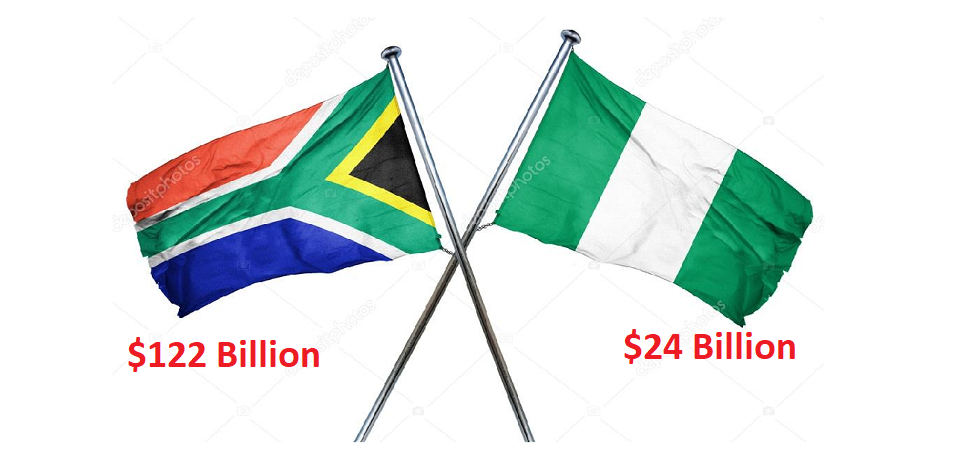
Nigeria’s national budget is $24 billion for 2019. South Africa budgeted $122 billion. South Africa spends 50% of our national budget on healthcare alone! Yet, Nigeria’s population is more than 3 times South Africa’s. I do not share this without the consciousness that I carry the Nigerian passport.

Expenditure in 2019 is expected at R1.83 trillion, with the bulk (R1.1 trillion) going to social services.

State wages and compensation remains the largest category of spending, accounting for 34.4% of consolidated expenditure – a level which the finance minister described as “unsustainable”. Measures are in place to realise a R27 billion reduction in spending here, he said.

Yes, we need to stop the argument that government has tons of money that can be cut. If you go through 2,000 years of economic history, nations rise when companies evolve and pay taxes so that government will have money to spend and improve institutions. This is the fact: Nigerian public institutions will not advance until the private sector does, because the resources to improve them are in the taxes. Even if you remove corruption and save $24 billion in Nigeria, we are still not there!

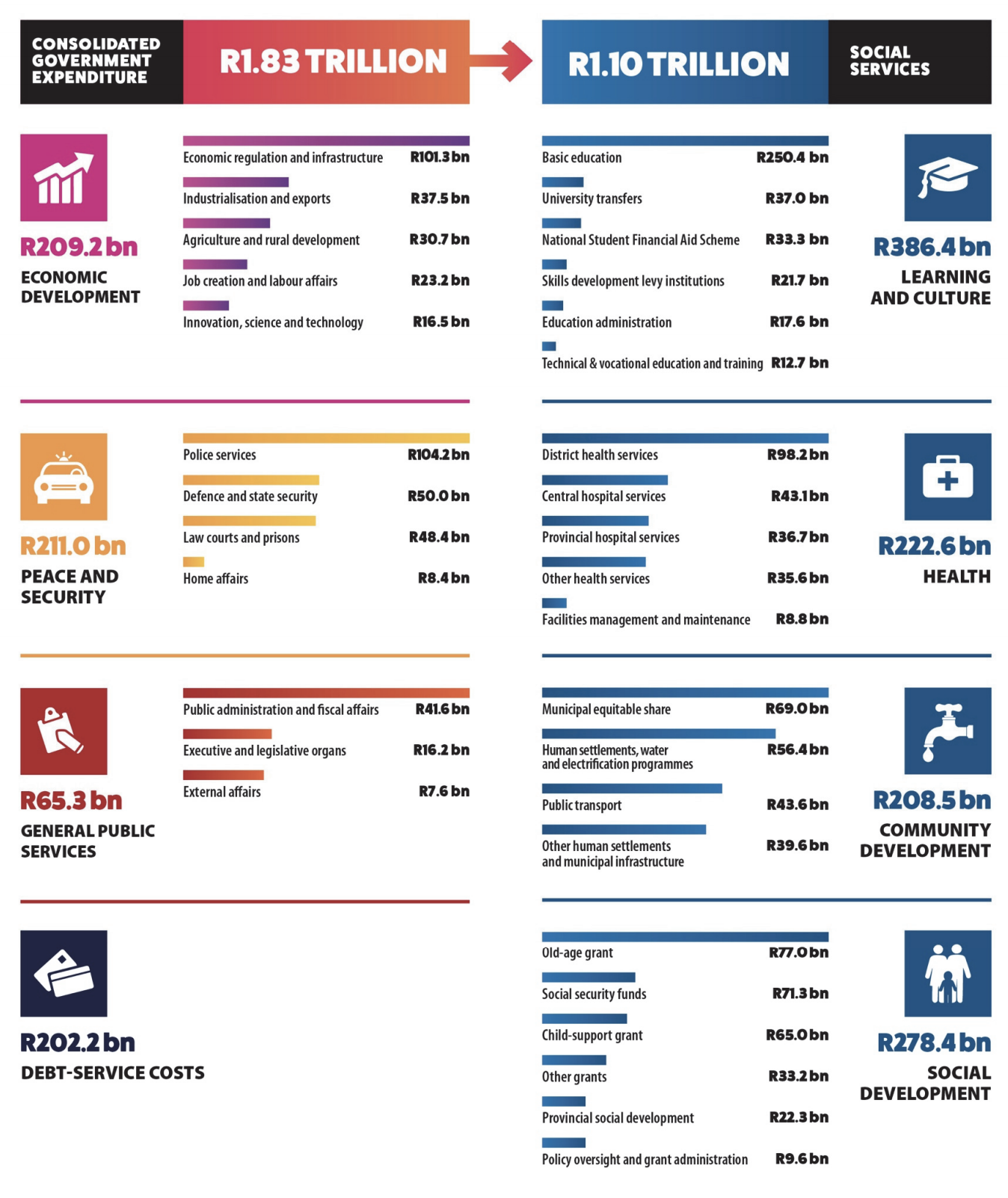
Nigerian Budget Source: Deloitte Nigeria


2019 South Africa budget (source: Businsstech)

As Carnegie pioneered U.S. steel sector, he wrote the ordinances, made money before government came to regulate it to avoid it from destroying itself! As Mellon, JP Morgan and other financial titans shaped U.S. banking, government waited, and then went in later to regulate the sector at scale. As Amazon devoured retail, U.S. waited until it moved with ecommerce regulations by requesting local tax collection.

As Rockefeller changed oil business, he provided the money government used to regulate Standard Oil. He was an oil man, and paid the poison pill. Across markets and domains, the private sector has always funded the public sector. Regulation, taxes and those fees are how governments monetize those moments.

Nigeria does not have a dynamic private sector and Nigeria does not have money – do not think government needs to be cut into shape. The fact is this: the government has no money to spend. 

Time is Scarce Even in its Limitless Form; Master Your Time.

1

One of the most important elements for success is the mastery of time. If you master your time, you will WIN your future. There is no greater liberation than  owning your time, and no great success has been achieved without knowing that time is scarce even in its limitless form. But managing time does not mean spending lesser time on something; it’s simply knowing what to spend time on, to advance your mission. Do not be like the lifeless feather which when tossed into the stream wanders wherever the stream current moves it. Be like the dragonfly which even though enjoying the mild current defines its path. 

Have a process and see how that process aligns with your goals in life. Students, look carefully, the bests in your classes are not necessarily the smartest but those smart enough to manage their clocks. Because the world is bounded by time, defined within 24 hours a day, companies and schools look for those “bests” as they have overcome by managing time. The best companies, the best universities, and the best leaders want them because if they continue on those paths, they will add values.

I wish you a great purposeful weekend. My teams are playing this weekend – Baltimore Ravens has to win (Steelers) in the NFL (U.S football, not soccer!) while Sevilla has to help Barcelona FC make points in La Liga. We need your support.

The Biggest Failure is NOT Fixing Things that Lead to Failures

Stop Waiting for the Perfect Time

1

They always say, ”no one is perfect”, true! Perfection can never be attained but if we try to get better at every level that we are, maybe we can be excellent.

All my life, I waited too long for perfection. So I never tried anything because I feel it wasn’t perfect enough for me to start. The fear of being criticized left me in a spot for many years. Until I had to break out from the thoughts. Common! Stop waiting for perfection.

I have never seen anyone out there who is perfect. Not even those referred to as the Greatest Of All Time (G.O.A.T.).

They make mistakes, they fumble and even perform below par. But their ability to overlook the flaws and get better at every level is what makes people see them as the greatest.

If experts also have their flaws, why would you wait till you are perfect?

Waiting for perfection is like waiting forever. You’ll never get there. No matter how long you wait. But if you decide to improve on what you know, who you are, the level you are, that would make a whole lot of sense.

I know you demand too much from yourself, yes, it is good. Being hungry pushes you to do more, which is fine. However, you need to be fair on yourself. Be fair on the assessment and judgment of yourself. Sometimes, you need to pat yourself on the back. You are doing better.

There’s an adage that says, ”Rome wasn’t built in a day.” The experts you see today were once amateur. The only difference is – they strive to improve daily.

Perfection only comes to those who try every day. If you want to be good at something, do it every day.

At first, you will struggle. It will not even make sense to many people. They’ll tear you down. Some will advise you to quit.

But if you listen to them, then you are not ready.

Shut your ears to the noise around you. Breathe. Only you know what you want, so go for it. Do it every day, do it till the nonsense makes sense.

At the end of it all, those who told you to stop will ask you to teach them. But till then, are you doing enough to win over their doubts.

Ask yourself!

Nigerian Graduates – A Low-Paying Job Doesn’t Diminish You!

0

You see many graduates out there unemployed and you blame the government. I do too. I blamed the government for not doing the right thing in the country.

So I embarked on helping graduates as many as I can. Been an unemployed graduate, I quite understand where the shoe pains. The feeling is always suicidal. No graduate wants to go back home. It doesn’t make sense after all that your parents have done for you.

At least, it will make sense for any graduate to take responsibility for himself after graduation and NYSC even if you are not giving them money for now. But when the situation is not encouraging, what can they do?

Like I was saying earlier, I tried to help some unemployed graduates by trying to show them a way that could help them a bit, but I was actually gutted at the manners of some graduates. They all want opportunities with at least six figures for a start.

It really amazes me anytime I see graduates come online to crucify government and recruiters. Are you telling me there are no jobs? For real?

Hell no! There are some jobs out there but when you let the certificate get into your head, the ego starts to push you here and there.

I’ve shared my stories many times. I don’t mind sharing again if someone is really learning. I never started my writing thinking I will earn a dime. I never even see my writing as something good enough to be read or paid for. I only joined for passion.

During the course, I wrote some articles for free. I mean, I got zero dimes. Today, pick up some graduates and offer them an opportunity that is worth $50USD, they will tell you – ”I am sorry, I can’t do it.”

”It’s too low for me.”

”I am a graduate.”

”I have First-Class.”

”I attended Harvard University.”

They will turn it down. Yet, they complain that there are no jobs. You want a job of $5000USD with zero experience, who will give it to you?

I think they are missing a lot here. Not everyone gets lucky with such opportunities. Why not pick the one you see and pile up experiences? That will make you more marketable. Stop deceiving yourself!

Am I against anyone getting what they think is good for them in terms of monetary value?

Capital no!

But I have a problem with people who turn down opportunities because they think too highly of themselves. Wake up from your slumber. You can only do that if your dad owns a company.

Do yourself a favour by going with what you see but never limit yourself to it. A low-paying job doesn’t reduce you. Neither does a high-paying job lifts you higher. It’s who you know and what you know that determines how far you will go.

My question is, ”How will you get to know people when you have turned down almost every opportunity because of the low paycheck?”

Think about it.

The AfCFTA Challenge Ahead As Nigeria Reintroduces Toll Gates

1

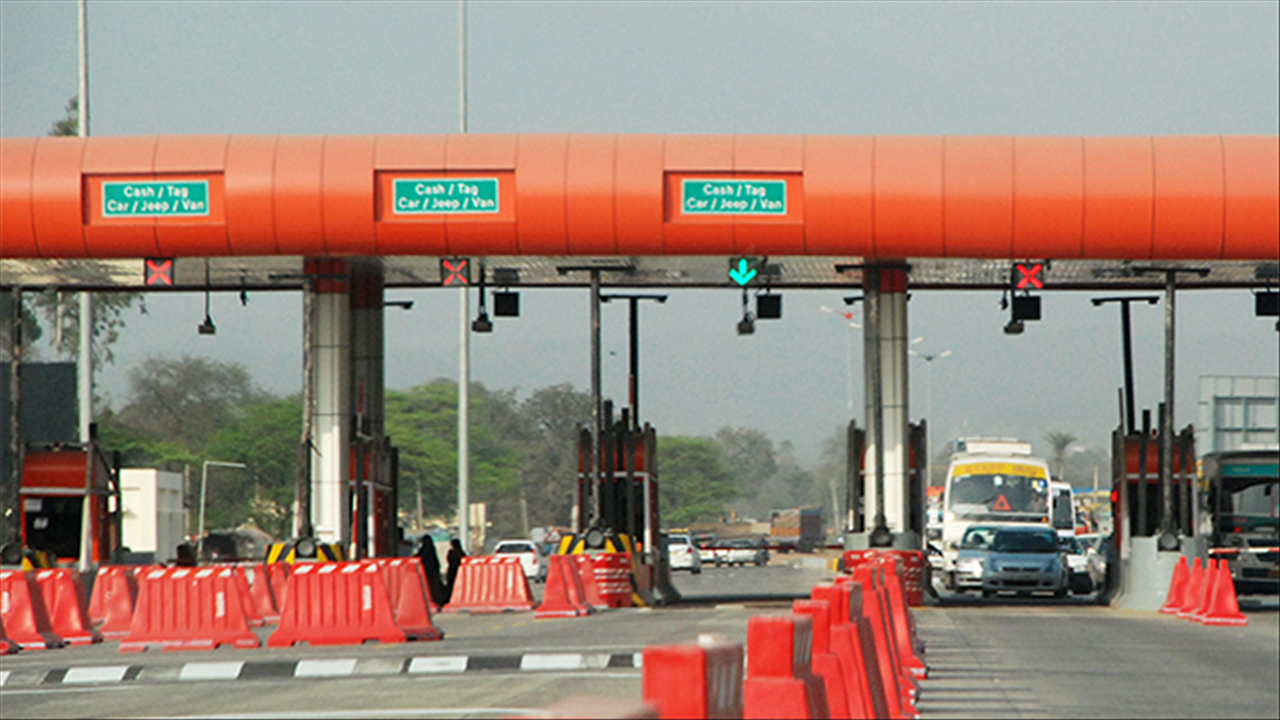
On Wednesday, the Nigerian Government announced its decision to reintroduce toll gates on federal highways in the country. The announcement came from the Minister of Works and Housing after the Federal Executive Council meeting.

This is coming 15 years after the Obasanjo’s administration scrapped the tolls. For some years now, the Works and Housing Minister, Babatunde Fashola, has been preaching the reintroduction of the toll gates as a necessary evil. A preachment he backed by the success of Lekki Toll Gates. Although the Federal Government was adamant to act upon his suggestion, its empty purse has pushed it to succumb just as it has done in many other tax advice from government agencies.

The introduction of online VAT is one of those: It came just at the time when Nigeria is claiming to encourage her cashless policy: A contradicting step that FinTech startups would pay the price because the likelihood of decline in online transactions for avoidance of the VAT will result in low patronage when the policy takes effect in January 2020.

And there is also the increment of VAT to 7.5% from 5%, which part of the justification by the government and many others is that Nigeria’s VAT is the lowest in the world. The adverse effects these decisions will have on startups and local businesses was maybe, not considered, or was, but pushed aside for the greater interest – revenue generation for the government.

The decision to reintroduce the toll gates is also aimed at revenue generation. Apparently, it is evident that the Government is broke and desperate for funds. The oil based economy is struggling, and the only option that the government seems to have is to tax businesses and the people to make up for the downturn. But it’s a poor step, with a high price that will be paid now, and in the future.

Few months ago, Nigeria joined other African nations to sign the African Continental Free Trade Area (AfCFTA) agreement. A bold step the African Continent has taken to promote intra-continental trade. Though Nigeria was reluctant to join the pact for obvious reasons, the decision to join is looking like a big mistake.

One of the reasons the Manufacturers Association of Nigeria (MAN) and industrialists in Nigeria vehemently opposed AfCFTA is because they know that Nigeria cannot compete with many African countries. Infrastructure and policy making win it all, and many African countries are ahead when it comes to that.

In 2017, the Ghanaian Government announced the abolishment of some taxes aimed to stimulate economic growth. The 1% Special Import Levy, Kayayei market tolls, 17.5% VAT/NHIL on selected imported medicines, 17.5% VAT/NHIL on financial services, 17.5% VAT/NHIL on domestic airline tickets, 5% VAT/NHIL on Real estate sales, duty on imported spare parts, excise duty on petroleum.

As a result of this abolishment, the Ghanaian GDP grew to 7.8% in the first half of 2017, against 2.7% in 2016, while inflation reduced to 11.6% by October 2017, from 15.4% in December 2016. Evidently, the tax cuts and abolishment boosted Ghanaian macro-economy that the government initiated further tax cuts in 2018 to encourage micro-economy. That included cutting income tax rates for people earning below 20, 000 Cedis from 35 to 30%. Reviewing of corporate income tax from 25% to 20%, replacing the 17.5% VAT/NHIL with 3% flat rate for traders. There was also tax waiver for entrepreneurs. The economic progress stemming from these fiscal policies attracted applause from the International Monetary Fund (IMF) and economists. And it spurred the country to do more.

In April, in a bid to curtail smuggling, Ghana announced a benchmark review of her import duties, reducing it by 30% and 50% for vehicles. While Ghana is fertilizing her soil for economic growth through tax cuts, Nigeria is increasing taxes to generate revenue for the government at detriment of her economy. Among other anti-economic measures taken by the Nigerian Government is the closure of its land borders in an attempt to curb smuggling, and there’s report that Nigerian Custom Services is invading hotels, impounding vehicles to extract custom duties.

As AfCFTA unfolds into reality, its fortune favors only the countries who made preparations for it. The cost of production in Nigeria is high that it cannot compete with products from many African countries; and that’s due to lack of infrastructure, poor fiscal policies and government imposed levies (like the toll gates) that have left producers with no option than to increase the cost of their products. So in trade related infrastructure and productive capacity, Nigeria is lost based on her current fiscal policies. 

The factor market agreement of AfCFTA enables integration, which means that every African country will have equal right to sell goods and services in member states. And the competition will beckon prosperity only on those whose infrastructure has cut the cost of their production. The cheaper the goods and services, the more patronage. It wouldn’t take Nigeria long to realize how much it has cheated herself through the revenue generating policies and basic infrastructural decay of today.