DD
MM
YYYY

PAGES

DD
MM
YYYY

spot_img

PAGES

Home Blog Page 6666

Towards Made in Nigeria Products

7

The issue of scaling the sales and support of made in Nigeria products is very hard and authorities are getting exhausted with various approaches used to gain the trust of the Nigerian populace. As the GDP generated from locally made and sold products drops rapidly, there must be a way the vast stream of Nigerian SMEs who are producing locally made goods should benefit for their hard-work. But then, there is the problem that looms, it has shattered the hope of the common and average sized production companies locally. Whats the hope for made in Nigeria products?

According to Trading Economics, Imports to Nigeria surged 45.8 percent from a year earlier to NGN 1042 billion in June 2019, boosted by purchases of manufactured goods (100.5 percent); raw materials (38.5 percent); agricultural goods (1.6 percent) and solid minerals (86.9 percent). Among major import partners, purchases rose mostly from China (78.7%), India (70.2%), Japan (92.2%) and the US (181.6 percent); but fell from the Netherlands (-23.1%) and Spain (-34.6%). Imports in Nigeria averaged 234304.14 NGN Millions from 1981 until 2019, reaching an all time high of 2209385.78 NGN Millions in August of 2018 and a record low of 167.88 NGN Millions in May of 1984.

In a bid to boost local sales and production, President Muhammadu Buhari directed the Central Bank of Nigeria to block food importers’ requests for foreign currency in a bid to boost local agriculture in Nigeria.

It is a continuation of a policy that the president began after coming to office in 2015, when he banned the use of foreign exchange to import dozens of items including the staple food, rice. Since then, domestic production has increased, but the policy has been criticised for not taking the low capacity of local farmers into consideration. The policy has also coincided with a rise in food & product prices, which has been blamed on insecurity in some of the country’s main food producing areas.

To enable you understand this issue, lets consider the following pointers:

What is Made in Nigeria Product?

A made in Nigeria product is a product (goods or even services) that is produced locally in Nigeria. This means that the product (goods or services) was not imported. The materials used for the production of such goods and services were obtained locally.

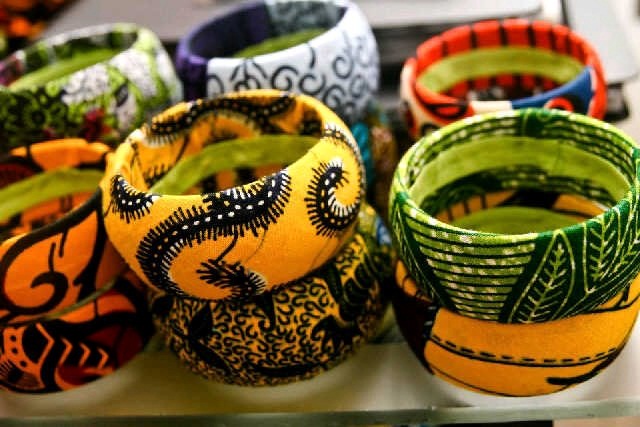
A footwear, Courtesy of Nairaland Forum

What are the Challenges of Made in Nigeria Products?

For the average to the large sized Nigerian production businessess, there worries are numerous. They include:

Corruption

One of President Buhari’s top priorities is to root out corruption. A recent poll conducted by NOIPolls and LEAP Africa revealed that 85% of adult Nigerians believe that the prevalence of corruption in the country is responsible for the bottlenecks that characterize the difficulty of doing business in Nigeria. Reasons given for the prevalence of corruption in Nigeria included weak government institutions (24%) and poverty (18%). Well-connected business people gain from anti-competitive practices that shield Nigeria from market forces. The Government of Nigeria has sought to address corruption through the Economic and Financial Crimes Commission (EFCC), the Independent Corrupt Practices and Other Related Offences Commission (ICPC), and the Extractive Industries Transparency Initiative.

Power Supply

A lack of a consistent access to reliable power costs businesses and the economy as a whole. Even with access to energy, unreliable power makes operating a business even more challenging than usual. Nigerian business and manufacturing enterprises experience power outages. As a result, firms lose sales revenues in the informal sector. Where back-up generators are limited, losses can be as higher. These losses have severe consequences for the health and growth of the wider economy, not to mention the dramatic impact in achieving other development objectives outlined by the sustainable development goals (SDGs).

Owners of small businesses in Nigeria seem to have adapted to the poor power and epileptic power supply in the country as they have resorted to alternative forms of getting electricity to power their businesses. Those that suffer most now are the SMEs and the micro operators that rely on generators, more so now that the fuel is not even available, their problems have been compounded. With a remarkable increase in operational cost and poor purchasing power of consumers, the manufacturing companies have had to lay off thousands in the last six months, with about three million still to go.

Selling Platforms

The average size and even large size Nigerian business relies on the facial selling pattern where the goods are bought at a cash rate during market sessions. The whole world are leveraging on different marketing schemes to help boost their business presence. Unfortunately, many SMEs who are into production of made in Nigerian goods are yet to catch the cruise.

The selling platforms such as Jumia, Konga, and even Amazon does not fully feature Made in Nigeria products as their strong points. Why? Policies, intents and objectives differ with respect to individual e-commerce companies. The platforms do not recognize the average Nigerian business on the streets. The average Nigerian production companies are in awe, as they see fellow citizens purchase foreign products that they can produce with more superiority and style.

Finally a Hope for Made in Nigerian Products!

The e-commerce scene is pretty much dominated, but there is a new kid on the block that promises to bridge the gap between foreign and made in Nigeria market. Launching on October 1st, Keanyi is the first indigenous e-commerce marketplace to sell strictly only made-in-Nigeria products! With a large database of vendors they seek to garner, it will definitely become a force to be reckoned with.

Currently, there are some vendors on the new platform. In time, the sore story of the poor selling process faced by Nigerian indigenous companies will become a history. Until then, we can only be optimistic as to what the future hold for Keanyi?—?Our Own!

Conclusion

The need to patronize made-in-Nigeria goods cannot be overemphasized as it is one major way to economic growth and development. The economy of any nation grows rapidly when locally made goods are promoted through patronage, first by its people then through export.

It is, however, dispiriting to know that we obviously have been growing other countries’ economies through our over-dependence on imported goods, especially those which have local substitutes. Nigeria can easily experience a breakthrough in the quest for local content development and a stable, strong and advanced economy if Nigerians would patronize made-in-Nigeria products.


Featured image  (source Nigerian News Direct)
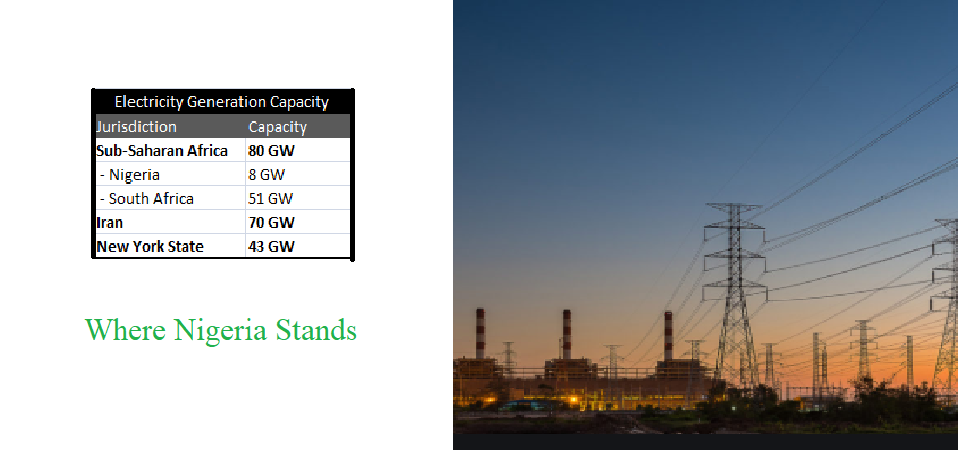
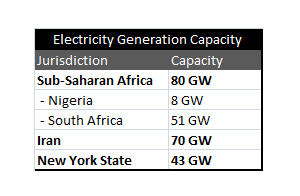
The Paralysis in Nigeria’s Electricity Sector

2

These days, I just pity the Nigerian Electricity Regulatory Commission (NERC). Listening to the big boss as he makes a case on the future of Nigeria’s electricity sector, you will hear a man who is at a crossroads on policy.

The Nigerian Electricity Regulatory Commission (NERC), says no tariff increase has been approved by the commission yet. In a statement, Usman Arabi, NERC’s General Manager, Public Affairs, on Friday said it was still consulting with stakeholders. He said that the commission wished to notify the public that no tariff increase had been approved by the commission contrary to the impression in some quarters.

“However, the commission in the discharge of its statutory responsibilities enshrined under the Electric Power Sector Reform (EPSR) Act, shall continue to undertake periodic reviews of electricity tariffs in accordance with prevailing tariff methodology.

“In all instances of such reviews and rule-making, the commission shall widely consult stakeholders and final decision shall be taken with due regard of all contributions,” he said.

Yes, NERC is at war with everyone. It had promised a decent market-based reflective tariff, and investors showed up for the privatization program. (Sure, the process was not evidently optimal but that is now a past tense.)

The lack of cost-reflective tariffs is discouraging investments in the ailing Nigerian electricity sector, a firm involved in power generation in the country has said.

Azura Power, which in 2018 delivered Nigeria’s first privately-financed power plant in Edo State, has acquired a new power plant in Senegal, investing funds an official of the company says would have been deployed in Nigeria.

The Managing Director of the company, Edu Okeke, confirmed the development to PREMIUM TIMES on Thursday after closing the deal for the Tobene power plant in Senegal. Located in Taiba Ndiaye, 90 kilometres northeast of Dakar, the capital of Senegal, the 115 MW plant started operations in 2016.

Then after the process, the court ruled “Not Here” – this tariff is illegal in this land and cannot stand. Simply, get back to the “old tariff”. Unfortunately, with the current tariff, many investors do not see a long-term value creation opportunity in Nigeria. Of course the government is managing the paralysis – but the slumber will be long!

I heard that Siemens is coming; we welcome Siemens. But electricity challenge in Nigeria has never been about generation. The problem remains distribution and that means the ability to collect money from people that still believe that electricity should be free because it is one of the rights enshrined the Nigerian Constitution. Of course, nothing like that.

The Federal Government of Nigeria has signed a partnership deal with the German Government and Siemens AG. The presidency announced the partnership this afternoon as a step in addressing the epileptic situation of power supply in Nigeria. The deal, which is designed to take effect in 2 phases, has a target of 7, 000 megawatts of power generation by 2021, (the 1st phase) and subsequently, 11, 000 megawatts by 2023, (the 2nd phase). President Muhammadu Buhari stated that the initiative has become necessary in the face of helplessness of Nigerians with current power supply infrastructure

Do not think too far – the tariff for potable water in a state in South South geopolitical region in Nigeria was last reviewed in 1987. Yet, the state is looking for investors to provide potable water in the state! I saw the document and wrote to the project manager, and asked him if he could get the state to update the water rates. The response was typical – “The government cannot increase rate because it will be politically sensitive”. Of course, nothing happened, and no investor thought there was anything there. 

Our leaders must find a way to engage Nigerians honestly on open conversations to move the nation forward. From electricity to potable water to healthcare services, unless there is decent revenue factor in the equation, it will be hard to move from the miry clay on the provision of basic services. 

And the legal institutions need help and only the National Assembly can help them by updating the laws  to avoid confusions in markets. Yes, the updates will help to engineer reflective costs that will make services become available as investors are attracted by the opportunities therein to participate. This does not mean that Nigerians should be priced out. Yet, Nigeria cannot also afford to price investors out. A win-win is needed on these services on cost.

The Death Trap Called Enugu-Onitsha Expressway

1

I don’t know if the Federal Government is aware of the state of the Enugu-Onitsha Expressway. I believe that even senators and house members from this side of the country aren’t aware of it too. I mean, there is no way someone with authority can pass through that road and not do something about it. Believe me when I say that Enugu-Onitsha Expressway is a death trap. It is indeed a disaster.

The part of the road that is so bad right now is ‘Ugwu Onyeama’ to 9th Mile axis. This place is just an embarrassment to the nation. The last time I passed there I was asking if it was still an expressway or a cleared farm awaiting cultivation. To avoid this part of the road, motorists now pass through Milliken Hill into Ngwo and then burst out at 9th Mile. But heavy duty trucks and other long vehicles are barred from Milliken Hill, so they have to enjoy the Ugwu Onyeama axis.

Another section that is also very bad is the one that ran through Ugwuoba town. It looks like Ugwuoba has been mapped out to trap motorists every year, especially during the rainy seasons. When this area becomes so unbearable, a construction company will be hired to do a little patch work on it. By the next rainy season, everything would have been washed away, and the old story continues.

The only place that is good enough to be called an expressway is from Agu Awka to Amawbia Bypass, and then from Mkpu Odumodu, Umunya to Onitsha. Beside these ones, every other part of the road is a complete mess.

When I came down East in 2016, I saw RCC (Reynolds Construction Company) working on the road. I was like “Thank God o, at least RCC will do a good job there”. Months later, Niger CAT started on another section of the road. Well, people were sceptical about them because their works didn’t look so ‘solid’.

So, that was in 2016, about three years now, and our roads are still bad. I don’t know what’s going on but I noticed that these construction companies weren’t steady with their works. They may work this month and disappear for another two or three months, or even more. People kept speculating on the possible causes of this irregularity. Some said FG is owing them, others said the cost of materials has been affected by inflations so these companies couldn’t work with the old cost. Anyway, those were speculations.

Now, some parts of the road have been constructed – between Oji River and 9th Mile – but it is only in one direction, which has just two lanes. But for reasons best known to RCC, the section of the road they constructed is blocked so that motorists can’t use it, and it’s not as if they are working on it right now. In essence, the bad side of the road is still being used.

My concern about this road is that it carries heavy traffic. Vehicles of different sizes ply it. The road is ever busy. This is why I still wonder why it is in such a deplorable state.

I know a lot of people benefit from this bad road. Among such people are the hawkers. They take advantage of the bad state of the road to sell their wares. It’s as if they knew that travellers have stayed long on the road and will need some refreshments. But then, I don’t think these hawkers will want to be on that road in the night because of the high rate of accidents and thefts that happen there.

Honestly, I don’t know if the FG is waiting for a national disaster to happen before they do something. My question is why is that road still in that state? Since it has been awarded for construction, why is it still the way it is? What is the Federal Ministry of Works doing about that road? Has the road been written off? I mean, what is going on?

When people start talking about being marginalised they have a reason for that. But in this case, I believe it is not a case of marginalisation. I am seeing corruption written all over it, and nobody is saying anything about it.

Well, I hope the people concerned actually know what they have been causing innocent Nigerians because of the bad state of the road. The first problem motorist encounter, like I stated earlier, is accidents. There is no day you will pass that road without seeing one form of accident or another. Lives have been lost, vehicles have been damaged, bones have been broken and people have been sent to hospitals.

The people I pity most are the heavy duty trucks and tankers with merchandise that fall regularly. I know a lot of people have lost their business capitals on that road. I’m saying this because the rate at which heavy trucks fall and smash all that they carry is disheartening. There are some you’ll see and you know that the owner could recover some and sell, but some are totally damaged. I can’t just imagine what it feels like carrying your wares from a far distance only to lose them when you are closer home. Trust me, it is very painful.

The way motorists drive on this road so that they can meet up with time is quite appalling. The truth is that the journey that is supposed to last for an hour thirty minutes takes about three to four hours to complete. Because some drivers want to get to their destinations on time, they drive recklessly through the potholes and gullies. The problem with this type of driving is that it either causes accident or damages the car.

The body pains travellers experience after plying this road is worth mentioning. There is no day I pass that road that I don’t end up with headache and aching muscles. Some people even throw up inside the car. Honestly, you wouldn’t want to ply this road unless you have something important you are going for.

To be honest, I believe there is a reason why federal and the concerned state governments ignore this death trap called road. It is quite unfair that people have to pass through a lot just to go for their normal businesses. Federal Ministry of Works need to explain to Nigerians why a road, whose contract for reconstruction has been awarded for many years now is still the way it is. Truly, Nigerians need to make their public and civil servants accountable. They should stop taking us for granted.

Nigerian Refineries to Function at Full Capacity by 2022 – NNPC

1
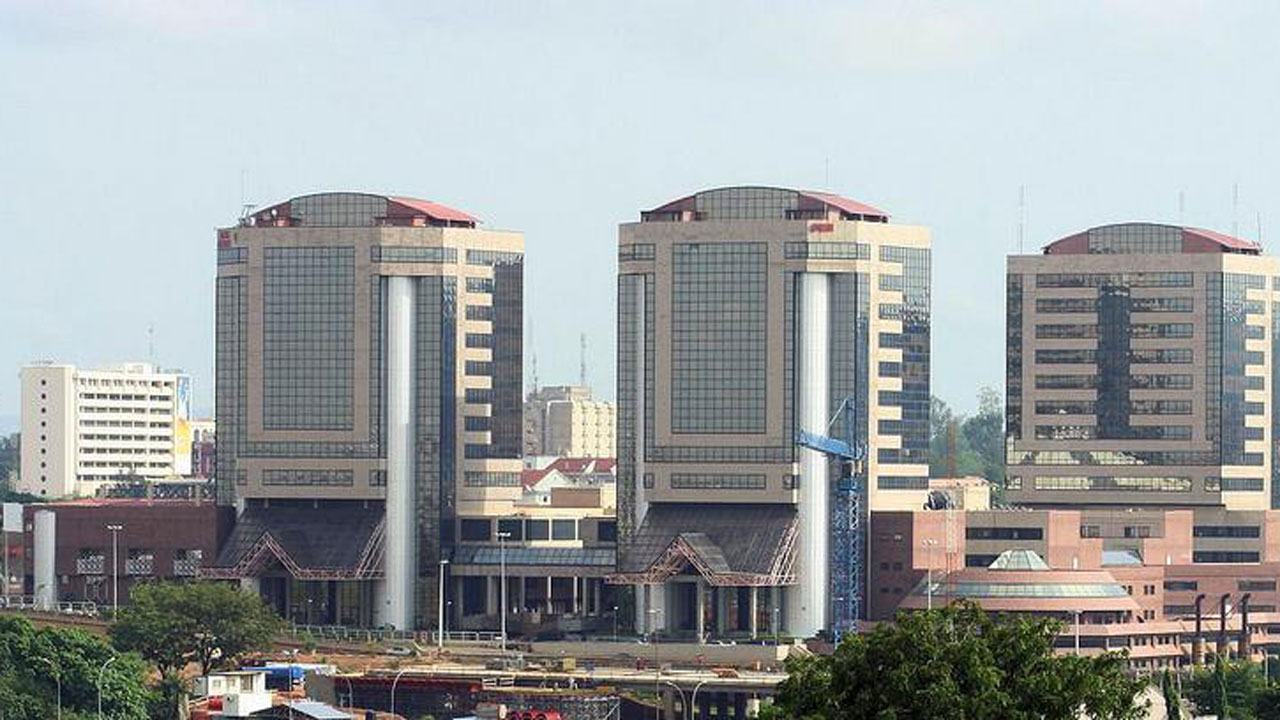
NNPC HQs in Abuja (credit: Guardian)

The long awaited rehabilitation of Nigerian refineries is set to commence at last. With work at the Port Harcourt refinery kicked off in March, the GMD of Nigerian National Petroleum Commission (NNPC), Mallam Mele Kolo Kyari, said on Saturday that rehabilitation work will commence on the Warri and Kaduna refineries in January, and will be delivered at full refining capacity by 2022. He said this while touring the Port Harcourt refinery, and inspecting the progress of work going on there on Saturday.

According to the press release by the NNPC’s Publicist, Mr. Ndu Ughamadu, the visit of Mallam Kyari is an evidence of the national oil corporation’s determination to revive oil refining business in Nigeria by getting the refineries functioning again.

Mallam Kyari assured Nigerians that it’s not business as usual this time, that no stone will be left unturned until the refineries roar to life. And that will happen with every sense of urgency.

“We will stick to time; we will deliver this project by 2022. We will commence actual rehabilitation work in January. We will do everything possible between October and December to close out all necessary contracts for us to deliver on that project. I believe with the support we have from the shareholders – government of this country, the entire staff of this company and the contractors, I believe it is doable and we will deliver the project.” He said.

He also tasked the stakeholders of the project, Tecmmont, Eni/NAOC to be fastidious, reminding them that their reputation is on the line. The mandate is to deliver functioning refineries to over 200 million Nigerians by 2022.

“It’s no longer about business now, but a reputational issue. For the refinery, Tecmmont, Eni/NAOC and NNPC, let us be conscious of the fact that our reputation is at stake as far as this project is concerned. The NNPC leadership has promised this country that our refineries will work, therefore, we must work not to disappoint over 200 million Nigerian stakeholders.” He emphasized.

Reacting to his statement on urgency, the Tecmmont project Manager, Mr. La Mattina Carmelo, said that the inspection aspect of the work is at 91% while the final report and EPC proposal stood at 75%. He therefore, promised to deliver the first phase of the project in 3 weeks from now.

The representative of Eni/NAOC, Daniele Tamburini, also affirmed that the companies are following international best standards in executing the rehabilitation.

However, the news has been received by Nigerians with skepticism. Many are saying that it is another window dressing by the NNPC, designed just to loot public fund. The quest to rehabilitate the refineries have been a bone of contention that has endured through successive administrations, and each time, the project has failed to produce functional refineries.

How To keep Your Business Ideas from Being Stolen

0
business idea, startup idea

Karl Marx, during his lifetime, sought to unearth the profound contradictions that he suspected to be what accelerated the capitalist system, but would also lead to its demise. In a capitalist market, governed by the forces of demand and supply, sellers are constantly searching for new technologies and business systems to increase productivity, while reducing the cost of production. As globalization and competition get heightened, entrepreneurs have been forced to introduce more efficient technologies, accelerating productivity to the zenith, where the marginal cost of production approaches zero. 

Over the past decades, millions of consumers, have become prosumers, producing, distributing and sharing music, video, information, news, knowledge at near-zero marginal cost and nearly free. Internet technology is driving this momentum, liberalizing information and democratizing knowledge, making it accessible to everyone. Think of our lives today, we live in a network of information convergence. We share information in real time and at the end, we all possess almost the same information.

With the role social media plays in today’s interactivity, someone stealing your idea is approximately the most insignificant challenge you should worry yourself about, as you seek to build a viable business. According to Eric Ries, author of The Lean Startup “Only 5 percent of entrepreneurship is the big idea, the business model, the whiteboard strategizing, and the splitting up of the spoils. The other 95 percent is the gritty work that is measured by innovation accounting: product prioritization decisions, deciding which customers to target or listen to, and having the courage to subject a grand vision to constant testing and feedback”

When you have a great business idea, it becomes difficult to share it with others without worrying about someone implementing it for himself. For a business idea, where you need more resources beyond your capacity, to fully implement it, then you must be able to safeguard your ideas, without being disquieted about losing them.

Steve Blank, a Silicon Valley entrepreneur-turned-professor, recounted a horrible experience, when his idea was stolen. Blank, had made a presentation of a marketing automation system to a Vice President of Marketing at a company in Silicon Valley. After 9 months of ignored phone calls from the initially enthusiastic VP, a partner pointed out that Blank’s PowerPoint slides has been stolen by the same person. The VP had become CEO of a competing company and was presenting the idea as his own. 

While the awful stories are genuine cause of concern, the crippling fear of sharing your ideas can be far more dangerous. Fear itself is a much bigger danger than the possibility of theft. Don’t treat everyone you meet as a potential idea thief.  You just have to be cautious about who you share your ideas with. Some traditional suggestions, you must have heard of, to safeguard your ideas include:

  • Creating a confidentiality/ Non-disclosure agreement for people who work on a sensitive part of the project
  • Applying for a patent, copyright or trademark, as the case may be.

While these sound good, they can also pose significant threats to your ideas. Signing a Non-disclosure agreement form with someone, before sharing your ideas with them, can create an intermediate barrier to the flow and sharing of knowledge between the two parties. It can result in loss of interest, trust and enthusiasm, from your team players.

On a strategic level, all legal protection in the world isn’t going to be useful, if your idea is easy to reverse engineer. The truth is that, almost anything can be reverse engineered, so the focus is not on ideas that can’t be copied, but the ideas that are difficult to copy. Legal documents have their strengths and weaknesses. They do not offer a complete solution to idea theft, and they won’t help unoriginal ideas to become successful.  First mover advantage, only exists, if it takes time for your competitors to catch up.

Good Execution cannot be copied

An idea remains an idea. Even when you have successfully prevented your ideas from being stolen, immediately you launch your products, and you begin to gain few tractions, in no time, competitors will show up, attempting to offer a better value proposition. And if you do not have sufficient resources to withstand the heat coming from competitors, you’ll chicken out in a few months.

In today’s age, being the first may not be an advantage. You must be able to build a product/ service offering that your customers will cherish. Redirecting your energy from drafting NDAs, filing patents, to building, testing and iterating your products, can be far more profitable. If you execute well, your business will not only grow, it will also be hard to copy your success. Loyalty is very difficult to copy. “Loyalty is when your employees or customers are ready to suffer some inconveniences to continue working with you or doing business with you. You have been able to make them believe in a higher cause and have simply inspired loyalty in your customers and employees.”

Branding, and positioning takes time, but once it’s built, it becomes difficult to copy. For instance, while still building and iterating your product, you can also spend some time publishing blog posts, and creating initial demand for the product you are building. When you get people excited about your product, competitors find it difficult to snatch them. Not just your customers, get your employees excited. Offer them a profit-share or some kinds of benefits that will make them resist poaching from competitors.

Employ Network Effects

The quick growth of internet evolution has been driven partly by the powerful influence of network effect. The benefit of a network effect is that the value of a network grows with each new participant. It creates disproportionate benefits for leaders who consolidate what become a winner-take-all market. Metcalfe’s Law states that the value of a network is proportional to the square of the number of connected users on the system (n^2). Although some have argued that Metcalfe’s law should be re-defined, to show that the value of network follows a n x log (n) curve, where n is the number of users. In both cases, one thing is certain, there is a quick deviation from a linear regression model.

For instance, as the density of drivers and riders increases, Uber’s market gains value. And as the value increases, the users benefit more from the platform. Similarly, when a lot of people started connecting on Facebook, it became the most popular way to connect with your entire network, increasing its user base, utility and value

Before the internet age, the power of network effects was limited. Most businesses that exhibit network effects did not have a downward sloping variable cost. Take a restaurant for example, once the restaurant is built, the variable costs of adding extra tables are low. But when the restaurant gets to its maximum capacity, to add a new table requires building a restaurant in a new location. The challenge now is that the new location, might not benefit from the excess demand of the first, as a result of changes in the geographies and demographics.

The internet has altered the basic economics of business, by drastically reducing variable cost. And low variable costs mean that the profit potential of viral growth through network externalities is exponential. Building network effects into your products will increase traction and retention, making it harder for your product to be copied. Once you can attract enough early adopters to raise the value of your product, beyond the critical mass point, (a point where the product value becomes greater than its cost), then you can start leveraging network effects.

All together

The internet age has significantly reduced barriers to knowledge. The idea you are guarding jealously could be what someone else has been developing for several months and about to launch. When you start executing your idea, you will discover that you need far more than the initial brilliant idea to scale through. Break down your ideas into components. Share those worth sharing, and keep the rest to yourself. Run background checks on people, before sharing your ideas with them. Most importantly, take a bold step to execute your idea. If your idea is not stolen, your product (if it gains traction), will be copied, or at best reverse-engineered. Nonetheless, a good execution is difficult to copy and the network effects, you create, is hard to duplicate.