DD
MM
YYYY

PAGES

DD
MM
YYYY

spot_img

PAGES

Home Blog Page 6666

The Death Trap Called Enugu-Onitsha Expressway

1

I don’t know if the Federal Government is aware of the state of the Enugu-Onitsha Expressway. I believe that even senators and house members from this side of the country aren’t aware of it too. I mean, there is no way someone with authority can pass through that road and not do something about it. Believe me when I say that Enugu-Onitsha Expressway is a death trap. It is indeed a disaster.

The part of the road that is so bad right now is ‘Ugwu Onyeama’ to 9th Mile axis. This place is just an embarrassment to the nation. The last time I passed there I was asking if it was still an expressway or a cleared farm awaiting cultivation. To avoid this part of the road, motorists now pass through Milliken Hill into Ngwo and then burst out at 9th Mile. But heavy duty trucks and other long vehicles are barred from Milliken Hill, so they have to enjoy the Ugwu Onyeama axis.

Another section that is also very bad is the one that ran through Ugwuoba town. It looks like Ugwuoba has been mapped out to trap motorists every year, especially during the rainy seasons. When this area becomes so unbearable, a construction company will be hired to do a little patch work on it. By the next rainy season, everything would have been washed away, and the old story continues.

The only place that is good enough to be called an expressway is from Agu Awka to Amawbia Bypass, and then from Mkpu Odumodu, Umunya to Onitsha. Beside these ones, every other part of the road is a complete mess.

When I came down East in 2016, I saw RCC (Reynolds Construction Company) working on the road. I was like “Thank God o, at least RCC will do a good job there”. Months later, Niger CAT started on another section of the road. Well, people were sceptical about them because their works didn’t look so ‘solid’.

So, that was in 2016, about three years now, and our roads are still bad. I don’t know what’s going on but I noticed that these construction companies weren’t steady with their works. They may work this month and disappear for another two or three months, or even more. People kept speculating on the possible causes of this irregularity. Some said FG is owing them, others said the cost of materials has been affected by inflations so these companies couldn’t work with the old cost. Anyway, those were speculations.

Now, some parts of the road have been constructed – between Oji River and 9th Mile – but it is only in one direction, which has just two lanes. But for reasons best known to RCC, the section of the road they constructed is blocked so that motorists can’t use it, and it’s not as if they are working on it right now. In essence, the bad side of the road is still being used.

My concern about this road is that it carries heavy traffic. Vehicles of different sizes ply it. The road is ever busy. This is why I still wonder why it is in such a deplorable state.

I know a lot of people benefit from this bad road. Among such people are the hawkers. They take advantage of the bad state of the road to sell their wares. It’s as if they knew that travellers have stayed long on the road and will need some refreshments. But then, I don’t think these hawkers will want to be on that road in the night because of the high rate of accidents and thefts that happen there.

Honestly, I don’t know if the FG is waiting for a national disaster to happen before they do something. My question is why is that road still in that state? Since it has been awarded for construction, why is it still the way it is? What is the Federal Ministry of Works doing about that road? Has the road been written off? I mean, what is going on?

When people start talking about being marginalised they have a reason for that. But in this case, I believe it is not a case of marginalisation. I am seeing corruption written all over it, and nobody is saying anything about it.

Well, I hope the people concerned actually know what they have been causing innocent Nigerians because of the bad state of the road. The first problem motorist encounter, like I stated earlier, is accidents. There is no day you will pass that road without seeing one form of accident or another. Lives have been lost, vehicles have been damaged, bones have been broken and people have been sent to hospitals.

The people I pity most are the heavy duty trucks and tankers with merchandise that fall regularly. I know a lot of people have lost their business capitals on that road. I’m saying this because the rate at which heavy trucks fall and smash all that they carry is disheartening. There are some you’ll see and you know that the owner could recover some and sell, but some are totally damaged. I can’t just imagine what it feels like carrying your wares from a far distance only to lose them when you are closer home. Trust me, it is very painful.

The way motorists drive on this road so that they can meet up with time is quite appalling. The truth is that the journey that is supposed to last for an hour thirty minutes takes about three to four hours to complete. Because some drivers want to get to their destinations on time, they drive recklessly through the potholes and gullies. The problem with this type of driving is that it either causes accident or damages the car.

The body pains travellers experience after plying this road is worth mentioning. There is no day I pass that road that I don’t end up with headache and aching muscles. Some people even throw up inside the car. Honestly, you wouldn’t want to ply this road unless you have something important you are going for.

To be honest, I believe there is a reason why federal and the concerned state governments ignore this death trap called road. It is quite unfair that people have to pass through a lot just to go for their normal businesses. Federal Ministry of Works need to explain to Nigerians why a road, whose contract for reconstruction has been awarded for many years now is still the way it is. Truly, Nigerians need to make their public and civil servants accountable. They should stop taking us for granted.
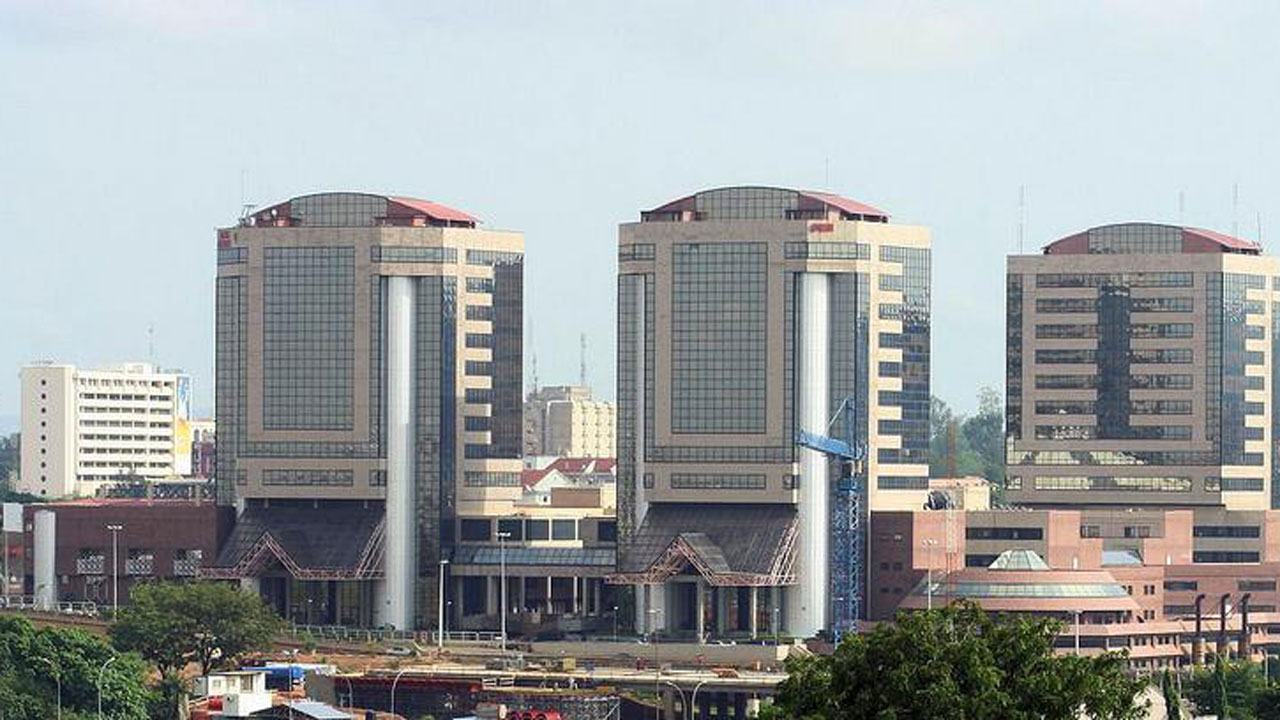

Nigerian Refineries to Function at Full Capacity by 2022 – NNPC

1
NNPC HQs in Abuja (credit: Guardian)

The long awaited rehabilitation of Nigerian refineries is set to commence at last. With work at the Port Harcourt refinery kicked off in March, the GMD of Nigerian National Petroleum Commission (NNPC), Mallam Mele Kolo Kyari, said on Saturday that rehabilitation work will commence on the Warri and Kaduna refineries in January, and will be delivered at full refining capacity by 2022. He said this while touring the Port Harcourt refinery, and inspecting the progress of work going on there on Saturday.

According to the press release by the NNPC’s Publicist, Mr. Ndu Ughamadu, the visit of Mallam Kyari is an evidence of the national oil corporation’s determination to revive oil refining business in Nigeria by getting the refineries functioning again.

Mallam Kyari assured Nigerians that it’s not business as usual this time, that no stone will be left unturned until the refineries roar to life. And that will happen with every sense of urgency.

“We will stick to time; we will deliver this project by 2022. We will commence actual rehabilitation work in January. We will do everything possible between October and December to close out all necessary contracts for us to deliver on that project. I believe with the support we have from the shareholders – government of this country, the entire staff of this company and the contractors, I believe it is doable and we will deliver the project.” He said.

He also tasked the stakeholders of the project, Tecmmont, Eni/NAOC to be fastidious, reminding them that their reputation is on the line. The mandate is to deliver functioning refineries to over 200 million Nigerians by 2022.

“It’s no longer about business now, but a reputational issue. For the refinery, Tecmmont, Eni/NAOC and NNPC, let us be conscious of the fact that our reputation is at stake as far as this project is concerned. The NNPC leadership has promised this country that our refineries will work, therefore, we must work not to disappoint over 200 million Nigerian stakeholders.” He emphasized.

Reacting to his statement on urgency, the Tecmmont project Manager, Mr. La Mattina Carmelo, said that the inspection aspect of the work is at 91% while the final report and EPC proposal stood at 75%. He therefore, promised to deliver the first phase of the project in 3 weeks from now.

The representative of Eni/NAOC, Daniele Tamburini, also affirmed that the companies are following international best standards in executing the rehabilitation.

However, the news has been received by Nigerians with skepticism. Many are saying that it is another window dressing by the NNPC, designed just to loot public fund. The quest to rehabilitate the refineries have been a bone of contention that has endured through successive administrations, and each time, the project has failed to produce functional refineries.

How To keep Your Business Ideas from Being Stolen

0
business idea, startup idea

Karl Marx, during his lifetime, sought to unearth the profound contradictions that he suspected to be what accelerated the capitalist system, but would also lead to its demise. In a capitalist market, governed by the forces of demand and supply, sellers are constantly searching for new technologies and business systems to increase productivity, while reducing the cost of production. As globalization and competition get heightened, entrepreneurs have been forced to introduce more efficient technologies, accelerating productivity to the zenith, where the marginal cost of production approaches zero. 

Over the past decades, millions of consumers, have become prosumers, producing, distributing and sharing music, video, information, news, knowledge at near-zero marginal cost and nearly free. Internet technology is driving this momentum, liberalizing information and democratizing knowledge, making it accessible to everyone. Think of our lives today, we live in a network of information convergence. We share information in real time and at the end, we all possess almost the same information.

With the role social media plays in today’s interactivity, someone stealing your idea is approximately the most insignificant challenge you should worry yourself about, as you seek to build a viable business. According to Eric Ries, author of The Lean Startup “Only 5 percent of entrepreneurship is the big idea, the business model, the whiteboard strategizing, and the splitting up of the spoils. The other 95 percent is the gritty work that is measured by innovation accounting: product prioritization decisions, deciding which customers to target or listen to, and having the courage to subject a grand vision to constant testing and feedback”

When you have a great business idea, it becomes difficult to share it with others without worrying about someone implementing it for himself. For a business idea, where you need more resources beyond your capacity, to fully implement it, then you must be able to safeguard your ideas, without being disquieted about losing them.

Steve Blank, a Silicon Valley entrepreneur-turned-professor, recounted a horrible experience, when his idea was stolen. Blank, had made a presentation of a marketing automation system to a Vice President of Marketing at a company in Silicon Valley. After 9 months of ignored phone calls from the initially enthusiastic VP, a partner pointed out that Blank’s PowerPoint slides has been stolen by the same person. The VP had become CEO of a competing company and was presenting the idea as his own. 

While the awful stories are genuine cause of concern, the crippling fear of sharing your ideas can be far more dangerous. Fear itself is a much bigger danger than the possibility of theft. Don’t treat everyone you meet as a potential idea thief.  You just have to be cautious about who you share your ideas with. Some traditional suggestions, you must have heard of, to safeguard your ideas include:

  • Creating a confidentiality/ Non-disclosure agreement for people who work on a sensitive part of the project
  • Applying for a patent, copyright or trademark, as the case may be.

While these sound good, they can also pose significant threats to your ideas. Signing a Non-disclosure agreement form with someone, before sharing your ideas with them, can create an intermediate barrier to the flow and sharing of knowledge between the two parties. It can result in loss of interest, trust and enthusiasm, from your team players.

On a strategic level, all legal protection in the world isn’t going to be useful, if your idea is easy to reverse engineer. The truth is that, almost anything can be reverse engineered, so the focus is not on ideas that can’t be copied, but the ideas that are difficult to copy. Legal documents have their strengths and weaknesses. They do not offer a complete solution to idea theft, and they won’t help unoriginal ideas to become successful.  First mover advantage, only exists, if it takes time for your competitors to catch up.

Good Execution cannot be copied

An idea remains an idea. Even when you have successfully prevented your ideas from being stolen, immediately you launch your products, and you begin to gain few tractions, in no time, competitors will show up, attempting to offer a better value proposition. And if you do not have sufficient resources to withstand the heat coming from competitors, you’ll chicken out in a few months.

In today’s age, being the first may not be an advantage. You must be able to build a product/ service offering that your customers will cherish. Redirecting your energy from drafting NDAs, filing patents, to building, testing and iterating your products, can be far more profitable. If you execute well, your business will not only grow, it will also be hard to copy your success. Loyalty is very difficult to copy. “Loyalty is when your employees or customers are ready to suffer some inconveniences to continue working with you or doing business with you. You have been able to make them believe in a higher cause and have simply inspired loyalty in your customers and employees.”

Branding, and positioning takes time, but once it’s built, it becomes difficult to copy. For instance, while still building and iterating your product, you can also spend some time publishing blog posts, and creating initial demand for the product you are building. When you get people excited about your product, competitors find it difficult to snatch them. Not just your customers, get your employees excited. Offer them a profit-share or some kinds of benefits that will make them resist poaching from competitors.

Employ Network Effects

The quick growth of internet evolution has been driven partly by the powerful influence of network effect. The benefit of a network effect is that the value of a network grows with each new participant. It creates disproportionate benefits for leaders who consolidate what become a winner-take-all market. Metcalfe’s Law states that the value of a network is proportional to the square of the number of connected users on the system (n^2). Although some have argued that Metcalfe’s law should be re-defined, to show that the value of network follows a n x log (n) curve, where n is the number of users. In both cases, one thing is certain, there is a quick deviation from a linear regression model.

For instance, as the density of drivers and riders increases, Uber’s market gains value. And as the value increases, the users benefit more from the platform. Similarly, when a lot of people started connecting on Facebook, it became the most popular way to connect with your entire network, increasing its user base, utility and value

Before the internet age, the power of network effects was limited. Most businesses that exhibit network effects did not have a downward sloping variable cost. Take a restaurant for example, once the restaurant is built, the variable costs of adding extra tables are low. But when the restaurant gets to its maximum capacity, to add a new table requires building a restaurant in a new location. The challenge now is that the new location, might not benefit from the excess demand of the first, as a result of changes in the geographies and demographics.

The internet has altered the basic economics of business, by drastically reducing variable cost. And low variable costs mean that the profit potential of viral growth through network externalities is exponential. Building network effects into your products will increase traction and retention, making it harder for your product to be copied. Once you can attract enough early adopters to raise the value of your product, beyond the critical mass point, (a point where the product value becomes greater than its cost), then you can start leveraging network effects.

All together

The internet age has significantly reduced barriers to knowledge. The idea you are guarding jealously could be what someone else has been developing for several months and about to launch. When you start executing your idea, you will discover that you need far more than the initial brilliant idea to scale through. Break down your ideas into components. Share those worth sharing, and keep the rest to yourself. Run background checks on people, before sharing your ideas with them. Most importantly, take a bold step to execute your idea. If your idea is not stolen, your product (if it gains traction), will be copied, or at best reverse-engineered. Nonetheless, a good execution is difficult to copy and the network effects, you create, is hard to duplicate.

Tips on How to Encourage Employees to Add Values to their Employers

0

People complain much about Nigerian civil servants and I don’t blame them for that. The problem with the civil service in Nigeria is that civil servants do not add values to the Nigerian system. In truth, policies are supposed to be made by these workers, but how can they do that when they don’t even know what to do?

This problem doesn’t end with the civil service, private sectors also suffer it. In most private organisations I know employees are expected to stick to a stipulated routine without being allowed to add or remove any of them. We also see companies where workers are paid for the time they spent, and not for the values they add. For instance, when a worker has finished the stipulated routine and still has like three or four hours before closing time, he will be asked to sit down and wait till the official closing hour before leaving. What this sort of employees usually do is sleep or ‘gossip’ with others that are ‘free’ too.

When I talk of values here, I meant the new things or ideas employees bring to their employers that will help in increasing their productivity and profit. I always believe that every employee has something new and unique to offer to the office if he is given the opportunity.

Adding values to the company is not only beneficial to employers, employees and customers also benefit from it. When, an employee has the opportunity to be innovative, he is indirectly training himself for better things to come. The customers will also benefit because the organisation will have something better to offer them.

I will like to point out here that it is not always the fault of the company when employees fail to add value, though companies bear bigger share in the blame. Why I said this is that if an employee really wants to bring in new ideas or make some changes to the way things are run in the organisation, he will put in his best to do so. All he needs to do is meet the management and try to sell his ideas to them. But no, they will rather keep that to themselves and have the ‘what is my business’ attitude towards their jobs and employers.

Anyway, here are some tips on how companies can encourage their employees to add values to their systems.

Tip 1: Communication

We constantly hear how important communication is and how to achieve effective communication in offices, but we hardly put them to practice. Both public and private sectors need to open up communication links in their various offices. These days, establishments create online forums where every staff member is allowed to contribute ideas towards the growth of the companies. But even these forums yield little results because the superior officers still use them to exhibit their authorities. This only ends up bringing more friction into the system.

Establishments also need to create rooms for feedbacks from both customers and employees. Some companies do that but they give more credits to customers’ feedback than their employees’ own.

Tip 2: Room for Growth and Development

Companies should create rooms for growth and development for their staff. It is only when staff are allowed to grow that they can add to the growth of the company. I know an establishment that wouldn’t allow her staff to go for further studies. In this company, any staff that wishes to go for further studies, irrespective of how long he has worked there, will have to resign. Some members of staff that secretly registered for part time and holiday programmes were discovered and dismissed.

Tip 3: Appropriate Staff Designation

Most times, employers post staff to positions where their talents and abilities are not fully utilised. For example, when a graduate of law is posted to accounting section, what is this person going to achieve? What contribution will he make to the company? This is the case of a square peg in a round hole, which exists in many offices.

Tip 4: Use of Incentives

Establishments can bring in incentives to encourage their staff to become innovative. For example, some private owned schools give staff members that bring in students a certain amount of money. This makes these staff work hard to bring in customers and indirectly try to bring in ideas that will make the schools attractive to prospective customers.

Tip 5: Flexibility in Company’s Routine

Companies need to be flexible in their routines. They should understand that change is a constant thing and that sticking to rigid routines and rules could cost the company some values. For example, a private school I know recruited an office driver who had another source of income. So, for this driver to be able to manage these income outlets properly, he starts very early in the morning to pick up students and comes back immediately school dismisses to drop them off. When parents whose children attend other schools saw how diligent this driver is (you know, there is no waiting for a long time before school bus comes to pick up students), they started enrolling their children into the school. And what was more, the driver is paid on part time basis. So, the school saved money and at the same time attracted more customers.

Tip 6: Tasking Staff

I believe it is necessary for employers to task their staff to be innovative. When I was the head teacher of a school, I always tell my colleagues that they have to bring in something new to the school. As long as the new ideas they bring aren’t selfish and too expensive to implement, I adopt them immediately. The effect of this strategy is that staff members discover that they too can add something to the growth of the company. And when they realize this, they are always happy to ‘help’.

Tip 7: Dislodging Non-Innovative Staff

The fear of dismissal can make some staff members sit up in their duties. This time, the staff to be dislodged are those that have nothing new and unique to offer the company. I strongly believe that when an employee knows that he will be dismissed after some duration of ‘unproductivity’, he will either sit up or leave so that better people will come in.

So, as an employee, do you add value to your employer? Or are you selfishly clinging to your ideas? Remember, if you don’t bring out that idea now so that it will be nurtured and developed, somebody else may do that in the nearest future. By then, you will be a ‘copycat’.

And you, an employer, do you give your staff room to be innovative? Are you clinging so tight to your old system of operation? What are you afraid of? Is it the cost of implementing new ideas? Remember, new companies are springing up every day and they have latest ideas to make their businesses grow and satisfy customers’ demands. Don’t wait for them to take over your business. Start today to set up routines that will encourage your staff to be responsive to growth.

Improving Nigeria’s Oil and Gas Industry with Blockchain

0

Nigeria’s oil and gas industry which is her major source of export revenues has an integrity problem. Previous scandals include petroleum products subsidy fraud in which product importers collected billions of naira as payment with a good number of them not bringing in any cargo. Other scandals include award of crude oil lifting contracts and oil blocks to cronies of government as compensation, crude oil swap agreements with some major refiners abroad, non remittance of accurate revenues from Joint Venture agreements, and Production Sharing Contracts from the NNPC to the Federation account.

The new czar in town, Mallam Mele Kolo Kyari, has stated that it won’t be business as usual. In his agenda, he has stated some commitments which will help to clean the NNPC’s corruption stables which include publishing the full list of those possessing Nigeria’s crude oil contracts and organizations who won crude oil deals for products swap deals, publish audited accounts of the corporations books, and automate of the sale of crude oil so that marketers can purchase products online.

Blockchain will help in creating transparency in how the NNPC, Department Of Petroleum Resources and indigenous oil and gas companies conduct their daily operations. As a secured transaction ledger database which is shared by all parties in a distributed network which records, and stores every transaction that occurs in the network, the NNPC should utilize blockchain to store information and record daily transactions of all those it awards crude oil swap agreements and lifting contract.

Also the renegotiation of its Production Sharing Contracts as well as automation of the sale of crude oil and gas will be transparent with the adoption of Smart Contracts which is an automated contract that will be issued by the corporation to buyers that will execute various terms and based on reaching agreed upon conditions. This will eliminate fraud since no middleman will be involved in the transaction. In the event of a force majeure which is prevalent in the industry due to shut downs as a result of crude oil bunkering and other hazards, the system will autonomously inform the buyer that the terms of contract cannot be delivered at that time due to reasons beyond the seller’s control.

The Department Of Petroleum Resources should adopt blockchain to ensure transparency in the issuance of licenses to players in the upstream and downstream sectors of the oil and gas industry, monitor their daily operations which will avail them to know those who are sabotaging the industry with underhand dealings and sanction them in the process.

Seplat, Oando, Aiteo, Sahara Group, NNPC, and other indigenous upstream and downstream players can learn from Exxon Mobil and Chevron who recently established a blockchain consortium to digitize their crude oil and gas transactions to ensure enhanced security, transparency and optimized efficiency as well as improved data storage.