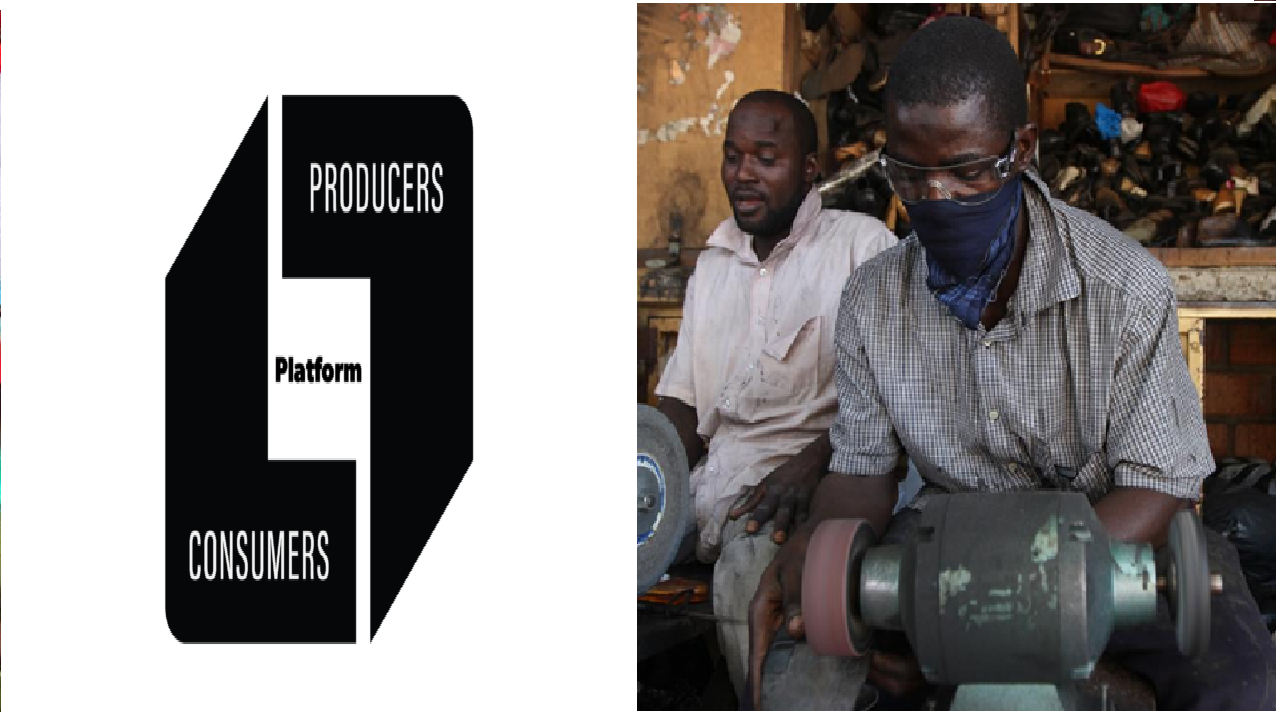
The Igbo Apprenticeship scheme is a laudable one which helped the Igbo race survive the harsh conditions of the civil war, which saw them lose all their investments, as they were forced to survive on 20 pounds irrespective of their net worth before the ugly episode.
The Apprenticeship scheme is a major factor in the South East having the least poverty rate in Nigeria despite a major absence of critical economic infrastructure to support wealth creation. Most Igbo billionaires and multimillionaires today were products of apprenticeship, and have today become economic champions controlling several aspects of trade and commerce, not just in Nigeria, but the rest of Africa and in the developed world.
In a rapidly changing world where e-commerce has disrupted traditional markets and other digital technologies, revolutionizing industries, the Igbo Apprenticeship model should be transformed to enable it scale at a higher pedestal, creating more value.
Nigerian State Governments and the private sector should establish a partnership where selected young people will be taught modern skills which are relevant to business transformation. After they have undergone tutelage in emotional intelligence, sales and marketing both with digital and offline techniques, agility, design thinking, business intelligence, etc, they will now be deployed to various organizations to serve them through application of their learnt skills.
After they have served those companies for seven years and acquired domain knowledge of the industries they operate in, the CEOs of the companies can now empower those employees who would like to become entrepreneurs of their own, in the line of their business with seed capital to start up, and a network-building on the existing enterprise ( i.e. the platform network model where they will establish businesses which will run on their former company’s infrastructure), creating a win win situation for everyone while reducing poverty.
If this model is adopted across the other geopolitical zones, it will unlock entrepreneurial sustainability and create national prosperity increasing the Gross Domestic Product of Nigeria.
As we examine a new application nexus of the Igbo Apprenticeship system, postulated by Dr. Olumide Odeyemi, I note one area which makes the system defective in modern capitalism. Largely, the present model of the system is ineffective and could be updated to be relevant in the new age of commerce and industry. Keep reading!
The soul of the Igbo Apprenticeship System could be likened to the U.S. Federal Reserve which largely works to keep the U.S. dollars stable (by reducing inflation) and maximize employment through interest rates. So, the Reserve has defined main focus areas even though it can use its systems to do other things. Consequently, the U.S. Congress uses those two main factors to ascertain the effectiveness of the Reserve policy. For the Igbo Apprenticeship System, the main focus is to prevent poverty by mass-scaling opportunities for everyone, and not building conglomerates!
So, you have a scenario where a man (trading in a city) goes to his village, picks 3 boys who might have lost their fathers, and decides to ensure they have meaningful lives despite the tragedies that befell them. Those boys serve him for some years, and one afternoon, he invites his kinsmen, friends, business partners and everyone as he “settles” them.
This settlement is simply dividing his market share among these boys. In other words, assume he holds 3% in that specific market, by the time he is done, he might be holding only 2%, releasing 1% to the boys. For him, the growth of his company is not what matters – it is that “his boys” do well. Then, he does not stop there, he begins to send the boys opportunities, making sure they are able to thrive independently. No Western textbook teaches that!
Yes, under Western education, we focus on the accumulation of market share. That is what business schools teach us – and what business, in the Western world, is all about. Come up with ideas and win more market shares. But the Igbo Apprenticeship System is not designed to maximize market share. Rather, it is structured to ensure everyone is just fine. This is the reason you enter into a community, everyone is doing well but no one is an iroko tree.
When a child is born, he belongs to the community. That is why Igbos name their kids “Nwaoha” [the child of the community]. The parents are agents to bring children into the world; the communities have duties to ensure the children thrive.
So, under Igbo Apprenticeship System, you see men who could have built massive assets and empires dividing their acquired market shares for over four decades, happily. That is why you will not see any big conglomerate in Aba, Onisha etc because the Igbo Apprenticeship System is not designed to have one iroko but many trees in the forest!
From the continental and global levels, Igbo Apprenticeship System is defective.But from the community level, it is perfect. There is no beggar in my village in Ovim (Abia State) because there is always help. But those helps come by relinquishing market shares by market leaders even as they fund their future competitors.
Largely, the more you look into the system with Adam Smith economics, the more it looks extremely troubling. But if you look at it with “Igbo Umunneoma” economics, you will marvel what men and women have invented to avoid extreme poverty and inequalities in communities. [Umunneoma means good brethren]
As Elizabeth Warren, Joe Biden and other U.S. Presidential aspirants speak out over inequalities as digital conglomerates rake all the values while others struggle, the Igbo Apprenticeship System is the most advanced system that is engineered to reduce mass-scaled inequality. But do not expect Amazon, Google, and Facebook to give out market share to competitors, and even fund them.
Yet, from America, they need to understand that some people are already practicing what they hope to happen. If they follow that redesign, the U.S. will become a nation of mass-micro-entities with limited conglomerates. That means, no company will have massive scale to deal with big challenges at the upstream level since accumulated capabilities will be largely downstream.
I will be speaking this October in Nnamdi Azikiwe University, Awka, and I will be looking at a new leadership nexus by examining present market mechanics, human society and culture. A Harvard professor will score the Igbo Apprenticeship System poorly because its market system works against the typical drivers in fixing market frictions: launch, scale, and dominate.
But the 200 CEOs who recently signed to upgrade corporate missions – “purpose of a corporation”- is coming back to a purpose Africans have been practicing for centuries – with solid results of better wellbeing in communities. Yes, humane leadership that seeks for the rise of all over just a few is African, even though everyone is running for the western system because they have convinced us that our system is defective!
Sure, we can improve this system to have it both ways by making sub-members of an apprenticeship hub to be in a cooperative that operates as a conglomerate. This is typical in Europe in entities like Frieslandcampina (makers of Peak Milk) which is owned by a cooperative of dairy farmers, yet structured to grow as a conglomerate. The daily farmers have a clear feeder system for their produce while the corporation works to maximize market share and profit globally.
Building a successful career has shifted from just having the necessary skills.
If you have great skills and the right audience that needs it to make you great knows nothing about it, how does that help?
The solution is to cultivate the habit for and become viral in building professional relationships.
When building professional relationships or building professional connections, it’s important not to make the mistake of diverting from ‘connecting’ to ‘selling’ at the initial stage. It’s easier to connect with a stranger than to sell to a stranger.
In my practice, I have come to learn the importance of valuing people chiefly for who they are as individuals. The opposite of this is to engage people solely because there’s something you want to get from them.
When I started my career, one of my basic business priorities was to personally ‘connect’ with my clients. This saw me building relationships with customers. Being an amateur professional or venturer then, I didn’t know much of what could result from that commitment, aside the innocent interest to be closer to my clients, beyond business dealings. Over the years, I have experienced viral instances where my clients become actively involved in building for me huge customers network, offering ‘unsolicited’ referrals that fetches huge revenues. I refer to it as unsolicited because, at first, I was not expecting it nor was that part of the expected end product of my ‘strategy’.
So, it’s my customers who initially made me saw the huge potential of leveraging on my relationship with them to gain more business, increase performance and market share. I merely consolidated on the practice. I have been getting more business through referrals from my customers. I’d later learn that this practice has been very effective for modern businesses for a long time now.
What Do You Aim for When You Want to Connect With People?
Connecting with people means you are the one giving attention. Now, that is where the challenge lies. And the reason is simple: from infancy, we’re accustomed to expecting attention from others. We want to be seen, noticed, pampered, praised, fancied, and the list goes on. But when it’s about noticing others, it’s disgusting? And even when we seem to really ‘praise’ other people’s work or take notice of them, it’s an invitation for a quick payback from them. This makes it difficult for us to work on really building genuine connection with people.
Farther beyond this level is a deliberate commitment to having sincere interest in what the other person does. What is it about the person’s work, method, hobby, etc that’s exciting? Don’t you think it’s worth talking about? Instead of spending time, fruitlessly talking about what you can do or what you do, to a listener who’d rather wish he/she be spared those details, why not spend the time discussing about the unique things (work, life, projects or hobby) of or about the person that’s interesting?
Practical Case
I had the pleasure of taking particular likeness for the paintings on the walls of an institution to which I was posted sometime ago. There was something about them which, although they were simple paintings, it however made them beautiful. When I got to meet the artist in person, it naturally happened that my conversation with him, initially centered on art (paintings and drawings) which was his professional practice. As we went on talking, it naturally happened that we shared lots of common passion in music, entrepreneurship, social (community) services, etc. These other areas equally became subjects of our discussions then, and in subsequent interactions. We became very good friends and over time, executed projects which earned him and I professional accolades.
Notice that it all started because I took genuine interest and talked about things that matter to him. From there, we realized we share some common passions. How would it have been if I had been telling him about me and what I do? Well, the same way you’d not be interested in a stranger telling you about themselves is the same way he’d have been disgusted by by disturbing his peace with tales of myself. But since I liked what he does and was telling him about himself, something he treasures, we readily connected.
How to Apply This in Your Career
Develop passion for taking an interest in the works of people in your field of interest/ Profession. Find time to discuss their works, achievements and projects. Lots of people want to talk about these things with people they consider genuine. And it makes everyone happy to talk about what they cherish. Be the happy learner. Learn and don’t compromise trust. When at a future time you have need of professional assistance to accomplish an important project or to make a needful professional move, the ease with which you get the right ‘heads’ to work in your favor will be a well earned reward for your labor of building professional network and genuinely taking interest in those that will matter in your career.
Enough of blaming people or your family background as the cause of your not having the connections you need to help you in your career. Build it. Start by giving relevant attention and making useful contributions in people’s lives. And when you have firmly developed a thriving connection with an individual, that will be time to easily ‘sell’ to him/her.
Everyone talks about love and how much we need to cultivate a love for people of all races and ethnic groups so that the world can be a better place and we can all live in peace. That is all good and fine. But I think love is grossly overrated.
A lot of people do terrible things, in the name of love, to people they claim to love. The truth is true love is difficult to plant and even more difficult to cultivate because the conditions in our society are hostile towards that kind of love. And because, as everyone knows, love does fade. It is important to understand that it is far easier to plant and grow hate. Which is why this piece will suggest how hate can be used as a force for good and for progress.
Hate is a powerful emotion. It can start quickly and burn like wildfire. Hate is easy to find everywhere, both online and offline. It is seen in something as seemingly little as hate speech, to something as big as the different wars currently being fought across the world. But before you begin to think bad about this thing called hate, think of this: Hate is the reason some persons choose not to drink alcohol – they just can’t stand the taste! They hate it. Hate is also the reason men and women of integrity choose not to cheat or defraud others – they just can’t stand the thought of doing that to another person!
Since hate appears to be so abundant in our world, wouldn’t it be easier to achieve our goals of human progress if we all properly channeled that hate inside of us? What if we all grew that hate inside of us and directed it towards corruption, towards not getting along well with a fellow human, towards waste of our human and material resources on an individual and on a global scale, towards placing material gains over and above everything else? That would be a terribly good thing, all driven by that feeling we tend to deny is somewhere within us – hate.
The closure of Nigerian borders has lingered longer than expected by Nigerians and West Africa as a whole. The Nigerian Government has been criticized for what is seen by many as a deliberate attempt to inflict more suffering on Nigerians.
The cost of food items has moved up since then, and the Government has insouciantly maintained that the border will remain closed until a permanent solution is served on smuggling of banned and substandard goods and services.
Smuggling has been fingered as the biggest sabotage to President Buhari’s economic policies that is centered on domestic production of goods and services.
The Government is also concerned about the inflow of counterfeit goods through land borders. These concerns have resulted in partial closure of the borders until the porousness is contained.
In a statement on Friday, President Buhari assured a delegation of Chambers of Commerce and Industry from Nigeria and West Africa of its administration’s readiness to put an end to it all.
Here is the full statement:
“Today I met with a delegation of Chambers of Commerce and Industry from Nigeria and West Africa. I assured them of our administration’s readiness to work with them to bring an end to smuggling and the dumping of substandard items in West Africa and on the continent.
It is regrettable that there are traders who simply do not play by the rules; who choose profits over patriotism, and whose selfish practices in perpetrating smuggling and counterfeiting help keep foreign factories working while closing ours. We have all heard stories about the dangerous and sometimes, fatal impact of fake drugs and foods on our citizens. We have also seen how fake electrical items have led to fires in homes and markets thereby destroying lives and property.
Most of these substandard and illegal items are smuggled through our land borders. After many years of diplomacy and aggressive regulatory oversight which has yielded few results, we decided to close our land borders for a limited time to assess the impact of this measure. Within a few short weeks since the partial border closures began, we are already seeing a decline in the volumes of counterfeit smuggled goods in some of our major markets across the country.
This validates our actions as a Government when we insist that the African Continental Free Trade Agreement (AfCFTA) must not only promote free trade, but legal trade of quality made-in Africa goods and services. We will soon finalize the National Action Committee on the implementation of the AfCFTA. We expect the organized private sector to continue to support us in achieving a Free Trade Area that employs Africans to produce high-quality made-in-Africa products.
Let me also thank NACCIMA for the honor done to me with the investiture today as their Grand Patron. I will not let them down. Trade is central to our economy, we are a nation of traders, and have been for centuries. I will ensure that we continue to give the sector full support.”