DD
MM
YYYY

PAGES

DD
MM
YYYY

spot_img

PAGES

Home Blog Page 6721

Zenvus Loci Now Uses Tracking ID Over IMEI Number

3

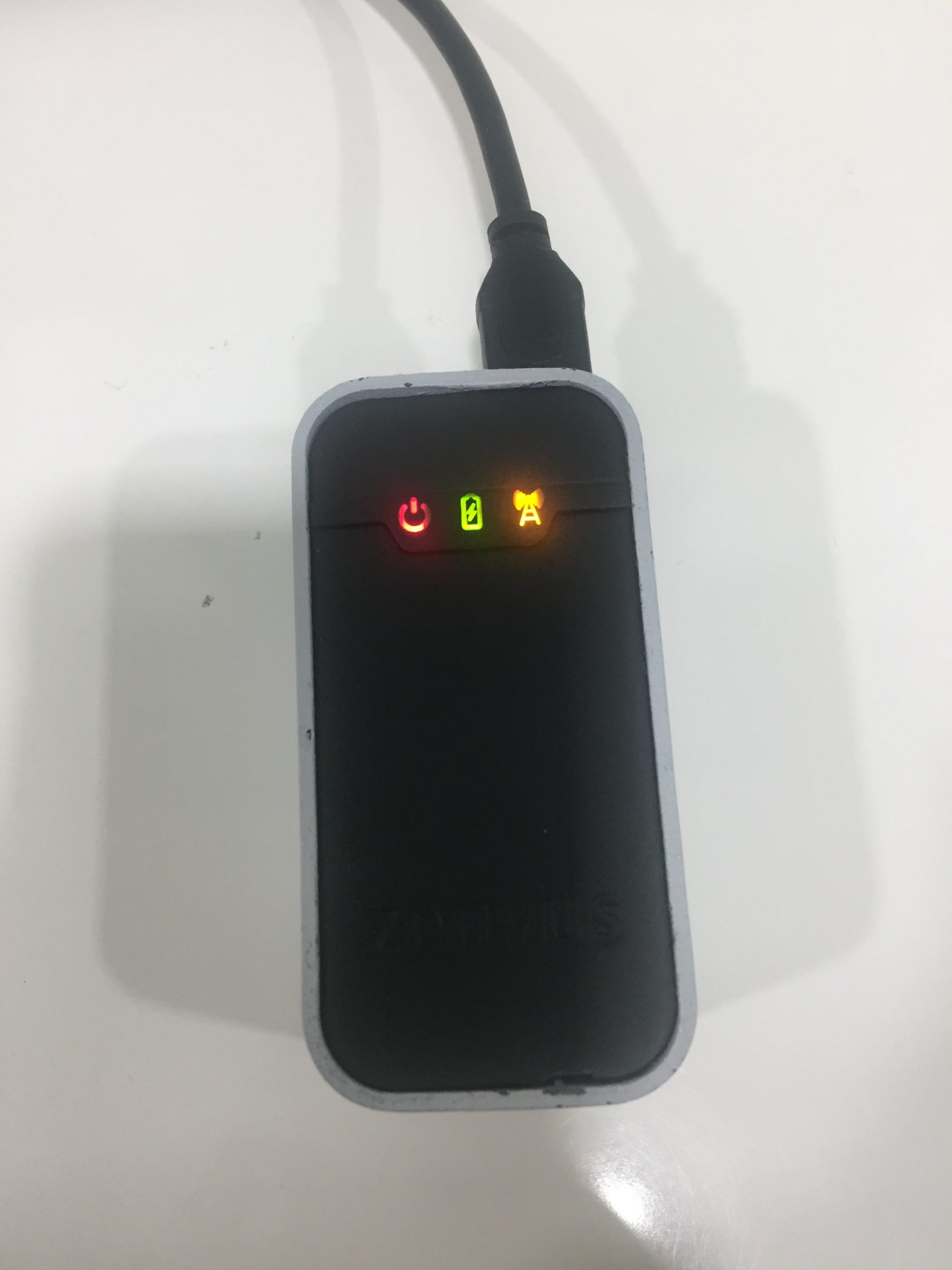
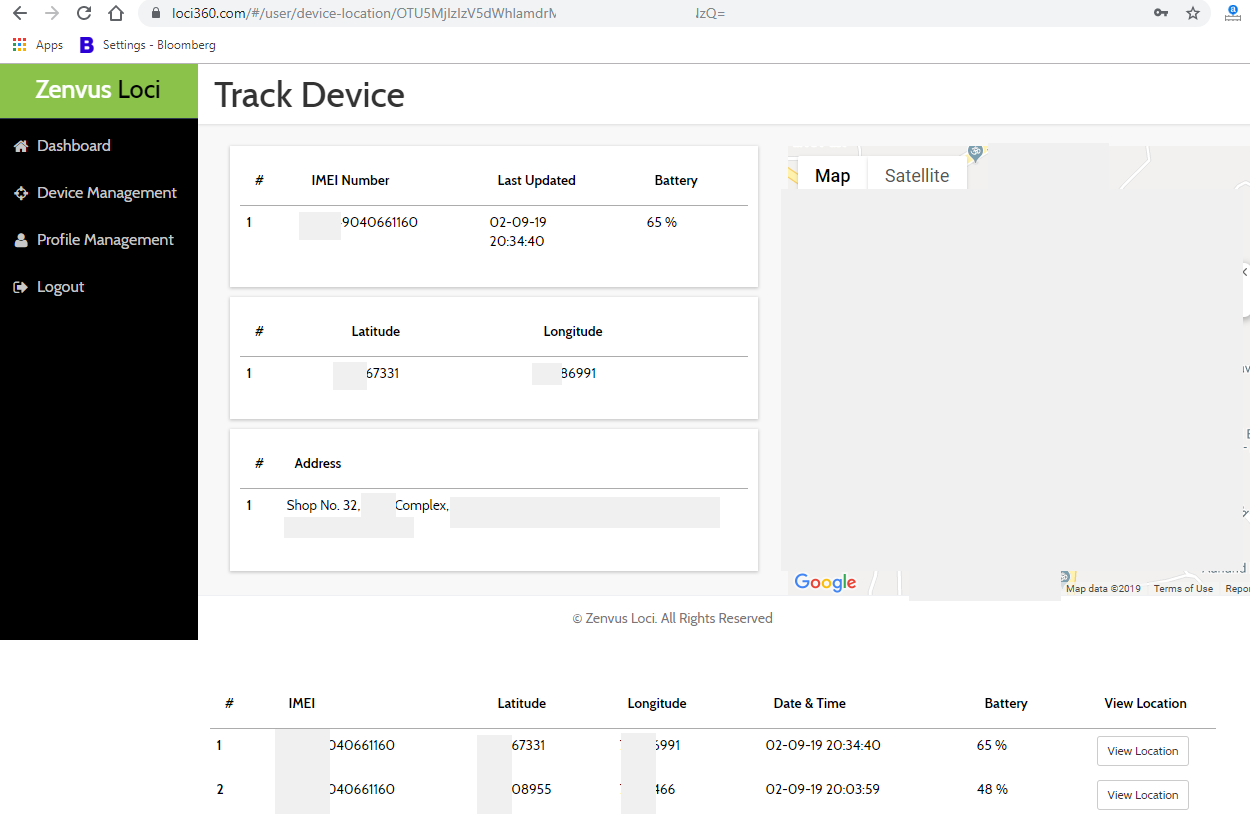
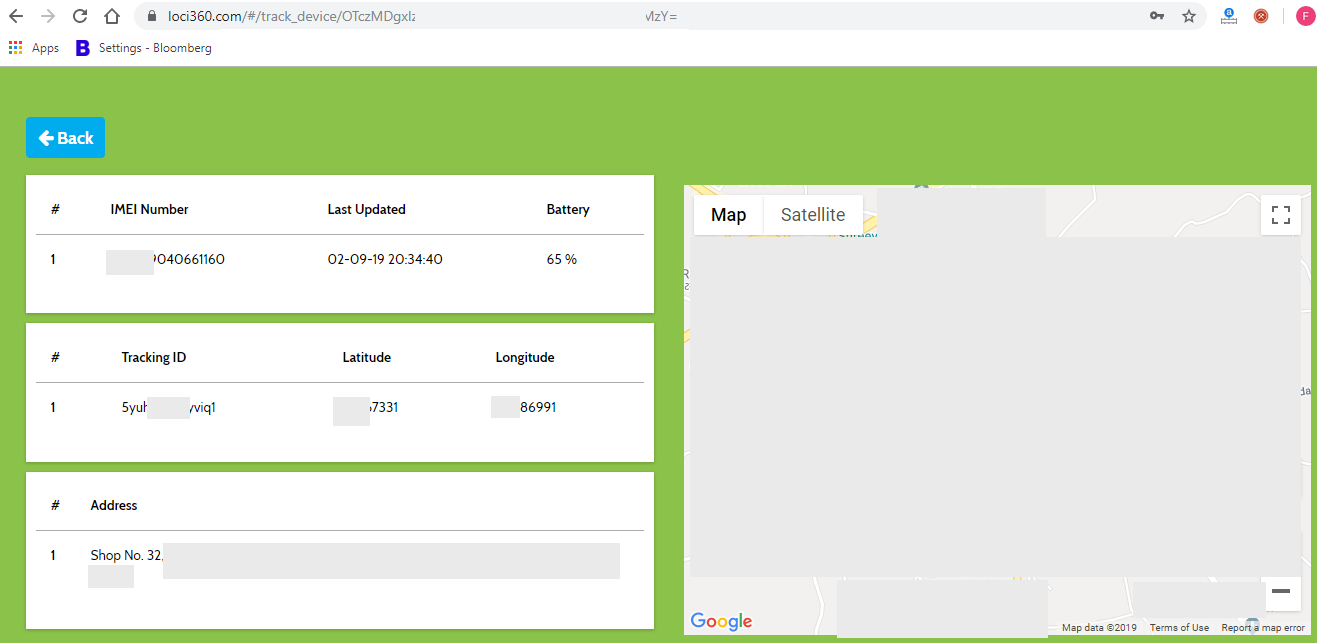
This morning we successfully tested a new protocol that will help Zenvus Loci customers use our package tracker more optimally. Zenvus Loci is a largely disposable package tracker but engineered to be re-usable. Our first prototype tracked with an IMEI number. Everything worked perfectly. But there was a problem: if you send a package to a customer with Loci and share the IMEI number (to help him track also), the customer can use that number to track wherever the tracker is, in future, even after your business relationship with him has ended. To fix that problem, we have introduced Tracking ID which expires after every logistics/delivery session. By doing that, only the buyer knows the IMEI and with the Tracking ID, only the specific customer can track the tracker (see the images below). To our partners, we will be in touch very soon as volume production begins (still accepting partner applications in selected regions; learn more, and email team here).

Zenvus Loci is a disposable or reusable package GPS that you can put in a briefcase, cargo, personnel, etc and monitor in real time its location. We see opportunities in tracking the specific cargoes (not just the trucks), ecommerce shipments, security guards, equipment on transit, law enforcement (police, army, etc), human (child, oil workers, etc), luggage (individuals shipping via buses, personal air travel luggage, etc), vehicles (no installation), etc. It is cheaper than anything in the market and it is rechargeable with USB. It has two versions: Zenvus Loci Mini and Zenvus Loci Max

Tracking in Buyer Portal


Tracking in Guest area


The New Crime

0

History will have to record that the greatest tragedy of this period of social transition was not the strident clamor of the bad people, but the appalling silence of the good people.“~~ Martin Luther King Jr

Over the years, Nations have enacted laws criminalising certain offences. Our parliaments are so busy, due to legislation. However, there is one legislation that no parliament has made. Perhaps, the reason for this is because it disguises itself. Since it acts dumb, nobody concentrates on it. This is the new crime! It is not Murder, Theft, Abortion, or even Fraud! It is Silence!

Let’s look at the Holocaust in which about six million Jews died in the concentration camps. As Rabbi Mark Wildes rightly puts it, “We must never forget the hundreds of millions who watched and remained silent. The dozens of governments and heads of state who had the opportunity to intervene, but would not sacrifice military, political or even economic support to save innocent Jewish lives. ” According to him, what was more disturbing was the lack of reaction by members of the Jewish Community – Jews in positions of authority and leadership who failed to act.

It is not the violence of the few that scares me, it’s the silence of the many.”~~Martin Luther King Jr

When Not To Be Silent 

  • When Injustice Rules

Silence against cruelty is the biggest crime in the world, and we do. “~~Junaid Raza

Injustice is the progenitor of Oppression, Terror, and the likes. There are situations in which silence becomes an assent, and a signature to the reign of Injustice in the land. Sometimes we choose to ignore, because it doesn’t directly affect us. We turn a blind eye to what is happening in our immediate environment, because to us, we are not affected. We live in estates and GRAs, and do not concern ourselves with the injustice meted out to ordinary citizens who are not so privileged. We occupy a high position in government, and are entitled to a diplomatic passport to leave the country at will, when we sense danger in the land. In order to escape mob action, we choose to travel by air all the time, forgetting that one day the plane may crash.

We know there is hunger in the land, but still choose to spend millions and billions of our currencies on wrist watches, earrings, inner wears, and even on a foot wear. Of course, something is wrong with us. We know that the roads are dilapidated, but yet, we keep promising, year after year. Even the money for the execution of contracts, we slash it, and use the other half to fund our children’s education overseas. There is an abuse of power, and yet, you say everything is under control. How? In what way? You refuse to speak out, because you don’t want to lose your job. Even the Holy Book says that he who tries to save his life will lose it…

  • When there is degradation of our core values

I agree with Dante, that the hottest places in hell are reserved for those who in a period of moral crisis maintain their neutrality. There comes a time when silence becomes betrayal.“~~ Martin Luther King Jr

In our world today, nobody speaks up anymore. There is no integrity! There is no Accountability! We no longer emphasize on moral codes and moral standards. That is the reason some politicians are bold to embezzle funds meant for public projects, and we keep quiet. We buy ripe fruits at the market, without knowing that they were forced to ripen through the application of chemicals such as Calcium Carbide. We fail to speak up because we are major shareholders in such businesses. Nobody says a word, and so we let innocent citizens die through heart failure, liver failure, kidney failure, and even cancer. Is there a greater crime than this?

How about those who repackage expired goods for resale? And those who recycle medical waste like syringes, specimen bottles, etc? How about artisans such as carpenters, bricklayers, electricians, painters, vulcanisers, mechanics, etc, who cheat their customers through price inflation, as well as through the use of substandard materials in their work? Despite the fact that these unethical practices could lead to death, we say nothing, and do nothing. We have seen it all, in the churches, schools, offices, everywhere! In the words of Martin Luther King Jr, “To ignore evil is to become accomplice to it. “

He who passively accepts evil is as much involved in it as he who helps to perpetrate it. He who accepts evil without protesting against it is really co-operating with it. “~~Martin Luther King Jr

  • When there is hate everywhere

Our youths are losing focus, because they no longer believe in themselves, in their nations, and in their leaders. They believe that their representatives have failed. As a result, they resort to crime, and other social vices.

We live together, but suspect one another. There is hate everywhere, and war of words.

Our lives begin to end the day we become silent about things that matter.” ~~Martin Luther King Jr

We must rise to condemn evil, when we sense evil. If we refuse to speak up, the fire that is slowly ravaging the bushes, and other neighborhoods would soon devastate our homelands that there will be no escape.

In the words of Nadezhda Mandelstam, “I decided it is better to scream. Silence is the real crime against humanity.”

How to Bridge Hostel Scarcity in 13 African Countries

0

As the world moves towards another decade, there are have been many projections regarding population growth and its positive and negative consequences on society. Some of the projections have largely been centred on Africa, expecting it to play key roles based on its huge young population which would be most needed from 2020.

In 2015, projections suggest that the continent has a population of 226 million aged between 15 and 24 years and expected to double by 2045. The growth has been predicted to contribute to the increase in the use of consumable and non-consumable goods, most especially student housing or hostels considering the fact that tertiary aged population growth has been exponentially in the last 5 years.

By 2020, tertiary aged population is expected to be 98.90 million. This has resulted in the emergence of new universities, both private and public. In 2017, World Bank notes that 7.2 million students enrolled in tertiary education in sub-Saharan Africa compared with less than 400,000 students recorded in 1970. According to the international body, the gross enrollment ratio (GER) for tertiary education grew at an average annual rate of 4.3 percent between 1970 and 2013.

UNESCO Institute for Statistics adds that the number of students in Africa enrolled in tertiary education has doubled from six million to more than 12 million over the last 15 years. As the enrollment grows every year, governments also increase their spending on public education, which covers expenditure on schools, universities and other public and private institutions delivering or supporting educational services.

These and the consideration of the quality of life in cities where the institutions are located, job prospects after education completion and affordability of available hostels have been shaping the supply of and demand for student housing on the continent.

Demand and Supply

Drivers for Growth

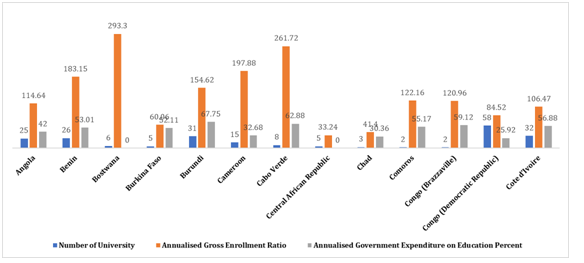
Source: UNESCO, Infoprations Analysis, 2019

By 2020, over 500,000 new purpose-built student beds will be demanded by additional students entering the market, if the sub-Saharan Africa tertiary gross enrollment ratio was to grow to 10.8%, according to JLL Africa, a commercial property and investment management services company.

To understand the demand country by country on the continent, Angola, Benin Republic, Botswana, Burkina Faso, Burundi, Cameroon, Cabo Verde, Central African Republic, Chad, Comoros, Congo (Brazzaville), Democratic Republic of Congo and Cote D’Ivoire within sub-Saharan region were selected (as the first set of countries for analysis).  Analysis reveals that some of these countries have prioritised the need to increase gross enrollment rate and education expenditure between 2012 and 2016 (the years data are available).

Botswana, Cabo Verde, Cameroon, Benin Republic, Burundi, Comoros, Congo (Brazzaville), Angola and Cote D’Ivoire were better in the area of gross enrollment rate, while Burundi, Cabo Verde, Cote d’Ivoire, Congo (Brazzaville), Comoros and Benin Republic were good in terms of expenditure on education (as percent of GDP), analysis suggests.

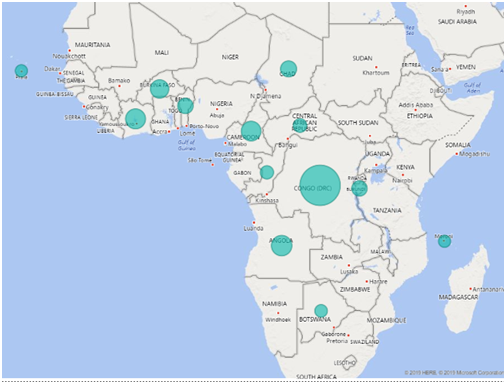
These countries have 46,914,829 tertiary aged population, according to 2017 estimates. From this estimate, analysis reveals that 9.1% (4,269,249) are expected to be in school between 2017 and 2019. Congo (Democratic Republic), Angola, Cote D’Ivoire, Cameroon and Burkina Faso are the most attractive countries, our analysis suggests.

Country Attractiveness Status

The Place of PPP

Despite the spending on the programmes to increase enrollment and improve public education in these countries, a huge shortfall in government funding creates opportunities for private investors to support governments in the provision of adequate hostels for the students through direct investment and public-private partnership (PPP) agreements. Investors need to move into the countries with high spending on enrollment and public education.

Nigeria’s Double 2% Premium Customers

4

Two percent (2%) is a special number in Nigeria. Out of the 30 million people I have noted that have some money to buy things in the nation, 2% brings another dimension. According to government data, 2% of the Nigerian bank depositors control 90% of the total value. Also, Nigerians who have more than N500,000 ($1,400) in their bank accounts are just 2%. I have called this the Double 2% – the first 2%  controls 90% of the total deposits and the other 2% has more than $1,400 in their bank accounts. Certainly, there is an overlap in these two 2%s.

Director of Research and International Relations at the Nigeria Deposit Insurance Corporation, NDIC, Alhaji Mohammed Umar, disclosed this at the Businessday Capital Market Development Annual Conference in Abuja, yesterday. His words: “Our current deposit insurance coverage is N500, 000 for the Deposit Money Banks. And some people have said that it is low. I can tell you that it is very adequate for the majority of accounts. “It will interest you to know that it covers over 90 per cent of accounts in the country. Indeed, Nigerians who have more than N500, 000 in their accounts are just two per cent.

“What we found is that this two per cent Nigerians have 90 per cent of banks’ total deposits. Look at that – two per cent Nigerians own 90 per cent of total banks deposits, while the remaining 98 per cent have just 10 per cent of total deposits.  What that tells you is that the gap between the rich and the poor has continued in this country.”

If you miss this 2% in Nigeria, even if you are selling food and medicine, you will be in trouble because they are really the people that have money to spend. Also, if only 2% of the population has more than $1,400 in the bank, you need to test the viability of running a saving-based business model in Nigeria since people have really nothing to save: hand to mouth. The implication is that you have to depend on maybe another cohort which is certainly lower than 2%.

More so, if you use BVN (bank verification number), 2% of the about 40 million users will give you 800,000 people in the Double 2%. Those 800,000 people  – less than 0.5% of Nigeria’s population – are the jewels in the Nigerian economy for most companies in consumer business!

Causes of Anger in Nigeria

0

I was delivering a lecture in Communication Skills to ICAN students when we delved into things to consider when sending messages. When we got to considering the recipients emotions, the class became alive. Almost all the students had experienced some form of emotional outburst from people when they were relaying messages to them. Some had good experiences while others had very terrible ones. The conclusion by the end of the day was that you have to be careful when delivering messages to any Nigerian because he or she might be angry at that moment.

The experiences of these students are just the few among the ones experienced by many Nigerians. The emotional atmosphere of Nigeria is charged negatively. People seem ready to throw insults around without any known cause. Take a while to observe our roads and you will witness how vehicle drivers seamlessly abuse one another for minor traffic offences. What about the sellers in the market? A little pricing of his wares will earn you the insults of your life. This attitude even followed us into the social media. If you ask me, I will say that it is possible that Nigerians have taken their angry nature into their dream worlds.

So my question is, why are Nigerians so angry? What is it about Nigeria that easily gets people angry? How can this anger be brought under control?

Anger is just an emotion. It is something that pops up as a result of another factor. I don’t believe anybody is born angry. This means that if we can easily feel angry, we should easily feel other emotions too (both the positive and the negative ones). But the fact that anger and other negative emotions (fear, sadness, hatred, jealousy, and the rest of them) abound more in Nigeria shows that there is an underlying cause within the country itself.

The consequences of anger can never be over-stressed. To start with, it is not good for our health. Anger can lead to other complicated mental, psychological and physical illnesses. It weighs downs and exhausts its victim. It keeps its victim stagnant (in every ramification) and could end up destroying him.

Anger can easily be harnessed by ‘evil doers’ to destroy the lives and properties of others. It could be manipulated by these people to disrupt national unity and development. It can prevent the economic and financial growths of the victim because his aggressive nature and mindset will send the right people away from him. Besides, decisions made while angry always turn out wrong.

If you ask me who is angry in Nigeria, I’ll tell you that everybody is angry – the rich and the poor, the young and the old, the educated and the non-educated, the male and the female; even our pets are angry. Anger is spreading everywhere like cancer eating deep into our system. Honestly, to survive in Nigeria, you have to learn how to be angry, react angrily or ignore angry people.

Ok, let’s quickly look at the identified causes of anger in Nigerian societies.

1. Poverty: Of course a hungry man is an angry man. But then, the word ‘poverty’ is relative because I have seen ‘poor’ people that are not angry. It means that only when someone sees himself as poor will he be angry.

2. Insecurity: People have pointed accusing fingers at insecurity as a cause of anger in Nigeria. This may be true, but I guess it is in relation to people who have been directly affected.

3. Unemployment: Yes I can relate here. Being unemployed can be quite frustrating. If care isn’t taken, someone in this situation can just get angry at everybody and everything around him. I guess this person’s anger may be seen as justified but it truly won’t help him. He needs to help himself out here.

4. Lack of Basic Amenities: People get angry when ‘NEPA’ shows their strength. People get angry when their cars breakdown because of bad roads (or even when they are driving on the roads). People get angry when they couldn’t access some basic amenities they believe they have the right to as taxpayers. The worst thing about the anger that comes from here is that nobody will listen to you.

5. Marginalisation: As far as every Nigerian is concerned, his tribe is being marginalised. I haven’t seen any one that is satisfied with what is being sent to them by the government. The anger from this source can be quite destructive.

6. Bad Governance: No need to go into this one because this is the grandfather from which other causes of anger emanates.

7. Injustice: Yes, anybody who has faced injustice from any quarter whatsoever is always angry until justice has been meted out. The injustice I meant here isn’t the one from our Judiciary; but rather the one that an individual experienced as a member of a society.

8. Stress: Sometimes the way we show our stress is through anger. Maybe that woman selling oranges under the rain in the market that sprayed insults on you when you priced her #100 oranges at #50 did so because she was stressed out. This is why we need to bear with people at times because we don’t really know what they are passing through at that moment.

These factors mentioned above are the ones people easily point out when asked why they are angry. Unfortunately, some people don’t know why they are angry. Some people’s anger is so deep that they don’t know the words with which they could express it. The causes of this type are what I have my major interest in. I will try to mention some that I believe have been deeply destroying us as individuals and our nation as a whole.

  • Past Negative Experiences: You know there are some personal experiences you may have that takes time to instil anger in you. These experiences could be something that happened over a period of time and had therefore developed a taproot deep into the victim’s system. The only way to reach into this person and help him is through the professional works of experts. This is why we need our psychologists to face their primary works and help our people manage their emotional, mental and psychological health.
  • Upbringing: Most Nigerian parents believe that children have to be brought up the hard way. We also see parents that take out their frustration on their children. Because of this, they don’t tolerate any slightest mistake from their children. In the long run, they transfer their anger to their children, who grow with it and transfer it to anybody that comes their way.
  • The Influence of Others: Situations like this can be seen in mob-action, terrorism, tribalism and religious fanaticism. When people are being fed information that will fan their anger, they will be forced to bring up that emotion and act on it.
  • Less Attention to Emotional Health: Nigerians pay more attention to their physical health than to any other type. Our emotional, mental and psychological health are always swept under the carpet. This is why most of us don’t consider the effects of what we do on other people’s emotions.
  • Sense of Failure: This usually comes when someone puts in efforts but the results aren’t reflecting the rate of the efforts invested. This can also come up when a person compares himself to others, whom he deemed successful. If this person doesn’t know how to be inspired by the progress of others, he may end up angry with himself and others.

We have seen some of the causes of anger in Nigeria. What we need now is the way forward. We don’t have to wait for the government to help out here. Let us do the much we can for ourselves and then come together to influence the government. In other words, we need to know exactly what we want before expecting a change of governance.

Anyway, I’ll suggest that we, as individuals, can imbibe the following attitudes to help us with anger, and other negative emotions, management.

1. Change of Mindset: When we try to imbibe a positive attitude to life, we will start attracting positive things towards us. You can find an article on developing positive mindset here https://www.tekedia.com/how-our-mindset-can-determine-our-financial-and-social-status/

2. Avoidance Method: Here I’ll say that we should avoid situations and people that always elicit anger in us. Cut off every discussion or association with people that can influence you negatively, they will only destroy your happiness.

3. Recreation: Find time to relax and do what makes you happy. Don’t say you can’t afford to do so. By the way, don’t go for things that only have short-lived happiness (things that you enjoy at the moment but take a life time to regret) and don’t spend so much money on your search for happiness.

4. Child Upbringing: Child-rearing is an uphill task. But remember to preserve their innocence until they are old enough to understand the challenges of life. Don’t tell them how hard things are for you (of course you know they won’t understand), rather tell them you can’t provide for something they asked for at that moment (be patient as you entertain their questions on when you will do that, they will eventually get tired of asking).

5. Seek Help: If you have a bitter experience that is eating deep into you, seek for help. Please, go to a professional that is trained for that. Be careful with roadside helpers that will only complicate matters for you.

6. Self-Control: This is not easy at all. But we have to learn to control our emotions when situations try to burst them out. The easiest way to hold your anger when someone is pushing it out of you is to walk out of the place. If it is a place you can’t just walk out of, start counting numbers from one to wherever you want. This technique is to distract you from what is being said (you actually don’t listen when your mind is busy with some tasks). If the thing that will make you angry is a reported speech, don’t reply immediately. Sit down and try to analyse the situation, maybe you will understand that person’s point of view. And finally, when someone tries to push you to the wall, just respond with a smile and change the topic of discussion.

Anger in Nigeria is something that has to be solved individually. Though some of our institutions have failed us, we don’t have to fail ourselves. Being angry won’t take us anywhere; rather it will stagnate and destroy us.