DD
MM
YYYY

PAGES

DD
MM
YYYY

spot_img

PAGES

Home Blog Page 6730

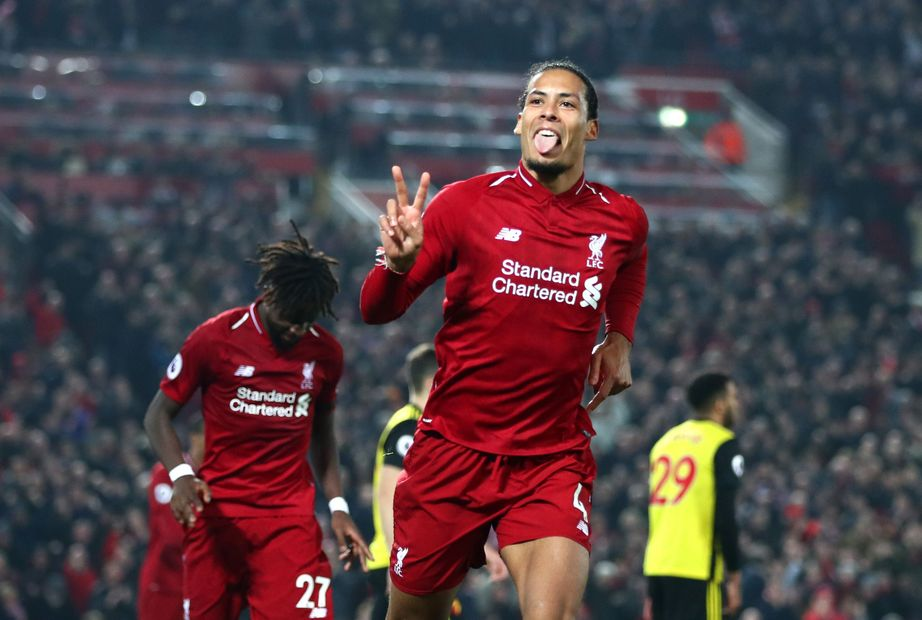
Virgil Van Dijk: A Lesson on Self-Improvement

0

The last time a defender came close to a major football (soccer) award was in 2006, when Italy won the World Cup and Fabio Cannavaro was afterward, decorated with the Ballon D’or. Ever since then, it has been strikers or by extension, midfielders. But that changed in the most dramatic way.

In 2018/19 UEFA Champions League season, a dramatic display of determination, resilience and faith saw Liverpool overturned a 3 – 0 first leg loss, to win Barcelona 4 0 in Anfield, and thus, qualified for the final of uefa champions league. They proceeded to win the champions league in grand style, whipping Tottenham Hotspur, 2 – 0.

It’s a memory that will forever remain in football history, and Liverpool fans will live it daily. One character that will ever live the memory is the defender, Virgil Van Dijk. A moving monument standing like a rock in Liverpool’s defense, stopping the deadliest among the strikers. He has a record of 65 games without being dribbled past. A record that Lionel Messi wouldn’t deny.

So it was not surprising when yesterday, he was announced as the winner of the uefa best player of the year, breaking a 13 years old jinx and setting a new record. It is remarkable because it happened in an era when the football world has been under the dominion of Lionel Messi and Cristiano Ronaldo. The prodigies whose adept has placed far above others for over 10 years now.

How He Got There

In the early days of Van Dijk’s career in Gronigen, he was being played as a right full back before he was moved to the center. He suddenly had some changes in his body that resulted in frequent injuries, especially on his knees and groin. He got better with time.

He was a promising youngster, he had what was needed at that time, but obviously needed to get better. He spent more time traveling with the team, featuring in games than he did training. A situation that was not only harming his performance at matches but also jeopardizing his career chances. The reserve team coach, Dick Lukkien took note of him and said:

“I saw a guy who was not fit to play games. He was not training during the week so we used the first six months to get him fit.”

Another person who took notice of Van Dijk was Pieter Huistra, and he corroborated the observation of Lukkien.

“At the beginning he had to be pushed to train to improve himself. He had to become stronger and fitter. But once that was in place and once he felt could make the step, I think it went smoothly and he took a lot more initiative himself.”

At this point, van Dijk had realized that what everyone was saying was the truth: he needed to work more, train more, and he needed to see it as a favor he’s doing to himself not to others. And that was the breaking point. Gratefully, he had someone to push him – Dick Lukkien, the tough master.

Lukkien told SkySports: “I obviously recognize his talent but I thought he was much too easy, much too laidback. You have to give your best every day. He was too easy. Sometimes he’d train at 50 percent or 60 percent.

“The key was getting him to do it every day in every session. In my opinion, it was a matter of maturing and getting out of him the talent that was always inside. I tried to teach him that this was the biggest thing he needed to improve.”

Van Dijk accepted the correction and it made the difference in his career. Sling shooting him to a £75 million deal at Liverpool, a record deal for a center back. And there has been more to it since then, laurels that complement the efforts.

The Lesson

No matter how good think you are at what you do you can always get better. And the best way to get better is to listen to those around you who are genuinely interested in you. These ones always tell you things you wouldn’t want to hear. But in those things lies the truth that will make you a better person. The truth has a very bad attitude, it’s always hurting. But behind its hurtfulness lies the relief that will spur you to the tops.

The thin line between your success and failure lies in working on those things pointed out by your observers. That takes humility, a lot of it. Virgil Van Dijk shed himself of the negative traits weighing him down, and so can everyone else. Learn to accept criticism, and be glad to have someone who sees something wrong in what you are doing. It’s the best way to self-improvement.

Then practice to get better than you did the very last time. Talent is good but it gets better with practice.

Insecurity: The Nigerian Police Commence Helicopter Surveillance

0

The Inspector General of Police, M.A Adamu, has ordered the immediate deployment of helicopters for security surveillance and to tackle crime related issues around the country.

This was announced as part of active measures aimed at curtailing kidnapping and banditry in the country. The idea is to conduct aerial patrol on major cities in the Southwest and Northwest of Nigeria. The statement issued by the police headquarters says:

“While the Police Air-Wing Operational Base in Abuja caters for Abuja – Kaduna highways as well as the adjoining states in the North-West and North–central. The new base in Ondo State will cater for the adjoining states and highways straddling the South-West.”

The likely panic that may result in such uncommon surveillance was also considered by the force. The statement added:

“The Force therefore enjoins citizens not to panic but to go about their lawful businesses as the aerial surveillance is geared toward improving the security of lives and property in the affected areas.”

It could be recalled that a few weeks ago, the Federal Government announced plans to deploy drones and install cameras on the high ways in a bid to curtail incessant kidnappings and armed robbery that has become paramount in many highways, especially, Kaduna–Abuja and East–West highways.

Early in the week, the news of the 3 students abducted on the Abuja–Kaduna highway broke, not to the surprise of many since it has become a norm. Many believe that the abductees who were later released by means of ransom is the evidence that the police are not doing enough. Though the Government has taken credit for their release, the 3 families involved were quick to refute it as lies, saying that ransom was paid in full for the release of the victims.

In view of these happenings, the aerial surveillance seems like the news that the people are waiting for, if not that many are concerned that it may go awry. Judging by the victimization of innocent citizens by armed forces in the name of fighting crime, many are saying that the poorly trained police cannot be trusted with a security measure involving such professionalism.

Citing the case of Rann where over 200 Internally Displaced Persons were bombed by the Nigerian Airforce. The victims were even blamed for not putting up any sign indicating that they are not terrorists.

The concern is that it may even get worse with the police, and the people may turn out to be victims of those who are supposed to protect them.

Ayobami Ojebode in Search of Elusive Voices for Sustainable Development in Nigeria

4

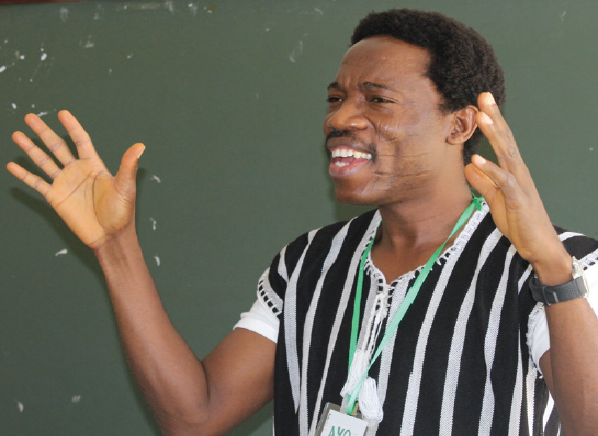
Since the emergence of sustainable development as a concept and practice, scholars, professionals and businesses have been working toward making living on earth and in water beneficial to the present creatures without jeopardising the chances of the future creatures of using the same resources with more advanced techniques. Ayobami Ojebode, a professor of Development Communication at the University of Ibadan, is one of the scholars who have conducted and still conducting significant studies with a view of revealing various pain points associated with the roads towards sustainable development in Africa.

Before 2002, the year he earned his PhD in Development Communication, and after the certification, has been teaching and researching issues within political, economic, social and environmental components of sustainable development. For more than two decades, his interest in teaching and researching has been exclusively on finding solutions that resonate with the students, C (corporate) and F (functional) levels executives in industries, and public administrators in Nigeria and other African countries.

Searched Voices for Sustainable Radio Usage

As a professor of Development Communication with a special bias for radio for communication purposes, he has searched and found that there are challenges impacting enabling policies and legal environment for community radio in Nigeria. According to him, “licensing community radio stations remains difficult under democracy as it was in the military period.”  On the content production, a in 2008 publication, Ojebode found that while radio stations used significant time and energy producing and broadcasting development programmes, the listeners in the rural areas mostly avoided such programmes and spent their time and batteries on a strange genre of programmes dubbed “bizarre occurrence’ programmes. A year later, he discovered that a very minute proportion of news deals with rural areas and rural issues, describing the coverage of the issues as “one-way information to and not from rural people.”

Expanding his searching hypothesis, the diversity consciousness among the Delta State Broadcasting Service and the British Broadcasting Service was explored. Professor Ojebode found that different categories of fear propel the determination to reflect diversity at both stations. For instance, his analysis shows the challenge of balancing diversity with competence in staff recruitment as parts of the problems in managing diversity.

In a study published in 2012, his intent was to know the extent to which people receive information about the sick cell disorder through radio. The study reveals that workers in the studied radio station did not aware of the SCD prevalence. With his colleague, Professor Ojebode notes that “there is the need for non-media forces to call media attention to and in fact use media to educate people about SCD in Nigeria. Nigeria government also must show commitment to SCD education.”

In a study that could be described as mind-blowing 10 years after his PhD, Professor Ojebode and other colleagues discovered that despite that RSTD, a radio in Benin Republic is not a truly participatory radio, most listeners were content with being listeners and unaware that community people could be involved in radio programme making. “We wonder whether what matters about a community radio is not its ability to key into the aspirations, sentiments and beliefs of the community rather than how participatory it is.”

Searched Voices for Sustainable Governance

Over the years, his interest within sustainable governance has largely been on understanding various issues in journalism, public communication and civic engagement.  Till date, he remains one of the communication and media scholars who have researched the issues around the full implementation of the Freedom of Information Act in Nigeria. Apart from conducting researches, he has also spoke at a number of fora and workshops, warning media practitioners and Nigerians on the danger of fake news. “There is a chasm between law making and governance on the one hand, and the daily concerns of the average citizen on the other. It is probable that more than half of Nigerians are unaware that a bill became law which can protect their interests. Therefore, for the Act to truly serve the poor and the illiterate, those at the lowest rung of the political and economic power, there is a need for massive awareness creation.”

As Nigeria continues battling insecurity, his searching hypothesis has equally been extended to the security component of sustainable development. In collaboration with other researchers in Nigeria and Latin America, he has researched the place of community policing in sustainable security in Nigeria.  On September 5, 2019 Professor Ayobami Ojebode will be speaking on, “In search of muted voices for the mirage named development.” This is the title of his inaugural lecture at the University of Ibadan. All roads are expected to lead to the Lakeside Lecture Theatre, Faculty of Science, venue of the lecture.

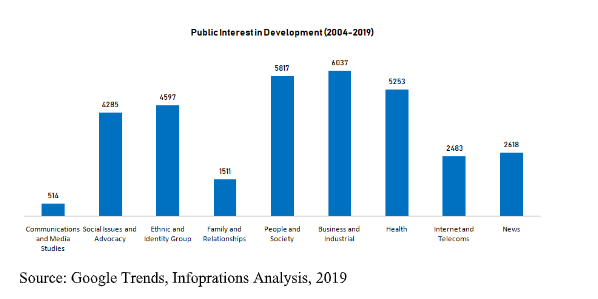
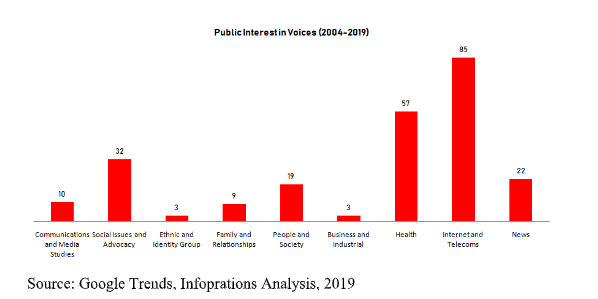
Among his students, the university community and captains of the industries who are expected at the lecture, the expectation is that the Igboora born professor of Development Communication will dissect the stumbling blocks for the realisation of sustainable development in Nigeria. This is imperative as public interest in development issues continue soars while human and business voices towards solving varied socioeconomic and political problems across the country remain low, analysis suggests.

Turning GSM Phones Into Satellite Phones – The Mission of BeepTool

1
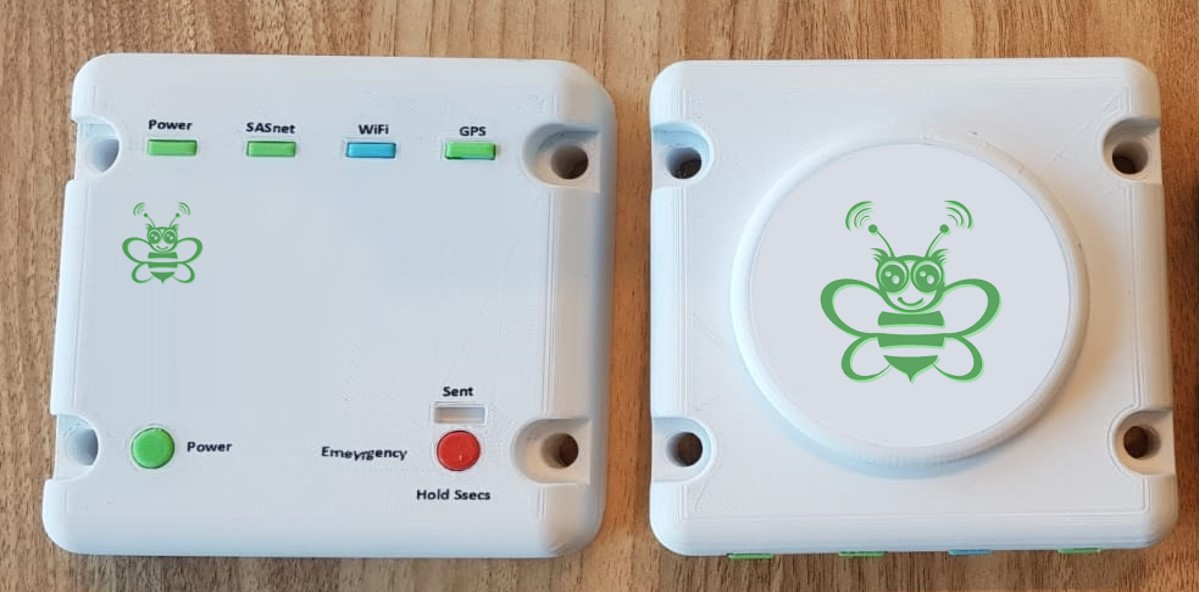
BeepTool terminal

A nice piece on BeepTool, a company I am very proud to be part of. We are bringing broadband connectivity to remote locations in Nigeria and then Africa. With our technology, you can turn a GSM phone into a satellite phone. It is simply amazing. If interested in this mission, connect with BeepTool leader, John Enoh.

BeepTool signed some notable strategic partnerships to scale its operations and complement its proprietary innovations. The company’s partners include Sky and Space Global, a British publicly-traded narrowband satellite communications provider…

[…]

BeepTool’s co-founder and CEO, John Enoh, in an interview granted to Africa Business Community, said, “the market response has been good even though it could be better. The community of BeepTool users is more than 1,000,000 users strong, with about 30 per cent active usage on a monthly basis from the direct app and agent location networks.”

Yet, BeepTool continues to look for partners as explained here.

“We are closer to the coast now. But before we break the news, we want to still give 30 days of investment opportunity to friends, family, and individuals to join our private shareholders who are about to make history in sub-Sahara Africa”, the company noted on its Linkedin page.

The Japan’s $20 Billion

4

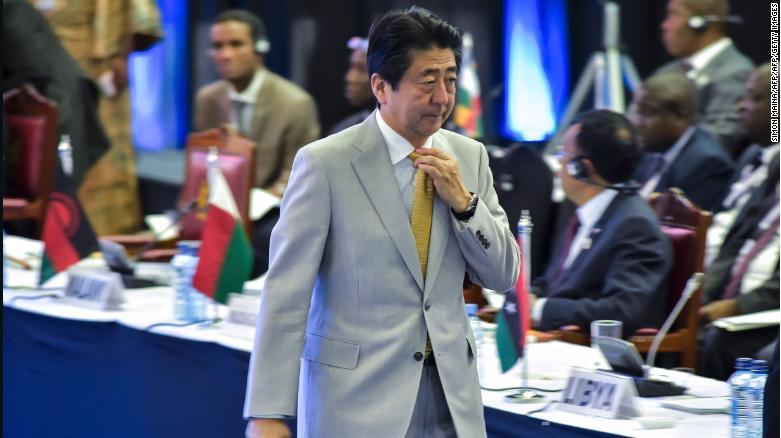
Japan has pledged to invest $20 billion in Africa over the next three years. Japan’s Prime Minister Shinzo Abe made the promise in a meeting with African leaders during the Tokyo International Conference on African Development (TICAD) in Yokohama, on Wednesday. CNN extrapolates that Japan wants to challenge China in Africa.  My question to Japan: is this real cash or line of credit? Lol.

Japan’s private sector will invest $20 billion over three years in Africa, Prime Minister Shinzo Abe promised Wednesday.

Abe, who was addressing African leaders gathered at the Tokyo International Conference on African Development (TICAD) in Yokohama, said Japan is interested in infrastructure and human development on the continent.
“I make this pledge to you: The government of Japan will put forth every possible effort so that the power of Japanese private investment, of $20 billion in three years, should in the years to come be surpassed anew from one day to the next,” he said in his opening speech at TICAD.
“We will do whatever it takes to assist the advancement of Japanese companies into Africa,” he added.
Japan also seeks to train 3,000 people over a period of six years under a human resource development program for Africa so there will be more people from the continent who can contribute to promoting Japan-Africa business relations

Good luck to Japan. It once had Africa to support but like Europe and U.S., it was giving line of credit. China came with cash and African leaders now see Beijing as the direct path to the god of money. 

Sure, I have problems in some Chinese business models in Africa but I am happy that China is activating more options in the continent. If our leaders can see the big picture, even America’s President Trump will come calling for attention. Most African leaders do not really remember U.S. anymore because China has disintermediated most linkages to Washington DC. 

A Challenge: list one project U.S. is funding in Nigeria; you may struggle. But if I update to China, you will start dropping names easily, from airport to train projects.

Japan, it is not over. Yes, China can call African leaders that it will invest $50 billion on better terms than whatever Japan is proposing, and Japan will then know that writing a cheque does not mean the recipient will cash.

Yet, Beyond China

Of course, China has a long way to catch up with decades of U.S. human + physical investments in Africa. America may not build railways and airports but it has worked on investing in our young people through scholarships and human capacity development projects. When all is tabled, U.S. continues to lead investments in Africa. Yes, all those fintech, logistics, and broad startup investments are coming mainly from U.S.  Yes, they may not be visible – but that does not mean they are not catalytic for Africa’s future.

The growth of Chinese investment in Africa over the past two decades has been unprecedented and unparalleled. Despite what one might believe, China is not the leading foreign investor in Africa, nor is it the biggest donor. Both honors still belong to the US. What makes China’s presence different from that of the rest of the world, is that it’s physical, and thus, visible.

China has become the builder of a modern Africa, with its state banks providing loans and its state-owned companies constructing roads, bridges, railways, dams, airports, industrial parks and ports all over the continent. In 2018, China was the single largest financier of African infrastructure, funding one in five projects and constructing one in three.

For those in Africa, it’s hard not to notice a new bridge being built in the neighborhood, or a new airport terminal under construction. These giant structures sprawling from city centers to rural areas are