DD
MM
YYYY

PAGES

DD
MM
YYYY

spot_img

PAGES

Home Blog Page 6736

Most Fintechs Built on Transaction Fees Will Fade in Nigeria in 3 Years

6

Fintechs in Nigeria where the main source of revenue is transaction fees will fade within 3 years. We will move towards a perfect digital market where marginal cost is absolute zero. The new phase of opportunity will be monetizing data for lending, wealth management, etc and not “taxing” citizens with fees.

Paytech startups built on transaction fee-based revenue will struggle as new business models evolve where transactions can be efficiently processed at absolute zero transaction cost and distribution cost. My state of Nigerian fintech shows a shift in the equilibrium on the points where startups make money from users. This will simply become the new normal. 

Consider the possibility that OPay has bank accounts in all banks in Nigeria. If a customer ( paying for DStv) pays through it, it will simply receive money from the customer to the specific corresponding bank account it maintains in the customer originating bank. At the same time, it will pay the merchant to the merchant’s bank account using its (OPay) funds in the same bank as the merchant’s. Because wallet-to-wallet transfer in Nigeria does not attract a fee, this two-sided intra-bank transaction (inflow and outflow) does not cost OPay and its customers any transaction fee.OPay, relying on bank APIs, automates this protocol. This is Option 1. There are other options on how to execute this including having a holding quasi-entity.

Do not be confused on this – we will leapfrog London and New York in this domain. The architecture of our banking system makes this possible. I do not expect it to be changed!

Updated after Flutterwave $35 million Raise

Comment: I remember an old post of yours where you spelt doom for payment outfits like flutterwave where you mentioned they couldn’t just thrive on payment charges. May I ask what you now see differently.

My Response: Share the link please. I would be interesting to actually use that to teach. My position has been this: any fintech that competes for checkout pay by sending code will fade.But those that help clients to improve their businesses will win checkout pages and thrive with the clients. But share the link. Flutterwave has subject matter experts in education, trading, agro, etc that help their clients before they work on those checkout pages. That is the Silicon Valley Bank model which I have advocated for them.

Plus – doing that is one way of dealing with decreasing percentage on transaction fees which have dropped from 6% (when BankAmericard was unveiled in U.S.) to now about 1.4% on average. It will get to near zero one day. We have 0.99% on fees in most platforms. So, if you do not help clients, fees would not do it!

Comment: Well you just answered the question already. Sharing the link won’t matter then. Thank you sir.

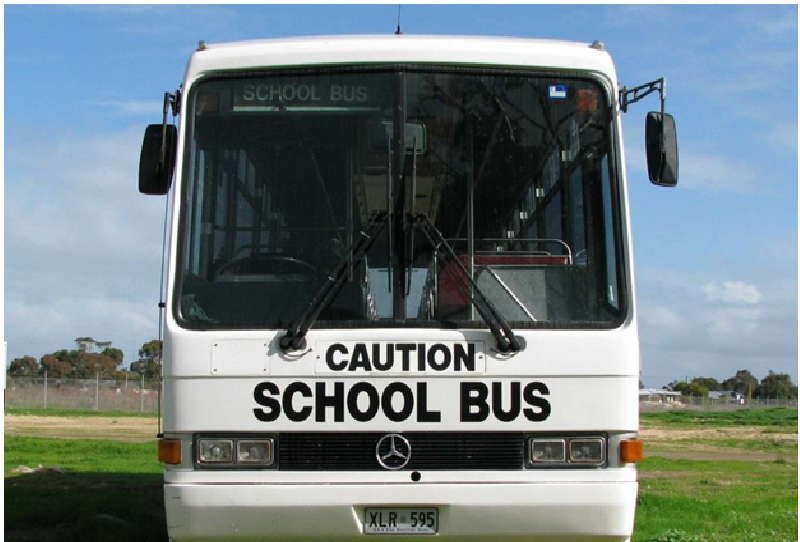
Private School Bus Management Needs Logistics Tech Aggregators in Nigeria

2

Recently, while walking through Divine Estate, Amuwo Odofin, Lagos, I observed the parking lot of a private school in that vicinity. I counted about seven buses parked within the compound. These buses were parked because the school is currently on vacation (3rd term holiday). As a typical Igbo Man, I began to calculate how much revenue those buses could have been generating if they were deployed on the roads during this holiday.

Recall, the holidays started July 12th, 2019 and most schools will reopen 9th September, 2019. This means we are talking about 60 days (approx.2 months) with those buses being idle. Apart from the holidays, weekends and public holidays, those school buses are also idle generating zero revenue. Come to think of it, we are talking of some brand new Toyota Hiace buses with market value of between N18 million and N22 million sitting idly for 60 days. Some of them that were bought fairly used may have market value of between N5 million and N10 million.

I reflected on the reasons why most private schools choose to own school buses and the reasons include:

  1. To ease the transportation problem of their pupils who probably come from far distances.
  2. To advertise the school within the vicinity of the school’s target market.
  3. To ensure the safe delivery of the pupils to their parents by a system they can trust and have control over.
  4. Most parents specifically request for this service as they do not have the luxury of time to do such school runs.
  5. This is a means of revenue generation for most schools when managed properly.

However, on a Facebook group of school owners, many of the school owners complained bitterly about managing their own school buses. These are some comments from them:

“Maintaining a school bus is a headache on its own…”- I.O

 “I have parked mine for the past two years. Am healthier. Drivers and mechanics were my major headache. I told myself I was too young to come down with high blood pressure.”… E.O

 “It swallows up the school finances. You end up spending school fees to fuel the car.”…R.B.J

 Other observations from the comments include:

  1. The school bus drivers colluding with mechanics to inflate cost of maintaining the vehicles.
  2. Parents complaints of poor service by either the bus drivers or late arrival of the drivers.
  3. Multiple taxations from local government revenue collectors, etc
  4. Excessive cost of fuelling the vehicle which ends up not adding up when compared to the revenue generated
  5. Parents’ resistance to pay new rates that incorporate the high cost of running the school bus.

Since these schools are not transport companies, I make a case for them to outsource these buses. Transport tech startups can fix this market friction. For one thing, these schools already have the buses. The major thing they require is a system to effectively manage these buses and generate more revenue from these buses. Instead of allowing these buses lie idly during the holidays and weekends, they can be aggregated to be used for school runs during the school hours (peak period) and holidays and weekends (off-peak period).

Instead of having more than ten different schools buses deployed to Ago Palace way for instance, you can have say 5 buses dropping off students at each of the partner school during the peak period. The transport tech company can track the movement of all its buses and know where to quickly deploy more buses especially during the peak period (6:30am -8:30am). The same pattern will definitely happen during the closing period (2:00pm-4pm). During the off-peak period in between,the buses can be utilized intra-city so that it would be easily available for the school closing time. Holidays and weekends afford the buses the opportunity to be used both inter-city and intra-city for transportation.

One of the issues that any startup desiring to go into this niche market should put as top priority is the safety of the children onboard the buses. It should be able to design a tracking system whereby these buses safely deliver the children to their parents. With the rising cases of kidnapping in our society today, such tech startups should be able to assure both parents and the schools that the safety of the children is assured.

Most times when I pass through Doyin bus-stop, Iganmu-Orile around 7:30am to 8:00am on weekdays, I see a good number of pupils trying to board tricycles (keke) to their various schools. The same situation plays out on Babs Animashaun Road by Gate. This makes me to wonder why Zido(the Keke aggregator) is not keying into this opportunity. Its aggregated tricycles could work with private and public school authorities to pick and drop these pupils to and fro school. At the rate of N200 (N50 per passenger), they could do 10 trips between 6:30am and 9:00am and the same average between 2pm and 4pm (closing time). This can generate N4000 per tricycle within the school rush period on such routes as Doyin to Masha, Doyin to Shiita, Doyin to Eric Moore, Gate to Shiita, Gate to Eric Moore,etc. The revenue generated could be more if the parents choose the option of having their children dropped at home rather than the bus-stop.

As the new school year begins in few weeks time, I believe that transport tech companies can explore the market opportunities of transporting schoolchildren across our major cities with their securities assured and revenue generated for both school and the companies.


PS: Names have been abbreviated to hide the identity of the commenters.

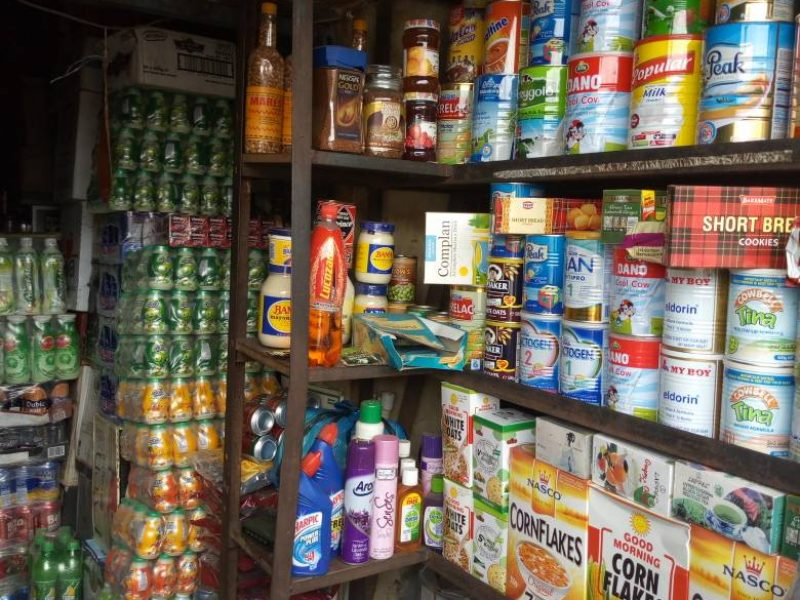
The Rise and Rise of Container Shops in Nigeria

0

The first time I heard about container shops, I was like “What’s this person talking about? How can that woman own a container? Does this person really know what a container of goods cost?” That was many years ago.

I was living in Ibadan the first time I heard about a container shop. I heard about it from someone that resides in Koroduma, close to Mararaba in Nasarawa State. I haven’t heard or seen anything like that before. So I was actually confused when I heard that a petty trader owned a container. Things like that didn’t exist in Anambra and Oyo States then, so you can understand my ignorance and confusion.

I later moved to Koroduma and saw this wonderful edifice. I was like, “Whaaaatttt! Is this for real? Containers as shops?” I mean, I have only seen containers as ‘containers’ for goods that are moved by long trucks and emptied when they are brought to warehouses. I have also seen containers as makeshift offices in construction companies. But I’ve never seen them as private shops, and even homes. My small mind thought that once these containers were emptied in the warehouses, they will be bought by these construction companies, resold for more importation and exportation, or dismantled for other constructions works, such as gates and wheel barrows.

What I know that petty traders use in those days as their shops were temporary structures made with wood and aluminium sheets, commonly known as batchers. But these structures have their disadvantages because they are easily affected by fire outbreaks, thefts, termite attacks and weather attacks. But the conversion of these batchers to containers is an innovative idea that saved these petty traders a lot.

The first time I saw a container shop, I marvelled at the artistic works done to that chunk of metal. Openings were made for the windows and doors; rafters were constructed above it and zinc or aluminium sheets used to make its roof. The inside wasn’t left out as the floor was tiled. Shelves were built on the walls for the display of goods, and the ‘office’ table and chair kept at one corner. A veranda was also added to this shop by extending the ‘roof’ and tiling the floor at the front, and sometimes sides of the container. Trust me, it was a beauty to behold. If you didn’t look well, you may think that it was actually a real house made with cements, sands and blocks.

But my major interest in this piece is not about the aesthetic features of the container shops, but the economic roles they play in Nigeria. I believe they can be found in every part of the country today. Here in Enugu, they are springing up in every nook and cranny of the town. Though this invention has a lot of advantages, it equally has some menaces that need to be checked before they get out of hand. But I will start with the good side of it.

  1. Less Capital Investment: The good thing about having a container shop is that it is cheaper to start. I asked, about two years ago, how much a container costs and was surprised to hear that they come in sizes – one room, two rooms and even three rooms (lol) – and in grades – the very durable (the original foreign ones that came into Nigeria with imports), the constructed ones (the ones made in Nigeria using lower quality metal), and the second hand of any of these two. I was told then that a one-room durable container will cost me like eighty thousand naira (#80, 000), while the constructed one of same size may take me like forty-five thousand naira (#45, 000) to acquire. If I decide to go for the second hand containers, I will need to have between thirty-five to twenty thousand naira, depending on the grade and size.

I looked at this and realised that I could easily start up a small scale business with about a hundred thousand naira, that is, if I see where to keep the container.

  1. Lower Rate of Thefts, Damages and Accidents: The coming of container shops has reduced the reported cases of loss of goods to theft. These containers are built in such a way that their locks cannot be easily accessed by someone without the right key. This means that it will be very difficult for a thief to break in.

Containers also prevent fires and destructive animals from gaining access to the goods inside the shop, unless the ‘house’ has been destroyed in some parts by rusts. Honestly, I haven’t seen anyone who lost her wares in the container to fire.

  1. Mobility: It sounds funny but it is true. Container shops are mobile shops. I witnessed this first hand when the Nasarawa State government came to demolish most of the containers placed on major streets. The way these shop owners were carrying their shops, with all the goods inside, into nearby compounds were marvellous scenes to behold. So, if the area you placed your shop isn’t accommodating, you just have to carry your shop to another place. No need for too much talk.
  2. Revenue Generation: Even though our government has not really acknowledged these types of shop owners, a lot of revenues are being generated through them. These people pay tax, or I say taxes, to different officials from their respective domiciled local governments. They also pay rent, even though that may be small. Yes, in case you didn’t know, they pay whoever that is in charge of that land they kept their shops. And then, they are traders, one way or the other, which means they contribute to the economic affairs of the country. Besides, I have seen a huge container shop used by a wholesaler to stock and supply drinks to retailers. So, container shops are not owned only by petty retailers.

Like I said earlier, container shops can cause some social nuisances to the community. One of the ways they do this is by littering the environment with abandoned containers. Because containers are private properties, nobody else can enter and use it without the permission of the owner. In most cases, the owners of such shops may leave town and never bother going with their ‘shops’. Some of them may put it up for sale but will send away prospective buyers with their exorbitant prices. These abandoned containers obstruct the free movement of cars, humans and floods. And they can become comfortable habitants for deadly animals and miscreants.

Another problem with these container shops is the illicit transactions going on in and behind them. I have observed that some of them in Enugu seemed to be peddlers of marijuana. Maybe because nobody really checks on their business dealings, nor regulate their operational time, they can comfortably go ahead with both legal and illegal businesses. Law enforcement agencies need to be more vigilant with some of these people. Instead of treating them like they don’t exist, the government should encourage them to register their businesses so that they too will feel like they ‘follow’.

The way container shops are springing up in every space in the city needs to be looked into. I am not against them, after all they are reducing the rate of unemployment, but they need to be checked. The way they keep containers these days is gradually making the town look untidy, unplanned and unorganised. These shop owners look for any available space that could contain their ‘shops’ and drop them there (even if they block part of the road, they don’t care). The concerned landowners and caretakers seemed to be more interested in the little money these people pay them than in the problems they create.

Anyway, container shops have come to stay in Nigeria. No one can send them away right now, at least not in the near future. All that the town planning agencies need to do is to map out places for them to keep their containers and ensure that they stick to their corners.

The law enforcement agencies should also monitor the activities of these people. They should not be allowed to open these shops in residential areas only to start selling illicit goods and inviting the wrong type of crowd.

As for the unemployed, you actually don’t have reasons to complain now because you can see that a lot of business ideas have been flowing around. What skills do you have? What business do you want to go into? Have you ever thought of owning your own ‘mobile’ shop or office? See, there’s no need to waste more time. This is Nigeria, things are moving very fast right now. So, look around you and find the right spot for your own container shop and mount it there, before someone else takes that space.

Keep the hustle real.

The Contenders: Winning Grammy Awards for Nigeria

2

Why are we still waiting for the first African to win the Grammy Awards?

Just like every writer dreams of winning the Nobel Prize award, the same applies to every musician.

The highly coveted Grammy Awards has never been won by any African till date. Although we’ve had many nominees such as Fela Kuti, King Sunny Ade, Femi Kuti, and Seun Kuti; but none seems to have done enough to win the accolade. 

Could this mean that African musicians are not doing enough to convince the organizers of the Awards? 

I don’t think so. In fact, Africans are doing exceedingly great. After the American music industry, I will choose the Nigerian music industry as second if not first. I don’t see how the American music industry is better than us. 

Wizkid

We have talented musicians who were not given the right opportunity and environment to grow, yet they made waves and even collaborated at the International level. Examples include, Wizkid, Burna Boy, Kiss Daniel, Wande Coal, Simi, Phyno, Adekunle Gold, Patoranking, Dbanj, Don Jazzy, Ruggedman, Timaya, Tuface Idibia and many more. They all started from scratch. 

Back in the 90s, Africans only listened to American music but these guys have changed the game. People now listen to Nigerian music. Even the Americans listen to Nigerian music. We’ve seen collaboration with international acts like Beyonce, Chris Brown, Wyclef Jean, Rick Ross, Snoop Dogg and many more. 

But the big question is, ”why haven’t we seen any Grammy Awards winner from Africa?”

What are the criteria being used by the Grammy Awards organizers in selecting their winners?

Whatever the criteria may be, I don’t see any reason why it should elude Africans. It’s time for African musicians to win this. 

I nominate Ayo Balogun, aka Wizkid, to win Grammy Awards this year. The CEO of Star Boy record label has really been a top hit for ages. He’s been 10 years in the game and he’s getting stronger.

His collaboration with Beyonce titled ”BROWN SKIN GIRL” is a banger. I don’t see any reason why the Soco crooner shouldn’t win the award. 

Lyrically, he is sound. No wonder he had a sold-out concert at the O2 arena in London. He has also won numerous international accolades to back his talent. It is time for Africans to get what we deserve.

Grammy Awards cannot continue to overlook our homegrown talents making waves outside. If they are getting featured by international acts, it simply shows they are amazing. 

Let’s not only preach equality but also let’s practice it. 

We hope to see Wizkid and many more African musicians win the Grammy Awards this year.

Wedding Is Not An Investment

0

Have you ever been to any Nigerian wedding?

Yes, I have been to many. I can’t even remember some anymore. When I see how people attach so much importance to just a day event, it makes me wonder where our priority lies as human. 

Often times, I have seen people put themselves under the pressure of satisfying the public. They will go as far as to borrow money to spend on planning a wedding ceremony. Some had even gone to the point of emptying their bank account just to satisfy every invited guest in just one day. The worst part of it all, these weddings don’t even last. 

Am I against anyone having a big party?

No! Far from my point of view. I have written this to tell everyone to tread with caution when planning a wedding ceremony. Spending big doesn’t make you big. People will attend many more wedding ceremonies after yours. Meaning, people won’t dwell on it again. The annoying part is that you won’t satisfy every invited guest. So why even try at the expense of your pocket? 

Wedding is not an investment. As much as it is worth celebrating, it should be done reasonably. There’s always life after the wedding. Why attach so much importance to just a day event when you should be more concerned about the life events – marriage. 

We need to break away from the ”I will do it only once” mentality. Because it has put many into a terrible situation. The wedding ended and you had to realize that you’d pay back your debts. It is not a good way to start your home with your loving partner. Thinking about debts when you are supposed to be honeymooning in Dubai or Canada may frustrate your home and put your marriage vows under threat. 

I understand your partner may want a big ceremony, but I will advise you to check your pockets. Use what’s left after savings to organize your wedding. There’s no standard rule that specifies how a wedding should look like. In fact, you don’t even need to go bankrupt to organize any. If you can only afford to feed five people, it’s fine. After all, no one will help you feed your home. 

Don’t ever succumb to the pressure of family or your partner because a marriage that starts with debt may never last. It’s too early to start living in fear and frustration. Think about your unborn children. The cost of training a child in Nigeria is no longer a penny. Would it not be better to invest in your children that will be there for you in your old and stricken days than to lavish on a day wedding. 

Lastly, if you are not a celebrity, there’s no need to lavish your money on a wedding because it won’t make the headlines and neither will you make any profit from it, unless you can conveniently afford it. 

A better Nigeria starts with a great mindset. This boils down to every one of us. We don’t want broken homes anymore. The children are the ones who suffer from failed marriages. We want our children to be well catered for, and it starts by foreseeing the future.

It makes no sense to borrow money for a wedding but can’t borrow money to execute a business idea. 

Think about it.