DD
MM
YYYY

PAGES

DD
MM
YYYY

spot_img

PAGES

Home Blog Page 6741

The Importance of ‘Summer’ Schools to Nigerians

0

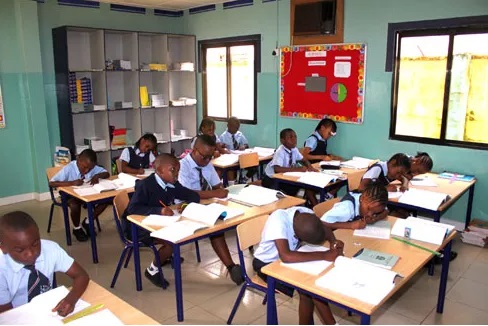
Most of us in this country would have noticed that within this month of August, a lot of school-aged children were seen going up and down the streets, with their school bags hanging on their backs. In fact, if you happen to be at home within the week, you will enjoy the quietness that comes between 9am to 12pm when most of the children within the vicinity have gone for their ‘summer’ lessons.

When I first heard about summer schools and classes in Nigeria, I was confused because we don’t have any season called ‘summer’ here. But someone told me that why that name was given to it was because we hold summer classes in Nigeria within the same time some countries experience their summer; and that most of our people travel out of the country to enjoy that season with them. It doesn’t make sense to me either. But since they already call it Summer School, Summer Classes, Summer Lessons, Summer Camps and so on, we have to do that too.

I’ve seen a lot of people that kick against this holiday programme for children. The major argument presented by this group is that these children need to rest their brains during the holiday. Some also said that parents need that period to bond well with their children. These points are all correct, but then, there are still some reasons why ‘Summer Schools’ are still important in our society.

I will try to group these points according to its importance to the schools, the parents and the children.

A. For the Schools

1. Customer Attraction and Retention: This is the major reason most schools engage in this programme. If you have noticed, new schools start off with summer classes, and some of them make it free of charge.

Now if you are wondering how these schools attract customers through summer programmes, I will tell you. The first thing they do is that they either charge very low fees for the classes, or they make it free of charge. The essence of this is that the parents of the children within that vicinity will be attracted by the cheapness of the programme. When they finally bring these people together, the teachers will then do the rest by making students from other schools feel that the teachers in their schools weren’t teaching them enough.

How do they do this? They bring up those topics that are usually avoided by teachers in Nigerian schools (though they are in the curriculum) and then teach them deeply. A good example of such topics are phonetics and phonology in the English language (most of our English teachers avoid them like the plague).

As for how they retain their customers, since they are running that programme, their students living nearby will have no reason to go to another school (and face the same tactics used by this school).

So, when these children go home, they will complain to their parents about how Teacher A and Teacher B in their current schools are not good and so they want to go to School B, where the teachers are very good. Now, I’ve leaked our secrets.

One more thing, schools that have beautiful surroundings and good facilities use the summer programme to exhibit them and bring in new customers.

2. Extra Income for Schools: Schools that collect fees for summer lessons obtain extra income for carrying out some projects. For example, some schools use the income from summer lessons to pay August salaries, repaint the school buildings or buy textbooks that will be resold to the students at resumption.

3. Extra Income for the Teachers: Teachers that partake in summer classes are always paid for it. This is a way of obtaining the extra fund they need. Some of them may even engage some of the students in private tutorials and generate more income from there.

B. For the Parents

a. Keeping the Children Safe: Some working parents are not comfortable with leaving their children alone at home or with some relatives and friends they couldn’t vouch for. Summer schools therefore provide the best alternative for them.

b. Keeping the Children Busy: Everybody knows that children are always busy. They must definitely find something to do. If they are not well monitored, they can either destroy something or hurt themselves. So to decide that they should sit back home and rest their brains may not really be wise (unless there is an adult left with them). Anyway, summer class is one way to keep these children busy within the long vacation.

C. For the Children

a. Networking: If you think these children don’t want to network, then I’ll suggest that you have a rethink. To be honest, the major reason these young ones want to go to summer classes is to meet with old friends, make new ones and play their hearts out. You need to spend some time with them in their classes to understand what I’m saying here.

b. Preparing for the Next Class: This doesn’t mean that every child that went for a summer class is going to learn everything he/she will meet in the next class as the term resumes. But, one good thing about the summer classes is that they give these students insights into what they will meet within their first month in their new classes. This has a way of making the students have more confidence as they go back to school.

I, however, have some suggestions to make towards how these schools should be run. The first thing I will like to point out is that the number of hours spent on academic activities should be reduced. In fact, if it is possible, let some days be free of any academic works. As a matter of fact, these children need time to play and socialise under the watchful eyes of the teachers. Everything shouldn’t be about academics.

Secondly, summer schools in Nigeria should find a way to inculcate extracurricular activities into their programmes. I know that this means that extra charges have to be made, but let them work something out first. Why I’m suggesting this is that this may be the only time these children will have to try out some of their talents.

Next is that, if it will be convenient, some schools can organise morning and evening classes. Maybe different programmes will be held during the morning classes and another set during the evening classes. This will allow those who couldn’t make the morning classes to come for the evening ones.

Finally, our public schools should be encouraged to start up summer schools. I noticed that their school compounds are used during this ‘summer’ period by some private individuals who organise their own programmes and tutorials. Let them follow the trend to make their students feel as special as those from private schools. The holiday is too long for these students to sit down at home while their parents are out there pursuing their careers.

Most summer classes have ended right now, while the rest will end next week. It will be advisable for those schools that missed this year’s own to start now to plan for the one of next year. They have a lot to benefit from it.

Quantum Denomination

0

Some years ago, while in the University, I went to buy a tin of tomato paste which cost N20 per tin and I knew that the cost of a dozen was N200. After about a month, I found out that the tin cost N30 and a dozen cost N290. I was surprised to see that the cost of the tin had increased from N20 to N30 that is, 50% increase. I asked the retailer the reason she did not sell at N25, she replied that she wouldn’t make any gain which we calculated together by dividing N290 by 12. Then I remember that if small denominations such as 1Kobo, 5Kobo, 10Kobo, 50Kobo, N1 etc were available, she would have at least sold at N27 or N28 per tin and would still make her gain. Then this term “Quantum Denomination” sprung in my heart.

The term was actually borrowed from physics. In physics, a quantum is the minimum amount of any physical entity (physical property) involved in an interaction.

I used the term metaphorically to express the effect of the small denominations on our daily business transaction..

Then in the University, I wanted to write an article titled “Quantum Denomination” but I couldn’t articulate my thoughts.

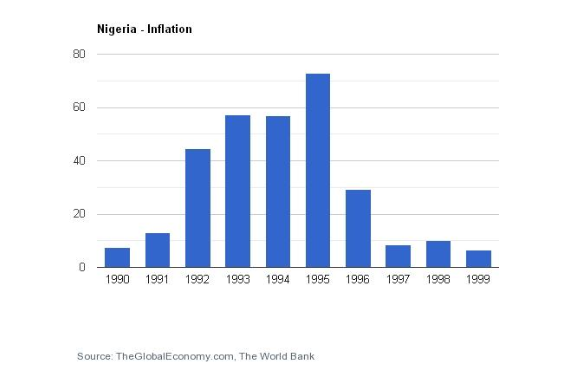
It reminds me of the rate at which inflation has eaten up into the Nigerian economy that even the N5 and N10 notes are losing their purchasing power and the confidence people have in them.

Though there are other causes of inflation e.g. Excess Demand over supply, Rising Cost of production, inflation Imported and Exchange rate but the rate at which the non-availability of these denominations has fuelled inflation in Nigeria cannot be undermined. They are like those small things which have the greatest effect. 

The worst effect of inflation is the erosion of value of a country’s currency. We see the Italian lira lost its value and the German Dutch once did. Others are poverty, higher borrowing cost, increased cost of living, fall in purchasing power and standard of living.

The value of Nigerian currency dwindled rapidly into the verge of entering the fourth republic. So, before the fourth republic, the people of Nigeria had lost confidence in the denominations as the purchasing power of those denominations had become naught especially in the Southern Nigeria. 

While other CBN Governors administered around the problem, the coming in of Professor Charles Soludo in 2004 saw the need to reawaken the people’s confidence in the denominations. He started the resuscitation exercise with the coins especially the N1 and the N2. The effort was unfruitful as the people refused to accept the denominations in their transactions.

The governor also tried to enforce acceptability through the banking sector, but the people have the will. The people would rather leave their transaction balances than to have the denominations with them because they had the premonition that no one would accept from them.

This went on for some months that the government gave up its effort to resuscitate the denominations.

What was the mistake the Government made?

In 2012, I carried out a mini research on why these denominations were still being accepted in countries which were even advanced than ours and had been for years before us.

I realized that in those countries the effort to maintain the small denominations is inclusive at every government level. The government ensured that every price of goods is quoted with their small denominations and even in their decimals. In the US, you will see that a particular good is sold at $92.30 etc. The same thing happens in other developed countries.

I realized that though the Central Bank Management then tried to resuscitate the denominations but enforcement in one sector or through one sector made it not to see the light of the day. The CBN focused using the monetary policy and within the monetary economy neglecting the real/product economy where the real activities of exchange occurs.

That is, the resuscitation can not only be done by one unit of the economy alone, all hands must be on deck.

The Effect of Extinction of the “Quantum Denomination”

The extinction of the denominations has made the cost of goods increased sky-rocketedly.

Prices have been known to be sticky according to Maynard Keynes, the father of Macroeconomics. That is, it will always go up as the economy increases its volume of transactions in goods and services. Inflation is bound to happen but the rate at which it increases is the problem.

For instance, between 2015 and 2016 when the price of a bag of sachet water containing 20 pieces of sachet was N50 naira, retailers were able to sell at the rate of N5 per sachet making between 80% to 100% profit depending of number of wastage. But when the price of a bag of sachet water went up to about N70 naira, the retailers could have increased by just N1 or N2 naira. But due to non availability and non-acceptability of these small denominations, we had the retailers increased the price to N10 per sachet. That is a wholesome 100% increase. We see how the non availability and non acceptance of these quantum denominations fuel inflation at high rate.

Solution

  1. The policy makers should make effort to resuscitate the use of these denominations if we are serious about curbing high rate of inflation in Nigeria. The inflation data often given by NBS are computed using the CPI (Consumer Price Index, which uses basic goods and services consume by people). That is, the effect is high on consumers whose large percentage of their income goes into the purchase of basic food items
  2. Government can collaborate with supermarkets and its agencies to give incentives to those people who purchase items using the denominations.
  3. However, the effort has to be at all government level.

And I believe my analysis will give some insights into providing additional solutions

Ndubuisi Ekekwe Will Speak In Sterling Bank’s Agriculture Summit – Ag, The $1 Trillion Sector

2

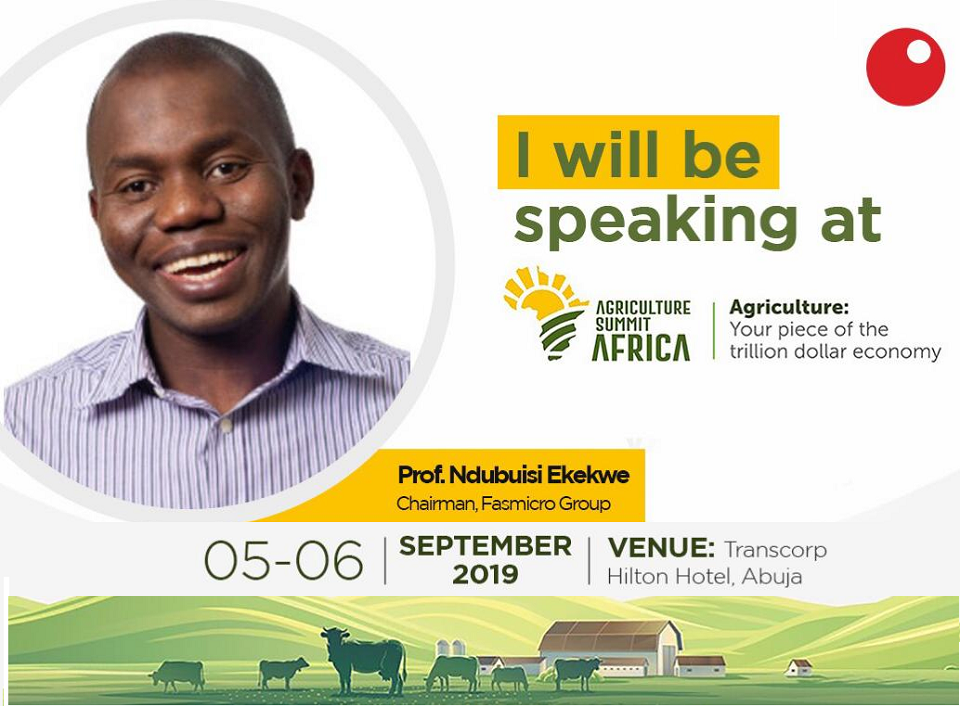
I will be speaking in Sterling Bank Plc’s Agriculture Summit Africa. The Summit’s objective is to create a platform for both private and public investors to discuss the opportunities that exist in Africa’s Agricultural sector and how to harness the same for development and wealth creation. The event holds 5th to 6th of September in Hilton Abuja.

In a statement, the bank said that the summit themed, “Agriculture – Your Piece of The Trillion-Dollar Economy,” seeks actualization of the $1 trillion African agribusiness economy dream by 2030.”

Group Head, Agric Finance and Solid Minerals at Sterling Bank, Bukola Awosanya, said “Agriculture productivity in Africa is low and a source of concern in the sector that account for 60 per cent of the continent’s labour force and 75 per cent of its domestic trade. And the creation of a single African market with over 1.2 billion people through the Continental Free Trade Area (AfCFTA) treaty is not without possible adverse impact on the sector’s growth which calls for a pan-African agriculture summit. “Sterling Bank has been at the forefront of Nigeria’s agricultural transformation agenda which seeks commercialization at scale nationwide through focus on value chains where the country has comparative advantage. This market-led transformation driven by strategic partnerships is stimulating investment, creating new jobs, wealth and food security. It is imperative that this same model is adopted across the 54 countries that now make up the single African market to improve productivity, guarantee food security and ensure a future of shared prosperity for all Africans,” Awosanya said.

Africa is entering a golden era of agricultural production where technology will drive productivity. We expect continuous improvement in crop yield over the next few years. Everyone knows that fixing agriculture will fix Africa because more than 65% of Africa’s working population is employed in agriculture. So, it has the most catalytic impacts possible in raising millions of people out of poverty. That $1 trillion market will surely arrive before 2030.

Don’t Try To Move Mountains, Tend To The Gardens You Can Touch

0

We’ve all gone nuts, I mean crazy and it’s ruining us. It’s blinding us, it’s killing us.

There’s this major mindset that has been passed to us just because the world is getting worse daily which is to do the impossible, dream big, solve big problems, making it all look like its a race to solve the biggest problems of the world in order to either be rich or get famous.

I was once in that shoe and I got burnt badly. Fine, I am passionate about the educational system and I felt that if I could solve the “BIG PROBLEM”, I would be crowned a hero and make my billions. The truth is, I didn’t know where to start, I didn’t know how to start, it was a big mountain and I have a shovel.

Everyone else had their big mountains and a shovel so there’s no one who can assist. We all want to win the crown for the world. That is what the motivational speakers say, that is what they big entrepreneurs say, that is what our parents and teachers say. But is it possible to move a mountain with a shovel?

The fact is that we have so much obsessed ourselves with big problems that we do not have any sight left anymore to see what we can actually do. We keep fighting to become very strong to solve that big problem, to win millions of crowds and to build the big companies that we totally overlook how we can win the hearts of the hundreds around us.

Like I said, I was once in that shoe. I have written a post earlier on how SMALL is the new BIG. Truth is, if we all pay attention to the little things out efforts can achieve, we’d begin to build big communities of loyal people. If I want to solve the educational system, why don’t I fix for the first few hundred around me.

It would not lead to frustration, they are in my environment. If I give you a hundred thousand naira to start a business in either your location or another country you don’t know anything about, which would you choose?

Which will have effect and impact?

Don’t try to move that mountain, it’s a trap!!!

Why not tend to the garden you can reach, then create a forest, then make some money and buy a drilling machine.

Lots of youths get burnt out trying to solve big problems and it’s fine if you want to solve big problems but how do you want to solve it?

By commanding the world to help you or by raising faithful tribesmen to help you convince another tribe, then another tribe, then another tribe and like that.

There’s power in small beginnings. Mountains didn’t erupt in a day; you can neither surmount it in a day nor move it on your own.

You cannot do the impossible; start with the possible. I wish those youths trying to be heroes will see this and start small; those who are also frustrated about not getting the impact they want would also see this, and those who are trying to make more money would read this.

SMALL is the new BIG. Start small, build a tribe, and move and expand.

Africa’s Infrastructure Deficit, A Drawback To The AfCFTA

0

It is no longer news that the African Continental Free Trade Agreement (AfCFTA) became effective May 30, 2019 with 54 of the 55 African Union nations agreeing to a borderless and tariff-free trade agreement. The number of signatories to this agreement makes it the largest in the world in terms of participating countries since the formation of the World Trade Organization (WTO) in January 1995.

Low Intra-African Trade

According to the United Nations Conference on Trade and Development (UNCTAD), at the continental level, inter-regional trade was highest in Europe followed by Asia and North America. Inter-Europe trade, as at 2017, stood at 68% while inter-Asia and Northern America trade were 59% and 31%, respectively. Within the same period, inter-Africa trade recorded 17%, the lowest of any region globally. With an estimated population of 1.2 billion people and gross domestic product (GDP) in excess of US$3.4 trillion, Africa not only has the market but the potential for organic growth through strategic, complementary and mutually-reinforcing trade partnerships.

Benefits of the African Continental Free Trade Agreement

AfCFTA promises the diversification of Africa’s industrial export by encouraging a transition away from extractive commodities such as oil and minerals through continental economic integration, harmonization of customs/border checks and free flow of human and material resources. The agreement also advances the African Union Agenda 2063 which envisages a single African air transportation market. Besides the direct economic benefits to airline operators and the revenue gains to governments within the region, the air transport liberalization is expected to reduce the cost of air transportation. The welfare gains therefrom could be channeled to other alternative uses to increase the quality of life of Africans. However, for AfCFTA to realize its full potential and for Africa to possibly catch-up with the Western world, the continent must address, as urgent and important, its infrastructure deficit which the African Development Bank (AfDB) estimates to be about US$170 billion annually.

Infrastructure Development, a Necessary Condition for AfCFTA’s Effectiveness

Why is infrastructure important to AfCFTA? The Economist argues that good ports are perhaps more important to Africa than any other region since 90% of trade happens by sea. It is, therefore, worrisome that the United Nations Office of the Special Adviser on Africa (UN-OSSA), reports that poor port facilities add 30-40% to intra-African trading costs and Foreign Direct Investment (FDI) and this could more than offset the potential gains of a tariff-free continental trade agreement. Empirical evidences suggest that, “the poor state of infrastructure in Sub-Saharan Africa cuts national economic growth by 2% points every year and reduces productivity by as much as 40%”, while “the output elasticity of infrastructure in South Asian countries ranges between 0.24 and 0.26 percent”. The implication is that investment in infrastructure contributes about a quarter to the growth outcomes in South Asia. Africa’s Pulse, a biannual analysis of African economies by the World Bank, reports that closing the infrastructure quantity and quality gap relative to the best performers in the world could increase per capita GDP growth by 2.6% per year.

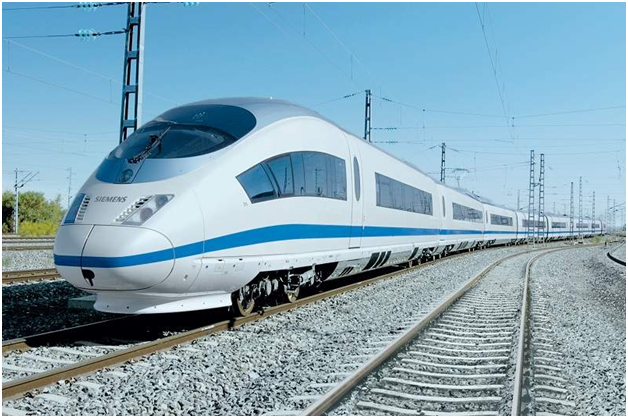
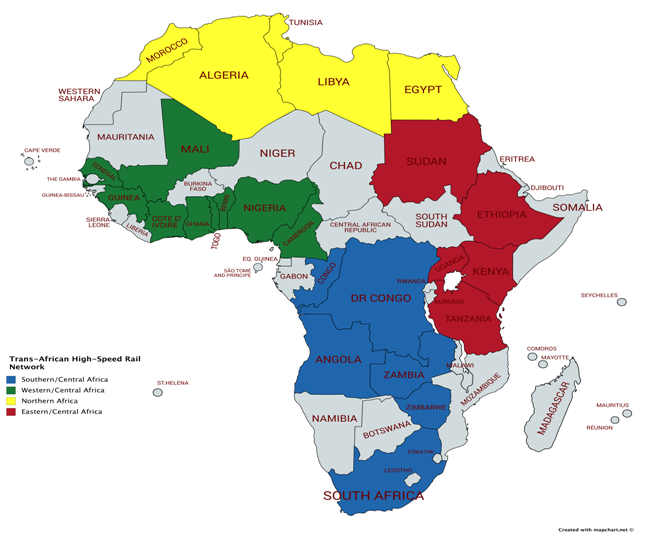
What can Africa do to address this infrastructure shortage? Just like France, Spain, Italy, Germany, Austria, Sweden, Belgium, the Netherlands, Russia and the United Kingdom are connected to a cross-border high-speed railway through the Trans-European high-speed rail network, sub-regional economic giants like Nigeria, South Africa, Egypt and Kenya should be connected through a Trans-African high-speed rail network with connecting stations through other African countries on the rail link as shown on the map below.

Created by the Author using mapchart.net

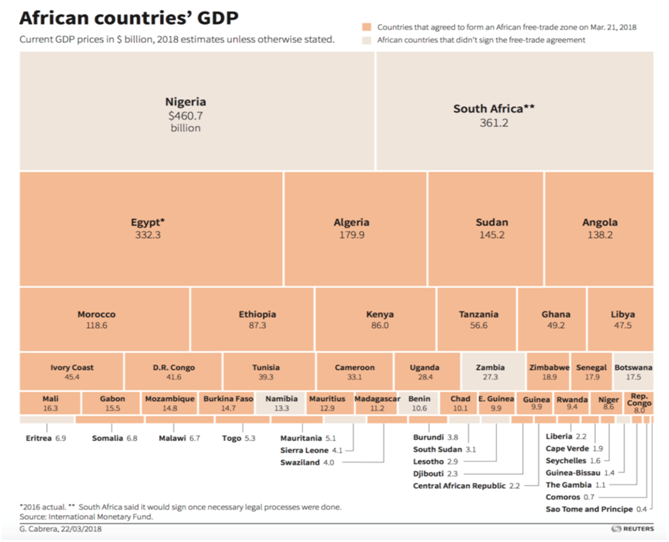
This proposal is based on the size and contribution of countries along the high-speed rail network to Africa’s overall GDP as shown on the chart below. Investment on the Trans-African high-speed rail network is expected to not only reduce the cost of cross-border transportation and transaction costs but also ease the pressure on seaports and airports.

Source: International Monetary Fund/Reuters/World Economic Forum


Financing Africa’s Huge Infrastructure Deficit: Challenges and Opportunities

Following the first Africa Investment Forum in Johannesburg, South Africa in May 2018, where discussions were held as to how to further strengthen Africa-led response to the continent’s infrastructure-financing deficit, the AfDB in November 2018 approved an equity investment of US$50 million in African Finance Corporation (AFC). According to the AfDB, “the equity investment is aimed at strategic partnerships with some Development Finance Institutions (DFIs) that have comparative advantage at regional or sub-regional levels in certain strategic sectors”. Given that bridging Africa’s infrastructure deficit would require about US$170 billion annually (which is 5% of the continent’s GDP), the reasonable question before policy makers at the regional level is where will the money come from? Should Africa rely on Nigeria, South Africa and Egypt that cumulatively account for more than 50% of the continent’s GDP? Can Africa fund Africa’s infrastructure need with Africa’s resources or should we seek external assistance?

What financing options can Africa explore? AfDB is expected to lead the charge here by structuring loan syndication partnership deal with other multilateral development banks (MDBs) like the World Bank, European Investment Bank, International Development Association, Asian Development Bank and Inter-American Development Bank. Loan syndication with a consortium of MDBs has the added advantage of risk diversification. This consortium of MDB lenders with the ratification of the African Union (AU) can select through competitive bidding, a concessionaire with expertise in rail construction and management to guarantee the viability of their investment. The elegance of structuring concession contracts that bundle construction and service-provisions together with a single private operator is that it is generally believed to be incentive-efficient and yields the best outcome.

Alternatively, Africa could also explore financing through Sovereign Wealth Funds (SWFs). With a global cumulative asset of over US$7 trillion, SWFs are better placed to finance large scale infrastructure of this magnitude. Policy Analysts tend to prefer SWFs to institutional investors like Pension Funds because SWFs have longer investment horizon and they do not have substantial explicit liabilities (specific obligations created by law or contract, that government must settle). Additionally, SWFs are not subject to the “prudent person” investment regulation, which prevents large exposure to long-term infrastructure projects.

Africa Infrastructure Bond Market could also be a financing option where the AfDB together with sub-regional and national development banks like ECOWAS Bank for Investment and Development (EBID) and Development Bank of Nigeria (DBN) create infrastructure development bonds with different tenors and yield. This would encourage Africans (within and outside the continent) to invest in Africa and with “strength in numbers” (credit to the Golden State Warriors), Africans can build the Africa of our dreams.

Although the United Nations Economic Commission for Africa (UNECA) has estimated that AfCFTA could potentially boost intra-Africa trade by 52% by 2022, but to realize that estimate, the task of addressing Africa’s infrastructure deficit must be accorded the urgency and importance it deserves. Until then, like Jaramogi Oginga Odinga titled his 1967 Classic, it is not yet uhuru (freedom in Swahili) for Africa.