DD
MM
YYYY

PAGES

DD
MM
YYYY

spot_img

PAGES

Home Blog Page 6743

The Game of Nigeria’s Bike-Hailing War

1

It is no longer news that Gokada is on a 12 day journey to improve its services. The question then is why do you have to take a break before you can improve your service? In this piece, I will highlight a few developments that I believe informed this move.

  1. The Need for Blue Ocean

Within two years of growing activities in the motorbike hailing space in Nigeria, the small drop of water has turned into a great ocean and surprisingly it’s now a Red Ocean. With players like Max.ng, Gokada, ORide, the movement of activities changed. Price is no longer a big deal as ORide came with a ridiculous price that left others with no hope.

What then can possibly be done differently? The answer is Service! Professionalism must be weaved into the fabric of any brand that will compete with ORide. This is primarily what GoKada set out for.

In the note released by Fahim Saleh (GoKada Co-C.E.O.) he said “It’s not easy criticizing your own company. But either I could ignore these issues and move along happily like everything was fine. Or I could realize that this kind of thing is happening to our customers thousands of times over. I am not ok with that. Gokada was started to change the perception of what the bike taxi could be in terms of safety, convenience, and transparency”. 
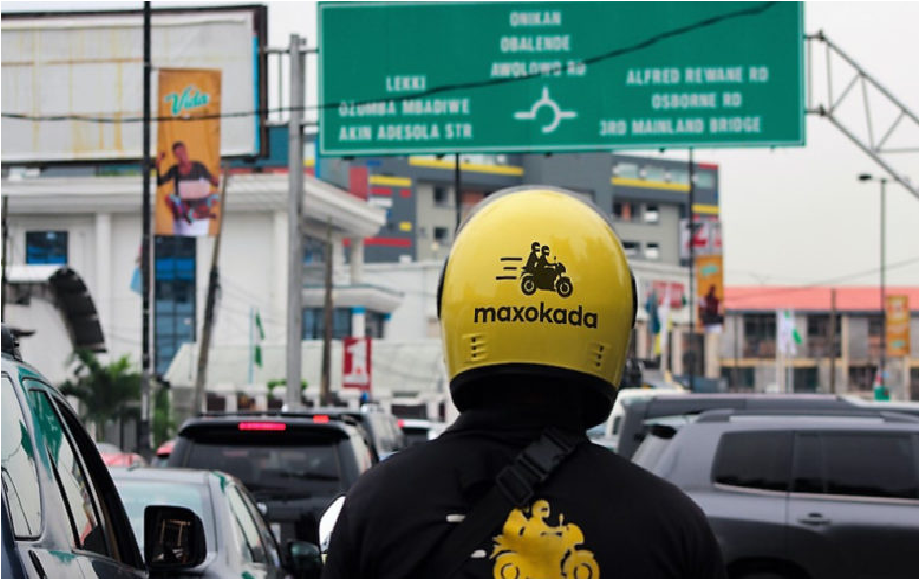
Max rider in Nigeria

This was a statement that narrates his unpalatable ordeal while trying to hail Gokada bike from Lagos V.I. to Third Mainland Bridge.

He believes the brand is far from fulfilling its promise (safety, convenience, and transparency).

I also have a series of experience with different motorbike hailing brands. So, I can talk about how service can make a difference. The best of my experience is always when I take MaxOkada, there’s this premium feeling that accompany their brand, from the type of bike and helmet to their champions’ (MaxOkada called their drivers Champion) driving skill. However, Gokada and ORide hardly give me the same feeling.

Fahim however stated that the 12 days shutdown will result in improved service from the brand with a re-trained Pilots on using navigation and adequate use of the app for service delivery, new set of bikes, among others.

My Take: Price will take you far but exceptional service is the only guarantee to keep you up. Sure, Gokada has received a great hit in market share within this break but if they can be back with a significantly improved service, then, I can speak of their survival.

  1. The Loss of Key Resources to Competitors

Like I stated earlier, the most obvious reason is the need to create a Blue Ocean however, a lead to this need is the loss of key resources to their competitor (ORide).

In less than a year, Gokada has lost key resources as high as its Co-founder to ORide. Below is a list as reported by WeeTracker.

  1. Awolowo Moses: Awolowo Moses was the co-founder/COO of Gokada. He currently works as the Director of Business Operations at ORide.
  2. Ebunoluwa Shipe: served at GoKada as Head of Driver Support/Experience, currently working as a Senior Operation Manager at OPay
  3. Awe Oluwakayode: currently working as a Senior Operations Manager at OPay but previously as Driver Acquisition and Road Operations Officer at Gokada.
  4. Akinwale Afolabi: left Gokada earlier this year (Feb 2019), and joined OPay May 2019 as the Senior Manager, Growth and Marketing.
  5. Riders Dumped GoKada for ORide: there are reports that upon confirmation that a driver is from Gokada, he will get a sign-on fee of N36,000.

Report also has it that both Jumia’s dispatchers and MaxOkada riders have been poached by ORide.

So, I believe this is a big blow that can lead to service inefficiency for Gokada hence the need for urgent restructure (Gokada 2.0).

While working on a better service, I will advice Gokada to also pay a very good attention to Talent acquisition and retention because it’s all about PEOPLE.


Photo Credit: originally the Game of Throne season screenshot.

How to Create a Minimum Viable Product That Will Interest Customers

0

Minimum Viable Product (MVP) is a development technique in which a new product or website is developed with sufficient features to satisfy early adopters. The final and complete set of features are only designed and developed after considering the feedback from the product’s initial users according to Techopedia. 

As an entrepreneur or founder, there are a lot of risks you face in business, it is therefore your responsibility to ensure that you have a Minimum Viable Product that won’t fail when it’s introduced to your prospective audience. This is one of the most difficult tasks of an entrepreneur because your Minimum Viable Product can determine if you will continue or halt your entrepreneurial journey, depending on your attitude and disposition.

The question now is how can you create a Minimum Viable Product that will interest customers? We share some helpful tips.

Identify an actual problem

Any innovative, viable and scalable idea or product must be aimed at solving a particular societal problem. This will ensure that the idea won’t hit the rocks from the initial phase. No matter how fantastic your idea or product maybe, if it does not tackle a human problem; it will definitely fail. Before going further, ask three questions to figure out whether the path you’re heading down is a useful one: 

  • What problem is being solved? 
  • How is this product’s solution better than the competition? 
  • Is this an issue that occurs frequently enough to keep customers coming back? 

These questions are critical to a development process that will result in more than something that just seemed like a good idea at the time.

Identify how the product will fit into users’ daily lives

While it isn’t possible to check out every single use case for a product before it’s released, there are ways to get an idea of what typical use might look like. Develop representations of a variety of users with their own stories surrounding when and how they use the product. Knowing what the user is doing with your product helps bring a project into focus and indicates which features will be useful in the final product, and which can be scrapped or delayed for future versions.

Perform frequent A/B tests

Just because a product works well for developers doesn’t mean it’s guaranteed to do the same for real-world users. To avoid succumbing to unseen biases, perform A/B testing when possible to better capture customer preferences. A/B testing is a significant part of the Minimum Viable Product. It will help decide on which features, approach, design, and branding to be modified throughout multiple prototypes to best drive user behaviour and increase audience buy-in.

Consider the design process & user flow

Design the product in a way that is convenient for users. You need to look at the product from the user’s perspective, starting from opening the product to the final process, such as making a purchase or delivery. In addition, user flow is an important aspect as it ensures you do not miss anything while keeping the future product, and its user satisfaction in mind. To define your user flow, it is necessary to define the process stages; and, for that, you need to explain the steps needed to reach the main objective. 

Build your MVP

Once you have decided upon the main features and have learned about the market needs, you can create your MVP. Keep in mind that a prototype is not lower quality than a final product, and still needs to fulfill your customer’s needs. Therefore, it must be easy to use, engaging, and suitable for your users.

Social Media – The Perfect Field of Magicians

0

The world has moved from the stone, iron and bronze ages to the jet, digital or modern age. One of the central cores of the present age is the social media. A large number of people will find the link to this article on social media platforms. Social media is robust with real-time attention. Timelines are filled with reaction and raw responses. Opinions are wielded like swords. Political and popular figures are skewered with aplomb.

ICT has turned the world into a global village with the chief tool to achieve this being social media. One can access life transforming messages through social media platforms, distance barriers in relationships have been broken, and with just a click, one can access the current news, and world trend, amidst a few to mention. Everyone has to say a heartfelt thank you to everyone involved in this evolution.

Social media is often referred to as the worst and best thing to have happened to this generation. It is a platform where billions think they are connecting with the world, but are disconnecting with reality and connecting with only illusions.

The allure of social media is the desire to be seen, omnisciently seen, if not always affirmed, at least always put in view of others. It promises to protect us from athazagoraphobia — the fear of being forgotten. So we impulsively connect, from the moment we wake up to the moment we must surrender ourselves to sleep.

It is a panopticon, a type of prison in which you never know who is watching. A panopticon is a type of goal that was proposed by philosopher Jeremy Bentham in which a single guard tower stood in the center of a prison in which guards in the tower can visually see every inmate in their cells causing the inmates to have a feeling of paranoia because they can not tell who is looking. Isn’t social media like this? One can update my status on Facebook and in seconds get notifications of likes and comments.

But not to be deceived that is not the number of people that have viewed the update. With one click, marriages have been shattered and visions destroyed.

The world is full of illusions. Magicians use myriads of things to trick people into believing the unbelievable and capture their attention. Today, a large percentage of people engaging in social media also perform this kind of magic. Life is full of illusions but social media has amplified this. Many put in their profiles who they are not, there are the tools we have to update our status, share pictures and perform magic that can make who we would like to be in the real sense. With everyday, social media is moving us from the real world into the magic world.

It is easy to get the impression that friends are more famous, powerful and knowledge than they really are these days. It is also easy to form the impression of the nice guy or lady than in real life. Everyone of us must be humbled enough to accept we have fallen for this magic before.

With the tools available people look more beautiful or handsome than they’re, locations can be changed, voices can be made more sonorous amidst others. Truly, with social media all that glitters is not gold.

Millions go to the extreme ends with social media today. Why? Because with social media racking up likes, comments, and follows has become a way to measure someone’s worth. A writer starts to measure the worth of his or her article with number of likes gotten.

And with everyday, we disconnect with people near us while fighting to connect with people far from us.

Next time you are posting something – ask the critical question – do I just want a reaction or something else?

The search for perfection embodies our social media and in that hunt we are deviating everyday from who we are to who we wish to be with a less appreciative manner in the society.

In the 1890s, physiologist Ivan Pavlov discovered that when he rang a bell to signal mealtime to dogs, they would begin to salivate whether he brought food or not. Many researches have been done in recent years to confirm his findings. Brain researchers have found that people have more brain activity anticipating a reward than receiving one. With this, whenever the ping of your phone rings it sets off a dopamine loop in your brain. Dopamine isn’t simply a pleasure chemical but a wanting chemical. With this, people send all kinds of pictures and messages hoping for responses.

The Invisible Layer Strategy and Why OPay Is Emerging As Nigeria’s Most Potent Fintech

5

I wrote a few days that OPay, an Africa-focused mobile payments startup founded by Norwegian browser company Opera, was in the phase of customer acquisition through subsidization of transportation services. By making ORide (motorcycle ride hailing) very affordable, Opera would attract massive user base for its paytech unit, OPay. I explained that even though Opera may be losing money in the transportation unit, it has a promise on the payment one under double play strategy. Simply, OPay will make money for the business even though ORide may be loss-making. And profitability is irrelevant, at least in the short-run, because the parent company is known for exiting via IPO (initial public offer) in Europe where user base and growth are the key selling factors.

Extending that, I remind you that in a perfect internet market, marginal cost is zero for online solutions. That means, every internet delivered service should have distribution cost of zero fee if markets were perfect. Of course, markets are not perfect, and that means we have to pay distribution costs for online solutions. Yet, companies like Google and Facebook which can attain marginal cost of zero, offering freemium services, scale massively. Besides the distribution cost, there is also the transaction cost. Marginal cost comprises of transaction cost and distribution cost.

People, marginal cost of zero has come to the paytech sub-sector of Nigeria’s fintech sector. Yes, OPay is running what I call the Invisible Layer Strategy. The Invisible Layer Strategy is a strategy where a company builds a product utilizing critical infrastructure of another competing company, in the same product line, but finds a way to under-cut that company on cost of services to end users. Today, OPay offers zero fee to customers who use it to pay for DStv services in Nigeria. It utilizes and relies on Nigeria’s banking infrastructure. But if the same customers use banks, directly, they would be charged fees, by banks. Largely, OPay has invented an invisible layer which makes it possible to handle those payments at zero cost that even the banks themselves cannot do. It is important to note that OPay is not absorbing any cost to acquire customers; there is no cost whatsoever in the value chain, and that means even in the long-run, it can process payments in Nigeria at absolute zero fee.

Image result for marginal cost is zero tekedia
OPay has eliminated both the transaction and distribution costs pushing the marginal cost to absolute zero

I will not explain what OPay is doing at the technology level [pardon me for that, that is exclusive for our clients and portfolio startups  Update: many have written asking for help. Consider the possibility that OPay has bank accounts in all banks in Nigeria. If a customer ( paying for DStv) pays through it, it will simply receive money from the customer to the specific corresponding bank account it maintains in the customer originating bank. At the same time, it will pay the merchant to the merchant’s bank account using its (OPay) funds in the same bank as the merchant’s. Because wallet-to-wallet transfer in Nigeria does not attract a fee, this two-sided intra-bank transaction (inflow and outflow) does not cost OPay and its customers any transaction fee.OPay, relying on bank APIs, automates this protocol. This is Option 1. There are other options on how to execute this including having a holding quasi-entity.]

But consider if OPay scales that redesign of zero fee across all payment ecosystems in Nigeria, killing commissions, you will agree that many fintechs in Nigeria built on commissions will go bankrupt. Simply, you cannot compete with free. OPay is working to move paytech in Nigeria to a perfect digital market where marginal cost is absolute zero.

I have a friend who runs a fintech. His wife uses OPay to pay for their DStv services since his own company charges fees and madam cannot ‘waste money”. Scale that experience, you will understand where OPay is going.

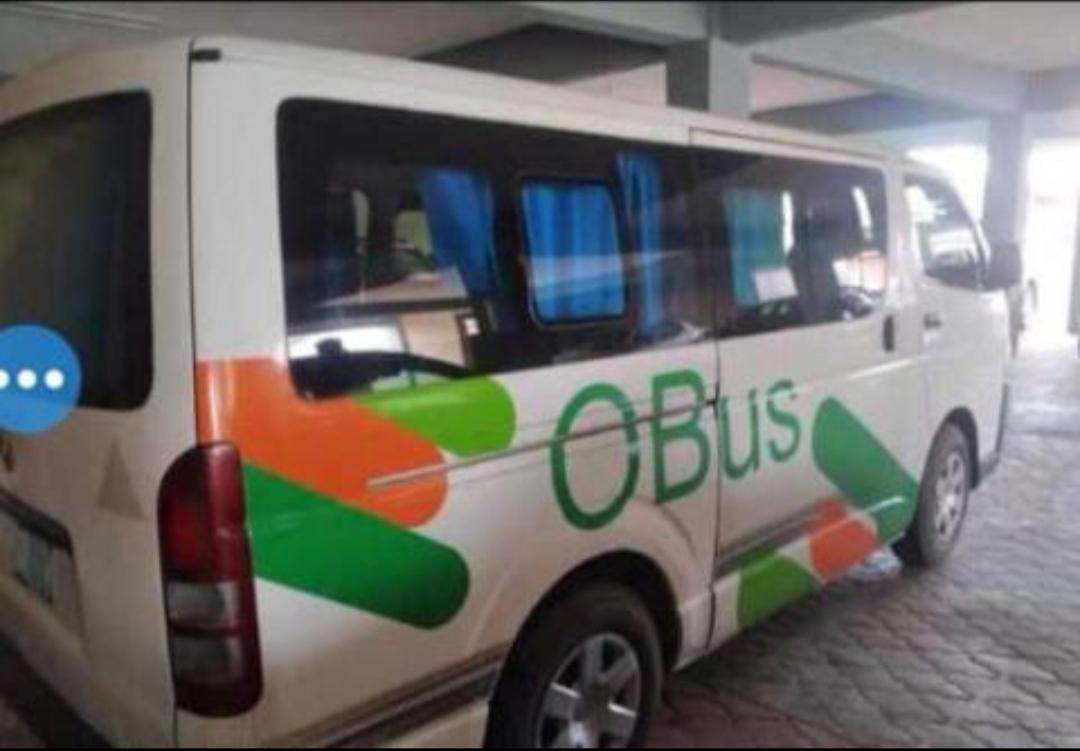
I expect massive dislocation in the fintech sector as OPay advances. You cannot compete with zero! As ORide (motorbike aggregator), OBus (bus aggregator), OKash (loan services), OTrike (keke aggregator), OFood (food delivery), and OWealth (investment management) feed into the Opera operating system, Nigeria’s business sector will not be the same. This company is on a mission – the indigenous companies have a huge challenge ahead. I expect OPay to be low-fee, and OKash and OWealth, at maturity, to be components of money makers for Opera.

OPay Raises $50 Million for Digital Finance Business in Nigeria

OBus from Opera’s OPay is expected to be launched in some Nigerian cities next month


NB: This will work well via non-card transactions

How to Market Facilities Management Training in Nigeria

2

From recognition gap to the insufficient skilled facilities managers and other professionals needed for effective solutions delivery, players in the Nigerian Facilities Management industry cannot continue to wait for the formal institutions of learning to produce professionals through undergraduate courses. The industry is thirsting for skilled Facilities Managers. The supply remains low to the demand every year. This has been the main reason for companies in the industry to create FM Training as part of their solutions.

In the last 5 years, Alpha Mead and Max-Migold have been the vanguards for FM training deepening in the country, supplying required skilled practitioners to other companies within and outside the industry. Since June, 2019, the two companies have been engaging the public, especially existing and prospective FM professionals on the need to acquire necessary skills and learn the emerging ones based on the global best practices.

This piece offers insights from the data generated from the companies’ engagement with the prospects between July 1 and August 12, 2019. During this period, 58 posts and 115 reviews from the trainees were analysed. The emerging insights point out appropriate marketing practices considering the prospects’ emotions and cultural norms.  This line of argument was chosen because of the need to properly communicate the benefits of varied FM courses to individual and organisational buyers.

Strategic Intents and Message Construction

Source: Companies’ Websites, Infoprations Analysis, 2019

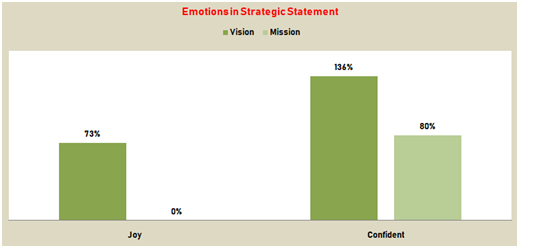
The two companies’ strategic statements indicate that they came into existence because of the need to engage the right people, to apply the right processes and to deliver value to users and other stakeholders in the built environment.  When this was subjected to emotional analysis, the result indicates that the companies are more confident in their vision and mission statements than being happy about their intents. One of the reasons which could be adduced for the low happiness is the expected level of commitment to the clients’ cause and societal growth. This is equally anticipated to reflect in the communication engagement to various stakeholders.

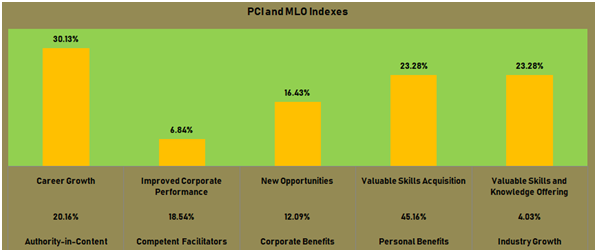
Like other FM solutions, communicating or marketing requires an understanding of the prospects’ respect for authorities, believe in experts, seeing the benefits or values in courses being sold by the companies and the end results of being equipped with the courses for the industry growth. This is captured under the PCI Index. Another index is MLO. With this Index, the companies are expected to develop messages that resonate with the individual and corporate desire to be the best and have reasons to connect with their previous activities along the learning or skill acquisition curve.

Career growth, valuable skills acquisition, and valuable skills and knowledge offering are used mostly within MLO Index, personal benefits, authority-in-content, competent facilitators are better than others within the PCI Index. These insights have many implications for the companies and the industry.

While the prioritisation of career growth, valuable skills acquisition and valuable skills and knowledge offering are good, it is instructive to note that low interest in creating and disseminating contents that establish improved corporate performance and new opportunities for the trainees would facilitate perception of the FM training as insipid for operational efficiency and job opportunities expansion. The low interest in connecting training of the prospects with the industry growth has indicated that overcoming the recognition gap would remain take years to subdue.

Source: Companies’ LinkedIn Pages, Infoprations Analysis, 2019

What Happens When They Cross the Line?

As pointed out earlier, communicating the FM Training and its benefits is best understood within the companies’ strategic statements. Modelling of the statements with the specific consideration of emotional appeals and language tone employed by the marketers shows that the statements reduced the PCI Index by 3.5%. A similar result was obtained for the MLO Index. A 6.8% reduction was found. These indicate that marketers did not develop sufficient messages that resonated with the statements during the period.

Post-Training Behaviour: What is in it? What is at Stake?

Source: Google Business Review, Infoprations Analysis, 2019

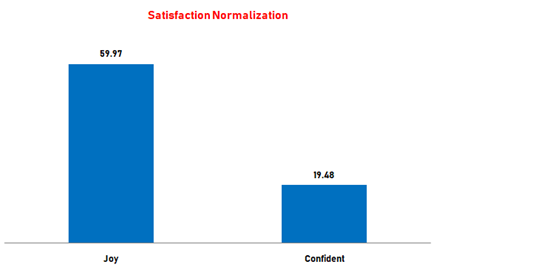
It is a norm that trainees would express their feelings about the course contents, facilitators and learning environment. With this belief, analysis was conducted using reviews collected from the two companies’ Google Business Pages, the results indicate that the level of happiness of the participants connected with content quality and competent facilitators, and confident about their views on the enablement than the good facilities and learning environment, and delivery strategy. Analysis further suggests that the trainees had a different confidence level in satisfaction enablement. In this regard, trainees’ confidence in content quality, competent facilitators, good facilities and learning environment and delivery strategy differed. The highest confidence level was 99%, while 55% was the lowest.

Despite this, analysis reveals that the trainees were not comfortable with their satisfaction within the PCI Index. A 27.2% reduction was found in their evaluation of the indicators within the Index. This is quite different from what was obtained for the MLO Index. The higher they perceived career growth, valuable skills acquisition and offering of the right skills and knowledge as benefits, the more they rated the enablers –content quality, competent facilitators, good facilities and learning environment and delivery strategy. With these insights, the companies need to train the marketers on PCI and MLO Content Generation and Marketing Strategy towards the attainment of their mission through the training solution.