DD
MM
YYYY

PAGES

DD
MM
YYYY

spot_img

PAGES

Home Blog Page 6752

The Molue Strategy in Marketing

0

The evolution of the internet and the emergence of digital channels have made it easier for brands to build impactful connections with their consumers at a fraction of the cost when compared to other traditional media. The presence of this poses a challenge. The challenge is that the digital space is becoming crowded with average consumer being exposed in a day to more content than he can consume in a lifetime. 

It becomes imperative for brands to constantly craft unique and innovative ways to standout in a crowded ecosystem. There are myriads of ways to accomplish this; one of which is yet to be fully maximized is the creation of an exclusive social community. Yes, a platform that allows consumers to both connect and consume in one platform. 

Another is taking a sales and marketing learning from one of the most iconic means of transportation in Nigeria: The Molue.

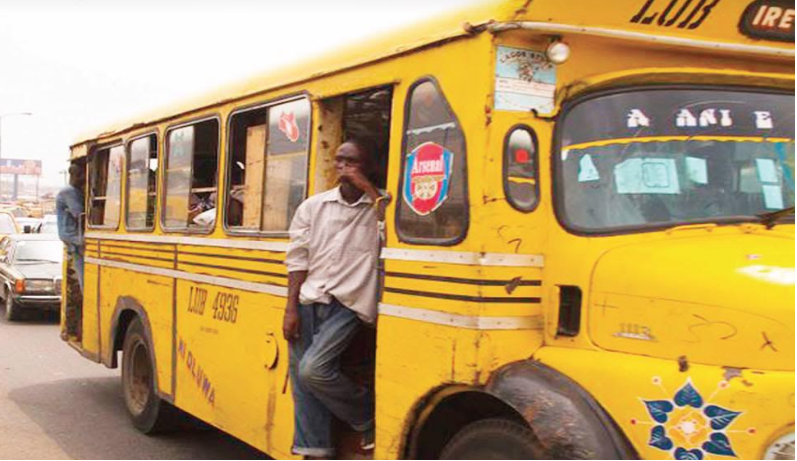
Molue is the nickname given to the huge yellow buses that at a time was the major means of transportation for many Lagosians particularly the middle class. It starts operating as early as 4am and continues till midnight. The rugged and rickety buses are legendary. And their availability has made it the King of the road. It was almost impossible to travel on major routes without coming in contact with it.

One of the striking features of a Molue is that it is large and spacious and could take up to 50 people in a single trip; you could call it the 44/99 principle as observed by Fela Anikulapo Kuti.

Friendship with a stranger usually starts from recognition, an awareness of his presence, a first impression and a point of the meeting. E.g. If you regularly commute in public transport, you would notice that there’s a strong recall when the stranger you met the first time enters your bus again on a different day. Sometimes you feel confident and ready to interact with him though on a casual level.
Even merrier if it’s the opposite sex, and there was some form of eye contact the last time. I digress.

Let’s take a journey into the interesting world of a Molue, a large ecosystem where we can learn new ways to engage our consumers online. Buckle your seat belt.

 In a Molue, there are two entry points manned by two conductors who are tasked with the job of getting passengers into the bus by calling out their routes.

Often times, there’s always a struggle to get in; this is because of an identified consumer need- “I need to get from point A to Point B now and if I don’t double my effort, I might spend the rest of the day here’.
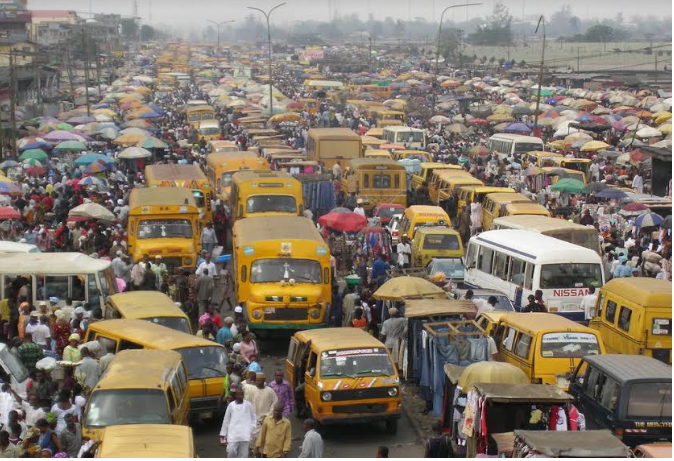
Inside the Molue is an ecosystem filled with 6 types of personalities.

The Rumour-Monger: He’s in the bus to propagate fake news; this is often triggered by ignorance

The Politician: The one who always has a perspective on every political issue in the country and claims to be there when Nigeria found Oil in Oloibiri.

The Preacher: The man of God who takes a visible spot to share the good news to the people.

The Learned: He’s the one that spends the trip asking himself what the ‘hell’ he’s doing in this bus. He has a supposed educated opinion which can’t be comprehended by the majority of the passengers.

The fearful: They’re the driver’s human speedometer, should in case he starts to receive a phone call from Heaven. They are there to ensure he’s called into the order and you can see this from their occasional screams.

Then there’s the final group called the Sales Team. Their brilliance is non-nonpareil.

Note: In a Molue, everybody is everybody’s friend on matters they share a similar interest in, anything outside that, it’s a war.

Let’s do a quick dive in on the Sales Team.

We have the Sales Man or Woman; a brilliant chap who knows how to get to the hearts of his target audience. Yes, a first-class sales man who has an above average knowledge of the product he is selling to them.

They speak so well about the product that sometimes you just want to hear them speak on, even when you’re convinced that it’s a lie.

I had an encounter with one before, the salesman brought out a disposable cup from his bag (which looked like his everyday pitch kit). The cup had a green leaf on it, and he started by saying anywhere you see this green leaf, it means it is an authentic and international product. Next, he brought out the product he wanted to sell and went on praising it and showing people it had the same green leaf we had just seen. I was dazed about this act of mental trickery but most of the passengers seemed intrigued and interested.

But that’s not all about the Sales Team, the salesman always has some unidentified hyper-men positioned strategically to corroborate whatever he says.

For Example, the first hype-man goes “I bought this product before and it brought instant relief to the toothache I was feeling, it works”. Second, with a dramatic tone “True o, I have heard about this product before, my neighbor spoke to me about it, in fact, give me two”. This basically begins to arouse curiosity, coupled with the Salesman’s pitch.

Identifying this interest, the salesman goes “I have only ten left, who else is buying?”. Remember the people on the bus are more than ten, so basically, supply can’t meet demand, then another tussle starts between the passengers.

The Salesman might probably have more than ten products but he needs to stick to the script, he can sell the others in his next trip.

So let’s connect all this; in this short view, some processes took place but I’d just highlight the topline.

First is Need: as a brand it is important to know what makes your consumers tick and build around that. They would only respond favorable when they perceive that your brand understands their needs.

Second is Recognition: their needs are established but they also seek a person, place or thing that can solve it. Across the journey to fulfilling this need your brand has to be visible. With digital, you can effectively map your consumers online journey and engage them in the moment.

Third is Invitation: onboard your potential customer with a compelling call to action. It’s an important step in converting your prospective customers.

Fourth is Engagement: building trust and interactions with your consumer which has a way of shaping the way the brand is perceived.

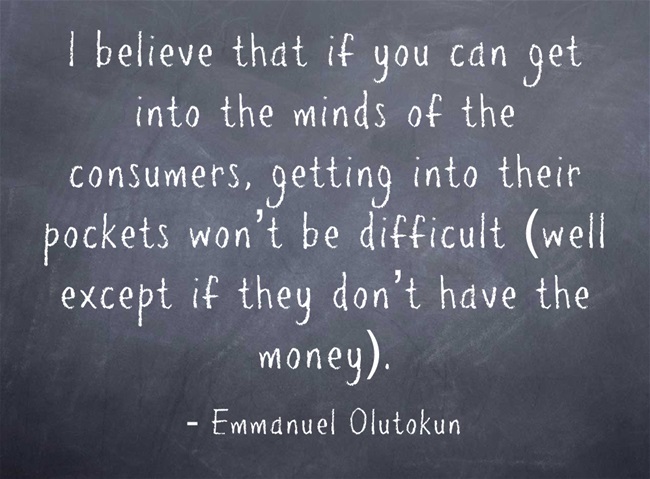
Finally, Sales. I believe that if you can get into the minds of the consumers, getting into their pockets won’t be difficult (well except if they don’t have the money)

Advertising and marketing are swiftly evolving and I personally believe brands should invest in building a community- Niche or Mainstream because it converts the relationship from transactional to communal.

How Emerging Technologies Are Transforming Logistics in Africa

4

African startups raised a cumulative $726 million last year, a 300% increase from 2017 number. Across sectors, investors are trusting entrepreneurs to redesign the architectures of African economies by using emerging technologies to improve productivity and in the process deliver huge returns. It is a Cambrian moment where startups are emerging in all forms and varieties, providing services and products, and in the process fixing market frictions even in impervious hitherto industries like logistics, healthcare and agriculture.

Indeed, across the continent, we are witnessing a transformation where ambitious and pragmatic young people, armed with digital skills and new business models, are unlocking the enormous opportunities mobile connectivity has unleashed. With barriers of entry, into most sectors, radically reduced, through cloud computing services, knowledge has assumed a premium position as a factor of production. So, from the lagoons of Lagos to the rainforests of Cape Town, from the beautiful hills of Cairo to the grasslands of Bamako, there is an entrepreneurial explosion in Africa, and it is unprecedented. Powered by microprocessors, accessed via the cloud, that knowledge is being transmuted by pieces of codes, into bold solutions, eating everything on its path.

Three decades ago (i.e. the 1990s), African entrepreneurs created most of the current new generation of banking institutions. Then mobile telephony arrived at scale in 2000s, being followed in 2010s by mobile internet. The decade of 2020s will be the digital utility decade as immersive connectivity and mobile devices will unlock new domains in commerce, across markets, as startups pursue transformation of industries. From energy to healthcare, agriculture to logistics and even financial services, Africa is being economically restructured by the combinatorial powers of digital technologies to arrange, re-arrange and make sense of atoms and bytes. I have written in Harvard Business Review the promises in agriculture and healthcare before.

Specifically, Africa’s logistics industry has been growing over the last few years, buoyed by massive urbanization, population growth, increased demand for imported finished goods, rising exports of agriculture commodities and other unfinished goods, and fledgling industrialization of most key markets. The industry, which we have estimated at $220 billion market size, is broadly divided into air, maritime, road and rail. The road logistics at $157 billion is the largest, and growing at 8% annually, with ecommerce a noticeable growth anchor.

In this sub-sector are startups like Kobo360, Lori Systems, Zido, and Copia, a Nairobi-based logistics-ecommerce combo, among others. Most of these new species of logistics companies do not own trucks, vans and the hard assets usually associated with logistics entities. Rather, they focus on building all-in-one logistics platforms that aggregate end-to-end haulage operations to help cargo owners, vehicle owners and drivers, and cargo recipients achieve an efficient supply chain framework. By doing that, they attain new logistics equilibrium, delivering higher operational efficiency and transparency while reducing overall costs. Asset-light, highly technology-enabled, from data analytics for pricing and scheduling, to GPS navigation systems for tracking, they are winning customers across the continent.

The business model is based on aggregation which Uber had pioneered for city taxies. Unlike many years ago where millions of dollars would have been required to build datacenters, today, young people with visions simply find new territories, orchestrating demand and supply, via platforms, engineered on codes, hosted in the cloud. For merchants, manufacturers, and producers, supply chain frictions are reduced as disparate systems, devoid of order, are transformed into ones fully integrated with deep visibility and transparency. Amazon AWS, Microsoft Azure and local players like Layer3Cloud make ideas to markets to happen within weeks.

Before these digital logistics startups, cargo owners like agribusiness, FMCGs, manufacturers and distributors would call agents and street urchins to look for trucks on the streets for them. With digital tools, cargo owners can now schedule trips ahead of truck positioning for loading within few hours, and from the pickup to final delivery, a cargo owner will have visibility on the trip status of their goods. And being end-to-end logistics, the platforms ensure that trucks have goods to pick on reverse trips, boosting the vehicle utilization rates which drive higher returns for truck owners and more incomes for drivers. That ability to make sure trucks do not return empty, but carry things on reverse, is why truck owners, drivers, and shippers have become fans.

These improvements, anchored on emerging digital tools, have resulted to the evolution of new industrial systems, facilitating the process of socio-economic developments. We are witnessing new domains on information exchange, and business transactions which are largely cheaper and more efficient, seeding efficiency in production and business processes at unprecedented productivity gains. It is changing supply chain which is at the heart of commerce, even as major African cities become knowledge-based economic structures and information societies, comprising networks of people, organizations and state agencies that are linked electronically, and in interdependent relationships.

As these digital logistics companies expand into rural areas, century-old agribusiness friction will go. Before now, the overriding thesis is that Africa must build local storage facilities to eliminate harvest wastes – a challenge in rural areas with no grid power. But pilots we have run in Kobo360 have shown that warehouses are unnecessary if produce can be morphed into hubs and transported to cities or factories for processing within days. With micro-aggregation connecting people, bikes and vans, linked to the macro-platform with big trucks, farmers harvest within a specific time-window, and all produce are paid and shipped out. We have removed the stress of finding new markets, empowering farmers to focus on farming, knowing that no waste is possible under Kurfman (Kobo Urban Rural Feeders Micro Aggregation Network) which also supports SMEs in urban areas to reach new markets and territories.

Yet, despite the optimistic exuberance across Africa on the promise of digital technologies, critical enablers remain sub-optimal. In the logistics sector, the number of available trucks is severely inadequate, implying that even when there is demand-supply matching, lack of trucks injects shocks at the equilibrium. It is a challenge these companies cannot fix with codes or apps, and which will require involving governments to offer incentives for more truck assembly plants in Africa towards advancing supply chain. If trucks are readily available, logistics costs will drop, especially in the rural areas, and that means welfare of many citizens will improve. Yet, the entrepreneurs are not waiting, using digital tools to pool investors together in funding new trucks to improve their businesses.  They see a positive continuum where new challenges will meet ubiquitous and intelligent digital systems as they sojourn in this 21st century Cambrian moment which is changing African economies.

People’s Bank of China Unveils A Cryptocurrency; Facebook Libra Gets A Challenger

2

The People’s Bank of China has noted that it will release its own cryptocurrency, structured to replace cash in circulation, over just generating credit: “PBOC’s intention that the digital currency would replace M0, or cash in circulation, rather than M2, which would generate credit and impact monetary policy. The digital currency would also support the yuan’s circulation and internationalization”.

The People’s Bank of China is “close” to issuing its own cryptocurrency, according to a senior official.

The bank’s researchers have been working intensively since last year to develop systems, and the cryptocurrency is “close to being out,” Mu Changchun, deputy director of the PBOC’s payments department, said at an event held by China Finance 40 Forum over the weekend in Yichun, Heilongjiang. He didn’t give specifics on the timing.

Mu repeated the PBOC’s intention that the digital currency would replace M0, or cash in circulation, rather than M2, which would generate credit and impact monetary policy. The digital currency would also support the yuan’s circulation and internationalization, he said.

In 2017, I posited that Nigeria should do this, explaining how NairaCoin would be an extension of the paper Naira under the full control and supervision of the Central Bank of Nigeria. I expect this to be the convergence for nations when it comes to cryptocurrency.

Rwanda has executed a very fascinating vision and in line with my proposal for Nigeria to have a digital currency (NairaCoin or any other name) that is tied to the Naira and under the supervision of the Central Bank of Nigeria.  In Rwanda, I&M Bank has partnered with a Norwegian fintech company, Blockbonds, to launch a blockchain-based banking application called SPENN. SPENN does digitize national currencies and makes it possible for bank customers to perform different types of cost-free transactions. It has digitized the Rwanda currency, making the Rwandan Franc the first national currency to be digitized. It also means that mobile money may fade and being replaced with blockchain digitized currency depending on how this evolves.

With this news, the U.S. Government will flash green light to Facebook Libra. Notice that China wants to take its coin international and use it as a basis for global transfer and remittance.  Facebook Libra will be laughing at U.S. Congress, understanding that U.S. Congress is hurting America by delaying its mission!

Have Accepted Invitation from Nnamdi Azikiwe University Awka for a Major Speech

5

I will be in Awka in October. Yes, I have accepted the invitation of the Vice Chancellor of Nnamdi Azikiwe University, Awka,  Prof. Charles O. Esimone, to deliver a university-wide lecture in that institution named after the Zik of Africa, a Founding Father of modern Nigeria. The podium I will mount for this specific event has been graced by Prof Barth Nnaji, Senator David Mark, Dr Kalu Idika Kalu, Prof Chukwuma Soludo, Chief Emeka Anyaoku, Bishop Mathew Hassan Kuka, among others. To have my name is that league is simply amazing.

From Awka, I will touch base in Onitsha to challenge the OMATA members who continue to thrive, creating Africa’s largest market, despite institutional challenges across Nigeria. My message to them:  band together, join efforts, push for scale to improve unit economics, and move upstream. We must create conglomerates and dominant category-king companies out of Onitsha. To do that, we must unleash entrepreneurial capitalism with the mindset of scaling capabilities over the rituals of “cultural trading”.

I like containers and am a proud member of this tradition, but we have to upgrade.

Insyt Helps Brands Make Informed Decisions By Aggregating Public Perception Online

0

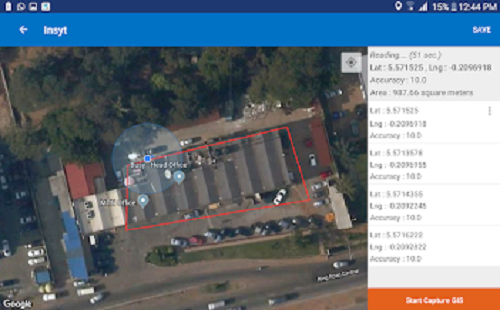
Insyt is a platform which collects data in real time from social media channels to help organizations know the public perception of their brands and allows them to keep track of conversations about them and their products in English and Pidgin languages.

No matter how small or complex your data needs are, Insyt helps you convert from inefficient paper-based systems to a simple, fast and flexible mobile & web-based platform for data collection, paper form digitization, agent management and data analysis. Reduce cost, time and errors in targeting customers and gaining visibility into your operations. Go paperless with Insyt!

Insyt helps in measuring the impact of marketing campaigns so that enterprises can know if they are truly getting value for their ad spend and interact with customers in a conversational manner to gather valuable insights.

The platform helps brands to take the guesswork out of influencer marketing and easily measure the impact of influencers on their brand online as well as connecting them with the most relevant and engaging influencers in their industry of operations. It saves marketing communications teams time to engage in further productive activities on their jobs by utilizing Keyhole to aggregate metrics, monitoring, analyzing and creating reports. 

Using artificial intelligence, it helps brands to predict how their campaigns will go in order for them to take action based on the insights.

Reputation management is very essential for organizations in this age of social media and Insyt helps them to understand the feelings of their target audience concerning their brand as well their competition online.

As enterprises organize events to promote their products or services, Insyt helps them to capture every moment and gain access to data from their guests which they can leverage in amplifying their reach during the duration of the event. Through social media monitoring, it helps them gain insights on key conversations on any subject online in order for them to understand trends and audiences in providing solutions targeted at their customers.