DD
MM
YYYY

PAGES

DD
MM
YYYY

spot_img

PAGES

Home Blog Page 6757

How Do You Invest in Farmers? What Central Bank of Nigeria Needs To Do.

5

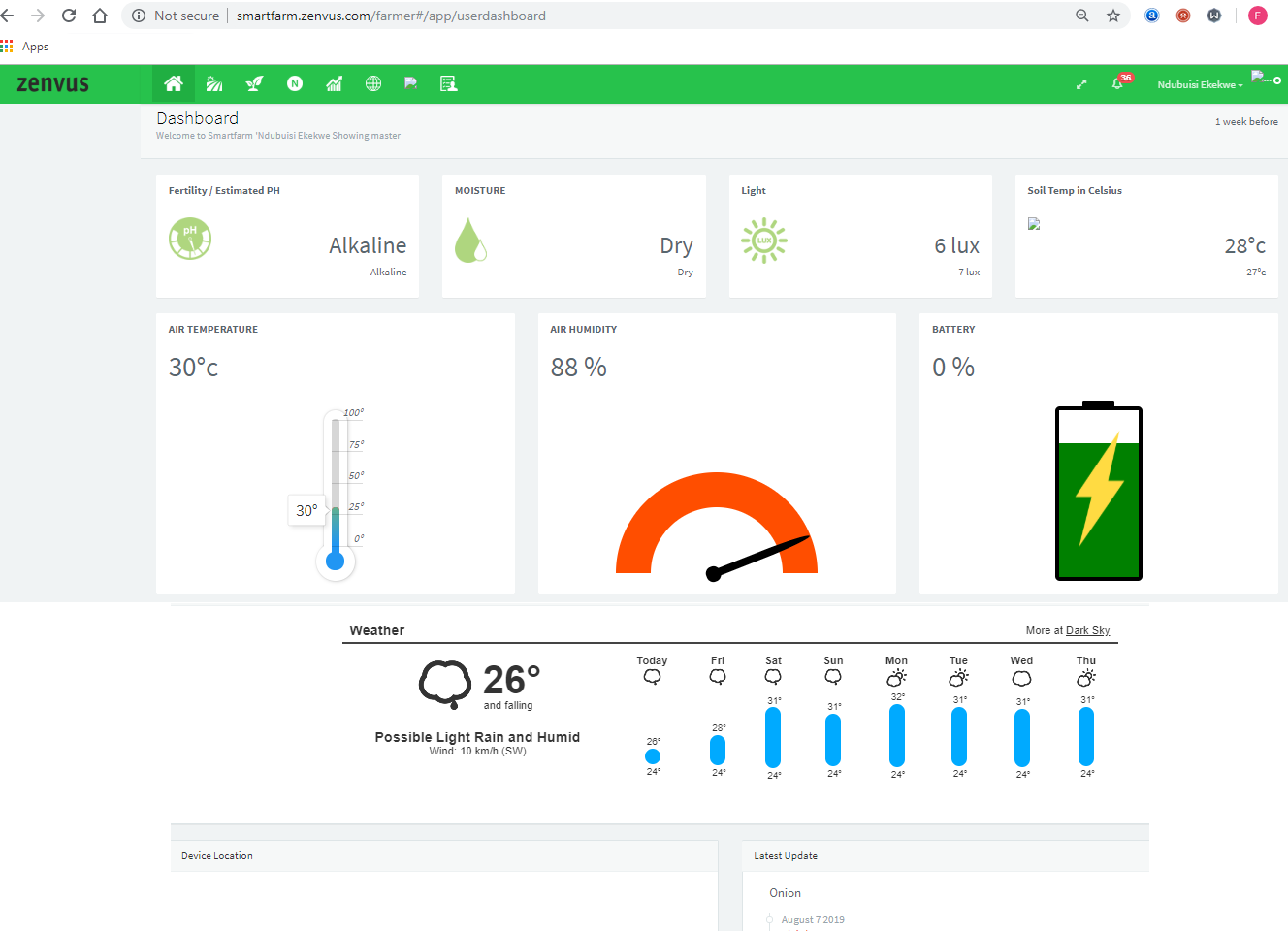
How do you invest in farmers? Possibly, you visit them. For me, I use Zenvus. I give you money, install my Zenvus sensor and right anywhere on earth, I will see an update on what is happening on the farm. If you do well, and we break even, expect more support next year. 

Zenvus is an intelligent solution for farms which uses proprietary electronic sensors to collect soil data like moisture, nutrients, pH, etc. It then sends the data to a cloud server via GSM, satellite or Wifi. Algorithms in the server analyze the data and advice farmers on farming processes. As the crops grow, the system deploys special cameras to build crop vegetative health index for detection of drought stress, pest and diseases. Our system has the capability to tell a farmer what, how, and when to farm. It has in-built GPS, compass and XL making it possible to map farm boundaries which could be useful during loan and insurance applications.

Yes, no briefcase farmer possible because I know how much fertilizer you added, and when you neglected to irrigate the farm even when the crops were begging for water. I have all the updates on what is happening on the farm including when it rained, etc.

I just checked for weekly state of the farms – all of them have my name because they are my farms. This is how the Central Bank of Nigeria should invest in farming: intelligently put money in farming and monitor them from CBN headquarters with local systems to support farmers. Yes, make decisions anchored on data.

Zenvus Smartfarm dashboard can enable you monitor farms, making it possible that you can be in U.S., UK, Lagos, etc and monitor what Jigawa, Kano, Abia, Osun, etc farmers are doing. #NigeriaThinkDifferent.

You want bags of onion? I can supply!

*I run many experimental farms across Nigeria as part of my Zenvus business.

The Challenging Side Of Entrepreneurship, The Reality Of The Ecosystem

0

Are you burned out as an entrepreneur? Here’s why;

Firstly, I’d say this piece is as golden as the motivations you prefer reading as a wantpreneur and it is more like an exposition and a safety net for you to keep you from being burned out knowing the reality of entrepreneurship.

I’m an African and Nigerian to be precise, and in my two years journey into entrepreneurship, I have had some few discoveries that if I had them earlier, I might have been saved from a lot of mess, debts, depression and frustration. There’s this subtle feeling that once we have an idea, succeeding is not far and that if we keep at it, winning is sure.

Statements like “Be consistent, you’d surely win”>

I’m here to tell you that there’s so much in this statement that is not revealed. All we see are successful entrepreneurs whom we admire pose in front of their cars and houses type such statements. Consistency might ruin you if you’re being consistent on the wrong trail. Entrepreneurship has its dark side and I’m here to get you aware of them and what you can possibly do to stay safe.

  1. Optimism and Realism are two different words: This point is golden. When starting out, it is good to be optimistic and if you’re starting out as a team, having an optimist will save you so much stress, will keep the energy burning, will keep hope alive and will keep the company on wheels. However, there’s a need to always rely on realism.

Optimism will say it’s possible to build a house on the sun, let’s try it. Realism will say, the temperature of the sun can melt the earth if it moves some kilometers closer. Now, that’s not pessimism, it’s being real. Another good thing about optimism is that it helps see bright ideas but it can be harmful because you’d be in a rush to get it done.

This happens a lot during the planning stage as ideas begin to pop out of your mind, you’re in a haste to get them executed. Out of optimism, you begin to write down accomplishing huge feats within seconds. Realism will tell you to take it one at a time. After my experience so far, when I discuss with entrepreneurs to give them pieces of advice, I tell them to always mark one month as ten months.

  1. Expectations are different from reality: Now, to further explain why they should mark one month as ten months, I have realised that things won’t always go as planned and I’m not trying to sound evil but that’s just as it is. There’s one stone that’s always left unturned which will cause a delay and give so many lessons. Whenever you have an idea in your head, put it down on paper, set out time frame but also have it at the back of your mind that one month on paper is ten months in reality.

This simply means that you should not be hyper-excited about ideas even when you have them on paper. Even Elon Musk sometimes delays in finishing his goals on time. This means that you shouldn’t announce your launch date unless you have really completed 90% of the work that needs to be done and not when it’s still on paper. I have learned my lesson the hard way.

  1. Huge investment may not come on time: Well, well, this is another golden point. If you are thinking of delving into entrepreneurship, then you should practise the habit of saving ahead before you go into it; don’t go on an empty pocket. It’s either you have a side job, hustle that puts food on your table, keeps cost running, or you have some huge money you have saved overtime.

Like I said, optimism might want to make you go all in hoping that in a few months, you’d hit it big. In few months, you might as well be totally depressed over huge amount of debts you need to repay. Have a safety net while bootstrapping because it’s obvious that bootstrapping is the best option at the early stages. Safety net means have something you can always fall back on, your parents, your side hustle, your side job or your partners.

The funny thing is that despite your side hustles, you might still always see your account in negative because you’re running, spending and all. It is rather advisable to know you have a source of income anyways. I learned this the hard way and I have seen many wantpreneurs also make similar mistakes. In order to save yourself from battling with debts while running, take this advice.

  1. You’d be alone: I believe you must have read this a lot on quotes and it may just sound like a normal quote to you. There’s a huge reality behind these words. In Africa, starting a business as a young fellow or even delving into entrepreneurship is not often celebrated seeing several risks around it. The advice you’d often receive is to get a job. Nobody will believe in you at first, even down to your family, so you must have your mind ready to face the worst else you’d always slip into depression, pressure, frustration.

The average African believes in getting jobs and your friends who rush to get jobs may begin to make it faster than you because they have a steady source of income. They now save their money and invest while you don’t. If you don’t know that this reality exists, you may want to begin to question your existence.

Now that you’re aware that entrepreneurship has its dark sides, I hope you build your mind to staying strong on the journey.

Nigenius Uses Smart Digital Assistant to Improve Learning in Nigeria

0

Nigenius is a smart digital assistant which enables Nigerian teachers to improve their students’ performance and learning outcomes by providing quality teaching and learning contents. It is the premier teaching and learning solution for private and public, primary and secondary schools, in Nigeria and the West African sub region. It wants to be the medium for school administrators to maximize the productivity of their teachers in the classroom.

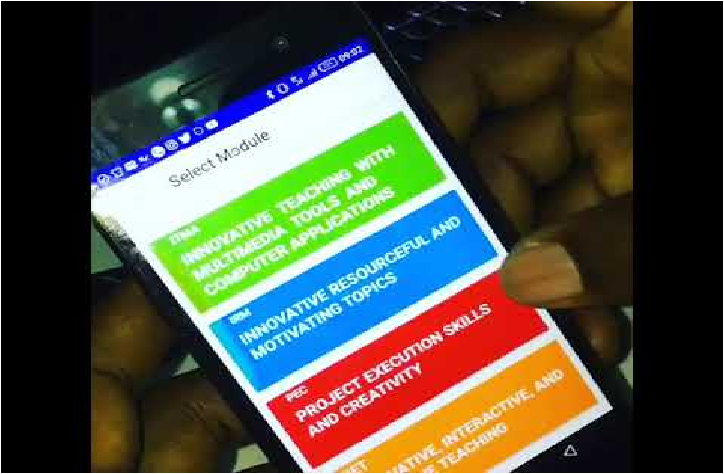
Nigenius provides teachers with access to well researched lesson plans and teaching resources quickly and efficiently through their mobile devices via the Google Playstore. Teachers with Nigenius  spend less time searching through multiple web pages and rather devote it to engage students with quality content from the app. To solve the common problem of outdated teaching and learning content which is prevalent in the Nigerian educational sector resulting in inefficient teachers and students, Nigenius updates its content regularly so that teachers are abreast with the latest developments in efficient teaching.

It provides teachers with the ability to search and access content which is specific to their teaching and learning objectives with quality assurance on the lesson plans by different teachers which is regularly updated for positive classroom engagement.

Nigenius operates a monthly subscription service with single and multi user subscription packages. It’s goal is to create a classroom leveraging technology for teachers to have access to the best teaching and learning resources on the go.

 As a result of ill trained teachers, Nigeria has had to grapple with a high illiteracy rate because an inefficient teacher cannot impact the pupils with knowledge to make them globally competitive. With Nigenius, it is hoped that the standard of education in primary and secondary schools in the country will be bench-marked positively in line with global standards for the 21st century.

Pundi X Is Building Blockchain Solutions for Commerce

0

PundiX is a leading provider of blockchain-enabled solutions which include the world’s first Point Of Sale (POS) solution. The POS solution enables merchants and consumers to  perform transactionary commerce on the blockchain in physical stores. It has the first blockchain enabled smartphone, Xphone, which is powered by the Function X OS which transmits users communication, media sharing and browsing  data to the blockchain which they are connected to.

Its POS, the XPOS, has been shipped to over 35 markets including Argentina, Australia, Columbia, South Korea, Switzerland, Taiwan, USA with over 100,000 targeted at the global retail market in 2021.

Its Open X platform supports blockchain developers, digital asset issuers and businesses to freely apply and list their custom digital assets unto PundiX’s payment ecosystem which includes XWallet, XPOS & XPass cards. It will first support ERC20 tokens before late expansion to digital assets of other blockchain.

The XWallet application connects regular digital asset wallets with the PundiX payment ecosystem. It allows users to easily make payments in physical stores with the XPOS. The XWallet can also be paired with XPass making it a digital payment app for usage at one’s convenience.

Blockchain developers and other merchants can now easily make their digital assets available to serve various online and offline payment scenarios.

It recently launched its XPhone in Rwanda at the GSMA Mobile 360 Africa event.  With the Chinese e-commerce and mobile payments processing transactions of over $3 trillion annually and the USA recording similar volume as well as the recently integrated African Continental Free Trade Area  to create the largest single economic market in the world, and blockchain’s grand promise to redesign the global commercial and financial system, Pundix is well prepared ahead of the harvest.

The Challenge in Africa’s Agriculture Value Chain

0

To plant or not to plant?  There are moments in the life of a farmer when it seems as though planting more may not be so desirable. They earn a living by planting, so why not?  Increasing food production leads to abundance, we all know that. So what do we not know? Well, maybe you already know or have seen or experienced something close to the scenario I’m about to describe.

Once I was on transit across a particular highway linking a major farming community with a small town . Our vehicle got to a bus stop just beside the road, and not so far away from a nucleated settlement. I looked through the window to see a heap of farm produce rotting away in a major dump site. I looked a bit closer only to discover that fresh and still edible produce was among the dumped items. I inquired only to find out that the local farmers usually dump some of the produce there after failing to sell them within a particular period, or at a price they think is commensurate with their efforts or inputs.

I once travelled to a community in the interior parts of Abia State for a ceremony and I discovered there were lots of mangoes in that community. They were so much that primary  schools were littered with a whole seasons mango all on the ground . It was everywhere! As we were leaving the community dwellers offered those mangoes to us at extremely low prices that many like myself didn’t feel comfortable buying from them at the price they offered since we knew what they sold for from where we were coming.

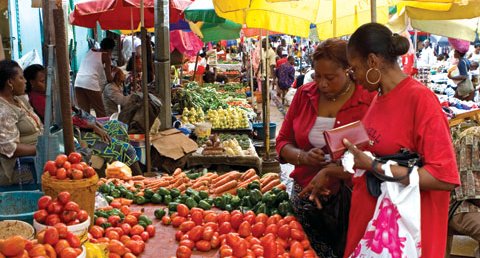
These are not just stories,  this is the reality of many farmers. Yes there are farmers, entrepreneurs, and commercial agriculturists . These are not the ones I’m talking about. Most of the agricultural produce products consumed in developing countries are cultivated by subsistence farmers of whom most are poor.  Yes, poor farmers are feeding the rich and middle class and are yet struggling to break even.

The illusion that cultivating more will make farmers rich is not backed by reality or any economic principle.

The truth is the more food supply they produce, the more the markets are flooded with with agricultural products, and the more this happens, the more the price of their commodity falls. And complex problems arise when supply pulls the price far below their total input putting them at a loss.

This is just basic demand and supply. Price goes down when supply exceeds demand.

This has led many farmers into both financial and psychological crisis. According to this ozy.com, the ” Indian government data shows 12,602 Indian farmers killed themselves in 2015 alone, mostly owing to economic distress. Indebtedness was responsible for 38.7 percent of suicides, while crop failures or the inability to sell produce led to another 19.5 percent of suicides.”

Here the Wikipedia explains “…this happens often due to their inability to repay loans mostly taken from banks and NBFCs to purchase expensive seeds and fertilizers, often marketed by foreign MNCs…”

This isn’t just about what’s happening in India, there are issues close to this in so many other places, especially in developing countries.  It is also very important to understand and identify the particular demographics that benefit from improved food supply. The populace seems to be the ones benefiting most from it.  So what about the farmer, who protects the farmer? The truth is the farmer shouldn’t be left alone in all this.

 Protecting the Farmer

In 1933 and later in 1938, the United States Government made deliberate efforts to alter the supply of these farm commodities by creating laws that will benefit the farmer. This they did it by passing the Agricultural Adjustment Act  (though controversial and open to numerous debates) which was further amended by the Agricultural Adjustment Act of 1938.

“The Agricultural Adjustment Act (AAA) was a United States Federal Law of the New Deal era designed to boost agricultural prices by reducing surpluses. The Government bought livestock for slaughter and paid farmers subsidies not to plant on part of their land. The money for these subsidies was generated through an exclusive tax on companies which processed farm products.”  In other words, farmers were paid to cut down production.

Another way the revenue of farmers could be enhanced  is through Agricultural Value chain. In simple terms, this refers to a whole range of goods and services  required to get the agricultural product to move from the farm to the final consumer or customer. In other words, farmers should be involved in many of the processes along the chain outside cultivation and harvest. From planting tomatoes to canning and selling,  from planting cocoa to producing and selling chocolate, from having a grape farm to producing and selling wines, the farmer should not be isolated from any of these.

In summary, farmer protection could be enhanced by, though not limited to, the following :

  1. Enactment of suitable laws aimed at regulating price and or supply.
  2. Mechanization and the use of modern technology.
  3. Value chain.
  4. Provision of suitable and sufficient storage facilities.