DD
MM
YYYY

PAGES

DD
MM
YYYY

spot_img

PAGES

Home Blog Page 6758

Four Lessons for today’s Entrepreneurs from Nollywood

0

Nigeria, today, is fraught with a myriad of bad press: Boko Haram, sex trafficking, corruption, bad governance, economic decline; and it was offhandedly labelled a ‘shit-hole’ by Donald Trump. But right in the centre of its mess stands Nollywood, the country’s million-dollar film industry, built by dogged entrepreneurs in a world without major cinema chains, world-class film equipments or million dollar funds.

Nollywood’s success proves that with a few right ticked boxes, any entrepreneur, even you, could grow a successful venture from scratch. Below are the four boxes that you, and your business, must tick:

  1. Focus on being remarkable.

In his 1993 Ted Talk, bestselling author and marketer, Seth Godin defines remarkable as, “something worth making a remark about.”

Marketers also have another word for this: a differentiating benefit. And even another: standing out.

Having an appealing benefit that only your brand can offer is the key to entrepreneurial success. This rule works irrespective of the type of startup that you run: Type A startups attempt to tap into a proven, efficient and already existing business model (like a tailoring or a web design startup) while Type B startups are an experiment to find and dominate an untapped but viable business model (like the celebrated tech startup, Amazon).

Being remarkable – possessing a stand out benefit – helps your brand get noticed and easily remembered.

But does this concern Nollywood?

Nollywood were apostles of this theory.

Prior to the industry’s birth, Nigerian filmmakers shot films on celluloid that were exhibited in elitist cinemas. Most of these movies catered to the need of the “few” wealthy in urban cities and only left the poor thirsting for a rare taste of cinematic beauty.

But it was not until international sanctions crippled the Nigerian economy during the early 90s, strangling theatres and forcing filmmakers to seek alternative means of income did they opt to make movies with cheap video equipment, sell them on VCDs and connect with the average Nigerian. Nollywood’s local appeal ensured it spread like wildfire throughout Africa, even without outrageous marketing budgets.

Even Google, You tube, Facebook and Amazon are examples of remarkable businesses. These companies shot right to the top without the need for expensive marketing budgets because people cared enough to talk about them.

  1. Build on your strengths.

When critics realized the kind of local, unsophisticated output that Nollywood was churning out daily, they were scandalized. It was a descent from the promising days of celluloid filmmaking to amateurish productions and they were unpleased. But they were no less scandalized when the same industry scaled heights that no other African film industry had aspired, becoming Africa’s largest and most popular film industry.

Nollywood had built on their strengths, and turned disadvantages to advantages. Without the typically big budgets of Hollywood and Bollywood, they were producing a lot of video films within weeks, paying no attention to preparing proposals to big corporations for film financing.

Fortunately, the market loved their content so much that they mostly overlooked the errors in filming.

Also, since theatrical exhibition was elitist and limited only to urban Africa, Nollywood used video to connect with a waiting audience in both urban and rural settlements. They also benefited from the low access to foreign films in Nigeria at the time for average Nigerians. And solving this problem put Nollywood firmly on the map in Africa.

That’s why the next generation of billionaire entrepreneurs must be ready to turn problems to answers. Your brand’s strength emanates from the weaknesses of your competitors and how well you are able to utilize this for your own good.

  1. Win where it matters the most.

And where does it matter the most? In your customer’s mind.

How your business is perceived among its customers is its true market value. And facts do not always equal perception.

During its early days, video Nollywood’s output was amateurish and of low quality when compared to Hollywood – and to a large extent, it still is. That was the fact and many critics hampered on it. But how many average Nigerians cared about this? Very few. And this was Nollywood’s market, not the audience obsessed with Hollywood. Small wonder then that Nigerian filmmakers kept making their low-budget movies.

Today, Nollywood’s stars are recognized around the world, and even better, new businesses are now springing up in Africa to take leverage of the industry’s runaway success. Jason Njoku’s irokotv, now tagged the Netflix of Africa, is a multi-million dollar example of this.

Building a profitable perception demands that you create something remarkable in a positive way, at least for your target market. If anyone outside your target market does not appreciate the kind of value your brand provides to your market, you should not be bothered in the least. For example, Nigerians living in Britain and South Africa still watch Nollywood movies regularly to relive the Nigerian experience.

  1. You should be profitable.

There’s no need to make something that no one is going to pay for. Most billion-dollar entrepreneurs, while designing their products or services, had a clear idea of how they were going to get paid for their efforts. This may require teaming up with someone who is more business-savvy than you are.

While it is true that most businesses hit rock-bottom in the first few years after inception, you should aspire to make turnovers while you are still small. This will afford you the leverage to attract more investors and build on past successes to greater heights.

In Conclusion.

You must realize that no one can succeed at entrepreneurship without the right mindset. You must be ready to fail, you must love the unpredictability that comes with self-employment and you should build your business with a purpose.

The four factors are essential ingredients that will add value to your business and increase your chances of success. And when you fail, you can always use them as a guide when revisiting your mistakes and hunting for the next business idea.
Spent A Full Day with BeepTool Team

3
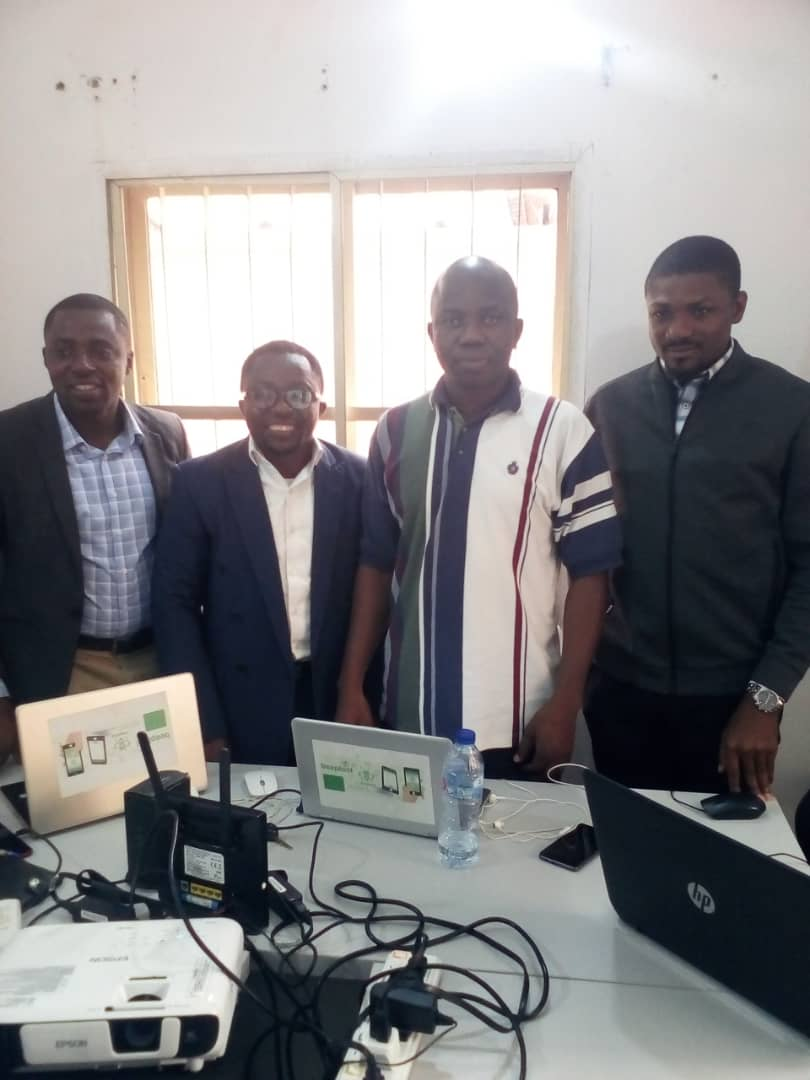
A section of our Lagos team

This is a cross section of the BeepTool team. Our vision is to improve rural communities with the best satellite connectivity and services. I spent a FULL day with our team, explaining the mechanics of markets and frameworks to execute for success.

The Head of the telehealth wrote: “It was the most interesting and inspiring workshop”.  And the agtech leader thundered, “It’s really a wonderful experience. Like just graduated from a business school”.

Yes, they have graduated. Now, execution. Learn more about BeepTool and how we can use satellite connectivity and services to advance the wellbeing of our citizens.

Ndubuisi Ekekwe Takes Equity And Joins BeepTool Board (Photos)

A section of our Lagos team

Ndubuisi Ekekwe Takes Equity And Joins BeepTool Board (Photos)

6
Telehealth system connected via BeepTool

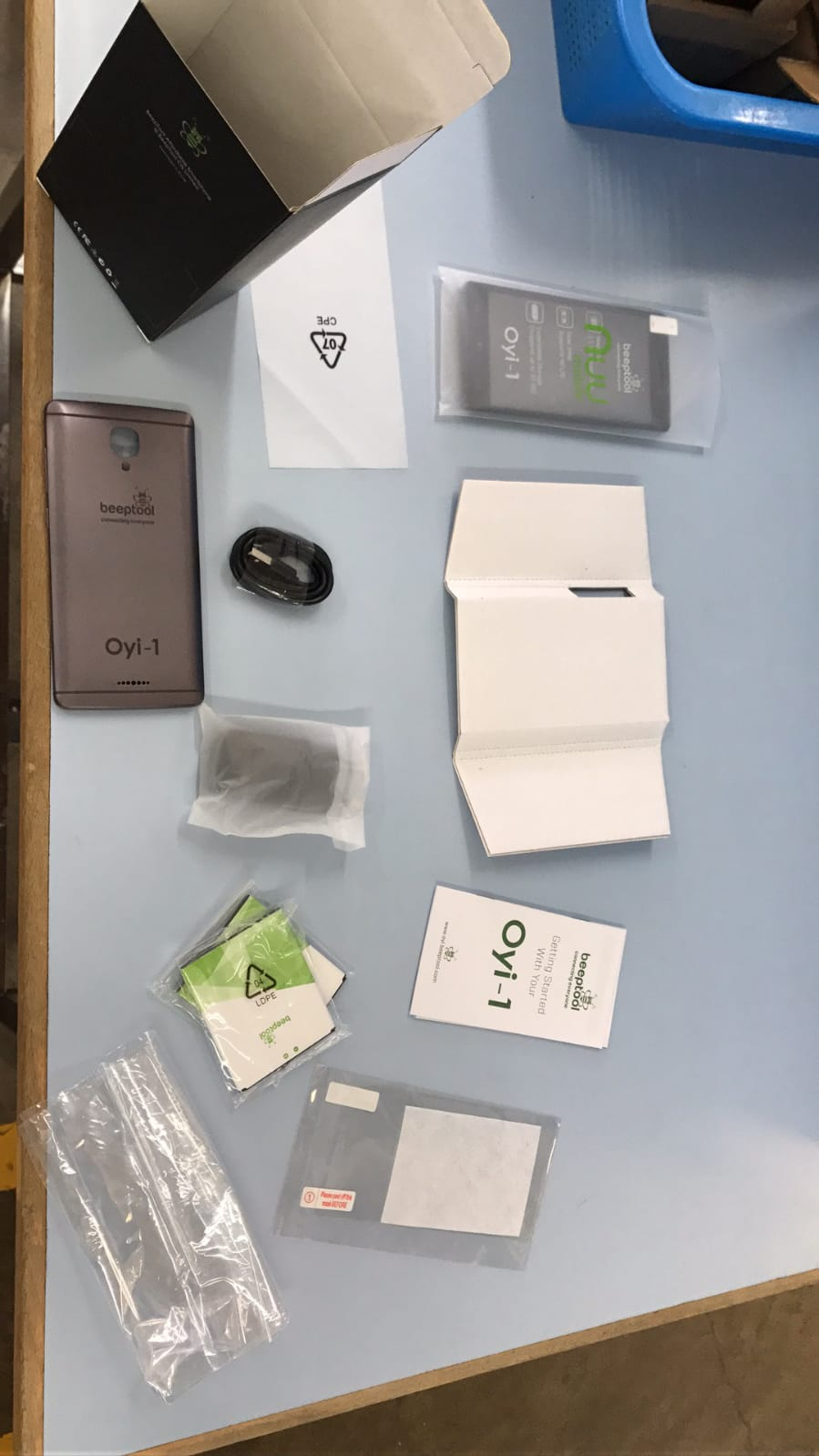
Today, I became a shareholder and Board member of BeepTool. BeepTool makes small satellites with its partners. With its Oyi-I smartphone, you can access the web using a mobile application in areas its satellites cover. The satellites are engineered to serve largely small geographical areas and well optimized. For example, you can have one in your village and if everyone uses Oyi-1 phone with the app, everyone will have Internet connection. You can put one in your oil rig location and everyone will have Internet connection.

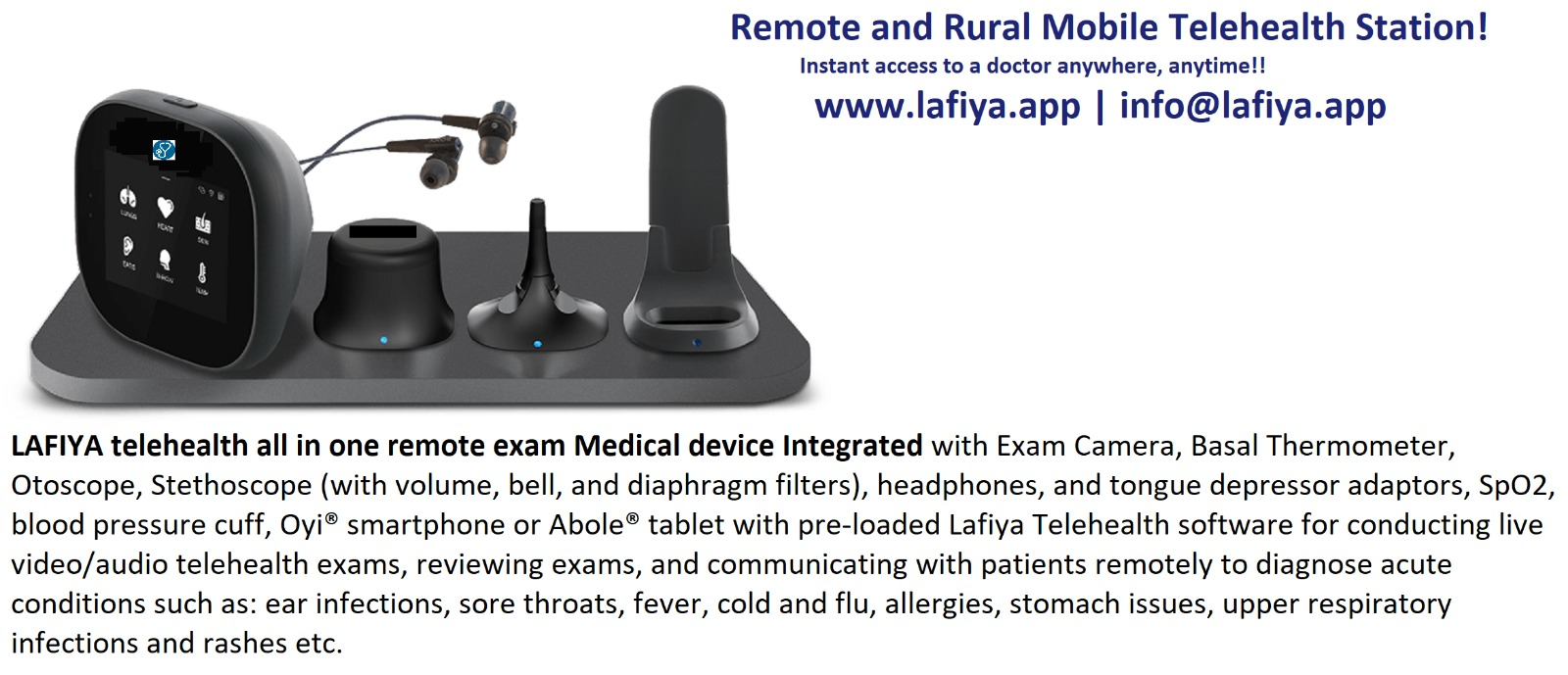
Building on this connectivity are services like Lafiya which is a telehealth solution that practically brings a “clinic” in your office, home, church or more with clusters of health professionals unbounded and unconstrained by geography. Lafiya is powered by solar with nothing to do with national grid. There is also an agro-aggregation business, Ogleji, which supports rural farmers.

In the BeepTool world, there is a fintech – mNaira – which powers the commerce happening in BeepTool ecosystem.  To load credits on BeepTool for subscription of the data, one has to use mNaira. mNaira enables many services designed for locations and areas with non- or poorly existent connectivity. Those services include saving, lending, etc.

Over the last few months, I have been working with BeepTool founder John Enoh, and it is amazing that we are ready for the world. John is based in Texas USA; our local team operates from Lekki. I spent a full day with them today. You will be learning about the different solutions in this amazing African technology company.

Our vision in this company is to take the services which Nigerians in urban areas are enjoying to rural communities. To do that, we have to create a connectivity system supported by services. The Nigerian regulators and Standard Organization of Nigeria (SON) are all licensing or have licensed critical BeepTool technologies. I have been working with this entity for largely a year, and decided now is the time to get full. We also hope you will be interested in our services and quickly connect.

A section of our Lagos team

Contacts

  • Address: 40 Fola Osibo Rd Lekki Phase I, Lagos, Nigeria
  • Tel #: +234-1-453-5771
  • Email: info@beeptool.com
Immersion on the satellite
The satellite
BeepTool terminal
Telehealth with solar support

Telehealth system connected via BeepTool
Oyi 1 smartphone
Oyi 1 smartphone

Don’t Fight your Competitors, Learn from Them

0

There are several memes that discourage fighting competitors. Two that I love so much read – “Bro, the battle is against poverty not us” and “Do whatever you can to make your ship float so long as you don’t try to sink mine”. These two memes keep me going anytime I feel threatened by someone’s success. They help me to look beyond the success and focus on the success story. Yes, their strategies always lie in their success stories.

It is true that when we see our competitors moving up, we too will want to move up and surpass them. But we have to be sure of what drives us – envy or admiration?

I am always appalled when I hear people saying that so long as there is a drive, it doesn’t matter if it is envy or admiration. We have to understand that there is a thin line between these two emotions but their effects are glaringly different. When we envy our competitor, we will be under much pressure to level up, which may end up causing a lot of damage to us and the business. But if we admire our competitors, especially the successful ones, we will want to learn how they battled and won some challenges we are currently facing. This way, it will be easier to navigate through these challenges as we encounter them. Ok, let me share my personal experience to buttress my point.

I was lost when I was made the head teacher of a young school. To start with, what I studied at the university was English (Hon) so I don’t have a teaching certificate nor a business one. But I have worked in good schools and was able to pick up some good strategies, which I have been suggesting to this young school. Because of that, the owner of the school felt that the only way I can practice what I preach was by being in a managerial position. Honestly, I was scared.

Of course I had so many ideas, but I still needed more because our customers kept complaining about our inability to do certain things other schools around the area were doing. Being someone that doesn’t appreciate criticism I hated those schools and the people that criticised us. I tried and tried to discredit these schools before our customers but it didn’t work. Instead those schools continued to thrive and our customers continued to complain. To be honest, if I had seen a way to erase those schools from the face of the earth, I would have done just that. They were just making my work difficult and expensive.

But my mindset towards our competitors changed when I attended a workshop on how to run a successful private school. It was from that day that I truly appreciated the SWOT strategy. I noted down our weaknesses and threats (made so obvious by our complainants) and found out that our competitors are one of the best opportunities I have towards managing them. So I started studying these schools to find out what exactly makes them so ‘wonderful’ as our critics described. I also found out that these schools also have their challenges and have been admiring our strengths. I stopped discrediting them before our critics and started embracing criticisms. Because of my positive attitudes towards these schools, I believe, they started reaching out to us and symbiotic relationships developed among us. You know what is so good about all these, we didn’t lose our students to them, instead we watched each other’s back. Believe me, through them, I was able to gain much insights on how to run profitable schools in that particular environment.

It was not an easy feat accepting that I needed to learn from these schools, but I did. Well, here are some of the ways I was able to learn as much as I can from them (with and without their permissions) and the ways that benefitted me:

  1. Spying: I know that spying is always given a negative connotation but I am going to describe how we used it to obtain something positive. Well, I started by taking hikes around the different areas where these schools were situated. I used that to observe the environments, buildings, facilities and every other physical attributes of the school. I needed to see what they have that we don’t. However, I couldn’t risk going into the school compounds for further observations so I sent others to do that for me. The information obtained from these surveys helped me to beef up our own side. I started putting things in our plan based on these surveys. I don’t believe in being a copycat, but I needed to understand what the people within the area wanted, which these schools already knew. So, we have to give them what they want first before giving them something unique. By the way, our spying exposed the fact that these schools also spy on us. So, go figure.
  1. Friendship: It got to a time I had to look beyond the fact that these schools run the same type of business as ours and develop a cordial relationship with their head teachers. Because of that, they started inviting our students to academic and sporting competitions. The friendship also encouraged exchange of vital information between the schools. In fact, we started watching each others’ back to the extent that debtors from one school will not be admitted into any of those schools unless they clear off their debts.
  2. Partnership: One of the complaints our customers were throwing at us was that we have very few students in secondary school. So they expressed their scepticism about our school being approved as a centre for Basic Education Certificate Examination. (BECE). Thank God I was already learning from my competitors when we had our first JS 3 class. I registered the JS 3 students with one of our competitors, which saved the school a lot of money it couldn’t have afforded. We also enjoyed a lot of other things as a result of partnering with these schools to pull resources for projects.

But the major thing I enjoyed when I stopped fighting these competitors was peace of mind. I am not trying to say that I was stupid enough to believe that these schools are no longer threats but, I was intelligent enough to learn how our school could survive despite their domineering presence. Besides, they have been in the business long enough so they have been through what we were passing through then and were making waves through new challenges. So I was able to learn how to conquer our challenges and prepare for bigger ones.

Dear entrepreneurs, look around you, which of your competitors poses the highest threat? What is it about that company or that person that is making you uncomfortable? Have you taken time to study him/her/it? What’s your attitude towards this competitor? Is it positive or negative? Have you been able to listen to their success stories with an open mind and learn their strategies? Do you really admire their growth?

Honestly speaking, it is not easy to admire the success of someone you know that can kick you out of business, but you need to. And it is achievable. It requires a change of mindset. Trust me, if I could do it, so can you. You can also attend workshops and seminars that will help you to achieve this. You have a lot to gain.

The Fundamentals of Believing With a Strong Conviction

0

“When I was young, I had to learn the fundamentals of basketball. You can have all the physical ability in the world, but you still have to know the fundamentals.”- Michael Jordan

While growing up, I had held on to some beliefs that were not accurate and had hindered me from getting the best. For example, I believed that I didn’t  need to perform well in my academic to become valuable in life. This believe is true and not true. Being valuable in life is not tied to your academic but having the opportunity to study in school is an opportunity to become valuable in life, and to the society. Thank God that my believe changed in the University. 

The society, your fellow peers can affect one’s belief system. Our society play major role in our belief system and if a society is built on a wrong belief system, then the performance of each individual who has held on to such belief will be affected. Let’s see what makes up a belief system.

The fundamentals of believing simple means the basic facts that surround what one believes in. Life is made up of different believers, who held on to different belief systems through experience and analogies.

So, how do we get our fundamentals right?.

Identify and define Facts/ Assumptions that backup our believe.

A person who has gotten certain belief through analogy may not know if such belief is right or wrong if there is no proper finding to such beliefs.

“A thing is not necessarily true because a man dies for it”- Oscar Wilde

So when setting that goal, make sure you are going with the right belief system. Don’t set that goal based on assumptions; set it with the right fact. Examples of assumptions are “expect success and it will come”, “success happens overnight”, etc.

Know the fundamental principles guiding those believes.

Knowing the fundamentals guide you to know whether those beliefs are based on fact or assumptions. To understand the fundamentals guiding those beliefs, we have to question those beliefs we have gotten through experience or analogies.

Questioning those believe does not mean to doubt them. Questioning them help you to understand the fundamentals guiding those believe.

For example, a person that believes success happens overnight will have to ask some questions.

  1. How does success happen overnight?
  2. What are the factors that guarantee success overnight?

“If your believe are stressful and you question them, and you come to see they aren’t true – whereas prior to questioning, you absolutely believe them. How can you live in joy when you are believing thoughts that brings sadness, frustration, anger, alienation and loneliness?- Byron Katie

So don’t live your life on a wrong believe, live your life on a right believe with a strong conviction.

” The important thing is not to stop questioning. Curiosity has it own reason for existing – Albert Einstein.