DD
MM
YYYY

PAGES

DD
MM
YYYY

spot_img

PAGES

Home Blog Page 6763

Dear Naija Start-ups, Capture that Market with Discounts and Loud Adverts

0
Nigerian startups founders

“One cup N50, three cups N100,” shouted a woman selling boiled groundnuts while she was busy attending to numerous customers surrounding her and her wheelbarrow filled with boiled groundnuts.

“One salt N80, two N150, three N200,” this time from a man pushing a wheelbarrow loaded with packets of salt.

“Don’t spend too much on clothes for your children. Buy better clothes here. Two, two hundred; two, two hundred. Three for 600; six for 1000.” This one is from a woman and her son selling second-hand clothes.

“Buy three, get one free.” This was blasting from a loudspeaker mounted by a local herb seller.

These are just a few out of the numerous ‘noisy’ advertisements that characterises Nigerian markets. To be honest, I always wonder how these people make their profits especially those that sell things that are of good quality. But the fact that they don’t fold up after some time shows that they have ways of surviving. I am not a business analyst but I believe the following strategies kept them afloat:

  1. One thing I’ve noticed is that these sellers make large sales. And if you consider the amount discounted, you will find out that they will realise it through the quantity of sales made.
  2. If not for anything else, these people attract new customers and their old ones keep coming back. However, customer retention depends on so many other things, one of which is the quality of goods sold or services rendered. But when a new customer is satisfied with what he or she paid for, he/she will keep coming back for more.
  3. I noticed that these traders sometimes use this discount strategy to attract customers who will find out when they come that there are better commodities that are not discounted. Most times, the buyers will find what they need from the undiscounted goods and will buy them. This has happened to me several times.
  4. Some of the goods given out on discount are those that may spoil if left in the shop or warehouse for longer time. So, instead of losing those goods entirely, they’ll sell them off at give-away prices and still benefit from the exercise. The traders may also decide to sell off some commodities so as to make space for new stocks.
  5. One thing these traders have learnt so well is the effect of loud advertisement. I called it loud because they make their advertisements so forceful. In fact, they don’t consider whether you were disturbed by their ‘noise’ or not. Theirs is to make sure that as many people as possible heard about their business, and the discount. In other words, they know the powerful effect of the combination of discount and forceful advertisement.

I know that some of us feel that this type of business strategy employed by these traders may not work in large scale businesses, but who knows. Some businesses have made so much name that they don’t think they need to waste their resources on discounts and adverts. But those are not my interest right now, because they have experts that study the markets for them and recommend what they should do to increase sales. My interest for now is on Naija start-ups.

One of the major challenges of Nigerian emerging businesses is how they can pave their way into the market, which has already been dominated by large and rich conglomerates. I want to inspire these new emerging and would-be-emerging companies with the success story of a school I know so well.

There is this school somewhere in FCT, I’ll call it School A. When School A’s structure was still under construction, someone that lives on the street where School A is located, immediately converted her residence to a school (School B). Maybe she all of a sudden realised that there wasn’t any school around that area and that School A will make much profit. So she decided to open hers first and establish very well before School A’s building is completed. Well, when School A was ready to receive her students, the owner pulled a stunt that nobody thought of – she offered scholarship based on the number of students that come from a family. Look at the way she did it: for families that register up to three children, the 3rd ones will have 50% scholarship. For families that register up to four children and above, the youngest ones among them will have full scholarship until he/she finishes from the school. This information was included in the flyers and circulated. Did this bring students for her? Of course it did.

Dear Naija Start-ups, nobody said it was going to be easy. But we can’t fold our hands because we believe it’s difficult. So, what do you think about giving discounts to attract new customers and retain the old ones? Have you ever thought of the form of discount you will give?

What about advertisement? How do you plan to go about it? Which form do you want to use? You don’t have to spend so much on that. You can spread the words around through the internet. You also can do that through spreading flyers and posters. Ever thought of letting your contacts spread the words for? What about using social media such as YouTube, Instagram, Facebook and the rest? See, make your advertisement loud and don’t apologise to anybody for being ‘noisy’ because the people in the market do not apologise to us for the noise they cause in the market.

Dear Naija Startups, you are not there to compete with the big companies. You are just there to locate your space and keep it. So, I’ll say, “locate your space and keep it by combining discount and loud advertisement.”
Nigerian Banks Hitting Record Numbers on Arbitrary Charges and Fees

0

On the 27th of May, I got an SMS notification from Zenith Bank that my account has been debited of N52.50, as MasterCard monthly fee, and my balance was at the deficit of N8.42. On the 30th of May, I received another transaction notification: “SMS Notification Charge, Deducted Amount, N12.” My balance deficit climbed to N20.42 by the 23th of June, I was indebted to ZenithBank to the tune of N80. Five days after, my deficit shot up to N141.30, as a result of N8 SMS notification charge for the month of July. All these happened in a savings account.

This means, you can leave N10, 000 in your savings account with a Nigerian Bank, and at the end of the year the Bank will take almost half of the money for charges. It is an extortionist situation applicable to countries like Nigeria, which goes against the ethos of savings account.

Savings account is defined as “a basic type of Bank account that allows you to deposit money, keep it safe, and withdraw funds, all while earning interest.”

Unfortunately, the above definition does not apply in Nigeria, it’s the other way round. Bank customers are being ripped off on a daily basis in the name of “maintenance charges” that has little or nothing to do with transactional charges incurred through banking activities.

I thought about the charges and realized that there has not been significant difference since 2017, when Nigerians went confrontational and demanded that the Central Bank of Nigeria (CBN) reverse some of the rules on banks charges, because it’s becoming more like extortion in the interest of the banks alone, and customers were bearing the brunt. The National Assembly intervened and directed the CBN to quash some of the charges. Well, it’s 2019, and the aforementioned experience is an indication that many of us are working to enrich the banks.

In 2012, Innoson Nigeria Ltd, a customer to Guaranty Trust Bank (GTB) was unlawfully imposed such charges upon, and its current account was debited of N700 million. It took a careful audit for the company to find that out, and it became an eye opener to others who lodge huge sums with the banks. But then it took arbitrary turns before we know it, and every bank account holder in Nigeria is at the receiving end.

In the first quarter of 2019, top 5 Nigerian banks made a total of N15.7 billion from account maintenance charges. They are as follows:

  • Zenith Bank: N5.238 billion.
  • First Bank: N3.218 billion.
  • GTB: N3.045 billion.
  • Access: N2.212 billion.
  • UBA: N1.967 billion.

This whooping sum was extorted from the monies that should be yielding interest to Depositors, a reason why Nigerians embarked on a #Endbankingfraud campaign on Social Media for months. Well, the campaign didn’t change anything if not that it created the awareness that Nigerians are getting ripped off by banks, and the enormity is alarming.

ATM cards are issued to customers to ease the number of people on the counter trying to withdraw, so in a way, customers are helping the banks to do their job by using their ATM cards. Therefore, they should be compensated through interests for doing the job they did not sign up for. But that’s not the case, and that’s not the only pain that Nigerians go through in using the ATM. The three withdrawal limit when you are using other banks ATMs, and N20, 000 cash maximum on the withdrawal menu of many ATMs are to ensure that customers who have more cash to withdraw pay charges for doing so.

The Consumer Protection Council seems helpless as the charges are backed by the CBN. And there is less people can do other than complain and seek refuge in Thrift Collectors (Alajos). However, the sundry charges have become a hurdle to banking inclusion advocacy. A student who is counting on the N1000 left in his account would be disappointed seeing that he can’t access the money because  his bank has debited N200 from his account for sundry charges. The next time he would keep his money to himself however else he can. The banking recapitalisation is an evidence that Nigerian Banks can function without ripping their customers off. There is a whole lot of lucrative businesses and ideas to invest in. So instead of counting only on depositors money to stay in business, the CBN should ensure policies that will make banks business innovative.

Make Warri or Eket the Home of Nigeria’s Petech, Start-ing up Petroleum Technology

1

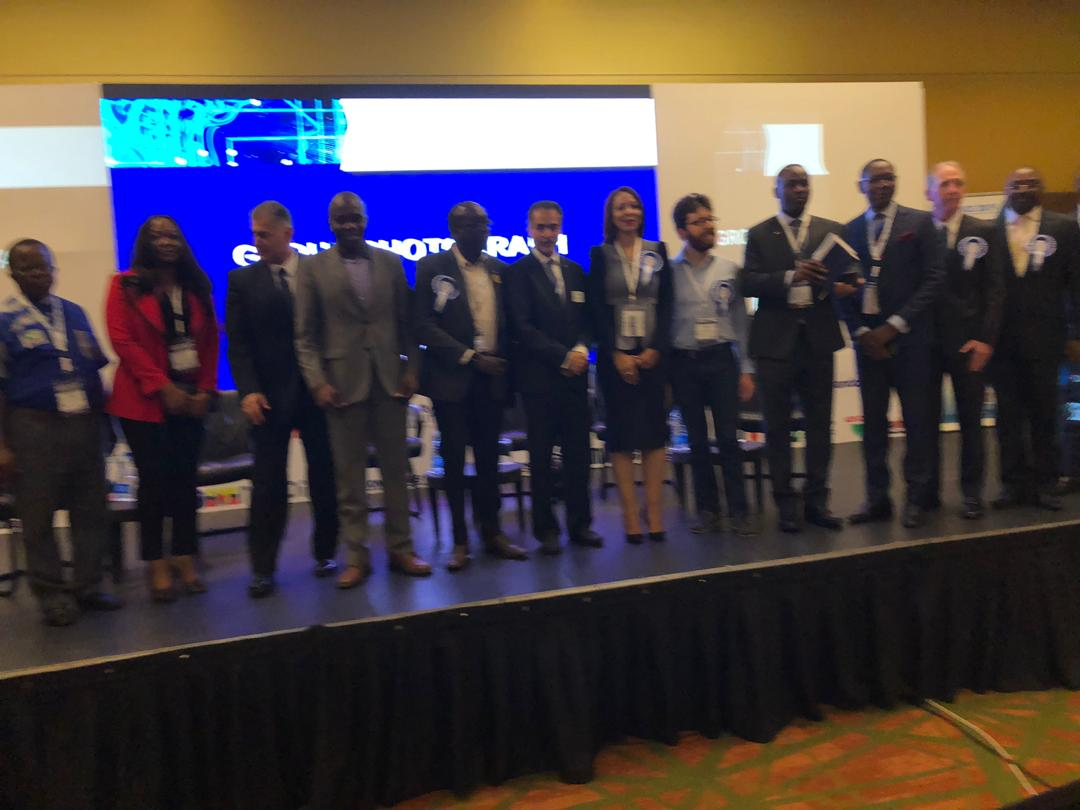
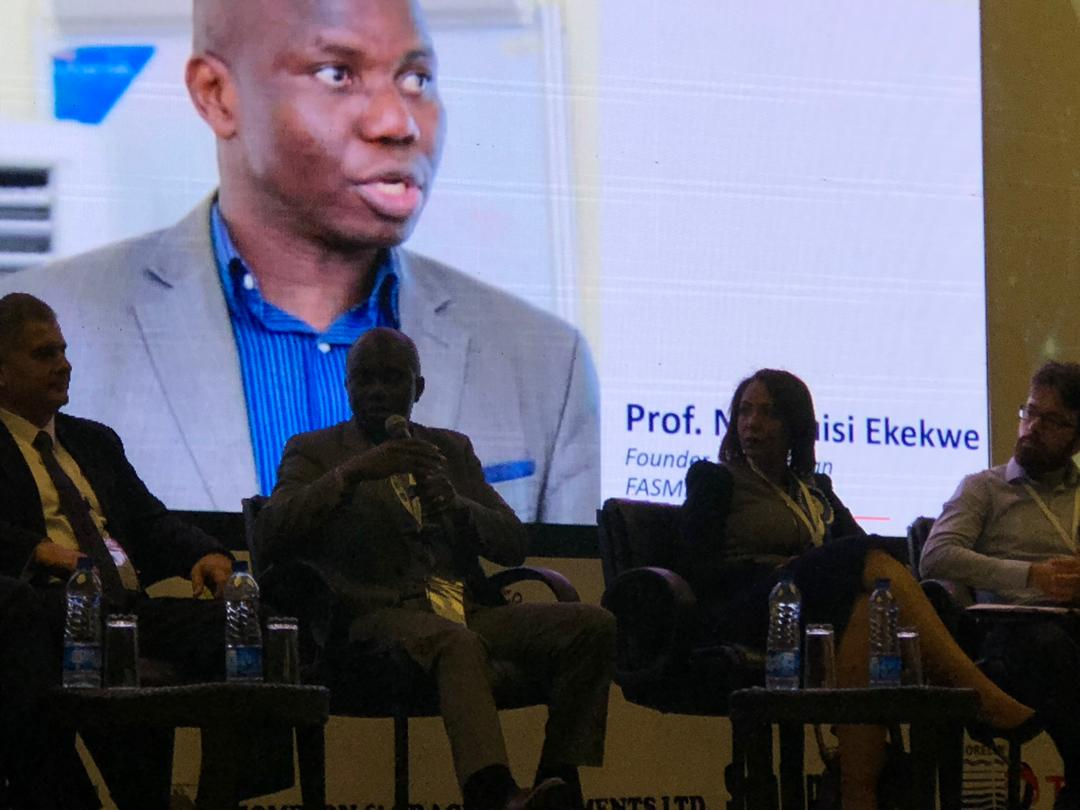
On phase today with Schlumberger, Agip, Seplat, Chevron and more as we discussed big data, AI and broad technology in the oil & gas sector. I pushed for Warri or Eket to become the home of Petech (start-ing up petroleum technology). Yes, Nigerian entrepreneurs will build startups to serve oil & gas sectors and become the fintech equivalent of the banking sector. The conversation was lively and was well received. It was moderated by CNBC Africa anchor Wole Famurewa.


Online VAT: Where Nigerian Government Got It Wrong

0

The proposed Value Added Tax (VAT) for online transactions has stirred frowning reactions from Nigerians. The chairman of the Federal Inland Revenue Service (FIRS), Babatunde Fowler, disclosed the decision of the Federal Government (FG) to introduce VAT to online transactions in an interview with Premium Times on August 1. But Nigerians are not buying the idea; they are saying that it’s just a measure by the FG to kill online businesses in the country.

At a time when digital transactions are being encouraged and Nigerians seem to be waking up to it, VAT is perceived as a threat to the cashless policy that even the federal government has been advocating. There are so many online outlets, most of them startups, leveraging on the VAT free online system.

The new policy billed to take effect next year does not apply to every item purchased online. Mr. Babtunde Fowler explained that items and services mostly used by people, like education and medical services will be excluded from the list. And the FG will be partnering with banks to effect VAT charges.

“We are thinking that maybe early next year, we will advise banks to start deducting five percent VAT for all online purchases done locally.” He said.

Despite the exclusion of some mostly used items from the list, Nigerians see the decision as discouragement to local online enterprises. And a viable reason why most of them wouldn’t be making online purchases anymore.

A Twitter user analyzed it this way:

“If you pay for an item worth N10, 000 with your card, you will need to give the federal government N500 extra. If the goods are worth 200, 000, you will pay the FG N10, 000. If you do 500, 000 transactions, that’s N25, 000 to the FG’s kitty. If your transaction is N10 million, you will pay the FG 500, 000.”

Another Twitter user added:

“With 5% VAT, usage of POS and other online payment options will reduce. People will start carrying loads of cash around for transactions which will trigger a sudden rise in robbery cases. The government just created an enabling environment for the ‘Armed robbery sector’ to thrive.”

With these sentiments, it’s obvious that Nigerians are unlikely to patronize online markets if this policy is implemented. And that’s going to impact negatively on online businesses. Even those who are deemed to be established, like Jumia and Konga and other retail stores that are counting on the cashless policy to thrive. Many of them will be laying off workers.

There are also developing payment platforms that will not survive this decision. Mr. Fowler tried to excuse the implications with further explanation, saying that the VAT payment is a thing of choice. According to him:

“What that means is, if A wants to impress B, and takes B to eat at the Transcorp Hilton, A will pay VAT for services enjoyed. This is because of the environment.

“The cost of Coca Cola they will drink at Transcorp Hilton at N1, 000 could have been bought at N100 in any supermarket without paying any VAT.

“Also, A can buy chicken, with all the ingredients in the markets, cook it and eat without any VAT. But instead of spending N5, 000 for that meal, if A decides to go to the Transcorp Hilton and spend N20, 000, then A must pay VAT. It is a choice A has to make.”

What is missing in this explanation is the fact that online VAT will not be exclusive to eateries alone. There are retail stores that sell at the same cost with conventional stores or even cheaper. And many people opt to online for convenience since most online stores do home delivery.

The “choice” emphasized by Mr. Fowler is highlighting the fact that the government has little or absolutely nothing to lose in this decision. The VAT tax is already implemented in offline businesses at 5%, and the International Monetary Fund (IMF) is even urging the FG to increase it to 7%. Mr. Fowler give further details on how extensive it has become, he said:

“We crossed the N1 trillion mark in VAT last year for the first time. We are equally improving this year. At the end of 2019, if we can have everybody under the tax net, sign for VAT, start remitting VAT, let’s look at the volume we can generate.”

The insinuation in this statement is that whether people choose to make purchases online or offline, the government is going to charge the 5% VAT, because it’s a win-win for them. And that is carefree if the online businesses survive or not. Since the VAT depends on buyers, the FG will have nothing to lose.

Apart from the UAE (United Arab Emirates) that recently introduced VAT at 5%, Nigeria has the lowest VAT rate in the world. But that does not justify its introduction to online purchases. Since the Nigerian environment lack the facilities that Entrepreneurs need to thrive, the online VAT waiver should substitute for the things lacking.

The Shocking Truth About Bleaching, Whitening and Toning Products

0

Due to popular demand, I would like to discuss the chemical ingredients found in some bleaching, toning and whitening products. Over the course of my advocacy project for better healthcare systems and self care, I have received a lot of questions about this, which has prompted the need for this article.

I must say the motive for discussion is non judgmental, I just want to create awareness and encourage people to be body-vigilant and practice self care.

For this article, exclusions include the use of skin lightening treatments under the care of a dermatologist or doctor for skin conditions like hyper-pigmentation.

I conducted a mini poll on social media recently, I asked a question – Do you think products applied on the skin get absorbed into the blood stream, 80% of the people that responded said yes, 10% said No and another 10% said Not sure.

Well evidence has shown that products applied on the skin in the form of creams, lotions, patches can get absorbed into the skin, as the skin layer is embedded with blood vessels as well, hence the motive behind the use of medicated skin patches, for drug delivery systems.

So let’s understand the makeup of the human skin:

The skin is the largest organ of the body, with a total area of about 20 square feet. The skin protects us from microbes and the elements, helps regulate body temperature, and permits the sensations of touch, heat, and cold.

Skin has three layers: Epidermis, dermis, hypodermis. These layer constitute hair follicles, sweat glands, fat connective tissues and blood vessels.

  • The epidermis, the outermost layer of skin, provides a waterproof barrier and creates our skin tone.
  • The dermis, beneath the epidermis, contains tough connective tissue, hair follicles, and sweat glands.
  • The deeper subcutaneous tissue (hypodermis) is made of fat and connective tissue.

The skin’s color is created by special cells called melanocytes, which produce the pigment melanin. Melanocytes are located in the epidermis.

What determines your skin colour? The colour of the skin is “determined by a person’s genetic make-up, and it involves the pigment melanin. Melanin is made by special cells called melanocytes which can be found in certain layers of the skin. Melanin production is a complex process. The amount of melanin produced, the type of melanin formed and how it is distributed throughout the skin determines the skin’s colour. Melanin is also the pigment responsible for the colour of hair’.

According to the London Trading standards, ‘The following ingredients found in some skin lightening products have been proven to be harmful to health and cause permanent skin damage: Harmful Ingredients – most common ones are Hydroquinone, Mercury and Steriods”

Possible side effects:

Possible risks of creams containing hydroquinone, corticosteroids or mercury include:

  • skin turning dark or too light
  • thinning of the skin
  • visible blood vessels in the skin
  • scarring
  • kidney, liver or nerve damage
  • abnormalities in a newborn baby (if used during pregnancy)

If you are in doubt about any product you are using on your skin, a good place to start is to double-check if the product has been approved by the appropriate regulatory agencies in your country.

Approved products fit for human use should be registered; also be mindful of using products that the manufacturers do not list all the ingredients.

Analysis by the agencies could help reveal the actual ingredients contained in those products. Below are examples of regulatory agencies for different countries:

  • UK- MHRA- Medicines & Healthcare Products Regulatory Agency
  • USA- FDA-Food and Drug administration
  • Nigeria- NAFDAC- National agency for food ,drug administration and control

Conclusion

This article is not aimed at influencing your decision to use certain products on your skin, Discussion was borne out of the desire to educate and create some form of awareness on the effects of certain chemical substances when applied on the skin.

If you are concerned about any chemical ingredient or products you apply on the skin, please speak to your local pharmacist or see your doctor.

I would advise you to always seek medical advice, weigh the risk benefit ratio, report all skin problems to your pharmacist or doctor, check with the regulatory agencies in your country to ensure products you use on your skin are safe, approved and registered.

Your skin is a very important organ in your body, look after it and be body-vigilant.

Like/Follow/Share: https://www.facebook.com/AskYourPharmacistAdaku