DD
MM
YYYY

PAGES

DD
MM
YYYY

spot_img

PAGES

Home Blog Page 6772

Uzoma Dozie Unveils A Startup, Sparkle.

1
Photo by: Kelechi Amadi-Obi (www.kelechiamadiobi.com)

No Comment – the full press release below. 

Uzoma Dozie, one of Nigeria’s leaders in the financial sector and the last Group Managing Director of Diamond Bank, Nigeria, today announces that he is launching a new financial technology community and ecosystem, Sparkle; a mobile-first platform focused on the country’s retail sector.

Sparkle will tackle how retailers can achieve their daily objectives and scale their businesses, providing a suite of innovative lifestyle services, in addition to typical current and savings accounts that exist in the market. In particular, Sparkle will deliver customer experience-led support services, ranging from inventory management and invoicing statements to foreign exchange services and a POS-via-mobile function.

Powered by AI and Machine Learning, Sparkle is building a dynamic community around Nigeria’s retailers and consumers, influencing purchasing decisions based on user-generated behavioral purchase data. This will actively support retailers in navigating a better route to market by directing the right consumers their way. In a bid to drive wider financial inclusion and regulatory reform in the market, the team is also building a digital framework for retailers to register their companies, register for tax and register domains, as it looks to plug the gap in terms of business advisory and regulatory services for retail SMEs in the country.

Uzoma Dozie, Founder and CEO, Sparkle says “Retailers and consumers in Nigeria are currently disconnected; Sparkle is building the solution around its understanding of the challenges of small businesses, which will help reduce the operational risks small businesses are exposed to in their infancy. Sparkle is a product, a community, born out of necessity for Nigeria’s retail landscape. We will connect millions of retailers on a digital platform, providing a service they can trust, that is seamless, and that allows for frictionless transactions across all activities and business services”.

“Having spent more than 20 years building out the retail arm of Diamond Bank, it is clear that there is a significant gap in the market to incubate and roll out a new approach to services for retailers, and at scale; they need a financial & business services partner, not another finance platform.  This is where we stand out from all others. Sparkle is a collaboration between retailer and customer – a support system that will ensure far greater financial inclusion and much improved access to market, built for many, built to scale”.

Set to launch in 2019, Sparkle will release plug-in APIs for the platform, to enhance convenience & service, whereby outside developers can contribute & build solutions.  The company has also entered into partnerships with Visa, Network International, as well as PricewaterHouseCoopers. They will also be working with Microsoft.

Retailers contribute 33% to total GDP and 45% of total employment in Nigeria and are a critical part of powering the Nigerian economy, however services available to small businesses have not been best suited. Sparkle has identified lack of funding, poor access to market/network and lack of business training as the primary challenges for the sector, which is why the new platform will also provide access to mentorship and development.

Keen to pioneer diversity and financial inclusion, the Sparkle team has also identified women as a key demographic to collaborate with, as they play a key role in the new economy, with high adoption of tech to leverage on the flexibility of driving new businesses. Women are also essential in staying in touch and connecting with their millennial families.

During his tenure at Diamond Bank, Uzoma was responsible for ensuring technological innovation was central to the institution’s growth strategy. From 2014-2018, Diamond Bank’s mobile app adoption rates grew from 206,000 to 3.3M, and he simultaneously focused on aggressively growing the bank’s retail arm to include 18M MSME customers.

He concludes, “Technology adoption is the only way retail can scale in Nigeria. We are in a new, digital economy. Retailers, individuals and businesses need the space and bandwidth to be creative and to build their business; we are building Sparkle as a wrap around for what they are already doing and we are levelling the playing field for all Nigerians, democratizing access and helping SMEs create their own luck. Sparkle is for the many, not for the few and as we continue to build out the platform”.


-ENDS-

Partner quotes

PricewaterHouseCoopers will design and implement future focused operating models that support Sparkle’s business strategy, while also co-creating disruptive technology solutions backed by the power of PWCs Experience Centre.

Femi Osinubu Partner and Leader, Experience Centre and Emerging Technology, PwC Nigeria says “We are very excited about our relationship with Sparkle and the prospects of working with them to create Nigeria’s first whole digital financial services company. This presents us an opportunity to showcase our thinking around the future of financial services and the ways technology can be innovatively deployed to make a clear difference for businesses in our clime. This is in line with our purpose of building trust in society and solving important problems”.

Network International says “As an established leader in the provision of end-to-end payment solutions across Africa, Network International is pleased to announce its strategic alliance with Sparkle Bank, to become Sparkle’s strategic payment processing partner. With over two decades of experience within payments and with a presence in Nigeria for more than 12 years, Network International is well positioned to support Sparkle Bank in the next exciting phase of their journey”.

Microsoft will also collaborate with Sparkle to leverage their enterprise class security technologies and build a platform that meets each customers security, privacy and compliance standards.

Microsoft says, “In addition, Microsoft provides Sparkle with access to unprecedented storage and compute power that will enable Sparkle provide data and real time analytics in a manner that is easy to digest and process for our users. Microsoft is a trusted partner to organisations around the world and by working together, both companies will continue to build and evolve Microsoft solutions specific to the Nigerian fintech industry.”
Best Practices for Designing Great Mobile Websites for Business

0

Just this morning, I came across a post on the Guardian about the possibility of the US government banning ‘addictive’ autoplay videos and infinite scrolling online. The general aim of the bill is to tackle features that ‘capture attention by using psychological tricks’.

While things like this take time to be considered unethical in other regions outside the US, infinite scrolling is just one of many forced content exploration mechanisms that looks good in theory but may be hurting your business practically. In my past experience, as a product design lead in an online travel agency, I have seen firsthand how having a high bounce rate is not automatically a bad thing, there are reasons to look beyond the numbers.

Below is a list of best practices you can explore for your business if you have many customers on mobile.

Homepage/Landing Page

Put key things above the fold

When users visit your website for the first time, they probably came there with some intention, interest or expectation. There are 3 key things that need to be above the fold when designing landing pages for mobile:

  • Value proposition: What are you offering the users?
  • Call-to-action(CTA): How should they start exploring your site?
  • Visuals: What first impression would you like them to form?

A/B Test: Your CTA

Every call-to-action  button is a collection of four things: a placement, a shape, a message and a colour. Always A/B test any of these variables, don’t rush into commitment.

A/B Test: Exposing the search bar on the homepage

Search is one of the main ways people can start exploring your content. Users who search usually convert more. A/B tests have shown that the more prominently you display the search, the more actual searches and clicks you are going to get.

A/B Test: Using static carousel

Automatic rotation is not a great user experience as it is a forced content exploration. Also, quite often they are perceived as ads, and even if users get interested on the banner and want to study it a bit more, it moves away. Statistics have shown that the first banner usually gets most of the interactions and the rest are just being ignored, so try testing a user initiated exploration with animation switched off. On the other hand, moving promotions usually cause a lower page speed and make everything look important.

Navigation

A/B Test: Top sticky navigation panel

Test iteration where the navigation always stay available for users no matter where they were on the page or how deep they scrolled.

A/B Test: Complement icons with text

Complementing icons with texts could increase the clarity of your navigation. Just “call it” what is going to happen when users click on it. Every icon is a room for misinterpretation and because users may probably have different assumptions, different backgrounds or different experiences in the past, it is a good practice to add a text label to icons.

Search

Show search suggestions based on popular

Search results should be easy to scan with a prominent helpful filtering. Allow users to easily delete queries by adding a small x at the end of the search bar.

Once users start typing in the search bar, you can show popular suggestions that will help them make the decision. Also offer for them to just immediately click on one of the suggestions and not type anymore.

Show search suggestions when no matching results

You should never return an empty or a sorry page if the search was performed. This means validating input real-time for item availability. You can always show either popular items or contact us.

In conclusion, data points are just events, they do not have a clear view of the processes behind them; a combination of feedback and analytics can provide the motivations behind these processes and ultimately guide your design and redesign decisions.

Quality Will Boost Growth in Nigeria’s Solar Energy Sector

1

Solar is an intrinsic part of the target energy mix for Nigeria. There are plans to generate 5000MW from this source by 2030. Climate change, energy security and an unmet energy demand are amongst the prominent factors propelling this charge. Its allure stems from utilisation of the ubiquitous sunlight, to the declining cost of solar equipment. 

Nonetheless, tangible growth can only be achieved when increment in energy generation is sustainable, not mere quick fixes. Certain issues ought to be addressed if the energy generation targets are to be met and sustained. One of such is quality management (QM). Public confidence and growth are hampered by the presence of poor quality equipment. This is compounded by the difficulty in visually detecting equipment of superior quality. Defective equipment will always produce a poor output even when installed by the most experienced personnel. Expertise in system design, installation and maintenance are also worthy considerations in this bracket. Maintenance is an integral part of a systems functionality. The longevity of a solar system is unlikely to be attained without the right maintenance. 

Current practices seem rather incapable of addressing the quality concerns expressed. Interactions with leading industry practitioners revealed that only a few are aware of any efforts being made to curb these concerns; some of whom have been operating in the industry for close to a decade. This queries the level of involvement of industry stakeholders in such efforts. Interestingly, the Standards Organisation of Nigeria (SON) has some provisions for the solar industry. The reason for its seeming unpopularity may not be farfetched. The SON has an official mandate of “Quality control of products, weights and measures”. It has several industries to cater for, therefore, it is only fair to expect that some will be affected by lethargy. 

There is a need to have robust QM schemes to regulate the solar industry in Nigeria. One would suggest that such provisions be domiciled in an energy commission, as opposed to a general standards body. The Microgeneration Certification Scheme and Golden Sun Certification are examples of similar efforts made to enforce quality in other climes. The aggregation of the 12 SON provisions which relate to solar into a unitary scheme would also be helpful. Equipment testing at the point of manufacture should be more effective than testing after products have been distributed or shipped. Legal customer rights protection against substandard product quality is necessary.

Certification to identify those qualified for installation and maintenance is apt. Summarily, a scheme that caters for equipment quality and personnel quality (installation and maintenance) would be useful to the Nigerian solar industry. It should be accessible, affordable, uniform and inclusive. It could be anchored by an energy commission, in conjunction with reputable stakeholders from the private sector. Database building, certification, periodic monitoring, mandatory for major project awards and penalty for defaulters are all tools that could be utilised to ensure sustainability of the scheme. 

There is no doubt that substantial technical expertise exists in Nigeria. The task is really in identifying them. Quite importantly, solar EPC companies have a duty to ensure that industry best practices are observed. All must realise that system maintenance is crucial and factoring this into the early stage of project deliberations is key.

Uber Cuts 400 Marketing Jobs, Market Heat Intensifies

4
Dara Khosrowshahi rings the opening bell during the Uber's IPO on the floor of the NYSE in New York on May 10. Photographer: Michael Nagle/Bloomberg

Uber is cutting 400 people in its marketing unit. Call that the heat from markets. Yes, being a publicly traded company over being a private one. Uber will now be measured not by hype but by numbers it is bringing in the business. I still maintain that Uber and Lyft will merge. If Lyft does not join Uber, a consortium of car companies will acquire it to deploy their vehicles in the redesigning transportation sector. That decision will come because profitability for these firms will take longer and markets cannot wait on just promises.

The ride-hailing company will dismiss about 400 employees, said the person, who asked not to be identified because the details aren’t public. Dara Khosrowshahi, the CEO, told employees of the changes in an email Monday.

“Today, there’s a general sense that while we’ve grown fast, we’ve slowed down,” Khosrowshahi wrote in the email reviewed by Bloomberg. “This happens naturally as companies get bigger, but it is something we need to address, and quickly.”

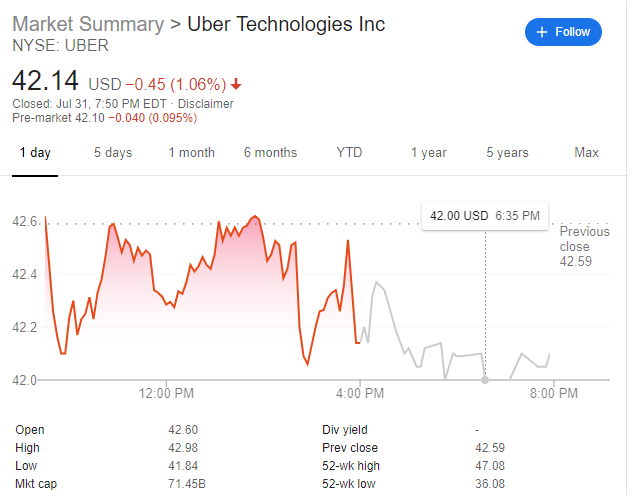
Uber market cap is $71.5 billion, well below the rumored excess of $100 billion it raised money in its last private round.

My Note To NYSC Members – Learn a Digital Skill

0

Firstly, this post is addressed to my “mates” who are currently on NYSC (National Youth Service Corps) and young folks out there. If there’s anything very important to a young man or lady who is out of school (higher institution) or who is qualified for the world of work, it is a good job and a stable income.

Now, I know the country is very hard and access to good jobs is also very hard but I have this to say from my observation so far. 

  1. Please make up your life about your career: Honestly speaking, I am not trying to sound like one god up there. There are still many juvenile adults out there who really get on my nerves when we have discussions about career and life. The responses I get most times are. “whatever will be will be”.

I am here to say “whatever will not be willing not be”. Nigeria is a hell of a country, and depression and frustration is so real. See, too many words are coming to mind but I can only type a few.

I often hear excuses like “there are no opportunities here” Are you really sure about that claim. Don’t you use an Android phone. Remember, I said I’m no god but I don’t believe in giving excuses for some present setbacks. Do something to yourself. Why not spend nights learning something more relevant.

Well, only those who really cherish this will see the value.

  1. Take a chill pill: There’s something called pressure and trust me, I have faced worse last year. While mine doesn’t seem to be as regards seeking for jobs and all directly, it was regarding seeking for funds to keep my startup running. However, there’s going to be much pressure based on the fear of “after service, what next”.

Now, I’m not just assuming this, I’m raising this point because at this point I’ve seen so many folks rush into so many things at the same time. I want to learn this, I want to learn that, and start this business and start that business, all at the same time. Please, you don’t need so many things at the same time. Start from just a simple place.

Most preferably, start by getting a job, start by working! If you have not wired up yourself for entrepreneurship, then don’t venture into it immediately after your service. 

  1. Learn a digital skill: Now, this is exactly why I wrote this post. A digital skill could be common Microsoft Excel; it is a skill. See, stop procrastinating about this skill thing, it’s not difficult; it’s something you can do while you’re currently on service. Now, I know nobody is telling you but when you begin to run from one seminar to the other, you’d realize that you really need it. It will be demanded of you by organizations.

When the word “skill” is mentioned, it’s not necessarily coding; it may not be marketing. Please go and ask friends about which skills will be best for you to learn. I have learnt business development, content marketing, business strategy, marketing strategy over the course of a year.

  1. Maximize LinkedIn or job platforms: Well, as you can see, I don’t currently work as a full time employee. I work based on services as I run my startup, so it might sound like I’m not the best person to give you this piece of advice.

Well, just switch over to LinkedIn, spend time on it daily. You can follow me because I’m working on something huge. However, just pay attention to conversations around what HRs are saying. Get to know the reality, the pros and cons of jobs search. You might get job offers.

I moved to LinkedIn a month again and I’ve gotten two job offers which to me wasn’t appealing, it might to some folks though but the point is that I got.

If Twitter is where you stand higher chances of getting a job, then move; if it’s Instagram, go there. Know where you belong. You should be in the face of these companies.

If you want me to teach you how, it’s not free as well but I’m not even here to sell myself at all. My major concern is that we should all have jobs, good ones and break through in this hard economy.

Finally, I’ll end with this; Pray! As much as you grind, pray!! I believe in supernatural favour, I believe in miracles, I believe God blesses and sends help. I pray for opportunities myself seeing I haven’t arrived yet, I need lots of connections and ingredients in my company, so I pray because I have and I’m still working hard on it.