DD
MM
YYYY

PAGES

DD
MM
YYYY

spot_img

PAGES

Home Blog Page 6783

How To Beat That Presentation

1
Amo from South Africa talks to Patrice C. McMahon, , director of Global Engagement, before the lecture. 20 Students from southern African countries are on the UNL campus for 4 weeks as part of UNL study of the U.S. Institute on Civil Engagement. January 17, 2014. Photo by Craig Chandler / University Communications

Making a presentation is arguably the hardest part of being a student. As a student you could either be one that talks a lot but get cold feet in public or be someone who doesn’t talk a lot but makes quite an impressive speech in public or be someone who doesn’t even talk much and still cannot make any meaningful impact in public presentation, but whichever group you belong, a few tips can turn things around and bring out the best in you when making a presentation.

When I was pursuing my bachelors’ degree back in school, you will be doing yourself a huge disservice if you chose me to defend a group project in front of a panel, because I would gasp for air! Funny right? It was really difficult. But along the line I realized that it was not a permanent situation, and that  I could change all that, so I went searching and discovered the tips needed to make a good presentation. This tips worked so well for me. I couldn’t worry too much about my shakiness or panic attacks; I finally learned a way to drive my point home in a relaxed manner and in my own words.

So here we go the 5 basic presentation tips.

BE YOURSELF

This statement is very much underrated mostly because of its frequent use from around the globe. Everyone tells you to be yourself, at home, at work, in places of worship, basically everywhere. You could say “oh I’ve heard that too many times, just not working” but it’s never enough until you understand its contextual meaning. It’s more like get in touch with your inner child; become more aware of your thoughts; follow your intuition; RULE YOUR WORLD! Professionally act like you own this place; be in charge

SHOW YOUR PERSONALITY

You do have a personality, bring it on. Use your body, do not let the body use you; gesticulate; use your hands; walk around a fixed position. Make impressions; bring up scenario; tell a story within time constraint; make them laugh and hit the nail on the head.

FINISH BEFORE TIME

There is something about leaving people at the climax, when you begin in time, make your point as succinct as possible, be concise and confident; take your time, pause in between points to allow it to sink into the minds of your audience. Finish well and in time. If you have 10mins for a presentation, there is no crime finishing at the 8th minute. My uncle will always say “leave the stage while the applause is still on”.

BE AUDIBLE

Speak loudly enough to catch your audience’s attention, if there is a provision for a microphone, hold it with one hand for most of the time.

PRACTICE, REHEARSE

As they say, practice makes perfect. It is not just about knowing what to say, you have to practice how you are going to say it. Call a few friends together and rehearse in front of them. Get them to tell you where you are lacking that you should improve on and enjoy yourself. 

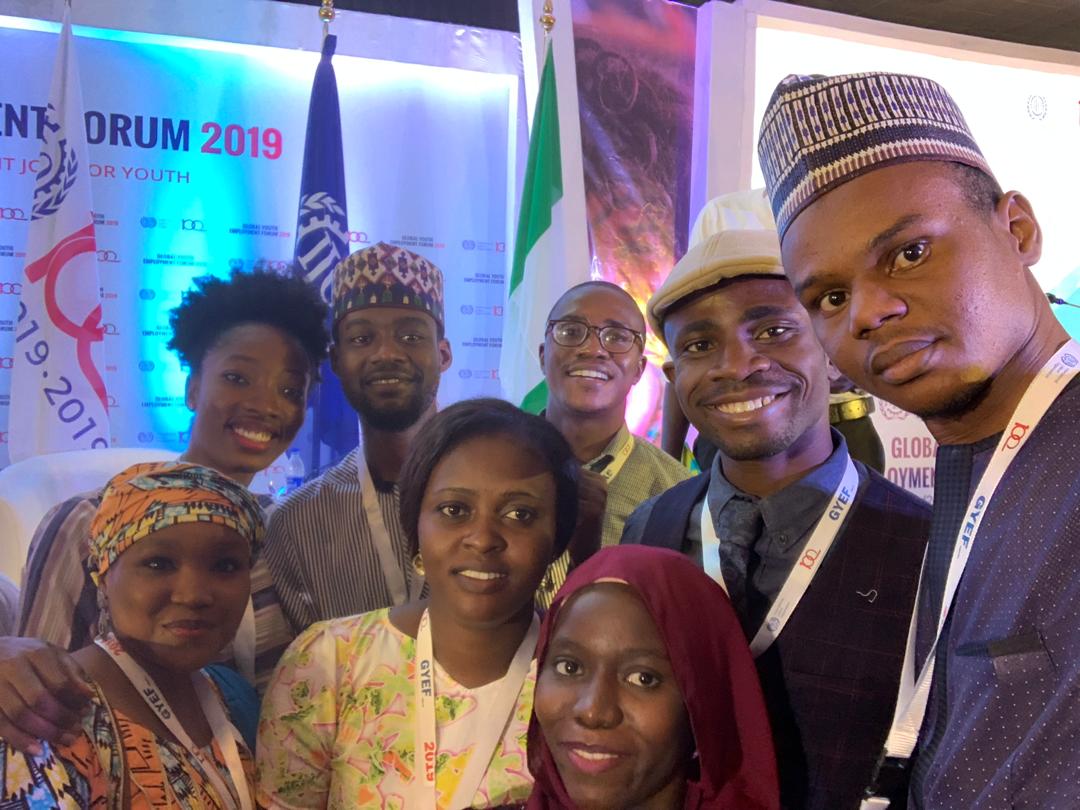
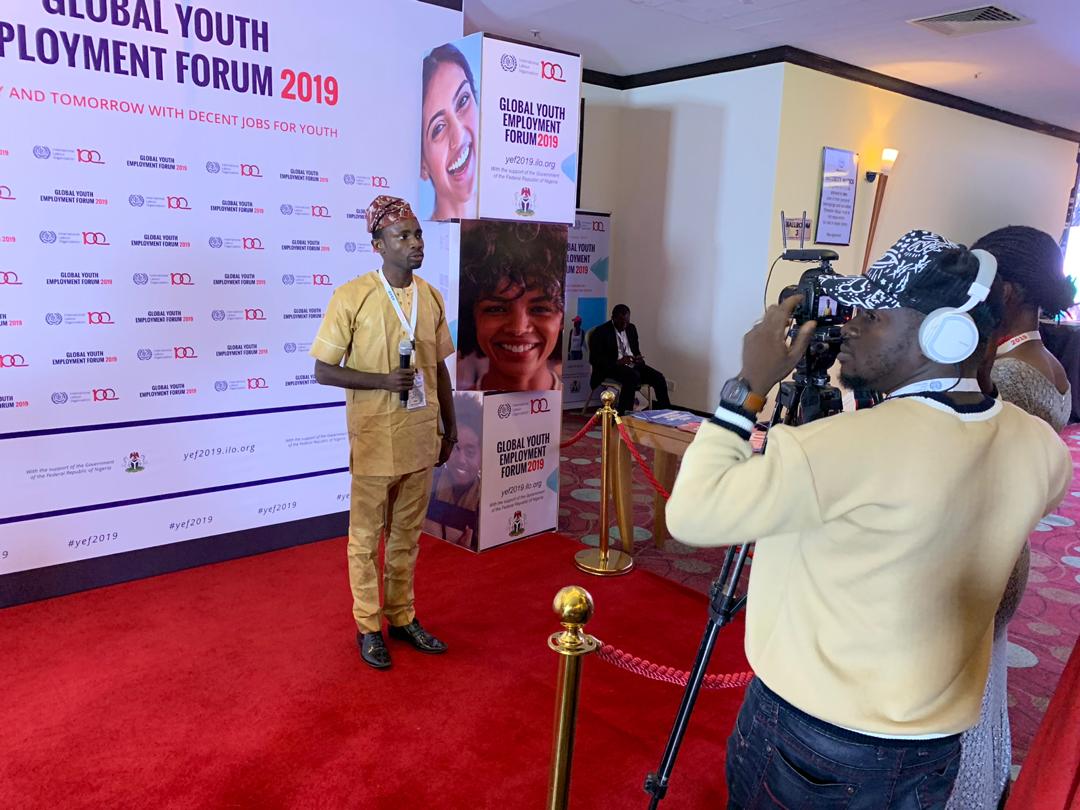
My Experience At The ILO’s Global Youth Employment Forum 2019

0

The ILO’s Global Youth Employment Forum 2019 ended with deliberations, key action plans, and thoughts that will contribute to the frameworks for today and tomorrow. Through  series of Tripartite fishbowl discussion, Keynote speeches, Roundtable sessions, Tripartite fireside chat panel discussion, and Panel dialogue that featured over 100 young representatives from government, trade unions, workers, employers’ organizations, and civic society organizations from over 60 countries across the world. 

In some of the topical issues, it was clearly marked that young people are anxious about the future of work and what will influence the future of work. The energies of young people, the potential of young people, and the voices of young people needed to be heard.  

In another submission, “Workers were duly recognized as the creators of wealth for the world”. Their input and ideas towards transformative processes needed to be regarded. 

Mr. Guy Ryder, ILO Director General, stated in an action statement during his opening speech that “we need to stop, think and take action”. We need to stop and look at the barriers that exist, the barriers that are impeding us from making progress towards decent jobs creation, do a reflections and brainstorm to come up with ideas and thoughts that will contribute toward achieving the sustainable development goal 8, and collaborate to take practical steps and actions that will ameliorate the effect of over 255 million young people who are unemployed; and over 136 million young people who are working in extremely hard, and  living in poverty. Of which, 60% of these statistics are from Africa.  

We explored innovative and emerging issues that are critical to key economies. With a definite call to action to create framework for enabling youth employment opportunities and enablers within the digital, green, lavender, blue and orange economies. We also engaged in an intergenerational dialogue, reflection, and commitment to champion the call for action from now to 2030. 

An open market for youth employment solutions was also Featured such that 17 selected Young Participants exhibited best practices, new ideas and broadcast recent achievements on youth Employability and Entrepreneurship. 

My work at Social Impact Africa was also selected to be Exhibited. I contributed by discussing key ideas that will reduce youth unemployment, foster partnerships, and prepare for the future of work in rural Nigeria through teaching basic Employability and Entrepreneurship Skills in both primary, secondary and tertiary schools as well as setting up innovation workspaces and hubs that will be devoted to quality R&D in youth unemployment solutions, build strategic partnership, synergy and support towards reducing the unemployment rate within Nigeria. 

There were areas of key action plan which I believe will be of great benefit towards defining the future of work. And they are: 

  • Pro-employment: Discussion on microeconomic policies that will contribute to economic growth and development; 
  • Investment in quality education and skills that are needed by youths and that will help them be relevant in the future.  
  • Promoting youth Entrepreneurship and Employment Solutions.  
  • Been respectful of the rights of young workers. 

I appreciate all the contributions and investment by United Nations Inter-Agency Network on Youth Development and in Partnership with International Labour Organization (ILO) towards promoting decent jobs and Economic growth in Africa and all across the world.

Steal But Never Plagiarize

0

There’s nothing new under the sun. Everyone is going through it or have gone through it.
Even as a writer, we all steal. But it should be done in a professional way.
I could be inspired by your work and decide to turn into mine or use it as a basis to write mine.
It is acceptable as long as I give credit to you.

However, there’s a big difference between stealing a writer’s work professionally and plagiarism.

Plagiarism is likened to intellectual laziness. Taking someone’s projects, word-for-word as your own without citation or credit.
It is more like taking your expensive car as mine without your permission. How will you feel about that?

Tim Denning said, ”I don’t care if you plagiarize my posts on LinkedIn. You know why?
First of all, I am honored that you deem them good enough to copy in the first place. It means a lot.”

He further added, ”secondly, even if you take a post that I wrote which has over 10,000 engagements on it and copy it as your own, it won’t have the same result for you.”

Reasons why people plagiarize:

  • To go viral.
  • The feeling of making money by going viral
  • They likened going viral to success

No matter how much you steal another person’s work, you will never get the same results. Besides, it is painting you bad.
The words of the content are not what makes it get high engagements with the world; it’s the person that wrote it and the people who have watched the creators journey over a long period of time.

It is the result of consistency and quality that have been shown over time. You can’t copy become a millionaire by going viral, you become a millionaire by solving problems.
”Even if you do go viral, from experience, it won’t change your life.” – Tim Denning.

When you copy and paste someone else’s work as your own, you are only cheating yourself. It’s like claiming to be a doctor when you know within yourself that you are a farmer. Nothing beats the truth. You can deceive the world but don’t deceive yourself.

Here is what happens to you when you plagiarize other people’s work:

– People will feel deceived
– People will fish you out and show the world how horrible you are.
– You will lose credibility overnight.
– Your reputation is at stake
– You could land yourself in trouble if the creator takes a legal action

There are better ways to copy others work without losing your reputation:
Reach out to them before using it
Give credit to them
Rewrite it in your own words

”That is why I don’t care if you plagiarize my work. It won’t make you a success or go viral.? You can’t beat putting in the work and being honest in the process. There is no shortcut.” – Tim Denning.

Instead of aiming to go viral, aim to give value. When you bring value, you solve problems.
Going viral is for a while but the value you give will stand the test of time.

Tips on Developing Creative Writing Skills

0

Some people wonder why they are not so good in writing. Some believe they aren’t cut out to be writers. Some are struggling with it, some have conquered, and some have given up. Anyway, I believe everybody is a writer, all that is needed is learning the tricks.

Writing is a skill, just like speaking, listening and reading. If you can speak, you can write. As it takes learning and practicing to develop other skills, so is it with writing. You can look up articles on developing writing skills from the internet and read them up, but I want to drop my two cents on the matter.

Creative writing is different from academic writing. To me, creative writing is using our experiences and the experiences of others in an invigorating way to pass on intended message(s). A creative writer is expected to be imaginative, captivating and unique, even if the write-up is not a fiction. This means that you need to let your mind make use of its creativity during this process.

Before you start writing, you need to bear the following in mind:

1. Motivation: The first thing you have to do is ask yourself why you need to write. You have to be motivated for you to be a writer. If not, you will lose interest along the line. Besides, motivation should be your driving force in everything you do, including writing. So ask yourself these questions: Do I want to write because I needed to inspire people? Do I want to write because I wanted to correct some societal norms? Do I want to write because it is an outlet for my emotions, opinions and ideas (that’s me here)? Do I want to write because it will bring in more income? Anyway, look deep down you and find the reason you really wanted to write and allow it to pull you through.

2. Choose a Stand: Here is where you decide on the area(s) you want to write on. Your decision here will affect everything about your writing – language, length, mood, style and so on. So, do you want to write on politics, religion, romance, marriage, business, ICT, health, crime, community development, philosophy …? There are so many of them. But I’ll advice that you choose what interests you and what you are conversant with.

3. Audience: Who are your intended readers? What are their interests? Do you think your work will capture those interests? You have to bear your intended readers in mind when you write. It will be wrong to write to medical practitioners about the latest inventions that help in language teaching. It will be wrong to write to teenagers on exotic places they can enjoy their retirements. It will also be out of place if farmers were told about robots that can carry out surgeries. Let your targeted readers decide your write-ups.

4. Communication Channel: What I meant here is where you plan to send your write-ups to. How do you intend to get your audience to read your works? Which outlet will your audience have access to? You can think of using any of the following – newspapers, periodicals, blogs, magazines, social media, flyers, pamphlets, and so on. Some platforms have length requirements, making a word count tool necessary.

5. Language Choice: The language and the language variety chosen depend on a lot of things – topic, audience, purpose and channel. If you plan to write to professionals, it will be proper to use related jargon. If you are writing to the man on the street, then use street language. If you want to write to a semi-literate, please simplify your language. If your intention is to make your audience laugh, go for comic terms. Are writing religious matters? Then, use religious register. Let your language be the forerunner of your message.

6. Style: By style I mean the narrative technique you plan to use – suspense, imagery, code-switching, flashback, symbolism, and so on. You need to develop your own style to make your work unique (try not to pick up another person’s own). For example, you can choose to present your works using stories, rhetorical questions, proverbs, code-switching, arguments, and so many others. Find a way to make your work unique and captivating.

7. Practice: The saying that practice makes perfect still holds. Writing skill needs constant sharpening and oiling to avoid it getting blunt and rusted. And, if you don’t write at least once a day, you are going to lose the zeal to write. So, form the habit of writing everyday. You can make it long or short depending on your unique style. The major thing is that you transfer what is in your mind into the paper. If you get stuck along the line, just take a break and get back to it later.

8. Choosing a Topic: Choosing a topic is not the same thing as choosing an area. Within the area you focused on, you have to choose what to write about. That is the topic. Sometimes, the topic we are to write on eludes us; you find yourself wondering what to write and nothing will come to you. What I usually do in situations like this is to meet with people for some conversations, hang out in places that interest me, or read posts on social media. Trust me, ideas will keep jumping out of every structure, interactions and comments you see or read.

9. Facing your Fears: Sometimes, or rather most times, we are afraid of how our write-ups will be received by the readers. We are afraid that no one will want to read them or that they will be criticized. We are also afraid of our grammatical errors being pointed out and our ideas being thought as shallow. The truth is that everybody is afraid of how their works will be accepted. No one can really say what the reactions to their works will be until they push them out. It is also good to know that there is no perfect work, and that your idea isn’t all encompassing even though it will add to existing knowledge. Besides, criticism helps us to develop. So, remember, fear is a normal thing. Just write it and send it out.

I will come back with another post on different stages and strategies of creative writing. But before then, draft something and get it ready for your audience.

Building Anticipation to Achieve Your Goals

0

Every New Year, most people come up with different goals to achieve for the year. Those goals might set due to lapses observed by each individual in a particular area. Consequently, the person thrives to seek improvement. It can be a financial ,spiritual, relationship or a personal development goal. 

Goals are set to be achieved not just for the pleasure of setting them. But most goals don’t get achieved due to one reason or the other. Reasons include lack of motivation to continue the goals, lack of focus, no solid plans, etc. One major driver in achieving a goal is motivation and it is also difficult to sustain. Building anticipation to achieve a set goal must be intentional.

Anticipation is the art of expectancy, having faith and assurance that a goal or a particular outcome would be achieved. Building anticipation is an art of building up motivation to achieve a particular result. Motivation helps us build and sustain the inner strength to accomplish a goal. Why most goals don’t get accomplished is lack of ability to sustain the motivation that initially started the goal. 

So, how can we build our anticipation to achieve our goals?

Step 1: Don’t start immediately

We are sometimes enticed to start a goal we lack motivation to achieve due to pressure we get from our peers and the society. For example a person may decide to set a goal to learn programming because of a friend who is a programmer is making a good amount of money from it. Starting immediately without the right source of motivation might hinder the goal from getting accomplished.

While building anticipation, you can set a future date – a month, a week, or a few days after the initial plan to carry out the goal. It all depends on you. And during the time of anticipation, begin to set out plans on how you are going to achieve that goal. During this period of anticipation, you will be able to discover whether you have the motivation to achieve that set goal.

Step 2: Anticipate challenges

“Accept the challenges so that you can feel the exhilaration of victory .” ~ George S. Patton

Anticipating challenges set the mind in preparation for possible stumbling blocks that might hinder the success of a goal. Mohammed Ali anticipated his opponent’s next move and prepared for the next punch during training which helped him to know how to maneuver them. 

Source- Create a strong work Environment… by John Jenkins.

Step 3: Anticipate success

While anticipating, it is wise to anticipate success in whatever goal we want to accomplish. By anticipating success, we can be able to initiate and sustain the necessary motivation needed to achieve a positive outcome.

With the right source of motivation, all goals are possible to achieve. Build the right source of motivation through anticipation.