DD
MM
YYYY

PAGES

DD
MM
YYYY

spot_img

PAGES

Home Blog Page 680

Document Processing Gets Smarter: Why IDP Is Replacing Traditional OCR

0

Document Processing Gets Smarter: Why IDP Is Replacing Traditional OCR

The Shift from Basic OCR to Intelligent Automation

For decades, organizations have relied on traditional Optical Character Recognition (OCR) to digitize printed documents. While revolutionary at its inception, OCR is now being overshadowed by more advanced technologies. The new frontier? Intelligent Document Processing (IDP). As businesses seek smarter, faster, and more accurate ways to extract data from documents, IDP is leading the transformation.

Traditional OCR: What It Can and Can’t Do

OCR technology scans printed or handwritten text and converts it into machine-encoded data. It is particularly useful for converting scanned invoices, contracts, or forms into searchable, editable formats. But OCR comes with major limitations:

  • Lack of context: OCR can read characters but doesn’t understand them.
  • Poor accuracy with unstructured documents: Layout changes or handwritten notes can confuse the system.
  • Manual validation required: OCR often needs human review for accuracy.
  • Limited scalability: It is not suitable for high-volume, real-time processing.

In short, while OCR laid the groundwork, it no longer meets the needs of modern businesses. That’s where Intelligent Document Processing steps in.

What Is Intelligent Document Processing (IDP)?

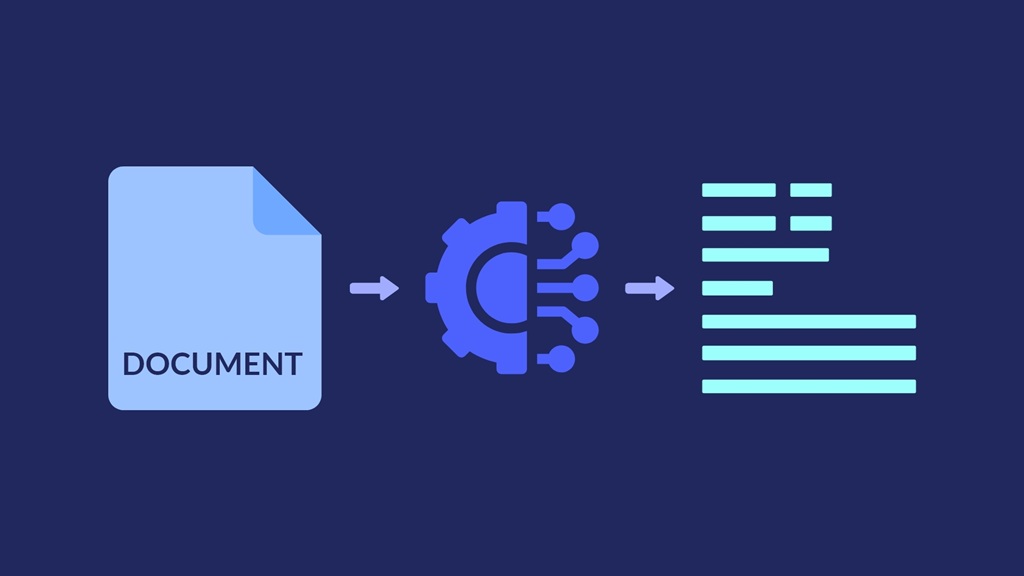
Intelligent Document Processing combines advanced technologies like Artificial Intelligence (AI), Machine Learning (ML), and Natural Language Processing (NLP) to read, understand, and extract data from documents—structured and unstructured alike. Unlike traditional OCR, IDP not only recognizes text, but also understands its meaning and context.

Core components of IDP include:

  • AI/ML models for learning from data over time
  • Computer vision for identifying document structures
  • NLP for understanding human language
  • Workflow automation to streamline processing and approvals

In essence, IDP is a cognitive leap forward in document automation.

Key Advantages of IDP Over Traditional OCR

Why is Intelligent Document Processing quickly becoming the preferred method for document automation? As we’ll see below, the advantages are clear.

1. Higher Accuracy

IDP systems learn and adapt over time, resulting in fewer errors and less manual intervention. By analyzing document content in real-time and incorporating human feedback loops, these systems achieve higher precision, especially with varied formats and languages.

2. End-to-End Automation

From data capture to validation and integration, IDP automates the entire document lifecycle. This holistic approach drastically reduces time spent on repetitive tasks, enabling staff to focus on more strategic work.

3. Handles Unstructured Data

Emails, handwritten notes, and even multimedia content can be analyzed with Intelligent Document Processing. Unlike OCR, which is mostly effective for structured text blocks, IDP can pull meaning from narrative text, irregular layouts, and even tone.

4. Scalability

Whether you’re processing 100 documents or 100,000, IDP systems scale effortlessly. Cloud-based solutions make it easy to scale up without large infrastructure investments.

5. Compliance and Audit Trails

IDP provides traceable data pathways for meeting regulatory requirements. With built-in logging and timestamping, companies can demonstrate accountability and meet strict industry standards like HIPAA, GDPR, or SOX.

6. Language Versatility

Thanks to NLP, IDP can handle multilingual content involving various alphabets, a feature increasingly vital in globalized industries.

Real-World Use Cases: How IDP Is Changing Industries

The application of Intelligent Document Processing is vast and industry-agnostic. Here’s how various sectors are benefiting:

Financial Services

Banks and insurers use IDP to process loan applications, claims, and KYC documents automatically. It improves turnaround time while ensuring compliance.

Healthcare

Hospitals leverage IDP to extract patient data from handwritten records, lab reports, and discharge summaries. This supports the integration of  Electronic Health Records (EHR) and faster care coordination.

Logistics

Shipping companies use IDP to scan and process bills of lading, shipping labels, and customs documents. It minimizes errors in international shipping and customs clearance.

Government

Government agencies employ Intelligent Document Processing to handle tax filings, permits, and citizen requests. Automated workflows reduce bureaucratic delays.

Legal

Law firms streamline contract analysis and litigation support using IDP tools. Legal teams can extract clauses, detect anomalies, and ensure document completeness without manual line-by-line reviews.

Manufacturing

Manufacturers use IDP to digitize safety audits, compliance forms, and equipment logs, ensuring real-time access and fewer compliance failures.

When Is It Time to Move Beyond OCR?

If your organization is struggling with:

  • High volumes of unstructured or semi-structured documents
  • Inconsistent data extraction results
  • Long manual validation cycles
  • Regulatory compliance issues
  • A lack of real-time document processing

…then it’s time to explore Intelligent Document Processing.

Key indicators include rising labor costs, increasing regulatory pressure, and bottlenecks in customer onboarding or invoice processing. The return on investment with IDP is often realized within months.

Challenges and Considerations When Implementing IDP

While the benefits are clear, implementing IDP comes with its own set of challenges:

1. Data Privacy and Security

Handling sensitive documents requires strong compliance with data protection regulations. Encrypting data at rest and in transit is non-negotiable, and you’ll also need role-based access controls.

2. Integration Complexities

IDP must integrate smoothly with existing systems like ERP, CRM, or legacy databases. API compatibility and middleware tools may be needed for successful integration.

3. Training and Adoption

Teams need training to understand and trust IDP systems. Clear documentation and support from vendors will ease the transition and reduce resistance.

4. Initial Costs

Though long-term ROI is high, initial investments can be significant. Budget for software, implementation, and internal resources are needed to deploy and fine-tune the system.

5. Vendor Selection

Selecting a provider with proven experience and a platform that supports future scalability is key. Request a proof of concept and examine their data handling policies before signing contracts.

6. Data Quality Issues

Garbage in, garbage out. Poor document quality can derail automation. Organizations must invest in preprocessing tools and adopt document standards to maximize IDP effectiveness.

OCR Was the Start — IDP Is the Future

Traditional OCR was revolutionary for its time, but the future lies with Intelligent Document Processing. By leveraging AI and ML, IDP offers greater accuracy, speed, and scalability. Businesses looking to stay competitive and compliant must consider moving beyond OCR to embrace the power of IDP.

The next decade will be shaped by automation and intelligent systems. Organizations that adopt Intelligent Document Processing early will enjoy better operational control, higher customer satisfaction, and reduced costs. Don’t just digitize—intelligently automate.

How Local Government Autonomy Became Nigeria’s Loudest Political Debate

0

In Nigeria, politics often revolves around who controls power at the center. Governors, ministers, and federal lawmakers dominate headlines while the tier of government closest to the people, the local government, has often been treated as an afterthought. Yet, in recent years, the debate over local government autonomy has moved from the margins to the mainstream. By 2024, it had become one of the loudest political conversations in the country, stirring emotions across regions and drawing the attention of citizens, activists, and policymakers alike.

Between 2010 and 2015, conversations around local government autonomy were scarce. A handful of states such as Lagos, Adamawa, and Kano hinted at the problem of councils being financially dependent on governors, but the issue lacked national traction. At the time, the central debate in Nigerian politics centered on federal allocation and resource sharing. Local councils, though important for basic services like education, sanitation, and rural roads, were overshadowed.

That silence began to break after 2016. Civil society organizations, journalists, and some state legislators started to demand a stronger voice for councils. By 2017, the issue was no longer confined to a few states. From Lagos in the South West to Benue in the North Central and Delta in the South South, stakeholders began openly challenging the practice of joint state–local government accounts, which often left councils powerless. The tone of the debate shifted from quiet complaints to a coordinated push for reform.

Momentum built through 2018 and 2019 as more states such as Anambra, Bauchi, and Kwara joined the conversation. What made these years significant was not just the growing number of voices but the diversity of perspectives. In some states, unions representing council workers took the lead. In others, community groups and traditional leaders raised concerns about the decline in local service delivery. The debate was becoming less about political elites and more about ordinary citizens demanding functional governance.

The turning point came in 2022. Oyo State emerged as the loudest single voice, with its lawmakers and civic groups challenging the status quo. Benue and Kogi in the North Central also made autonomy a frontline issue. These were not isolated protests but visible confrontations between governors and local councils over who should control grassroots governance. The conversation reached a tipping point where Nigerians began asking not whether councils deserved autonomy, but why the matter had been delayed for so long.

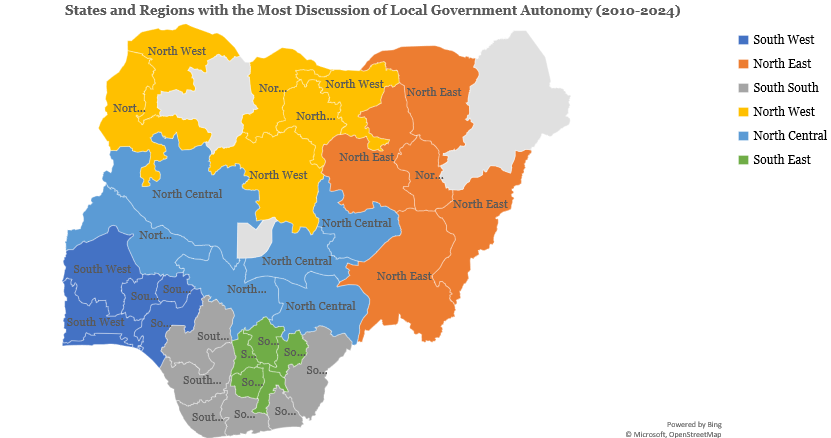
Source: Nigerian Newspapers, 2010-2025; Infoprations Analysis, 2025

Then came 2024, the year autonomy became impossible to ignore. Discussions about local government independence spread across nearly every region, with 191 separate mentions recorded nationwide. Oyo, Lagos, Delta, Rivers, Anambra, and Ogun became hotspots of advocacy. For the first time in more than a decade, local government autonomy outpaced many other policy debates in both intensity and reach. It was no longer a side conversation. It had become a national demand.

Why did autonomy rise to the top of Nigeria’s political agenda? The answer lies in its direct impact on everyday life. Local governments manage primary schools, markets, rural roads, and community health centers. When councils are financially crippled, these services suffer. Citizens increasingly recognized that the failure of local governments was not simply administrative, but a matter of governance being held hostage by state-level politics. Autonomy was no longer framed as a technical reform, but as a solution to the frustrations of communities across Nigeria.

The regional spread of the debate also tells an important story. In the South West, especially in Oyo and Lagos, strong media institutions and active civic groups kept the conversation alive. In the North Central, where rural communities often feel neglected, states like Benue and Kogi took bold positions. In the South South, the link between revenue control and autonomy shaped the discussion. Even in the North, where the conversation has been quieter, Kaduna and Kano played their part in voicing concerns.

The rise of local government autonomy as Nigeria’s loudest political debate shows that citizens are connecting governance to their daily realities in ways that cannot be ignored. From whispers in 2010 to a nationwide outcry in 2024, Nigerians have made one thing clear: strengthening councils is not a matter of politics between governors and chairmen. It is a matter of dignity, accountability, and service at the grassroots.

If the federal and state governments are serious about improving governance, they must stop treating autonomy as a bargaining chip. The loud voices from across the country are not asking for charity. They are asking for a system where governance begins where people actually live.

Ethereum and XRP Could Rise 5x, But This Low-Cap Token Is Being Touted for a 100x Surge by Mid-2026

0

Ethereum and XRP are both positioned for strong gains heading into 2026, with analysts calling for 5x price growth. However, Remittix, a PayFi-focused DeFi project, is drawing even greater attention as it has hit its $20m milestone. With more than 608 million tokens sold, RTX is being touted as a potential 100x crypto with real-world payments utility.

Ethereum on Track for 5x Gains Amid ETF Strength

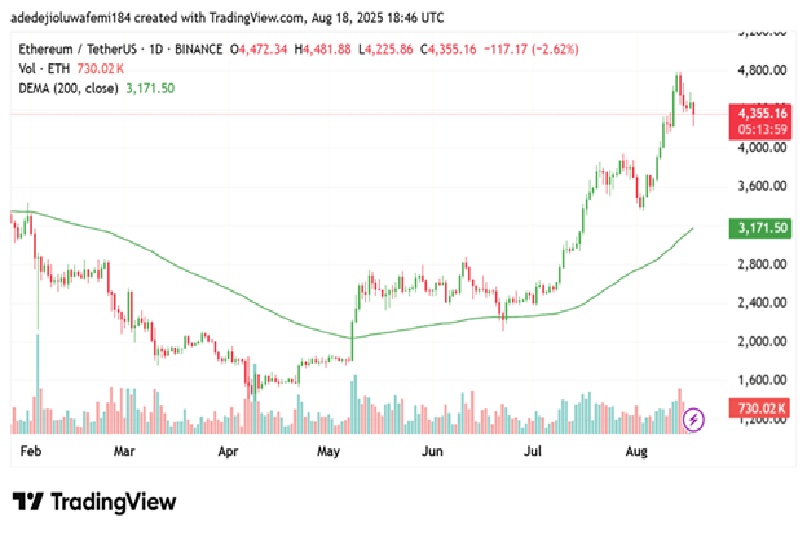
Ethereum’s price has been boosted by ETF inflows and rising activity across its DeFi ecosystem. Forecasts suggest ETH could rally between $6,500 and $8,800 by 2026 as staking demand and Layer 2 Ethereum alternatives expand the network’s reach.

Source: TradingView

Institutional investors are also treating Ethereum as a core part of the best long term crypto investment strategy, diversifying portfolios alongside Bitcoin. With continued upgrades improving scalability and lower gas fees, Ethereum remains a top crypto to buy now for traders betting on the next bull cycle.

XRP Price Outlook Targets $15 By 2026

XRP is also generating buzz, with analysts eyeing a move toward $15 within the next 18 months. This represents around a 5x jump from current levels, largely driven by adoption in payments and favorable developments in ongoing regulatory clarity.

Whales rotating capital into XRP highlight its appeal as both a cross-border settlement token and a crypto with real utility. With Ripple pushing deeper into global remittances, XRP remains one of the top crypto under $1 that investors continue to accumulate.

Why Remittix Is Leading the Pack as the Best Presale of 2025

Remittix has raised over $20 million, sold 608 million tokens, and is currently priced at $0.0969. The recent wallet reveal and planned Q3 beta launch promise instant crypto-to-bank transfers in more than 30 countries. The project has also announced its first CEX listing, on BitMart, a milestone expected to boost liquidity.

Highlights fueling RTX’s momentum:

  • Multi-currency wallet with real-time FX conversion
  • Audited by CertiK for transparency and security
  • Ideal for freelancers, remitters, and small businesses
  • Solving a $19T global payments problem
  • One of the fastest growing DeFi projects of 2025

Beyond speculation, Remittix is being used to streamline real-world payments, offering a bridge between crypto and traditional finance. Its design positions it as the next big altcoin 2025 and a high growth crypto that could transform cross-border transactions.

Final Take: Is Remittix the Top Crypto Presale of 2025?

Ethereum and XRP may deliver reliable 5x returns, but RTX is drawing attention as a low cap crypto gem with the potential for a 100x surge by mid-2026. From early-stage crypto investment momentum to upcoming exchange listings, Remittix is emerging as a standout. For those searching for the next big crypto launch, this could be the one that changes everything.

Discover the future of PayFi with Remittix by checking out their presale here:

Website: https://remittix.io/  Socials: https://linktr.ee/remittix
 $250K Giveaway: https://gleam.io/competitions/nz84L-250000-remittix-giveaway

Foxconn Pivots From iPhones to AI Servers as Nvidia Partnership Redefines Its Future

0

Taiwan’s Foxconn, once best known as the world’s largest iPhone assembler, has officially crossed a major milestone in its decades-long evolution.

The company’s revenue from manufacturing AI servers and other cloud networking products has now surpassed its earnings from consumer electronics like smartphones for the first time, marking a historic turning point not only for Foxconn but also for Taiwan’s wider tech industry.

The shift underscores how Foxconn has reduced its dependence on Apple, long its biggest client, and successfully capitalized on the artificial intelligence boom. According to company filings, cloud and networking revenues represented 41% of Foxconn’s income in the second quarter, compared with 35% from consumer electronics. In 2021, consumer electronics still made up 54% of its business, demonstrating just how quickly the transition has taken place.

The Nvidia Factor

Foxconn’s early bets on servers and data center hardware have paid off handsomely, especially as it has become the biggest manufacturer of AI servers for Nvidia, whose chips power the world’s most advanced AI systems. Foxconn first worked with Nvidia more than two decades ago on graphics card reference designs, later expanding into general-purpose servers in 2009. That foundation gave it a head start when AI demand surged after the release of ChatGPT in 2022.

Industry analysts note that Foxconn now commands nearly 40% of the global AI server market and has nurtured a long-term partnership with Nvidia by committing investments earlier than competitors. The company has already announced plans to build new AI server factories in Houston, Texas—part of Nvidia’s $500 billion U.S. investment strategy—and in Mexico to serve North American demand.

As a result, Foxconn expects its AI server revenue to surge more than 170% year-on-year in the third quarter, a pace unmatched by its smartphone business. Both Foxconn and Nvidia have declined to comment on the specifics of their partnership, while Apple has remained silent as its once-dominant role in Foxconn’s revenue mix diminishes.

The Broader Industry Shift

Foxconn’s pivot reflects a wider transformation across Taiwan’s technology sector. Firms such as Quanta Computer and Wistron, once reliant on notebook and consumer electronics assembly, have also ramped up AI server production to meet surging demand from U.S. tech giants. Data show that Wistron’s revenue jumped nearly 93% between January and July, while Quanta’s rose more than 65% over the same period.

Taiwanese manufacturers now account for roughly 80% of all global server shipments and more than 90% of AI servers, underscoring the island’s strategic importance to the digital infrastructure underpinning the AI economy. Analysts at BofA Global Research say this transition demonstrates the agility of Taiwan’s supply chain and its ability to adapt quickly to the needs of global tech leaders.

Strategic Vision Beyond iPhones

Foxconn Chairman Young Liu, who took over in 2019, has been the architect of this diversification strategy. While the company’s ventures into electric vehicles and semiconductors are still developing, the pivot into AI servers shows the results of his long-term vision to lessen Foxconn’s vulnerability to slowing smartphone sales.

“Foxconn has shown a willingness to commit capital earlier than others, both in the Apple era and now with Nvidia,” said Ming-Chi Kuo, an analyst at TF International Securities. “Its ability to meet demanding quality standards while diversifying production sites and vertically integrating operations has positioned it as an indispensable partner in the AI era.”

The shift signals more than just a change in revenue streams for Foxconn—it marks the company’s redefinition from a consumer electronics assembler into one of the world’s most important players in artificial intelligence infrastructure.

Goldman Sachs Strategist Backs Five-Year Treasurys Ahead of Looming Fed Rate Cuts

0

Wall Street is bracing for a pivotal Federal Reserve meeting in September, and Goldman Sachs is weighing in with a clear call.

Josh Schiffrin, the investment bank’s chief strategy officer for global banking and markets, said five-year US Treasurys remain his “favorite trade” across all asset classes ahead of what he described as an almost certain interest rate cut.

Speaking on Goldman’s The Markets podcast on Friday, Schiffrin said he sees Treasurys in the 3% to 4% yield range as particularly attractive, especially in a climate of growing economic uncertainty.

“I think of valuations with five-year sector Treasurys in the 3 and 3.25 to 4% zone as attractive,” he said. “I also think they have good characteristics to protect, should there be risk market weakness.”

The five-year yield stood at 3.83% as of Monday morning, down significantly from 4.38% at the start of the year, reflecting investor anticipation of looser policy. Schiffrin argued that short-dated government bonds will provide a shield as markets prepare for both softer economic data and the Fed’s next moves.

Betting on a September Cut

Schiffrin made it clear that he expects the Fed to ease monetary policy next month, citing weakening labor data as a key driver. The US economy added just 73,000 jobs in July, well below forecasts of 106,000, suggesting the labor market is losing steam.

“I kind of feel like it’s 25 basis points in September with a very high likelihood,” Schiffrin said. “Keeping rates unchanged is even less likely than a reduction of 50 basis points.”

His comments align with the broader market consensus. A Reuters survey of 110 economists found that 61% expect the Fed to cut its benchmark rate by a quarter percentage point to between 4% and 4.25% when policymakers meet on September 17. That would mark the first reduction of 2025 after five straight holds.

Fed Balancing Act

Chair Jerome Powell has resisted pressure to cut rates at recent meetings, citing inflation still running above the Fed’s 2% target and the need to assess the impact of earlier hikes. The central bank has kept rates steady through five consecutive meetings, most recently at the end of July.

But investors increasingly believe the Fed’s hand is being forced by cooling job growth and mounting signs of economic slowdown. Meanwhile, consumer and business confidence remains fragile, clouded further by uncertainties surrounding tariffs imposed under President Donald Trump’s trade policy.

Trump’s Pressure Campaign

The White House has been far from quiet in this debate. President Trump has openly and repeatedly called on Powell to lower rates, arguing that high borrowing costs are hurting American competitiveness. For months, Trump has taken to public rallies, social media posts, and interviews to insist that monetary easing is essential for sustaining growth.

While Powell has held his ground so far, citing the need for caution, the political spotlight on the Fed has intensified. If the central bank follows through with a September cut, it could fuel speculation that Trump’s pressure campaign is finally yielding results — even though Fed officials stress their independence.

For Goldman Sachs, the calculus is straightforward: five-year Treasurys offer both value and protection in an environment that seems to be tilting toward looser monetary conditions. Schiffrin’s comments suggest the bank expects not just one cut, but potentially a cycle of easing that could extend into 2026 if growth falters further.

However, for investors, the coming weeks will test whether the Fed bends under political and market pressure or maintains its cautious stance — a decision that could ripple across bonds, equities, and currencies worldwide.