DD
MM
YYYY

PAGES

DD
MM
YYYY

spot_img

PAGES

Home Blog Page 6814

Nigeria’s Withholding Tax Model Goes Global, France to Unleash on Digital Techs

8

France wants to tax revenue of digital tech companies since they have no access to the profits as most are shipped to tax havens: “new law expected to be passed by the French parliament today would slap a 3% levy on firms like Google and Facebook for revenue made in France”, notes Quartz. This move will affect many U.S. digital firms like Google, Facebook and Twitter; America is not happy.

US President Donald Trump has ordered an investigation into France’s planned tax on tech giants – a move that could result in retaliatory tariffs.

His trade representative said the US was “very concerned” that the tax “unfairly targets American companies”.

On Thursday the French parliament is due to approve a 3% levy on revenue made by such companies as Google and Facebook inside the country.

France argues that these firms currently exploit global tax loopholes.

Tech giants are able to locate their headquarters in low-tax countries where they declare most of their profits, thereby minimising their tax bill.

U.S. should relax: Nigeria taxes revenue through Withholding Tax (WHT) and it is a good idea. Sure, if you want to do business with government in Nigeria, the WHT is designed because government is sure you will make profit. So, it wants to take its tax before anything; you may decide not to return to pay tax. But if you end up with a loss in the business activity, good luck getting a “refund” back.

American trade officials are probing the plan, on the basis that it could unfairly target U.S. firms. Trade Representative Robert Lighthizer: “The president has directed that we investigate the effects of this legislation and determine whether it is discriminatory or unreasonable and burdens or restricts United States commerce.” (Fortune newsletter)

Globally, the construct of taxing profit in the digital world makes no sense because in a sector where marginal cost tends to zero, you can practically shift profit as you want. Twitter makes money from Nigeria as our companies advertise therein but Twitter may never need an office in Nigeria to serve its Nigerian clients. The implication is that without a taxable jurisdiction in Nigeria, Twitter will not have anything to be taxed. To the taxman in Nigeria, Twitter does not exist.  Yes, Twitter tax will be $0 in Nigeria even though it makes money from Nigeria. That tax is zero because Twitter has no books for Nigeria and that means it has no profit to be taxed. Yes, Twitter profit is $0 in Nigeria for tax purposes because there is no taxable Twitter for Nigeria to tax. Add Netflix, Spotify and other digital firms to get the idea.

The French case is unique because these American companies do have offices but largely declare any profit therein. So, France struck to help its treasury with funds to keep things that make those companies to keep coming. Of course, U.S. will impose tariff on French imports and everything will normalize. I expect these contact-games going forward in the rich world. Nigeria should have its plans.

Why Smoking Waterpipe Tobacco aka Shisha is Harmful to Your Health

1

By Adaku Efuribe

I wish to draw attention to a public health issue that has become popular in the major cities of Nigeria which is shisha smoking.

It is worthy of note that using shisha also poses the same risks as cigarette smoking.

I have decided to write this article to create some form of awareness about shisha.

Few days ago, I watched a youtube interview which featured a popular Nigerian artist and throughout the interview the artist engaged in a shisha smoking session which was quite shocking to me.

Following the recent issues emanating with codeine and tramadol abuse among youths in Nigeria, the federal ministry of health has to up their game in educating the general public on the harmful effects of social substances that are dangerous to health.

There are mixed messages regarding shisha coming from uninformed people that do not understand the ingredients that make up shisha.

The other day I read a comment on social media made by a young Nigerian lady; advising people that there is nothing wrong with shisha and using it is a way of taking nutritional supplements. The lady went on to say shisha is mixed with vitamins and minerals and those who engage in smoking it are getting their daily vitamins and minerals.

Her comment had hundreds of likes from people who are as uninformed as her.

The World Health Organisation (WHO) fact sheet on waterpipe tobacco smoking states that:

Waterpipe smoke is toxic. Laboratory analyses of waterpipe smoke reveal measurable levels of carcinogens (including tobacco- specific nitrosamines, polycyclic aromatic hydrocarbons [PAH], volatile aldehydes like formaldehyde, and benzene), and toxicants such as nitric oxide and heavy metals. Additionally, the burning charcoal generates high levels of carbon monoxide.

Systematic reviews of existing research point to significant associations between waterpipe smoking and lung cancer, periodontal disease and low birth weight . More recent data suggest probable associations with oral, oesophageal, gastric and urinary bladder cancer, as well as chronic obstructive pulmonary disease, cardiovascular disease, stroke, chronic rhinitis, male infertility, gastro-oesophageal reflux and impaired mental health.

Shisha smoking is becoming popular among artists and some celebrities in Nigeria. This is a worrisome trend as such people could easily influence their fans and followers into smoking it as well.

As a clinician, I don’t see anything classy in engaging in risky behaviors that could endanger one’s health and probably shorten life span.

I care about the health of Nigerians and any little information as regards to self care and healthy living would help especially in this day and age where our healthcare sector is a reflection of system failure in all quarters.

A lot of people believe that smoking shisha is safer than smoking cigarettes but this is not true unfortunately.

The key facts about shisha show that it is even more risky and harmful to health than cigarette smoking.

The British Heart foundation advises that shisha smoking – “also called hookah, narghile, waterpipe, or hubble bubble smoking – is a way of smoking tobacco, sometimes mixed with fruit or molasses sugar, through a bowl and hose or tube”.

Please see below key facts about shisha from a publication by the British Heart Foundation (BHF) to learn more:

What is in a shisha pipe?

Shisha pipes use tobacco sweetened with fruit or molasses sugar, which makes the smoke more aromatic than cigarette smoke. Popular flavourings include apple, plum, coconut, mango, mint, strawberry and cola. Wood, coal, or charcoal is burned in the shisha pipe to heat the tobacco and create the smoke because the fruit syrup or sugar makes the tobacco damp.

When you smoke shisha, you and anyone sitting near you are breathing in smoke which releases toxins including carbon monoxide and heavy metals –reducing your body’s ability to carry oxygen around in your blood.

How harmful is shisha smoking?

Traditionally shisha tobacco contains cigarette, tobacco so like cigarettes it contains nicotine, tar, carbon monoxide and heavy metals, such as arsenic and lead. As a result, shisha smokers are at risk of the same kinds of diseases as cigarette smokers, such as heart disease, cancer, respiratory disease and problems during pregnancy.


Is herbal shisha safer?

No it isn’t. Shisha, herbal or otherwise, usually contains tobacco. Fruit or herbal flavours do not mean the product is healthy. Even if you use tobacco-free shisha, you’re still at risk from the carbon monoxide and any toxins in the coal or charcoal used to burn the shisha.

Now that you know the key facts about shisha, I expect you to make an informed decision whether to use shisha or not considering the risks and associated diseases.

Healthy living is the greatest gift you can give yourself, why not choose health!

Author

The Challenges Ahead of AfCFTA (African Continental Free Trade Agreement)

2

By Samuel Nwite

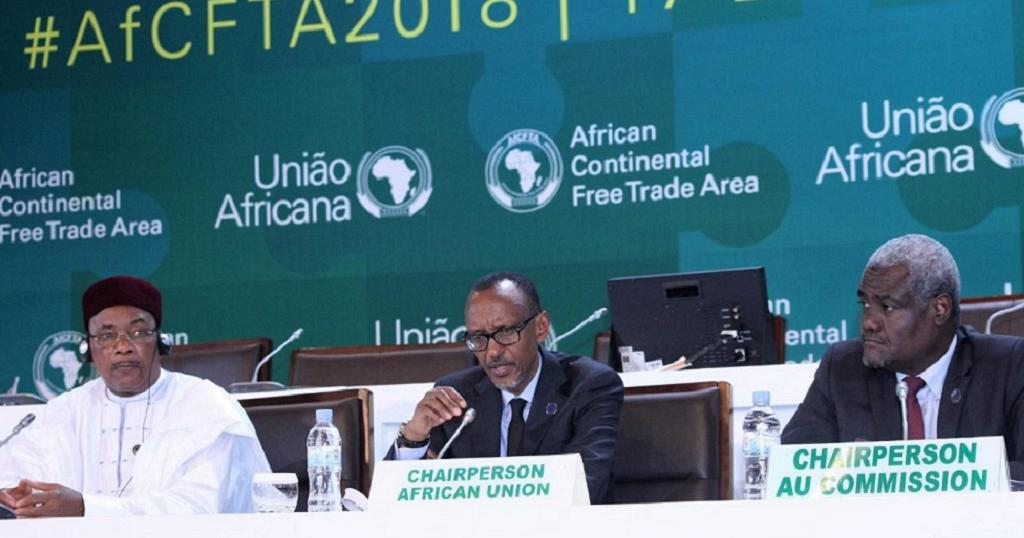
On July 7, the long awaited signature from Nigeria was finally given in Niamey, the Niger Republic capital by President Muhammadu Buhari, to the African Union (AU). It was received with a resounding applause because it’s keen to the implementation of African Continental Free Trade Agreement (AFCFTA) that started signature collection since 2018, and so far has 44 signatures of the continent’s 55 countries. AFCFTA was constituted in March 2018, with the goal of creating a single market enabled by free movement and a single currency. However, the unwillingness of some states to embrace the pact from inception created a shadow of doubt on the success that it projects.

For instance, Nigeria, the largest economy in the African continent that was expected to spearhead the move was until July 7, an observer of AFCFTA, even though it was already in force in 27 African countries. Kenya and Ghana were the first countries to tender their ratification instrument on May 10 2018, and others followed suit. On April 29, the threshold of 22 ratifying states for the free trade area to formally exist was reached, after Sharawi Republic tendered her ratification instrument, and AFCFTA became a force on 30 may 2019.

Although the late involvement by AU member countries delayed the trade pact that would have seen Africa gearing toward competition with their counterparts in Europe (Common Market) and Asia (ASEAN), it didn’t stop the good news that came from Niamey on July 7, “AFCFTA has become operational.” It was such a news that the world has waited for. The United Nations Economic Commission for Africa (UNECA) said the implementation could increase intra African trade by 52% in 2020. GDP and employment are expected to grow by 0.97% and 1.17% respectively. Intra-African growth is estimated at 33% and the continent’s trade deficit is expected to drop by 50.9%.  But there are challenges, apart from issues ranging from tariff to patent rights to duties etc. Africa has more integration barriers to beat in the markets than in agreements. And they come in their sizes as follows.

Language

There are over 2000 languages spoken in Africa, each commanding a profitable business interest. And to those who have been in the Intra-African trade, it’s a problem, a transaction stymieing barrier that usually takes a ton of losses before it could get even. And to get even, it must be narrowed to colonial languages of European origin, mainly, English, French, Portuguese and Spanish. But that doesn’t solve it in every case, there are those who word in Arabic, and the vast majority that can only communicate in local African tongues that could number in tens in one locality alone. For instance, Nigeria has a population of over 200 million, but only 53% of this number of people could speak the official language “English” fluently, the rest are divided into over 200 local tongues, relying on the Pidgin English to communicate. What this means is that a ‘Zulu only’ speaking South African who has a business to run in Nigeria may need more than 3 interpreters to function – one for ‘Zulu to English,’ Hausa, Yoruba, Igbo or pidgin to English, then back to Zulu. And this is the case with every other country in AFCFTA. Integration is stalled when mutual goods and services are disconnected by tongues.

Telecommunication

Intra-African telecommunication is the most expensive in the world. And as such, a bane of business facilitations, especially, for SMEs and startups struggling with so many other infrastructural deficiencies in their respective countries. Voice and broadband qualities don’t commiserate with the charges, and it becomes worse when you roam. Telecommunication companies in Africa, especially those of African origin are yet to reach a compromise that will enable affordable communication or augment their infrastructure to facilitate quality communication networks. And businesses that depend on them to execute financial and other transactions are at the receiving end of the brute spikes.

Transportation 

The African continent operates the most expensive air transport system in the world. A situation made possible by many factors that ‘poor intra-African rail line infrastructure’ is heading. The movement of people, goods and services depends mostly on road transportation for countries in the same region, and airplane, when you are going beyond your region. And that comes with costly price. A situation that has been blamed on the high cost of operations. Although there is Single African Air Transport Market (SAATM) designed for the implementation of open sky and integration in Africa, it doesn’t change the cost. Poor infrastructure, corruption, mediocrity and multiple taxation have taken deep seated positions in African aviation industries that the cost of flying is finding a place for itself in the sky. An African travelling to another African country may need to transit through European countries before he could get back to his African destination. Although the AFCFTA pledges to resuscitate SAATM, there are operational cost differences varying from country to country to contend with. So affordable air transport may not be attained soon and there is a need for practical alternative through rail transportation that will ease the movement of goods and services.

Single Currency

For Africa to integrate to the implementation AFCFTA, the currency barrier must be eliminated. Although the proposed single currency comes handy, Africa is not prepared to deal with the consequences. A single currency will mean a collective economic responsibility to member states, just like in the EU. The 2009 Greek economic crisis tested the EU’s support to member states to the tone of 320 billion euros in bailout funds. Member states like Germany took the lion share of the loans and made recommendation of austerity measures to be implemented by Greece, all in a bid to prevent the economic crisis from escalating to other EU member states. But Germany was only able to stand tall behind Greece because she was commanding a GDP of $3, 423, 470 million in 2010, and the proceeding years yielded more GDP per capita for her. In Africa, almost every member of AU is dealing with debt crisis, and her supposed economic giants, Nigeria and South Africa are still looking for loans from China and World Bank. So who will bail who? Everyone may be taking a fall for the financial indiscretion of one state.

There is also the issue of currency regulation that is usually done by the apex banks. Will AFCFTA member states be willing to bequeath currency control to one AU established bank? Will the Bank be able to establish a unified payment system that will facilitate easy, fast and secure payment from every corner of the continent? When regions like the ECOWAS is pushing for a regional currency (ECO) in the nearest future, these questions need to be answered in the future negotiations of AFCFTA.

Insecurity

Free movement and integration are attainable only when there is safety. In many African countries, civil unrest, terrorism, militia and ethnic violence are norms. Talk about Nigeria, Cameroon, Mali, Ethiopia, Kenya, South Sudan, Libya, Central African Republic (CAR) Democratic Republic of Congo (DRC) etc. Each of these countries are recording scores of death on the daily or periodically, and there is no solution in sight. The ravages of these conflicts are visible in concretes as well as humans. There are no markets, there are no buyers and there are no sellers or providers of goods and services in places where the utmost goal is survival.

The proposed AU passport will enable free movement of Africans no doubt, but not without security consequences. Boko Haram, Al-Shabbaab, ISWAP, ISIS and every militia group in Africa are likely going to see it as a means of exploiting the already damning security loopholes. And no African country is ready to contain the activities that may ensue thus.

Xenophobia

History has shown that getting across the border to the next African state isn’t where the integration lies, it lies in becoming part of the community that you crossed to mingle with.

In May 2008, streets in South Africa witnessed disturbing scenes of xenophobic attacks, stemming from unbridled intolerance of fellow Africans. Shops were looted, people were killed, and the South African government helplessly watched it all. The attacks perpetrated on the excuses of “foreigners are taking our jobs,” “they are committing crimes in our country,” were foreshadowing the discriminate barbarism that will hunt Africa’s integration in the future. It’s 2019, and Malawians, Nigerians, Zimbabweans (even members of SADC) are being asked to leave the country at the slightest provocation. So other nationals in South Africa live in xenophobic paranoia, even those who worked hard to establish private enterprises.

And so it is in West Africa. Ghana and Nigeria have been in sibling contentions that has resulted in one throwing out the other. In February, about 720 Nigerians were deported from Ghana, on the allegations of prostitution, Cybercrime and illegality. There have been subsequent complaints from Nigerians living in Ghana about maltreatment by the Ghanaian government and its people that on many occasions, the Ghana’s High Commission to Nigeria has to be summoned by the Nigerian government. (For instance, there was a complaint by the Nigerian Union of Traders Association Ghana (NUTAG) that the Ghanaian Government was asking them to raise their capital to $1 million or leave. In other case, there are just laws demanding that they shut their businesses down to make room for investments of Ghanaian origin. Ghana and Nigeria are leading members of ECOWAS that should be setting a leadership example in honoring the ECOWAS free movement and integration pact, unfortunately, some nationalistic elements stemming from ethnic jingoism have not only trumped the pact, but have set pessimistic precedents that place future engagements in doubt.

These unfortunate incidents are indications of some AU member states’ inability to control xenophobic revolution that usually plunges non-nationals to the ruin of everything they have worked for. The reason being that some of these governments see national interest in xenophobia. Therefore, the success of AFCFTA depends not only on documents signed in a conference room but mostly on the functions of elements beyond African borders.

How Do You Get Customer Attention?

0

This is the concluding part of this piece.

By Ajayi Joel

Now the big question is: How do you get their attention?

Well, I feel this is one of the most important parts in the process because it’s not as easy as it seems. I made a simple analogy to some set of students I was teaching on How to Get Attention. I picked up my pen and threw it at a group of people sitting in another part of the room. Immediately, they all looked at me.

It was simple! I got their attention. The pen signified something which I simply explained that it was called CONTENT. Few seconds later, they all focused on what they were doing. Why? It was simply because I only distracted them – I didn’t really get their attention as they could not make meaning of what the content is, and how it related to them.

There’s s huge difference between getting people’s attention and distracting them; the former is the only approach that will benefit you. Now that you are aware all you need to get attention, what should come to your mind is the kind of content and how to go about it.

When creating contents, you need to pay attention to some certain key factors:

Who is this content for? Before I break this down, I must first explain that contents could be in any form. It could be in written form, audio form, video from or even as a substance. Understanding who your target audience is key! I do not want to sound so complex but I will try to make it as simple as possible. There’s something called a consumer persona. It is a pictorial representation of your ideal audience or customer.

It is easy to develop and there are some basic details that you need to include such as a name, location, gender, occupation, values and problems.

Get a note – create a fictional character of that your customer using this consumer persona approach; here’s an example:

  • Ojo Chukwudi Hassan
  • Fisherman
  • 25 years old
  • Kano state
  • Male
  • Fishes for recognition in his community

There are other details to include, however this is enough to start with. The purpose of this persona is to help you understand your audience or customer without even having to meet them yet. In order to get the attention of this young fisherman, you begin to consider a lot of things.

Firstly, to a young fisherman who doesn’t earn up to N30,000, flipping a box of iPhone will be a dumb move and even if you walk up to him to get him to admire the product, he will soon forget as his mind will be focused on how he can fix his net or make more fish sales.

Taking an iPhone to him is a simple distraction as it doesn’t benefit you, neither will it benefit him. However, since you’re aware from research, you must have made your discovery that a fisherman of his age only cares about how his sales will be made, how his boat and net will keep working perfectly. So you can take an iPhone to him displaying a video on how he can catch more fishes or quick ways to mend a net and something related.

You have gotten his attention! However, now that you got his attention, you either need to get to the river or market. This means that you need to consider the channel through which you need to reach them. I have successfully established that getting attention needs to be from something your target audience can relate with. That way, instead of throwing a pen at those guys, I could bring out my laptop and begin to play PES. They will gather together since it’s something they relate to.

Whatever content you must throw needs to have a reason, and you must have envisioned the outcome. Let me break this down a little bit further, and this will definitely help you and your business or startup. As a business and marketing strategist, I take my time to explain the process so that if you follow it keenly, it will take you to a great result. Now, when you want to dish out contents, you need to plan out what the expected result will be. Take for example using the PES game to get the attention of undergraduates. You will definitely get it in a community of young guys. However, what do you hope to gain when they come?

Do you want to get their attention so they’d notice the Gucci shoes you wore, and then ask how much you sell them? If that’s what you want, it’s a very wrong move. They will be so busy they won’t notice your Gucci shoe. Besides if they do, they will quickly forget about it. Whatever content you must dish must be related to what you want to achieve because your customers mind cannot process different pieces of information at the same time. That is it for Attention.

ENGAGEMENT

This stage is the second stage you need to get to in order to get millions of customers or target audience. While it is true that we need to hurry to make profit as a business, it is also true that if you skip these stages, you will definitely achieve nothing relating to generating revenue, talk less of making profits from it.

Back to the case study: 200 students gather around you so as to both watch and play PES on your laptop; a minute later, you pause the game to tell them you sell game pads or phone charger at a cheaper price. Well, that’s totally a dumb move.

I gave a client a business strategy one time ago; here is the simple analogy I used: you want to spend 5 hours to mentor a 5 year old boy. Firstly, 5 hours? That’s ridiculous. The kid will sleep off in 30 minutes. However, there are some steps you need to take if you want to achieve such goal and the first thing to do is to know what such a kid loves – a bowl of ice-cream for instance.

Now, that is a content and it is not a bait. There is a clear difference between dishing out contents and giving out baits. The first thing that would make a 5 year old boy want to listen to you is if you have some value or contents to give. The same applies to business and skills. However, now that you have his attention, what next? Keep talking for the next 5 hours at stretch? What if the ice-cream finishes at the 45th minute? Trust me, the young boy will take his leave five minutes later.

Now, here comes the point of engagement. Engaging simply means you keep dishing out progressive contents. I want to sell a set of drugs to some people that will cure their headache. Firstly, like I mentioned from the beginning, what if they don’t have headache? What if they do but their budget is for fever instead? Since I have known and categorized these sets of people, I will begin to create the contents that will get their attention. I could create a content that headache is the first symptom of fever, how they are having headache but don’t know and the symptoms they are displaying but do not know headache is the cause. Immediately I create such content, I will not immediately suggest they come for my medicine as it might be quite difficult for them to believe me.

I need to keep them engaged with other relevant contents that will keep pushing them to the point that they believe they really need my cure and get it. Now that is what engagement is about and it requires a strategy and consistency, one content or substance or path must be linked with the next. It must be able to move them to the next stage and like that. There are several ways to keep your audience engaged. If social media is what you use, then you can make use of email newsletters just to keep them in sight of your brand, product or service. Nike brand is a very good brand to study if you want to understand engagement. Check them out on Instagram.

CONVERSION

This stage is quite complex if I go by marketing techniques. There are simple ways and approaches to do things. In Africa, we have a certain trait to want free stuff, and can continue like that all through without getting to bother if we need something more valuable that will cost us some money. As an African professional or business person, your contents should always at different moments point to the goal of what you want to achieve; either for them to come and pay for a product or acquire a service. You should not just create contents that will create value but contents that will lead to sales or profit or your goal.

If you follow these approaches keenly, you are on your way to breaking the clutter of sales and profit. Besides, you can reach me if you need business strategy for your business or marketing strategy.

Getting Any Job is Hard Work and Luck

10

By David Alade

This will be about how I landed my first job, things that I did, how I did those and the thought process that was involved. I highlighted the main points of every story as a call for action for you as you search for your own job. I concluded by stressing the fact that getting a job requires hard work, do the hard work and lady luck will favour you with time.

The common theme I noted when I was about rounding up my National Youths Service Corps (NYSC) program was that in the domain where I was searching for employment, a lot of my peers (competitors) have relevant experience to boost their CV and I had none. The second observation came from my inference, if I and XYZ are applying for a job and XYZ has relevant experience (internship), will the employer prefer me to XYZ? I answered NO to this question. From here, I knew the cards that I have shuffled to myself will not favour me if I don’t act smart.

This seems like the story of almost every graduate in Nigeria, no internship experience, nothing unique to set him/her apart from the crowd, hence, no job till now.

Getting a Job is Hard Work

Once I was clear from my strategic analysis that I am at a disadvantage, the next ploy for me was devising strategic moves. I did my SWOT Analysis, and I was strict about it. I asked questions like the following:

  1. What am I good at?
  2. What kind of jobs can I take up?
  3. What certification(s) do I need?
  4. What skill(s) can I develop to set me apart?
  5. Those that I believe are better than me what do they have that I don’t? Etc…

After asking these questions, a lot was clear to me. I needed experience (wherever that will come from), ICAN, strong MS Excel skill, financial modelling skill and writing skill. Those were what I came up with.

For the skills requirement, I paid for an online course on Udemy to learn Excel and Financial Modeling. ICAN, I was preparing for it already and for writing skills, I started writing (arguably the best way to learn writing). All those were the ‘easy’ part, how do I gain experience is a tough question? I did 3 things.

  1. I started investing on NSE (Nigeria Stock Exchange) because investment banking was the domain I targeted. Why I did this was simple, to have a hands-on experience with securities trading. Suffice to say I lost money and made money (lol), but till today the experience remains.
  2. I messaged someone I got to know on twitter that owns a Financial Journalism company that I will be relocating to Lagos and would like to work for him for free if he would allow me. I was glad he gave me a free ticket to show up at his office once I get to Lagos. I should quickly mention that I didn’t have to. But the gut, resilience and determination to get a job were there.
  3. I started putting myself out to the public that I am intelligent (remember Ndubuisi Ekekwe said, “The only valuable skills are those that we know that you have”). I did this by writing ‘every day’ on LinkedIn and people were paying attention and noticing me.

That was my hard work.

Firstly, I understood where I was and where I wanted to be

Secondly, I diagnosed the reason for the gap between those two positions

Thirdly, I worked hard to bridge the gap

If you too will do these three things, you will be setting yourself up for landing your first job and maybe luck.

Getting a job is Luck

I mentioned earlier that in the long run, I didn’t have to work for free, that’s because hard work paid off or let me say lady luck smiled on me. I like to say lady luck favours the one who tries, that’s a fact I have come to believe.

Between all my effort to get a job, I was constantly applying for jobs advertised on mainstream media, until today, I didn’t get a reply from any of them. My strategy and luck met because of my No. 3 action point (putting myself out there by writing). If you are conversant with Tekedia, you should have come across this article, how to get a job in Nigeria. I am a product of the manifestation of what the article preached even though I got to read the article much later.

On a faithful week, two CEOs reached out to me from LinkedIn if I would like to take up a position in their firm. Coincidentally, around the time when I needed a job, they also have a position to fill, one was not in consonant with my skill, the other was and that was my luck (the skills I acquired came in handy when I started the job). I took up the position and relocated to Lagos, remember even if the job didn’t come, I still would have relocated and work for free for another CEO. You need to be much determined and strategic about your pursuit.

That was my Luck

But you see, lady luck only favoured me because I made an effort. If I had not decided to improve my writing skills which led me to writing on LinkedIn for people to see I am intelligent, I wouldn’t have gotten the two job offers.

Firstly, take responsibility for your life

Secondly, take action. Put in all the hard work that is required

Thirdly, hope that time and chance favours you and pray to your God.

I have told you my story of how I got my first job. But there is a thing I noticed among we graduate, our first problem is not knowing what we want and if you don’t know what you want, it is difficult to forge a way forward. That you studied Geography does not compel you to study the geographic space for the rest of your life, that you studied Yoruba does not mean you should teach Yoruba. Expose yourself to career options, LinkedIn will greatly help on this, one of the things I did then was to check on people’s profile and I saw the vast difference between the course of study and career part.

To land your first job or any job I must say, you need to put in the hard work and lady luck of her own accord will smile on you with time.

Author