DD
MM
YYYY

PAGES

DD
MM
YYYY

spot_img

PAGES

Home Blog Page 6815

Nigerian’s Fintechs Biggest Challenge

0

The African Union had agreed on key aspects of AfCFTA such as tariffs, a monitoring system and a digital payment system. This means that AfCFTA is now effectively operational even though trading with the heavily reduced tariffs will begin a year from now, Fortune notes. Yes, next year! I have noted the implications on banking, and why Ecobank, UBA and Standard Bank are promising because of their geographical footprints.

AfCFTA’s digital payment system, Pan African Payment and Settlement Platform (PAPSP),  will be a great deal for Africa. Besides the “rule of origin” clause which remains largely non-conclusive, how the PAPSP works will be the game changer in this treaty.

And that will shape the new selling points for most African fintech startups. Nigerian fintech startups must look outwards over the next one year as AfCFTA evolves since geographical footprint will become a strategic advantage (I wrote few years ago in Harvard Business Review that locality is a competitive weapon). But these fintechs may not need to open new branches in new territories – they can form alliances (think of Ecobank Nedbank alliance). (Mergers and acquisitions are also options.)

The Ecobank Nedbank Alliance is the largest banking network in Africa, with more than 2,000 branches in 39 countries. As part of its commitment to offer a unique one-bank experience, the alliance provides tailored banking and LocalKnowledgeAfrica™ to Ecobank  and Nedbank  clients across the Africa continent.

Watch at this video.

Yes, PAPSP can solve the case in that video, and if it does, the most important friction in African trade and commerce will be gone. The things remaining will be marginal in value, diminishing the interests for huge investments by global investors! Do not take this construct for granted. We all know the key friction in the disparate African economies. If PAPSP does the fixing at scale, what again will be in the business plans for fintechs with continental roadmaps?

The Need for Non-Technical Mathematics Textbooks for Nigerian School Children

1

By Ozioma J. Okey-Kalu

I was always afraid of Mathematics. I used to see it as the devil that wouldn’t just go away. I and ‘my teammates’ always have this common slogan – we are not maths inclined. Then I kept asking so many questions, such as, “Why do we need Maths in the first place? Why don’t we concentrate on Home Economics, Social Studies, CRS and all those subjects that tell stories? Why should they force us to study Maths when we don’t need it?” I have always wondered why we bother with Mathematics because I didn’t see how it relates to human problems. I was miserably struggling with it because I needed it to gain admission into the university. As far as I was concerned, once I can manage to get a ‘P’ I am done with anything related to Maths. But then, reality hit me – we can’t do away with Mathematics because it is in everything we do.

Anyway, that was me many years ago. Today, I regret not finding a way around Maths then. Maybe I wouldn’t have ended up studying English in the university (even though I love reading, writing and public speaking). I learnt to embrace Maths after my NYSC. I managed to leave secondary school with a P8 in Maths in my SSCE and I was jubilating. But as a working class, I found out that I couldn’t go further in my academics, and consequently my career, without that necessary evil – MATHEMATICS. So, I asked for help. A colleague then advised that I look for a ‘Teach Yourself’ book in Maths because I couldn’t combine my job and private tutorials. I went to the school’s library (then I was working with one of the schools established by the Marist Brothers) and borrowed a ‘Teach Yourself’ Mathematics textbook (I’m sorry I was so much engrossed in the book’s contents that I didn’t get the name of the author and publisher, but I don’t think they were Nigerians). This book explained mathematics using non-technical terms that it succeeded in making Maths look so watered down. It was this book that made me realise that Mathematics is not abstract; it is something that we engage in everyday without being aware of it. The book broke the ice between Mathematics and me.

I used this book for just two weeks before returning it to the library. After that I picked up the almighty New General Mathematics and started seeing a lot of sense in the all none-sense I have been seeing before. I was able to tutor myself for three months after which I had enough confidence to register and sit for another SSCE (Nov/Dec exams) and then managed to get a credit pass in Mathematics (Wow! What a great feat to someone like me. Lol).

Now, I’m not writing all these to tell the story of my life nor to sell myself (I wouldn’t mind that anyway, *wink*). My major concern here is that I have children and I am worried that they are going to be afraid of Maths if something isn’t done as soon as possible. Not quite long ago, I wanted to play numeracy games with my children so I asked them to give me the multiples of 5 from 5 to 100 and they were confused on the difference between multiples and factors. I started the game. The younger one in Primary 1 that just received a lesson on multiples of 5 could join in after a while, but the elder one that is in Primary 3 has forgotten the numbers – he kept mixing them up. In fact, he had to pick up his rough book to do the calculations before he could land on the next multiple – and this was after I had explained how the numbers are gotten. That was when it hit me – Mathematics in Nigeria is taught mechanically. The pupils and students learn the rules, memorize them, spill them out during exams and then, forget them. Maths is not yet a part of them. That must be the reason I had challenges with the subject many years ago.

Believing I can get Maths textbooks on ‘Teach Yourself’ series for Primary schools, I visited different bookshops here in Enugu. All I wanted were books that will allow my children play with numbers the same way they play with words and letters, with or without supervision. The looks I get from these bookshop attendants were so discouraging. Those that were polite enough asked me to check ‘big’ supermarkets like Shoprite because that’s the only place such books can be sold, or that I should make do with what I see in the market and then get a private tutor for them. I don’t know if I can even afford a textbook sold in these ‘big’ supermarkets to start with. Even if I can, how many can I afford to buy?

In as much employing tutors for our children in primary and secondary schools are good, shouldn’t we first try to let them see the basics before the tutors teach them the advanced levels? Aren’t we confusing them by jumping into the advanced level when they are yet to lay a strong foundation? I don’t employ tutors so my children can read their story books, so why employ one because they will need to acquire basic mathematical skills. There are a lot of textbooks in Nigeria today that help children to develop their skills in the English language with little or no help, why can’t we have books like that for mathematics? Why can’t we have books that will make children in primary and secondary schools see Mathematics in their daily activities?

Note that I am not against the standard technical Mathematics textbooks in the Nigerian market. But, if my 6-year old son could easily perform the tasks on the pictorial representations of addition, subtraction, division and multiplication in his textbook and find it difficult to perform the same tasks when represented with numbers, then the textbook is surely not enough to help him develop his numerical skills. He needs a textbook that is less ‘complicated’ alongside the technical one. There is need for ‘Teach Yourself’ series for primary school children – in all subjects, not just Mathematics.

Nigeria needs to pay attention to the education of the children at the foundation level. A lot of people have found themselves in the wrong profession because their foundations were mismanaged. If Maths teachers, lecturers, researchers, curriculum developers, Mathematical Association of Nigeria (MAN), business entrepreneurs and all who have something good to offer will come together to find ways of developing and distributing standard teaching and learning materials on Mathematics, trust me the fear of Mathematics and the ‘I am (or he/she is) not Maths inclined’ slogan will disappear from the face of Nigeria.

It is #23

0

It is something to celebrate: yesterday, we sent the 23rd invoice for my PAID speeches this year. Last month, we increased our rate from $5k to $10k in Africa, and from $10k to $20k internationally. When we made that decision, I relied on one thing: if you really think I sabi, you need to pay to have me. Otherwise, I no sabi!

Who knows – in five years we can hit $1 million annual revenue on just speaking. This is your world, find your space. Do not allow anyone to design it for you. Create yours and do not be intimidated asking to be paid. There is nothing “immoral” about it.

Get out of that African mentality: water everywhere but none to drink! If you think I write here to entertain you, you are wrong. I write here to recruit customers. It is part of my job responsibilities in Fasmicro Group.

If you want to have me, the rate is still there: https://www.tekedia.com/talk/

AfCFTA will make UBA, Ecobank and Standard Bank the Most Vital African Banks

2

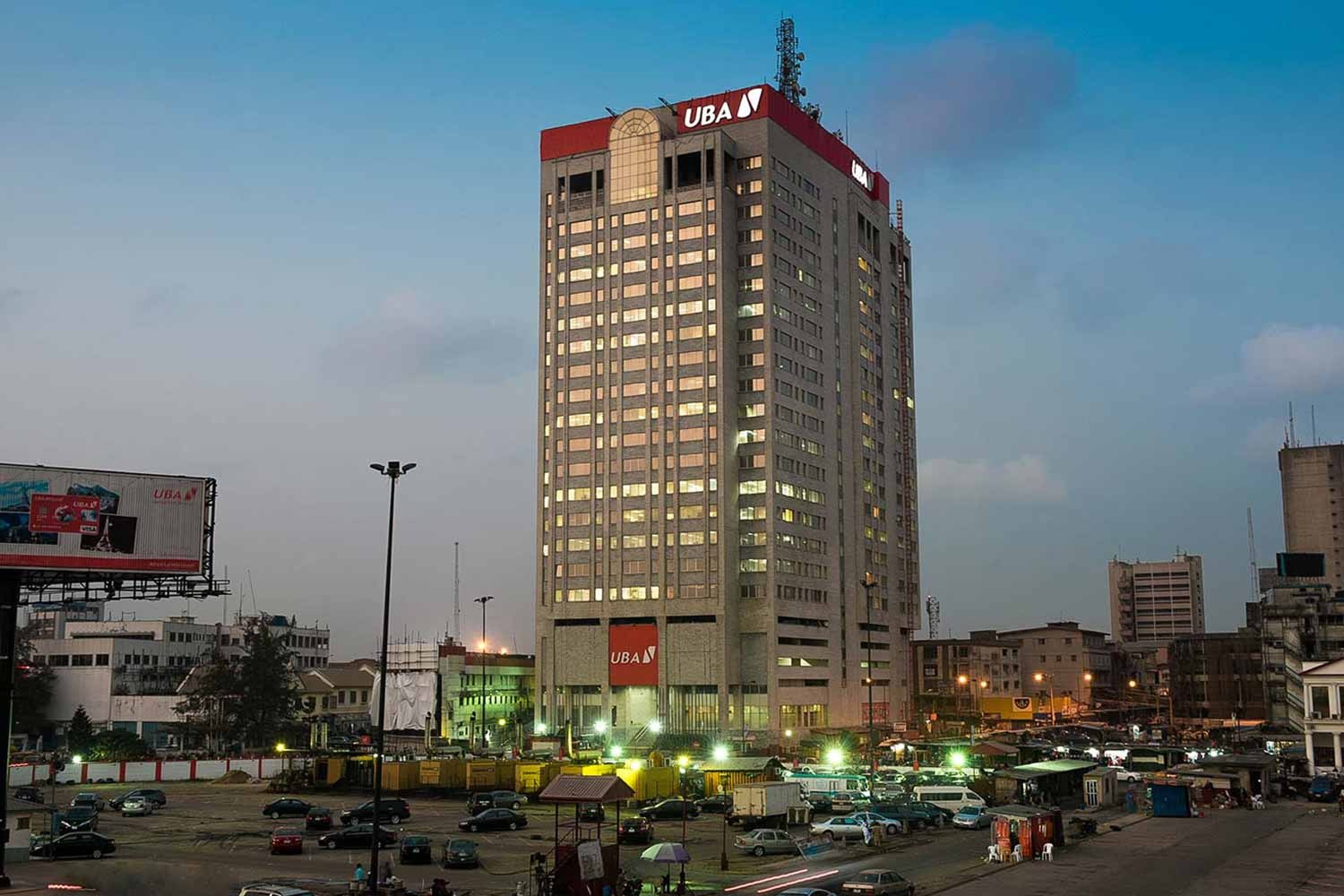
AfCFTA (African Continental Free Trade Area) will unify African trade and most elements of the real sector. That would be a huge opportunity for Nigerian banks with deep continental footprints. United Bank for Africa (UBA) with presence in about 20 African countries, more than any in Nigeria, will become the truly “Africa’s global bank” it has used as a slogan.

One of the most critical redesigns in African commerce, as a result of AfCFTA, will be capital markets. And I expect Nigeria to be the final destination since we bring not just deeper capital, relatively in Africa, but purchasing power as Africa’s largest economy and most populous country. Nigeria’s Broad Street will become the Wall Street of African companies as a result of AfCFTA.

If companies in Benin Republic or Mali want to raise capital, within the free movement of most factors of production, Nigeria should be the right domain. UBA is a bank that can galvanize that system and help them trade and do business continent-wide. UBA’s geographically spread in Africa is a very key strategic asset for its major customers. You can also put Standard Bank and Ecobank there.

  • Ecobank (Togo/Nigeria) operates in at least 36 African countries
  • UBA (Nigeria) operates in at least 20 African countries
  • Standard Bank (South Africa) operates in at least 17 African countries

More so, Nigerian capital market operators have opportunities: work with the Nigerian Stock Exchange, Securities and Exchange Commission and make our market to become the domain of choice not just  for primary listing but cross-listing for leading African brands. For countries without developed capital markets, Nigeria will be there for them. This is where banks like Ecobank and Standard banks with spread across the continent can play real games: we are already here to help you, and we are solid in Nigeria.

UBA, Ecobank and Standard Bank South Africa will become the most vital banking institutions in Africa upon the full implementation of AfCFTA. For banks without the footprints, now is the time to go into alliance with these institutions for deeper footprints for opportunities which AfCFTA will stimulate in Africa.

By the time government goes through the expected recapitalization in Nigeria, our banks will drop in numbers. I am not sure most investors will like to waste resources on some of the small banks in Nigeria for recapitalization when the economy will be open to practically any big bank in Africa. The PAPSP is a game changer for Africa, and many banks will struggle as fees will go!

Nigerian Secondary Schools Need Counseling Units To Help Career Planning

0

By Ajayi Joel

Now, we have seen that the educational system cannot be solved if we point our index finger at the government alone. I have shown you that the school curriculum as well needs to be blamed and that parents also have a huge role they must play.

There are different parties of people who hurl complaints and insults when it comes to looking for the people or entities to blame for the cause of massive unemployment in Nigeria.

Most times, the blame goes to the government for not providing enough jobs for the citizens and the communities. Then next, the blame goes to the students for being lazy while in school, unready to learn, and afterwards unemployable. Simply, the graduates are unprepared for jobs.

If education is not addressed, unemployment would be on the rise. Now, the table is turned towards the guiders and counselors both in secondary schools and the universities.

Firstly, if you ever had the privilege to sit with a counselor in school, and he or she gave you the option of what you currently study, or studied in the university, with full details of what the course entails, and what profession is out there for such course, then I count you lucky.

I would boldly say that just a few people are lucky, and if you are, kindly comment in the comment section. The truth is that the rest of us were quite unfortunate not to undergo proper guidance and counseling before we made the decision to move into the university.

We were clueless, we either wanted to be doctors or lawyers or engineers, and when jamb exam rejected us, we all looked at the long list of other courses related and boom, we were in the university. I mean you just made a shallow decision to opt in for a course you know nothing about, and you would spend 4 or 5 years there.

Is that a wise move? Well, should we blame the parents or students? Yes, we have already blamed the parents, and we will soon face the students. Yet, we need to also point this finger at the counseling department in school.

How many actually care about the job? Do they resume daily because they want to put students right or because there’s no salary if they don’t come to work? That’s still a very light issue.

The major issue is how many of those counselors understand the world of work in the 21st century. Well, fine, they might be our parents but how well do they understand the world of work in this decade: the latest jobs available, the best skills to pick, the right choices to make.

We are talking about saving the next generation so we have to face them and find a solution. The truth of the matter is that over 80 percent of youngsters go into the university without proper information about why and what they would be doing.

They would be left to figure it out on their own. If the counseling unit in a school isn’t working, why not close it down or get an updated person. This simple decision will be a game changer for any school that adopts it.

I will point out the fact that I have met many pre-degree and 100 level students who don’t know what they are in school for. The counseling department has failed them. We need to do something to fix it.

We must fix it. Else, unemployment will still be on the rise. Remember, simply addressing this aspect will affect a lot of lives, and youngsters will know what exactly they are in school for, why they are in school, and how to make the best of it.

Fixing Unemployment in Nigeria: Who Deserves To Be Held Responsible?