DD
MM
YYYY

PAGES

DD
MM
YYYY

spot_img

PAGES

Home Blog Page 6824

Nigeria’s Maritime Insecurity: where are the Coast Guards?

2

By Oko Ebuka

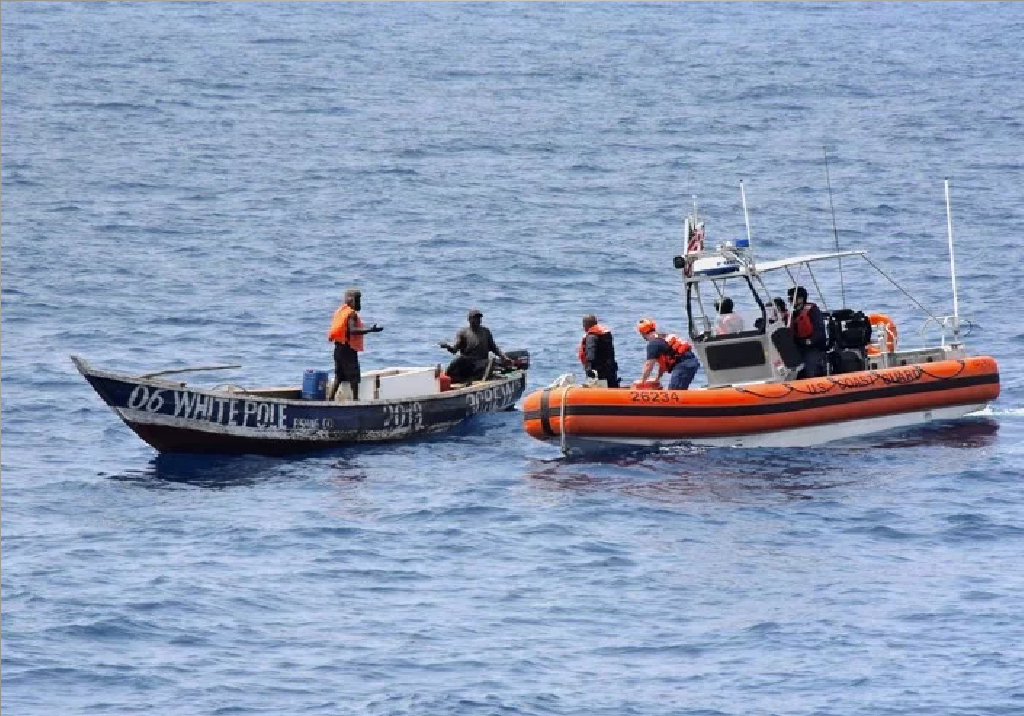
With the trending report released by CNN on the kidnapping of ten Turkish sailors on the early hours of Monday off the coast of Nigeria’s inland waterways, have poised a big rhetorical question concerning the efficacy of the Nigerian Coastal Guards toward achieving a clear coastal terrain and predominantly reduce the criminal activities on-going in the Nigerian waters.

I vividly recall the Facebook post in 2009 on the proposed bill to provide for the establishment of the Nigerian coast guard, which shall be charged with the responsibility among other things to enforce or assist in the enforcement of all applicable federal laws on, under and over the high sea and water subject to the jurisdiction of the federal republic of Nigeria; and shall maintain a state of readiness to function as a specialized service in the navy in time of war; for related purposes. The section 2 (1) (m) of the proposed bill succinctly approved the suppression of destructive and terrorist activities occurring in the maritime zone of the Federal Republic of Nigeria by the authorized coastal guards.

From my own point of view, this bill have a way of reducing the burden practically laid on the Nigerian Navy and equally shift the responsibility paradigm in order to have a definite approach to the issues of maritime security surrounding the entire Gulf of Guinea.

But in my greatest dismay however, the bill “Nigerian Merchant Navy Coast Guard Security and Safety Corps Bill, 2018 (HB.1331)” has just had its first reading in the floor of the Federal House of Representatives, on Wednesday, 21 February, 2018 as presented by Hon. Daniel Reyenieju of the defunct 8th National Assembly. This simply codifies that the prayer won’t be earnestly answered even though the need is highly felt in the survival and sustainability of the blue economy.

Another recent report released this month from the International Maritime Bureau (IMB), a non-profit organization devoted to fighting maritime crime, has called the Gulf of Guinea a “world piracy hotspot,” saying that the “seas around West Africa remain the world’s most dangerous for piracy.” (CNN, 2019)

The statistical report also showed that 73% of all kidnappings happened at sea and 92% of hostage-takings took place in the Gulf of Guinea — off the coasts of Nigeria, Guinea, Togo, Benin and Cameroon — from January to June this year.

The creation of the coastal guards with legal backup will elucidate their roles in safeguarding the territorial waters; improve the dwindling economic activities, open doors for transportation of goods and services through massive job creation both directly and indirectly.

No wonder the words of Captain Alfred Oluwasheyi keep ringing in my head as he hammered on the effectiveness of coastal guards in the reduction of security issues and other maritime misdemeanors which are farfetched if the guards are strategically positioned on the inland water coasts.

On the radar of employment, Captain Alfred boldly said that the establishment of the coast guard alone will create not less than 50,000 jobs without any cost to the government which indirectly, will create another 3 million indirect jobs for the teeming unemployed youths when the water is obviously secured.

Imagine if Nigeria has coast guards that supposed to take care of inland waters because normally the Nigerian navy job is to take care of the territorial waters, it will boom economy, bring back trust of the sailors back to the creek and place Nigerian seas on the map of a secured ocean.

The federal government, especially the existing 9th National Assembly should facilitate the legislative procedures for the establishment of this Act which I strongly believe will see the imprint of the Executive Arm under the auspices of President Muhammadu Buhari, who has shown his steadfastness in improving the Nigerian economic activities as regard to the blue economy especially as he recently assented to the Suppression of Piracy and other Maritime Offences Bill, 2019, as proposed by Nigerian Maritime Administration and Safety Agency, NIMASA.

Thrive With Mental Toughness

0

By Dipo Olaitan

In the last few weeks, I had experienced similar challenges but had encountered different results. This has made me to really ask myself a question like, “why different results?” (The latter result was better than the former).

You might say the difference was because I have learnt a lesson from my previous mistakes. That’s true, I won’t dispute that fact. But the difference in result was not really based on a different approach but a different mindset and attitude in facing the problem.

This has made me want to know how I can continue to have this mindset, and attitude in tackling problems. Yes, though I might not be able to determine the absolute outcome of the problem, but I can be able to shape the outcome.

Have you ever experienced an opportunity you and a person had, but that person was able to achieve a better result than you, even under a tougher condition than yours.

During these periods, the person had always shown a positive mental attitude, and it had looked like to you this person has everything working well for him or her, not until they shared their stories, on how they achieved the success. It was then you would realize you had a better advantage than them. This brings us to what we call being “Mentally Tough “.

source: youdost

According to Gucciardi, Gordon & Dimmock,  “To be mentally tough is a collection of values, attitudes, behaviors and emotions that enable you persevere and overcome any obstacle, adversity, or pressure experienced but also to maintain concentration and motivation when things are going well to consistently achieve your goals”.

Being mentally tough also involves the ability to be accountable and responsible in the face of adversity, irrespective of the circumstances.

Life does not give us what we demand or expect; we need the right attitude and mindset to get the best out of life. Being “mentally tough” will help us see the positive things about life, and help us to have the right attitude in the face of adversity.

Why Government Employees Should Be Internal Entrepreneurs

2

By Chinedu J. Ihekwoaba

Do you tremble at the word “Entrepreneurship”?

Yes, I once did. Perhaps the fear of not earning a monthly paycheck is a scary place to be because of the monthly bills.

Entrepreneurship is the only medicine for poverty. No wonder successful people like Bill Gates, Aliko Dangote, Mark Zuckerberg and many more are entrepreneurs. If you care for the unborn generations, start thinking of entrepreneurship.

I wrote about the Nigerian minimum wage in one of my articles and I got mixed reactions from the audience. One of the standout reactions from the audience is a masterpiece from a LinkedIn connection, J.O.

J.O. said, “You get paid for the value you bring to the table and not what you want. The result is VALUE. It is not how hard you work but it’s by how much value you bring from the skillset that you have acquired.

That is the reason why it is called MINIMUM WAGE because you bring minimum value due to less skill.”

He further emphasized that, ”A McDonalds  worker works hard but the value he/she brings is little and replaceable compared to the CEO or manager. A load carrier at main market works hard but what is the societal value of his/her contribution?”

This illustration shows why many employees are scared of going into entrepreneurship. Many government employees bring little or nothing to the table when it comes to value.

The government parastatals are one of the places we get minimum satisfaction for our money. Take, for example, the National Electric Power Authority (NEPA), before it was privatized, they gave zero satisfaction to the citizens. NEPA failed in the distribution of power supply to the country. That prompted the government to sell to a private organization.

Think about NITEL, National Population Commission and many other government parastatals. These sets of people running the organizations are employed by the government. No wonder the government finds it difficult to pay above $90/month for the least paid among them. It’s obvious the government cannot see any value they bring.

Most people blame the government for not providing adequate funding but the question is, what have you done with the limited funds given?

The Nigerian education system is still the same way it used to be back in the 1970s. The same sets of people are still in the running, doing the same thing, using the same curriculum.

  • Where is the value?
  • Why do you think you deserve more?

A big question only a few can answer. Those who bring great value had left a long time for greener pastures. Those who brought nothing are still behind agitating for an increase in pay. There is no disrespect to any professional. I am only writing the way I see it.

Entrepreneurship is scary to people who don’t bring value because it takes a lot to convince people to pay for your service. If you think otherwise, answer these questions:

  • Why should I pay for your service?
  • What will I benefit?
  • What is the value or satisfaction?

Remember, not every citizen of Nigerian can actually get an answer from the government parastatals.

If you wonder why people are scared of going into entrepreneurship, it’s simply because they bring little or nothing in value.

Who are scared of entrepreneurship? Many; and I will like to challenge government employees to become INTERNAL entrepreneurs in the government institutions. It is only when they exhibit such capabilities and productivity that government will have money to pay them better. They do not have to resign from their jobs, for the external entrepreneurship of owning companies, but they can innovate and be internal entrepreneurs in any government parastatals they are employed.

An internal entrepreneur is known as an intrapreneur (makes part of intrapreneurship) and is defined as “a person within a large corporation who takes direct responsibility for turning an idea into a profitable finished product through assertive risk-taking and innovation.

If they do just that, government will have resources to pay public workers better.

Interswitch Goes for Dual Homes – London and Lagos Exchanges – at $1.5 Billion

0
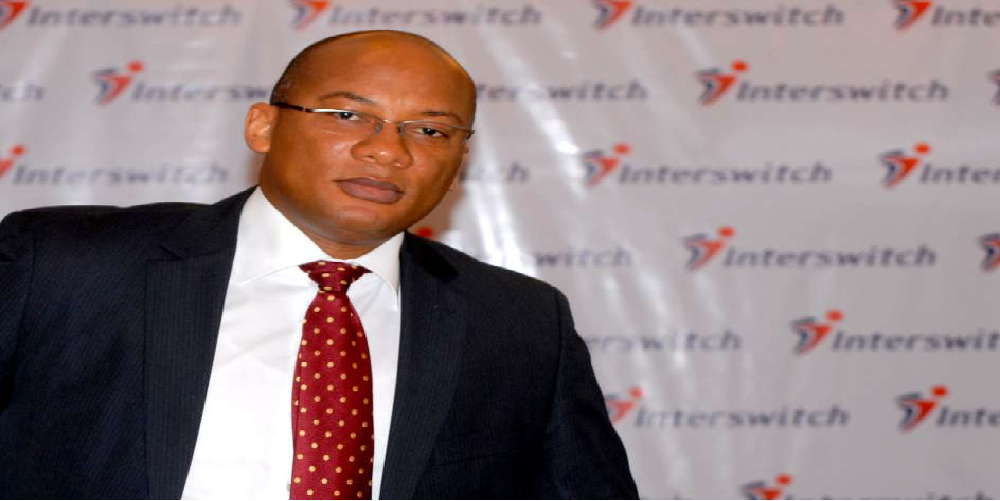
The founder of Interswitch

Interswitch, Nigeria’s pioneer fintech company, is hitting London Stock Exchange (LSE) and Nigerian Stock Exchange (NSE) later in the year for its long-delayed IPO (initial public offer), according to Bloomberg. The valuation has been pegged at $1.3 billion to $1.5 billion. In other words, it is a unicorn. There is nothing else to write except to challenge Interswitch to “just do it”. I predicted when Airtel Africa found dual homes in LSE and NSE that Interswitch will follow. Andela is next on the queue.

JPMorgan Chase & Co., Citigroup Inc. and Standard Bank Group Ltd. are among the firms working on an initial public offering, which may value the financial technology company at $1.3 billion to $1.5 billion, the people said, asking not to be identified because the deliberations are private.

Interswitch, owned by private equity firm Helios Investment Partners, has engaged with banks in recent weeks after a thwarted IPO attempt two years ago, the people said. The potential listing would follow those of two other major African and Middle Eastern tech company share sales this year. Jumia Technologies AG, dubbed the Amazon of Africa, listed in New York earlier this year, while Dubai-based payments firm Network International Holdings Plc went public in London.

Nigeria’s Law Enforcement Challenge

0

By Samuel Nwite

Almost on weekly basis, there are reports of rape cases in Nigeria. Some of the reports are beyond the scope of sexual passion, they are in fact, cases of mental illness displayed through sexual actions. When the case of Khloe, a 4 years old girl who was raped by a man named Idris Ebilimo, resurfaced on the 5th of July. It reminded us of how deep the hole holding this sexual madness has been excavated. To make things worse, the little girl’s father was tenaciously defending her Rapist to the point of getting him a Lawyer. His action was too much to bear that Nigerians had to take to the streets to protest the absurdity of the whole situation.

But this is a better story even. The 3 months old who was raped to death by her uncle didn’t get anyone protesting for her. To make things worse, her father was protecting her Rapist uncle. And it could only get sadder, not only because minors are becoming more victims nowadays, but because the police have become more of accomplices in cases of rape than law enforcement. As at 2016, there were only 18 convictions in as many as thousands of rape cases recorded in Nigeria weekly, since 1960. The Women At Risk International Foundation reports that over 10, thousand women are raped or sexually assaulted daily. This means that if unreported cases are considered, we will have a heartbreaking record of over 5 million Nigerian women who experience sexual assault annually. But less than 28 percent of this alarming figure is reported, and there is less than 10 percent conviction from the reported cases. The question on the lips of every sound mind is why? The answer is not far-fetched.

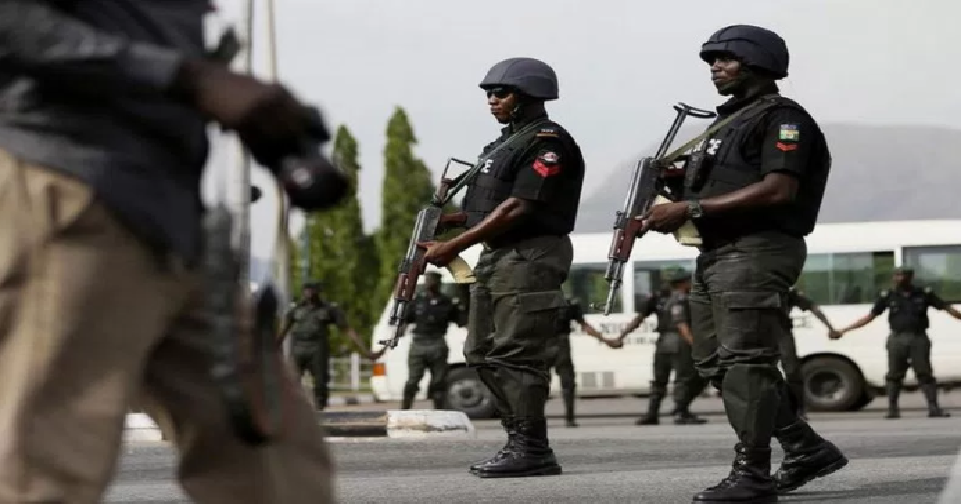
On April 27, over 65 women were arrested in a raid of Night Clubs in Abuja. It was more like a female gender subjugation in the guise of police raid, and it stirred enough anger that led to protests. What the protesters didn’t know was that the worst news was on the way. A few day later, the arrested women claimed that while in custody, they were raped by policemen who converted sachet water nylons to condoms. A few people doubted the claim but it was widely believed to be true based on the reputation that the Nigerian Police has made for itself.  This is the police that should be prosecuting rapists.

In 2011, when the video of a woman being gang-raped by five men in a private off campus hostel close to Abia State University, surfaced online, it drew a national outrage. The effrontery of the rapists to record their amorous barbarism and post it online showed the level of impunity that rape culture is escalating with in Nigeria. Any sane country would have realized the danger ahead, and take drastic action to quench it. Not to everyone’s surprise, the police dismissed the video. The then Assistant Commissioner of Police, ACP J.G Micloth issued a statement saying that there is no evidence to pursue the case, because the video showed that the victim had not resisted. Although the video showed the girl crying; “you people better kill me, you people better kill me.” It wasn’t enough for the police to launch an investigation.

In June, a 40 years old man defiled a 2 years old girl in Delta State. The police ignored the Rapist and arrested the victim’s 12 years old brother. He was beaten with baton and detained for 5 days, he was almost confessing to the crime of raping his own sister before help came for him. The police turned around to demand 10, 000 naira for his bail.

In May, the case of a 24 years old woman who was drugged and gang raped by two men, Don-Chima and his friend Olusegun Razak was added to the ever increasing number of rape victims. She was bold enough to file a rape complaint and had good friends who followed it up. The police effected the arrest of the Rapists, but not quite long after, they did their thing. They turned against the victim’s family, bullying them to withdraw the case. The Rapists’ families are rich, so you know where that’s coming from. They nearly succeeded, if not for public pressure.

On the 28th of June, Photographer, Busola Dakolo, the wife of Singer, Timi Dakolo, granted the most courageous “rape allegation” interview in Nigeria. It was against the Famous pastor of Common Wealth of Zion Assembly (COZA), Biodun Fatoyinbo. It was a one case too many. The series of allegations that followed it was disappointedly loud. But the Pastor is a big fish, the small fishes get off the hook easily muchless a Shark. The Nigerian people know this, they also know what it takes to pull the big fish out of water, and they did exactly so. The Sunday service in COZA that week was held with unwanted guests who came with placards instead of Bibles. And once again, the police intervened on behalf of the alleged Rapist, preventing the protesters, but the voices were too loud to be intimidated. The police would be forced to do their job this time, the number of high profile people who lent their voices in support of Busola will ensure that. That was what everyone thought, and then went home – waiting for news from the police. It’s a criminal case, the pastor must be invited and interrogated by the police.

It was until the 20th of July that police sent the invitation, but not to Pastor Biodun Fatoyinbo, but to the victims. It was more like invasion, they were going to whisk the Dakolos away, but another round of protest followed, Nigerians know well enough who they are dealing with. It wouldn’t take anything for you to hear confessions from the victim, claiming that she made false allegation against her Rapist. Influential voices like the Nigerian First Lady, Mrs. Aisha Buhari, the wife of the former Senate President, Mrs. Toyin Saraki reminded the police that they are interestingly watching. The police issued a statement saying the invitation is a standing procedure and is sequel to the rape investigation. However, the distrust speaks volume, the impunity that the Nigerian rape culture is thriving on stems from the police’s partisanship. And the question many keep asking is why?

No, it’s not patriarchy

The answer many will give to the above question (mostly women) is Patriarchy. And they have a good reason to say so. Nigerian is built on a foundation that subjugates women, especially, sexually. But in the case of rape, it’s a matter of moral bankruptcy that has eaten through every path of morality in the country. Everyone who treads these path is affected, either as a victim or a perpetrator. You can’t name one aspect of human endeavor in Nigeria that is not tainted by moral absurdity – it’s a crisis that knows no gender. And the police, just as in rape cases, built a platform for it all.

The fact that there has been only 18 convictions in the legal history of Nigeria, out of millions of rape cases is an evidence of a bastardized system. The stigmatization and blame that follows the victim is only a pity of the downtrodden. When the interview of Busola Dakolo surfaced online, the former Media Aide to the former, Governor of Ekiti State, Lere Olayinka, described her ordeal as “consented rape.” These two words have presented another question: Do Nigerians understand what consent means? It’s quite unlikely, the kind of questions and comments you hear whenever there is a rape incident prove otherwise. “If she did not enjoy it, why was she moaning”? “Why did you go his house in the first place”? “She is just looking for attention.” “Look at what you are wearing, why would they not rape you”?

If you are man, nobody would want to hear your story in the first place. The case of a man being raped by women is regarded as a favor, and therefore, cannot be entertained in any police station. A man is expected to enjoy being raped, and male children are living through the trauma in cold silence. The after effect may be consequential retribution that will only result in further acceleration of sexual misconduct.

These factors have made it difficult for sexual abuse victims to voice out. Abi Idowu, who was molested by Naval Commodore Olugbenga Fahad Oladipo, (Bidemi) from age 5 to 13, said that it took her 37 years to voice it out because, No one will believe you, the person involved is in position of authority, and you already know, the police will do nothing. That’s if they don’t turn the whole thing against you and accuse you of assassination of character. The emboldeners it begets are available on the streets, offices and anywhere men and women commingle. Bosses feel entitled to the body of their subordinates, and so do public office holders to every woman they are attracted to. All thanks to the paramount sexual abuse impunity.

The only reason why some sexual abuse victims in Nigeria try to talk about it at all is not because they expect justice, but because they want to ease their hearts of the burden. In the US, UK, and so many other countries, the police have devised so many anonymous means to enable victims of rape to file complaints without being threaten by their Rapists. The police don’t only accept such complaints, they investigate and prosecute the perpetrators without them knowing the source of the complaint.

Morality is a prerequisite of human development, and it is the prerogative of every country’s police. Nigeria is not exempt, therefore, the Nigerian police should realize that tomorrow strives or thrives on the events of today.