DD
MM
YYYY

PAGES

DD
MM
YYYY

spot_img

PAGES

Home Blog Page 6860

The Nigeria’s Individual Governments

2
generators Nigeria

By Sani Nahuche

In the normal sense of things, if a government existed within another government, one would ultimately seek to oust the other. Politically, it can be described as running a parallel government – where one government aims to concurrently run alongside one in a state or country.

The fundamental role of any government is to promote the welfare of the state. This role can be assumed in various ways and forms, some of them include monitoring the economy, business, security, providing basic infrastructure and so on. However, where the government has been grossly incapable of carrying out their most basic functions, do they still serve as the government of the people?

Albeit, the contrary is the case in Nigeria. The government has basically failed to provide anything remotely close to what any normal government should. Nigeria amidst its massive earnings from oil still lacks basic amenities like electricity, good roads, housing, and water. This sad trend has ultimately forced the people to assume the job of a government that they ironically pay tax to.

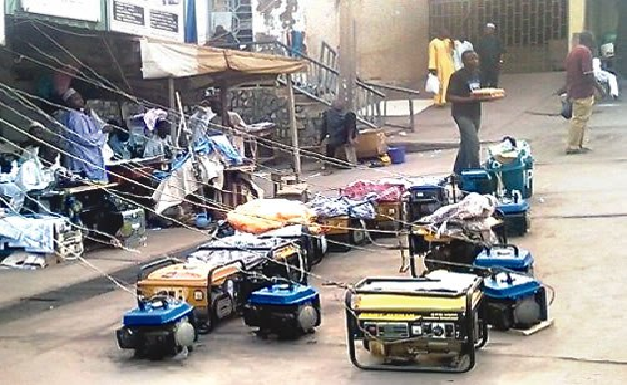
In Nigeria today, the average citizen is saddled with at least 65% of the normal function of the government. Citizens are forced to provide their own electricity – this is on the back of the phantom 16 billion dollars that was said to have been invested in the nation’s power grid since 1999. Most Nigerian homes and businesses are forced to buy a power generating set and fuel it themselves. Imagine running a successful business or industry without a reliable power supply.

The security situation in the country has steadily worsened over the years. Politicians now seem to draft a battalion of the country’s security operatives to themselves and their families. The average citizen is left with no option than to hire and pay someone to secure their premises/business. The saddest part of the nation’s security state is that the government uses these security agencies at will to oppress the citizens, rather than defend them.

Recently there has been a clamour for the restructuring of the nation’s security agencies due to misuse of power, harassment, bribery and assault, but these vocal complaints have been matched by an equal amount of silence by the government. Nigeria is a country where only the rich – the politicians and celebrities – are entitled to any form of decent security.

The same harsh fate awaits our roads and water supply. The average Nigerian has to drill a borehole with their own money to gain access to sustainable drinking water. Our roads are bereft of any sort of coordination, maintenance or infrastructure. This sorry picture is the same for education, housing, and economic policies. In a country where the government taxes its citizens and yet grossly fails to provide the most basic of amenities, can the country still be thought to have a working government?

A country where the majority of those in government would prefer to send their children abroad to study, rather than upgrade its educational institutions, a country where those in government shamelessly travel abroad for medical treatment rather than fix their hospitals, a country where the citizens are forced to provide their own security, power, water, education and basic infrastructure, can be likened to a country without a functioning central government.

A ‘supposedly’ developing country running one of the most expensive democratic systems in the world, at the expense of its majorly poor citizens that are ultimately forced to provide their own basic needs. A country where 70% of the youths are either underemployed or unemployed – wasting away its youthful population. A country where its leaders comfortably conspire and connive to loot the commonwealth of the nation without pity or fear of authority.

Small and medium scale businesses – the heartbeat of any economy – are currently struggling to break even. Interest rates are astonishingly high, ease of doing businesses is ludicrously difficult, people are forced to provide their electricity, water, security and other necessities, at the expense of the little profit they make from their businesses. Ultimately, most businesses in Nigeria are folding up, relocating or retrenching their staffs, the government’s economic policies are poorly thought, and it’s just too expensive and unprofitable to adequately run a profitable business in Nigeria.

Corruption has always been the Achilles heel of the most populous black nation in the world. The citizens have also failed to treat those in authority with as much disdain and vocal criticism as they maybe should have. When politics and power are seen as a tool to steal, oppress and undermine the will of the people rather than diligently serve them, the result is a society where impunity, stealing, corruption and lethargy is the order of the day. The average Nigerians  each as governments of their own.

The time has come for the citizens to start voting in the government of their choice and holding them accountable to their every actions. A government that would be made up of people that are actually willing to assume the role of a government and lift the heavy load that now rests on the weary shoulders of most Nigerians.

Nigeria is the sad tale of a nation where a good number of over 180 million citizens have to largely provide their power, education, water, security, health care and general welfare from their own impecunious pockets, despite the existence of a central, state and local government. A country where a central government exists and these many flaws are apparent can only be likened to a country with over 180 million individual governments and ineffective central, state and local governments.

To aptly describe this unfortunate situation, Nigeria is currently a country of various governments, a country where every citizen is a government of  its own, a country where the central government has monumentally failed to carry out even the most basic duties to the people they claim to serve. A country where you, I, and the next man are walking governments of our own!
I Expect Uber to launch Uber COPTER in Lagos – Eko Hotels to Ikeja Airports

2

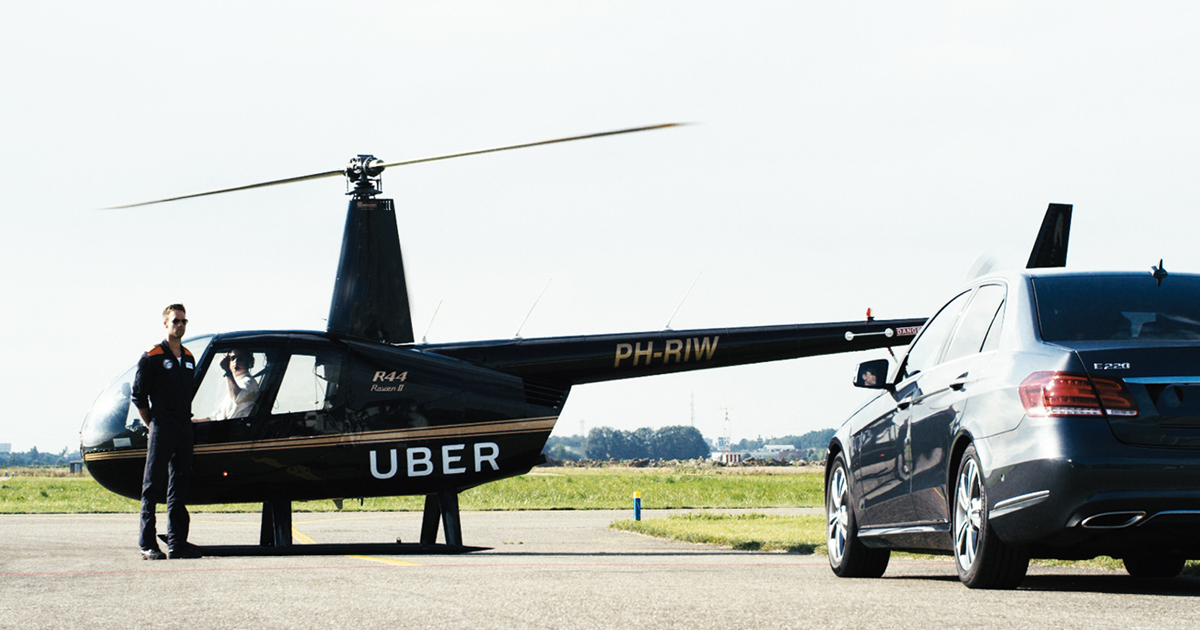
Uber announced that it would be launching UberBOAT in West Africa this week, and markets responded favorably. I expect Uber to unveil Uber Copter in Lagos for helicopter operations. The best routes would be Eko Hotels to local/ international airports at Ikeja, and Festac to Ikeja airports. Uber can charge $300 and people will pay; the Lagos traffic will make that $300 a good deal! Uber is already in the helicopter business; the Lagos one should not be different. Watch out –  Uber Copter will be flying by Q3 2020 in Lagos, Nigeria. Of course local companies like Gokada and Max can offer that service if they raise more money.

Starting July 9th, Uber will offer helicopter rides between JFK airport and Lower Manhattan that can be booked on demand through its app. Uber Copter, The New York Times reports, will offer eight minute flights between the city and its major airport, with prices typically costing between $200 and $225 per person. Flights can be booked up to five days in advance.

Uber Copter’s launch comes almost three years after Uber launched its flying car project called Uber Elevate, which was an ambitious plan to offer flights using a network of lightweight, electric aircraft. Since then the company has continued to offer one-off marketing stunts where it gives people helicopter tours of big events like CES, but nothing that will actually get you from point A to point B.

Nigeria Begins Helicopter Race Over Traffic [Video]

0

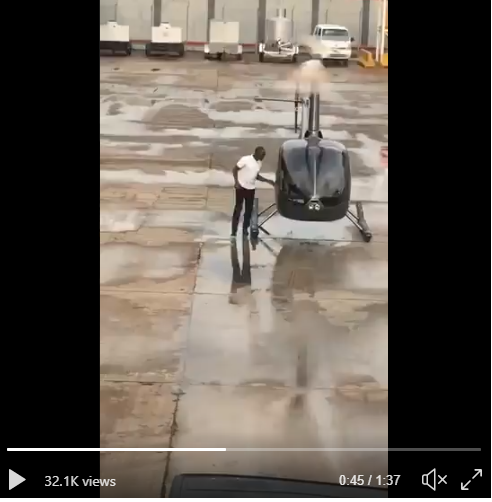
As I had predicted, the lion is out of the cage, and the big boys will be using helicopters for errands around city. Since that man called a helicopter to “get him” out of the traffic, exhalation has happened. This one (video below) used his helicopter to visit his warehouse. He even flew himself, and the staff went mad on jubilation. Who will not when your boss descends from high and you need the clapping to put food on the table? I once visited a building in Manhattan where the CEO comes to work from top of the building (helicopter). Check in the night, beggars would congregate to sleep in the outside basement. My only contribution is this: FIRS, make sure all the big boys pay big boys tax in Nigeria.

Apple’s Jony Ive, Chief Design Officer, Departs – Lessons on Continuity Management

2

Apple Chief Design Officer departs; Apple was Jony Ive before Apple grew past him. The excellence in great companies where no matter your talent, missions can move on with or without you, demands celebrations. Few expected that Apple would live – after Steve Jobs. Most Wall Street investors said they invested because of Jony Ive.

But in reality, it is all press illusion: to make a system in a top engineering company, dozens are involved. Practically, the capabilities are distributed, in any decent team; you would expect Apple to be top of the class on capabilities.

Yes, when you read those articles where one man was credited for designing a car, you will pause. Jony Ive was a legend. Today, he is going for a former staff of Apple. Apple will be fine because in continuity and succession managements, no one does them better than in the semiconductor sector. How? Intel can fire 5,000 people today with their badges revoked, and tomorrow, work will continue with limited hitches. Why: SOPs which make most staff to become numbers, mitigating continuity risks.

Sometimes a surprise departure isn’t much of a surprise. But the aftermath sure could be. Aaron in for Adam at week’s end, contemplating the “surprise” departure of Apple design chief Jony Ive.

Although Ive joined Apple in 1992 while Steve Jobs was occupied elsewhere, the amiable Brit became one of the genius CEO’s most trusted and important lieutenants upon his return. Ive gets credit for the iconic designs of the iMac, the iPod, and the iPhone. But he’s been increasingly checked out of Apple’s product design process since the Apple Watch hit the scene in 2015. His last–and perhaps most lasting–legacy at Apple was the design of its spaceship-like new headquarters. After more than a decade of planning, design, and construction, the effort finally came to a complete and official end last month in a spectacular dedication ceremony featuring a concert by Lady Gaga. So it was time for Ive to go. “This just seems like a natural and gentle time to make this change,” he told The Financial Times in an exclusive interview. (Fortune newsletter)

Nigeria’s President Buhari Responds on Free Trade Agreement

2

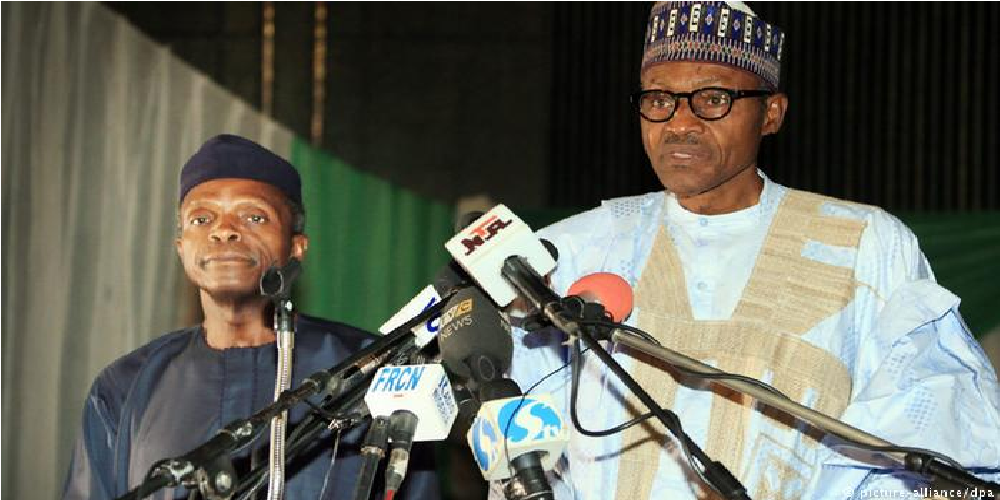
Nigeria’s President, Muhammadu Buhari, has received the report on impact of the African Continental Free Trade Area agreement (ACFTA). As you know, most African heads of states have adopted the phase 1 of the agreement. Nigeria’s president sees positives and negatives which ACFTA can bring to the nation. Then, he dropped the words:

“Our position is very simple, we support free trade as long as it is fair and conducted on an equitable basis…As Africa’s largest economy and most populous country, we cannot afford to rush into such agreements without full and proper consultation with all stakeholders.Africa, therefore, needs not only a trade policy but also a continental manufacturing agenda. Our vision for intra-African trade is for the free movement of “made in Africa” goods. That is, goods and services made locally with dominant African content in terms of raw materials and value addition.”

If you are reading carefully, President Buhari was alluding to the “rule of origin” clause, making sure that the goods which will have low or zero tariffs are actually made in Africa. You do not want France to open factories in Morocco which has an agreement with it, to make things in Morocco, and then ship to Nigeria tariff-free.

Besides, the president hinted on the need to fix key frictions like logistics which will really make Africa thrive. African Development Bank had already concluded on that one also: tariff is useful but building infrastructures will deliver most impacts to Africa’s economic future.

ACFTA (African Continental Free Trade Agreement) has been heralded by many as a possible panacea to many trade frictions in Africa. Interestingly, the African Development Bank’s 2019 African Economic Outlook may have a clear insight on what really matters: “trade costs due to poorly functioning logistics markets may be a greater barrier to trade than tariffs and nontariff barriers”.  Yes, logistics paralysis in Africa is more critical than tariffs.