DD
MM
YYYY

PAGES

DD
MM
YYYY

spot_img

PAGES

Home Blog Page 6861

Apple’s Jony Ive, Chief Design Officer, Departs – Lessons on Continuity Management

2

Apple Chief Design Officer departs; Apple was Jony Ive before Apple grew past him. The excellence in great companies where no matter your talent, missions can move on with or without you, demands celebrations. Few expected that Apple would live – after Steve Jobs. Most Wall Street investors said they invested because of Jony Ive.

But in reality, it is all press illusion: to make a system in a top engineering company, dozens are involved. Practically, the capabilities are distributed, in any decent team; you would expect Apple to be top of the class on capabilities.

Yes, when you read those articles where one man was credited for designing a car, you will pause. Jony Ive was a legend. Today, he is going for a former staff of Apple. Apple will be fine because in continuity and succession managements, no one does them better than in the semiconductor sector. How? Intel can fire 5,000 people today with their badges revoked, and tomorrow, work will continue with limited hitches. Why: SOPs which make most staff to become numbers, mitigating continuity risks.

Sometimes a surprise departure isn’t much of a surprise. But the aftermath sure could be. Aaron in for Adam at week’s end, contemplating the “surprise” departure of Apple design chief Jony Ive.

Although Ive joined Apple in 1992 while Steve Jobs was occupied elsewhere, the amiable Brit became one of the genius CEO’s most trusted and important lieutenants upon his return. Ive gets credit for the iconic designs of the iMac, the iPod, and the iPhone. But he’s been increasingly checked out of Apple’s product design process since the Apple Watch hit the scene in 2015. His last–and perhaps most lasting–legacy at Apple was the design of its spaceship-like new headquarters. After more than a decade of planning, design, and construction, the effort finally came to a complete and official end last month in a spectacular dedication ceremony featuring a concert by Lady Gaga. So it was time for Ive to go. “This just seems like a natural and gentle time to make this change,” he told The Financial Times in an exclusive interview. (Fortune newsletter)

Nigeria’s President Buhari Responds on Free Trade Agreement

2

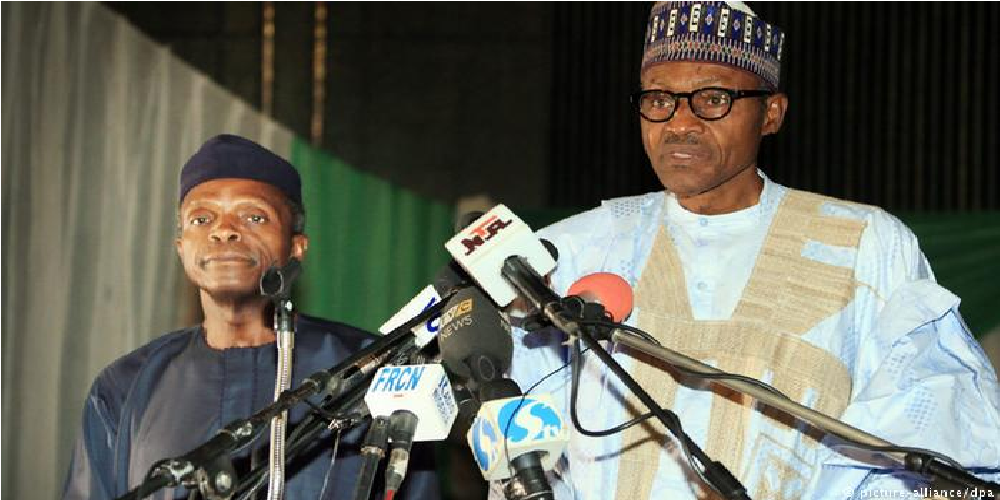
Nigeria’s President, Muhammadu Buhari, has received the report on impact of the African Continental Free Trade Area agreement (ACFTA). As you know, most African heads of states have adopted the phase 1 of the agreement. Nigeria’s president sees positives and negatives which ACFTA can bring to the nation. Then, he dropped the words:

“Our position is very simple, we support free trade as long as it is fair and conducted on an equitable basis…As Africa’s largest economy and most populous country, we cannot afford to rush into such agreements without full and proper consultation with all stakeholders.Africa, therefore, needs not only a trade policy but also a continental manufacturing agenda. Our vision for intra-African trade is for the free movement of “made in Africa” goods. That is, goods and services made locally with dominant African content in terms of raw materials and value addition.”

If you are reading carefully, President Buhari was alluding to the “rule of origin” clause, making sure that the goods which will have low or zero tariffs are actually made in Africa. You do not want France to open factories in Morocco which has an agreement with it, to make things in Morocco, and then ship to Nigeria tariff-free.

Besides, the president hinted on the need to fix key frictions like logistics which will really make Africa thrive. African Development Bank had already concluded on that one also: tariff is useful but building infrastructures will deliver most impacts to Africa’s economic future.

ACFTA (African Continental Free Trade Agreement) has been heralded by many as a possible panacea to many trade frictions in Africa. Interestingly, the African Development Bank’s 2019 African Economic Outlook may have a clear insight on what really matters: “trade costs due to poorly functioning logistics markets may be a greater barrier to trade than tariffs and nontariff barriers”.  Yes, logistics paralysis in Africa is more critical than tariffs.


Jumia Is Emerging As Aggregator of Digital Commerce: Jumia Music, Jumia Video, Etc

2

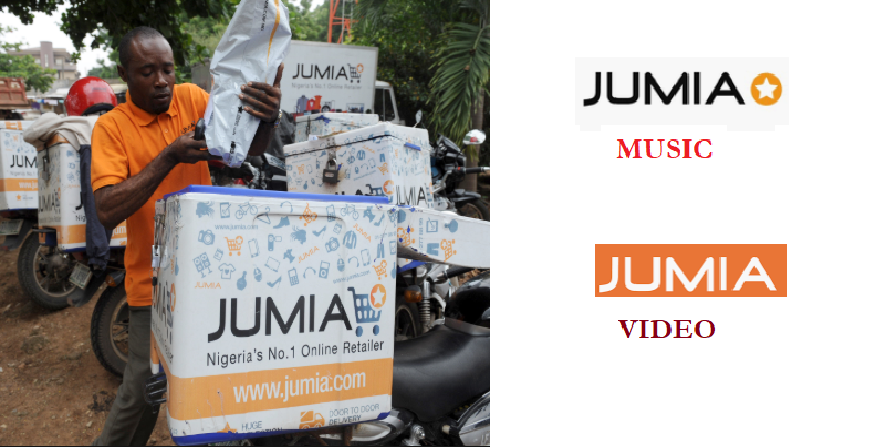
We are studying Jumia and this is our prediction: Jumia will emerge as one of Africa’s most dynamic aggregators of digital commerce. Recently, Jumia is not building but rather partnering and aggregating others. That is a potent business model: Aggregation Construct. Max is handling packages in West Africa, So Fresh is dealing with the food domain, and so on across market domains.

In coming months, Jumia will add music, video and broad entertainment through aggregation. We are examining this company and Jumia has no plans to put huge CAPEX but rather orchestrate partnerships on its near 4.5 million users in Africa. Being public brings discipline; Jumia is a public company traded in U.S.

Jumia Prime will not have any value without those elements. And to make it useful, Jumia will aggregate many things around it: “Jumia launches Jumia Prime, mimicking Amazon Prime, on a brilliant double play strategy where it promises to offer free shipping to customers, in Lagos and Abuja, who pay subscriptions to use Jumia.”

Jumia Music, Jumia Video, Jumia Readers, etc are coming. Yes, I expect Jumia to bundle subscriptions of some important publications for its Prime members. Expect FT and HBR there. Jumia Video could be a potent competitor to iRokotv than Netflix or DStv in Nigeria as Jumia Prime will make price lower.

This company is evolving in many ways.

Everything Has Potentials Today – Do It Well and Be Different

2

I have this mindset that every sector in Africa is still largely at infancy. Yes, I do not believe anyone has won anything except in areas Dangote operates in Nigeria! Our application and utilization of the factors of production are still extremely inefficient. This means that you can attack any sector and find your moments. Yet, the reason why most are at infancy levels could also be the reason why you need to examine the business battles you choose to fight.

I like to motivate and inspire young people to understand that despite everything they read, Nigeria offers opportunities. Let me take my blog, Tekedia.com, as an illustration.

When I began blogging about two years ago, I decided that it must be useful to people that visit Tekedia.com. We need to bring originality, predictability and authenticity. But it won’t cost me money since I am already spending resources via my time. I put 90 minutes of everyday on LinkedIn and Tekedia.com. But it is part of my business since Tekedia anchors most things we do. Without it, we cannot operate effectively on our works with startups and also our broad advisory services. Simply, Tekedia is our oasis in the One Oasis Strategy.

To be at that expense parity, my team added payment section for exclusive contents. I had told them that they must find a way to ensure we cover all costs. Then subscriptions took off. Most of the subscribers are actually corporations who pay for their staff. Largely, they like what we have here and want their staff to come and read, about Nigeria and Africa.

About 70% of Tekedia readers come from typing Tekedia.com, using Alexa. We do not pay attention to Twitter and Facebook. Rather, we focus only on LinkedIn where we think we have our audience. Yet, LinkedIn brings less than 10% of the traffic. What happens is that once people come from LinkedIn, they now begin coming directly. Tekedia enjoys average visit of 14 mins; yes, visitors spend at least 14 mins per visit on average.
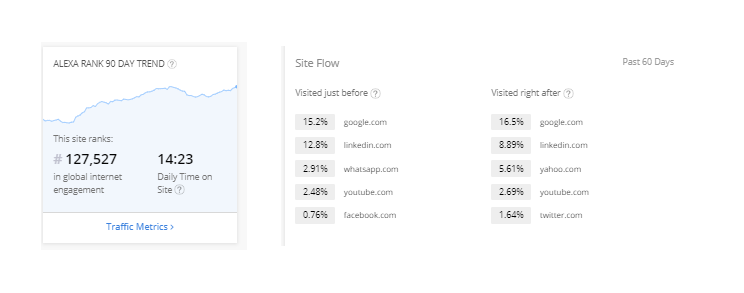
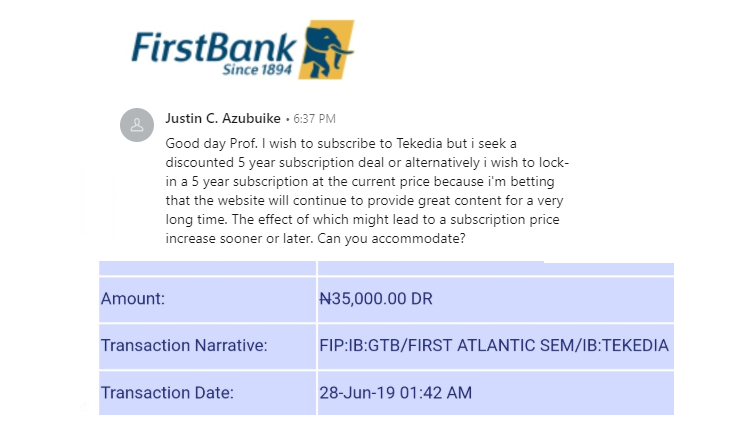
Today, I will use one customer that permitted us to share his transaction. He has paid for the next five years on Tekedia. Yes, he locked the subscription because he thinks we will raise price soon. Yes, someone is subscribing to a blog and paying for five years ahead. We have a Japanese company that paid for three years for its staff; the same for a Virginia company.

Why would they do that in the age when everyone thinks media cannot sell contents? Simply, being different! Yes, if you are different, the society will reward you. Do not go and copy Punch, Forbes, etc and hope you can create a product people will pay. But if you have your uniqueness, you will get that payment. We have thousands of subscribers in this blog and certainly do not care for those intruding Google ads everywhere.

Here is the link to subscribe. If you subscribe, we offer one more thing:  I will personally respond to any professional question you send to my team.

I hope this is of value. This is a hobby but I have learnt these days that society can also pay for your hobbies if you do them well.  Be unique and offer value in whatever you do, society will reward.

General Subscription

This is my comment to an analyst who wrote about Tekedia

Great insight but it seems you missed key parts of Tekedia. People spend 14 mins per visit on Tekedia according to Alexa you quoted. Techcabal for example is 2 mins. Nairametrics is 5 mins. If a site can retain people for 14 mins per visit, it means you can sell things to them. It is no more a news site but a mini-portal.

Also, you flipped and muddled the sources: 70% of users visit Tekedia directly through tekedia.com. For us, that is better than Google search. You are making it look like having a visit from Google search is better – that is not true. We do not even care if Google finds us because our business is not built on traffic but subscriptions.

Tekedia is not built for traffic – we have no Facebook, Twitter etc strategy; we want only quality visits which we found LinkedIn offers. Even LinkedIn where I am active contributes less than 13% of our traffic. Once people visit, they become fans and visit directly via typing tekedia. Google is 15%. FB is less than 1%. If you run it, 70% come to the site because they have paid and subscribed. Or want to read.

We are one of few blogs in Nigeria people pay to read exclusive contents. If you add ecommerce to Tekedia, you will make sales. I am hoping for a proposal in that space from people.

Jumia Goes Fresh, Gets Its Own Whole Foods (Yes, So Fresh) Through Partnership

1

Jumia is firing on all cylinders these days. There is a new level of intensity that comes when you are a public company. If Amazon did it – yes, getting Whole Foods, a grocery chain in-house – we will explore our options. An option is here: Jumia is partnering with So Fresh, a Nigeria-based fresh food chain, to deepen its competitiveness in the restaurants service nexus.

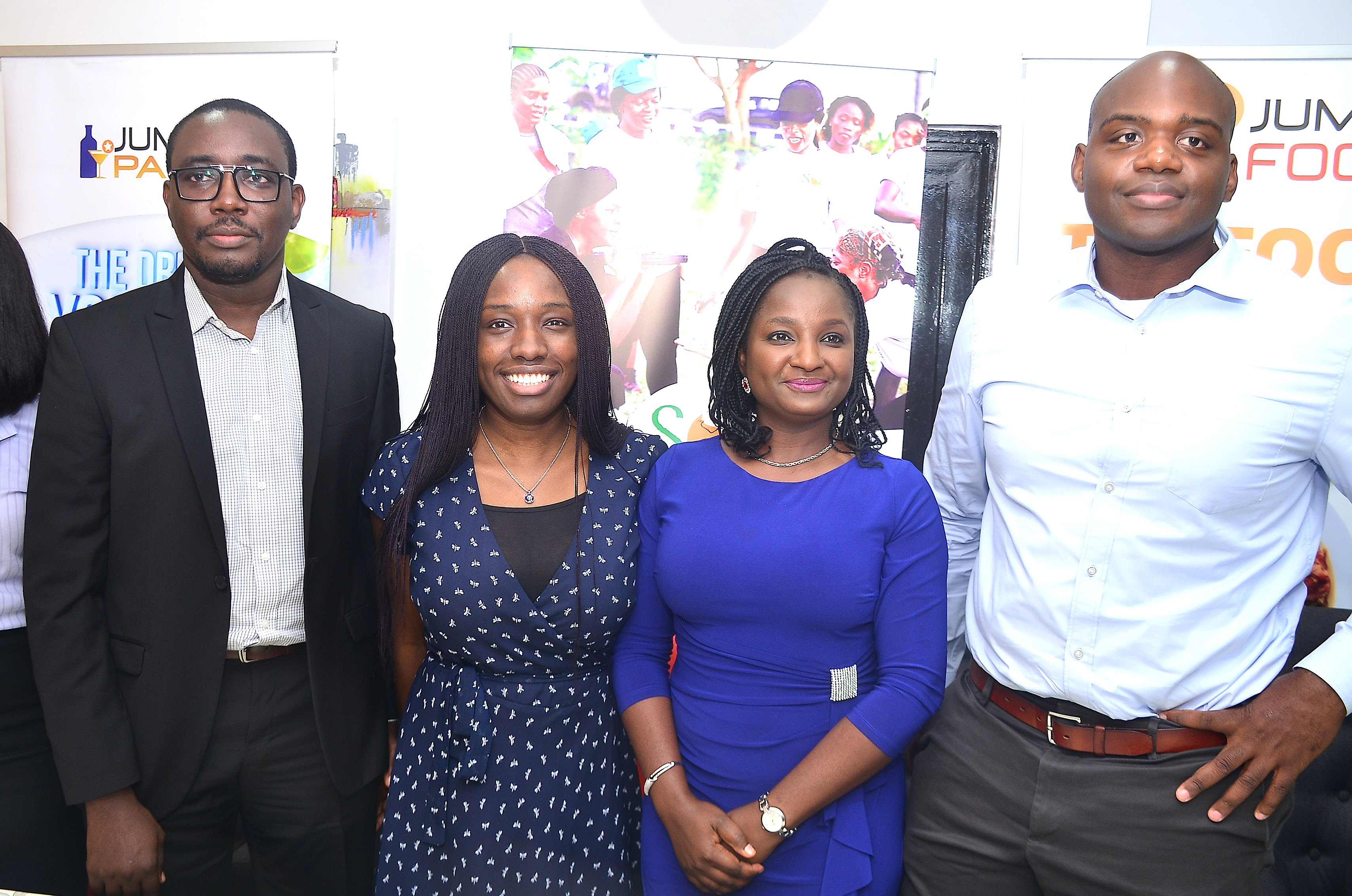
Jumia Food Nigeria has added So Fresh, Nigeria’s leading fresh food chain, to its ever-growing catalogue of restaurants on its platform. This is in a bid to promote healthy living among Nigerians.

Guy Futi, the Managing Director of Jumia Food said the company’s commitment to promoting and encouraging a healthy lifestyle among Nigerians necessitated the partnership.

“As a business, we are always looking for new ways to serve our customers, such as through a partnership like this. I am particularly excited with So Fresh because this is an opportunity for us to support and sustain healthy lifestyle among Nigerians through the consumption of fresh foods which customers can now order from So Fresh on Jumia Food

If you look carefully, Jumia is using its brand equity and visibility to become an aggregator. That is a winning model any day. So Fresh is in, and the journey to flip Africa from atoms to bytes in commerce continues!

In the aggregation-integration construct, more values accrue to the entity that controls demand, not supply, since supply is largely unbounded and unconstrained. For example, the number of news sources (i.e. the suppliers) is large while the entities that host users and control their experiences like Twitter, Facebook, and Google (i.e. the aggregators) are limited. These aggregators accumulate most gains and also hold more power over the suppliers of news like newspapers.