DD
MM
YYYY

PAGES

DD
MM
YYYY

spot_img

PAGES

Home Blog Page 6874

NBA Championship, Congratulations Nigeria’s Masai Ujiri: Toronto Raptors 4 – Golden State Warriors 2

0

From Wikipedia – Masai Ujiri is a Nigerian professional basketball executive and former player who is the president of basketball operations and former general manager of the Toronto Raptors in the National Basketball Association. After his playing career ended, he became a scout. Under his leadership, the Toronto Raptors won their first NBA title and the first by a non-US franchise in NBA history. Washington Wizards is going after him at $10 million per year deal. He is credited as being the brain behind building a formidable group to win the NBA title.  Getting Kawhi Leonard from San Antonio Spurs to Toronto was one of his best deals.

Meanwhile, the Washington Wizards are preparing to offer Toronto Raptors president of basketball operations Masai Ujiri a deal that could approach $10 million annually and deliver him the opportunity for ownership equity, league sources tell ESPN.

Wizards owner Ted Leonsis is expected to reach out to Toronto ownership soon to request formal permission to meet with Ujiri and offer a staggering financial package that would include running the Wizards’ basketball operations and, perhaps, taking on a larger leadership role in the Monumental Sports and Entertainment company that oversees the Wizards and NHL’s Capitals, league sources said.

Ujiri’s vision and team building helped deliver the Raptors their first NBA title on Thursday night, beating the two-time defending champion Golden State Warriors in six games.


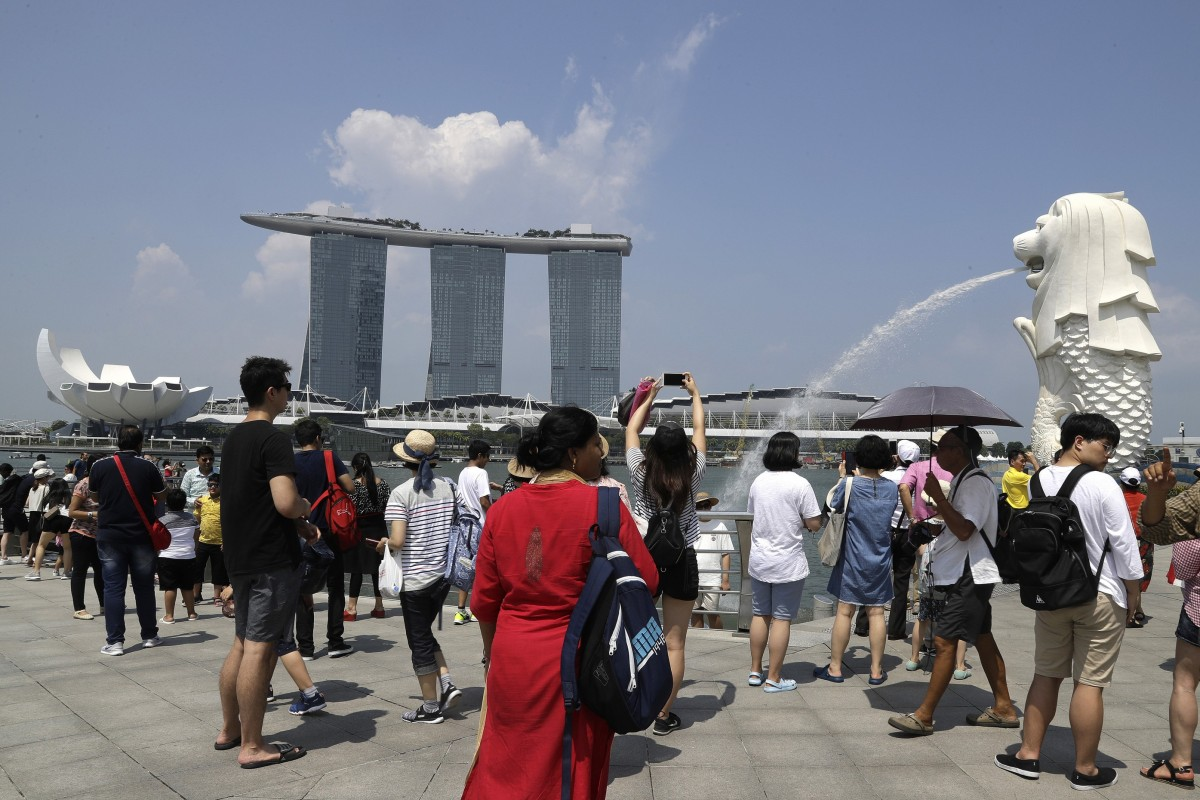
What Nigeria Can Learn from Singapore – The World’s Most Competitive Economy

1

By Nnamdi Odumody

According to a recent ranking on global economic competitiveness by Swiss Business School IMD, Singapore is now the world’s most competitive economy, exchanging positions with the United States which held the first position in 2018.

Its ranking evaluates how the economic environment of a country acts as an enabler for enterprises to achieve sustainable growth, create jobs and ensure its citizens welfare is the best.

Singapore’s rise to the first position is attributed to its advanced technology infrastructure which is the best in the Asia Pacific region. It was also recognized for planning, effectively managing its transformation, and availability of skilled labour in future-ready skills through quality educational policy. More so, favorable immigration laws have attracted bright talent from across the globe, and the Smart Nation initiative has made it easy for new businesses to be established.
Singapore’s rise to the top is proof that economic size and population is not essential in becoming the most competitive economy, if not China and India would have taken the first and second positions. Indeed, smaller economies can achieve consensus more easily and good economic policies pay off in the long run. Prof Arturo Bois, director of the IMD World Competitiveness Centre posits that when countries focus on a long term vision instead of short term measures, they improve the prosperity of their citizens.

Singapore needs to deepen her capacity to help enterprises scale like in China, United States, Israel and Hong Kong, increase the Skills Future Initiative to prepare her citizens for the future of work and create better domestic and foreign partnerships to access new markets.

China and Israel are not natural partners. In sheer size, demography, and geopolitical orientation, they appear vastly different. China has ten cities larger than Israel’s entire population. China has no indigenous Jewish community, and Israel has no indigenous Chinese community. Israel is closely aligned with China’s main competitor in the world, the United States. However, the China-Israel relationship has been expanding rapidly on a number of fronts.  The past few years have seen stark upticks in trade, investment, education exchanges, and tourism between the two countries.

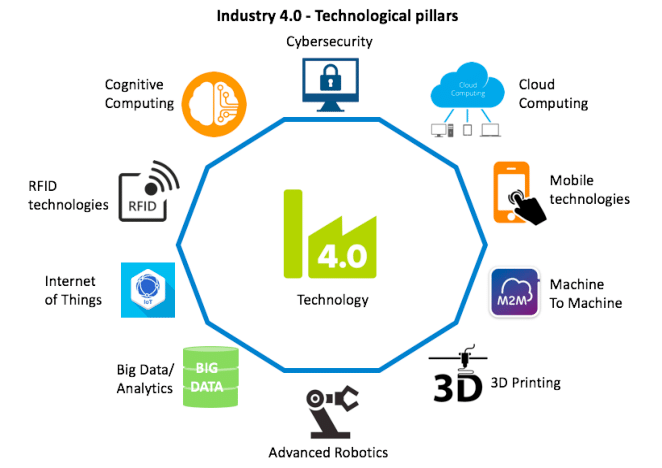
Global competitiveness will be more and more defined by the innovative capacity of a country, as talents will increasingly become more important than capital; indeed, the world is shifting from capitalism to talentism. So, countries preparing for the Fourth Industrial Revolution which is about knowledge-based economy, driven by technology and simultaneously strengthening their political, economic and social systems will be the winners in the competitive race of the future, posits Prof Klaus Schwab, Founder of the World Economic Forum. Singapore is on the right track for this leadership.
Nigeria has a lot to learn from Singapore. Yes, understanding that top-grade educational system that has supported its mission to the top will be catalytic to the Africa’s largest economy.

LinkedIn Comment on Feed

  1. Maybe the opposite is the case here. Talents chase capital here, rather capital chasing talents. Think about it…
  2. You are fantastically right. It has always been my position at every opportunity I have to speak or tutor people. Innovative capacity of a country has to do with her citizens being creative and empowered to achieve whatever is being put together as innovation. Another thing I see is “is there anything like innovation again in what is on ground or we are recreating what’s already in existence” which I know is another type of innovation. We need to start looking inward as Africa if we do not want to be taken for a digital slave on global integration. There is need for African’s cultural and traditional ways of handling things to be innovated rather than absorbing 100% western world of innovation that might eradicate most of all these values that have built Africa. Africa economic integration would make Africa maintain their pace for jobs sustainability rather than the global economic integration. This is my take about the global competitiveness though
  3. I have to respectfully disagree with my namesake Nnamdi Odumody. Capitalism has always depended on talent as talent has always been one of the distinguishing factors to establishing competitive advantages of nations. As such, the world has always been defined by talentism. Daily, however, talents are becoming easier to define. Which makes the world ever more capitalist because it remains challenging to protect and convert talent to results without capital. For this reason many with and of talents are daily exploited by those with capital. The larger the company the larger the cases. The bigger the country, the more frequent the cases.

Ndubuisi Ekekwe Response to #3: 

You are reading it literally Nam. Today, we are in a knowledge economy where knowledge is seen as a factor of production beyond the old ones by classical economists. Capital remains as a factor of production; it will always be. But the reality is that unlike few decades ago, you do not need tons of capital to create value (no one said you do not need any, you still need). So, companies like Uber, Airbnb, Facebook etc even though they need capital are winning by talent (i.e. knowledge).

Check most the largest 10 companies in the world, they were built on knowledge, not just capital. Those heavy-asset companies are making way. So, if you want to change the world, while you need capital, the key is talent (knowledge) because capital does not give that old competitive advantage it used to offer. Yes, you need it but you still need knowledge.

Jumia is more valuable than GTBank despite having asset base that is a fraction of GTBank. GTbank is the most valued bank in Nigeria!

WeCare Solar Suitcase is Providing Healthcare Access in Rural Communities

0

By Nnamdi Odumody

Lack of electricity and the poor state of healthcare facilities has led to increase in infant and maternal mortality cases in developing countries, claiming the lives of over 300,000 women in developing countries around the world.

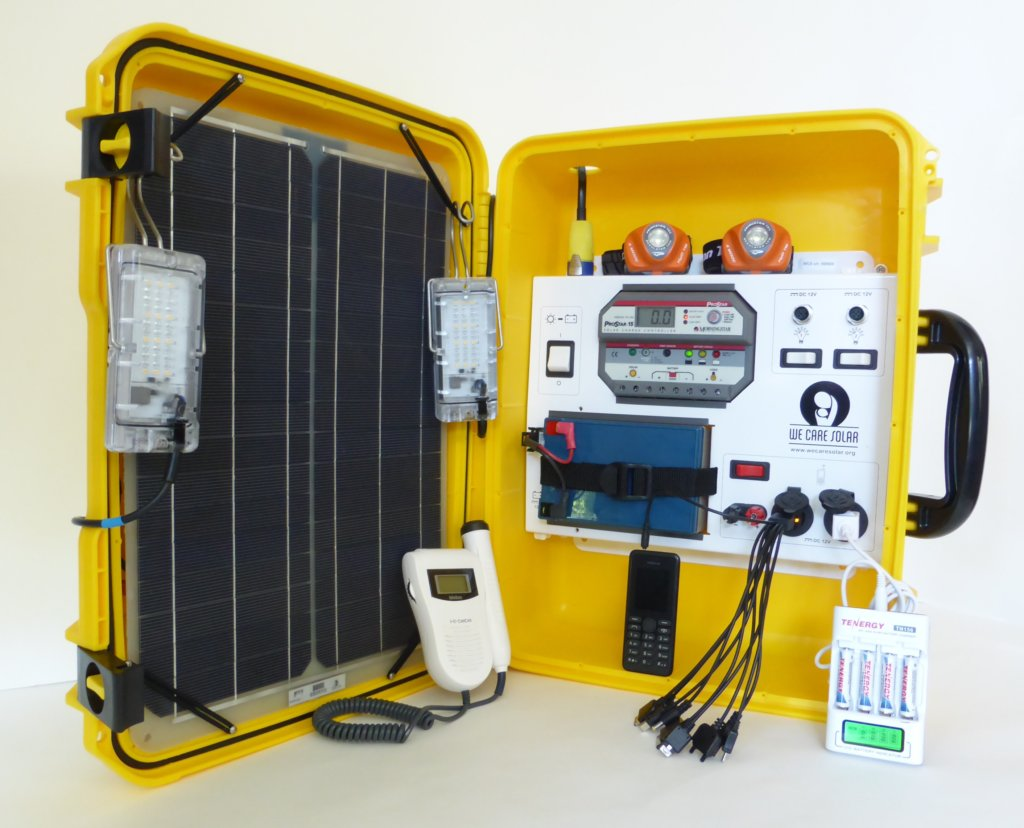
WeCare solar suitcase was developed by Dr Laura Stachel as a response to this friction. It is a highly efficient yellow portable suitcase which contains medical equipment including fetal monitors, a mobile phone, rechargeable headlamps and batteries, solar panels and outlets for 12 volt DC devices. The solar suitcase has helped to provide healthcare and electricity access for 1.9 million people and 4000 medical facilities in 27 countries on the African continent.

WeCare Solar partners with the World Health Organization and UNICEF as well as agencies and governments across Africa to support its Light Birth Initiative aimed at improving obstetric care across the continent, and skills development to local experts in installation and maintenance of the suitcase.

The Solar Suitcase includes medical-quality lighting, a fetal monitor, a battery charger, headlamps and cellphone charging so that health-care workers can make emergency referrals. Earlier units were built by hand, and later designs used off-the-shelf components and local contract manufacturers.

Because the Solar Suitcase is used in developing countries where people earn less than $1,000 per year, the nonprofit must also drive down costs as much as possible.

The latest Solar Suitcase, known as version 3.0, was made possible by close collaboration between the two companies. Its lower-cost, more robust, and powerful design uses the latest technologies that weren’t available for earlier versions of the system. The new design is also easier to manufacture at scale, easier to install and use and easier to train people in its use

They are currently working on countrywide programs for the elimination of poverty in healthcare facilities by 2030 through their Light Every Birth campaign with governments, UN agencies, and Non Governmental Organizations aimed at ensuring reliable electricity access in every public health centre.

In January, it won the 2019 Zayed Sustainability Prize in the health category for its impact on the health and safety outcomes for millions of women and children in Africa and Asia. It envisions a world where all mothers and infants survive childbirth, children thrive, and families have uninterrupted access to quality healthcare.

Today, I Signed a Term Sheet, Becomes Shareholder and Board Member

0

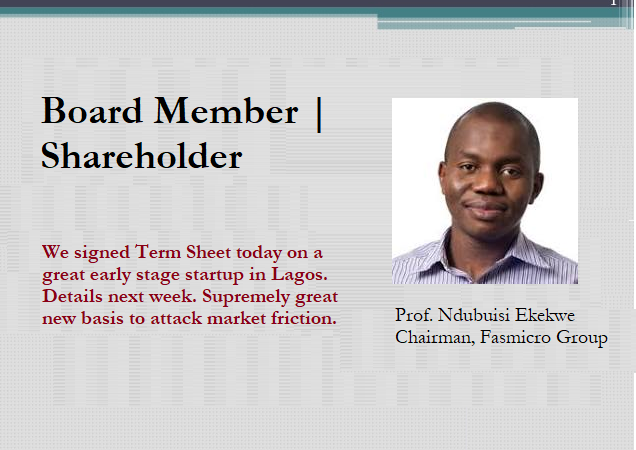
Today, I signed a term sheet with an amazing startup. We will be working with a remarkable team of great African techies to fix a specific market friction via an ingenious way. You will learn more next week when we unveil. BelieveInAfrica. BelieveInNigeria

Nigeria’s Max Raises About $7 Million To Scale Ride Hailing Motorbikes to Ghana and Ivory Coast

0

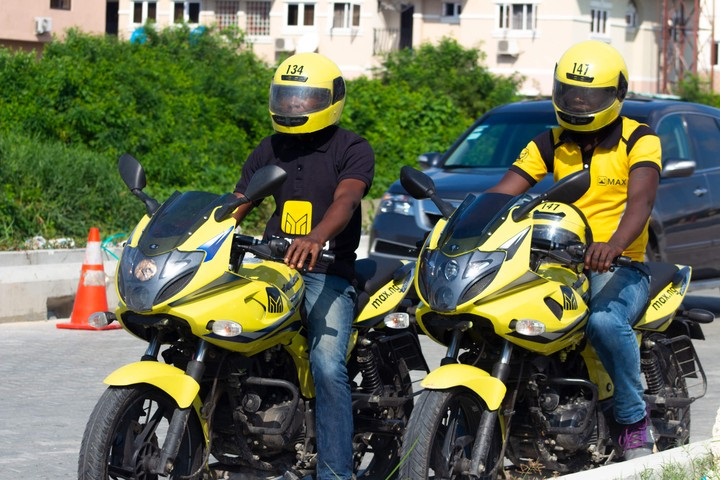
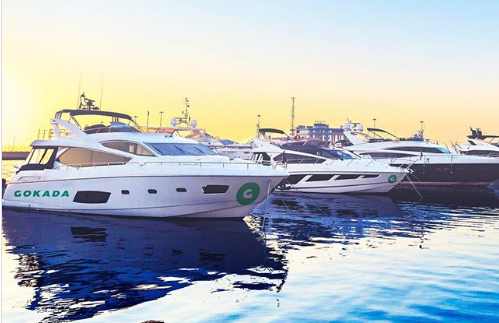
There is a major shift: transportation startups are raising tons of money right now in Africa. Gokada raised $5.3 million few weeks ago, and has now added boats in its business. Today, we are learning that Max .ng, a motorbike ride-hailing startup, has raised up to $7 million. As that happens, ORide from Opera, has $100 million to dip from as they work to fix the logistics friction in Nigeria. These companies are overlaying technology on what has been with us – informal motorcycle taxis  – and they hope to “win market share by offering trained, accountable drivers and the convenience of booking rides through a mobile app”, as Reuters notes.

Nigeria’s Max.ng recently raised between $5 million – $7 million according to an interview with Reuters. The motorbike taxi startup will use the funds to expand into Ghana and Ivory Coast later this year. Max.ng started its ride-hailing service in 2017 and completed 200,000 rides in May. The company is looking to complete 2 million rides by the middle of 2020. Max.ng is the oldest motorbike taxi startup in the country but it faces competition from new entrants including Gokada, Safeboda, Oride by OPay and a few more foreign companies looking to set up shop. (TC Daily).

Zido which I hold shares focuses on keke – three wheelers – for the same reason noted by Reuters: “Africa offers huge potential for motorcycle ride-hailing firms due to low personal car ownership, rapidly expanding populations and a lack of efficient mass transport systems in fast-growing cities that are clogged with cars.” There is innovation in the broad transportation space, not just in Africa, but also in U.S. and beyond: Uber is now offering helicopters. Yes, hail a helicopter and Uber helicopter will answer; I will be waiting for that one in Lagos, fiercely urgently!

While limited core infrastructures are being built by these startups, technology can use better planning algorithms to bring efficiencies in the transportation system. We will enjoy those productivity improvements until they hit the ceiling of diminishing returns. By then, governments can rise to provide better infrastructures that will drive long-term sustained transportation efficiency in Nigeria especially with the understanding that rural urban migration continues to skyrocket. But right now,  appreciate the startups; they are doing the best they can.

Gokada Boat