DD
MM
YYYY

PAGES

DD
MM
YYYY

spot_img

PAGES

Home Blog Page 6874

Workplace Demographic Challenges in Africa: Insights from a Public Sector Organisation

By Dr. Nnamdi O. Madichie and Dr. Margaret Nyakang’o

This article highlights the need for a Strategic Workforce Plan in the public sector using a case illustration of a National Bureau of Statistics in a developing world context striving to confront an ageing workforce situation. The article is based on a 2016 DBA study which was consequently published in reputable journal on Employee Relations.

Significance

The challenge of an ageing workforce is not a common occurrence in developing countries especially those in youth populated geographies such as sub-Saharan Africa. Surprisingly, therefore, the manifestations of this observed, and arguably unusual occurrence in a public sector organisation of the clout of the Kenyan National Bureau of Statistics, warrants discussing – from changing the status quo to “nipping” the demographic timebomb in the bud, engendering employee relations to organisational learning.

Timeliness

This topic is timeless as the demographic profile in Africa, South of the Sahara is ever-changing with a bulging youth population being side-lined from public sector employment. Indeed, the matter has been trending and the momentum brewing across countries from those is West Africa, to those in East Africa and Southern Africa.

Multimedia

With headlines such as Aging Workforce Challenges: Trends, Statistics and Impact closely following a 2014 World Bank Report on Aging: A problem in Africa as well? It is not surprising that the matter cannot be swept under the carpet. Indeed, a 2018 report in the Guardian recognises the problem in the UK in an article that highlights the unexpected costs. However, while this may be readily explained, the same cannot be said for Africa. Indeed, a recent report by the World Economic Forum entitled raises some matters arising – i.e. burden vis-à-vis opportunity, which confirm the study being interrogated in this article.

Key Points

Interestingly there have been numerous debates and commentaries from personal blogs to reports by the likes of the IMF and the World Bank and yet other think tanks on the pros and cons of an ageing workforce for the global economy. This article seeks to articulate these observations from a rather surprising context with a teeming youth population and the ensuing pensions crisis.

The challenge of an ageing workforce is not a common occurrence in developing countries especially those in youth populated geographies such as sub-Saharan Africa. Surprisingly, therefore, the manifestations of this observed, and arguably unusual occurrence in a public sector organisation of the clout of the Kenyan National Bureau of Statistics, warrants eyebrow raising. Using an internally generated strategic workforce plan as a tool for changing the status quo, this study highlights the “situation,” and posits how to “nip” the demographic timebomb in the bud” – from managerial interventions and/ or realisations such as employee buy-in/ relations to organisational learning.

Londoner Sydney Prior, who worked at a home-improvement store until he was 96 (source: WEF)

Why is this important?

The purpose of this paper is to investigate the need for a Strategic Workforce Plan (SWP) in a public sector organization (PSO) confronting an ageing workforce situation. The study is based upon an action research protocol with a view to initiating change through SWP developed in-house at a PSO that is arguably the custodian of workplace diversity. The findings reveal a general consensus on the ageing workforce challenges at the PSO requiring the need to revisit the status quo on the recruitment and retention strategies as well as succession planning and talent management practices within the organization. In terms of implications, the study highlights the case of a PSO that has set about addressing the workplace demographic challenge by involving employees to become more reflexive in their engagement within the organization, which serves the dual purpose of “custodian” and “role model” for the country.

Is this business as usual?

Generally speaking, the challenge of an ageing workforce is not common occurrence in developing countries such as Kenya. However, the manifestations of this unusual occurrence, and attempts to “nip things in the bud”, using an internally generated SWP with a view to changing the status quo is a demonstration of organizational learning and employee buy-in.

Against the backdrop of a rapidly growing, and better educated youth population in SSA, the representation of the youth in the public sector has been marginal. This raises a number of concerns that form part of the research enquiry prompting the need to explore whether a Strategic Workforce Plan (SWP) would be accepted and implantable in order to mitigate the demographic challenges in the workplace of a Public Sector organization (PSO) that should be a role model for the public sector in Kenya. The study demonstrates the case of a PSO that requires addressing the workplace demographic challenge confronting organizations especially those in the public sector. In this particular case the need is even more pertinent considering that it should be seen as not just the custodian but also as a role model for workplace diversity. The study, therefore, sought to investigate the need for a SWP in a PSO confronting an ageing workforce dilemma.

Study Aims and Objectives

The main purpose of this study was to investigate organizational sub-groups at the Kenyan National Bureau of Statistics (KNBS) and tease out the multiple team perspectives of employees as experienced in their everyday lives within the organization. This involved encouraging employees to become more reflexive in their engagement at KNBS. As a reflexive study the three aims were to:

First, understand why staff have not been replenished regularly leading to mass exits. This would then improve the staff recruitment strategies.

Second, to identify strategies that would foster understanding between the older and younger generations. This will improve employee relations within the workforce and improve retention rates.

Third, to link the organization’s strategic objectives to the human capital challenges as well as the Government’s development blueprint, the Vision 2030.

The Organisational Challenge

The KNBS faces a looming workplace demographic deficit that would require research into understanding how best to replenish exiting staff, while improving on diversity of its workplace along all facets of the demographic – age, gender, education being the main elements. In the face of a new “constitutional dispensation” in Kenya, coupled with the country’s increasingly aware and educated populace the diversity of the workplace should be seen as central to the daily lives of those in the public sector of which KNBS is the legitimate custodian. It must be pointed out that KNBS is a microcosm of the general Kenyan economy where on average, 800,000 Kenyan youth join the labour market every year, chasing the half a million jobs available. What is intriguing, however, is that these jobs are mostly in the informal sector of the economy (only 10 per cent are in the formal sector). Indeed, official statistics such as those from the World Bank’s Economic Stimulus Plan suggests that an additional 300,000 jobs would have been created enough to hire all unemployed urban youths aged 15-34 years. Government spending government on jobs creation is expensive and the returns are not commensurate with the financial outlays.

What are the main findings of the study?

The main findings of the study lean towards the need for SWP emanating from the established ageing workforce at KNBS. The focus groups all pointed towards: A change in the status quo especially in the areas of existing recruitment and retention strategies; Matters related to talent management and succession planning. Indeed, a realization of the disconnect in the inter-generational workforce, which emerged out of the collective internally driven action research also testifies to the appropriateness of the adopted approach; Provides avenues for reflexive thinking and organizational learning being plugged into the SWP going forward – in other words the buy-in of employees going through a change process. Overall, the main purpose of this study was to explore the how, where and what the ageing workforce in Kenya’s public sector has been managed.

So, what do we conclude?

In order to reach the conclusions, an evaluation of the status quo within the ranks of the custodian of national statistics in the country was undertaken with a general consensus reached as to the need for changing existing practices. Considering that KNBS is perceived by the key informants in the study as a microcosm of the wider economy, the dilemma of an ageing workforce was deemed to be a clear and present danger, which is in need of public policy attention. As a consequence, the proposed SWP may be seen as a step in the right direction, as it proposes coping strategies to address the demographic challenge facing, not just KNBS in particular, but Kenya in general.

Undoubtedly the workplace, as we know it today, faces challenges, even with the best laid out plans. The proposition for a SWP against a fast dwindling older generation of workers brings into sharp focus the question of accession of younger generation into the workplace – especially in a context that is newly exposed to the situation of an ageing workforce.

This demographic diversity poses a challenge in terms of creating and managing harmonious workplaces, where each generation’s unique values and office expectations commingle. Indeed, research has pointed out that management should be aware of the characteristics of the different generations (notably Generation Y) even though it may also bring about inter-generational conflict in the workplace. In order to avoid such clashes, organizations should have clearly defined roles and responsibilities to all staff without discrimination to ensure that all employees work in harmony. Overall even though this study may be deemed a pioneering effort as exploring diversity issues in the workplace and specifically from the age discrimination rather than the usual suspects (e.g. gender and ethnicity) it must be acknowledged that prior studies have undertaken such endeavours – albeit from an SME perspective – exploring organizational commitment and talent management.

About the Authors:

Nnamdi O. Madichie, PhD, is currently External Examiner at the Liverpool John Moore’s University, UK. He is also Director of the Centre for Research and Enterprise at the Bloomsbury Institute London. His research interests straddle broad areas of marketing and entrepreneurship. Dr Madichie is also co-author of Digital Entrepreneurship in Sub-Saharan Africa published as part of the Palgrave Studies of Entrepreneurship in Africa. He is a Fellow of the Chartered Institute of Marketing (FCIM), a Fellow of the Chartered Management Institute (FCMI), and a Fellow of the Higher Education Academy for England and Wales. He can be contacted at nnamdi.madichie@bil.ac.uk

Margaret Nyakang’o is a Certified Public Accountant (CPA) and holds a Doctor of Business Administration from the University of Liverpool, UK (2016). Her experience spans over thirty years across Government institutions, Local authorities, State Corporations, Donor-funded programmes and Academia. She has recently completed her term in office as Director of Finance & Administration at the Kenya National Bureau of Statistics (2008-2018). Prior to this, she had worked with the Kenya National Audit Office as Principal Auditor. Dr Nyakang’o has just completed a six-year tenure as a Board Trustee with the KNBS Retirement Benefits Scheme and is currently Board member of the Institute of Pension Management, where she chairs the Strategy and Finance Committee and the Vet Labs Sports Club since January 2018 as Membership Director. She also sits on the Kenya National Commission for Human Rights Audit Committee as a member. She had been the Finance Director of Africa International University and currently shares her wealth of experience at KCA University bridging the practitioner with the academic world in business schools.


Three Secrets That Will Transform Your Business

2

By Samuel Ukah

You remember Keke Palmer? Yes, the “Akeela and the Bee” girl. I saw her video interview where she was talking about her new song. With all enthusiasm, she went on and on to explain her lyrics and all that.

As Naija guy wey I be and amebo concerned, I paused the video and went to the comments section to see what people were saying.

You know what the comments section can look like.

Slowly, I started reading from comment to comment. There, I saw so much hate. People were complaining about how much she is just trying to be everything. Some people went as far as advising her to stop “trying” since she will ever remain Akeela Anderson to them.

From these reactions, I saw two things.

One, a person who does not seem to have a clear sense of why she is living. She has tried a lot of things so people don’t know what to associate her with any longer.

Secondly, the Akeela Anderson character she played remains the major thing people can associate her with and she has not been able to clearly communicate to people what she is now and how much the Akeela they know has not evolved out of her.

A brand with unique identity

This is the situation of several businesses and brands today. Things have become so complicated that no one takes them seriously any longer. This complication is something that many still don’t understand why it is so.

So how can a business who has been lost in the crowd find it’s winning formula?

How then can you become first in business? I am going to try as much as possible to summarize the major points that will do the job. Read slowly please.

Three Secrets for Transformation


1.     Focus on People

Truth be told that the desire of 98% of people starting up a business is to make profit. In fact, your business cannot be profitable if it doesn’t make money for you. We can only call it a business if it brings tons of money otherwise, it’s just an NGO.

While this is the focus, let’s look at another angle.

Businesses that start up profitable, are they always sustainable? The brands that come up and make huge profits within a few years, still fail, go bankrupt and leave the market.

Among many reasons why they fail, the biggest is that they are not people focused. People look at them and see them as crooks who are simply interested in money. They lack loyal customers so the day they face serious competition, they lose out.

In starting a business, see it as solving a particular challenge/need of the people. Instead of talking about what you do or designing great products, first show people why you genuinely decided to do it. Then design a great product.

What happens when you hire your staff?

Let these people, more than knowing their roles, understand clearly “why” that business is running. Please make this the first thing you will explain to your staff when you hire them. Then, go ahead to remind them of this “why” every month.

See people of God, do not be concerned with coming up with best products more than showing people why your product will help them achieve their goals.

For example, the baker should not talk about the wonderful cake she makes but how cake brings relationships closer. He/she should explain to the people that her cake is designed for one particular purpose, and that is to bring together family ties. The cake will encourage booming relationships.


Show your business as one that helps people live the great life they desire. Let your “why” be able to arouse emotions. It should be able to start a tribe. If you can raise enough loyalists up to the tipping point of market decisions (about 15%), you will be able to challenge for number one position in your niche.

Your “why” for what you do should first be about people. Let people see themselves in your product.

Write this down as your personal mission statement. Remember to start with why you are doing what you do. This must be centered on people, then explain what you do to meet this “why”.

Let me say this please. Forget about competition. Don’t compete with other businesses/brands. Compete with your yesterday but in doing that, never lose focus of your “why”.

  1. Be Concerned with the Name You Choose.

The name of your business is your first identity. When choosing a name, first ask yourself “Will people like to associate with a name like this?”

 “If I should design a branded T-shirt with my business name, will people be proud to wear it?”

Do you get that? If you don’t, please go back and read the last statement again.

Okay, now let’s look at this.

Which of the following T-shirt will you gladly put on?

a) Mama Chika Homemade Foods

Or

b) Laxic Meals


The name may not sound that great but you’ll surely love to wear the second. It looks and sounds better. More refined.

Your name should not be found poor and too personal. It is not advisable to use something like this “Ojewale and Son’s limited”.

The problem with the name above is that even your staff may feel they are just slaving away for one selfish family.

Is it just by great names?

Well let’s see.

If there’s nothing you should avoid, it is copying names. This advice is for those who are into making products.

Let’s take for example; you developed a great product that is highly demanded. Let’s take the name to be “Shaviz skin care”.

The temptation will be there for you to develop a powder with a similar name e.g. “Shaviz powder” to remind people that this was also made by you.

Research shows that this model will not work.

You may think people know the first product as “Shaviz skin care” but you would be shocked if you should do a research.

People will actually recognize the product as “Shaviz”. The brain will pick the first and leave the second and last.

So where will your powder be placed?

Still as shaviz? No dear. This will only lead to confusion.

Another thing…

Avoid names that sound similar. Please avoid confusing us.

Take for example what we see today. Let’s say you are not Ijaw.

An Ijaw woman will give birth to 3 girls and name them Sobiete, Sobife and Sobieme.

How long did it take you to avoid misplacing the names? Maybe you still do it self. Lol.

Or naming the children Sophia 1, Sophia 2, Sophia 3. This is dangerous if you want people to recall and place names rightly.

This is one of the reasons why organic chemistry was a no-no for many people. One name will extend to 5 different things (butanol, butan-2-one, 2,2-dimethyl butane) and they will tell you it is isomerism or a polymer.

Finally, avoid abbreviations. Forget about A.J SuperShop, you may have issues going global with such names. By the time you push global and there’s another established A.J, it doesn’t depend on what they do, they will swallow your name. To do this, avoid long names. People should know your full names first. Let them chose to give your business a short name if they wish. Even if they do, run simple adverts from time to time to remind them of the full name.

So please look well at the name you are choosing. Names matter. Choose names that can start a movement.

3) Develop Your Human Relationship Skills.

In order to build a strong business, you must leverage on the power of relationships. You need to note clearly that you are dealing with people, so build a relationship that can make these customers loyalists.

If you have people working for you, place them first before the customer. The people who work for you should be able to get their soul/mind and body involved in building your business.

One way of doing this is becoming genuinely interested in them. Know the full names of your staff. All of them even the cleaners. Be able to detect a change in their mode. And if you ever find them in a bad state or working poorly, don’t try to scold them into doing their work.

Everyone has an ego to protect. No matter how lowly an individual is, his personal ego is more important to him than anything. So instead of shouting, carefully ask questions to identify what must have gone wrong. Inquire about their family and health. Ask questions to show you genuinely care.

People expect to be scolded if they do something seriously wrong. Imagine seeing your staff hidden in one corner of the office eating when it is not yet lunch hour. Let’s say you simply walk up to her and give her a glass of water and then tell her gently to always eat her breakfast. No scolding.

What do you think her reaction will be? How much do you think she will respect you after now? From this time, she will see the office as home. A simple action that shows you care genuinely about people has more effect than any motivation you will give them in form of money.

I’ve written so much already so I have to stop. I hope you find value by applying the principles above in your business. Many have gotten massive results just by implementing this powerful material in your hand. I advise that you come back to this material once every month for best results.

Seven Rules For An Amazing Profile Photo

0

By Samuel Ukah

A few years ago, when most of us joined various social media channels, the issue of how we looked never really mattered. We just wanted to hit up and connect with people from around the world.

Ohoo! I can’t forget what yahoo messenger did to me around years 2008/2009. Did you use yahoo messenger then?

With time, things have evolved. People who hated the social media have all joined. I recall the day my dad sent me a friend request on Facebook, I was shocked because he always spoke against it.

So, if things have evolved this way, why are some of us still living in the dark ages. Did it occur to you that your profile picture is your first impression to people?

Has it occurred to you that your profile picture is just like your house? I mean like for real. It tells people the kind of mentality you have and the type of house you live in.

So, does your profile picture show you as an important person who should be loved, respected and associated with or as a beggar who needs help and hope?

So how should your profile picture look? What 7 rules makes for a great profile picture?

  1. It Has a Professional Look

This particular point has two parts to it.

First, you should look important by looking professional. It’s much better to use a picture with a suit on. It doesn’t really matter what you do, perception is key and in this 2018, you have to look like someone on a mission of helping the world. The truth about it all is that the mind can easily be deceived. Once it perceives you as something, it gets that registered. There are arguments about profile picture showing what you do, for example a lawyer on wigs. It may sound cool but it is not acceptable.

Secondly, it should be taken by a professional and not you. Your profile picture should never be a selfie. It’s a big no no. If you don’t have a phone with a powerful camera, visit a photographer to get a professional shot with a professional camera.

  1. It Should be a Headshot or Waist Up.

An awesome profile picture is never a full picture showing your legs neither should it be like a passport. From your waist up is good or just headshot but not with that serious passport look. An example is the picture below.

  1. The Head is Tilted.

There’s something lovely about a peaceful head tilt. Don’t stand erect like a soldier. Give yourself some angle tilt. Try to kill it by maybe slightly moving your body away from the camera but bringing your head in obedience to admire the camera lens.

Another thing, never stand erect in a profile picture. Psychologically, it shows you as too serious and mean. You don’t want that embargo.

You know what I mean?

Okay, I believe you do.

So let’s move on.

  1. It is like a CloseUp Advert

I know CloseUp is not paying you but can you bring yourself to look at those beautiful faces with the angelic teeth blazing like the sun? Now that’s what I mean. It’s lovely and inviting.

Make yourself attractive by borrowing a few smiles from your extrovert friend in case you don’t have some in your bank. But please don’t frown as if your name is Bonethugz. Haha.

  1. It’s Not with an Eye Glass

Pal, it’s not cool or “brilliant” taking profile pictures with glasses or goggles. Even if you have an eye challenge, try to keep the glass aside when you want to take a profile picture.

And to you who wants to take a profile picture with Sun Shades on, no problem, continue. You want to tell us you are a blind.

But please jokes apart, show us your eyeballs. We love it like that because those colored balls are beautiful.

  1. It’s not a Mirror Selfie

Dear slay queen, please don’t take profile pictures in front of a mirror. It’s not cool at all. It shows you as not serious and without direction in life. I know you have purpose and direction so please prove those gossip princes and princesses wrong.

Bro to you too. It’s not just the ladies. Leave mirrors alone.

Thanks. Let’s change the gear.


  1. It’s Not on a White Background

Yeah white background used to look cool but honestly it doesn’t anymore. It doesn’t look attractive to the eye. Add some color to the background. Use something else aside white.

But you know what? A natural environment is awesome.

A profile picture with some beautiful trees, green grasses or flowers is definitely awesome. And honestly, that’s the kind of profile picture I’m planning to shoot soon. Haha.

I have a lot of industry CEOs and founders as connections on LinkedIn and I must tell you that many of them have green lushes showing behind them and I totally love and admire it.

So, my next profile picture will be with nature in the background. I just got a cool photographer recently and one of these days, I’ll give him a call.

Finally, these are the rules for a killer profile picture. Use them to your own advantage, abandon to your own business. Yes, it’s your business not mine but I can’t help it not informing you because we are family.

And let me shock you.

When your name is searched on Google, do you know which pictures are shown?

Yeah, your profile pictures and the ones you’ve used on articles on other platforms. So, you want to look important, show us you are important through your profile picture.

Five Steps To Better Saving

1

By Samuel Ukah

(If you always have to send money home or to friends then read this because I’ll show you better ways of paying the black tax without becoming broke at the end of the month.)

Being born the first son and having four younger ones made me understand the reason behind the logic “black tax”.

As a first child, it’s almost difficult to say no to any request from any of your family members. You see everyone as yourself and hence feel naturally obliged to take care of them.

This is even made worse by a belief in Africa that the child has to take care of his parents. Please don’t get me wrong. I know this is Biblical but I’ll show you something shortly on how we’ve abused it.

If your parents send you to school, you’re automatically their retirement investment. I remember a Nollywood movie I saw not quite long ago where a man depended totally in his son to finish school, get a big job and then come take care of him.

Well, this guy finished with a first-class degree and after a couple of years when no job was forthcoming, all hell was let loose in that family. The guy became a disappointment and frustrated at life.

What led us to this situation?

Well, It’s been there for hundreds of years but it was different then. People didn’t have to look for jobs, they just needed to be strong to farm. That way, parents were never disappointed in their children.

Black tax became clearer to me after I finished from the university and couldn’t boast of up-to N500,000 as an investment. This was demoralizing because, with about 4 scholarships, I had enough money as a student.

A certain year, I was paid close to N1 million by different companies. I couldn’t account for how I was spending my money. I didn’t know how to save. Everyone’s problem was my problem so I gave until I didn’t know when to stop.

Haven’t you experienced something similar?

This is what is called “black tax”. Having to carter for your family members and sometimes, friends. An unchecked life of paying the black tax will leave you retiring and having to depend on others for your upkeep.

So, what’s my advice to you as a first child with a lot of responsibilities on your shoulder? How can you pay this tax and still have a great investment to fall back to in life?

  1. Don’t Disclose Your Monthly Earnings to Your Extended Family

It’s okay for your family members to know that you are working or doing something meaningful. But the day they know your total income in a month, their needs will multiply and your phone will ring more often.

Only people who can help you manage your finances such as your spouse should know your total income. Others should be allowed to stay guessing what it is. Don’t multiply your problems by yourself.

  1. Budget Your Earnings

I learned this the hard way. Don’t wait until you receive your income to budget what it will be used for. Have a comprehensive list of what each sum of money will be used for. Plan for your investments and projects. Give them proper attention.

  1. Open an automatic savings account

This does not have anything with your bank’s savings account. It’s almost useless in planning for your life. Special services like cowrywise.com and piggybank.com and alertpay.com are awesome ways of doing this.

On a platform like Cowrywise, you connect your bank account to it and automate how much should be moved from your bank account to each savings plan. (You can create as many plans as you like). Their interest is also better than what your bank will offer you. And you can save as little as N1000 per month.Once a plan is created on cowrywise.com, you can’t touch the money until the savings window expires. You can save for future investments or projects such as buying properties, investing in FG bonds, etc.

If you know any other great plan, please feel free to share in the comments section.

  1. Push Money into Your investment portfolio first

Immediately you receive your earnings for the month, pay yourself by sending money into your savings portfolio. Do this before you remove money for anything else. If you believe in tithing like me, please remove your tithe first.

  1. Decide How Much ‘Black Tax” You’ll Pay in a month

Decide clearly what percentage of your earnings should go into assisting your family and friends. Set a limit. If you decide it’s N10 naira, aim not to go above it.

Not every need must be met. The compulsory ones are those that bother around survival. Anything outside survival needs does not require immediate attention.

If someone needs money for clothes and there’s a bigger need like feeding or school fees, focus on the feeding and school fees. Shift the request for clothing to another month when they’ll be some space to accommodate it.

Well, I’m not working for any investment platform neither am I advertising for Cowrywise. I only want to share with you lessons that have helped me make better choices which I’m certain will help you.

Don’t become a black tax and remember that not every black tax must be paid. This post was motivated by an email I received from cowrywise. Wishing you a great week.

Stay winning and favoured.

The Facebook’s Biggest Connection – The Libra

0

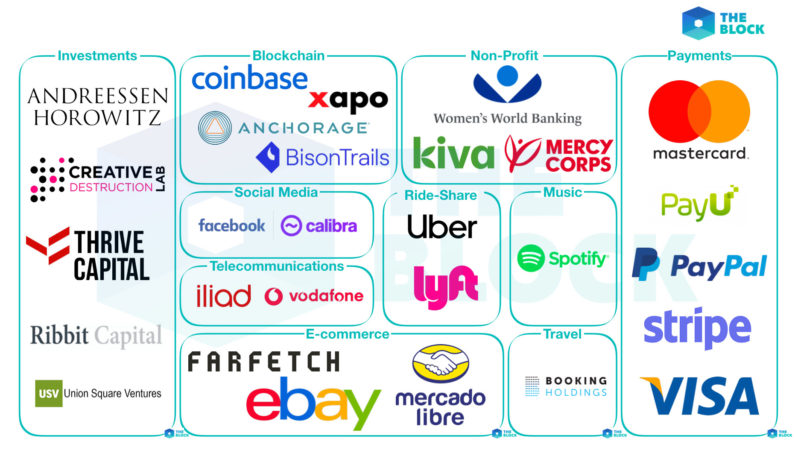
This may be the most amazing connection Facebook is executing since it was founded many years ago. The company is uniting amalgam of entities, from telecoms, financial services, to ecommerce firms, as it unveils a cryptocurrency dubbed Libra.

Yes, the Facebook’s cryptocurrency has Visa, Mastercard, Paypal, Uber and a host of other companies on board. Each of these entities will put $10 million into a consortium to govern the virtual coin. Simply, Nigeria is in because Visa and MasterCard are already linked in our financial systems.

Facebook Inc. has signed up more than a dozen companies including Visa Inc., Mastercard Inc., PayPal Holdings Inc. and Uber Technologies Inc. to back a new cryptocurrency it plans to unveil next week and launch next year.

The financial and e-commerce companies, venture capitalists and telecommunications firms will invest around $10 million each in a consortium that will govern the digital coin, called Libra, according to people familiar with the matter. The money would be used to fund the creation of the coin.

Facebook takes it – yes that NairaCoin, stable and in compliance, is off the table. Yes, we all mulled the idea but it seems it takes a man with a planet-level population to tie crypto to national currencies and take it mainstream.

We need NairaCoin as I have noted many times. Yes, simply create a Nigerian cryptocurrency backed by the Central Bank of Nigeria so that Nigeria has its cryptocurrency (NairaCoin) which is tied to the Naira. That will make blockchain contracts more efficient. The NairaCoin will maintain exchange rates with Bitcoin and others, just as paper Naira has with U.S. Dollars and Euro, while making sure that the paper Naira and NairaCoin are always correlated. The impact could be huge and the adoption would redesign industrial sectors since the banking fees will disappear for customers. NairaCoin would not be mined; it would be earned just as the paper Naira. Workers could select to be paid in the digitized Naira. Government can pay youth who are supporting farmers in different extension services via NairaCoin.

Facebook Libra

In May 2019, “Facebook registered Libra Networks LLC in Geneva, Switzerland, where it is working on blockchain developments, according to its register. BBC later reported that the company is looking towards a …launch of the coin, and has plans to begin testing it later this year before launching in a “dozen” countries”, the Block reports. The following are members of the Libra association.