DD
MM
YYYY

PAGES

DD
MM
YYYY

spot_img

PAGES

Home Blog Page 6882

How do you do Perception Banking? [Video]

0
Ndubuisi Ekekwe with Bill Gates

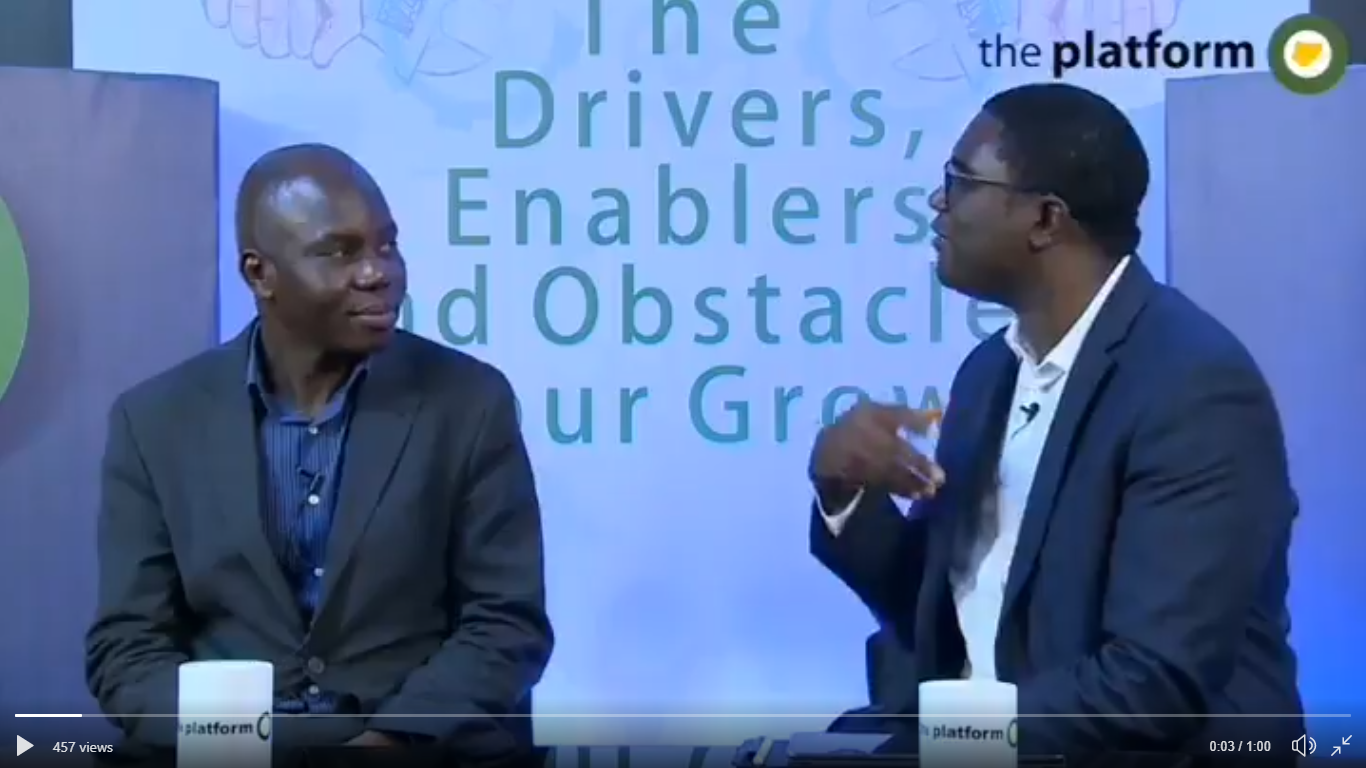
Tomorrow, I will deliver a Keynote in one of Africa’s largest gathering of bank CEOs [invitation only, unfortunately]. These business heavyweights have put so much to get me here. I hope I will add value in their moments. This is one of the slides which I just started working on. I want to offer something that is fresh, stimulating and actionable. Yes, they will go back to their businesses with something of value. Of course, I will mount the podium with humility knowing that most of them are legends – with deep insights! I hope to add to that knowledge base. How do you do perception banking?

Ndubuisi Ekekwe with Bill Gates (right)

Crowdfunding is now a major vector of African self-empowerment – Naijafund

1

Crowdfunding is a method of raising monetary contributions, typically online, from a large number of individuals, family, friends, customers, individual investors amongst others to fund a venture or project.
Typically, three key agents are involved in crowdfunding:

  • (i) the crowdfunding platforms;
  • (ii) the donors; and
  • (iii) the campaign owners.

The crowdfunding platform is the site on which the campaign is created and the transaction takes place, the donor contributes funds, and the campaign owner receives the funds.

There are four different crowdfunding models. Donation-based (without rewards), reward -based (donors are offered tangible but non-financial rewards or products by campaign owners in exchange for their money), lending model (donors lend money to individuals, businesses or companies in third world countries. The donors usually receive their money back with interest), equity model (donors contribute funds to a private company in return for shares in the company or shares in the company’s profit or voting rights). This form of crowdfunding is illegal in Nigeria. Crowdfunding campaign categories vary from medical expenses, school fees, travel, wedding expenses, business funding, creative projects, political campaigns and much more.

Crowdfunding has grown exponentially worldwide but it is still in a relatively nascent phase in Africa. Africa experiences a slow adoption of online fundraising and financial contributions to African crowdfunding platforms account for less than 0.1% of the global crowdfunding market.
Its expansion as an alternative online funding option is hindered by: low Internet penetration, lack of awareness about crowdfunding among the general public, low social media usage, no legal and regulatory frameworks that define the crowdfunding rules in any African country and limited funds transfer and payments options in most African countries.

In spite of these challenges,the prospects of the African crowdfunding market are bright. The world bank noted that crowdfunding has the potential to create 2.5 billion dollars of investment a year in Africa alone by 2025. Today, crowdfunding is an acceptable source of alternative start-up funding. Entrepreneurs across Africa are now raising capital by crowdfunding and Africa has established many active locally appropriate crowdfunding platforms which collectively raised $32.3 million in 2015.

South Africa has a more mature crowdfunding ecosystem with more home-grown platforms than other African countries although it trails behind Kenya in donations received. Backabuddy platform in South Africa has raised over 100 million Rands from more than 125800 donors. Other African countries are also active in the crowdfunding ecosystem with home-grown platforms like Naijafund in Nigeria, Yomken in Egypt, M-Changa in Kenya,Thundafund in South Africa, Farmableme in Ghana and Akabbo in Uganda.

Crowdfunding is now a major vector of African self-empowerment. Through crowdfunding, Africans have the power to fund projects and causes they care about and drive their own economic agenda.


Naija contributed this to Forum. We liked it and have moved it to the mainboard.

Yes, Secondary Data Shows That Nigerian Population Is More Than 200 Million

0

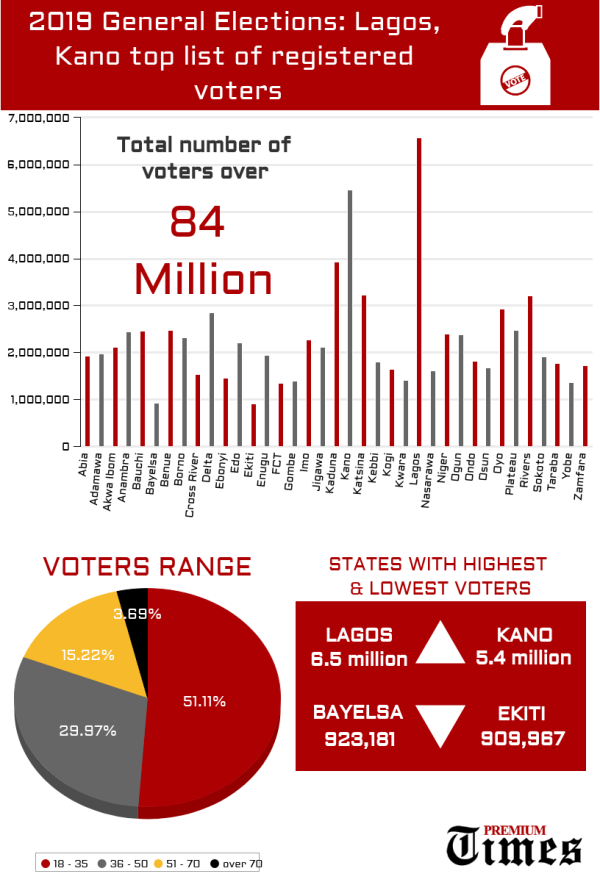
I read comments on the piece on addressable market where some are disputing the total population of Nigeria. Simply, people do not think Nigeria has up to 200 million here. Personally, I actually think the population of Nigeria is more than 200 million! I stopped using 180 million after INEC, the electoral umpire, published the total number of registered voters for the 2019 general election.

The total number of registered voters stands at 84 million, 15 million more than the figure in 2015 which stood at 68 million. In 2015, Lagos and Kano States also had the highest registered voters with 5.8 million and 4.9 million respectively.

Yes, according to INEC, 84 million people registered through biometric systems for the 2019 election. Though there are imperfections, you need to be at least 18 years to register for election voting in Nigeria. So, these 84 million people were at least 18 years old. Also, I personally think Nigeria does not exceed 70% participation on registered voters within the qualified population. This implies that in the whole population, 18 years and above should be around 120 million people.

Many independent data have shown that Nigeria has 44% of its population between 0-15 years. If you extrapolate to 18 years, you will have about 52% of the population below 18 years – let us just keep it at 50%.

Based on above, doubling 120 million will give you 240 million people. Keeping it at 200 million takes care of many issues but saying that Nigerian population is not up to 200 million may not be smart especially with INEC data which was built with biometrics.

The Translation of “Welcome” into Different Languages in Eko Hotels

1

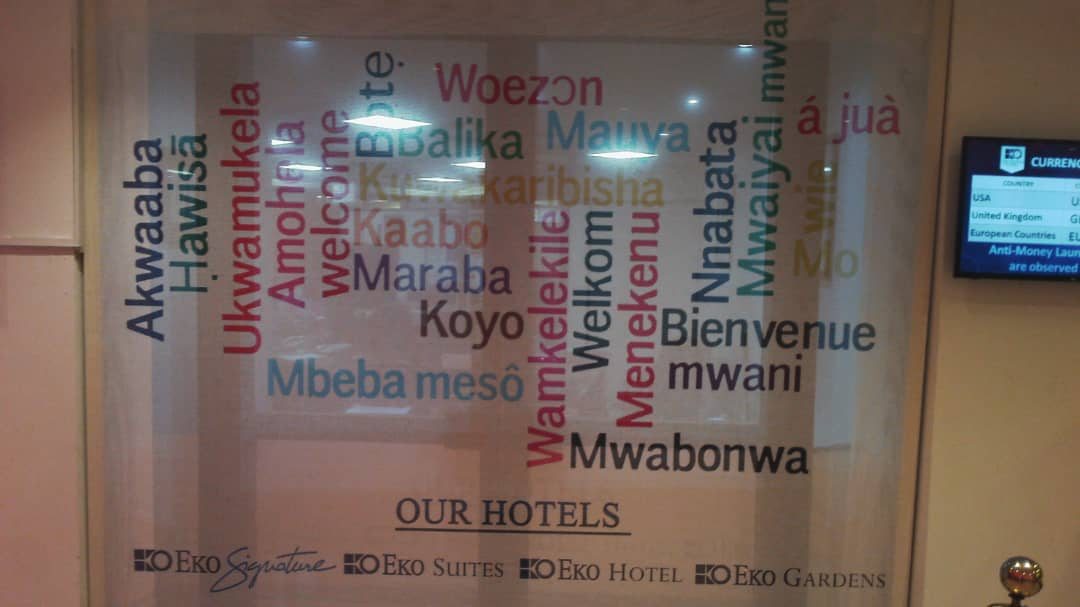
The translation of “Welcome” in Eko Hotels shows the diversity in Nigeria and the world. They just picked few translations out of the possible 250 languages in the nation. As Nigeria experiences one of the rituals of democracy tomorrow, may we have that era where someone or people will build the elements to stand in unity just as the translated versions of Welcome are structured in Eko Hotels.

Welcome means “Nnabata”,  “Maraba”, “Kaabo”, and more. In some, it is short while in others, it is long. But Eko Hotels has space for all of them there. Yes, even the colors are different meaning each has got its own culture and uniqueness. Put them together, they make a nation.

May tomorrow bring a better promise for Nigeria as politicians begin a new chapter in the nation’s history.